Tula
Tula's Toltec Atlantes warrior statues, Quetzalcóatl pyramid, and Tepotzotlán monastery. How to visit Mexico's Toltec capital on a day trip from CDMX.
From Mexico City: Tula and Tepotzotlan Private Day Tour
Quick facts
- Altitude
- 2,060 m / 6,760 ft
- Currency
- Mexican peso (MXN) — USD widely accepted
- Best for
- Toltec Atlantes warrior columns, Quetzalcóatl pyramid, low visitor numbers
- Getting there
- Bus from Terminal Norte ~1.5 hrs; or join a private tour from CDMX
The Toltec capital, undervisited and directly accessible
Tula de Allende — or Tollan, as it was known in its prime — is the capital of the Toltec civilisation that flourished between approximately 900 and 1150 CE, between the fall of Teotihuacán and the rise of the Aztec Triple Alliance. In terms of continental influence, the Toltec were disproportionately significant: Aztec oral history treated Tollan as a mythic paradise, and architectural features first documented at Tula (including the chacmool reclining figures and the Atlantes warrior column designs) appear later at Chichén Itzá in the Yucatán, suggesting either a direct cultural connection or parallel development.
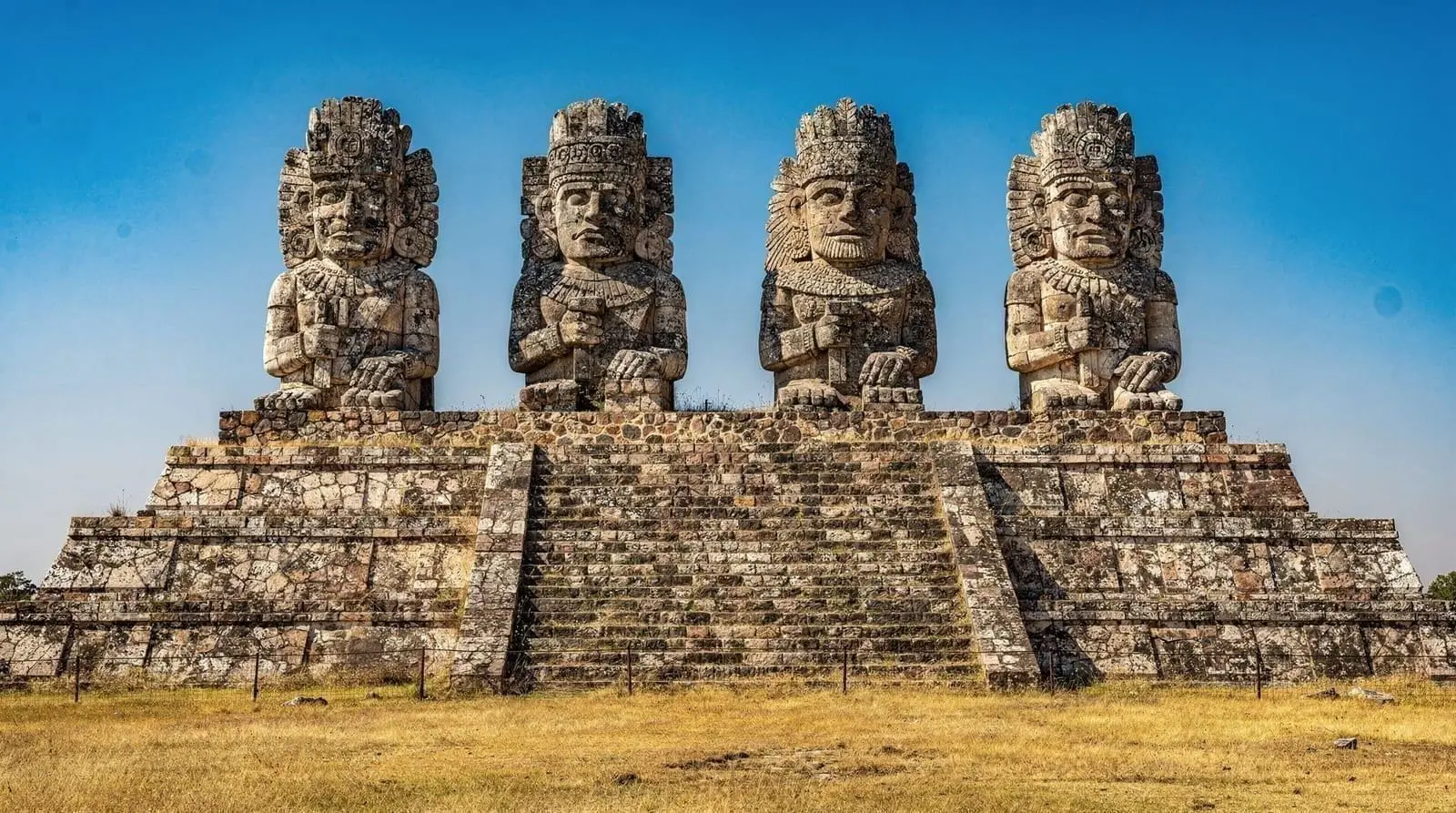
Tula receives approximately 100,000 visitors per year, compared to Teotihuacán’s 4+ million. The difference in experience is substantial. You can stand at the base of the Atlantes — the four 4.6-metre basalt warrior figures that originally supported the roof of the Pyramid B (the pyramid of Quetzalcóatl) — without fighting through crowds. This is one of the most iconic pre-Columbian sculptural images in Mexico, reproduced in textbooks and documentary programmes worldwide, and at the actual site you will likely have it to yourself on a weekday morning.
| Where | Tula de Allende, Hidalgo, ~90 km / 1.5–2 hrs north of Mexico City |
| Cost | 210 MXN site admission (museum included) |
| Time needed | Half day (2.5–3 hrs) |
| Getting there | Bus from Terminal Norte, or a private/small-group tour |
| Best time | Weekday mornings; Oct–May for the driest conditions |
The Atlantes and Pyramid B
The Atlantes are Tula’s defining image: four massive basalt columns carved in the form of Toltec warriors, standing upright, each approximately 4.6 metres tall, wearing elaborate headdresses, butterfly breastplates, and carrying atlatls (dart throwers) and incense bags. They were discovered buried near the pyramid in 1941 and re-erected on the pyramid platform where they originally served as roof supports for a now-vanished temple.
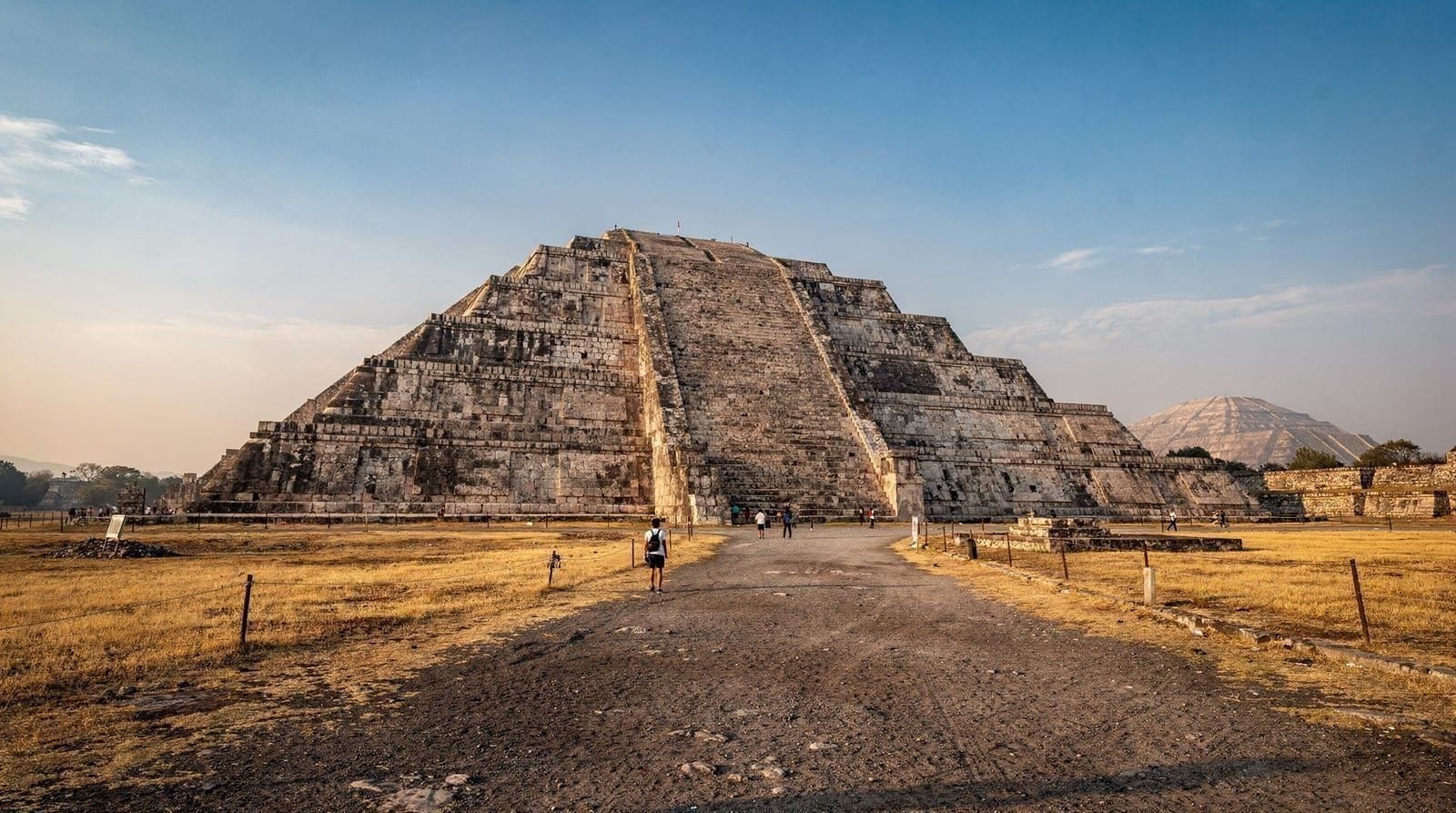
Pyramid B, the Pyramid of Quetzalcóatl, is a stepped pyramid of five terraces, approximately 10 metres tall. It is smaller than the Teotihuacán pyramids but better preserved in its sculptural decoration: the lower platform panels show carved processions of jaguars, coyotes, eagles eating human hearts, and the feathered serpent Quetzalcóatl in profile. These panels are among the best-preserved relief sculptures at any central Mexican site.
At the base of the pyramid, a large colonnaded hall (Palacio Quemado, or Burnt Palace) served as what may have been a council chamber. The columns retain fragments of their original painted decoration.
Pyramid C and the broader site
Pyramid C, the larger of the two main pyramids at Tula, is partially excavated but less reconstructed than Pyramid B. It gives a clearer sense of what unrestored pre-Columbian mounds look like — which is useful context for understanding how much of what appears at reconstructed sites is modern interpretation. The Great Vestibule between the pyramids has a large platform with carved friezes.
The on-site museum at the entrance has the original Atlante figures from the earliest excavations (the ones on the pyramid platform are replicas placed there for stability and weather protection), along with smaller sculptures, pottery, and an explanatory exhibition on Toltec culture and the excavation history. Entry is included with site admission. Allow 30 minutes for the museum.
Tepotzotlán: the baroque detour
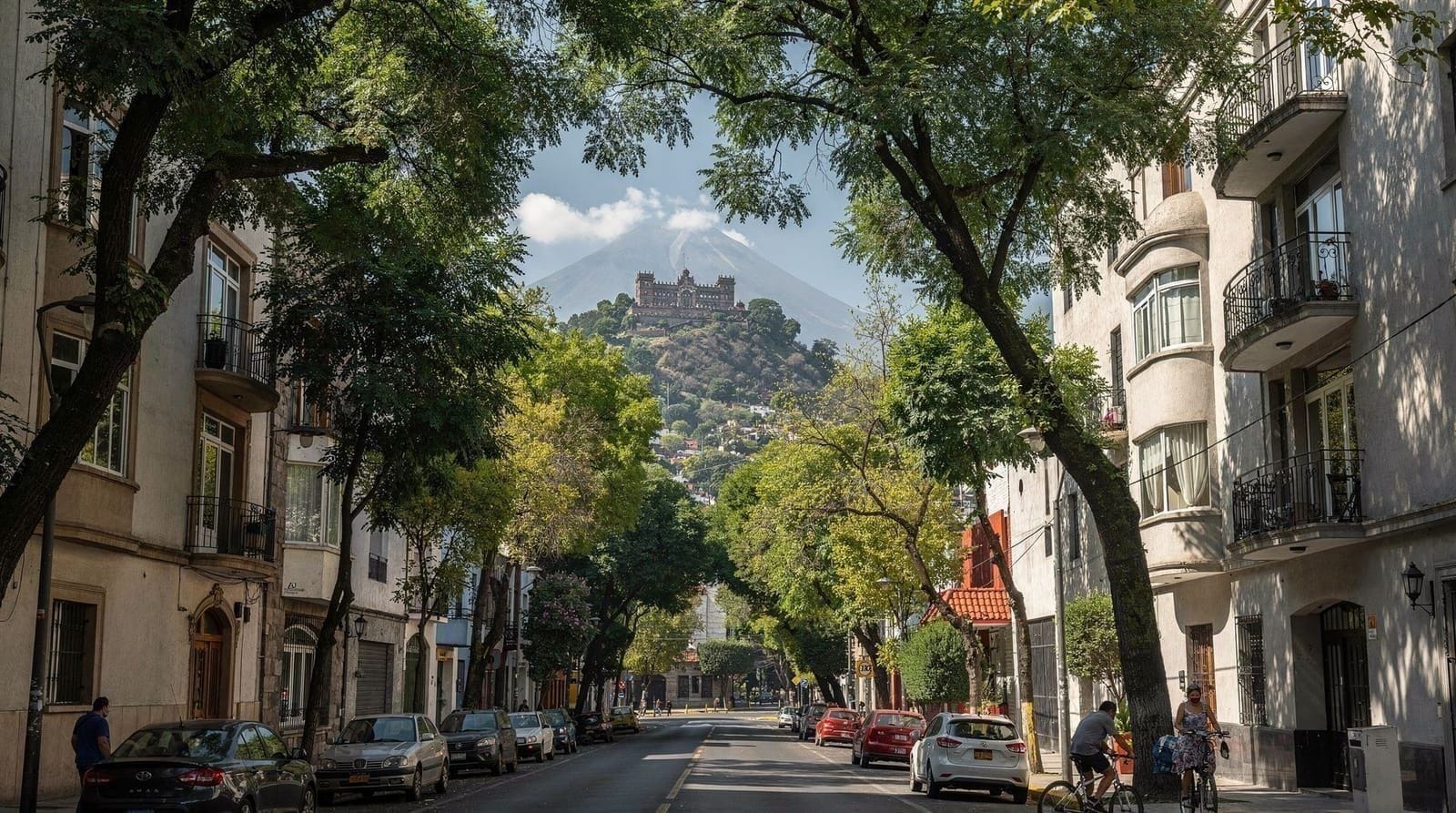
Most visitors to Tula combine the trip with Tepotzotlán, a colonial town 40 km south of Tula on the Mexico City highway. The Templo y Ex-Colegio de San Francisco Javier in Tepotzotlán is a Jesuit church and former college whose churrigueresque façade is considered one of the most elaborate baroque interiors in Mexico. The church was completed in 1762; the interior has gilded altarpieces that cover nearly every wall surface. The adjacent colonial buildings house the Museo Nacional del Virreinato (National Museum of the Viceroyalty), which covers colonial-era New Spain in extensive detail.
Tepotzotlán makes a natural stopping point between Mexico City and Tula in either direction. The private day tour from Mexico City covering Tula and Tepotzotlán does both sites with private transport and a guide who covers both Toltec archaeology and colonial history. The total round-trip is a long day (10–12 hours) but covers both subjects efficiently.
Combining Tula with Teotihuacán
Some tours combine Tula and Teotihuacán in a single day, which is geographically possible — the two sites are about 80 km apart via the highway through Mexico City’s northern suburbs. A Teotihuacán and Tula small group tour covers both in approximately 10–11 hours. The compromise is that both sites receive abbreviated visits: you get the main circuit at each but not the depth that a dedicated full day at either allows.
For visitors who have already seen Teotihuacán and want to add the Toltec context, a dedicated Tula day is the better choice. For visitors with only one day trip opportunity and an interest in both civilisations, the combined tour is a practical compromise.
A different combination pairs Tula with two Aztec-era sites closer to the capital rather than with Teotihuacán: the Tula, Tlatelolco and Tenayuca day trip adds Tlatelolco’s Plaza de las Tres Culturas and the Tenayuca pyramid to the Tula circuit, tracing an arc from the Toltec capital through Aztec-period sites on the way back into Mexico City.
The broader site: what many visitors miss
Beyond the main Pyramid B and Pyramid C circuit, the Tula archaeological zone has several structures that most visitors skip because they are less immediately dramatic than the Atlantes. The Coatepantli (Serpent Wall) on the north side of Pyramid B is a 40-metre-long basalt wall carved with horizontal frieze panels showing serpents swallowing human figures — a motif also found at Chichén Itzá, one of several architectural parallels between the two sites that archaeologists debate. The wall is well-preserved and in direct sunlight in the afternoon.
The Ball Court, east of the main platforms, is one of several Toltec-period ball courts at the site. Although less complete than Teotihuacán’s or Monte Albán’s, it gives context to the Mesoamerican ball game’s role at the civic level. The game (ullamaliztli) was played for ritual and competitive purposes; specific rules and the significance of outcomes remain debated among archaeologists.
Behind the excavated zone, the unexcavated hills to the south and east contain further pyramid mounds that have not been opened to study. These mounds are visible from Pyramid B’s platform level and give a sense of how much of the original city — which covered approximately 13 square kilometres — remains underground.
Practical information
Getting there independently: Buses from Mexico City’s Terminal Norte (Metro Line 5 to Autobuses del Norte) run to Tula approximately every 30–45 minutes. The service is operated by the Grupo ADO or regional lines; ask for “Tula, Hidalgo.” Journey time is 1.5–2 hours. Cost approximately 80–120 MXN each way. From Tula’s central bus station, taxis to the archaeological zone cost about 30–50 MXN.
Hours: The archaeological zone is open daily 9:00–17:00 (last entry 16:00). Admission is 210 MXN.
How long: The main circuit (Pyramid B, Atlantes, Pyramid C, Burnt Palace) takes about 2 hours. Adding the museum and the less-visited peripheral buildings adds another hour. Most visitors find 2.5 hours adequate.
Tula the town: The town of Tula de Allende itself is a working Hidalgo state city with little tourist infrastructure beyond the archaeological zone. The best approach is to visit the ruins and museum and then move on — there is no particular reason to overnight.
Weather and what to bring: At 2,060 m, Tula’s climate is similar to Mexico City’s — mild days, cool mornings and evenings. The archaeological zone has minimal shade, so a hat, sunscreen, and water are essential regardless of season. The dry season (October–May) is more comfortable underfoot; the rainy season (June–September) brings afternoon showers that can shorten an outdoor visit, so plan to see the main circuit before early afternoon if you’re travelling in those months.
The best day trips from Mexico City guide covers Tula alongside Teotihuacán, Tepoztlán, Tolantongo, and Puebla-Cholula with transport comparisons and honest time-cost assessments.
Tula town and food
The modern town of Tula de Allende is a working commercial city in Hidalgo state with a population of around 35,000. It is not a tourist destination beyond the archaeological zone, but it has a functional main plaza and several eateries near the central market that serve traditional Hidalgo state food.
Barbacoa — lamb or goat slow-cooked in an underground pit, traditionally served on Sunday mornings — is the food Hidalgo is most famous for. The best barbacoa in the area comes from the roadside restaurants between Tula and Mexico City on the main highway; if you are driving and leave early on a Sunday, these spots serve from 7:00–13:00. In Tula town itself, the Mercado Municipal near the central plaza has vendors serving quesadillas and consommé (the broth in which the barbacoa is cooked) from early morning.
Budget approximately 80–150 MXN for a full barbacoa breakfast including consommé, tortillas, and salsas. This is substantially cheaper than anything comparable in Mexico City’s tourist restaurants and is often the most memorable meal of a Tula day trip for visitors who time it correctly.
Choosing between Tula, Teotihuacán, and a combined day
Most visitors have to decide how Tula fits alongside Mexico City’s more famous archaeological sites, and the honest answer depends on how much time and archaeological appetite you have.
| Option | Time needed | What you get | Best for |
|---|---|---|---|
| Tula only | Half day | Full Atlantes/Pyramid B/C circuit unhurried | Dedicated Toltec interest, avoiding crowds |
| Teotihuacán only | Half to full day | Sun/Moon pyramids, larger site, bigger crowds | First-time archaeology visitors |
| Tula + Teotihuacán combined | Full day (10–11 hrs) | Highlights of both, abbreviated visits | One shot at seeing both civilisations |
| Tula + Tepotzotlán | Full day (10–12 hrs) | Toltec ruins + colonial baroque church | Mixing archaeology with colonial history |
If you have only one day trip in your Mexico City itinerary and haven’t seen either site, Teotihuacán is the better single choice for most travellers — it is larger and more immediately dramatic. Tula rewards those who already know the region’s archaeology or specifically want the Atlantes and the low-crowd experience. The Mexico City 5-day itinerary slots Tula in as a dedicated day rather than squeezing it in alongside Teotihuacán, which keeps both visits unhurried.
Fitting Tula into a wider Mexico City trip
Tula works best as a deliberate choice rather than a filler. If you are still deciding how many days to give the capital, the Mexico City itinerary length guide helps you see whether a northern archaeology day has room. Shorter stays rarely have space for it: the 3-day itinerary and the weekend itinerary are better spent in the city, and the 7-day itinerary is where a Toltec day sits most comfortably next to other excursions.
If this is your first archaeology day, read the complete Teotihuacán guide first and decide which site comes first. For comparison with other excursions, the Puebla and Cholula destination page and the Tepoztlán destination page cover very different days out of the capital, one colonial and one set among mountains and a hilltop temple.
Logistics before you go
Getting out to Terminal Norte and back is part of the day, so it helps to read the getting around Mexico City guide beforehand. Pick a base that makes the early start easy; the where to stay guide compares neighbourhoods, and the Roma and Condesa destination page is a good place to look if you want to be near cafés and restaurants for the evening you return. Because the day is long and you will be on your feet in strong sun, the Mexico City altitude guide is worth a look in your first days, and the best time to visit guide will help you choose the season. For a flavour of how others have paced their days, see the 24 hours in Mexico City post and the first-timer mistakes post.
Frequently asked questions about Tula
What makes the Atlantes at Tula significant?
The four basalt warrior figures are the most iconic Toltec sculpture in existence, representing a dramatic break from the abstract iconography of Teotihuacán toward individual human figures in warrior dress. Their discovery in 1941 fundamentally changed understanding of Toltec culture. They are also significant for their influence: similar warrior column figures appear at Chichén Itzá in the Yucatán, suggesting Toltec contact with or influence on the Maya.
How does Tula compare to Teotihuacán?
Smaller, later (900–1150 CE vs 100–750 CE), and much less visited. Teotihuacán is a larger site with bigger pyramids and better-preserved murals. Tula has the Atlantes and relief carvings that Teotihuacán lacks. Teotihuacán should come first for most visitors; Tula is a worthwhile second choice for those who want to understand the arc from Teotihuacán’s collapse to the Aztec rise, or who want a major archaeological site without crowds.
Can I visit Tula without a guide?
Yes. The site is compact and well-signed in Spanish and English. The on-site museum contextualises the main structures adequately. An independent visit is straightforward. A guide adds detail on the political history of the Toltec, the iconographic reading of the friezes, and the broader Mesoamerican connections that are not fully covered in the signage.
Is Tula combined with Teotihuacán in one day worthwhile?
Logistically yes, if you understand the trade-off: you will see the highlights of both but not spend enough time at either for a thorough visit. Both sites can be seen adequately in 2 hours each, which makes a combined day possible. For serious archaeology travellers, separate days are better.
What is in Tepotzotlán?
The main draw is the Ex-Colegio de San Francisco Javier — a Jesuit church completed in 1762 with one of the most elaborate churrigueresque interiors in Mexico, now part of the National Museum of the Viceroyalty. It is 40 km south of Tula and about 45 km north of Mexico City, making it a natural stop on any Tula day trip.
Top experiences
Bookable activities with verified prices and instant confirmation on GetYourGuide.