Coyoacán
Coyoacán: Frida Kahlo's Casa Azul, colonial plazas, Mercado de Artesanías, and the best tostadas in Mexico City. How to visit without the crowds.
Mexico City: Coyoacan Walking Tour
Quick facts
- Altitude
- 2,240 m / 7,350 ft
- Currency
- Mexican peso (MXN) — USD widely accepted
- Best for
- Frida Kahlo museum, colonial architecture, Coyoacán market food, slow afternoon walks
- Getting there
- Metro Line 3 to Viveros or Coyoacán; Uber from Roma takes 20–30 min (50–80 MXN)
Mexico City’s most walkable neighbourhood
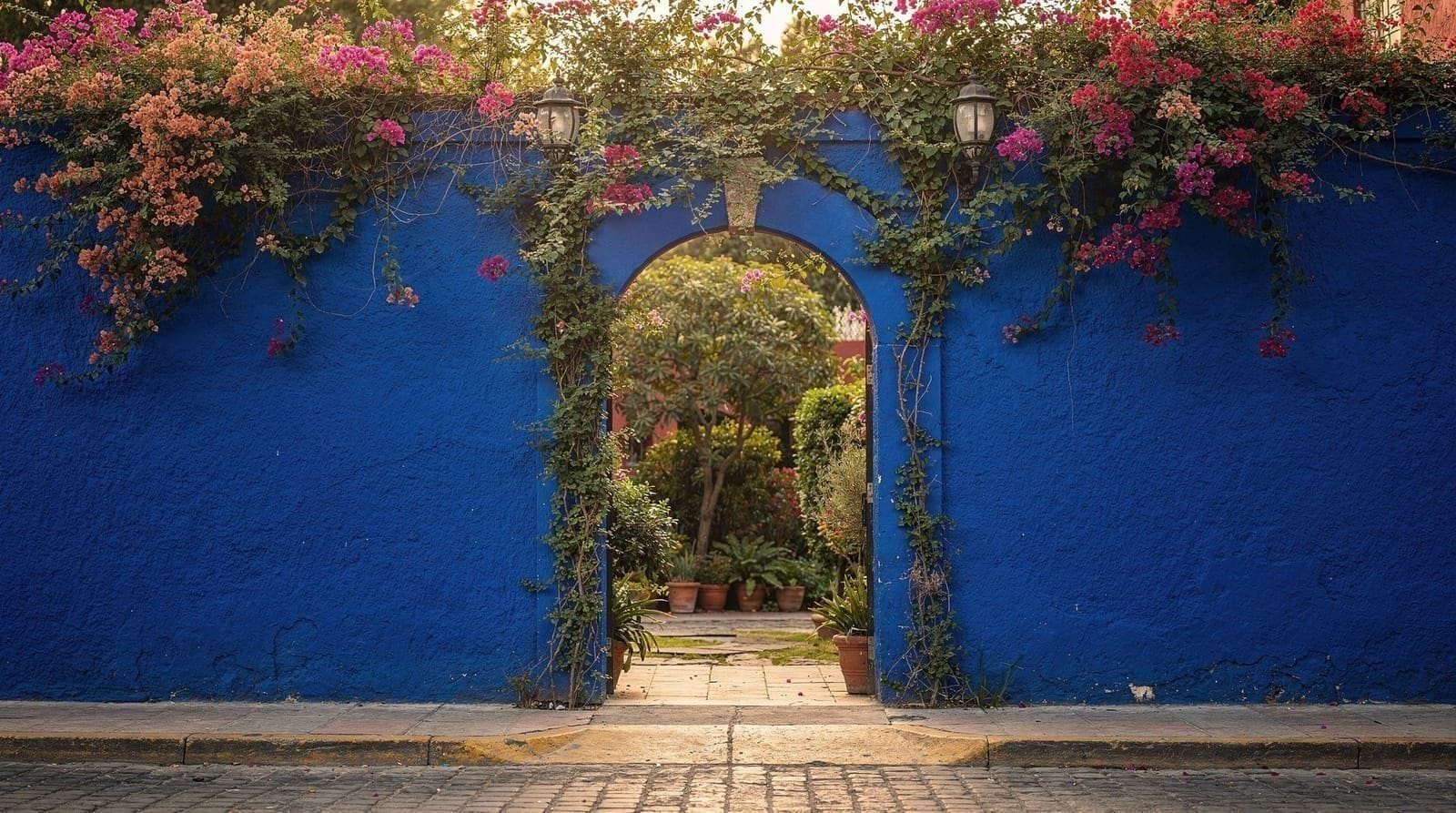
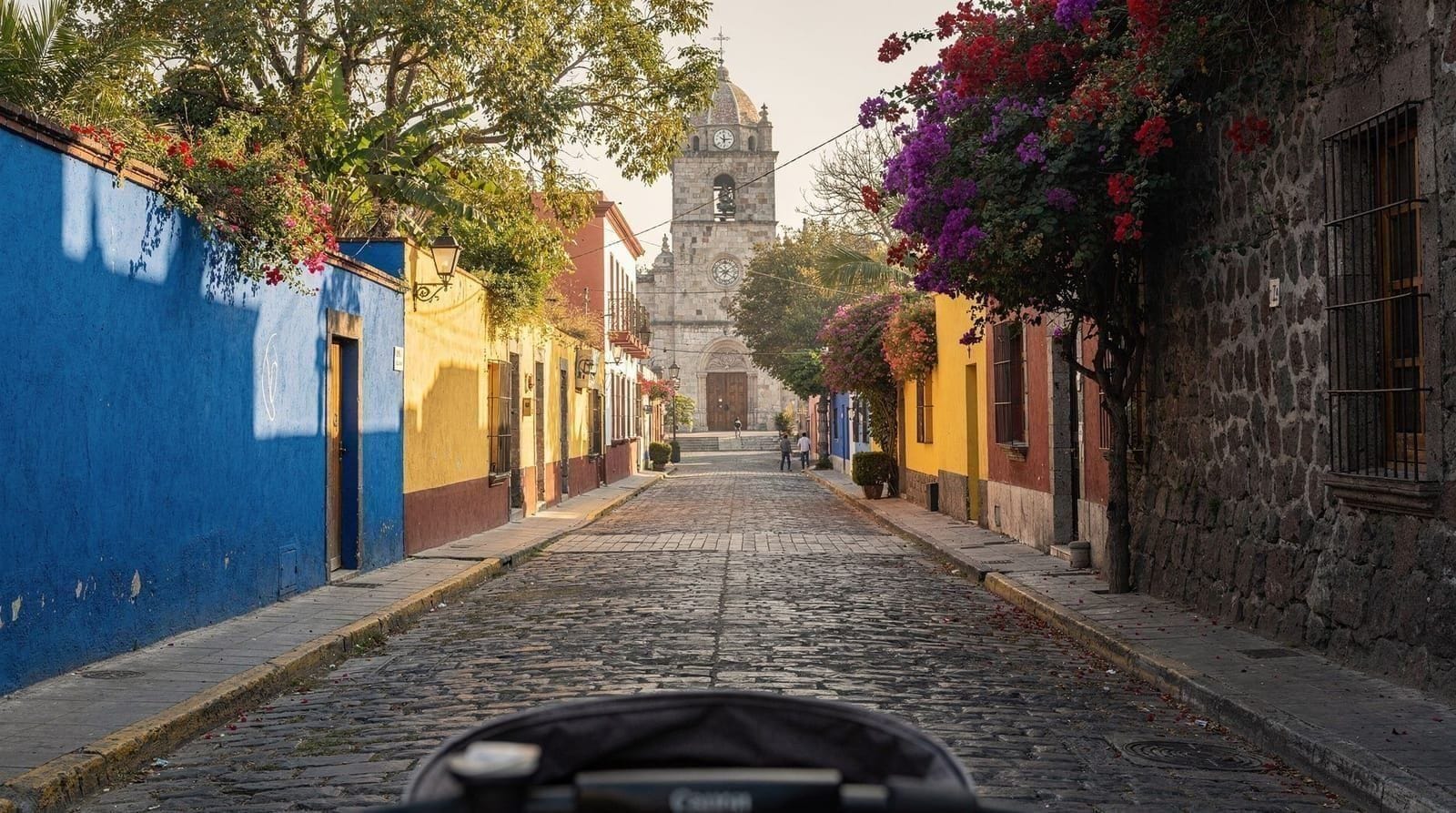
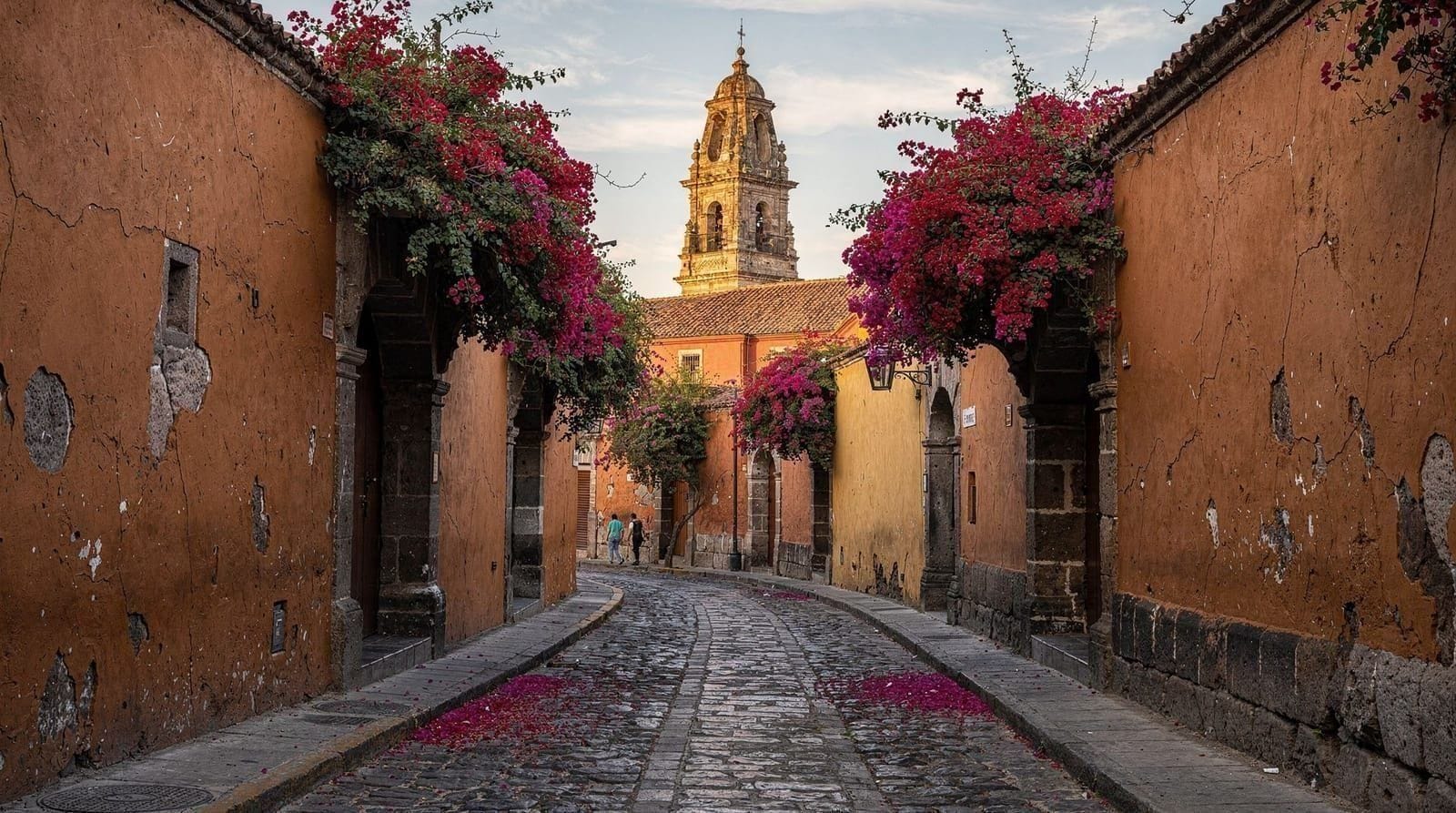
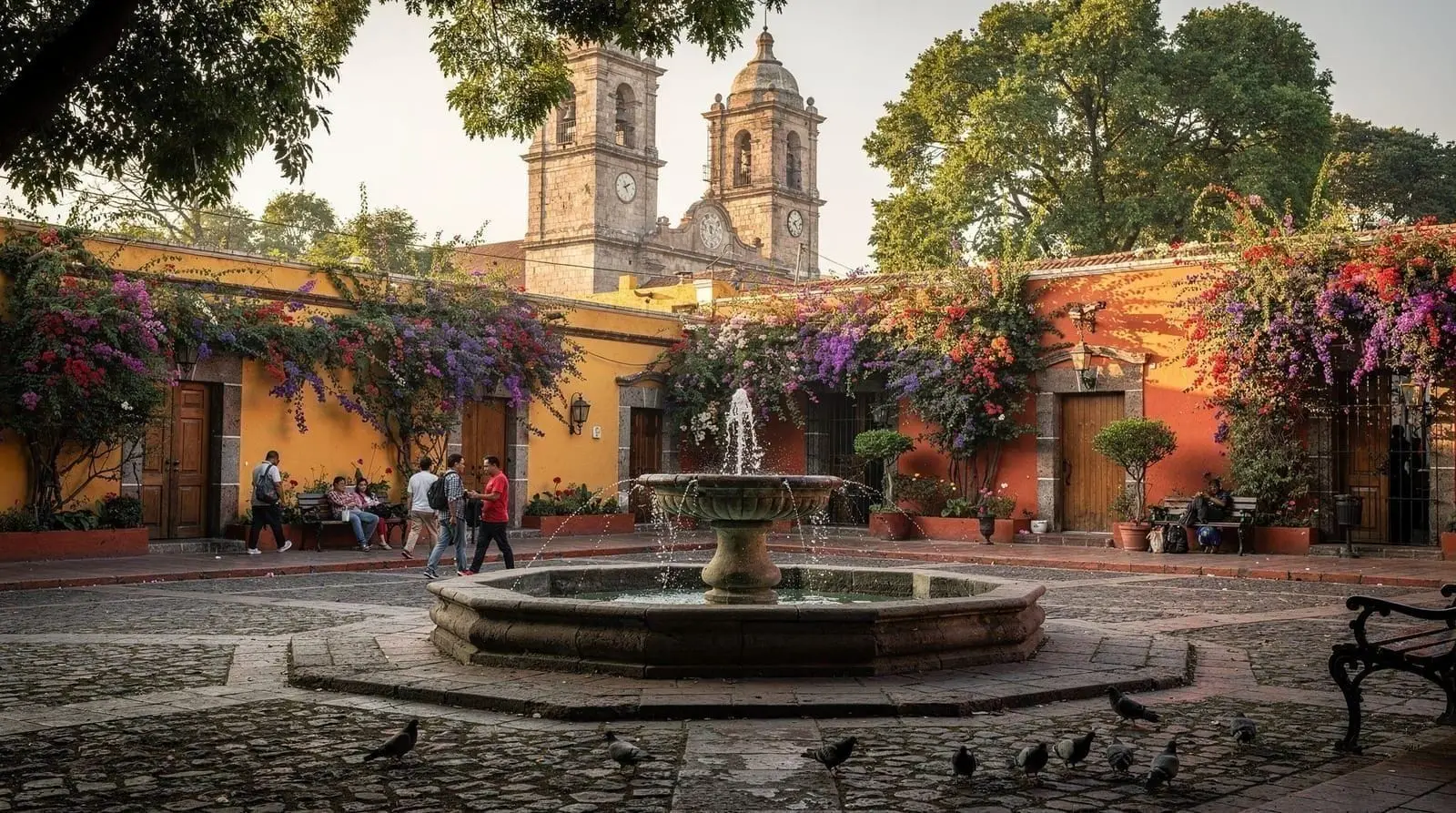
Coyoacán — from the Nahuatl for “place of coyotes” — is a largely intact colonial neighbourhood in the south of Mexico City, about 12 km from the Zócalo, that feels like a different city. The streets are cobblestoned, the houses are painted in ochre and terracotta, the plazas have fountains and market vendors and organ grinders, and the overall pace is slower than anywhere in the centre. It is the neighbourhood where Frida Kahlo was born, grew up, and returned to after her years with Diego Rivera. It is also where Leon Trotsky lived under asylum protection from 1937 until his assassination in 1940. Both houses are museums.
The combination of the Frida Kahlo museum (La Casa Azul), the market food, the weekend crafts market, and the general quality of the streets makes Coyoacán the single most satisfying full-day neighbourhood visit in Mexico City. It is also, predictably, crowded on weekends — the Frida Kahlo museum sells out by 9:30 on Saturdays and Sundays from November through March. Planning a weekday visit, or booking the museum well in advance, is the practical decision.
| Where | Southern CDMX, about 12 km from the Zócalo |
| Cost | Frida Kahlo museum around 270 MXN online; market lunch 80–150 MXN |
| Time needed | A full day for museums, plazas and the market |
| Getting there | Metro Line 3 to Coyoacán or Viveros; 20–30 min Uber from Roma |
| Best time | Weekday mornings; book the Frida Kahlo museum ahead year-round |
La Casa Azul: Frida Kahlo’s house-museum
The Museo Frida Kahlo at Londres 247 is one of the most intimate artist’s house-museums in the world. The blue-painted house where Kahlo was born in 1907 and died in 1954 was converted into a museum two years after her death, and it has remained largely as she left it — which means the interior is dense with objects: pre-Columbian figures on shelves, Tehuana clothing in wardrobes, her medical corsets (she underwent 35 surgeries in her lifetime), the wheelchair at her easel, the four-poster bed with the mirror above it where she painted herself during her long recoveries. The garden contains the ashes of both Frida and Diego in a pre-Columbian urn.
The museum is small and the permanent collection is partially the house itself rather than a gallery. This means the experience is more domestic than monumental — which is either precisely right or mildly disappointing depending on what you expected. Most visits take 45 minutes to an hour. There is a changing temporary exhibitions gallery, the permanent collection of approximately 300 objects, and the garden, which has its own atmosphere.
The Frida Kahlo museum digital guide ticket provides context through an audio guide formatted to the museum layout and includes skip-the-line entry — which matters significantly on weekends and holidays. For a deeper visit with a live guide, the complete Frida Kahlo museum guide covers booking, what to see, and how to read the objects in the context of Kahlo’s biography.
Coyoacán’s plazas: Hidalgo and La Conchita
Coyoacán’s heart is two connected plazas: Plaza Hidalgo (the main square) and Jardín Centenario, separated by a short pedestrian street. Both are lined with colonial buildings, cafés, and street vendors selling elotes (corn), churros, and tostadas. The 16th-century Parroquia de San Juan Bautista on Plaza Hidalgo is one of the oldest churches in Mexico City. Its interior retains colonial frescoes. The municipal building across the square has murals depicting pre-Columbian Coyoacán life.
Four blocks south of the main plaza, Capilla de la Concepción (La Conchita) on Higuera Street is a 16th-century chapel that many visitors walk past without noticing — it is built into the corner of a residential block and is small enough to miss. The square in front of it is one of the quietest and most photogenic corners in the neighbourhood.
Mercado de Coyoacán: where to eat
The covered market at the corner of Allende and Xicoténcatl is the place to eat lunch in Coyoacán. The market’s fame rests on its tostadas — tostadas de ceviche, tostadas de tinga, tostadas de cochinita — which are sold from stalls around the market’s interior. The vendors compete directly; the quality varies between them. The standard approach is to walk the whole market before choosing. Tostadas cost 20–35 MXN each. Budget 80–150 MXN for a full lunch.
The market also sells fresh produce, spices, handmade tortillas, and prepared antojitos. Aguas frescas (flavoured water drinks) from the market stalls — hibiscus, tamarind, horchata — are genuinely refreshing in the afternoon heat and cost 20–25 MXN per cup.
The crafts market (Mercado de Artesanías) on Avenida Hidalgo near the main plaza sells tourist-grade souvenirs with tourist prices, but it is worth walking through. More interesting are the artisans who set up in the streets around the main plaza on weekend afternoons with handmade jewellery, leather goods, and painted ceramics.
The Leon Trotsky Museum
The Museo Casa de León Trotsky at Viena 45 is less visited than the Frida Kahlo museum and arguably more historically compelling. Trotsky arrived in Mexico from Norway in January 1937, having been expelled from the Soviet Union after his break with Stalin. He lived briefly with Frida Kahlo and Diego Rivera at La Casa Azul before moving to this walled compound two blocks away. He was assassinated here in August 1940 by Ramón Mercader, a Spanish agent working for the NKVD.
The house has been preserved to a degree unusual in Mexican museums: you can see the study where the assassination occurred, the high walls and watchtowers Rivera and Trotsky added after a machine-gun attack on the house in May 1940, the sleeping quarters, and a small permanent exhibition on Trotsky’s political life and assassination. Entry is 50 MXN. This is a genuinely important Cold War heritage site that receives a fraction of the attention of the Frida Kahlo museum.
A walking route through Coyoacán
Start at Viveros metro station and walk south through Viveros de Coyoacán — a large nursery and park open to the public that joggers and families use in the mornings. Continue to Plaza Hidalgo by 10:00 to join one of the morning café openings on the square. Walk to La Casa Azul for your museum slot (book online). After the museum, walk east to the Leon Trotsky house. Return to the market for lunch. Afternoon: browse the crafts markets and walk the cobblestone residential streets between Higuera and Madrid. End at a café on Jardín Centenario for a late afternoon coffee.
A guided Coyoacán walking tour covers the neighbourhood’s history — particularly the colonial-era significance of the plazas and the Cold War context of the Trotsky museum — and includes a market food stop. The Coyoacán walking guide has a self-guided version with precise addresses.
Coyoacán’s café culture and afternoon rhythm
The neighbourhood has a well-developed café scene that functions on a slower schedule than Roma Norte’s espresso-bar energy. El Jarocho, a coffee shop that has operated on Allende street since 1953, serves traditional Mexican coffee prepared in a clay pot at prices that have not climbed with the neighbourhood’s fame (15–25 MXN per cup). It is perpetually busy and has no chairs — coffee is drunk standing at the counter or on the street outside. The line on weekend afternoons wraps around the block; the wait is 10–15 minutes.
Café El Parnaso on the Jardín Centenario occupies a bookshop-café combination that has been a Coyoacán institution since the 1950s. The bookshop section specialises in Mexican literature and art books; the café serves decent coffee and light meals in a terrace garden setting. Prices are mid-range (60–100 MXN for a coffee and pastry). The terrace is the better place to sit; the interior feels cramped.
For a proper sit-down meal beyond the market tostadas: La Guadalupana on Higuera 2 is a traditional cantina that has been operating since 1932, serving traditional Mexican food (mole, enchiladas, pozole) at reasonable prices in a tiled interior with antique fittings. It is the kind of place that appears in every magazine article about Coyoacán but remains genuinely good rather than having been destroyed by its own publicity. Budget 180–280 MXN for a full lunch.
Combining Coyoacán with Xochimilco
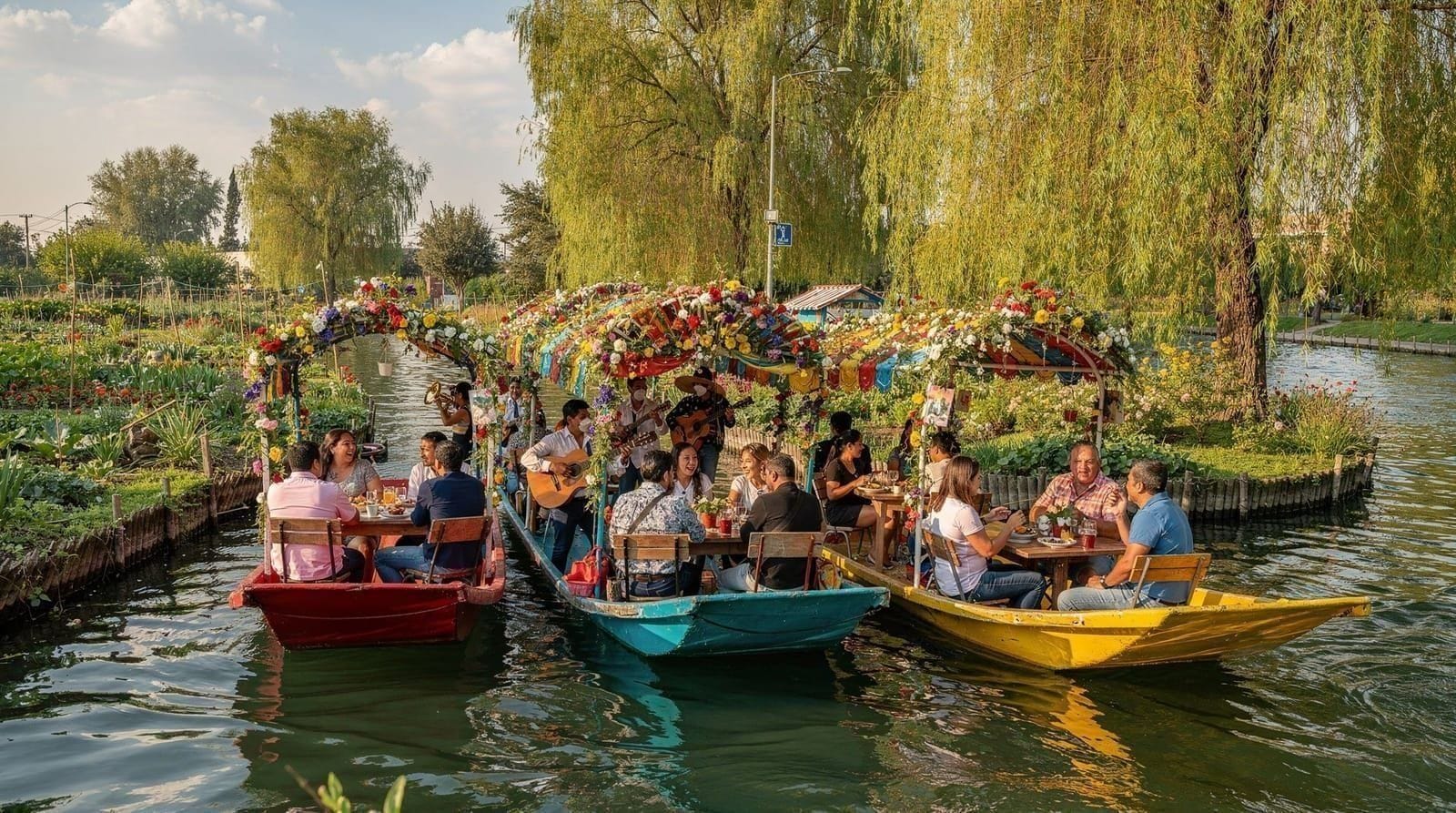
Coyoacán and Xochimilco are both in the south of Mexico City and are most naturally visited together in a single day. The standard combination starts with a morning in Coyoacán (market breakfast, Frida Kahlo museum, plaza walk) and moves south to Xochimilco in the early afternoon for a two-hour trajinera canal ride. A full-day Frida, Coyoacán, and Xochimilco tour covers both destinations with local guides and includes the museum visit. A full-day tour combining Coyoacán, Xochimilco and the UNAM campus extends the same day trip to include the university’s landmark murals, for visitors who want to cover all three southern neighborhoods together. See the Xochimilco destination guide for what to expect on the canals.
Coyoacán with children
Coyoacán is one of the easier neighbourhoods in the city to bring children to: the Viveros park has flat paths for running around, the plazas have organ grinders and balloon vendors that hold younger attention, and the market’s tostada stalls let picky eaters choose their own toppings. The Frida Kahlo museum’s dense, adult-oriented displays are less engaging for young kids, so plan a shorter visit there and budget the saved time for the plazas instead. The Mexico City with kids guide has more detail on pacing a family day here, and stroller-friendly transit options are covered in the getting around Mexico City guide.
What to skip if the market feels overwhelming
The Mercado de Artesanías near the main plaza is aimed squarely at tourists, with souvenir-grade goods at inflated prices; if your time is short, skip it in favour of the food stalls inside the Mercado de Coyoacán, which serve genuinely good tostadas at fair prices. The tourist traps guide covers which souvenir stalls across the city are worth walking past, and the street food guide has Coyoacán-specific stall recommendations beyond the market’s tostadas.
Frequently asked questions about Coyoacán
Do I need to book the Frida Kahlo museum in advance?
Yes, absolutely on weekends and during peak season (November–March). The museum sells timed-entry tickets online; walk-in availability is very limited and often exhausted by 10:00 on Saturdays. On weekday mornings in low season (June–September) walk-in is more feasible, but booking even a day in advance is always the safer choice.
How do I get to Coyoacán from the city centre?
Metro Line 3 (green) south to Coyoacán or Viveros stations puts you within easy walking distance of the main plaza. The journey from Insurgentes (near Roma) takes about 20 minutes and costs 5 MXN. Uber from Roma Norte is faster (15–20 minutes) and costs 40–70 MXN. Avoid driving yourself — parking around the main plaza is limited and the market area can be congested.
Is Coyoacán walkable?
Entirely. The main attractions — plazas, Frida Kahlo museum, Trotsky museum, Mercado de Coyoacán — are all within a 15-minute walk of each other on cobblestone streets. The Viveros park adds another 10-minute walk. The only thing that makes the cobblestones uncomfortable is high heels or uneven footwear.
What are the best things to eat in Coyoacán?
Tostadas from the Mercado de Coyoacán at Allende and Xicoténcatl. Elotes from street vendors on Plaza Hidalgo. Churros from the traditional churros stands near the jardín. For a sit-down meal, El Jardín del Pulpo on Allende serves seafood and is consistently reliable. Los Danzantes on Jardín Centenario has better cocktails than food but the terrace is worth a late afternoon drink.
Is Coyoacán safe?
Yes, Coyoacán is one of the safest neighbourhoods in Mexico City for tourists. The area around the main plazas and the Frida Kahlo museum has heavy pedestrian traffic throughout the day. Standard precautions apply — do not leave bags unattended, be aware at ATMs — but there is no elevated risk here.
Should I visit Coyoacán on a weekend or a weekday?
A weekday, if your schedule allows it. Weekends bring the Mercado de Artesanías vendors out in force on the streets around the main plaza, which adds atmosphere but also crowds and noise, and the Frida Kahlo museum’s weekend timed-entry slots sell out earliest. A Tuesday-to-Friday visit gives the same market food and colonial streets with noticeably thinner queues at every stop, and El Jarocho’s counter line drops from twenty minutes to almost none.
How does Coyoacán compare to San Ángel?
Both are colonial southern neighbourhoods, but they have different characters. Coyoacán is more lived-in and market-focused; San Ángel is slightly more polished and famous for the Saturday art market (Bazar del Sábado). If you have two days in the south of the city, visit both. If you have one day, Coyoacán has more to do. The San Ángel destination guide covers the Bazar and the colonial core in detail.
How much time should I budget for Coyoacán within a longer itinerary?
A full day is the right allocation if Coyoacán and Xochimilco are your only stops for the day; if you are also fitting in Centro Histórico or Chapultepec on a tighter schedule, a focused half-day (museum plus market lunch) is workable but rushed. The 4-day Mexico City itinerary pairs Coyoacán with Xochimilco on one full day, which is the pacing most first-time visitors find comfortable.
Top experiences
Bookable activities with verified prices and instant confirmation on GetYourGuide.