Best day trips from Mexico City: the complete hub guide
Mexico City: Teotihuacan First Entry Tour with Expert Guide
What are the best day trips from Mexico City?
The top five: Teotihuacán (50km, 1 hour, pyramids), Puebla and Cholula (130km, 2 hours, colonial city plus pyramid), Taxco (180km, 3 hours, silver colonial town), Tepoztlán (80km, 1.5 hours, magic town and pyramid), and Tolantongo (160km, 3 hours, hot springs and caves). All are doable in a day from CDMX with an early start. A week in the city allows 2–3 day trips without rushing.
Mexico City as a base for exploration
Mexico City’s central position in the country makes it one of the best bases for day excursions in the Americas. Within 200km lie more UNESCO World Heritage Sites, archaeological zones, colonial cities, natural phenomena, and distinctive towns than most countries contain in total. The road infrastructure radiating from CDMX is good; the bus system is extensive; and the city’s altitude of 2,240m means most day trips actually descend to warmer, lower elevations.
This guide covers the six best day trips, honestly assessed, with travel times, transport logistics, and what you actually gain from each destination. Use it as a decision tool, then go to the dedicated guide for each destination for detailed planning.
Quick reference: travel times and logistics
| Destination | Distance | Drive/bus time | Best option |
|---|---|---|---|
| Teotihuacán | 50km | 1–1.5 hrs | Bus or guided tour |
| Puebla + Cholula | 130km | 2 hrs | Bus or guided tour |
| Tepoztlán | 80km | 1.5 hrs | Bus from Sur terminal |
| Taxco | 180km | 3 hrs | Bus from Sur terminal or guided tour |
| Tolantongo | 160km | 3–3.5 hrs | Guided tour (transport complex) |
| Valle de Bravo | 150km | 2.5 hrs | Private car or guided tour |
Teotihuacán: the non-negotiable
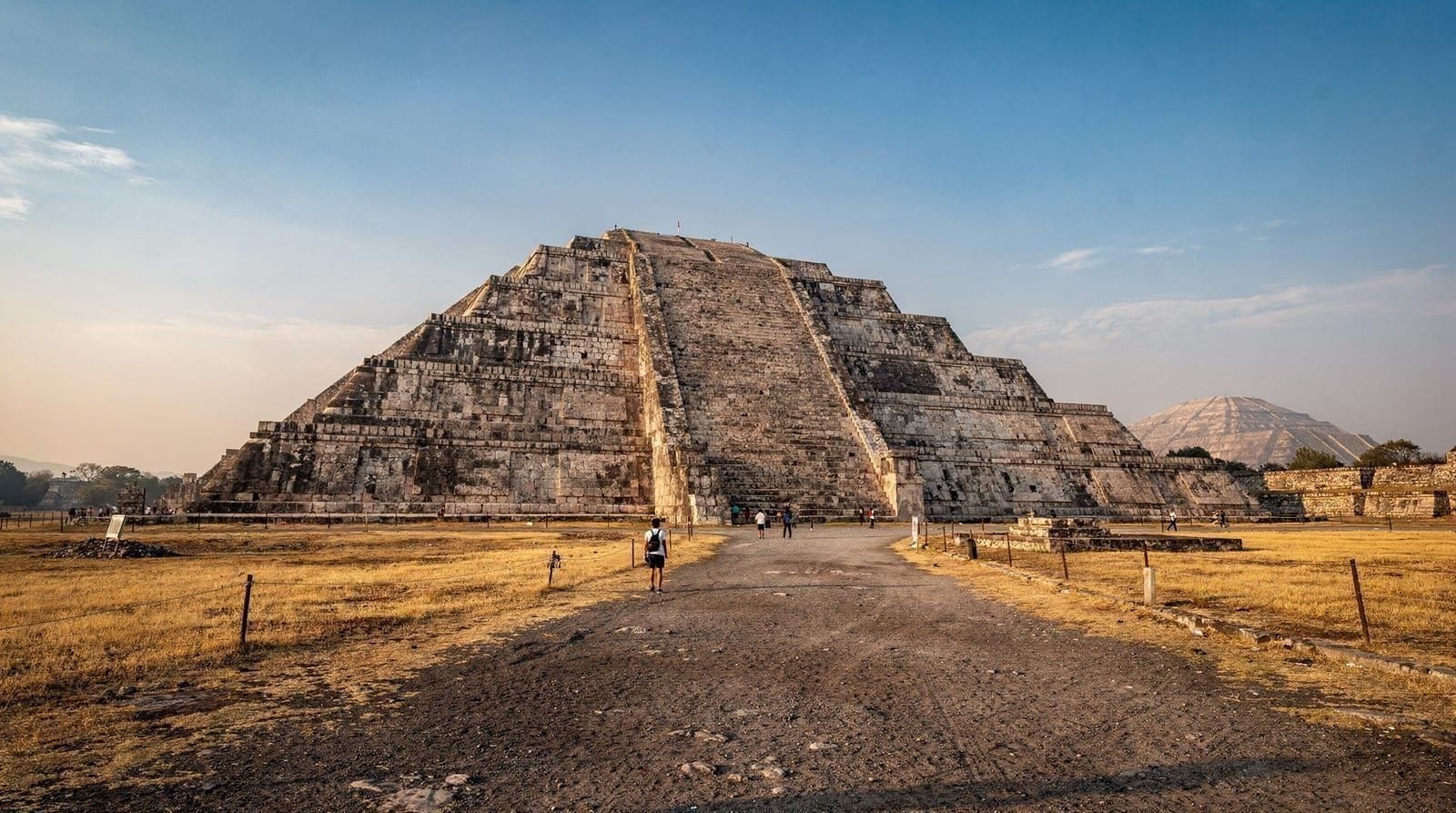
No day trip from Mexico City is more important than Teotihuacán. The “City of the Gods” was the largest city in pre-Columbian Americas, built by an unknown civilisation (Teotihuacán predates the Aztecs by 1,000+ years) and covering 20km² at its peak. The Avenue of the Dead, lined with temples and platforms, runs 4km from the Pyramid of the Moon to the Ciudadela complex. The Pyramid of the Sun is the third largest pyramid in the world by volume.
The climbing ban (since 2024): The pyramids cannot be climbed. This is a genuine change from prior visits — if you visited before 2024, the experience is different. The site is still extraordinary; the scale and the street-level archaeology of the Avenue of the Dead are impressive without ascending the pyramids.
Travel time: 50km north of CDMX. By Metro + combi (cheapest): Metro La Raza (Line 3), then a combi (minibus) from the Indios Verdes area, approximately 1 hour total, 60–80 MXN round-trip. By guided tour: 1–1.5 hours in a vehicle, with early access privileges.
Key timing consideration: The site opens at 8am; the vast majority of day-trip visitors arrive between 10am and 2pm. Early access tours (pre-opening at 7–7:30am) give 1–2 hours on the site before the crowds arrive. On summer weekends and holiday periods, the site is extremely crowded by 11am.
The Teotihuacán First Entry Tour with Expert Guide is the best structured option — early access, expert archaeological context (guides explain who built Teotihuacán and why the question matters), and transport included. See the full Teotihuacán guide for independent visit details.
Puebla and Cholula: the colonial-plus-pyramid combination
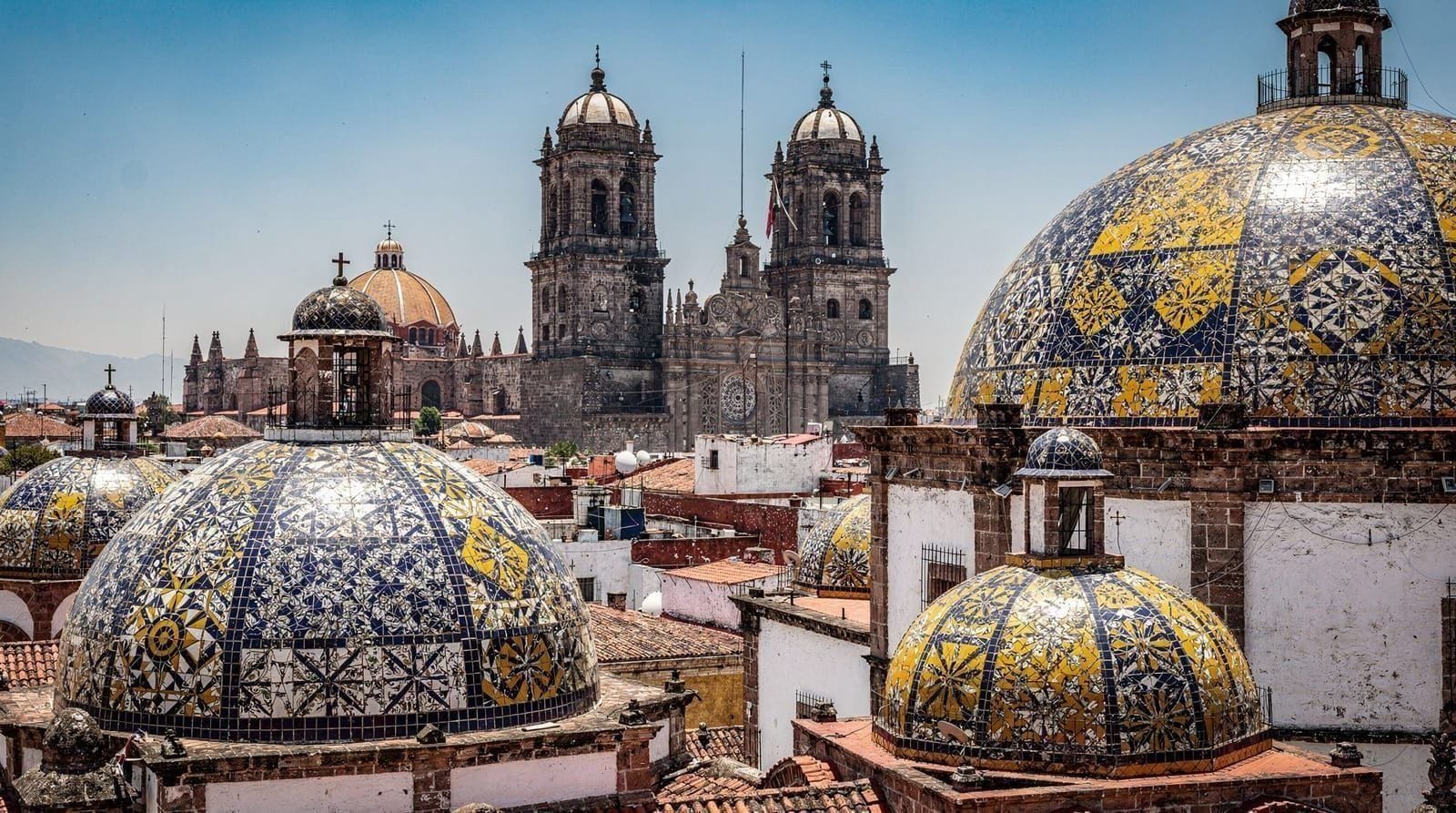
Puebla is a living colonial city — not a theme park or a museum piece — with an extraordinary architectural heritage from the 16th–18th centuries. Talavera-tiled church facades, the Great Baroque Cathedral (second largest in Mexico), and a historic centre that won UNESCO recognition in 1987. The city also has one of Mexico’s strongest food identities: mole poblano was invented here; chile en nogada (if you visit in season) is a definitive Mexican dish.
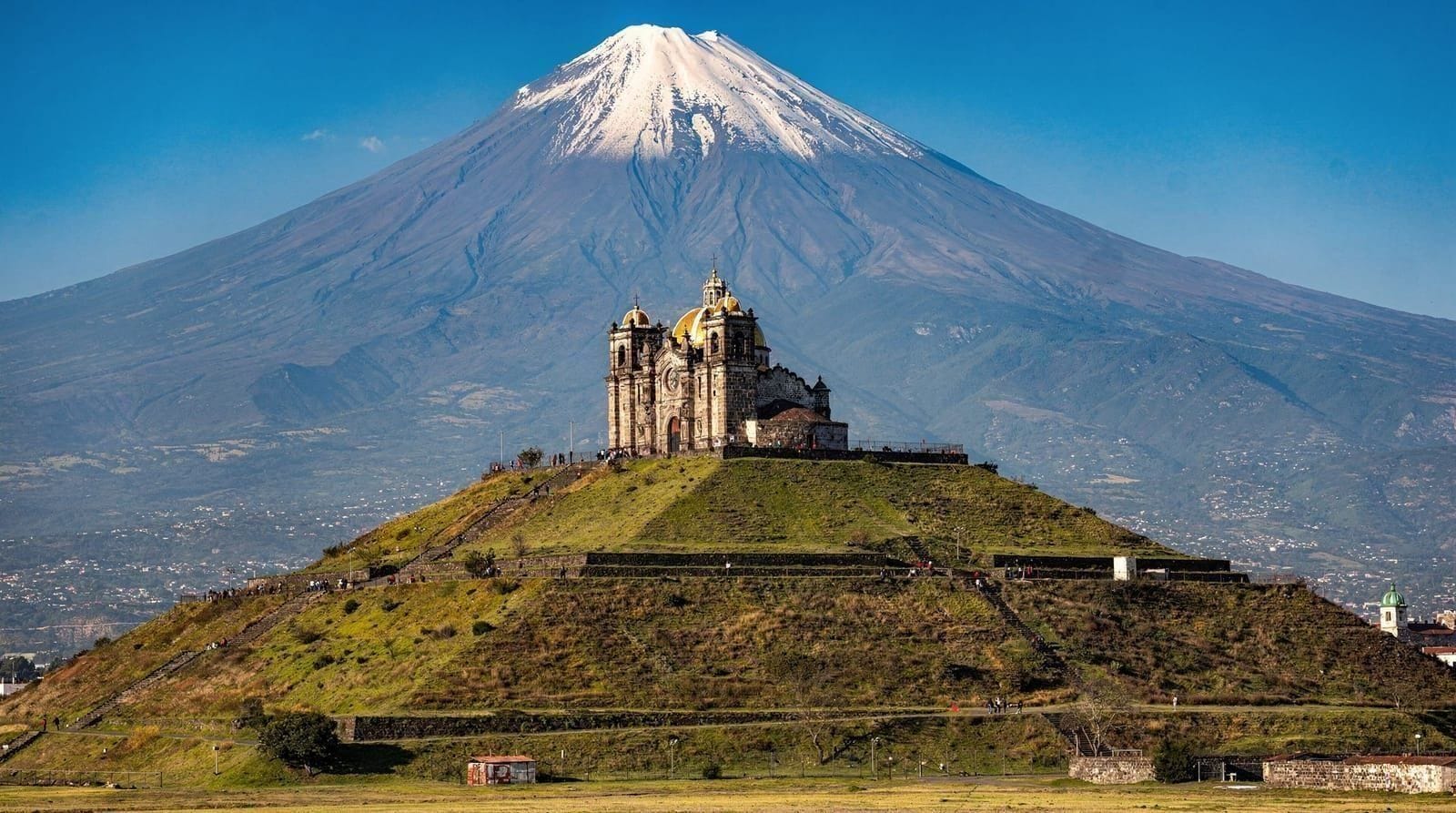
Cholula, 20 minutes west of Puebla, is the site of the Great Pyramid of Cholula — the largest pyramid by volume in the world, larger than the Giza pyramids, covered in dirt and vegetation with a Spanish colonial church built on its summit. The church-on-pyramid is one of the most striking images in Mexican history: a deliberate act of conquest architecture, now a pilgrimage site with remarkable archaeological tunnels beneath.
Travel time: 130km east of CDMX. By ADO bus from TAPO terminal: 2 hours, 280–380 MXN each way (first class). From Puebla to Cholula: local bus or taxi, 20–30 minutes. The ADO bus is comfortable, frequent (every 20–30 minutes), and the TAPO terminal has good pre-departure food options.
The Puebla, Cholula and Tonantzintla Day Tour with Lunch adds the village of Tonantzintla — a small church with an extraordinary indigenous-Baroque interior covered in polychrome stucco figures — making a complete cultural circuit. Lunch is included.
See the Puebla and Cholula day trip guide for independent logistics.
Taxco: the silver city
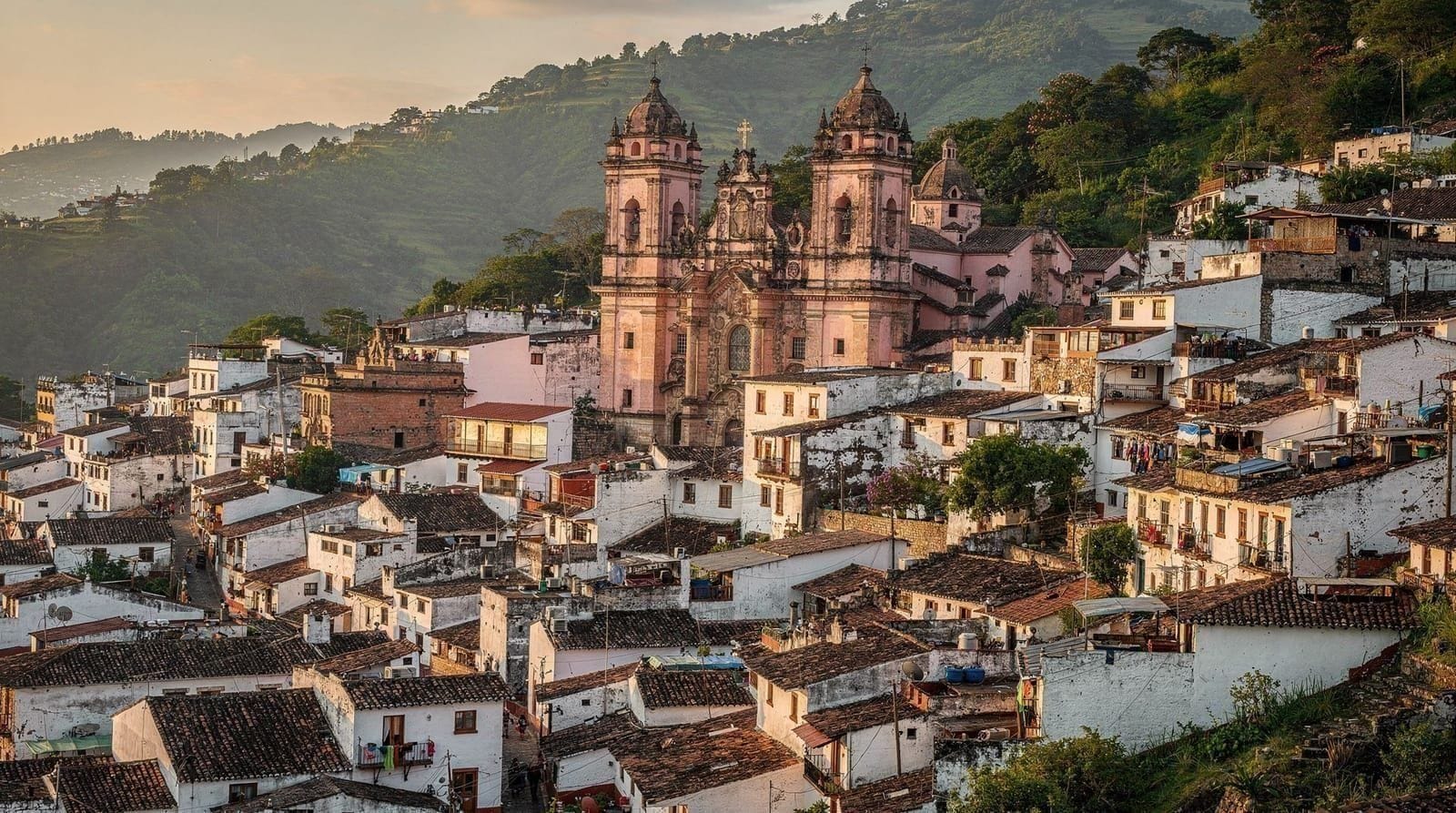
Taxco is the quintessential Mexican colonial hill town: whitewashed buildings and terracotta roofs cascading down a steep hillside, silver jewellery workshops on every street, the spectacular Santa Prisca church dominating the central plaza. The city has been a silver centre since the 18th century when a major mine was discovered nearby, and the tradition continues — Taxco silver is the most concentrated craft industry of any Mexican town.
Honest assessment: Taxco is genuinely beautiful and the silver shopping is the best in the country, but the “authentic colonial” experience is heavily commercially packaged. The silver market is excellent if you know what you are looking at; most jewellery shops on the Zócalo sell similar designs at varying prices. The city is worth the journey but the day trip often involves long stretches of sitting in a bus for a relatively short time in the city itself.
Travel time: 180km south-southwest of CDMX. By bus from Sur terminal (Terminal del Sur, Metro Tasqueña Line 2): Flecha Roja buses run direct services, approximately 3 hours. Tours combine Taxco with Cuernavaca (closer to CDMX, lower altitude, worth a brief stop on the way).
See the Taxco day trip guide for silver shopping advice and independent logistics.
Tepoztlán: the magic town near CDMX
Tepoztlán is one of Mexico’s designated “Pueblos Mágicos” (Magic Towns) — 80km south of CDMX, nestled against dramatic cliff faces in the Valley of Tepoztlán. The town centre is colonial, the weekend market is excellent, and the Tepozteco pyramid — a small Aztec temple atop one of the surrounding cliffs — requires a 400m climb to access.
The pyramid hike is the signature activity: 2 hours up on a well-marked but steep trail, views across the valley, and a genuine Aztec shrine at the top. Not suitable for visitors with limited mobility. The town below is worth several hours regardless: mezcal bars, artisan workshops, the weekend craft and food market, and the Convent of the Nativity (a fortress monastery from 1559).
Travel time: 80km south of CDMX. By bus from Sur terminal (Metro Tasqueña): Pullman de Morelos or OCC buses, approximately 1.5 hours, 120–180 MXN. One of the easier independent day trips.
See the Tepoztlán day trip guide for hiking details and weekend market timing.
Tolantongo: hot springs and geological drama
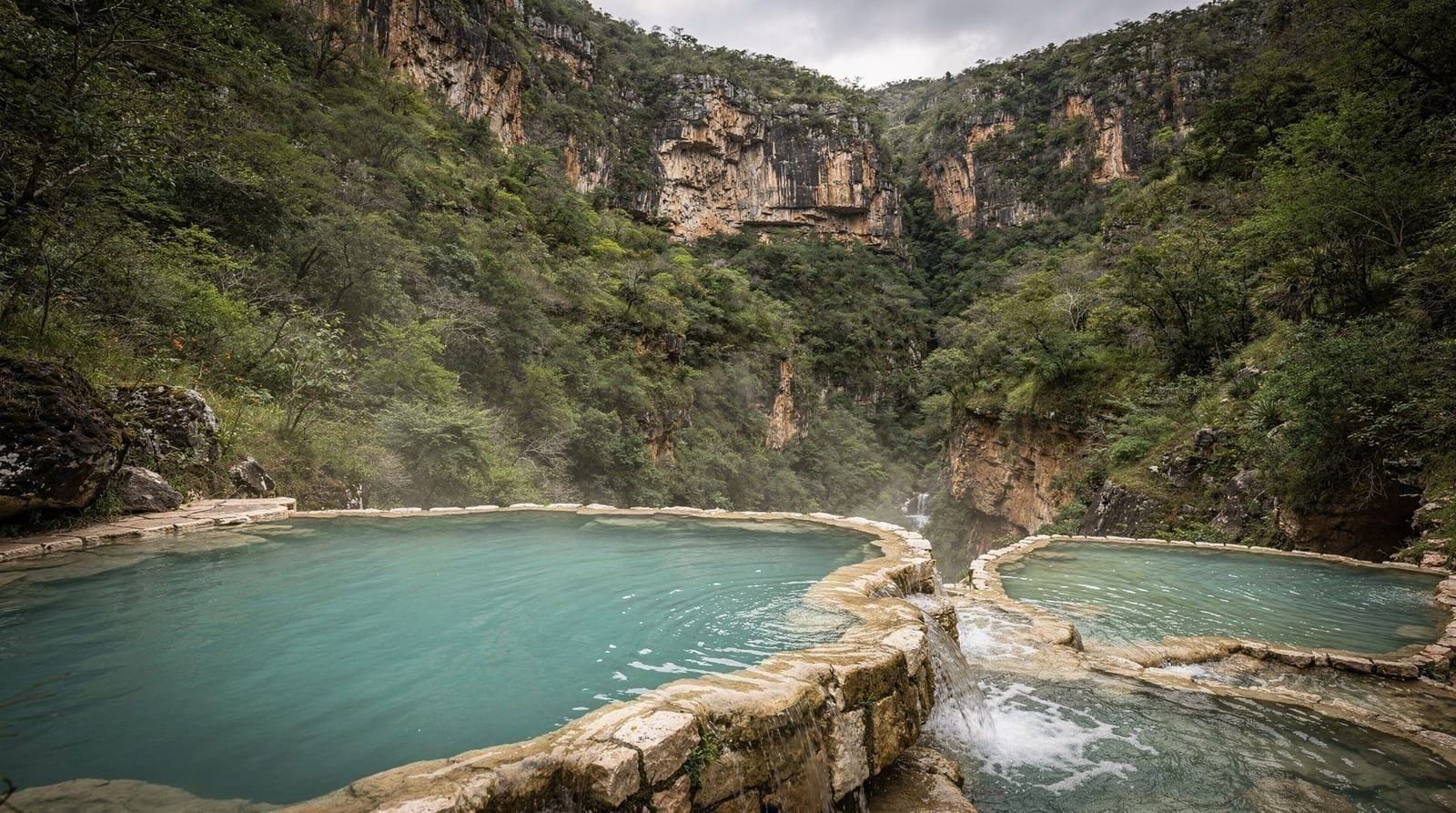
The Grutas de Tolantongo (Tolantongo Caves) are the most visually unusual destination within day-trip range of CDMX: a series of natural hot springs, terraced mineral pools, a river flowing through a narrow gorge, and cave pools fed by geothermally heated water. The location is in the state of Hidalgo, 160km northeast of CDMX, in a dramatic canyon descending to around 1,000m — explaining the warm temperatures year-round.
Honest caveats: The 3–3.5 hour drive each way makes this a very long day trip. The site is extremely crowded on weekends (bring your own patience). The access road is mountain-road standard. Guided tours make more practical sense here than independent transport because the logistics of getting there and the parking at the site are genuinely complicated.
Entry to Tolantongo is 200–250 MXN per person. The pools are open from 7am and close mid-afternoon to prevent overcrowding. An overnight stay at the site’s cabins allows a much less rushed experience.
See the Tolantongo guide for detailed logistics.
Valle de Bravo: the lakeside escape
Valle de Bravo is the weekend escape of choice for CDMX’s upper-middle class — a colonial lake town 150km west, with water sports, sailing, paragliding, and an attractive centro with restaurants and boutique hotels. Not primarily an archaeological or cultural destination, but one of the most physically beautiful places within day-trip range.
The butterfly sanctuaries (Reserva de la Biosfera Mariposa Monarca) near Valle de Bravo are accessible November–March — the arrival of 200 million monarch butterflies in the oyamel fir forests is genuinely one of the world’s great natural spectacles. This specific experience requires timing your visit to the migration season.
Travel time: 150km west of CDMX. No direct bus service as efficient as the Puebla route; private car or guided tour is the practical option.
The private Valle de Bravo day tour is the practical choice given the limited public transport, and it can be timed to the monarch butterfly migration (November–March) on request.
For travellers looking beyond these six routes, Malinalco and Chalma make a compelling pair south-west of the city: Malinalco’s Aztec temple carved directly into the hillside is one of the more remarkable pre-Hispanic sites within day-trip range, and the neighbouring pilgrimage town of Chalma, with its shrine to the Lord of Chalma, adds a genuinely different, more spiritual dimension to the day than the busier headline destinations. A Malinalco and Chalma cultural tour covers both in a single guided outing.
Querétaro sits further out than any of the routes above — roughly 210km north — which puts it past comfortable public-transport range for a single day, but its UNESCO-listed colonial centre and aqueduct are a genuinely different kind of stop from the pre-Hispanic sites closer to CDMX. The Wonders of Querétaro private tour handles the longer drive with a private vehicle, which is the only realistic way to fit the city into a single day trip.
What to pack for a day trip
Regardless of destination, a few items solve most day-trip problems. Cash (MXN) matters more outside CDMX than inside it — small towns and bus terminal vendors often do not take cards, and ATMs can be scarce once you leave the city. Bring more small bills than you think you need; nobody outside a supermarket wants to break a 500 MXN note. A refillable water bottle handles the altitude and heat combination on the pyramid sites, where shade is limited along the Avenue of the Dead.
Comfortable closed shoes matter for Teotihuacán’s uneven stone paths, Tepoztlán’s hiking trail, and Taxco’s steep cobblestone streets alike — sandals are a mistake on all three. A light layer helps for Tolantongo and Valle de Bravo, both of which have cooler mornings and evenings than CDMX itself despite their warmer daytime reputation (Tolantongo specifically) or higher altitude (Valle de Bravo). Finally, download offline maps before leaving the city — cell signal is patchy at Tolantongo and along stretches of the Tepoztlán and Taxco roads.
Safety and phone signal on day trips
All six destinations in this guide are established, heavily visited tourist routes with no particular safety concerns beyond the standard precautions covered in the Mexico City safety guide — watch belongings on buses, keep phones out of back pockets in crowded terminals, and use official ADO/OCC/Estrella Roja counters rather than unofficial ticket sellers at bus stations.
Cell coverage is reliable in Puebla, Cholula, Taxco and Tepoztlán (all sizeable towns), patchier in the Teotihuacán archaeological zone itself (fine at the visitor centre, weaker mid-site), and genuinely unreliable in the Tolantongo canyon. None of this should discourage independent travel; it simply means printing or screenshotting your bus tickets and hotel confirmations rather than relying on live internet access at the destination.
Cost comparison: independent vs guided by destination
Budget varies enormously by destination and by whether you go independently or book a tour. Use this as a planning reference, not a fixed price — always check current listings before booking.
| Destination | Independent (bus, round-trip) | Guided tour (per person) | Where guided adds most value |
|---|---|---|---|
| Teotihuacán | 60–80 MXN | $45–90 USD | Early access before 8am crowds |
| Puebla + Cholula | 560–760 MXN | $50–90 USD | Tonantzintla add-on + lunch |
| Taxco | 300–450 MXN | $60–100 USD | Cuernavaca stop en route |
| Tepoztlán | 120–180 MXN | $50–85 USD | Optional temazcal ceremony |
| Tolantongo | Not practical solo | $90–150 USD | Complex transfer + parking |
| Valle de Bravo | Not practical by bus | $90–140 USD | Butterfly season access |
Independent travel wins on pure cost for Puebla, Taxco and Tepoztlán, where the bus network is direct and well-signposted. Guided transport earns its premium at Tolantongo and Valle de Bravo, where public transport genuinely does not reach the destination efficiently, and at Teotihuacán, where early access has a real logistical value beyond convenience.
Planning your day trip calendar
If you have specific days in CDMX, here is how to allocate day trips:
3-day itinerary: One day trip maximum. Choose Teotihuacán.
4-5 day itinerary: Two day trips. Teotihuacán plus either Puebla/Cholula or Tepoztlán depending on whether you prefer archaeology/food-culture or nature/hiking.
7-day itinerary: Three day trips. Teotihuacán, Puebla/Cholula, and one more based on interest (Taxco for silver and colonial architecture; Tepoztlán for hiking; Tolantongo for hot springs). The 7-day Mexico City itinerary shows how to sequence these with in-city activities.
The mistake to avoid: Filling every day with a day trip. Mexico City itself contains enough to fill an entire week — the Anthropology Museum, Xochimilco, Coyoacán, Chapultepec, lucha libre, and the neighbourhood markets each deserve dedicated time. Over-scheduling day trips means under-investing in the city. The best food tours guide and Coyoacán walking guide are two examples of full-day city content that competes directly for the same calendar slot as a day trip.
Frequently asked questions about day trips from Mexico City
What is the easiest day trip from Mexico City for independent travellers?
Teotihuacán is the easiest: Metro La Raza plus a combi, no Spanish required beyond basic directions, the site is clearly signposted. Puebla by ADO bus from TAPO is a close second — the bus is comfortable, frequent, and TAPO terminal is straightforward.
Is a car rental useful for day trips from Mexico City?
Not particularly. Driving in Mexico City itself is difficult and stressful. For day trips, the bus system is excellent to most destinations. Car rental makes more sense if you are doing multiple destinations (Puebla, then Tlaxcala, then back) or if you want maximum flexibility for Tolantongo or Valle de Bravo where public transport is limited.
Can I do Teotihuacán and Tepoztlán on the same day?
Technically possible but not recommended — the sites are on opposite sides of CDMX, and each deserves at least 3–4 hours. Doing both means 6+ hours of travel and rushed time at both sites. Choose one.
What are the most popular day trips on weekends?
Teotihuacán is always the most visited. Tepoztlán weekend market draws large crowds Saturday and Sunday. Tolantongo is genuinely overcrowded on weekends — weekday visits are dramatically better. Puebla is the most relaxed about visit timing since it is a full city rather than a single attraction.
Are guided day trips significantly better than going independently?
For Teotihuacán: guided tours with early access are better. For Puebla/Cholula: independent buses work well. For Taxco: guided tours combine well with Cuernavaca. For Tepoztlán: either works. For Tolantongo: guided transport is strongly recommended. The general principle is that guided tours add most value when early access, complex logistics, or deep historical context are significant factors.
How far in advance should I book day trip tours from Mexico City?
For busy tours (Teotihuacán, Puebla/Cholula), booking 2–4 days in advance is wise during peak periods (Nov, Easter, school holidays). Teotihuacán early-access tours often sell out a week ahead in November. Independent day trips by bus or car require no booking — just show up at the bus terminal. All GYG-listed tours allow free cancellation 24 hours ahead.
Is it cheaper to take a guided tour or go independently on day trips?
Independent transport (direct buses from TAPO terminal or Sur terminal) costs 150–350 MXN round-trip to most destinations. Guided tours run $40–120 USD (700–2,100 MXN). The tour price covers transport, guide, and often lunch and entrance fees — so the comparison is not purely price. For Teotihuacán specifically, the guided early-access tours provide access windows the public queues do not. For Puebla and Taxco, independent bus travel is entirely practical.
What is the best day trip from Mexico City for first-timers?
Teotihuacán is the most important archaeological site within day-trip range — the Avenue of the Dead, Pyramid of the Sun, and Pyramid of the Moon are extraordinary even if you cannot climb them (climbing has been banned since 2024). Puebla/Cholula is the best cultural day trip — a living colonial city with extraordinary architecture plus the remarkable Great Pyramid of Cholula.
Can I combine two destinations in one day trip?
Some combinations work; most do not. Puebla and Cholula are a natural pair (20 minutes apart). Taxco and Cuernavaca are often combined by tour operators (2.5 hours apart). Teotihuacán and the Basilica of Guadalupe are sometimes combined but require rushing. Tepoztlán and Las Estacas (a river park) are combined by some operators. Teotihuacán and Tolantongo on the same day is not feasible — total travel time would eat the day.
What are the transport options for day trips from Mexico City?
By bus: TAPO terminal (east CDMX) for Puebla, Tlaxcala, Veracruz directions. Sur terminal for Cuernavaca, Taxco, Tepoztlán, Morelos. ADO, OCC, and Estrella Roja buses are the main operators. By Metro + combi: Metro La Raza then combi to Teotihuacán (cheapest option). By Uber/DiDi: Possible to Teotihuacán and Tepoztlán as door-to-door; expensive for longer distances. Guided tours include all transport.
Which day trips have altitude changes I should know about?
CDMX is at 2,240m. Teotihuacán is at 2,300m — similar. Cuernavaca (1,500m) is lower — you will feel warmer and more energetic. Tepoztlán (1,700m) is lower. Taxco (1,800m) is lower. The Tolantongo river gorge descends below 1,000m, explaining the warm spring water. None of these changes are severe enough to cause altitude issues if you are acclimatised to CDMX.
Are there any day trips I should avoid?
Avoid day trips that try to cover too much: the ‘Grand Pyramids Circuit’ operators who bundle Teotihuacán with Guadalupe shrine with Tlatelolco in one day result in rushed visits at all three. Also avoid day trips to Acapulco (5+ hours) marketed as day trips — they are not. The Tolantongo hot springs day trip has a very long transit time (3 hours each way); it is best as an overnight.
Top experiences
Bookable activities with verified prices and instant confirmation on GetYourGuide.