Teotihuacán
Teotihuacán pyramids: 2024 climbing ban explained, early access tips, hot-air balloon options, and the tourist mistakes to avoid at Mexico's top site.
Mexico City: Teotihuacan First Entry Tour with Expert Guide
Quick facts
- Altitude
- 2,300 m / 7,546 ft (site elevation)
- Currency
- Mexican peso (MXN) — USD widely accepted
- Best for
- Pre-Columbian archaeology, pyramids, murals, hot-air balloon flights
- Getting there
- Bus from Terminal Norte (Autobuses del Norte metro station) ~1 hr, 60–80 MXN; or guided tour from CDMX
Mexico’s most important archaeological site
Teotihuacán is the most visited archaeological site in Mexico and the largest pre-Columbian city ever built in the Americas. At its peak, around 400–600 CE, it was home to approximately 125,000–200,000 people, making it one of the largest cities in the world at that time — larger than contemporary Rome. The culture that built it is not fully identified: the name Teotihuacán itself is Nahuatl for “city of the gods,” given to the ruins by the Aztecs who found them already abandoned when they arrived centuries later. The original name the builders used for their city is unknown.
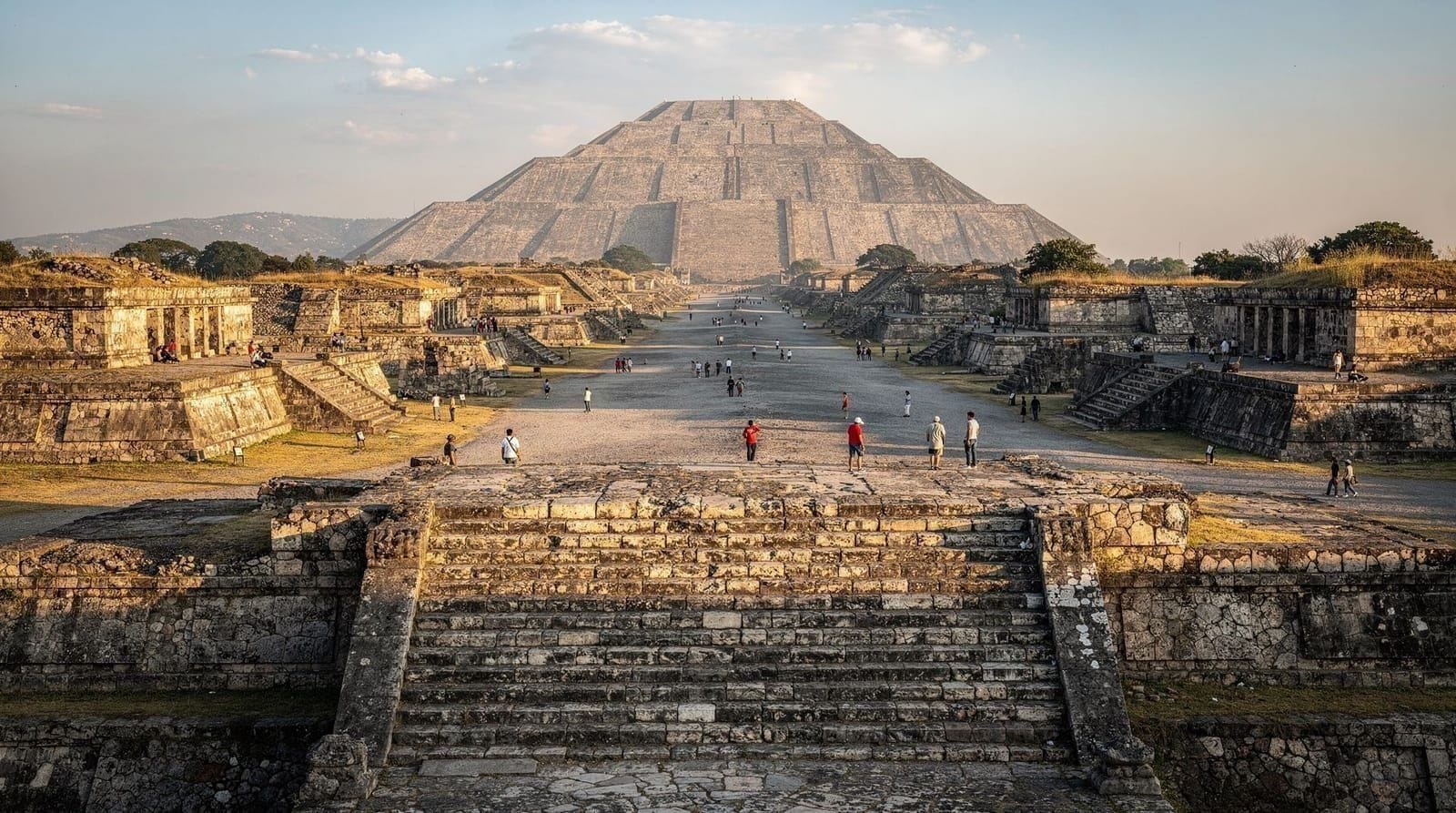
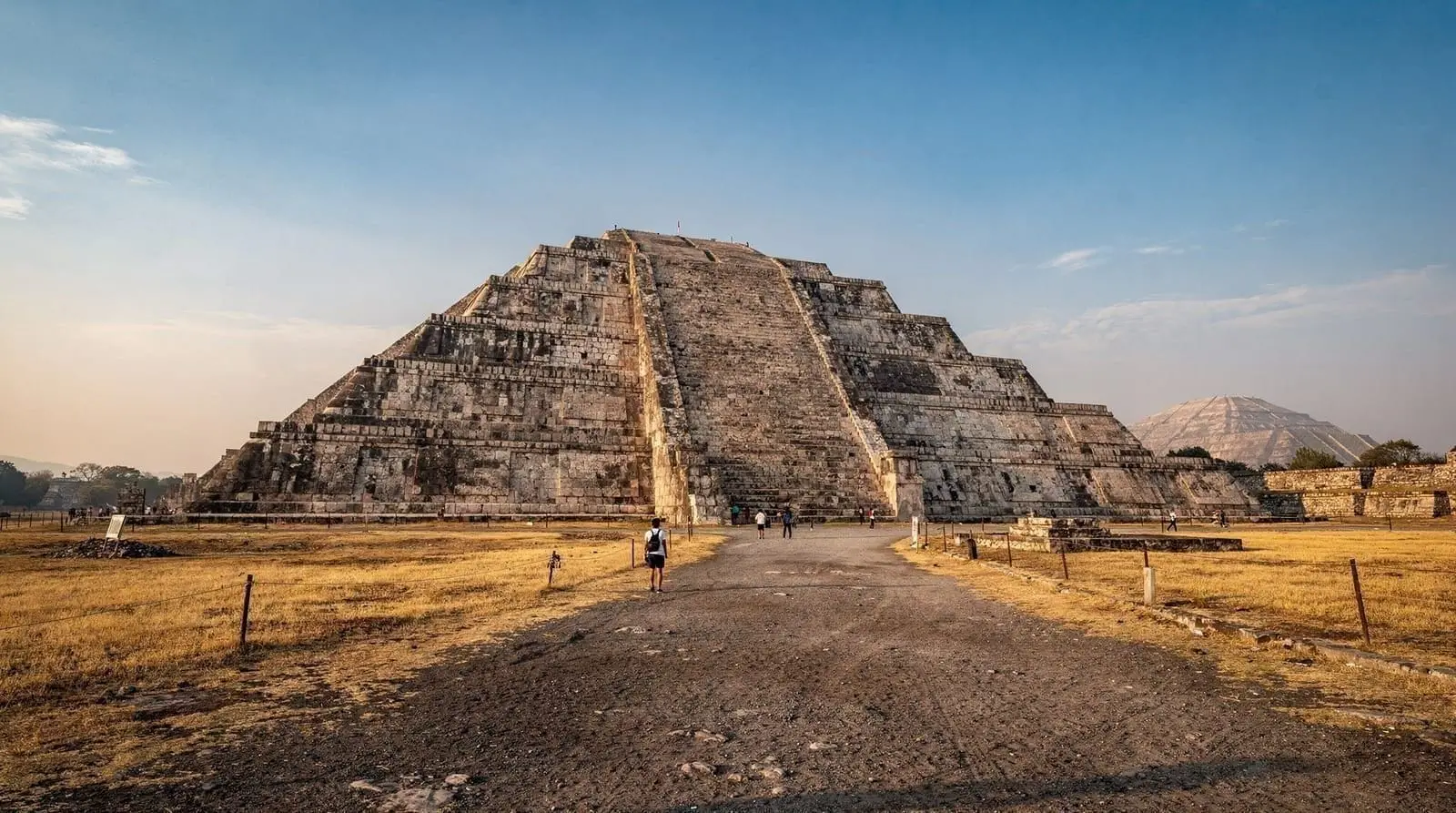
The site covers approximately 83 square kilometres and is centred on the Avenue of the Dead — a 2.4 km ceremonial boulevard running roughly north–south, flanked by temples, palaces, and administrative compounds. The Pyramid of the Sun (Pirámide del Sol) dominates the east side at 65 metres height; the Pyramid of the Moon (Pirámide de la Luna) stands at the northern end. The Temple of the Feathered Serpent (Quetzalcóatl) at the southern end of the avenue is the most ornately decorated structure and less visited than the main pyramids.
Teotihuacán is 50 km northeast of Mexico City and is the standard day trip from CDMX. Most visitors allocate a full day. The site repays arriving early, staying past midday crowds, and walking beyond the Avenue of the Dead to less-visited sections.
| Where | 50 km northeast of Mexico City |
| Cost | Entry around 210 MXN; guided day tours from around 700–2,800 MXN (balloon flights at the top end) |
| Time needed | Full day trip; 2.5–5 hours on site depending on depth |
| Getting there | Bus from Terminal Norte (~1 hr) or a guided tour with transport |
| Best time | November–May, arriving at 8:00 opening or on an early-access tour |
The 2024 climbing ban: what changed and why
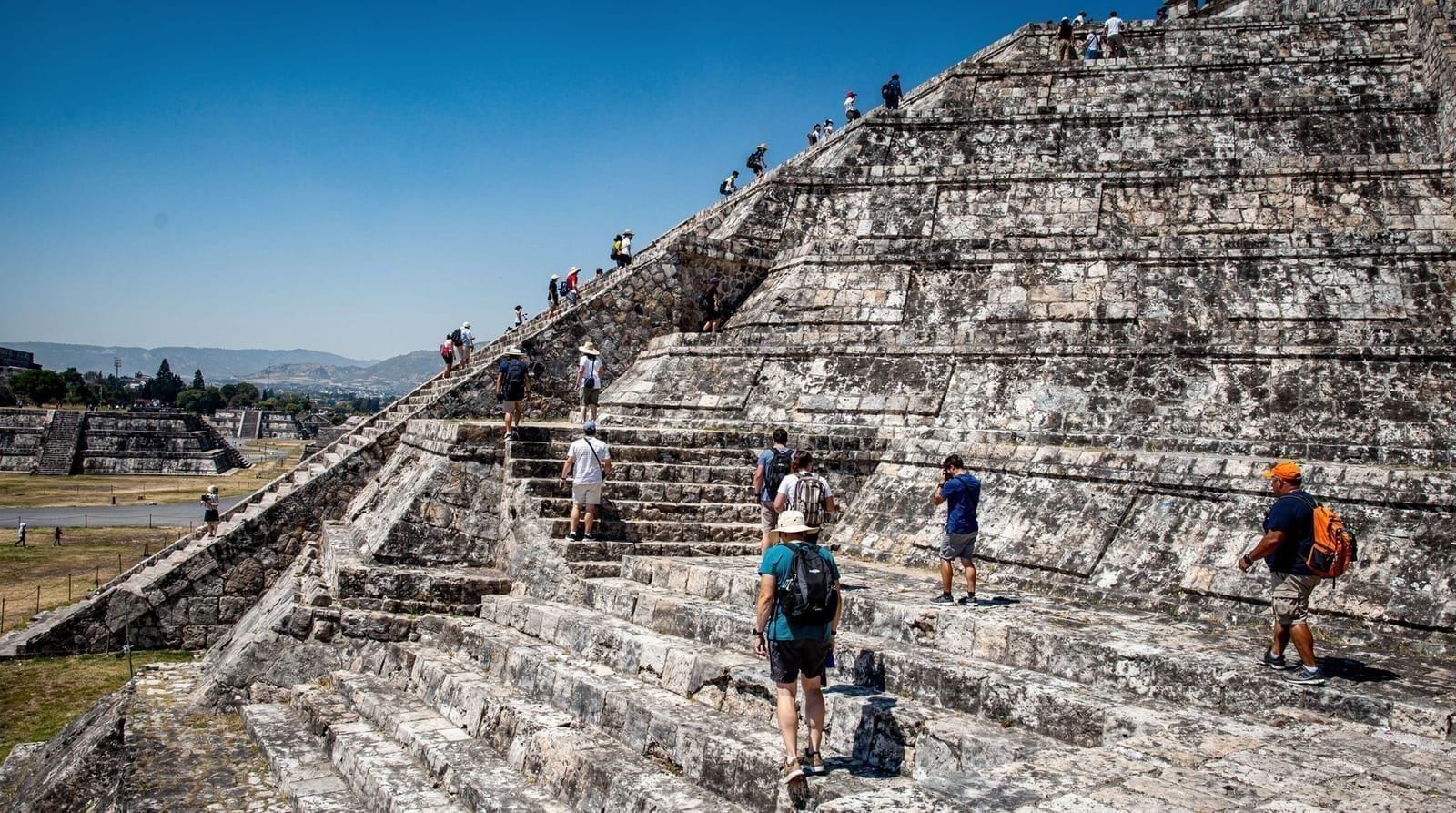
As of 2024, climbing the Pyramid of the Sun and Pyramid of the Moon is prohibited. This is a permanent policy change, not a temporary closure. The ban was implemented after INAH (Mexico’s National Institute of Anthropology and History) documented significant erosion damage from foot traffic — millions of visitors ascending and descending the pyramids annually had caused measurable deterioration to the stone surfaces.
This is a straightforward fact that should govern all planning. You will not climb the pyramids. The experience at Teotihuacán is now entirely ground-level: walking along the Avenue of the Dead, entering and exploring the interior plazas and palace complexes, viewing the murals in the Tepantitla and Tetitla compounds, and taking in the pyramids’ scale from the base and surrounding areas.
The view from the site is still impressive; the scale of the pyramids is perhaps better understood from ground level than from the summit (which, when climbing was permitted, was primarily a view of the queue behind you). The climbing ban guide covers the full context of the decision and practical implications for visitors.
What to actually do at the site
Avenue of the Dead: The 2.4 km central boulevard is the site’s spine. Walk it from the Temple of the Feathered Serpent (south entrance, Gate 1 or 2) northward toward the Pyramid of the Moon. The scale of the structures lining the avenue, and the way the Pyramid of the Moon frames the north end, is one of the great spatial experiences in world architecture.
Temple of the Feathered Serpent (Quetzalcóatl): At the southern end of the avenue, this 3rd-century CE temple has the best-preserved decorative carvings at the site — alternating serpent heads and rain-god masks covering the platform façades. It is frequently skipped by visitors who start from Gate 1 or 2 and walk north. Start from Gate 3 (south entrance) to see it first.
Palace of Quetzalpapalotl: Northwest of the Pyramid of the Moon, this reconstructed palace complex has the most intact painted murals accessible to visitors — abstract designs in red, yellow, and green representing the feathered butterfly deity. It also has a functional courtyard with reconstructed columns that gives a better sense of what the city’s elite residential architecture looked like than the open platforms and plazas of the avenue.
Tepantitla compound: Outside the main monumental zone, about 400 metres east of Gate 1, the Tepantitla palace has the most complex and colourful narrative murals at the site — including the famous Tlalocan (paradise) mural with hundreds of tiny human figures. This is the most important mural painting at Teotihuacán and is consistently overlooked because it requires a short walk from the main circuit. Go.
Early access versus hot-air balloon
Two premium experience options bookend the standard visit:
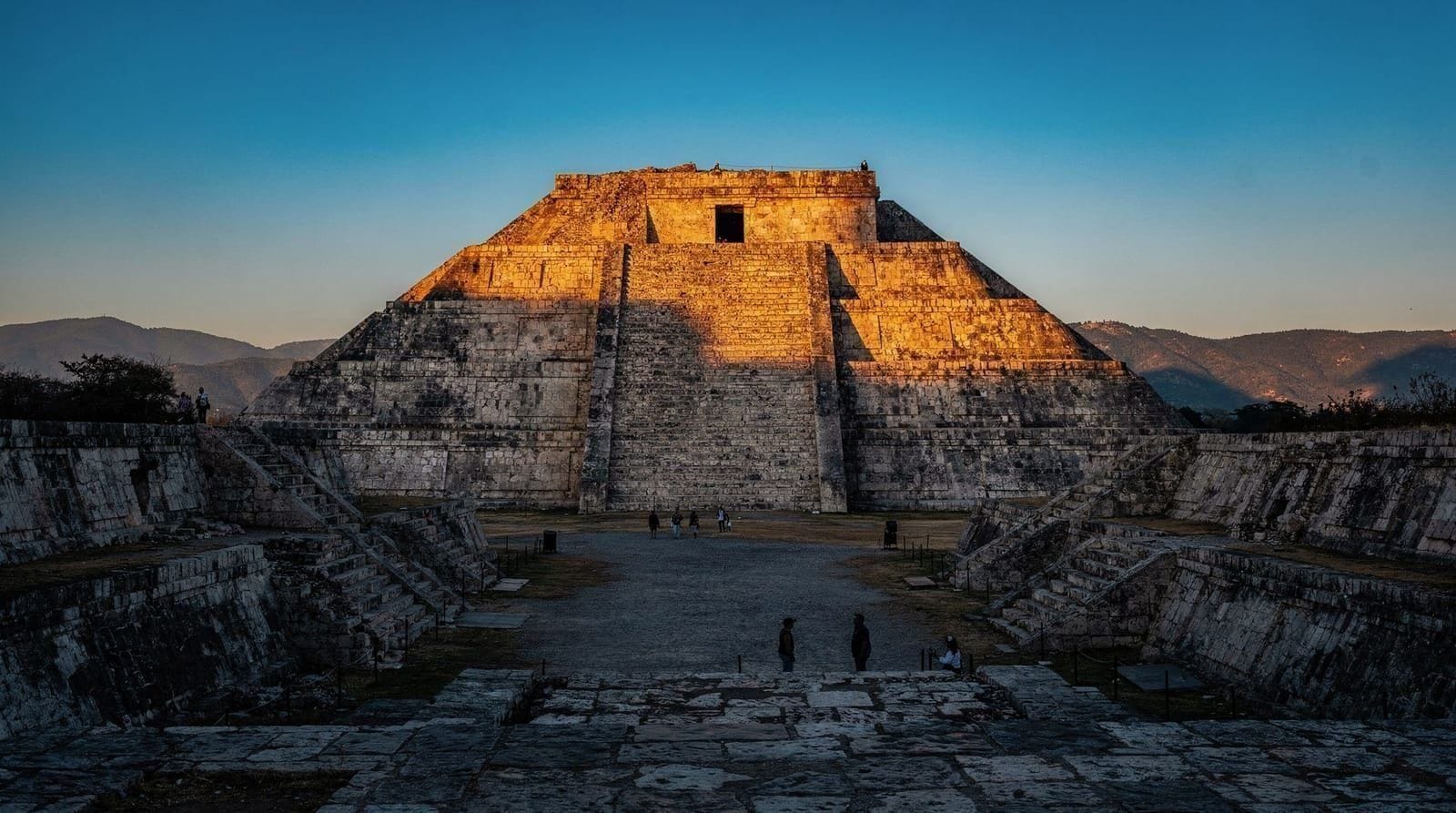
Early access tours enter right at opening, ahead of the coach-tour crowds. The light on the pyramids at dawn is dramatically different from the flat midday light that governs most visits. A first-entry expert guide tour provides this early access alongside a professional guide who covers the murals and architectural history that self-guided visitors miss. The early access versus balloon comparison guide helps you choose.
Hot-air balloon flights over the site operate at sunrise, typically departing from near the site and floating over or near the pyramids for 45–60 minutes before landing. The balloon flight with breakfast is the most booked single-experience tour in Mexico City — not because it is cheap (it costs roughly 2,200–2,800 MXN per person) but because the aerial perspective of the Avenue of the Dead and the pyramids from altitude is genuinely not achievable any other way. Book at least two weeks in advance; flights sell out on weekends year-round.
Getting there independently
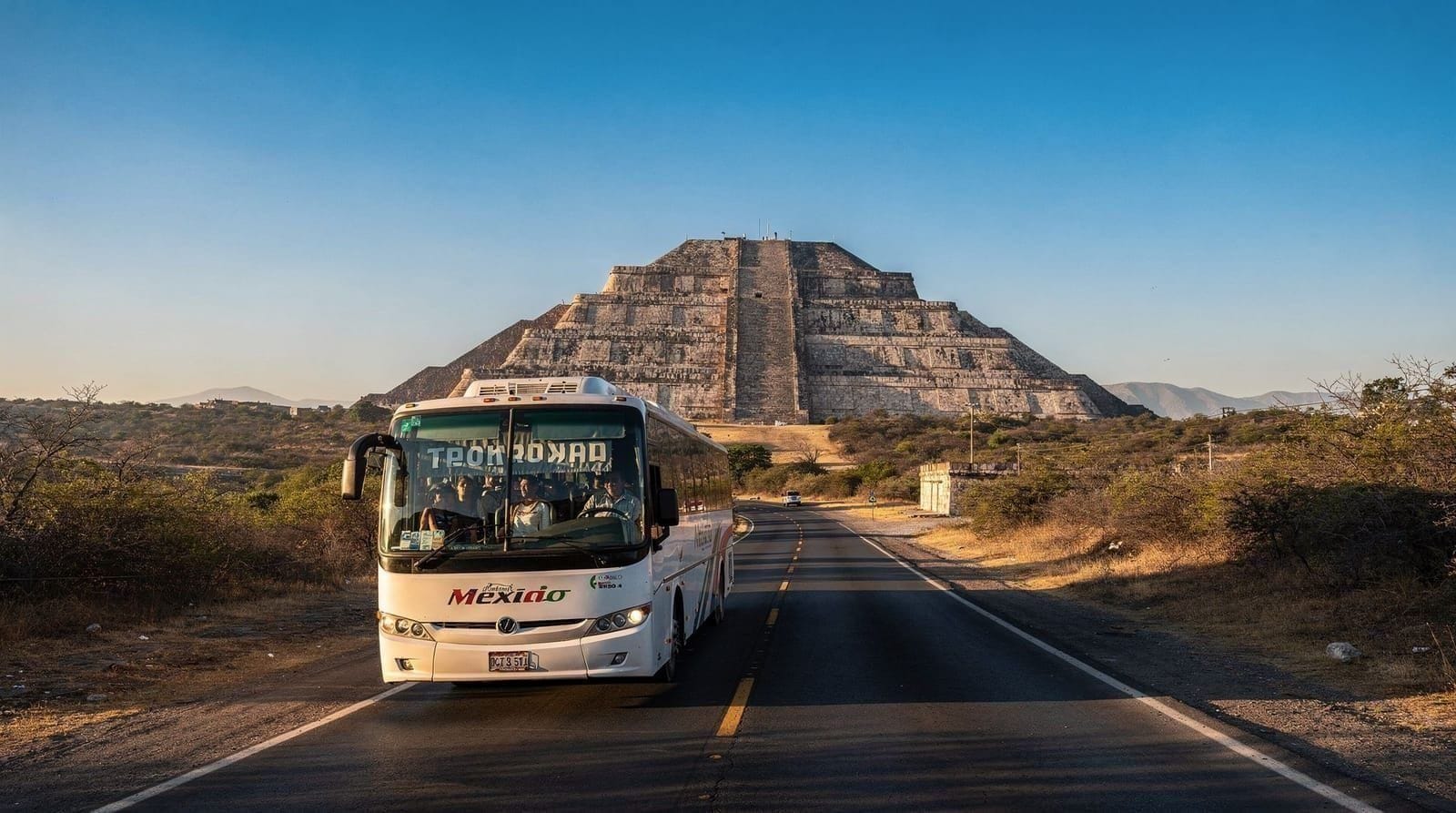
The cheapest and most reliable independent transport is the direct bus from Terminal Norte (TAPO buses also go, but Terminal Norte has more frequent service). Metro Line 5 to Terminal Norte station, then walk to the main Autobuses del Norte bus terminal and buy a ticket for the “Piramides” route on the Autobuses del Norte or Autotransportes México-San Juan Teotihuacán service. Journey time is 60–75 minutes. Cost is 60–85 MXN each way.
The bus deposits you at the site and returns to Mexico City from the same stop. Return buses from Teotihuacán to Mexico City run until approximately 18:00. Arriving on the 8:00 bus gets you to the site as it opens; a good departure time for the return is 14:00 or 15:00 after covering the main circuit.
The how to get to Teotihuacán guide covers all transport options including Uber (expensive, approximately 800–1,200 MXN each way) and joining an organised tour. A half-day guided tour from Mexico City includes transport and guide and is more efficient than the bus if you are short on time.
Practical information
Hours: Every day, Monday to Sunday, 8:00–17:00 (last entry 16:30).
Entry: 210 MXN per person, which also covers the on-site museums. Sunday free entry applies only to Mexican nationals and residents of Mexico with ID; foreign tourists pay the full price on Sundays too.
Gates: Gate 1 is the main tourist entrance (Pirámide del Sol / Pirámide de la Luna area). Gate 2 is west of Gate 1. Gate 3 (Quetzalcóatl temple area) is south. If you want to see Quetzalcóatl first, enter Gate 3. If arriving by bus, the bus drops at the Gate 1 area.
Water and sun: Bring more water than you think you need. The site has limited shade, the altitude is 2,300 m, and if you arrive in the dry season (November–May) the midday sun is intense. 2–3 litres per person for a full-day visit. Sunscreen essential. A hat is not optional.
Vendors: The site perimeter is heavily marketed. Vendors of “obsidian” figurines will approach repeatedly; the items sold at the site are generally not obsidian (they are dyed resin). Genuine obsidian is sold at reputable shops in Mexico City for correct identification and provenance.
The complete Teotihuacán guide has a full site map, hall-by-hall breakdown, current vendor information, and photography conditions.
Combining with the Basílica de Guadalupe
Many tour operators pair Teotihuacán with the Basílica de Guadalupe in a single full-day tour, since the bus route north passes near La Villa and both sites are logistically close. This combination works well if you have only one day for the north of the city; Teotihuacán is the priority for most visitors, with the Basílica as a shorter morning or afternoon add-on rather than an equal-weight stop. Some operators extend the combo further with a stop at Tlatelolco’s Plaza de las Tres Culturas on the way back into the city — a combined Teotihuacán, Tlatelolco and Basílica of Guadalupe tour covers all three sites in one long day for visitors who want to maximise a single day trip north.
Vendors and what to skip
The site perimeter and the walk between gates are lined with vendors selling “obsidian” carvings, whistles, and jewellery — almost none of it genuine obsidian, and prices are aimed squarely at first-time visitors. The tourist traps guide covers this and similar pricing patterns at other major sites; the short version is to browse without engaging repeatedly, and to buy any genuine obsidian or jewellery from a reputable shop back in the city instead.
Teotihuacán with children
Teotihuacán works for families willing to pace the visit around a child’s stamina rather than an adult’s — the 3–4 km of walking on uneven stone is the main limiting factor, not the content itself, since children generally enjoy the scale of the pyramids and the open space to run.
Bring more snacks and water than for an adult-only visit, and consider the half-day guided tour rather than a full independent day if a shorter, better-paced visit suits your children better. The Mexico City with kids guide has more on this and other family-friendly day trips, and the itinerary length guide helps fit Teotihuacán into a family schedule alongside the city’s other sights.
Frequently asked questions about Teotihuacán
Can you still climb the pyramids at Teotihuacán?
No. As of 2024, climbing both the Pyramid of the Sun and the Pyramid of the Moon is permanently prohibited. The restriction was introduced to halt erosion damage from millions of annual visitors. The prohibition is enforced by site staff and is not a temporary measure. See the full climbing ban explanation for details.
How long does a visit to Teotihuacán take?
A minimum visit covering the Avenue of the Dead, both pyramids (from ground level), and the Temple of the Feathered Serpent takes 2.5–3 hours. A thorough visit adding the Palace of Quetzalpapalotl and the Tepantitla murals takes 4–5 hours. With a guided tour, allow 3–4 hours from site arrival to departure.
What is the best time to visit Teotihuacán?
Arriving at or before 8:00 opening, Tuesday through Friday, in the dry season (November–March). This avoids both the midday heat and the tour group congestion that peaks from 10:30–14:00. Spring equinox (March 21) is a major visitor event and extremely crowded — interesting but logistically difficult.
How does the balloon flight work?
Balloon flights at Teotihuacán take off from a launch site near the pyramids at or just after sunrise, typically 6:00–7:00. You are in the balloon for 45–60 minutes and fly over the surrounding area (you may see the pyramids from different angles depending on wind direction). After landing, most tours include a breakfast, either buffet or cave breakfast. Total morning including transport from CDMX, balloon time, and breakfast runs approximately 5–6 hours.
Is Teotihuacán appropriate for children?
Yes, with appropriate preparation. The main circuit involves approximately 3–4 km of walking on uneven stone surfaces. Children under 12 may find the full circuit tiring. Bring snacks and water. The site has no climbing now, which removes one previous safety consideration. The site museum near Gate 1 has exhibits that older children (8+) typically find engaging.
What is the best way to get to Teotihuacán from Mexico City?
The bus from Terminal Norte is the cheapest (60–85 MXN, 60–75 minutes). A guided tour from Mexico City includes transport and a guide and is more efficient if you want context. Uber is expensive (800–1,200 MXN one-way) and not recommended for the sole purpose of saving time over the bus. See the Teotihuacán transport guide.
Should I book the early-access tour, the balloon flight, or neither?
Choose the early-access guided tour if context and avoiding crowds matter most and your budget is moderate; choose the balloon flight if a genuinely unique aerial perspective is worth a higher price and an early wake-up; choose neither and take the public bus if budget is the priority and you don’t mind arriving alongside the day’s other visitors. All three get you to the same ground-level site now that climbing is banned — the difference is timing, crowd levels, and perspective, not what you can physically do once there.
Top experiences
Bookable activities with verified prices and instant confirmation on GetYourGuide.