Xochimilco
Xochimilco's ancient canal network, colourful trajinera boats, Island of the Dolls, axolotl sanctuary, and how to avoid overpriced tourist operators.
Mexico City: Xochimilco Trajinera Party with Snacks, Drinks & Music
Quick facts
- Altitude
- 2,240 m / 7,350 ft
- Currency
- Mexican peso (MXN) — USD widely accepted
- Best for
- Trajinera canal rides, Island of the Dolls, axolotl sanctuary, UNESCO chinampas
- Getting there
- Metro Line 2 to Tasqueña, then Light Rail (Tren Ligero) to Xochimilco; or Uber (~25 min, 80–120 MXN from Coyoacán)
Aztec canals still navigable in the 21st century
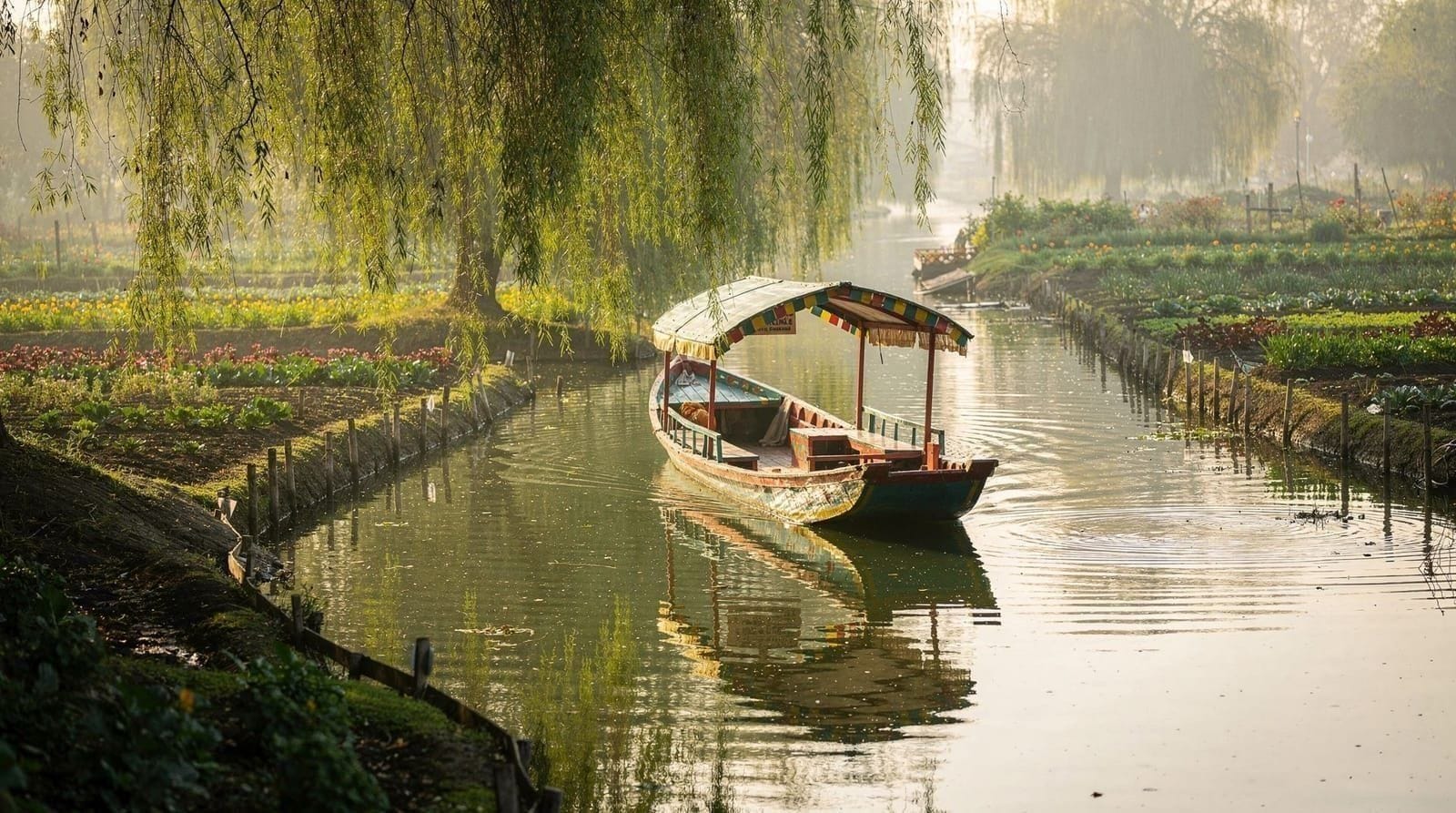
Xochimilco in the far south of Mexico City is the last surviving remnant of the canal system that once connected the island city of Tenochtitlán across Lake Texcoco. When the Spanish conquered the Aztec capital in 1521, they drained most of the lake and filled in most of the canals. Xochimilco’s network of approximately 170 km of canals was maintained because the chinampas — the artificial garden islands built by the Aztecs on the lake shallows — remained productive agricultural land. Today, they are also a UNESCO World Heritage Site (designated 1987), and the canals carry both working farmers and tourists in painted wooden boats called trajineras.
The tourist experience at Xochimilco has genuine charm when it is not manipulated by aggressive vendors and overpriced operators — which is a meaningful distinction. The embarcaderos (boat docks) at the main access points vary significantly in quality. Knowing which to use, what a trajinera should cost, and how long to stay makes the difference between a memorable afternoon and an expensive frustration.
| Where | Far south Mexico City, near Coyoacán |
| Cost | Trajinera ~500–700 MXN/hr for the whole boat; Island of the Dolls 50 MXN |
| Time needed | Half day to a full day |
| Getting there | Metro Line 2 to Tasqueña + Tren Ligero, or Uber (~25 min from Coyoacán) |
| Best time | Weekday mornings for calm canals; weekend afternoons for the festive atmosphere |
The trajinera experience: what actually happens
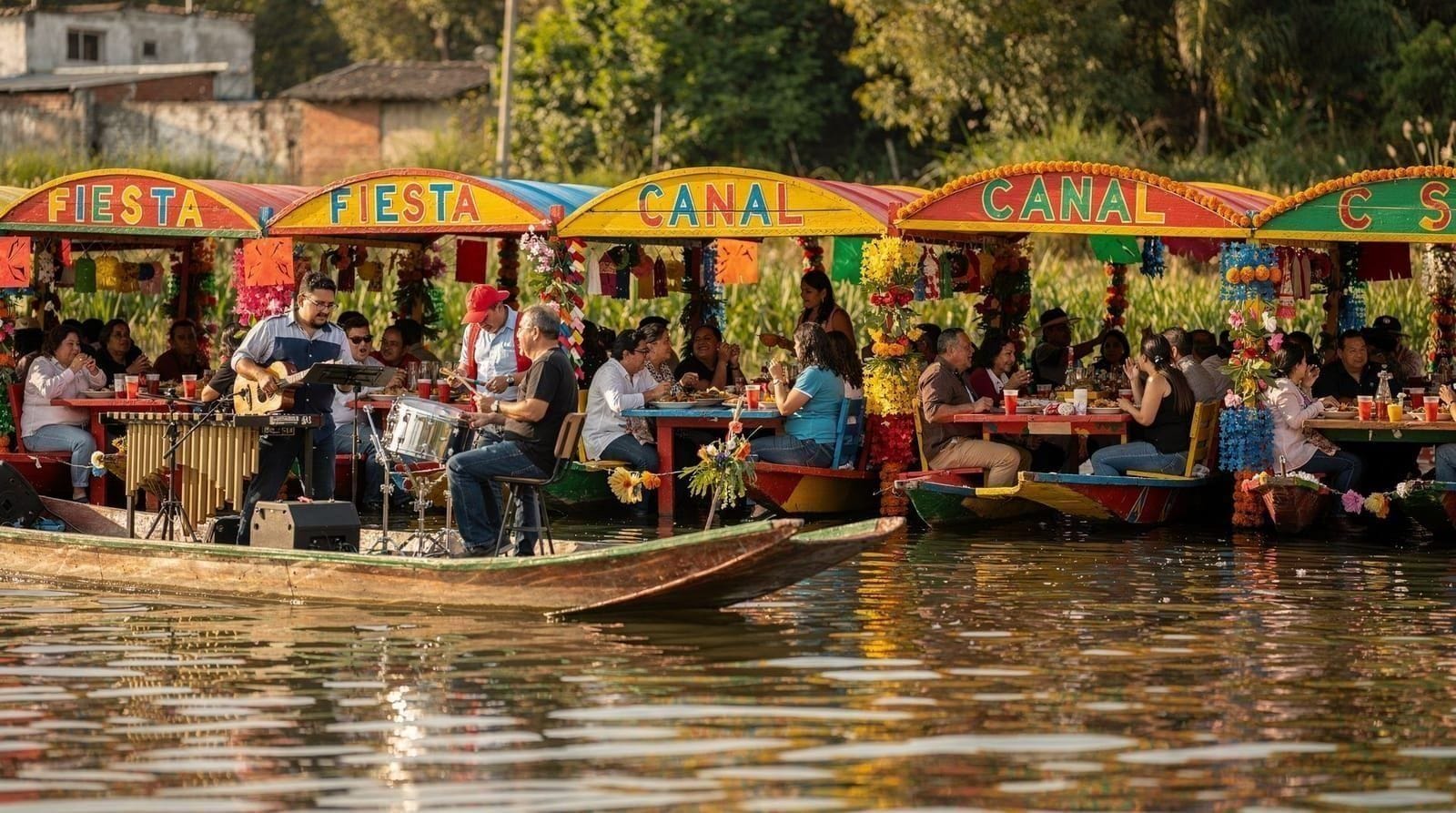
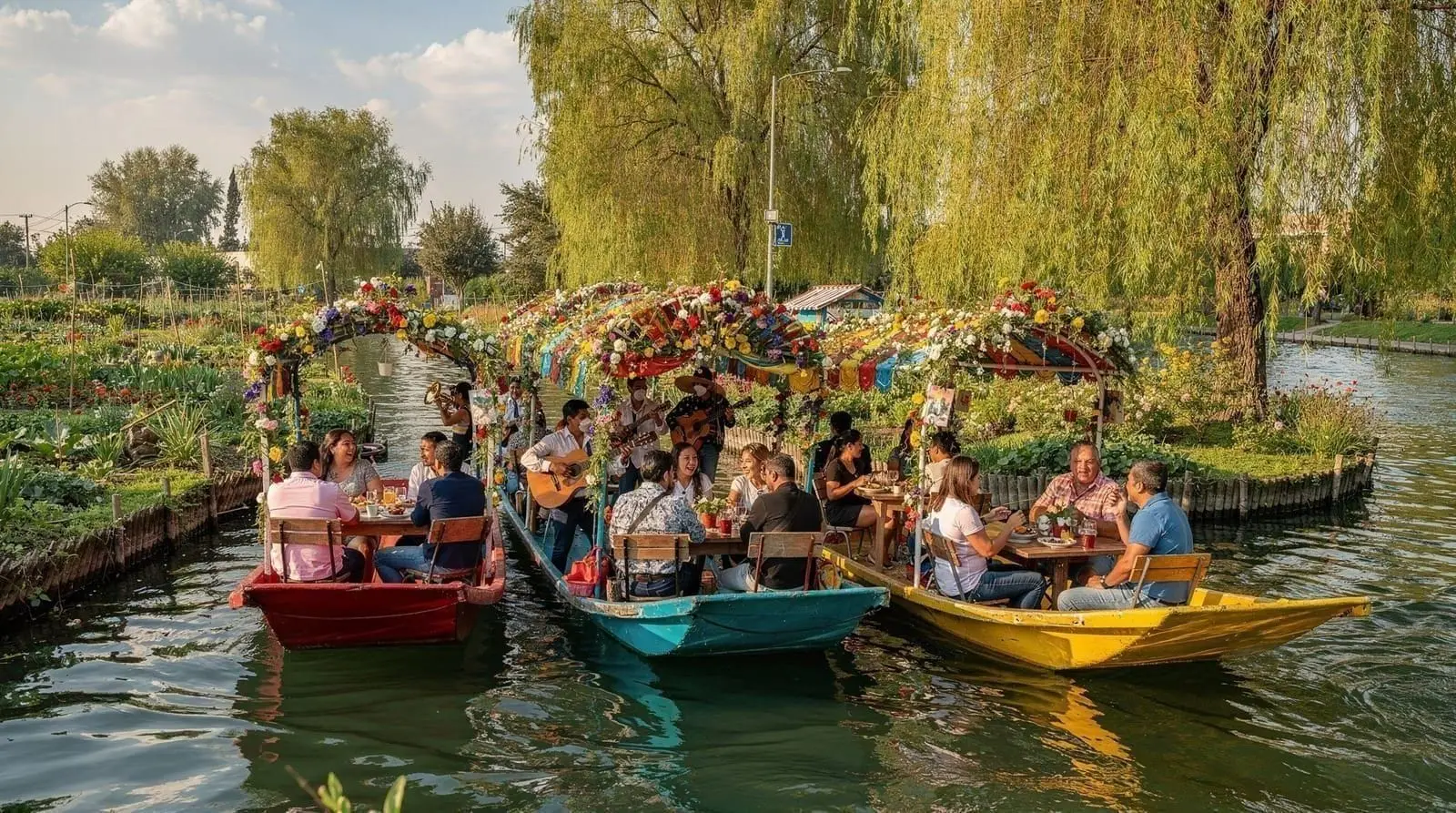
A trajinera is a flat-bottomed wooden punt, painted in bright colours, with a canopy painted with the boat’s name (traditionally a woman’s name) and rows of plastic chairs around a central table. You hire the entire boat — typically seating 8–20 people — for a set period (usually 1.5–2 hours for tourist rides) and a fixed price. At the embarcadero, vendors will approach to sell food, drinks, flowers, and music (a mariachi band can pull alongside in their own trajinera and play for 200–400 MXN per song).
Weekend afternoons at the main Embarcadero Fernando Celada are a full party: dozens of boats jammed into the narrower canals, music from multiple competing trajineras, vendors shouting, families celebrating birthdays and quinceañeras. It is loud, colourful, and occasionally chaotic. Weekday mornings are completely different — fewer boats, quieter canals, actual views of the chinampas and herons and egrets that live in the wetlands. Both versions are authentic Xochimilco; they are just very different experiences.
Standard trajinera rental from the main embarcaderos costs approximately 500–700 MXN per hour for the whole boat. Prices are set at the docks and are negotiable, though operators will try to charge more. The complete Xochimilco guide has current embarcadero prices and the best departure points depending on what you want to see. For the Island of the Dolls, you need to negotiate a route that covers approximately 2 hours of canal travel.
A trajinera party tour with snacks, drinks, and music provides the full weekend festive experience with group booking — particularly useful if you are travelling solo or as a couple and don’t want to hire a whole boat alone. The trajinera hire guide explains how to find the best embarcaderos and what to request when booking independently.
Isla de las Muñecas: the Island of the Dolls
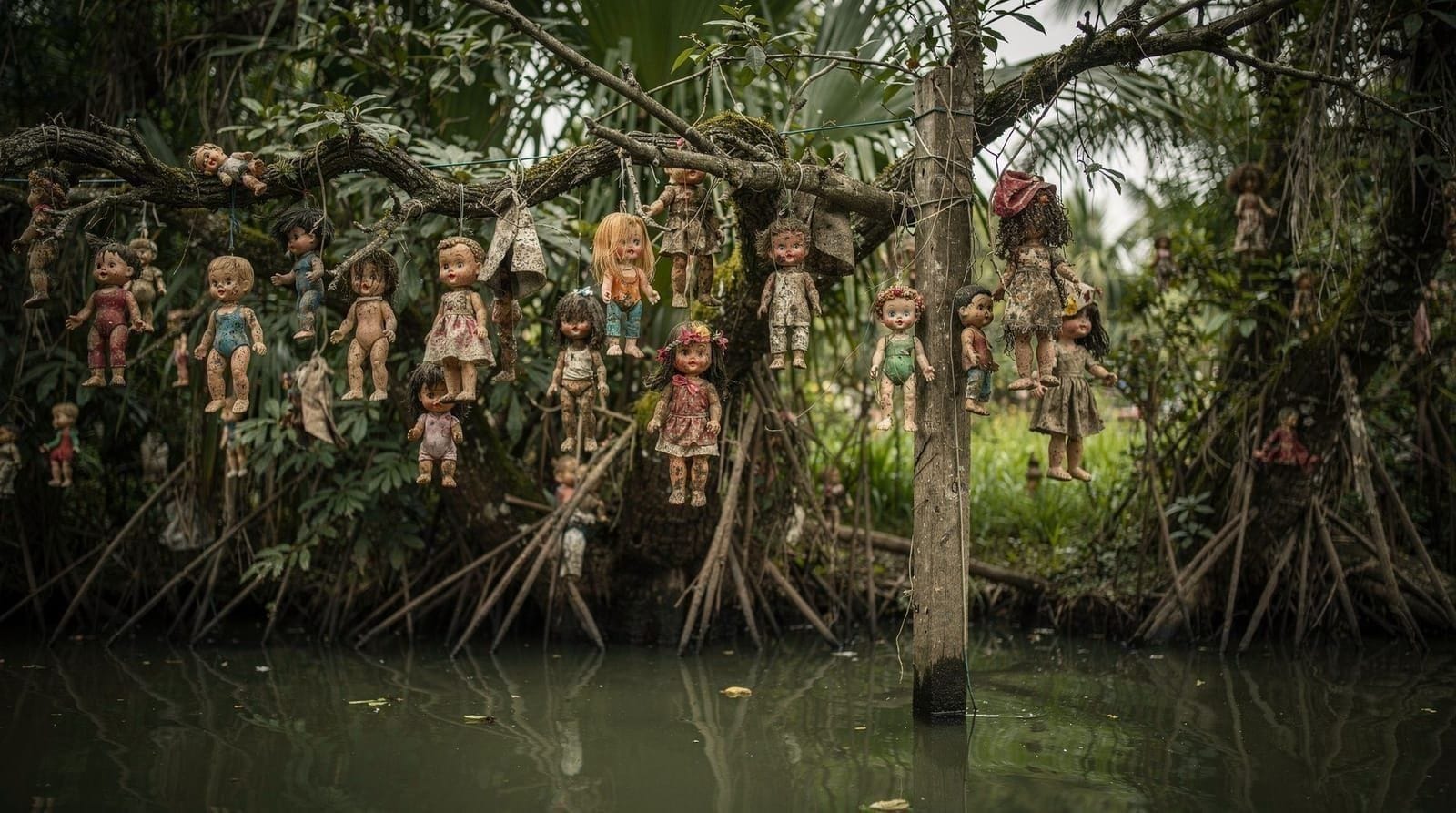
The Isla de las Muñecas (Island of the Dolls) is a chinampas island about 40 minutes by trajinera from the main embarcaderos in the southern canal network. The island is covered in hanging, deteriorating dolls — hundreds of them — that were hung by the island’s owner, Julián Santana Barrera, from the 1950s until his death in 2001. According to the story he told, a young girl drowned in the canal beside the island, and he began hanging dolls to appease her spirit and protect the island from further misfortune. The dolls, now weathered, dismembered, and moss-covered, have accumulated over decades into one of the more genuinely unsettling folk art environments in Mexico.
The island is now owned and operated by Santana Barrera’s family as a small visitor site charging 50 MXN admission. You can walk the island, photograph the doll installations, and buy drinks. It takes about 30 minutes to see the island thoroughly. The experience is either fascinating or disturbing depending on your tolerance for ruined dolls in trees; it is legitimately strange and photogenic.
The Xochimilco boat tour that includes the Island of the Dolls is the most efficient way to reach it if you are not familiar with the canal network. Independent visitors can request the route from their trajinera operator, but some will say it is too far — in that case, negotiate a longer booking (2.5–3 hours) or find a different operator.
The dedicated Island of the Dolls guide has the complete backstory, practical access details, and honest notes about what the experience is and is not.
The axolotl sanctuary
Axolotls are the salamanders endemic to the Xochimilco canal system — now critically endangered because the canals have become polluted and the introduced carp and tilapia eat their eggs. The axolotl has cultural significance in both Aztec mythology and modern Mexican identity (you’ll see their image on the 50-peso note). Several sanctuaries in the Xochimilco chinampas zone have been established to breed axolotls and reintroduce them to cleaned canal sections.
The Xochimilco Axolotl Sanctuary is a working research and conservation site that receives visitors in small groups. The sanctuary visit involves seeing live axolotls in tanks, understanding the breeding program, and learning about the chinampas agricultural system that the conservation work is linked to. It is a low-key but genuinely educational experience — quite different from the party atmosphere of the main canal embarcaderos.
Travellers who want the ecological and educational side of Xochimilco without the weekend party atmosphere have another option: a kayak tour through the quieter canals with axolotl watching, focused on the chinampas, wildlife, and conservation work rather than music and vendors — a useful alternative for anyone visiting with young children or simply preferring calm water to a floating party.
Combining Xochimilco with Coyoacán
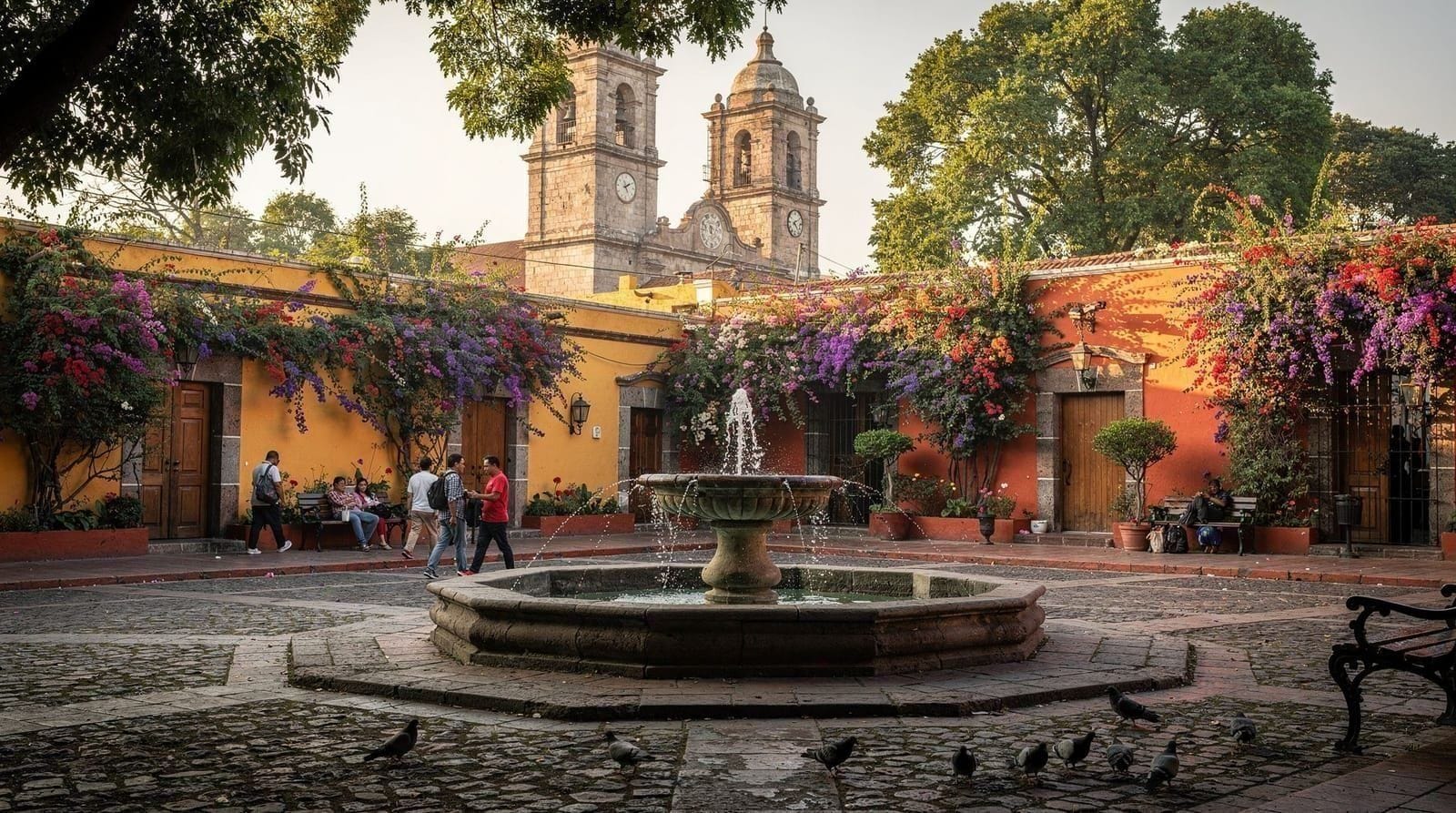
Xochimilco and Coyoacán sit close enough together in southern Mexico City that combining them into one day is the most common way visitors see both. The typical pattern is Coyoacán in the morning — the Zócalo, the market, and often the Frida Kahlo Museum — followed by the canals of Xochimilco in the afternoon, when the light is good for photos and the crowds have not yet peaked for the evening.
A private all-inclusive Xochimilco tour is worth considering for visitors who want transport, a trajinera, and food and drinks bundled into one booking rather than negotiating each element separately at the embarcadero. The 4-day Mexico City itinerary and the Coyoacán walking guide both lay out the logistics of combining the two neighbourhoods in a single day without rushing either one.
La Llorona: Xochimilco after dark
During October (and sometimes extending into early November), the Xochimilco canals host La Llorona — a theatrical live performance based on the Mexican legend of the weeping woman who drowned her children. Actors on boats and on the canal banks create an immersive night-time experience as your trajinera passes through scenes. It is one of the more memorable Halloween/Día de Muertos season experiences in Mexico City and sells out quickly. The La Llorona live show tickets require advance booking, typically from late September.
Practical information
Getting there: The Tren Ligero (light rail) from Tasqueña metro station (Line 2 southern terminus) to the last stop at Xochimilco costs about 5 MXN and takes 30 minutes. It deposits you near the Nuevo Nativitas embarcadero, which is the most convenient for tourist trajineras. Uber from Coyoacán takes 25 minutes and costs 80–100 MXN; from Roma, about 35–40 minutes and 100–140 MXN.
Best embarcadero: Nuevo Nativitas on the canal at the end of 20 de Noviembre street has the widest selection of boats and is the most organised. Fernando Celada is more central but can be chaotic on weekends. Cuemanco (further north) is better for access to the nature reserve sections but less convenient from the centre.
Prices: Trajinera rental is 500–700 MXN/hour for the full boat. Some embarcaderos have set menus that include food, drinks, and guide for fixed per-person prices. Solo and small-group travellers are better off joining an organised tour rather than paying for a full boat. Island of the Dolls admission: 50 MXN.
Crowds: Weekends from 12:00–18:00 are peak. Weekday mornings from 9:00–12:00 are quieter. If you want nature and calm, go early on a weekday. If you want the full festive atmosphere, go Saturday afternoon and embrace it.
Families and accessibility: Trajineras are stable, flat-bottomed boats and generally safe for young children and older visitors, though there is no formal life-jacket requirement on most embarcaderos — bring your own for small children if you want the extra reassurance. The boats themselves have plastic chairs at table height, no significant boarding step, and the ride itself is gentle. The main practical issue for families is the vendor traffic on weekends, which can feel overwhelming for young children; a weekday morning visit sidesteps most of it.
The 4-day Mexico City itinerary includes a full day combining Coyoacán morning and Xochimilco afternoon with transit details.
Frequently asked questions about Xochimilco
How do I avoid being overcharged for a trajinera?
Embarcadero prices are posted on signboards at the main docks. Walk past the first group of operators (who will quote the highest prices) to the dock office where rates are posted officially. For a 2-hour ride, you should pay 500–700 MXN for the full boat, not per person. Vendors on the canal (food, beer, mariachi) are additional and optional — you can say no to every one.
How long should I spend at Xochimilco?
A standard canal ride takes 1.5–2 hours. Adding the Island of the Dolls route requires 2.5–3 hours of boat time. Including the axolotl sanctuary visit adds another hour on land. A half-day (4 hours total from arrival to departure) is the minimum; a full day including Coyoacán is ideal.
Is Xochimilco safe?
The main tourist canal area and embarcaderos are safe. The area immediately around the docks can have petty theft risk — keep bags closed and phones out of sight in crowded dock areas. On the canals themselves, the main concern is boats that drift close enough to cause minor bumps; sit away from the boat edges on weekends when traffic is heavy. The Island of the Dolls requires a legitimate operator — independent attempts to reach it through unknown guides have led to scams.
Can I eat on the trajinera?
Yes. Food vendor boats pull alongside to sell tacos, quesadillas, corn on the cob, fruit, and drinks. Prices are higher than street food elsewhere in the city (expect to pay 60–150 MXN per item). Some tour packages include food; independent visitors should negotiate what they want before setting off or wait for the vendors on the canal.
What is the best time of year to visit Xochimilco?
The dry season (November–May) has better weather. La Llorona runs in October. Weekday visits in January–March offer quiet canals and low crowds. April through June can have some afternoon rain. The chinampas are greenest and most photogenic after summer rains (July–September) but the canal water level is higher and the flower barges less numerous.
How does Xochimilco connect to Día de Muertos?
Xochimilco has strong Day of the Dead traditions — the chinampas produce the marigolds (cempasúchil) used on ofrendas across Mexico City, and the communities around the canals hold local cemetery ceremonies on November 1–2. The La Llorona show in October is related to this tradition. For more on the citywide Day of the Dead programme, see the Day of the Dead Mexico City guide.
Top experiences
Bookable activities with verified prices and instant confirmation on GetYourGuide.