Centro Histórico
Mexico City's historic core: Zócalo, Templo Mayor, Metropolitan Cathedral, Bellas Artes, and Diego Rivera murals. All you need to plan your visit.
Mexico City: Historic Downtown Walking Tour
Quick facts
- Altitude
- 2,240 m / 7,350 ft
- Currency
- Mexican peso (MXN) — USD widely accepted
- Best for
- Colonial history, Aztec archaeology, murals, architecture, food tours
- Getting there
- Metro Zócalo (Line 2) or Bellas Artes (Lines 2 & 8); Metrobús Eje Central
The city’s origin story, still visible underfoot
Mexico City’s Centro Histórico occupies precisely the ground where the Aztec capital Tenochtitlán once stood — a lake island city that Spanish conquistadors levelled in 1521, then built over using Aztec stones as raw material. The result is the world’s most densely layered colonial city centre: baroque cathedrals sitting on Aztec temple foundations, murals covering government palace walls, and fragments of ancient streets emerging from subway excavations. Walking through the Centro is not tourism in any simple sense; it is the direct experience of 700 years compressed into a few square kilometres.
The historic core was declared a UNESCO World Heritage Site in 1987 and covers roughly nine square kilometres, bounded by the Circuito Centro. The Zócalo — officially Plaza de la Constitución — anchors the area at its geographic and emotional centre. From there, the city spreads in a colonial grid that maps almost perfectly onto the original Aztec street plan.
At 2,240 m altitude, the air in the Centro carries car exhaust and corn smoke in equal measure. Drink only bottled water. Mornings from 8:00 to 11:00 offer the best light, the thinnest crowds, and the coolest temperatures before smog builds.
| Where | Cuauhtémoc borough, downtown CDMX, around the Zócalo |
| Cost | Free to walk; Templo Mayor around 210 MXN; guided walking tours from around 500–900 MXN |
| Time needed | 1–2 days for the main sights, murals and markets |
| Getting there | Metro Zócalo (Line 2) or Bellas Artes (Lines 2 & 8) |
| Best time | Weekday mornings, November–May, before tour groups arrive |
The Zócalo and Templo Mayor: ground zero
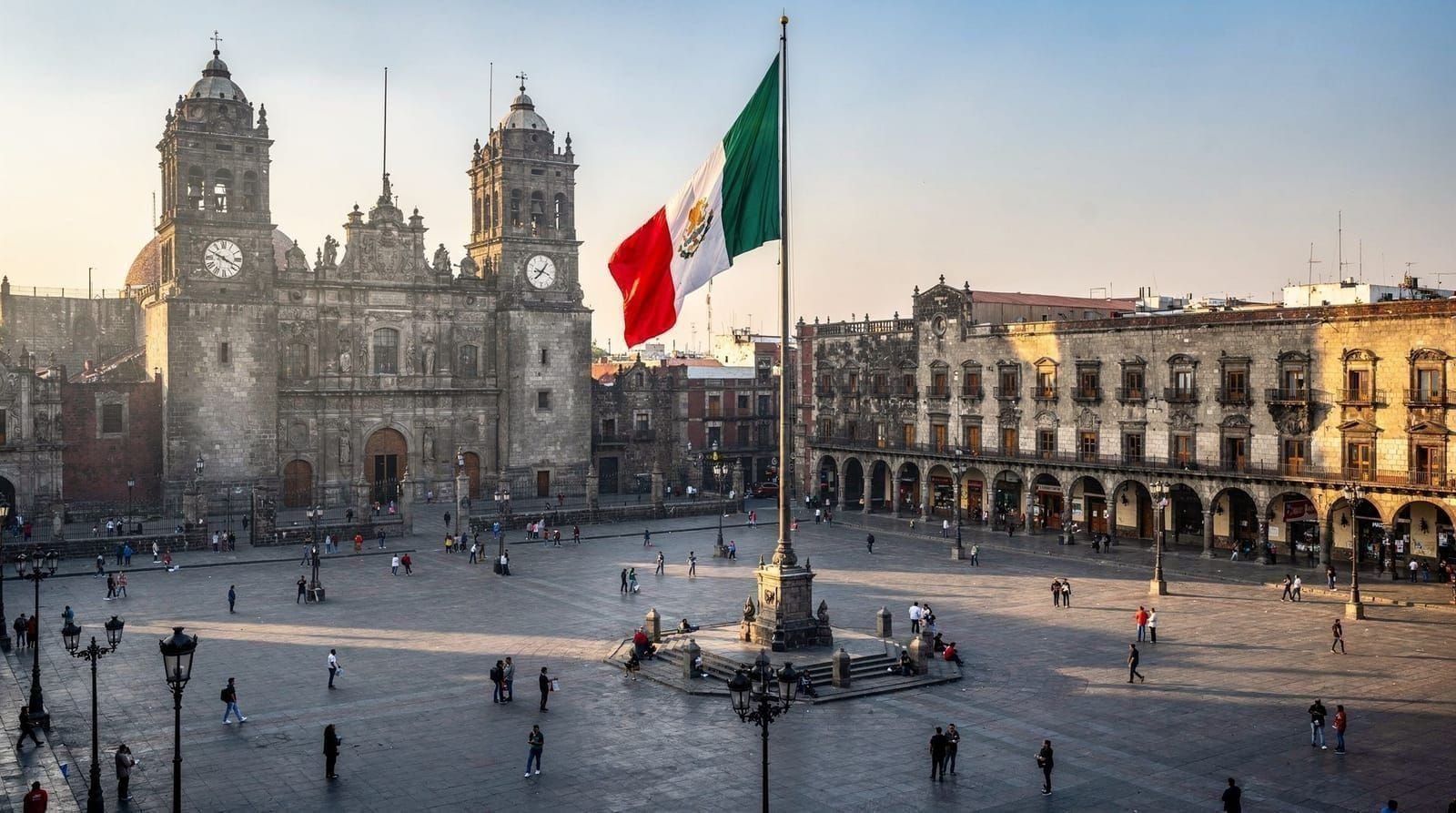
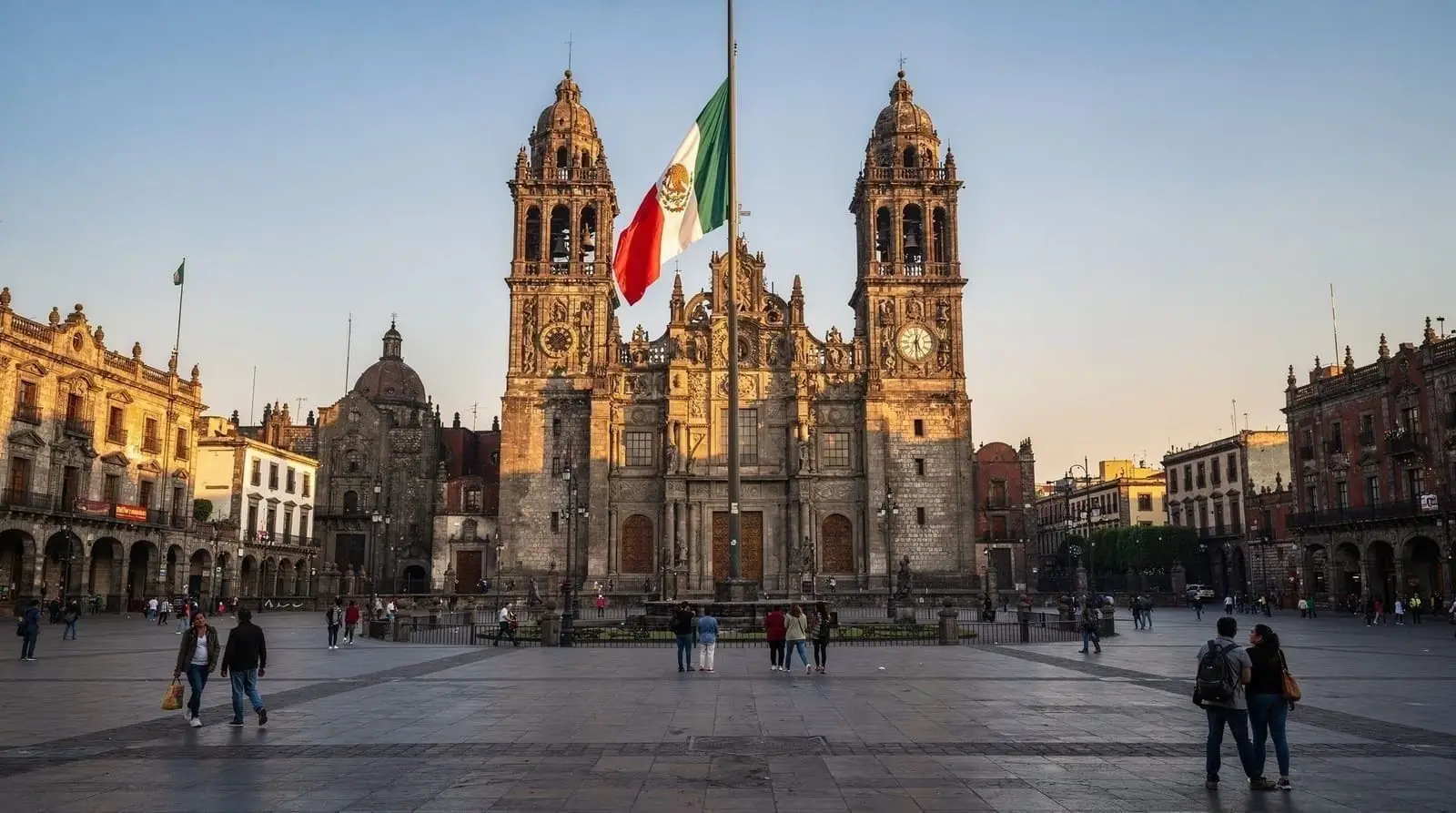
The Zócalo is one of the largest city squares in the world at 57,600 square metres, flanked on three sides by the Metropolitan Cathedral, the National Palace, and federal government buildings. The fourth side is open and used for civic events. On normal days the square hosts vendors, tourist police, and a permanent flagpole with a Mexican flag scaled so large it is visible from well beyond the square. On September 15 every year, hundreds of thousands gather here for El Grito de Independencia — the president’s re-enactment of the 1810 independence cry from the National Palace balcony — which is the highest-energy event in the city calendar.
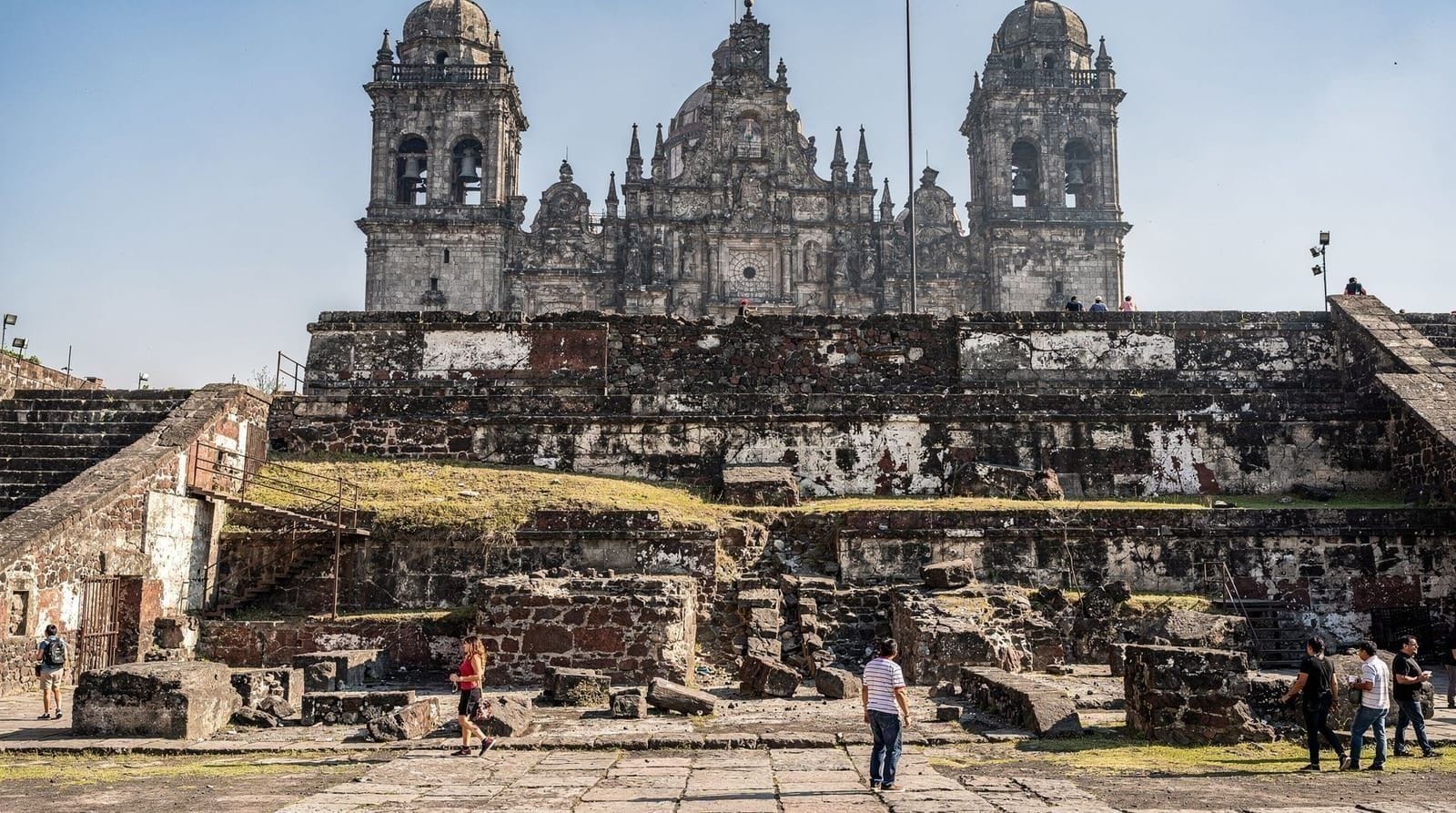
Immediately northeast of the Zócalo, the Templo Mayor is the unearthed ceremonial centre of Tenochtitlán, discovered in 1978 when electricity workers were laying cables beneath what had been a street. Excavations revealed seven layers of construction built atop each other between 1325 and 1521. The site remains partially open; approximately 70 percent of the original structure has not been excavated because it lies beneath existing colonial buildings and streets.
The on-site museum holds thousands of Aztec objects recovered from the digs, including the famous 8-tonne Stone of the Sun (the Aztec calendar disc) and extraordinary jade, obsidian, and ritual ceramics. Admission is 210 MXN (roughly $11); the museum is included. Closed Mondays. A skip-the-line Templo Mayor ticket is worth booking on weekends and holidays when queues form from 10:00 onward.
For deeper context, the Templo Mayor guide covers the archaeology layer by layer and explains what you are looking at inside the museum’s seven exhibition halls.
The Metropolitan Cathedral: four centuries of construction
The Catedral Metropolitana on the Zócalo’s north side is the largest cathedral in the Americas and the longest-running building project in Mexico: construction began in 1573 and the final towers were not completed until 1813. The result is a building that changes style across its façade — baroque, churrigueresque, and neoclassical details applied by successive generations of builders who each tried to update what their predecessors had done. Inside, eighteen side chapels surround the main nave; the gold-leaf Altar de los Reyes at the far end is one of the most baroque objects in the Western Hemisphere.
The cathedral is famously sinking. Mexico City was built on the soft lake sediment of dried Lake Texcoco, and the centre has subsided unevenly since colonial times. Engineers inserted a correction system in the 1990s that slowed the differential sinking; you can see the effect in the noticeably tilted floor as you walk toward the altar. A free visit takes forty minutes; a guided tour covers the crypts, the sacristy, and the architectural details that require explanation to appreciate. The full walking guide to the Zócalo and Templo Mayor covers both sites together.
National Palace: Rivera’s murals on government walls
The Palacio Nacional on the Zócalo’s east side is Mexico’s federal executive office, which means it is a working government building with armed guards — but the main courtyard and staircase murals by Diego Rivera are open to the public free of charge on weekdays and weekend mornings. Rivera spent 25 years, from 1929 to 1951, painting the staircase walls with a sweeping history of Mexico from pre-Aztec civilisations through the Spanish conquest, independence, and the Revolution, culminating in a utopian socialist future. The mural is enormous — approximately 450 square metres across three walls — and packed with individual figures and historical narrative.
This is not background decoration; it is considered Rivera’s masterpiece. The tourist density inside the palace is surprisingly manageable. Arrive before 10:00 and you can stand close to the murals almost alone. The Diego Rivera murals guide covers the staircase murals plus Rivera’s work in the nearby Secretaría de Educación Pública (SEP), which is even less visited. A dedicated guided Diego Rivera murals walking tour contextualises the political iconography that visitors without Mexican history knowledge tend to miss.
Palacio de Bellas Artes and the cultural corridor
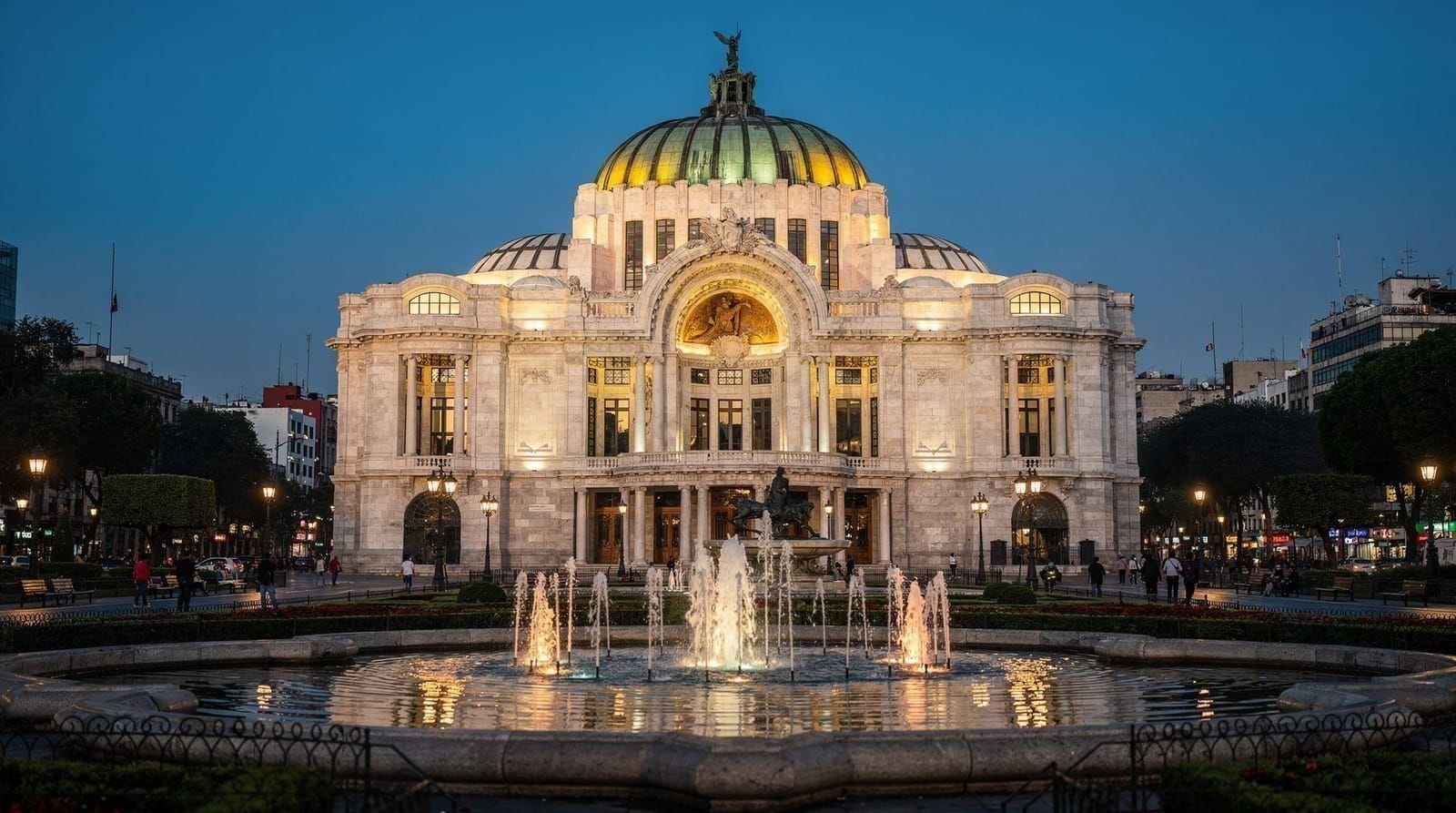
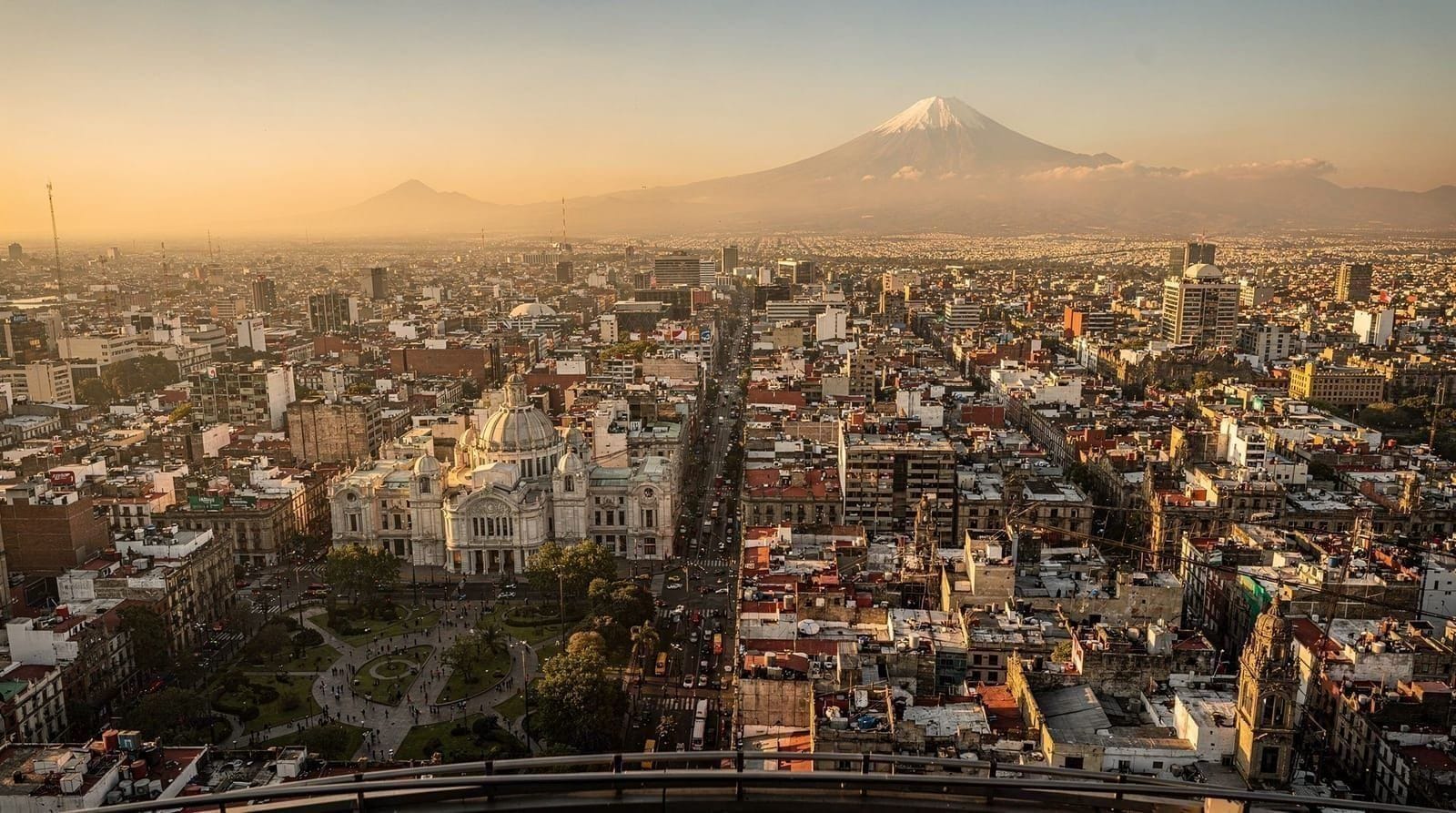
The Palacio de Bellas Artes is the city’s principal cultural venue and one of the most dramatic buildings in Mexico: a white Carrara marble exterior with art nouveau detailing that took 30 years to complete (1904–1934) and sank into the soft ground as it was built, requiring constant adjustments. Inside, it contains three additional major Rivera murals on the upper floors, works by Orozco and Siqueiros, and an art deco theatre interior with a famous glass curtain designed by Tiffany Studios. The building is free to enter and view the murals; theatre performances (including the Folklórico ballet) require tickets. The Palacio de Bellas Artes guide covers what to see and when.
Adjacent to Bellas Artes, the Alameda Central park is the oldest public park in the Americas (1592) and a pleasant place to decompress between museums. The Torre Latinoamericana at the corner of Madero and Eje Central offers observation decks on floors 37 and 44 with panoramic views of the centre — on clear winter days you can see Popocatépetl and Iztaccíhuatl from the top. Clear days are rare in the rainy season. The centre is also worth seeing after dark, when the illuminated colonial façades and floodlit Catedral take on a different character; a night walking tour with optional Torre Latino access combines that evening walk with the tower’s viewpoint over the lit-up skyline.
Calle Madero, running from the Zócalo to the Torre, is pedestrianised and lined with colonial buildings that have been converted into shops, cafés, and the occasional rooftop bar. Café de Tacuba at Tacuba 28, founded in 1912, is the closest thing to a genuine Centro institution for lunch — moles, enchiladas, and pozole in a restaurant that has not changed dramatically since the early 20th century.
Gastronomía del Centro: beyond tourist traps
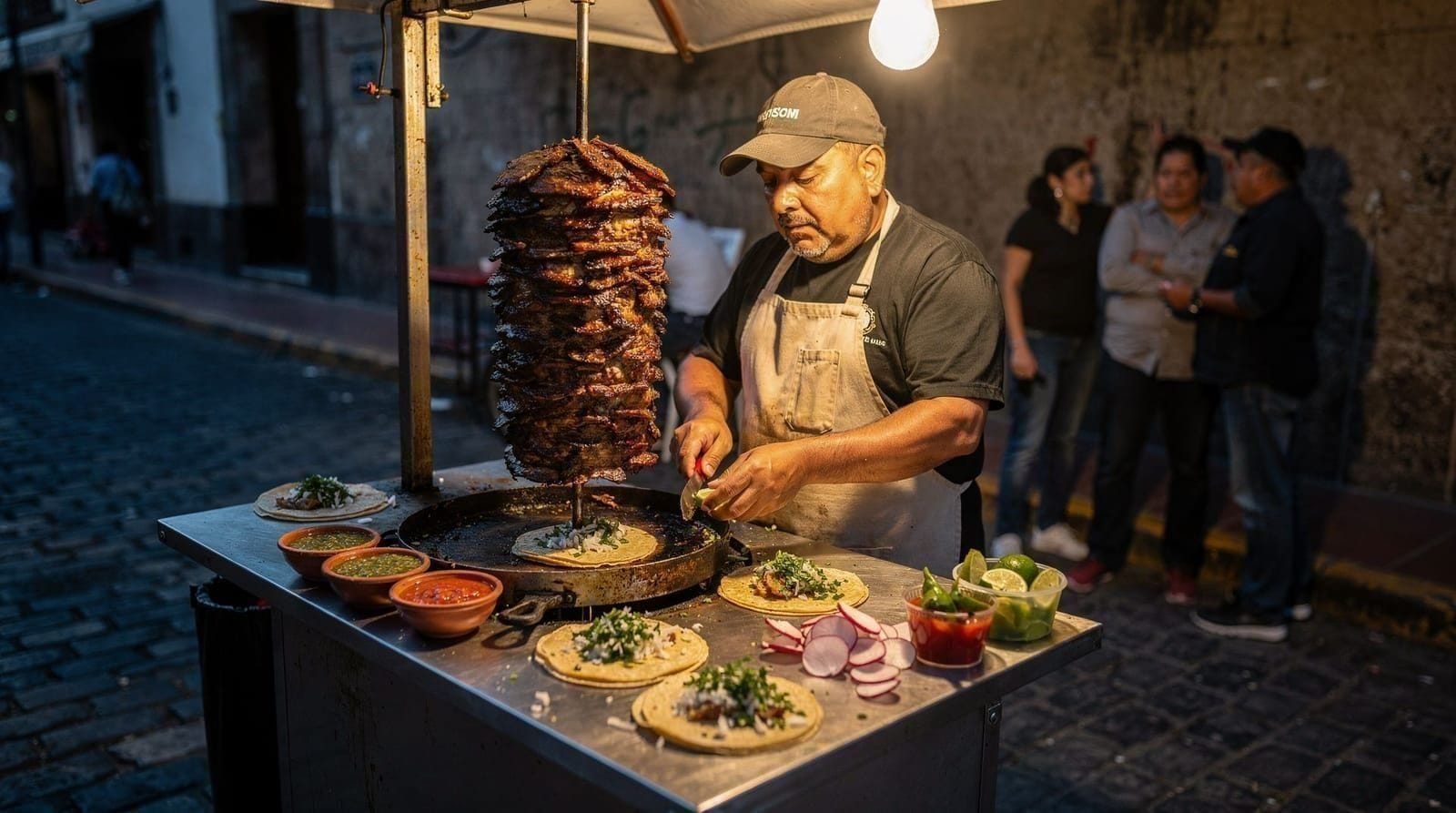
The Centro’s street food ecosystem is one of the best in the city if you know where to look and what to avoid. The Zócalo’s immediate perimeter is tourist-priced and mediocre. Mercado de San Juan at Ayuntamiento and Ernesto Pugibet is a different story: an indoor market selling premium Mexican ingredients, cheeses, meats, Japanese groceries, and prepared food at prices that reflect local purchasing power rather than tourist tolerance. The market itself has become slightly fashionable, but it is still legitimate.
The streets between the Centro and La Merced market — the city’s largest wholesale food market at Anaya and Circunvalación — hold the most intense street food in the city. Vendors set up on corners from 7:00 serving tortas, quesadillas, memelas, and tlayudas. The area is crowded and loud by 10:00; it is also perfectly safe during daylight hours. La Merced’s immediate perimeter has a rougher character and requires standard urban awareness; the interior market halls are fine to visit in the morning.
The VIP historic center tour with Templo Mayor access combines the architecture walk with food stops at market stalls and explains the social history of the Centro’s food economy. For a standalone street food guide to Mexico City, the neighbourhood-by-neighbourhood breakdown covers Centro’s best stops with specific names.
Walking the Centro: a practical route
A one-day Centro circuit starts at the Zócalo before 9:00, walks to Templo Mayor when it opens at 9:00, crosses to the National Palace for Rivera’s murals (free, no ticket needed, closes for lunch midday), walks along Moneda street to the Museo de la Secretaría de Hacienda (free, free entry to Rivera murals in the courtyard), then west along Tacuba to Calle Madero, lunch at Café de Tacuba, and ends with Bellas Artes in the late afternoon. This circuit is entirely walkable and covers the main sites in under seven kilometres.
For a proper orientation with context, a guided historic downtown walking tour is the most efficient use of three hours if you are arriving for the first time. Local guides provide detail on the Aztec-to-colonial transition that transforms what looks like buildings into readable history.
Safety note: the Centro is safe during the day on the main tourist circuit. After dark, stay on the Madero–Zócalo–Bellas Artes corridor and avoid the blocks east of Pino Suárez. The Mexico City safety guide covers the Centro’s risk picture honestly.
Lesser-known stops worth the detour
Beyond the headline sights, a handful of quieter stops reward the detour. The Museo Nacional de Arte (MUNAL) on Tacuba, one block from Bellas Artes, holds the country’s best collection of Mexican painting from the colonial period through the early 20th century, usually with a fraction of Bellas Artes’ foot traffic. The Casa de los Azulejos on Madero — a colonial palace clad entirely in blue-and-white Puebla tile, now a restaurant and Sanborns store — is worth walking through even if you don’t eat there.
Correo Mayor, the main post office near Bellas Artes, is a small Italian Renaissance building with a working postal counter that most visitors walk past without noticing. None of these appear on standard guided routes, which makes them a good way to have the Centro to yourself for twenty minutes. The tourist traps guide explains which nearby stops are worth skipping in favour of these instead.
One day versus two: what a second day adds
| One day | Two days | |
|---|---|---|
| Covers | Zócalo, Templo Mayor, National Palace murals, Bellas Artes | All of the above, plus MUNAL, Casa de los Azulejos, deeper market time |
| Pace | Brisk, back-to-back sights | Relaxed, room for a night walk and a second meal |
| Best for | First-timers combining Centro with other neighbourhoods | History-focused visitors and photographers |
| Typical add-on | — | Mercado de San Juan and La Merced in full, not rushed |
Centro Histórico with children
The Centro works reasonably well as a family outing if you pace it around nap times and snack stops. The wide-open Zócalo gives kids room to move after a museum, the Templo Mayor’s outdoor ruins are more engaging for children than an indoor museum, and Bellas Artes’ murals are large and colourful enough to hold younger attention briefly. Traffic noise and crowds are the main challenges — strollers struggle on some of the older cobbled side streets. The Mexico City with kids guide has a fuller neighbourhood-by-neighbourhood breakdown for family trips, and the getting around Mexico City guide covers stroller-friendly transit options.
Practical information
Hours: Templo Mayor opens Tuesday–Sunday 9:00–17:00. National Palace Monday–Friday 9:00–17:00 (free). Metropolitan Cathedral daily 7:00–19:00 (free). Bellas Artes Tuesday–Sunday 10:00–17:30.
Getting there: Metro Line 2 to Zócalo station exits directly onto the square. The Metrobús runs on Eje Central along the west edge of the Centro. On foot from Roma Norte, the Centro is about 45 minutes or a 30–40 MXN Uber.
Tickets: Templo Mayor costs 210 MXN ($11). The combined ticket with the museum is included. Photography inside requires no additional fee. Bellas Artes theatre events start around 450 MXN ($25). Folklórico ballet runs Sunday mornings at 9:30 — book ahead.
Best days: Tuesday through Thursday mornings for lowest crowds. Sunday the Zócalo fills with families and vendors and has a different but worthwhile character. Avoid national holidays unless you specifically want to see them (Sep 15–16, May 5, etc.).
The 3-day Mexico City itinerary builds the Centro into a broader circuit that includes Coyoacán, Xochimilco, and Teotihuacán for visitors with limited time.
Frequently asked questions about Centro Histórico
How long do you need in Centro Histórico?
One full day covers the Zócalo, Templo Mayor, National Palace murals, and Bellas Artes with comfortable pacing. Two days allows you to add the Museo de Arte Popular, the Archivo General de la Nación, deeper exploration of the markets, and a night walk. Most visitors allocate a half-day on arrival and underestimate the density; budget the full day.
Is Centro Histórico safe for tourists?
During daylight hours, the main tourist circuit — Zócalo, Madero, Bellas Artes, and the immediate surroundings — is consistently safe. The Mexico City tourist police maintain a visible presence. After dark, the Madero pedestrian street and the areas around Bellas Artes are fine; blocks east of Zócalo heading toward La Merced require more awareness. Do not carry large amounts of cash or wear expensive jewellery. See the honest safety guide for specifics.
What is the best time to visit Templo Mayor?
Opening time at 9:00 Tuesday through Sunday is best. By 11:00 tour groups have arrived and the narrow pathways through the ruins become congested. The museum inside the site is large and worth 60–90 minutes on its own; many visitors rush through it not realising it holds the most important objects.
Can I see Diego Rivera murals for free?
Yes. The National Palace murals on the Zócalo are free to view on weekdays. Bellas Artes’ upper-floor Rivera mural (including the famous reproduction of his Rockefeller Center mural) is free with the building entrance on days without major events. The Secretaría de Educación Pública murals at Republica de Argentina 28 are also free on weekdays.
How do I get to Centro Histórico from Roma or Condesa?
The easiest option is Uber/DiDi, which costs 40–60 MXN and takes 15–25 minutes depending on traffic. Metro Line 1 from Insurgentes to Pino Suárez (where Lines 1 and 2 intersect) takes about 20 minutes and costs 5 MXN. Walking from Roma Norte takes approximately 45 minutes and passes through Doctores, which is fine in daylight.
What should I eat in Centro Histórico?
Café de Tacuba (Tacuba 28) for traditional comida corrida at lunch. El Cardenal on Palma for one of the best breakfasts in the city — their champurrado and pan dulce are excellent. Mercado de San Juan for premium ingredients and prepared food. Street quesadillas and memelas from vendors on Mesones and Corregidora streets from 8:00–14:00 for the most authentic fast breakfast under 80 MXN.
Is Bellas Artes worth visiting if I am not attending a performance?
Yes. The building itself is remarkable and the murals by Rivera, Orozco, Siqueiros, and Tamayo on the upper floors justify the visit independently of performances. Admission is free for the building and galleries. The Folklórico ballet on Sunday mornings is the one performance most worth attending if your schedule allows — it runs about two hours and covers regional dances from across Mexico.
Is a guided tour better than exploring the Centro on my own?
Both work, and the right choice depends on your interest in the history. Self-guided visitors move at their own pace and can linger at whichever building catches their eye, but they typically miss the layered Aztec-to-colonial context that makes buildings like the Cathedral and Templo Mayor legible as history rather than scenery. A guided walking tour compresses that context into two to three hours and is the more efficient option for a single first visit; independent exploration works well as a second-day follow-up once you already understand the layout.
Top experiences
Bookable activities with verified prices and instant confirmation on GetYourGuide.