Chapultepec and Polanco
Chapultepec Castle, the National Museum of Anthropology, Polanco dining, and Soumaya Museum. The essential guide to CDMX's cultural and upscale west zone.
Mexico City: Chapultepec Castle and Anthropology Museum Tour
Quick facts
- Altitude
- 2,240 m / 7,350 ft
- Currency
- Mexican peso (MXN) — USD widely accepted
- Best for
- National Museum of Anthropology, Chapultepec Castle, Polanco restaurants, Soumaya Museum
- Getting there
- Metro Line 1 to Chapultepec; Line 7 to Auditorio (for Anthropology Museum entrance)
Two distinct zones sharing the city’s best museum address
Chapultepec and Polanco sit side by side in the west of Mexico City: Chapultepec is a vast urban forest (the largest in any Latin American capital) containing the city’s greatest concentration of museums and the hilltop castle that served as Mexico’s presidential palace until 1939; Polanco, immediately north of the park, is the city’s most upscale neighbourhood — a grid of tree-lined streets with designer boutiques, international restaurants, and the Soumaya Museum’s silver-disc tower visible from Reforma Boulevard.
Most visitors allocate one full day to this zone: morning at the Anthropology Museum, lunch in Polanco, afternoon at Chapultepec Castle. This works, but it leaves no time for the park itself, the Tamayo and Rufino Tamayo museums, or a walk along Presidente Masaryk. Two days gives you the full picture.
| Where | Bosque de Chapultepec and Polanco, western CDMX |
| Cost | Museums around 210 MXN each; Soumaya free; Polanco dining varies widely |
| Time needed | 1–2 days for the museums, castle, park and a Polanco meal |
| Getting there | Metro Line 1 to Chapultepec, or Line 7 to Auditorio for the Anthropology Museum |
| Best time | Tuesday–Sunday mornings (museums closed Mondays); avoid Sunday if crowds bother you |
National Museum of Anthropology: allow four hours minimum
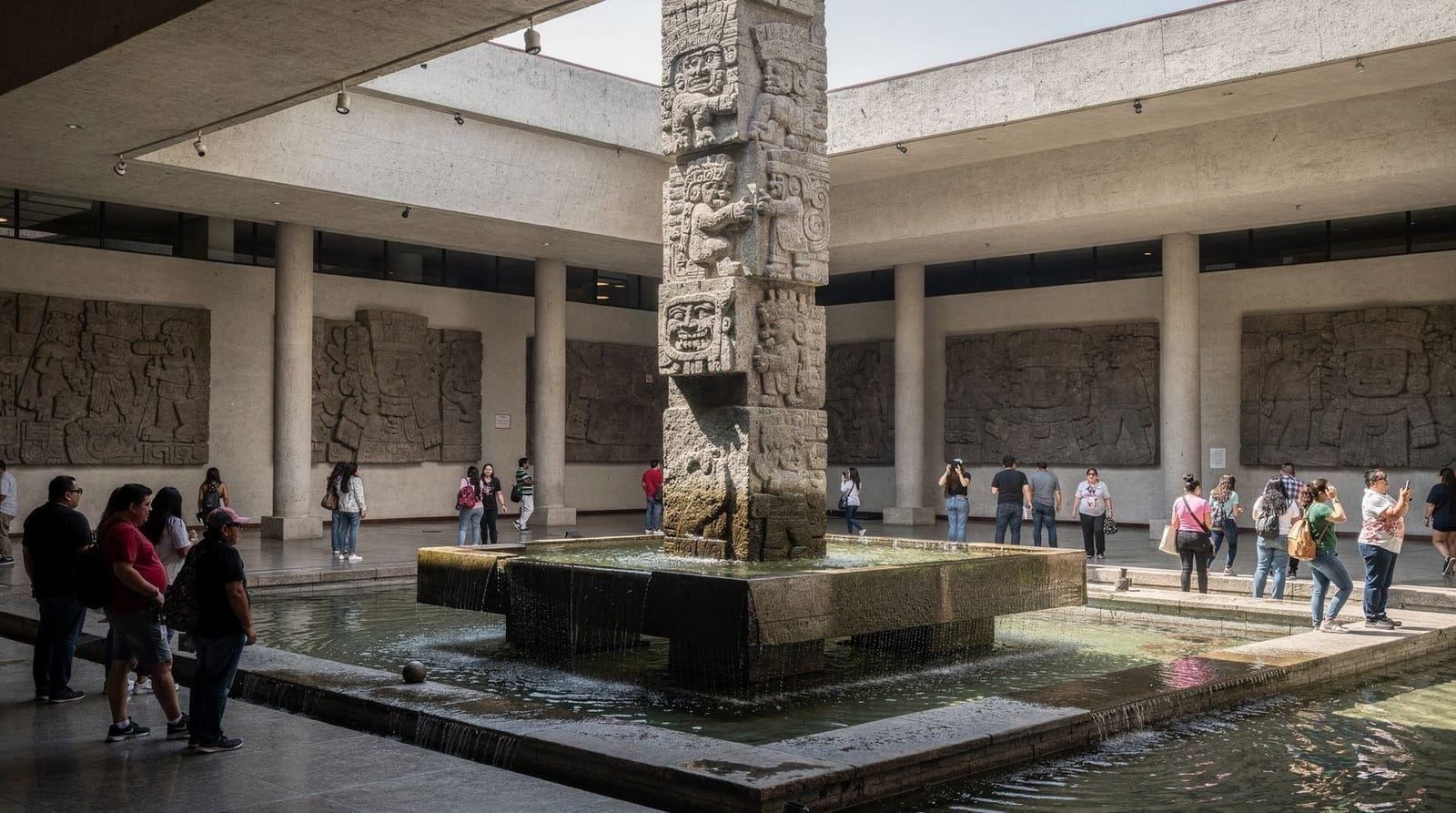
The Museo Nacional de Antropología at Paseo de la Reforma and Gandhi is arguably the best museum in Mexico and one of the top five archaeological museums in the world. It was designed by Pedro Ramírez Vázquez and opened in 1964 — the same architect who designed the Basílica de Guadalupe — in a building that demonstrates that public institutional architecture can be both functional and genuinely beautiful. A single central column supports a vast umbrella canopy over an open-air courtyard; water cascades from the column’s underside. The building is as impressive as the collection.
The collection covers pre-Columbian Mexico in 23 permanent galleries arranged roughly north-to-south geographically: Aztec/Mexica, Maya, Oaxacan (Zapotec and Mixtec), Gulf Coast (Olmec, Totonac), northwestern Mexican cultures, and several smaller regional collections.
The Mexica (Aztec) hall is the largest and most visited; it contains the Sun Stone (frequently misidentified as the “Aztec calendar”), the Coatlicue goddess statue, and dozens of objects from Tenochtitlán’s ceremonial centre. But the rooms that often impress experienced museum visitors more are the Oaxacan and Olmec galleries: the Olmec colossal heads, the Monte Albán gold jewellery from Tomb 7, and the Palenque funerary mask of Pakal the Great are extraordinary by any global standard.
The upstairs floor of the museum contains reconstructed indigenous village environments and ethnographic displays of living cultures — often skipped by visitors in a hurry, but useful context for what you have seen on the ground floor.
Entry is 210 MXN (free for Mexican citizens and permanent residents on Sundays, which creates large crowds). The museum is closed Mondays. Four hours is the practical minimum for a serious visit to the main galleries; two hours is enough to cover the highlights.
The guided tour of the National Museum of Anthropology covers the major halls with English-speaking archaeologists who explain the iconography that self-guided visitors frequently misread. The complete Anthropology Museum guide has a hall-by-hall breakdown for independent visitors.
Chapultepec Castle: hilltop presidential palace
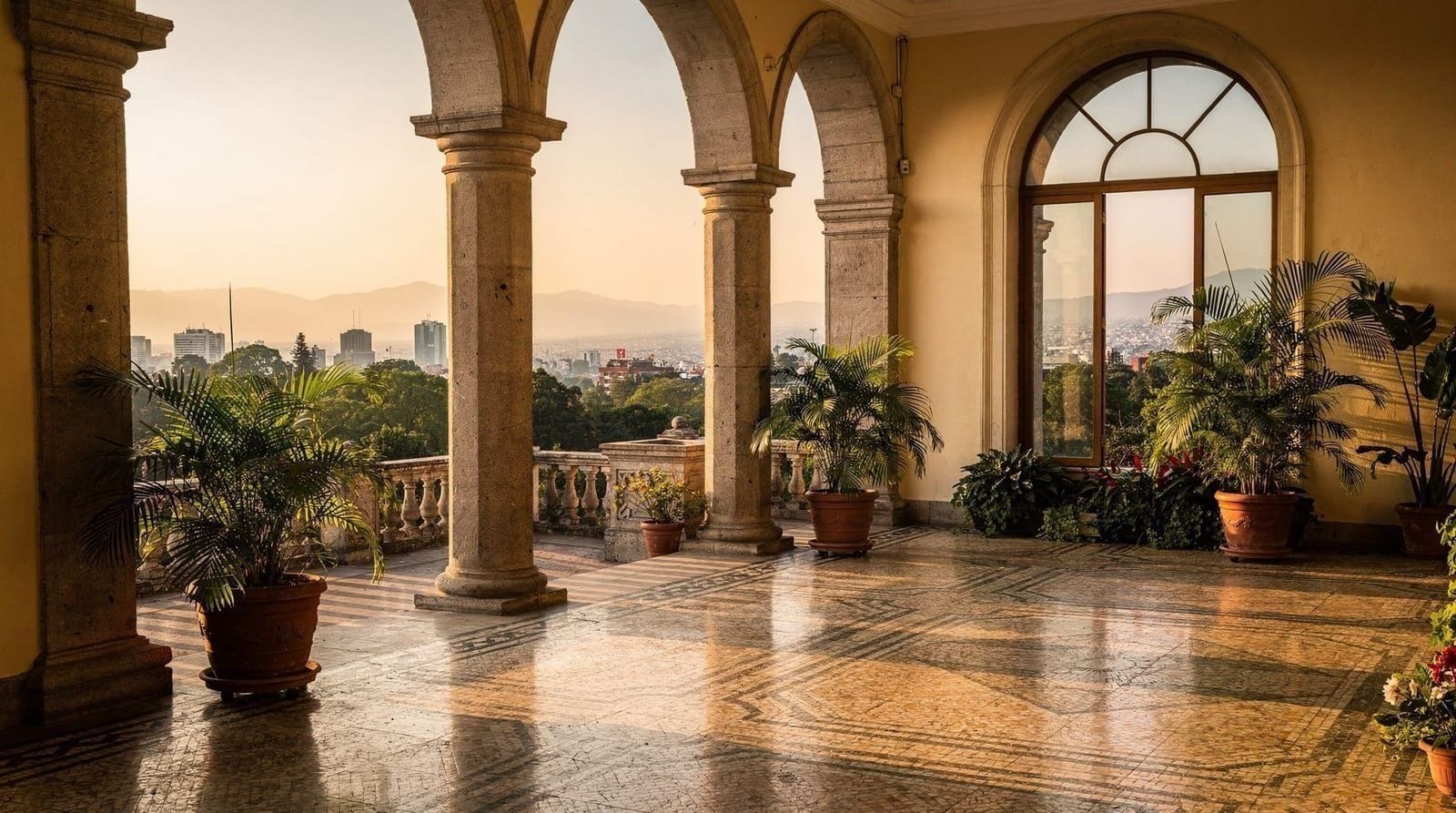
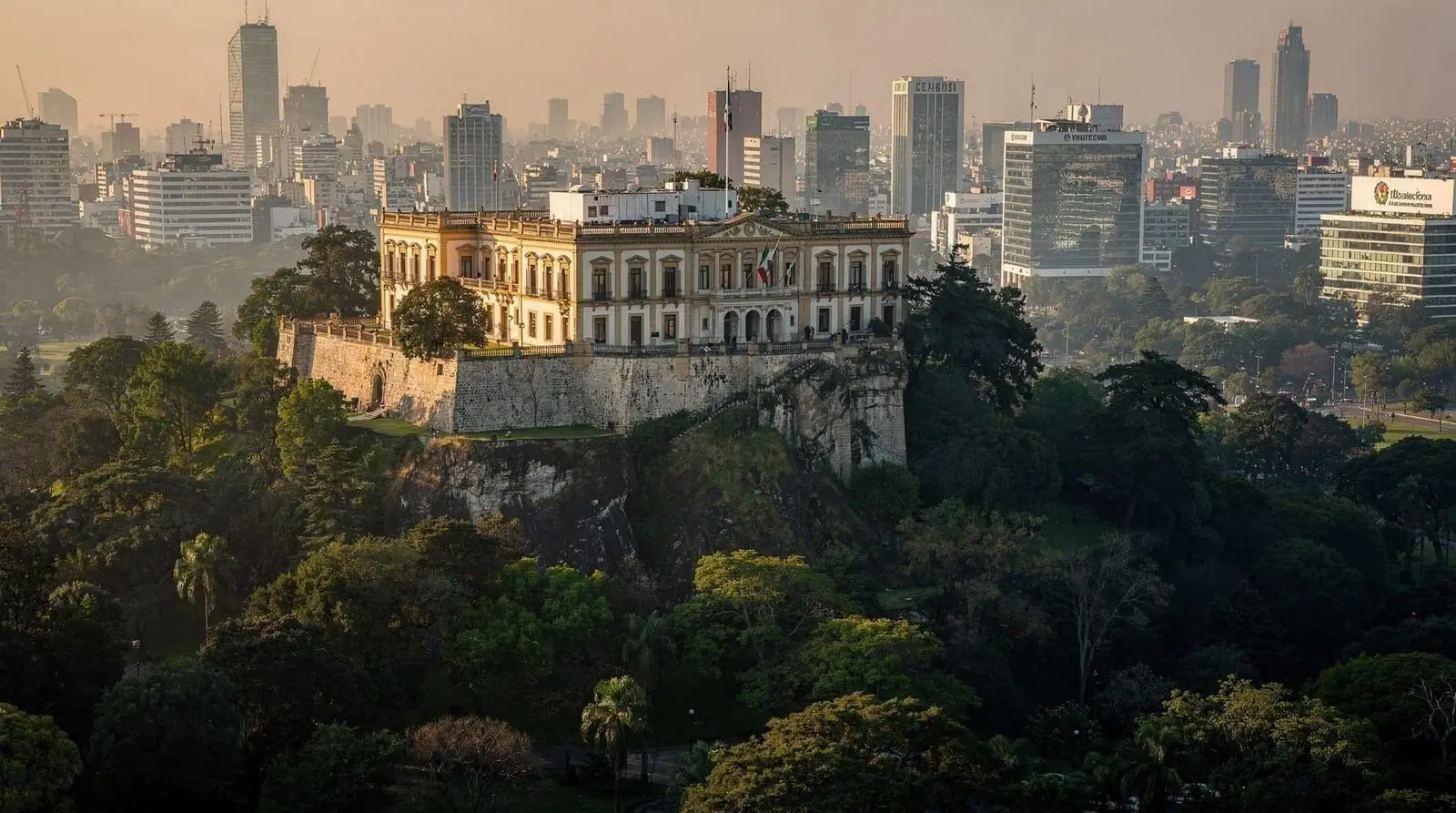
The Castillo de Chapultepec sits on a 43-metre basalt hill in the western section of the forest and has served at various points as a military academy, imperial residence (under Maximilian and Carlota), and presidential palace before becoming the Museo Nacional de Historia in 1944. Maximilian and Carlota redesigned the castle in the 1860s in European imperial style; the gardens and some rooms retain this character. The rooms used by presidents in the early 20th century contain original furnishings and state portraits.
The castle also contains murals by José Clemente Orozco and other significant works. The staircase murals by Juan O’Gorman are a compact and fierce account of Mexican history. From the terrace, the views across Mexico City on clear days (November through January typically) are the best elevated views within easy reach of the city centre. In summer and rainy season, smog and cloud generally obscure the volcanoes.
Entry to the castle costs 210 MXN and the museum is included. A skip-the-line Chapultepec Castle ticket is worthwhile on Saturdays and Sundays when the uphill path queues from 10:00 onward. The Chapultepec Castle guide covers the full history and what to look for in each section. The combined Chapultepec Castle and Anthropology Museum tour does both in a single guided day — the standard approach for visitors who want context without the prep work. For visitors who want the castle’s history told as a narrative rather than a room-by-room walkthrough, the guided walking tour telling the stories of Chapultepec Castle focuses on the events and characters tied to each space.
Polanco: the neighbourhood beside the park
Polanco is Mexico City’s most affluent residential neighbourhood and its premier restaurant zone. Avenida Presidente Masaryk — the commercial spine, running east–west through the neighbourhood — is lined with boutiques, cafés, and the kind of restaurants that charge international prices for Mexican cuisine interpreted at fine-dining level.
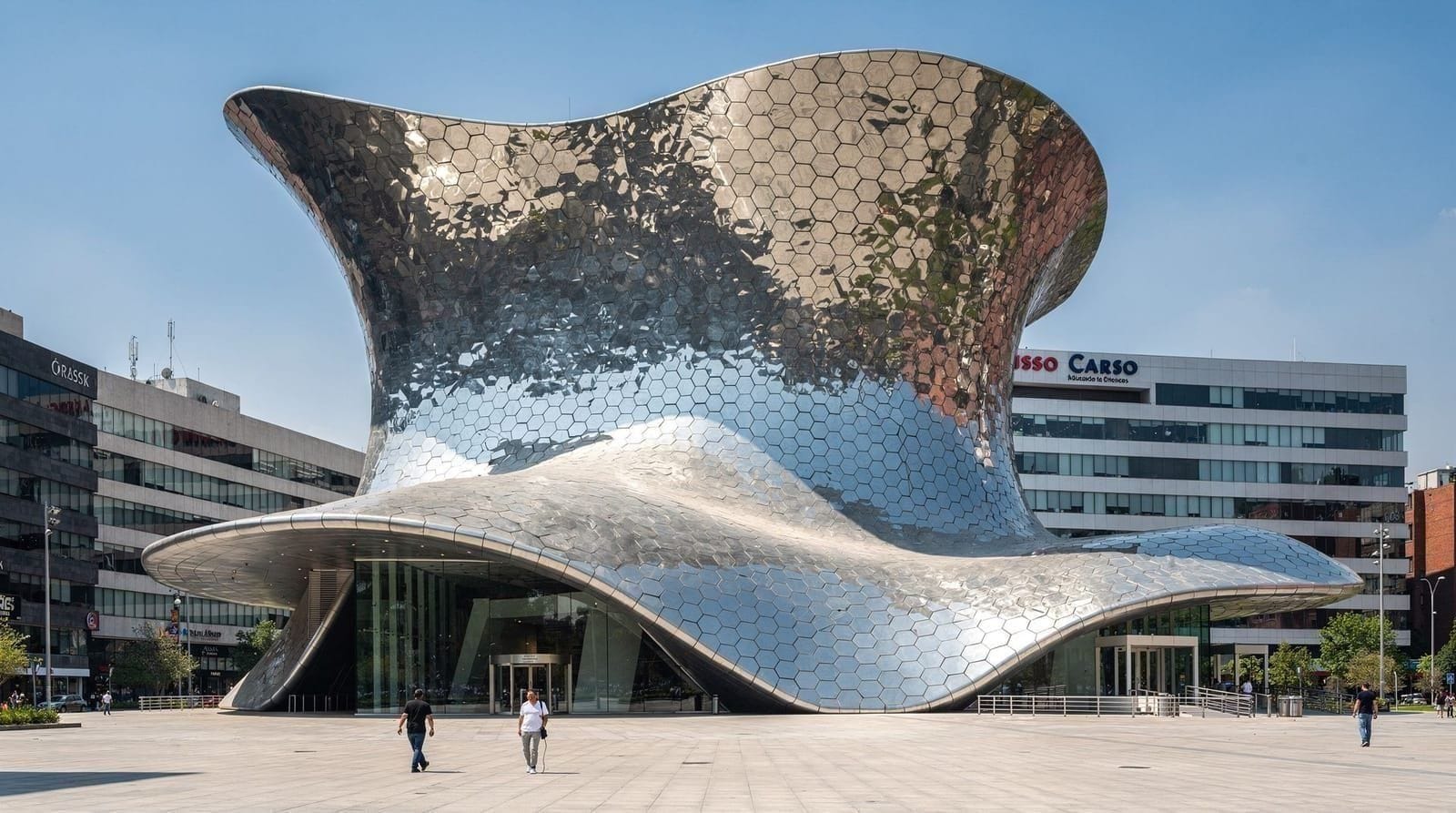
The neighbourhood is safe, well-maintained, and pleasant to walk in. Lincoln Park, one block from Masaryk, is a pleasant late-afternoon urban park. The Soumaya Museum (free entry) at Plaza Carso is ten minutes north of the main Polanco grid — a private collection assembled by Carlos Slim housing 66,000 objects spanning pre-Columbian artefacts, European Old Masters, and 20th-century sculptures, housed in an aluminium-clad building designed by Fernando Romero that is architecturally striking whether you like it or not.
For food in Polanco, Pujol (Tennyson 133) is Mexico City’s most internationally recognised restaurant — it has been on the World’s 50 Best list consistently and requires booking weeks in advance. Quintonil (Newton 55) is equally regarded for its interpretation of indigenous Mexican ingredients. Both charge 1,500–3,000 MXN per person. More accessibly priced options include El Bajío (multiple Polanco branches) for regional Mexican cooking at 200–400 MXN, and the Mercado Presidente Masaryk food hall for quality street food at 80–150 MXN per dish.
Chapultepec park: beyond the museums
The Bosque de Chapultepec covers approximately 680 hectares in three sections. The first section (closest to Reforma, containing the castle and the Anthropology Museum) is the most visited. The second section contains the Papalote Children’s Museum, a technology museum, and several lakes. The third section is a quieter recreational area.
The park is heavily used by Mexico City residents on Sunday mornings — jogging, cycling, family picnics, and the weekly ciclotón (bicycle lane closure of Reforma) make Sunday the most animated but also most crowded day. Weekday afternoons are pleasant and relatively uncrowded. The Lago de Chapultepec in the first section rents rowing boats for 80–100 MXN per 30 minutes.
Also within the first section: the Museo de Arte Moderno (MAM), one of Mexico City’s best modern art collections in a distinctive circular building, and the Museo Tamayo on Reforma, which houses an important collection of international 20th-century art in a building by Teodoro González de León. Both charge modest entry (70–90 MXN) and are far less crowded than the Anthropology Museum.
Reforma Boulevard: the connecting corridor
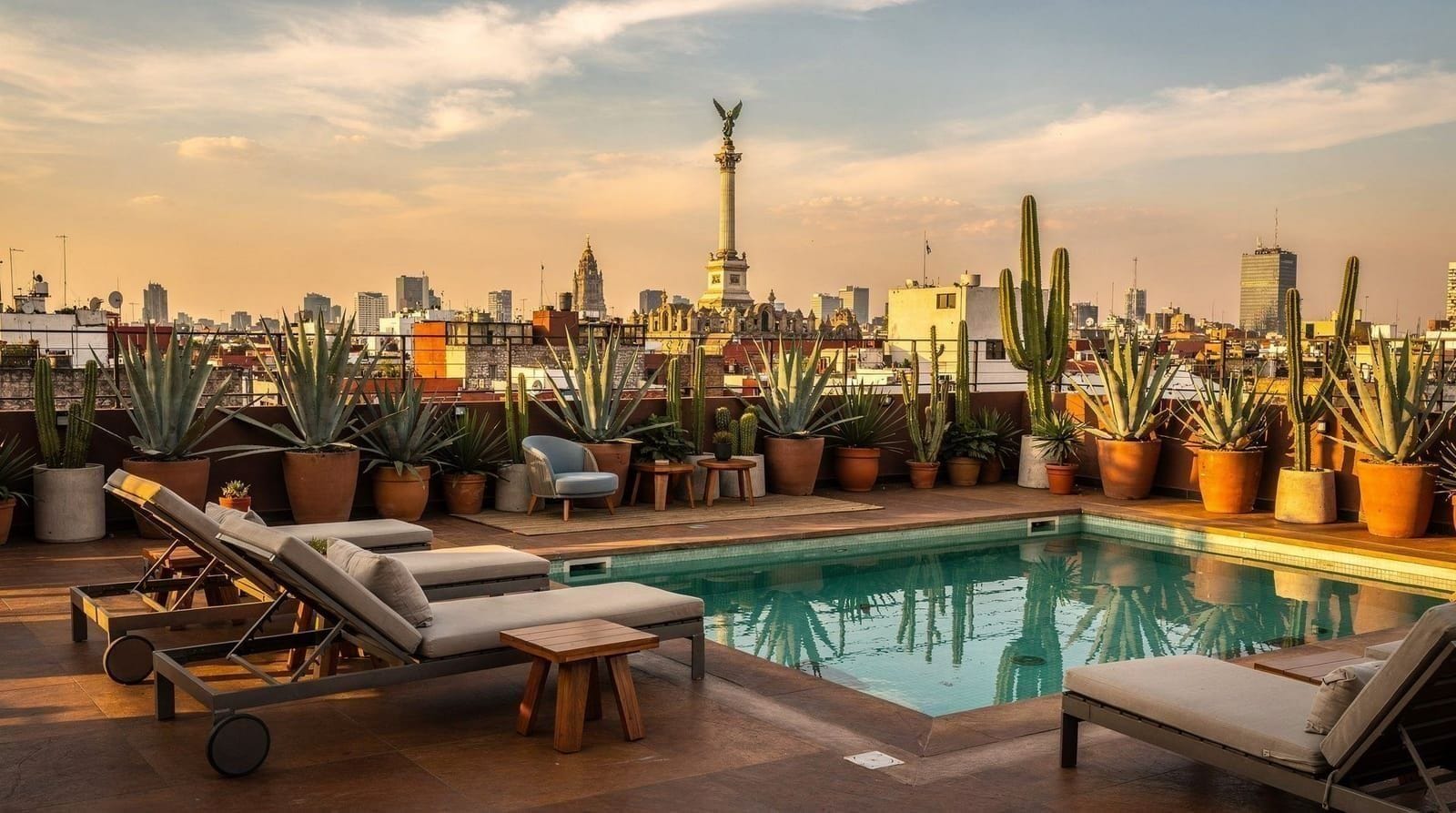
Paseo de la Reforma runs from the historic centre through the Roma-Condesa zone and into Chapultepec, serving as both a transport artery and a cultural corridor. The Ángel de la Independencia — Mexico City’s most recognisable landmark, a gilded angel on a 36-metre column marking the centennial of independence (1910) — stands on Reforma and is the gathering point for Mexico’s championship sports celebrations, protest marches, and December 31 fireworks. It is 10 minutes on foot east of the Chapultepec metro station.
The Reforma median has been progressively converted to pedestrian and cycling use on Sundays (the ciclotón). On the busiest Sundays, an estimated 20,000 cyclists use the closed lanes between Centro and Chapultepec. The bike tour along Reforma and into the park is genuinely the best way to connect the city centre and the Chapultepec cultural zone without fighting traffic.
One day versus two days in the zone
| One day | Two days | |
|---|---|---|
| Morning | Anthropology Museum (3–4 hrs) | Anthropology Museum, unhurried |
| Afternoon | Chapultepec Castle | Castle plus MAM or Museo Tamayo |
| Evening | Polanco dinner | Soumaya Museum, then Polanco dinner |
| Best for | First-timers with limited days | Museum lovers and photographers |
Chapultepec and Polanco with children
The park’s first section works well for families: the Lago de Chapultepec rowing boats, wide paths for strollers, and the castle’s terrace views give children a break from museum-hopping. The Anthropology Museum itself is large enough that young children tire before adults do — plan a shorter visit or split it across two mornings rather than pushing through the full four hours.
The Papalote Children’s Museum in the park’s second section, a short taxi ride from the castle, is built specifically for younger kids and is a good alternative to a third museum in one day. The Mexico City with kids guide covers timing and stroller logistics for this zone in more depth, and the getting around Mexico City guide explains which metro stations have working elevators.
Frequently asked questions about Chapultepec and Polanco
How much time do I need for the Anthropology Museum?
Four hours minimum for the main permanent collection if you move steadily through the 23 rooms. A comprehensive visit covering the upstairs ethnographic floor and the temporary exhibitions takes six hours. Most organised tours cover the major highlights in two to three hours. The museum is genuinely large — larger than most visitors expect.
Can I visit both the Anthropology Museum and Chapultepec Castle in one day?
Yes, but it is a full day. Start with the Anthropology Museum at 9:00 when it opens, spend three to four hours there, have lunch in Polanco (15 minutes on foot from the museum), then visit the castle in the afternoon. The castle closes at 17:00; arrive by 14:30 at the latest for a comfortable visit. A combined guided tour manages the timing professionally.
Is Chapultepec safe?
The park itself and the museum zones are safe during daylight hours. The forest sections away from the main paths — particularly in sections two and three — require more awareness after dark and are not recommended for solo visitors at night. The Polanco neighbourhood immediately north of the park is one of the safest areas in Mexico City.
What is the Soumaya Museum and is it worth visiting?
The Museo Soumaya at Plaza Carso, Blvd. Miguel de Cervantes Saavedra, is a free private museum built by telecommunications billionaire Carlos Slim. The collection includes more Rodin sculptures than any collection outside Paris, plus a range of colonial and pre-Columbian Mexican objects, European paintings (including works attributed to Dalí and Miró), and decorative arts. The building’s exterior is one of Mexico City’s most photographed contemporary buildings. Entry is free. It is worth visiting even if you disagree with the collecting logic, and the free admission makes the decision simple. See the Soumaya Museum guide for what to prioritise inside.
Where should I eat in Polanco?
Pujol and Quintonil for fine dining (book weeks ahead). El Bajío on Campos Elíseos for regional Mexican at accessible prices. The food stalls inside Mercado Presidente Masaryk for excellent tacos, quesadillas, and aguas frescas at 80–150 MXN. Café Nin on Presidente Masaryk for breakfast and all-day brunch.
Should I stay in Polanco?
Polanco is a good base if you want walkable access to the Anthropology Museum, high-end restaurants, and a very safe neighbourhood. It is farther from Coyoacán and Xochimilco than Roma or Condesa (about 20–25 minutes by Uber). See the full neighbourhood comparison in the where to stay in Mexico City guide, and see Roma-Condesa if you want a livelier, more walkable base closer to the city’s café culture instead.
How does Chapultepec-Polanco fit into a short Mexico City trip?
If you only have a weekend, the Anthropology Museum is the one non-negotiable stop in this zone — it is widely considered essential even on a tight schedule, while the castle and Soumaya can be trimmed if time runs short. The weekend itinerary allocates a single morning here alongside Centro Histórico; a longer 3-day itinerary gives the full day this zone deserves.
Top experiences
Bookable activities with verified prices and instant confirmation on GetYourGuide.