Can you climb the pyramids at Teotihuacan? The 2024 ban explained
Mexico City: Teotihuacan Pyramids Early Access Guided Tour
Can tourists climb the Teotihuacan pyramids?
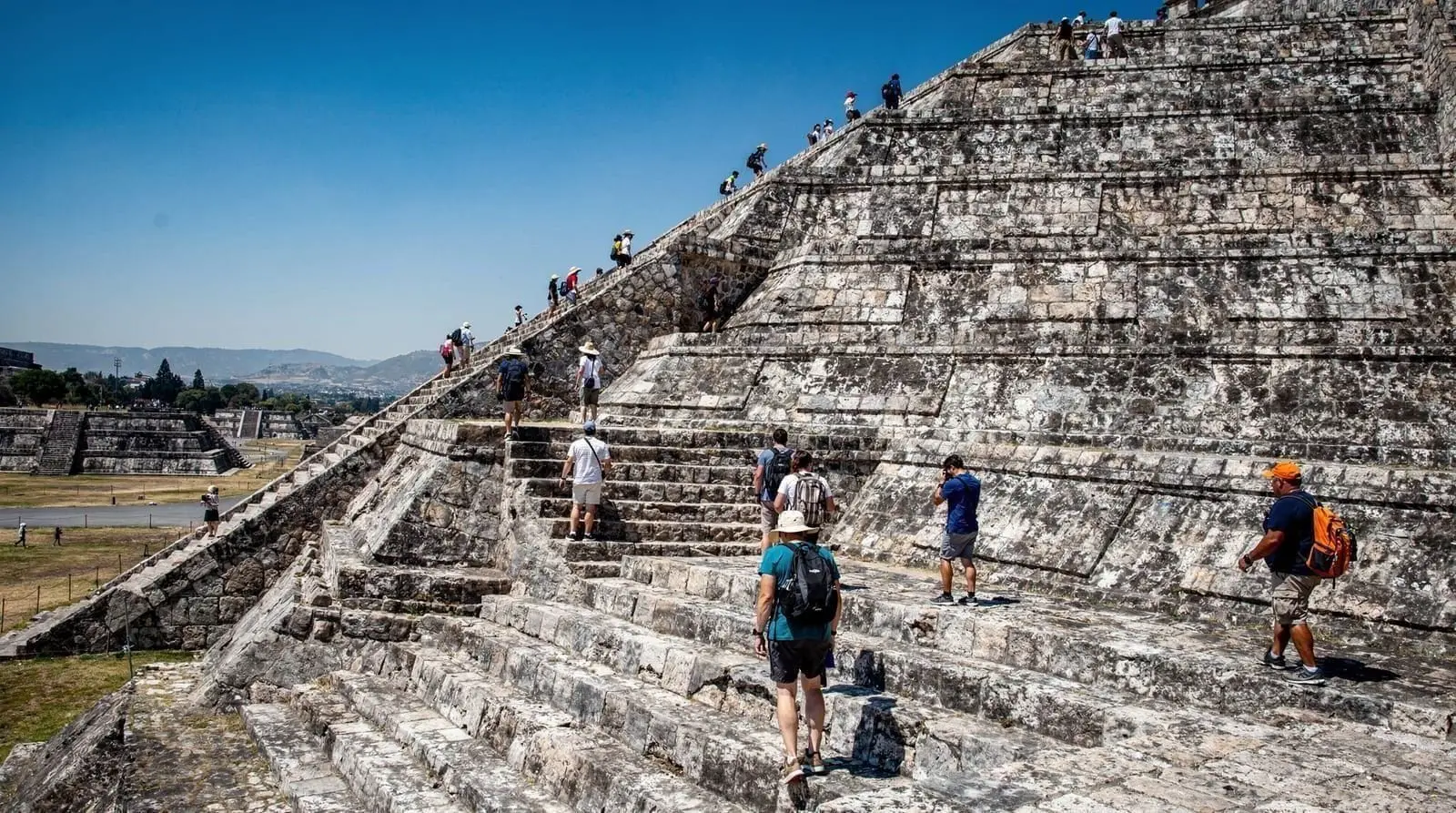
No. Since 2024, climbing the Pyramid of the Sun, Pyramid of the Moon and the Temple of Quetzalcoatl has been prohibited. The ban is permanent, not seasonal. You can walk the full Avenue of the Dead, explore the Ciudadela, and examine all pyramid bases at ground level — the archaeology is fully accessible, just not the stairways.
The short answer
No, you cannot climb the pyramids at Teotihuacan. The ban took effect in 2024 and covers the Pyramid of the Sun, the Pyramid of the Moon, and the Feathered Serpent Pyramid inside the Ciudadela. The restriction is permanent and enforced.
If you’ve been planning a Teotihuacan trip based on older travel content (much of which still shows people on the stairs), this is the update you need.
| Status | Permanent ban, in effect since 2024 |
| Applies to | Pyramid of the Sun, Pyramid of the Moon, Feathered Serpent Pyramid |
| Still accessible | Full Avenue of the Dead, Ciudadela, all pyramid bases |
| Aerial alternative | Hot air balloon flight (sunrise departures) |
| Enforcement | Barriers + on-site security, no exceptions |
What changed and why
Teotihuacan is administered by INAH — Instituto Nacional de Antropología e Historia — the Mexican government body responsible for all archaeological sites in the country. INAH has been monitoring structural deterioration at the Pyramid of the Sun for years. The stone steps were not engineered for millions of shoes; they were built from volcanic tepetate aggregate and various fills that degrade under compressive loading and abrasion.
At peak visitor density (weekend mornings, school holidays, Holy Week), the stairways saw concentrated human traffic that created wear rates incompatible with preservation on any practical timescale. The Pyramid of the Moon had significant erosion on its approach stairs. The Feathered Serpent Pyramid faced damage to the carved serpent head decorations at its base from visitors crowding for photographs.
The broader context is a global trend: Chichén Itzá’s El Castillo pyramid was closed to climbers in 2008. Machu Picchu in Peru has progressively restricted access to Huayna Picchu. Angkor Wat in Cambodia closed the steep outer stairs. The logic is consistent — these structures are irreplaceable and cannot absorb unlimited visitor contact.
What the ban does and doesn’t affect
Banned:
- Climbing any stairway on the Pyramid of the Sun
- Climbing any stairway on the Pyramid of the Moon
- Climbing the Feathered Serpent Pyramid
- Standing on any pyramid platform or terrace
Still fully permitted:
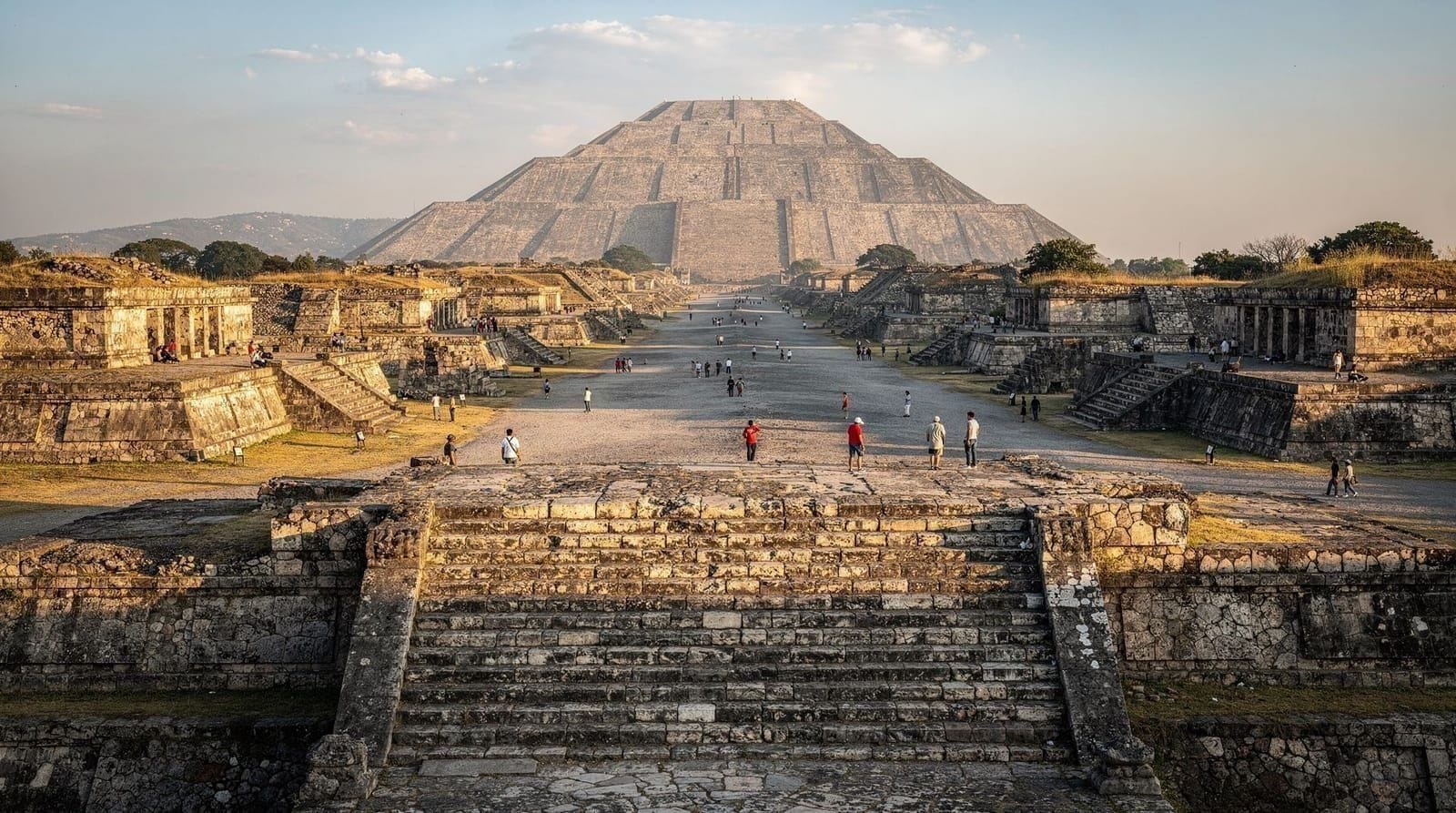
- Walking the entire Avenue of the Dead (4 km axis through the site)
- Entering and walking through the Ciudadela (the large sunken plaza)
- Walking up to and around the base of both major pyramids
- Examining the carved facades of the Feathered Serpent Pyramid at ground level
- Visiting the apartment compound murals at Tepantitla and Tetitla
- Entering the Museo de Sitio (on-site museum)
- Walking through all open plazas and platform bases along the avenue
In other words, about 95% of what there is to see and do at Teotihuacan is completely unchanged. The climbing experience itself was brief (5–10 minutes each way) and the view, while impressive, is available from the balloon. The archaeology remains entirely accessible.
The view alternative: hot air balloon
The most common objection to the climbing ban is loss of the aerial perspective — looking down the full length of the Avenue of the Dead from the Pyramid of the Sun summit. That view is now better obtained from a hot air balloon at 200–400 m altitude, where the full layout of the city (including sections outside the climbing view angle) is visible.
A balloon flight over Teotihuacan with transport from Mexico City costs significantly more than a general entry ticket, but it provides a view that the pyramid summit never could: a true bird’s-eye perspective on the entire 83 km² ceremonial city, not just the Avenue of the Dead. Flights at sunrise are the most photographically rewarding.
The early access vs. balloon guide has a full comparison.
What a ground-level visit actually covers
Visitors who “just wanted to climb to the top” sometimes dismiss the site as diminished by the ban. This reflects how little of Teotihuacan the climbing experience actually engaged with. The archaeology of this site goes far beyond looking down from a height:
The Ciudadela and Temple of Quetzalcoatl: This was the political and religious centre of Teotihuacan. The carved serpent head facade represents some of the finest stone carving in Mesoamerica, with alternating Quetzalcoatl and Tlaloc (or War Serpent) heads. Mass sacrificial burials beneath the temple — over 200 individuals in warrior dress — speak to the scale of ritual practice here. This structure is fully accessible at ground level and received relatively little tourist attention compared to the pyramids, which means you can often examine it in relative peace even on busy days.
The murals of Tepantitla: The Tlalocan mural in the Tepantitla apartment compound is one of the most complex narrative paintings to survive from the pre-Columbian world. It depicts paradise — a lush, populated world presided over by the rain deity. Figures play, bathe, sing, pick flowers. The interpretation has been contested for decades. It is 15 minutes’ walk from the Pyramid of the Moon and usually uncrowded.
The Avenue of the Dead at 08:00: In early morning before the coach tours arrive, walking the full length of the avenue is a physically impressive experience. The scale of the urban planning — a 4 km processional axis flanked by platforms, temples and plazas — is most legible when you’re moving through it at ground level, not watching from above.
How guides have adapted
Licensed archaeologist guides at Teotihuacan have shifted their interpretive focus accordingly. The previous common tour structure (“walk to pyramid, climb pyramid, look out, climb other pyramid”) has been replaced with more substantive engagement with the Ciudadela complex, the apartment compounds, and the site’s pre-Aztec history — areas that are richer in interpretive content than the pyramid summits ever were.
A guided early-access tour with a licensed guide at 08:00 now delivers more historical content and archaeological context than the old climb-focused visits, if the guide is good. Ask specifically about the Ciudadela and murals when booking; some guides still default to pyramid-centric narration.
For visitors who specifically came to climb
If your primary reason for visiting Teotihuacan was the pyramid climbing experience, that is no longer available and no workaround exists. The honest advice:
- The site is still worth visiting for different reasons — the history, the architecture at ground level, the murals
- The hot air balloon provides the aerial perspective
- Chichén Itzá’s El Castillo has been closed since 2008 and people still visit in millions — Teotihuacan will not suffer from this
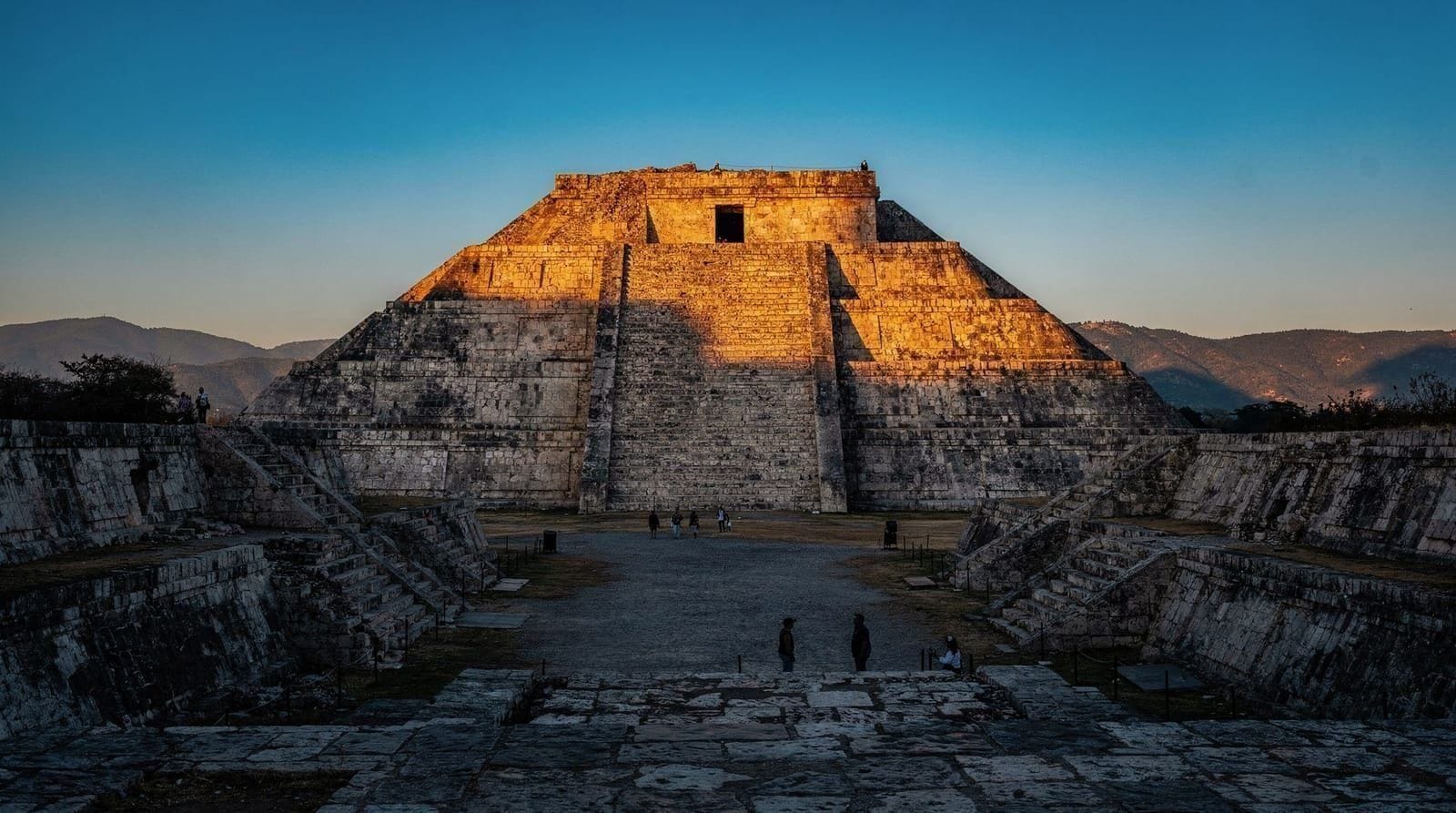
If you’re specifically interested in structures you can still access at elevation in Mexico, smaller sites like Monte Albán in Oaxaca and some structures at Uxmal (Yucatán) may still permit supervised access. Check current INAH policies before travelling specifically for this purpose.
Frequently asked questions about the Teotihuacan climbing ban
Is there any exemption — archaeological workers, press, special access?
INAH and their authorized researchers have access as part of ongoing conservation work. There is no tourist exemption for any category. Photography permits, early-access tour permits, and private guide licenses do not include pyramid access.
Did the climbing ban reduce visitor numbers?
Teotihuacan visitor numbers have not significantly declined since the ban. The site remains one of Mexico’s most visited attractions and a major UNESCO World Heritage site. The climbing experience was one element among many; the site’s historical significance and scale remain compelling.
I’ve seen recent photos on social media showing people on the stairs. Is the ban real?
Older photos from before 2024 continue to circulate. Any photo showing tourists on the pyramid stairs was taken before the ban took effect. The ban is real, current, and enforced in 2026.
Are the stairs still visible?
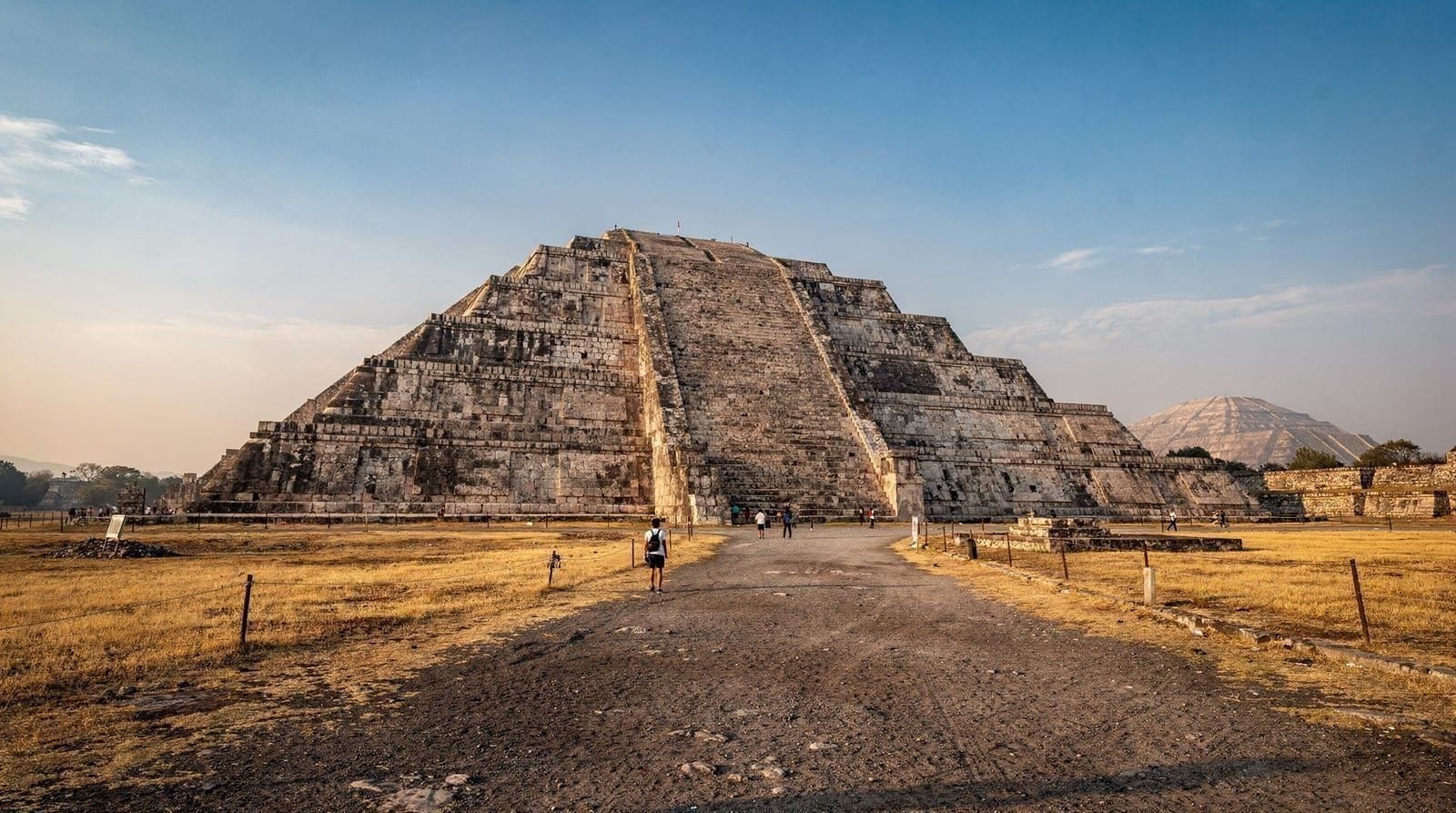
Yes — the original stone stairways are visible on all the pyramids. They’re just roped off at the base. You can photograph the stairs, examine the construction, and stand at the base looking up at the full height. The restriction is on ascending them.
Can children still visit if they can’t climb?
The absence of climbing does not reduce Teotihuacan’s suitability for children in any significant way. The Mexico City with kids guide notes that the Avenue of the Dead, the Ciudadela, and the ground-level exploration remain engaging for children — and the removed hazard of children climbing ancient steep stone stairs in summer heat is a practical improvement.
When did the climbing ban at Teotihuacan take effect?
The prohibition on climbing the pyramids was implemented in 2024. The decision followed years of debate about structural damage caused by foot traffic on the ancient stone steps. The ban covers the Pyramid of the Sun, Pyramid of the Moon, and the Feathered Serpent Pyramid.
Why did Mexico ban climbing at Teotihuacan?
The pyramids receive around 4 million visitors per year. Decades of foot traffic on the stone steps caused measurable erosion and structural damage. INAH (the National Institute of Anthropology and History) concluded that unrestricted climbing was incompatible with long-term preservation. Similar bans exist at Chichén Itzá (since 2008) and at many other major Mesoamerican sites.
Is the view from the top of the pyramids worth it? Could it have been?
The view from the top of the Pyramid of the Sun was impressive — a 360-degree panorama over the entire site and valley. That said, the view is now accessible via hot air balloon at a fraction of the structural impact. Visitors who climbed before 2024 describe the summit experience as memorable, but the new restriction does not prevent a deeply rewarding visit.
Which pyramids can you no longer climb?
The three main structures: the Pyramid of the Sun (the largest), the Pyramid of the Moon (the northern terminus of the Avenue of the Dead), and the Feathered Serpent Pyramid (Temple of Quetzalcoatl, inside the Ciudadela). Smaller platform structures along the Avenue of the Dead were never open for climbing.
Is the ban enforced? Will guards stop me?
Yes, the ban is enforced. Barriers and ropes are in place at the base of the stairs, and security staff monitor the areas. Attempting to climb results in removal from the site. There are no exceptions for any visitor category.
Is Teotihuacan still worth visiting now that climbing is banned?
Absolutely. The pyramids’ scale and the site’s historical significance are fully apparent at ground level. The Temple of Quetzalcoatl, the Avenue of the Dead, the apartment compound murals at Tepantitla and Tetitla, and the site museum are all unchanged and inaccessible from the top of a pyramid anyway. Climbers walked to the top and looked down; ground-level visitors look up and walk the architecture as intended.
Are there any other Aztec or Mayan pyramids you can still climb in Mexico?
Options are diminishing as preservation concerns spread. Teotihuacan and Chichén Itzá no longer permit climbing. Uxmal in Yucatán still allows climbing on some structures (check current policy). Coba in Quintana Roo had its climbing ban take effect in 2019. The clearest legal climbing experience in Mexico is now at smaller sites. Check INAH policies before planning a trip specifically for pyramid climbing.
Comparison with other sites where climbing has been restricted
Teotihuacan is not unusual globally in restricting pyramid access. The trend across major archaeological sites is clearly toward ground-level preservation as visitor numbers have increased beyond what ancient structures can absorb:
Chichén Itzá (Mexico, Yucatán): El Castillo pyramid closed to climbing in 2008, after a tourist fell and died descending the steep stairs. Visitor numbers have continued to increase since the closure. The Chichén Itzá model is the closest parallel to Teotihuacan — also a UNESCO site, also Mexico, also driven by both safety and preservation concerns.
Coba (Mexico, Quintana Roo): The Nohoch Mul pyramid was closed to climbing in 2019. Previously one of the few major Yucatán pyramids still allowing ascent, its closure removed the last legal climbing option at a major Yucatán Maya site.
Angkor Wat (Cambodia): The central sanctuary stairs were closed in 2019 for preservation reasons, though outer sections remain accessible under restricted conditions.
The pattern: Major archaeological sites globally are moving toward separation of physical visitor contact from the structures themselves. Digital interpretation (augmented reality guides, QR code content, detailed signage) is becoming the substitute for the physical “on top of it” experience that earlier generations of tourists expected.
What archaeologists say about the ban
INAH’s decision was supported by a broad consensus in Mexican archaeology that unrestricted tourist access to pyramid surfaces was incompatible with long-term conservation. Some specific concerns:
Mechanical erosion: Each footstep on the pyramid stones applies force that, multiplied across millions of visitors annually, causes measurable abrasion of the stone surface. At Teotihuacan, the stone is volcanic tepetate (compacted ash) and basalt aggregate with organic infill — not as hard as the limestone of Chichén Itzá’s El Castillo.
Water infiltration: Foot traffic compacts and damages the vegetation-resistant surface coating that develops on old stone. Once the surface is disturbed, water enters and accelerates subsurface erosion.
Structural weight and vibration: Concentrations of human weight on summit platforms create loadings the structures were not designed to sustain, particularly on smaller platforms and at the summit of the Pyramid of the Moon.
Mortar and fill loss: The stairs at Teotihuacan are partially reconstructed using modern mortar to maintain stability. Heavy foot traffic accelerates this mortar’s degradation. Repeated conservation interventions were becoming necessary at increasing frequency before the ban.
Planning your post-ban visit
If you’re arriving with knowledge of the climbing ban and have planned accordingly, the visit agenda is clear: the Avenue of the Dead, the Ciudadela (Temple of Quetzalcoatl), the apartment compounds at Tepantitla, and the Museo de Sitio. These are the elements that reward time and attention. See the Teotihuacan complete guide for the full prioritized route.
If you’re arriving expecting to climb and discovering the ban on site, the disorientation is understandable — travel writing that predates the ban still circulates widely. The information here is current as of 2026: the ban is in effect, it applies to all visitors, and no exceptions or workarounds exist.
The day trip tours from Mexico City include Teotihuacan in the context of all available day trips, with updated notes on the current site conditions.
Fitting Teotihuacan into the rest of your trip
Because the pyramids now work as a ground-level visit, Teotihuacan slots into a Mexico City stay more easily than it used to. It no longer needs a long, energy-sapping effort at the top of the stairs, so it combines well with a lighter day elsewhere. The how to get to Teotihuacan from Mexico City guide covers the transport options, and the Teotihuacan destination page gives a quick overview of the site and its surroundings.
If you are building the trip day by day, the 3-day Mexico City itinerary and the 5-day itinerary both show where a Teotihuacan day fits between the city’s museums, neighborhoods and food stops. Travelers with more room can compare it with other excursions in the Puebla and Cholula day trip guide or the Tepoztlán day trip guide, which offer a very different pace and landscape.
Teotihuacan also pairs naturally with the city’s own archaeology. The Anthropology Museum guide is a good way to see the objects and context behind what you walk past on the Avenue of the Dead, and the Templo Mayor guide covers the later Aztec capital, which helps you understand how Teotihuacan was already a ruin when the Mexica revered it. Visiting the museum before or after the site makes the ground-level walk far more meaningful.
Finally, a day at the site is a physical one even without climbing, so it helps to read the Mexico City altitude guide and the best time to visit Mexico City guide before you commit to a date.
Timing your visit around the ban
Because ground-level exploration is now the entire visit, timing matters more than it used to for avoiding crowds. The site opens at 8am; between 10am and 2pm, coach tours arriving from Mexico City fill the Avenue of the Dead and the base areas that were previously secondary to the pyramid queues. An early-access tour starting at 7–7:30am, before the general public entrance opens, now gives genuinely uncrowded time at the Ciudadela and the pyramid bases — arguably a bigger advantage post-ban than it was when visitors were also queuing to climb.
Afternoon visits (after 3pm) are the other quiet window, with softer light for photography, though some site areas begin closing earlier than the main gates. Weekday visits (Tuesday through Thursday) are consistently quieter than weekends, and the difference is more noticeable now that all visitors are moving through the same ground-level pathways rather than being spread between the pyramid stairs and the avenue below.
Ground-level photo spots that rival the old summit view
The most photographed pre-ban shot was looking down the Avenue of the Dead from the Pyramid of the Sun. Ground level has its own strong compositions, and knowing them in advance saves time on site. The base of the Pyramid of the Moon, looking south down the full 4km avenue, gives a compressed perspective that some photographers prefer to the top-down view — the scale of the platforms flanking the avenue reads more clearly from this angle.
The Ciudadela’s sunken plaza, shot from the entrance stairs (which remain climbable, unlike the pyramid stairs), frames the Feathered Serpent Pyramid symmetrically. Early morning light (before 8:30am) is the best time for all of these — flat midday sun washes out the carved detail on the Quetzalcoatl heads.
Booking the balloon vs the early-access ground tour
Both options solve a different problem, and some visitors book both across separate trips. The balloon flight delivers the aerial context the ban removed, at a materially higher price point and with a very early, weather-dependent departure. The early-access ground tour delivers deeper archaeological interpretation — the Ciudadela, the murals, the site’s pre-Aztec history — at a lower cost and without weather risk. If you can only do one and photography is the priority, choose the balloon. If context and history are the priority, choose the ground tour with a licensed guide.
Top experiences
Bookable activities with verified prices and instant confirmation on GetYourGuide.