Teotihuacan complete guide: pyramids, history and practical tips
Mexico City: Teotihuacan Pyramids Early Access Guided Tour
What do I need to know before visiting Teotihuacan?
Teotihuacan is 50 km northeast of Mexico City, open daily 08:00–17:00. Entry costs 210 MXN (about $11 USD). Since 2024, climbing the pyramids is no longer permitted. Arrive before 10:00 to beat crowds and heat. A full visit takes 3–4 hours on foot.
What is Teotihuacan?
Teotihuacan — “the place where the gods were created” in Nahuatl — was once the largest city in the pre-Columbian Americas and among the largest in the ancient world. At its peak around 450 CE, it housed an estimated 125,000 to 200,000 people, making it comparable to imperial Rome. This was not an Aztec city: the Aztecs arrived centuries after Teotihuacan had already been abandoned, and they named it, revered it as sacred, and incorporated its mythology into their own cosmology.
| Where | 50 km northeast of Mexico City |
| Cost | 210 MXN entry, Museo de Sitio included |
| Time needed | 3–4 hrs on foot, 4.5 hrs with the museum and mural detours |
| Getting there | Bus from Terminal Norte, Uber/DiDi, or a guided tour |
| Best time | Weekday mornings, at opening (08:00), for coolest temperatures and fewest crowds |
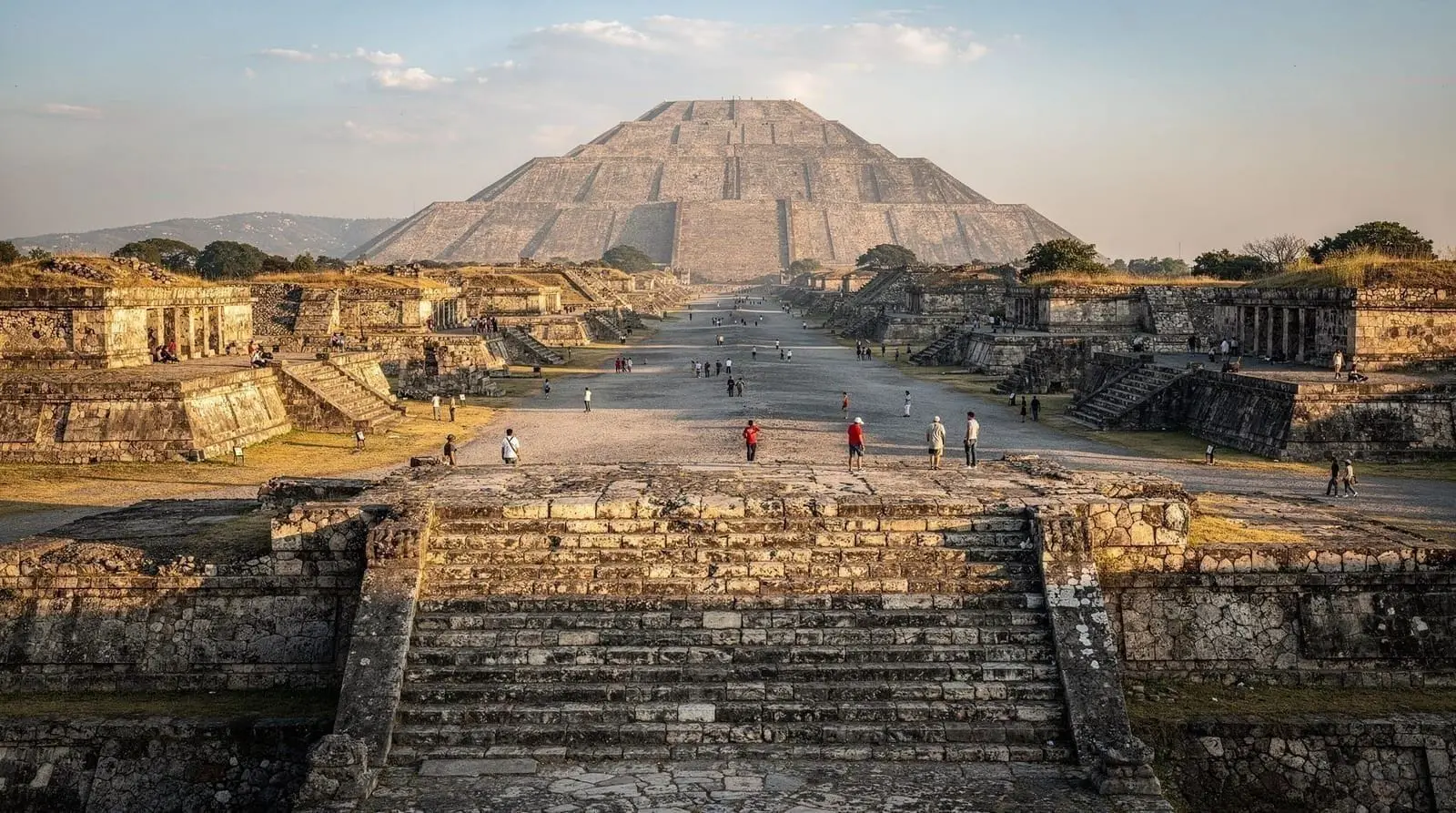
Today the site covers roughly 83 km² — though the UNESCO World Heritage archaeological zone open to visitors is a more manageable slice — and sits at 2,300 m elevation, 50 km northeast of Mexico City. On a clear morning, with the Avenue of the Dead stretching north and the Pyramid of the Sun to your right, it remains one of the most powerful archaeological experiences in the Americas.
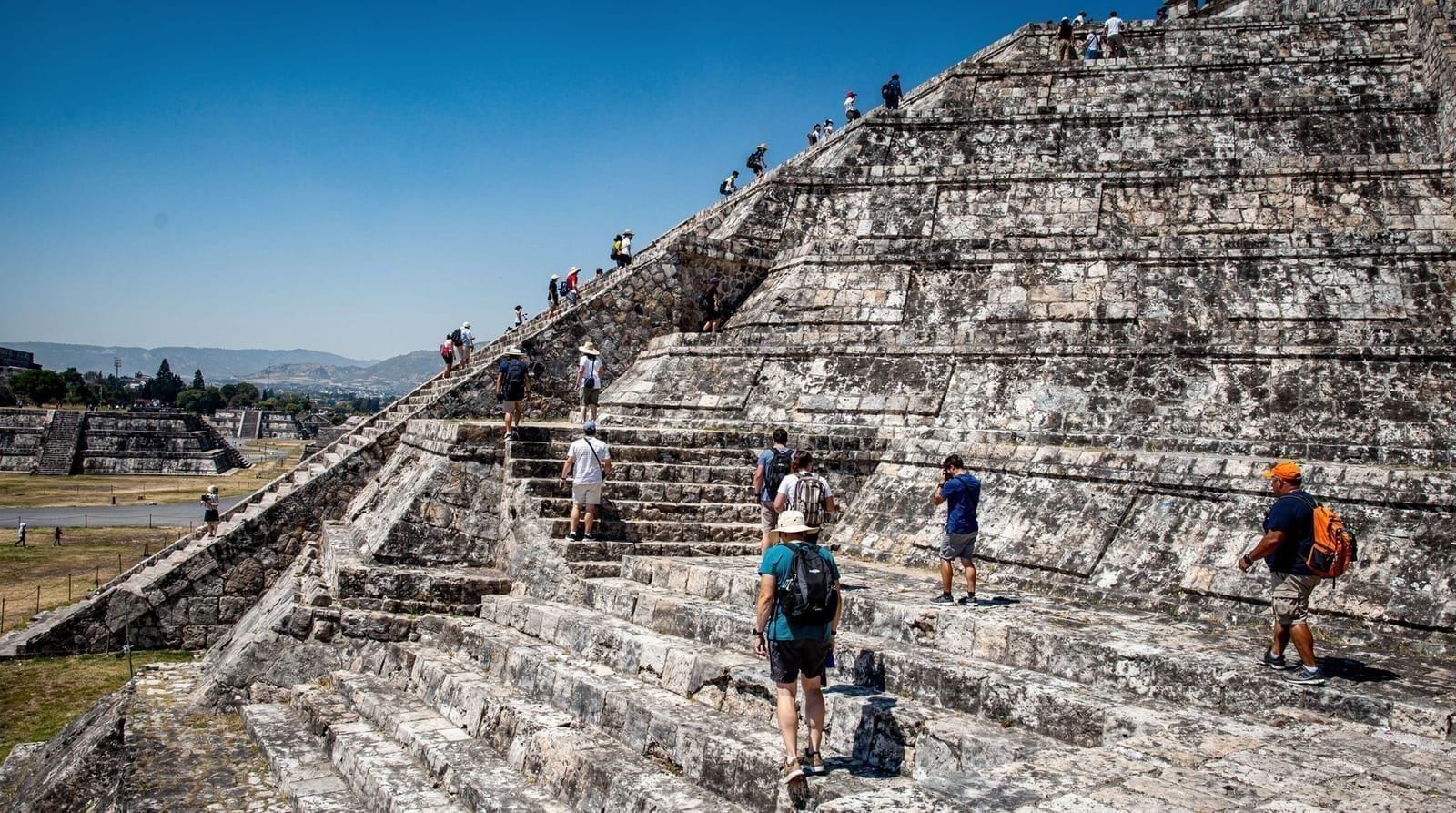
One critical update for 2026: the pyramids cannot be climbed. The prohibition took effect in 2024 to protect the structures from erosion caused by millions of visitors per year. If you last visited before 2024, your experience will be different — but the site is entirely worth the trip regardless.
Getting to Teotihuacan
The full logistics are covered in the how to get to Teotihuacan from Mexico City guide, but the key options are:
Organized tour (recommended for first-timers): Guided day trips pick you up from your hotel in Mexico City and include transport, entrance fee and a guide. A guided early-morning entry tour is the best value-for-time option — you get the site before the crowds and the heat.
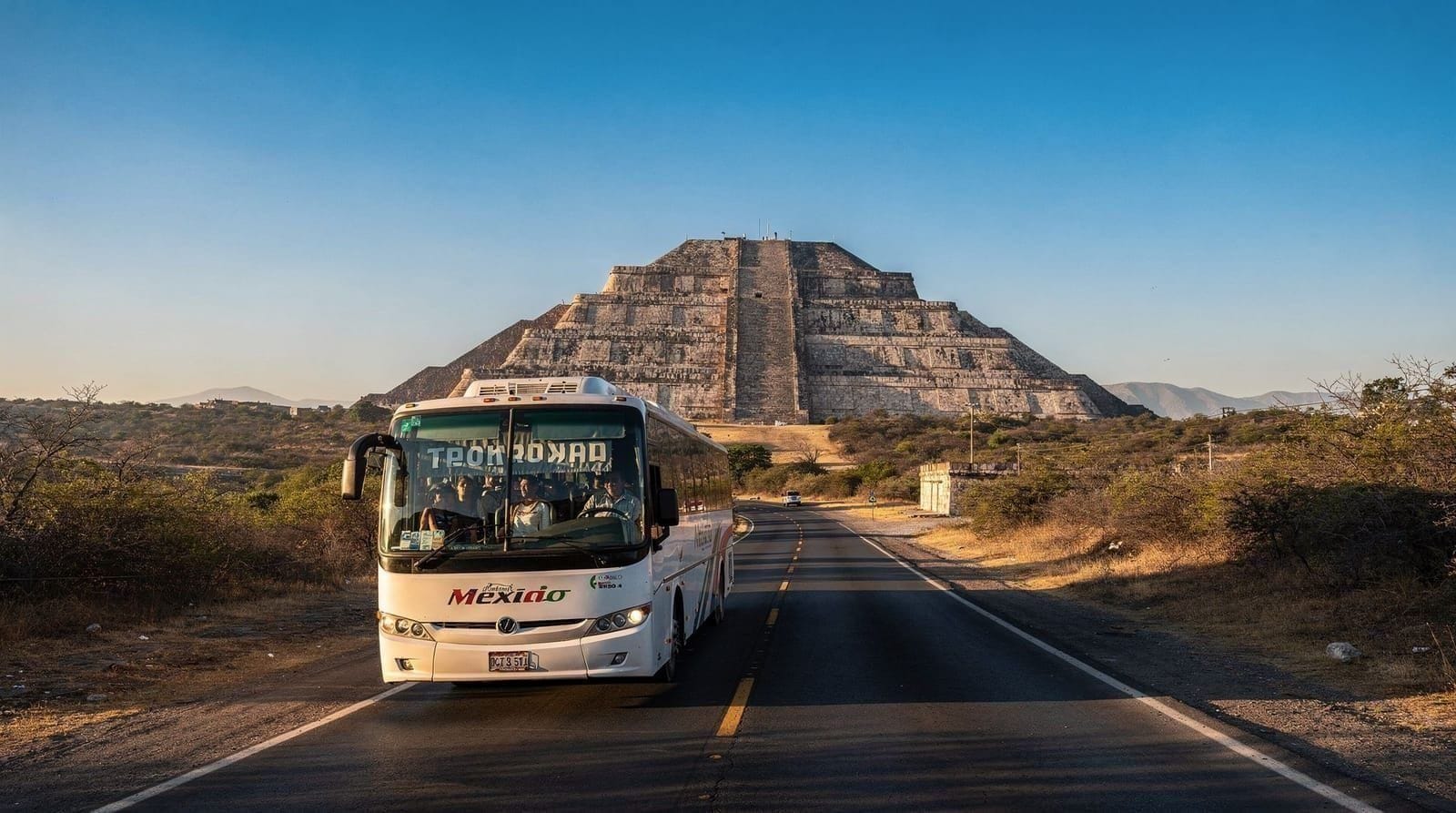
Public bus from Terminal Norte: Regular departures from Mexico City’s northern bus terminal (Metro Autobuses del Norte, Line 5). The bus company is Autobuses Mexico–San Juan Teotihuacan; fare is about 55 MXN each way. Journey is roughly 1 hour 20 minutes. This is the cheapest option and entirely viable if you’re comfortable navigating independently.
Uber/DiDi from CDMX: Around 300–400 MXN each way from central Mexico City. The driver won’t wait (it’s a full day), so you’ll need to book a return or flag a taxi/use an app at the site. Some drivers negotiate a full-day wait at the site for around 700–900 MXN.
Tourist transfers (without a guide): Several operators offer transport only from Mexico City, which is cheaper than a full guided tour but leaves you without interpretation on site.
Layout of the site
Understanding the layout before you arrive helps enormously. Teotihuacan is organized along a central axis — the Avenue of the Dead (Calzada de los Muertos) — running roughly 4 km from north to south. All major monuments are oriented relative to this axis.
Ciudadela (Citadel): Entering from Gate 1, the Ciudadela is immediately to your left. This enormous sunken plaza — the size of several football pitches — contains the Temple of Quetzalcoatl (officially the Feathered Serpent Pyramid), which is the most ornately decorated structure on the site. The carved stone heads alternating between Quetzalcoatl (feathered serpent) and Tlaloc (rain god) on the stepped facade are extraordinary.
Avenue of the Dead: Walk north from the Ciudadela and you’re on the main axis. The name comes from the Aztecs, who believed the platform mounds flanking the avenue were tombs — they are actually the bases of smaller temples.
Pyramid of the Sun: 2 km north of the Ciudadela and impossible to miss. With a base of 220 × 230 m and an original height of around 65 m, it is the third-largest pyramid in the world by volume. You can walk the perimeter at ground level, examine the carved details close-up, and read the interpretive panels.
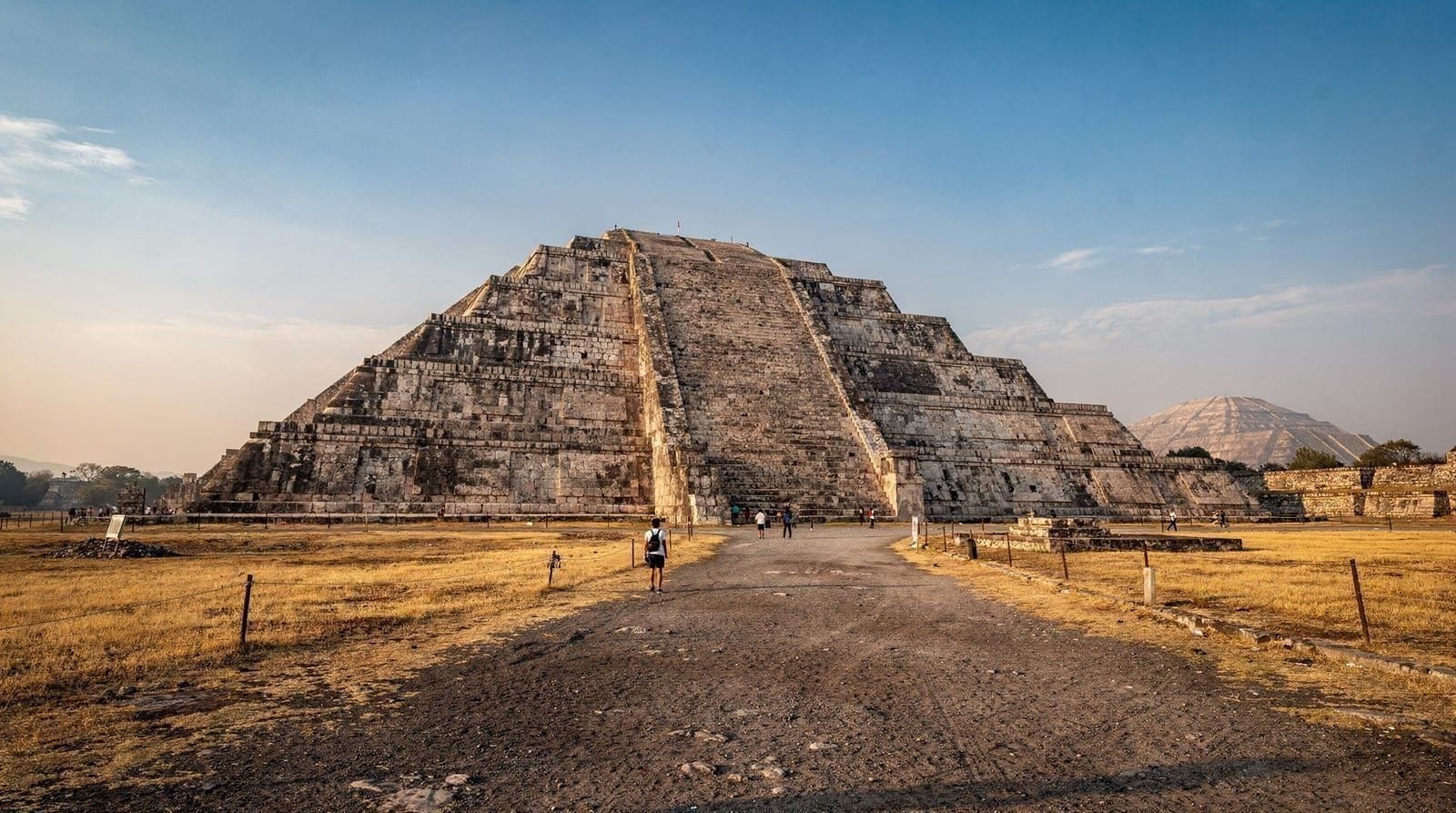
Pyramid of the Moon: At the northern end of the Avenue of the Dead, set against the backdrop of Cerro Gordo hill. Slightly smaller than the Pyramid of the Sun but photographically framed by the hill behind it. The Plaza of the Moon in front contains sacrificial altar structures.
Museo de Sitio: Located near Gate 1, this site museum holds artifacts excavated from Teotihuacan including obsidian figurines, murals, and the famous Tlaloc rain god vessels. Allow 45 minutes and consider it essential for context. Included in the ticket.
The Temple of Quetzalcoatl: don’t walk past it
Many visitors make a beeline for the big pyramids and spend minimal time at the Ciudadela. This is a mistake. The Temple of Quetzalcoatl (Feathered Serpent Pyramid) has the finest stone carving at Teotihuacan and is better preserved than most visitors expect.
The facade features alternating carved stone heads of two deities: Quetzalcoatl (the feathered serpent, with fanged open mouth and surrounding feathers) and a figure sometimes identified as Tlaloc or as the War Serpent. The original facade would have been painted in vivid reds and greens — traces of original pigment are occasionally still visible. The scale is impressive but the detail is what makes it.
Mass sacrifices occurred here: excavations below the temple found over 200 human skeletons, mostly young men in warrior dress, arranged in groups corresponding to the Mesoamerican calendar. This is serious archaeology, not decorative mythology.
The murals of Tetitla and Tepantitla
Most visitors to Teotihuacan don’t know that the best murals are not in the main ceremonial zone but in the residential apartment compounds to the west and east of the main site. Tetitla and Tepantitla are two of the excavated apartment complexes with painted walls still intact.
Tepantitla contains the famous “Tlalocan” mural — a large, complex scene depicting the paradise of Tlaloc, the rain god, with figures bathing, playing, and picking flowers. It was long misidentified; current scholarship still debates the exact interpretation. Tetitla has more extensive mural coverage with jaguar, net-jaguar, and processional scenes.
Access to these compounds is included in the general site entry; they are a 15–20 minute walk from the main area and worth the extra time.
Hot air balloon option
An early-morning balloon flight over the pyramids is one of the most distinctive ways to see Teotihuacan. Flights launch at sunrise (typically 06:00–07:00), and the light at that hour over the pyramids is genuinely spectacular. The balloon flight with breakfast packages include transport from Mexico City, the flight (30–45 minutes), and breakfast at one of the haciendas near the site.
Expect to pay around 2,500–3,500 MXN ($130–185 USD) per person for a quality balloon experience. Budget operators exist at lower prices; check operator credentials carefully — this is aviation, not a theme park ride. The Teotihuacan early access vs. balloon guide compares both options in detail.
What the site does not have
Managing expectations prevents disappointment:
No shade. Combined with the thin air of the high plateau (see the Mexico City altitude guide), the sun and the walking tire people faster than they expect. The Avenue of the Dead and the pyramid plazas are fully exposed. There are a handful of trees near the Ciudadela, but the main site is an open sun-trap. Midday from June to October is brutal.
No cafeteria (worthwhile). There is a cafeteria near Gate 1 and vendors throughout the site, but the quality is mediocre and prices are inflated. Bring your own food and water if you want a good lunch. For what is safe to eat and drink along the way, see the tap water and food safety guide.
Crowded on weekends. Saturday and Sunday see many Mexican families visiting along with international tourists. Weekday mornings are noticeably quieter. If you must visit on a weekend, be at the gates when they open at 08:00.
No ladder-free experience. The site involves substantial walking on uneven stone surfaces. There are no elevators. Visitors with significant mobility limitations should note that access to the pyramid bases and most of the site involves unpaved paths and stone steps.
Guided tour vs. self-guided
The interpretive panels at Teotihuacan are decent but incomplete — they give dates and names without much historical narrative. A licensed archaeologist guide makes a real difference. The private tour with an archaeologist guide and pickup is the premium option — expensive but genuinely transformative.
Budget self-guided visitors should download one of the offline audio guide apps before arriving; cell reception inside the site is inconsistent.
If you want more context before you go, a visit to the National Museum of Anthropology in Mexico City is a natural warm-up: it puts Teotihuacan alongside the other cultures of ancient Mexico, so the site makes more sense when you stand in it.
Practical timing on site
A well-paced visit follows this order:
- Enter Gate 1, turn left immediately to the Ciudadela and Temple of Quetzalcoatl (45–60 min)
- Walk north up the Avenue of the Dead (15 min)
- Pyramid of the Sun — walk the perimeter, examine the base details (30 min)
- Continue north to the Pyramid of the Moon plaza (20 min)
- Optional detour east to Tepantitla murals (30 min each way)
- Return to Gate 1 via the Avenue of the Dead
- Museo de Sitio if time remains (45 min)
Total: approximately 3.5–4.5 hours at a comfortable pace.
Souvenirs and the vendor gauntlet
The area outside Teotihuacan’s gates is lined with souvenir vendors selling obsidian figurines, onyx carvings, feathered headdresses, and the ubiquitous jaguar whistle that makes a convincing roar when blown. Prices start high and drop 40–60% with negotiation; this is expected. Obsidian is genuinely mined near Teotihuacan and the quality pieces are worth buying — the carved masks and geometric pendants are authentic crafts. The $1 USD whistles are tourist trinkets.
Avoid buying “authentic pre-Columbian artifacts” from any vendor; this is illegal, and the items are reproductions anyway.
Teotihuacan vs. Mexico’s other major pyramid sites
Teotihuacan is not the only pre-Columbian site within reach of Mexico City, and it’s worth understanding where it sits in context. The Great Pyramid of Cholula, near Puebla, is larger by volume but far less visually dramatic — centuries of vegetation have given it the appearance of a hill with a colonial church on top, and its appeal is the tunnels rather than exposed monumental architecture.
Templo Mayor, in the heart of the capital, is a single excavated Aztec temple precinct rather than an entire ancient metropolis — deep and specific where Teotihuacan is broad and monumental. Our Templo Mayor guide explains what to look for there, and the Puebla and Cholula day trip guide covers the Cholula option in more depth. Teotihuacan’s distinction is scale and completeness: an entire pre-Columbian city, with residential compounds, ceremonial avenues and three major pyramids preserved and open together, unmatched by anything else within day-trip range of CDMX.
Transport edge cases
Combi vs. direct bus: Some travellers get routed onto a slower combi (shared van) service rather than the direct Autobuses Mexico–San Juan Teotihuacan coach. Confirm at the Terminal Norte ticket counter that you’re booking the direct service — it’s a meaningfully faster and more comfortable ride for a similar price.
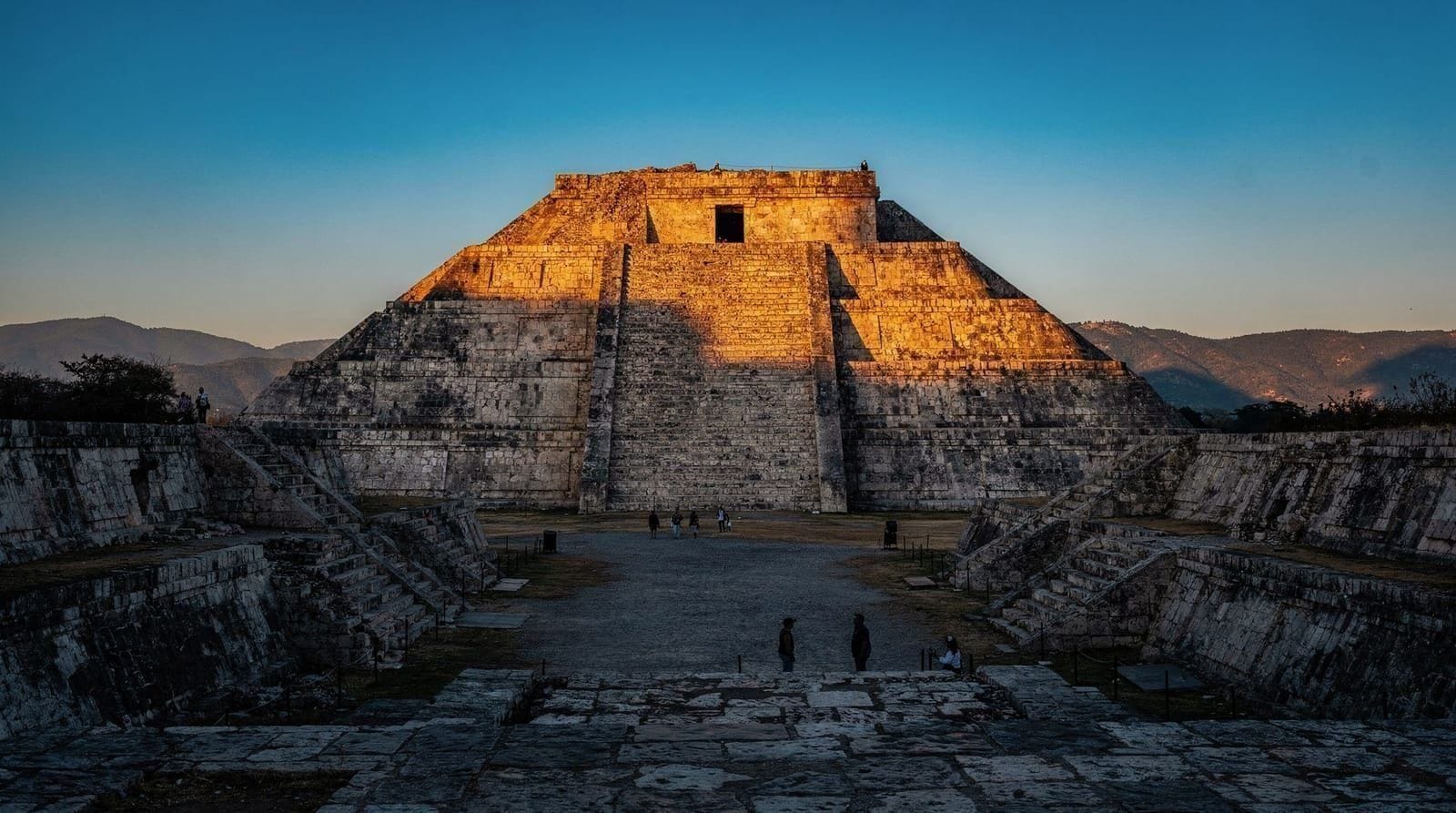
Returning after dark: The last direct buses back to CDMX typically run until around 18:00–19:00 from the site’s main bus stop near Gate 1. If you linger past closing for photography of the golden-hour light on the pyramids from outside the gates, confirm your return option before the site closes rather than after.
Combining Teotihuacan with other sites
The most logical combination is Teotihuacan plus Basílica de Guadalupe, which can be done in a single long day from Mexico City. The Basílica is 40 minutes south of Teotihuacan by car (or tour bus) and is covered in the Basílica de Guadalupe destination page. Several organized tours cover both sites. Start at Teotihuacan early (08:00) and reach the Basílica by early afternoon.
For Mexico City 3-day itineraries, Teotihuacan typically occupies the dedicated day-trip slot on day two or three. In 4-day itineraries, it pairs well with the Basílica in a full-day excursion leaving days one and four for city neighborhoods.
Best time of year to visit
| Season | Conditions |
|---|---|
| November–February | Coolest and driest; clearest skies for photography, but chilly at 08:00 opening |
| March–May | Hot and dry; the exposed site is at its most intense at midday |
| June–October | Rainy season; mornings are usually clear, afternoon showers typical from 14:00–16:00, greener surroundings and thinner crowds |
| Weekends year-round | Busiest regardless of season — Mexican families and international tour groups both concentrate here |
Whatever the season, the best time to visit Mexico City guide has the fuller picture of how Teotihuacan’s climate fits the rest of a CDMX trip, and the best day trips from Mexico City guide compares Teotihuacan against the other major excursions if you’re deciding how to allocate limited days.
Frequently asked questions about Teotihuacan
Can you still climb the Pyramid of the Sun?
No. Climbing was prohibited in 2024 to protect the pyramids from structural erosion caused by foot traffic. All three major pyramids — the Pyramid of the Sun, Pyramid of the Moon, and the Feathered Serpent Pyramid — are now ground-level viewing only. The full explanation is in the separate guide.
How early should I arrive at Teotihuacan?
The site opens at 08:00. Arriving at opening time gives you the best conditions: cooler temperature, minimal crowds, and better light for photography. By 11:00 large coach tours fill the Avenue of the Dead and the temperature rises sharply. Early-access tours enter right at opening, ahead of the coach-tour crowds, through specific operators, such as this early visit to Teotihuacan ahead of the general public.
Is the hot air balloon worth the price?
At 2,500–3,500 MXN ($130–185 USD) it is a significant spend on top of your existing Mexico City travel costs. If aerial photography and a dramatic sunrise experience are priorities, yes. If your main interest is the archaeology and history, the ground-level experience is equally informative and the money is better spent on a good private guide.
What is the difference between the Pyramid of the Sun and Pyramid of the Moon?
The Pyramid of the Sun is larger (base: 220 × 230 m, height ~65 m) and is the third-largest pyramid in the world by volume. The Pyramid of the Moon is smaller but architecturally more sophisticated — it was rebuilt seven times over centuries, each new pyramid encasing the previous one. The Moon Pyramid’s plaza contains the most significant sacrificial evidence.
Are there restaurants inside Teotihuacan?
There is a cafeteria near Gate 1, but the food is unremarkable and expensive. Several hacienda-restaurants operate adjacent to the site (particularly near Gate 3), offering buffet lunches that include pulque (the traditional fermented agave drink of the region). These hacienda lunches are included in many organized tours and are a genuinely good meal.
Do I need to book tickets in advance?
The general entry fee (210 MXN) can be paid at the gate — no advance booking required. However, organized tours require advance booking, especially for early-access slots and balloon flights. On weekends and during Mexican school holidays, the site can reach capacity; arriving at opening time is sufficient for independent visitors.
Is Teotihuacan suitable for children?
Yes, with preparation. The main challenge is the walking distance (3–5 km of open terrain) and the heat. Children who enjoy outdoor exploration and have some tolerance for walking will find it engaging, particularly if accompanied by a guide who contextualizes the scale and the history. The Mexico City with kids guide has more on family-oriented pacing.
Can you climb the pyramids at Teotihuacan?
No. As of 2024, climbing the Pyramid of the Sun, Pyramid of the Moon and the Temple of Quetzalcoatl is prohibited to protect the structures. You can walk the Avenue of the Dead, enter the Ciudadela, and explore the base of the pyramids at ground level.
How much does Teotihuacan entry cost?
The federal entry fee is 210 MXN (roughly $11 USD) per person. This covers the archaeological zone and the on-site Museo de Sitio. Children under 13 enter free. Sunday free entry applies only to Mexican nationals and residents of Mexico with ID; foreign tourists pay the full price on Sundays too.
What time does Teotihuacan open and close?
Teotihuacan is open daily from 08:00 to 17:00 (last entry 16:30). The site does not close for Mexican holidays. Early morning is the best time: cooler, quieter, and better light for photography.
How long do you need at Teotihuacan?
Budget at least 3 hours to walk the Avenue of the Dead, see the bases of both main pyramids, explore the Ciudadela and Temple of Quetzalcoatl, and walk back. Four hours is comfortable. The on-site Museo de Sitio adds another 45–60 minutes if you want context.
Is a guide worth it at Teotihuacan?
A knowledgeable guide transforms the experience from ‘big pyramids, very hot’ to a coherent history of the largest pre-Columbian city in the Americas. Licensed guides are available at the main entrance (Gate 1) for around 400–600 MXN for a group. Guided tours from Mexico City include transport and typically cost 450–750 MXN per person.
What should I bring to Teotihuacan?
Sunscreen and a hat are essential — the site is fully exposed and the UV index at midday is extreme. Bring at least 1.5 litres of water per person; vendors sell drinks at high prices inside. Comfortable walking shoes, a light layer for early morning, and cash for souvenirs. No need for a backpack if arriving with a tour.
What are the gates at Teotihuacan?
Teotihuacan has five entry gates (Gates 1–5). Gate 1 is the main entrance, closest to the Pyramid of the Moon and the tourist facilities. Gate 2 is near the Pyramid of the Sun. Tours typically use Gate 1. If arriving by public bus, you’ll enter at Gate 1. Some tours use Gate 2 or 3 for early-access routes.
Is Teotihuacan worth visiting in the rainy season?
Yes, with caveats. June to October brings afternoon showers (typically starting 14:00–16:00). If you arrive by 09:00 and leave by 13:00, you’ll likely avoid rain. The upside: far fewer crowds and greener surroundings. Bring a packable rain jacket.
Top experiences
Bookable activities with verified prices and instant confirmation on GetYourGuide.

Mexico City: Teotihuacan Pyramids Early Access Guided Tour
From Mexico City: Half-Day Tour to Teotihuacan

Mexico City: Teotihuacan Early or Afternoon Access Tour with Optional Lunch

From Mexico City: Teotihuacan Air Balloon Flight & Breakfast