Chapultepec Castle guide: Mexico's imperial palace on a hill
Mexico City: Chapultepec Castle Skip-the-Line Entry Ticket
Is Chapultepec Castle worth visiting and how do you get in?
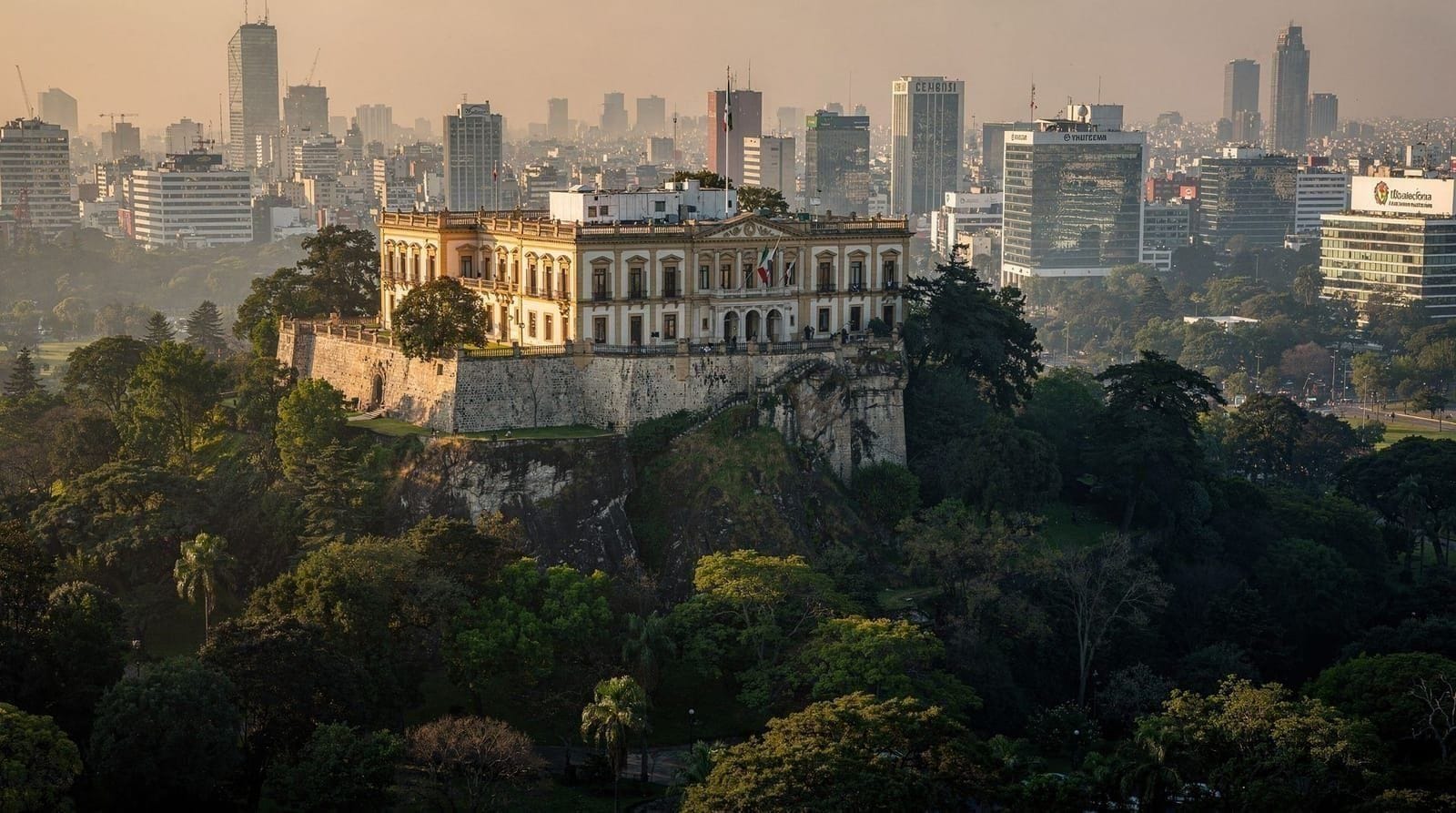
Yes — Chapultepec Castle is Mexico's only imperial palace and has extraordinary panoramic views over Mexico City. Entry costs 210 MXN (around $11 USD). Open Tuesday to Sunday 09:00–17:00, closed Mondays. Walk up the hill from the Chapultepec Metro station (Line 1) through the park — the walk takes 20–25 minutes. No cable car exists; it's stairs and a slope.
The only imperial palace in North America
Chapultepec Castle — Castillo de Chapultepec — is the only castle on the American continent that has served as a genuine imperial residence. From 1864 to 1867, Emperor Maximilian I (Archduke Ferdinand of Austria, placed on the Mexican throne by Napoleon III) and his consort Empress Carlota (daughter of the Belgian king) lived here, refurnished it in European style, and governed a Mexico deeply divided about whether it wanted to be an empire at all.
The castle’s history runs considerably longer than this three-year imperial episode. The hill — Chapultepec, “Hill of the Grasshopper” in Nahuatl — was sacred to the Aztecs, who used it as a royal summer residence. The Spanish built fortifications here. In 1785 the colonial viceroy commissioned a new residence. In the 19th century it housed the Military College, where in 1847 cadets (the Niños Héroes — Boy Heroes) died defending it against the invading US Army in the Mexican-American War. After Maximilian’s execution in 1867, Benito Juárez made it the presidential palace; presidents lived here until Lázaro Cárdenas moved the executive to Los Pinos in 1939.
Today it is the Museo Nacional de Historia. The combination of imperial apartments, military history, sweeping city views, and major murals makes it one of Mexico City’s most rewarding sites — and one that sees fewer international tourists per hour than the Anthropology Museum next door.
| Where | Bosque de Chapultepec, Metro Chapultepec (Line 1) |
| Cost | 210 MXN (around $11 USD) |
| Time needed | 2–2.5 hours incl. terraces |
| Getting there | 20–25 min walk uphill from Metro |
| Best time | Weekday mornings; afternoons after 14:00 |
The castle also makes a good counterpoint to the older layers of the city. If you have already seen the Aztec foundations at the Templo Mayor, the castle shows what came much later: the imperial and republican chapters of the same capital. The wider Chapultepec and Polanco area is worth reading about if you want to build a whole day around the park.
Getting there
The castle is inside Chapultepec Park (Bosque de Chapultepec), which occupies 686 hectares in the western center of Mexico City. The park is free to enter.
Metro: Line 1 (pink line) to Chapultepec station. Exit and walk east through the park toward the hill. Follow the main path uphill — well-signed toward the castle. Walk time from the Metro: 20–25 minutes.
Metrobús: Line 7 along Reforma stops at Chapultepec park entrance.
Uber/DiDi: Drop-off on Paseo de la Reforma at the park entrance. 70–100 MXN from Roma or Condesa.
On foot from the Anthropology Museum: The castle is about 600–700 m southeast of the Anthropology Museum, through the park. A logical pairing for a full Chapultepec day, and the visit covering both the castle and the Anthropology Museum is worth considering if you’d rather not buy separate tickets for each.
If you are unsure which transport suits your day, our guide to getting around Mexico City compares the Metro, Metrobús and rideshare options in more detail.
The guided tour of Chapultepec Castle and the forest includes transport from central Mexico City — useful for visitors not comfortable with the park walk.
The climb to the castle
The castle sits on top of a 60 m volcanic hill. There is no cable car. The ascent follows a paved path that switchbacks through the shaded forest — not strenuous for most visitors but notably warm in midday summer heat. The final section involves stone stairs and a steeper incline.
Time from park floor to castle entrance: 20–25 minutes at a comfortable walking pace.
Practical: The shaded path keeps the walk manageable except in late June–August midday heat. Coming from the Anthropology Museum, the ascent starts from the east side of the hill. Coming from the park entrance, it starts from the south side. Both approaches converge at the castle entrance gate.
The castle skip-the-line entry is available for visitors who want to secure their entry without the standard ticket queue — useful on weekends and Mexican school holiday periods.
What to see inside
The imperial apartments (lower level): The preserved rooms of Maximilian and Carlota are the castle’s most visited section. The emperor’s study, bedroom and reception rooms retain original European furniture, tapestries and decorated ceilings. The private dining room and Carlota’s apartments show a court interior transplanted from Vienna to Mexico City with unusual precision. Maximilian, despite his short reign and tragic end (he was captured and executed by firing squad in 1867), left a detailed physical record here.
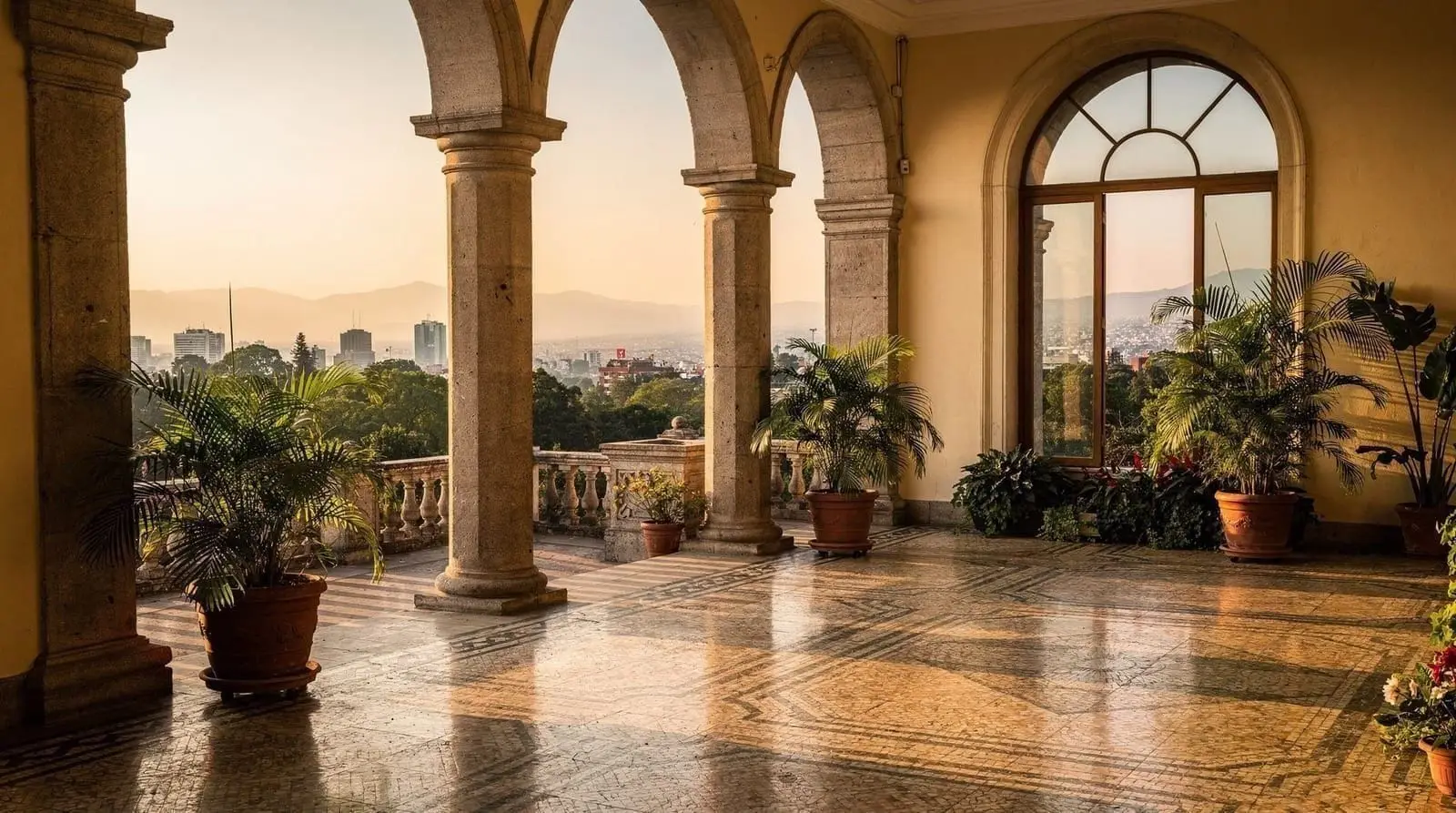
Particularly notable: the garden terrace that Maximilian designed on the south side of the castle, with its views over the park and the city. He reportedly spent hours here and had a direct view line to the road he had built connecting the castle to the city center — now called Paseo de la Reforma, one of Mexico City’s major boulevards.
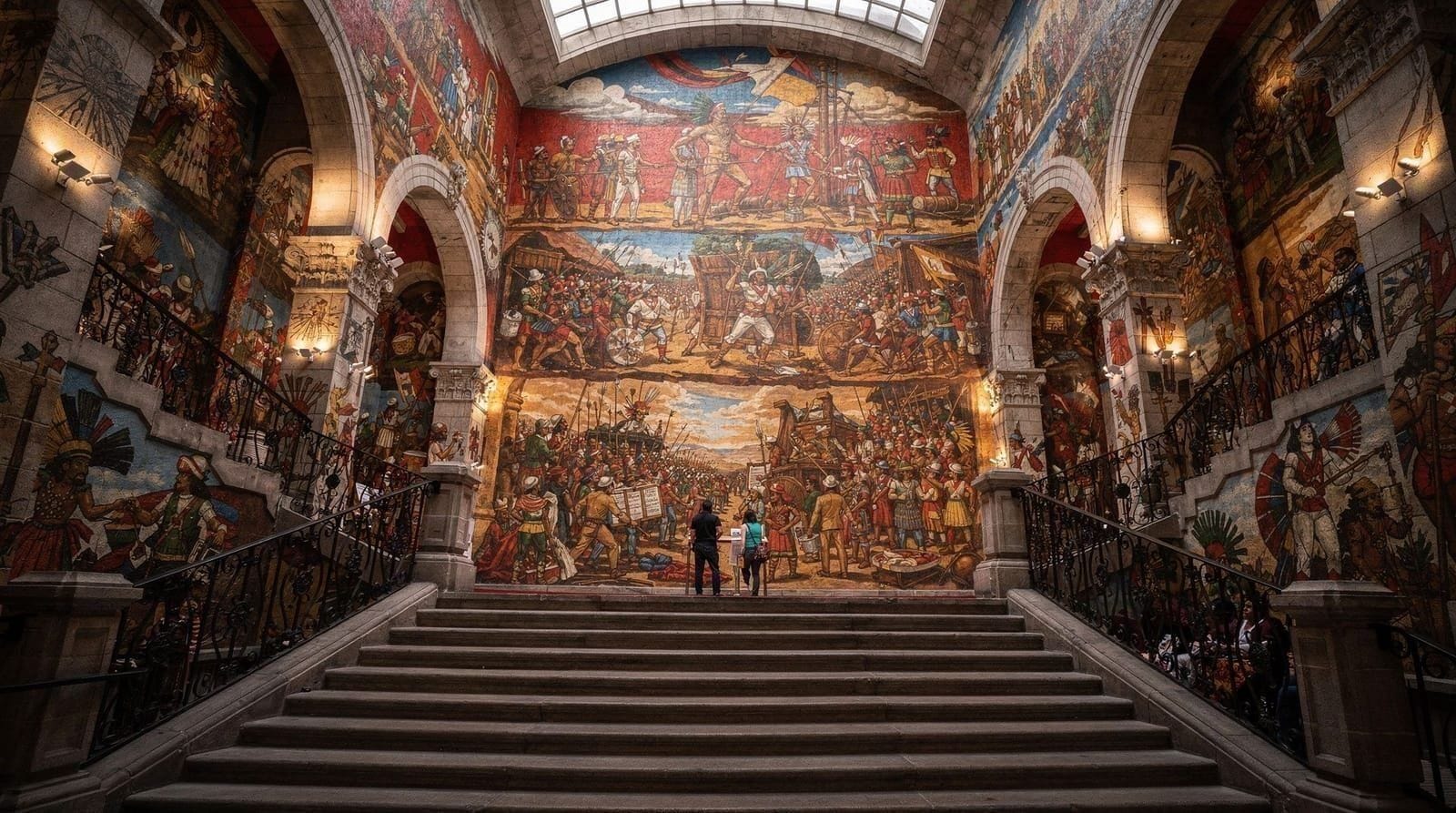
The upper historical galleries: The rooms above the imperial quarters trace Mexican history from the Spanish conquest (1519) through the Reform War and the 1910 Revolution. The interpretive content is dense and largely in Spanish, but the murals are the main event here.
Murals of the castle: Three significant muralists worked here:
- Juan O’Gorman painted the “History of Mexico” mural sequence showing the full arc from pre-Columbian civilization through the Revolution
- José Clemente Orozco’s contributions focus on the Reform War period
- David Alfaro Siqueiros painted the large “Del Porfirismo a la Revolución” (From the Porfiriato to the Revolution) on the upper level
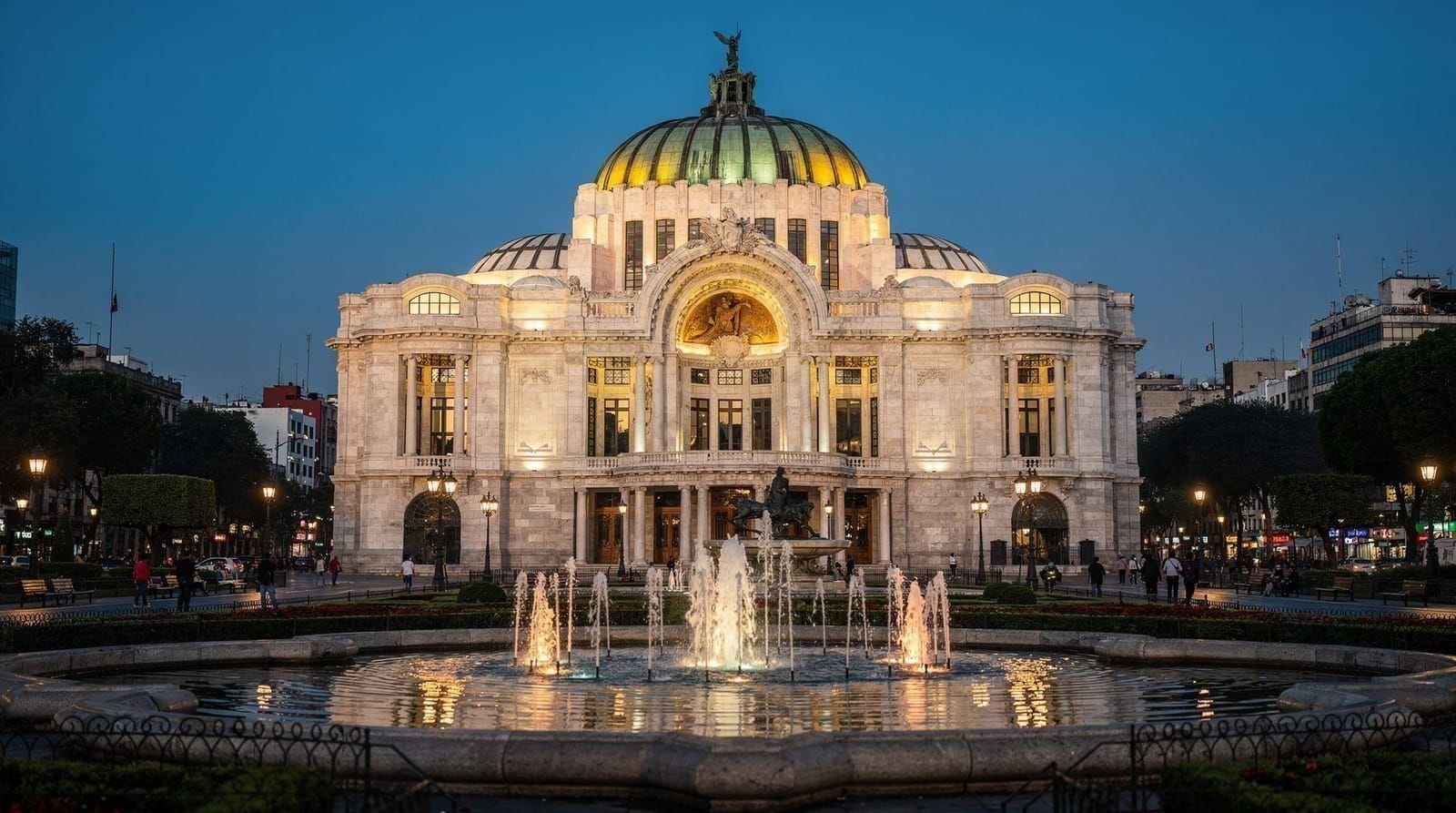
For visitors following Mexico’s muralism tradition through Diego Rivera’s murals and Palacio de Bellas Artes, the Chapultepec Castle murals are an important complement.
The view
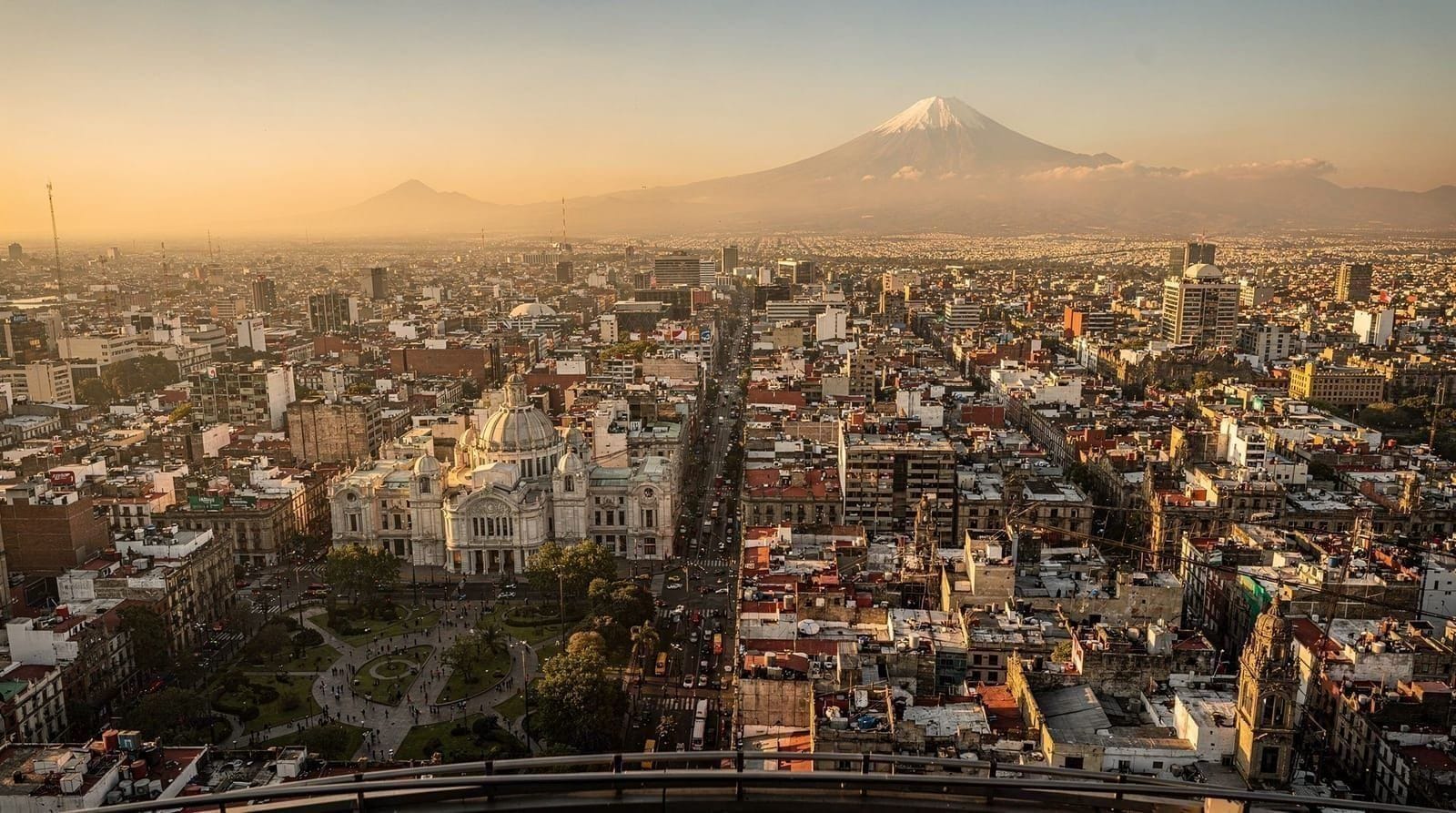
The panoramic views from the castle terraces are among the best in Mexico City and don’t require paying for a rooftop bar. The east-facing terraces look over Paseo de la Reforma — you can follow the boulevard straight to the distant Zócalo. The south terraces overlook the park’s lakes and on clear winter days, Popocatépetl (5,426 m) rises above the horizon to the southeast.
The castle is at approximately 2,300 m elevation (the city sits at 2,240 m; the hill adds about 60 m). The volcanoes are most visible in November through February when low humidity keeps the air clear. After a rainy season downpour they can be startlingly visible even in summer.
Planning your visit
Time needed: 2 hours covers the castle thoroughly — imperial apartments, history galleries and mural rooms. Allow an extra 30 minutes for the view terraces and photo stops.
Best time: Tuesday through Friday mornings. Weekend crowds are significant, particularly Sunday. The castle is less crowded in the afternoon (after 14:00) on weekdays.
Combined with Anthropology Museum: This is the ideal Chapultepec day. Start at the Anthropology Museum when it opens (09:00), spend 3 hours, break for lunch in the park or at the café, then walk to the castle for the afternoon (entering around 13:00). Return to the Metro or rideshare by 17:00.
The combined Chapultepec Castle and Anthropology Museum tour bundles both sites with a single guide, which is worth considering if you’d rather not self-navigate between the two on a first visit.
Season and weather: The walk and the terrace views both depend on the weather, so it helps to check the best time to visit Mexico City and the month-by-month weather guide before fixing your date. If you are newly arrived, the altitude guide explains how to pace a first uphill walk.
Fitting it into a trip: The castle slots naturally into the 3-day Mexico City itinerary, and families will find useful pointers in our guide to Mexico City with kids, since the park around the castle suits younger visitors well.
Accessibility notes
The castle presents genuine mobility challenges that are worth knowing in advance. The 20–25 minute uphill walk from the Metro has no vehicle alternative except a rideshare drop-off that still leaves a shorter but steep final stretch on foot. Inside, the palace rooms and historical galleries involve stairs between levels, and the building’s 18th and 19th-century construction was not designed with modern accessibility in mind — there is no elevator connecting all floors.
Visitors with mobility limitations who still want the Chapultepec experience may find the park itself (the lake, the Niños Héroes monument, the zoo) more practical than the castle summit. For visitors who can manage stairs but not a long uphill walk, arranging a rideshare drop-off as close to the base of the final ascent as security permits reduces the walking distance meaningfully.
Best photo spots at the castle
The east terrace, overlooking Paseo de la Reforma, is the classic shot — arrive in the morning when the sun is behind you rather than directly ahead, which washes out the boulevard in the afternoon. The garden terrace on the south side, where Maximilian designed his private view, is quieter and less photographed but arguably more atmospheric, framing the park’s lake through the same sightline the emperor used.
Inside, the mural rooms are dimly lit by design to protect the paint — a steady hand rather than a flash gets the best result, and flash is prohibited regardless. For the castle itself as a subject, the base of the hill near the Niños Héroes monument gives a clean upward angle that captures the full profile of the building against the sky.
Chapultepec Park around the castle
The Bosque de Chapultepec extends well beyond the castle. The park has three sections; the first section (nearest the Metro and the museum) contains most of the attractions:
- Lago de Chapultepec (the main lake) with rowboat hire
- Monumento a los Niños Héroes (the memorial to the Boy Heroes of 1847)
- Casa del Lago (exhibition and cultural space)
- Multiple museums and the Zoológico de Chapultepec (free entry)
The second and third sections of the park extend further west and are more wooded and less visited, popular with weekend joggers and cyclists.
If you are staying nearby, the Roma and Condesa neighborhoods make a comfortable base for reaching the park, and our guide on where to stay in Mexico City helps you compare the options.
The history of the hill: from Aztec to imperial
The volcanic hill at Chapultepec has been politically significant for longer than any of its current structures. The Aztec ruler Moctezuma I had a summer residence here in the early 15th century; a carved portrait of him remains visible in the rock face of the hill, weathered but discernible. The ahuehuete trees in the park — some of them 700 years old — were growing when the Aztecs controlled the water spring at the hill’s base, which was one of the primary fresh water sources for Tenochtitlan.
The Spanish viceroys used the hill as a hunting reserve and eventually commissioned the first stone building in 1785. The French intervention and the brief empire of Maximilian I (1864–1867) represents the castle’s most dramatic historical chapter — a foreign monarch, installed by French military force in a country that largely rejected him, who nonetheless left detailed personal marks on the building he called home.
Maximilian’s story is genuinely tragic by any measure. He was persuaded by Mexican conservative factions and Napoleon III that Mexico wanted an emperor; he arrived to find a country at civil war over his legitimacy. He refused Napoleon’s order to abdicate when French troops withdrew in 1867, was captured by Republican forces under Juárez, and was executed by firing squad at Querétaro on June 19, 1867, at age 34. His wife Carlota had already returned to Europe seeking European support that never came; she survived him by 60 years, increasingly delusional.
The rooms he furnished remain. His desk still holds period objects. The decorated ceilings he ordered painted are preserved. It is one of the more intimate connections to a failed empire available in any museum.
Maximilian and the Paseo de la Reforma
One of Mexico City’s most transformative pieces of urban planning — Paseo de la Reforma, the grand boulevard from the historic center to Chapultepec — was designed by Maximilian in 1864. He wanted a direct line from the city center to the castle, modeled on European imperial avenues. The project was completed and remained; the empire was not.
From the castle’s east terraces, you can see Paseo de la Reforma stretching toward the distant center of the city. The Ángel de la Independencia monument (a 1910 addition) marks the midpoint of the boulevard. Maximilian could follow the road from his window to the city he governed for three years.
The road’s survival after the empire’s collapse — and its subsequent development as Mexico City’s most prestigious boulevard — is one of the ironies of Mexican urban history: the most visible planning legacy of a foreign emperor became a national symbol of Mexican modernity.
Ticket logistics
The private guided tour of Chapultepec Castle is the best option for visitors who want the historical context — Maximilian’s story, the murals, the Battle of Chapultepec — without the research burden. A licensed guide covers all of this in a coherent 2-hour narrative.
For visitors who prefer to self-guide, the museum’s interpretive panels are detailed and available in English. The historical flow from the Aztec hill through the colonial period, the military academy, Maximilian’s empire, and the post-empire presidential residence is well-organized in the gallery sequence.
Castle vs Anthropology Museum: which to prioritise if short on time
| Chapultepec Castle | Anthropology Museum | |
|---|---|---|
| Time needed | 2–2.5 hrs | 3+ hrs |
| Entry cost | 210 MXN | 210 MXN |
| Best for | Imperial history, murals, views | Pre-Columbian archaeology |
| Crowd level | Moderate, less than the museum | Heavier, especially Sunday |
| Skip if… | You have under 2 hours in Chapultepec | You’ve already seen Teotihuacán’s site museum |
Most visitors with a full day should do both — see the combined itinerary above. With only half a day, choose the Anthropology Museum if pre-Columbian archaeology is your priority, or the castle if 19th-century history, imperial drama, and the view matter more to you.
Frequently asked questions about Chapultepec Castle
Who were the Niños Héroes and why are they commemorated?
The Niños Héroes (Boy Heroes) were six young military academy cadets, aged 13–19, who died defending Chapultepec Castle from the invading American forces in the Battle of Chapultepec (September 13, 1847) during the Mexican-American War. One, Juan Escutia, reportedly wrapped himself in the Mexican flag and jumped from the castle rather than surrender it. They are among the most revered figures in Mexican national memory, commemorated by a monument in Chapultepec Park and taught to every Mexican schoolchild.
Is the castle the highest point in Chapultepec Park?
Yes, the castle on its volcanic hill is the highest point in the central park area. The viewing terraces are at approximately 2,300 m elevation.
Can you see the volcanoes from the castle?
On clear days, yes. Popocatépetl (the active volcano, 72 km southeast) and Iztaccíhuatl are visible from the south terraces when atmospheric conditions allow. The best visibility is in winter (November–February) and immediately after heavy rainfall in the rainy season.
Is there a café at Chapultepec Castle?
There is a basic café near the castle entrance. Quality is serviceable for a coffee and snack; it is not a destination restaurant. The Anthropology Museum café next door is marginally better; the park lakeside has several casual restaurants and food stalls.
What is Chapultepec Castle?
Chapultepec Castle (Castillo de Chapultepec) sits at the top of Chapultepec Hill, 60 metres above the surrounding park. It was built in the 18th century as a viceregal summer residence, became a military academy, served as the imperial residence of Emperor Maximilian I and Empress Carlota (1864–1867), and later as the presidential residence until 1939. Today it houses the Museo Nacional de Historia.
How long does it take to walk up to Chapultepec Castle?
From the park entrance near the Chapultepec Metro station (Line 1), the walk up the hill takes 20–25 minutes at a moderate pace. The path is paved and shaded for much of the route. The final section involves stone stairs. The altitude is not challenging (the hill is about 60 m above the park floor), but the walk is uphill and worth pacing in summer heat.
What can you see from the top of Chapultepec Castle?
The castle sits above the Bosque de Chapultepec and looks east over Paseo de la Reforma and toward the Centro Histórico. On clear days (most likely November–February), you can see the Popocatépetl and Iztaccíhuatl volcanoes to the southeast. The panorama makes clear why this hill was important to the Aztecs (who called it Hill of the Grasshopper) and to every government that followed.
What is inside Chapultepec Castle?
The Museo Nacional de Historia occupies the castle. The lower section contains the palace rooms of Emperor Maximilian and Empress Carlota, preserved with original furnishings, tapestries and decorated ceilings. The upper section covers Mexican history from the Spanish conquest through the 1910 Revolution, with murals by David Alfaro Siqueiros, Juan O’Gorman and José Clemente Orozco.
How much does Chapultepec Castle entry cost?
Entry to the Castillo de Chapultepec costs 210 MXN per person (approximately $11 USD). Mexican nationals pay 105 MXN. Children under 13 enter free. Entry to Chapultepec Park itself is free; the castle ticket is required only at the castle entrance gate.
Are the murals at Chapultepec Castle worth seeing?
Yes. The castle contains significant murals from the Mexican Muralism movement — Siqueiros’ and O’Gorman’s historical paintings in the upper galleries are substantial works that complement the Diego Rivera murals in the city center. For visitors following Mexican muralism, the castle is an important stop.
Top experiences
Bookable activities with verified prices and instant confirmation on GetYourGuide.