Palacio de Bellas Artes guide: murals, opera and Mexico City's marble cathedral
Mexico City: Folkloric Ballet at the Palacio de Bellas Artes
What is at the Palacio de Bellas Artes and is it worth visiting?
Palacio de Bellas Artes is Mexico City's main cultural palace — a marble Art Nouveau building housing major murals by Rivera, Orozco and Siqueiros on the upper floors, temporary exhibitions in the lower galleries, and a main performance hall for opera and the Folkloric Ballet. The murals are on floors 2–3 (entry approximately 95 MXN). The building exterior is free to admire; performances require separate tickets.
The building before the art
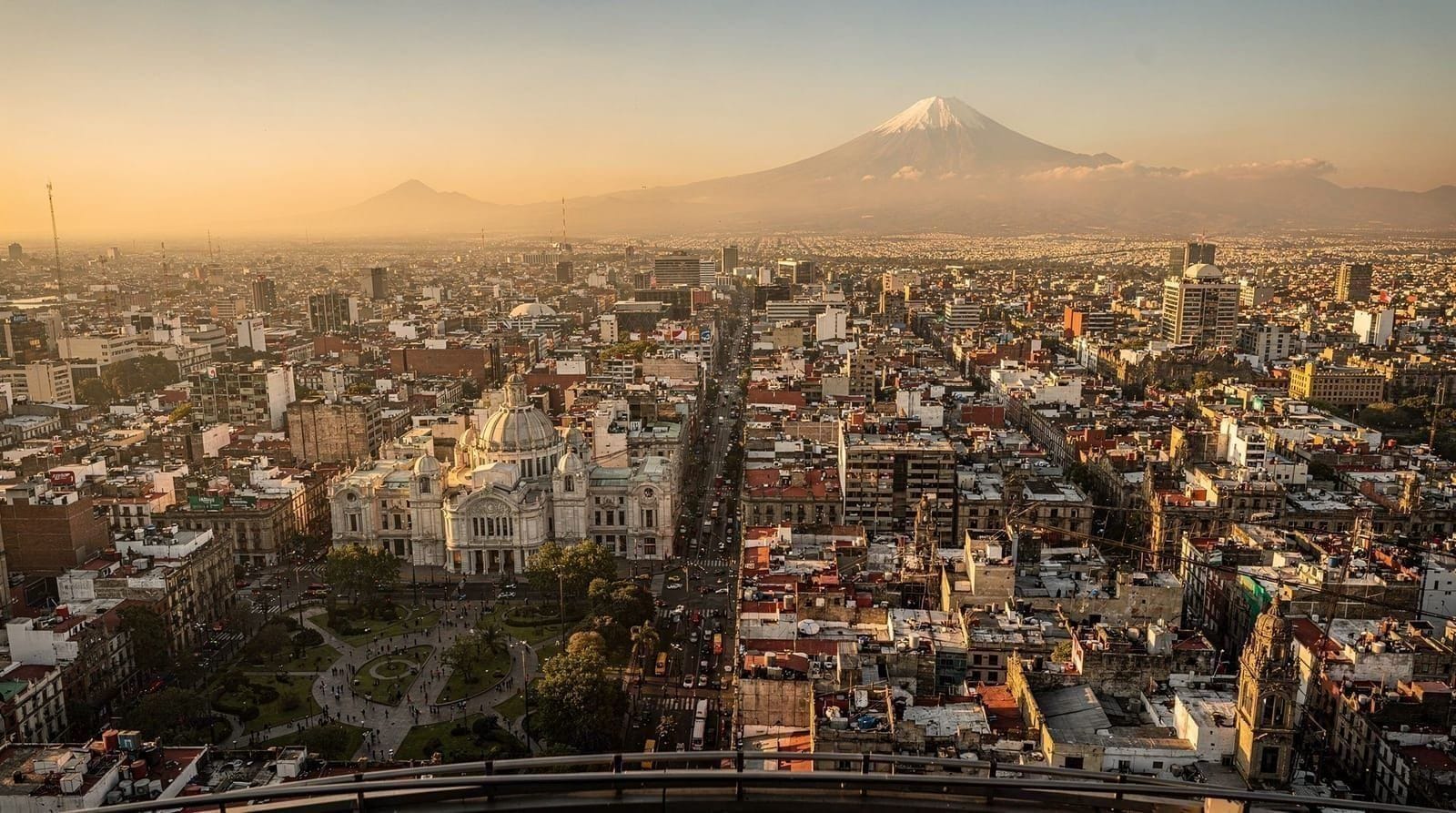
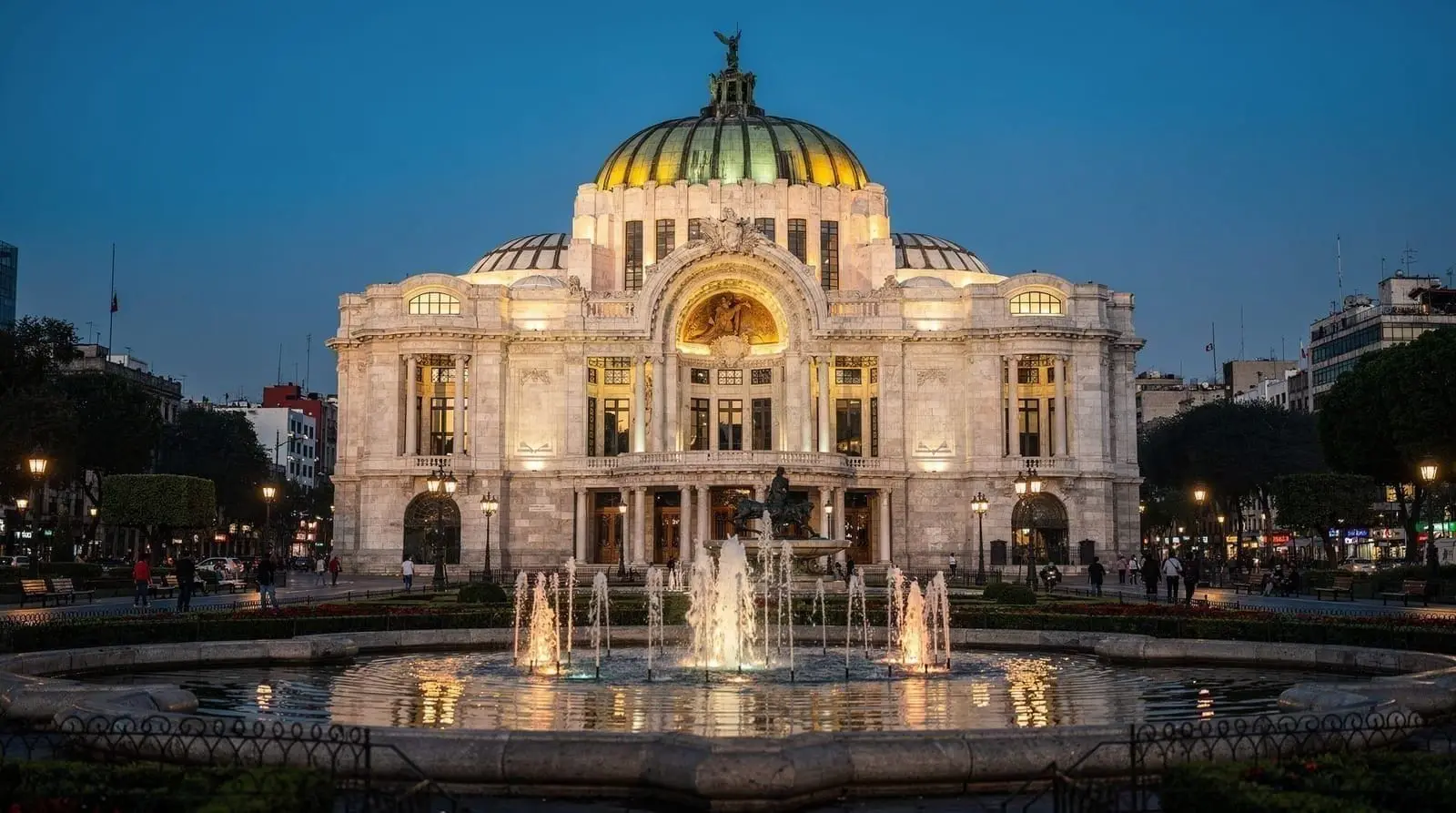
The Palacio de Bellas Artes is one of the most visually striking buildings in the Americas — a white marble wedding cake of Art Nouveau and Art Deco, perched on the east end of the Alameda Central park like an operatic apparition. The building has been sinking into the soft lake sediment beneath central Mexico City for a century; it now sits approximately 4 metres below the level of the surrounding streets, which means you walk down to enter it rather than up, and the proportions look slightly off from street level compared to what the architect intended.
| Where | Alameda Central, Centro Histórico, ~600 m west of the Zócalo |
| Cost | Around 95 MXN for the mural galleries; performances from around 300 MXN |
| Time needed | 1–1.5 hrs for the galleries; 2 hrs with a performance |
| Getting there | Metro Bellas Artes (Lines 2 and 8) |
| Best time | Weekday mornings for the galleries; book performances ahead |
Construction began in 1904 under the direction of Italian architect Adamo Boari, who worked in the Porfiriato (the long dictatorship of Porfirio Díaz). The Revolution of 1910 interrupted work for decades; the building was finally completed in 1934, by which point the Art Nouveau exterior now sat atop an Art Deco interior that reflected different aesthetic fashions. The combination shouldn’t work architecturally. In practice, the contrast between the ornate white marble exterior and the sleek geometric interior creates something more interesting than either style would have produced alone.
The centerpiece of the interior is the main theater curtain: a massive Tiffany glass mosaic depicting the Valley of Mexico with Popocatépetl and Iztaccíhuatl rising above Anahuac lake, designed by artist Gerardo Murillo and executed by the Tiffany Studios in New York in 1910. It weighs approximately 24 tonnes and operates hydraulically. If you attend a performance, the curtain is lowered and illuminated at the start — it is worth the price of a ticket alone.
The murals: a single building housing all four great muralists
The Palacio de Bellas Artes is the only building in Mexico where you can see major works by all four of the founding figures of Mexican Muralism in the same visit. Floors 2 and 3 of the gallery wing function as a permanent hall of Mexican muralism:
Floor 2:
- David Alfaro Siqueiros — New Democracy (1944): a monumental figure representing democracy emerging from darkness with fist raised
- Siqueiros — Torment of Cuauhtémoc (1950–1951): depicting the Spanish torture of the last Aztec tlatoani (king), with the explicit political purpose of equating Spanish colonialism with fascism, which Siqueiros had fought against in Spain
Floor 3:
- Diego Rivera — Man, Controller of the Universe (1934): the recreation of the destroyed Rockefeller Center mural, now approximately 11 × 4.7 metres. The central figure of a man at a machine console controls the cosmos; to his left are capitalist figures (Rockefeller himself appears); to his right are socialist and revolutionary figures, with Lenin centrally placed. The work is politically explicit in both directions
- José Clemente Orozco — Catharsis (1934): depicting humanity consumed by war, sexuality and chaos, with a central figure emerging in flames.
Orozco’s vision is darker and more nihilistic than Rivera’s; his murals at Bellas Artes are less politically ideological but more emotionally intense
- Rufino Tamayo — Birth of Nationality (1952) and Mexico Today (1952): Tamayo’s work is formally different from the three grandes — less documentary and more abstract in form, drawing on Zapotec imagery and surrealism rather than social realism
The murals gallery entry is approximately 95 MXN. For the Diego Rivera murals guide covering the Palacio Nacional and SEP cycles, the Bellas Artes murals are the essential complement — the same figures working on the same walls of the same institution but with notably different aesthetic and political approaches visible side by side.
The Folkloric Ballet
The Ballet Folklórico de México de Amalia Hernández is the most accessible introduction to Mexican regional dance in the country. Founded by choreographer Amalia Hernández in 1952, the company has performed at Bellas Artes as its official home for over seven decades, touring internationally while maintaining the Sunday and Wednesday residence in the theater.
Each performance presents 10–14 regional dance forms from across Mexico — Jalisco jarabe tapatío (the hat dance that foreigners identify as quintessentially Mexican), Oaxacan Guelaguetza dances, Veracruz son jarocho, Maya ceremonial dances, pre-Columbian ritual reconstructions, and more — with full traditional costumes, live orchestra, and theatrical production.
The Folkloric Ballet at Palacio de Bellas Artes tickets are bookable in advance — essential for weekend performances and high season. Ticket prices: approximately 300–1,000 MXN depending on seat location. The upper gallery seats (most affordable) still have excellent sight lines for this relatively intimate theater.
Performance schedule: Typically Sundays at 09:30 and 20:30, Wednesdays at 20:30. Confirm the current schedule before booking as seasonal changes apply.
Guided tour of the galleries
The guided tour of Bellas Artes covers the mural gallery with contextual interpretation of each artist’s political position, technique (all are frescoes, requiring specific wet-plaster preparation and fast execution), and the historical moment each work addresses. The guide also covers the architecture and the building’s history, which is inseparable from 20th century Mexican political history.
For a more exclusive experience, the exclusive private tour offers out-of-hours access with a specialist art historian — appropriate for visitors with deep interest in Mexican muralism.
What to see beyond the murals
The lobby and main theater: Even without a gallery or performance ticket, the ground-floor lobby is accessible and worth 15 minutes. The scale of the building interior, the Art Deco railings and floor mosaics, and the view up through the central space toward the upper galleries give you a sense of the architectural ambition.
Temporary exhibitions: The ground-floor galleries host rotating temporary exhibitions, typically of Mexican and Latin American art, design and photography. Entry is separate from the mural galleries. Quality varies; check what’s on before your visit.
The exterior and Alameda Park: The building is best photographed from the east (toward the Zócalo direction) where the full white marble facade is visible against the sky. The Alameda Central park immediately to the west is one of Mexico City’s oldest parks and contains the Museo Mural Diego Rivera (see Diego Rivera murals guide).
Location and transport
The Palacio de Bellas Artes is at the intersection of Avenida Hidalgo and Avenida Juárez, facing the east end of the Alameda Central.
Metro: Bellas Artes station (Lines 2 and 8) at the northwest corner of the building. The most direct option.
From the Zócalo: 600 m west on Avenida Madero or 5 de Mayo, about 8 minutes on foot. A natural combination on a Centro Histórico day.
From Roma or Condesa: 70–100 MXN by Uber/DiDi.
The building is near the Torre Latinoamericana observation deck and the Palacio de Minería. A historic center walking day naturally combines the Zócalo and Templo Mayor, Palacio Nacional, Bellas Artes, and Alameda Park — see the Centro Histórico destination guide for how the neighbourhood fits together, and the 3-day Mexico City itinerary for where this slots in a first visit.
Comparing Bellas Artes to Mexico City’s other big art stops
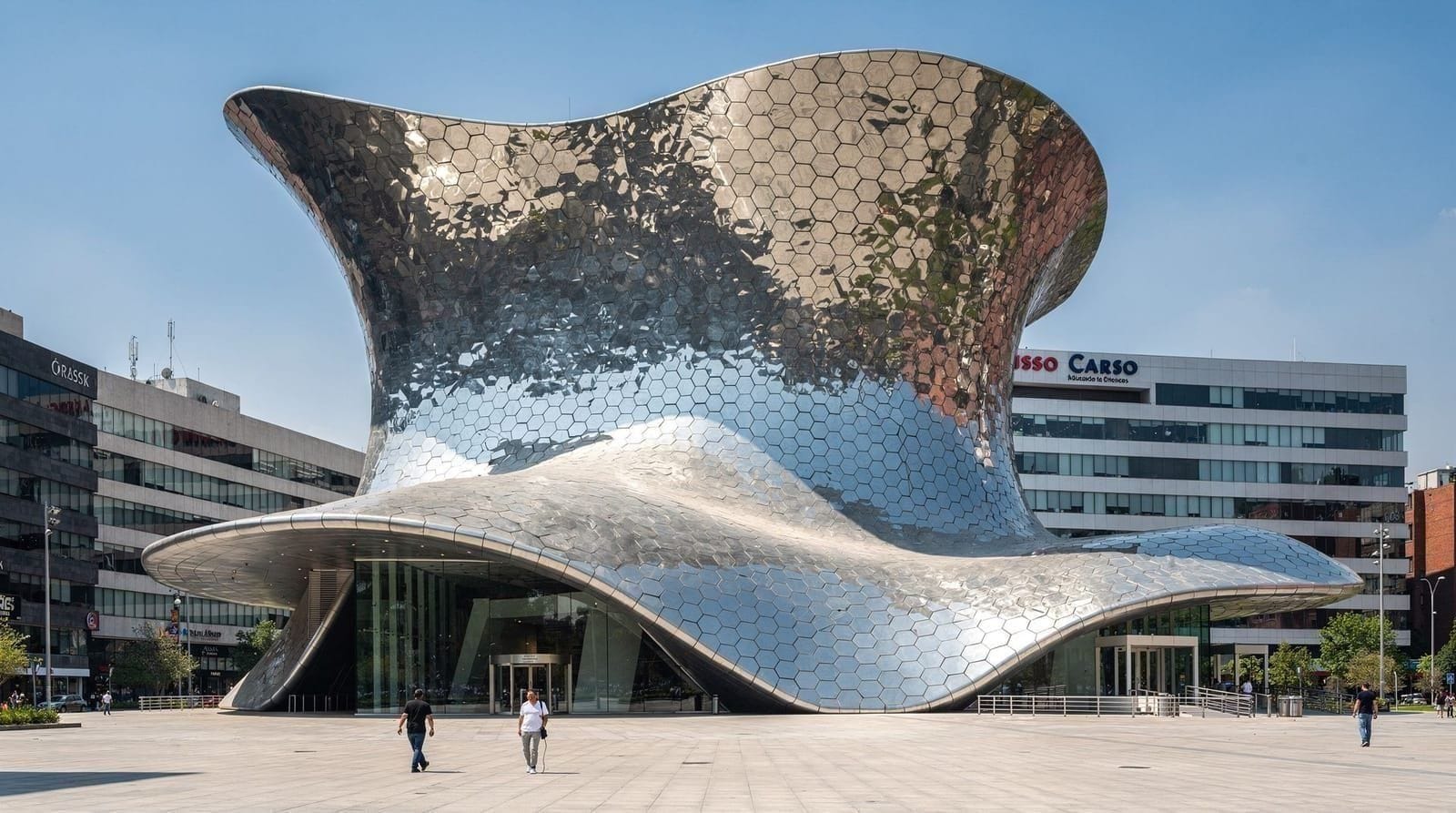
Bellas Artes is not the only major art stop in the city, and first-time visitors often try to fit in more than a single day allows. The Soumaya Museum in Polanco is free and covers a much broader collection from European Old Masters to Rodin, but has none of the mural-specific context Bellas Artes offers — the two are complementary rather than competing.
If getting between the Centro Histórico and Polanco in the same day feels like too much, the hop-on hop-off bus guide covers routes that connect both areas without relying on taxis for every leg. For visitors focused specifically on murals, pair Bellas Artes with the fuller Diego Rivera murals guide rather than treating either stop as a complete Rivera experience on its own.
Frequently asked questions about Palacio de Bellas Artes
Why does the building look like it’s sinking?
Because it is. Central Mexico City is built on the drained sediment of Lake Texcoco, which compresses under weight. The Palacio de Bellas Artes has sunk approximately 4 metres since 1904. So have most historic buildings in the center; the Cathedral, the Palacio Nacional and the buildings around the Zócalo have all subsided. The differential sinking is why the interior feels level while the street access is via steps down. This is a known and accepted feature of building in this geological environment; the buildings are maintained and monitored.
Can you see the Tiffany curtain without attending a performance?
Occasionally. Some tours include a look at the theater interior from the upper gallery; ask at the ticket desk whether the theater is viewable on your visit day. During performances, the curtain is always lowered at the start. The best way to guarantee seeing it is to attend even the cheapest-seat performance.
Is the Folkloric Ballet authentic or tourist-oriented?
Both. The Ballet Folklórico is a professional, state-supported company that has maintained a genuine artistic standard for 70 years. The performances are polished theatrical productions using traditional costumes and regional music. They are also explicitly designed for tourism and cultural diplomacy — they have performed internationally for decades. This doesn’t make them inauthentic; it makes them a formal, elevated presentation of regional dance traditions rather than a community celebration. For a visitor wanting an introduction to Mexican regional dance culture, it is excellent.
Is the Palacio de Bellas Artes suitable for children?
Yes. The building itself is dramatic enough to engage children. The murals are visually intense and comprehensible without prior knowledge. The Folkloric Ballet is the best family-accessible performance option in Mexico City — bright costumes, energetic dancing, live music, relatively short program length (1.5–2 hours). The Mexico City with kids guide recommends the Sunday morning performance specifically for families.
How much does it cost to see the murals at Bellas Artes?
Entry to the visual arts galleries (floors 2 and 3, containing the murals) costs approximately 95 MXN. Entry is free for everyone on Sundays. The ground-floor lobby is free to enter. The main theater for performances (Folkloric Ballet, opera, concerts) requires separate tickets from 300 MXN upward.
Which murals are at Palacio de Bellas Artes?
The most significant works: Diego Rivera’s Man, Controller of the Universe (Floor 3, 1934 — a recreation of the destroyed Rockefeller Center mural); José Clemente Orozco’s Catharsis (Floor 3); David Alfaro Siqueiros’ New Democracy and Torment of Cuauhtémoc (Floor 2); and Rufino Tamayo’s Birth of Nationality and Mexico Today (Floor 3). All four major Mexican muralists are represented.
What is Man, Controller of the Universe (Rivera’s Rockefeller mural)?
In 1934, Diego Rivera recreated the mural that Nelson Rockefeller had destroyed the previous year in New York. The original was commissioned for Rockefeller Center but Nelson Rockefeller ordered it destroyed when Rivera refused to remove a portrait of Lenin. The Mexico City recreation at Bellas Artes is larger than the original and includes the Lenin portrait plus additional political figures. It remains one of Rivera’s most iconographically rich and politically explicit works.
What is the Folkloric Ballet at Bellas Artes?
The Ballet Folklórico de México de Amalia Hernández is the official Mexican national folkloric dance company, performing at the Palacio de Bellas Artes since 1952. Shows run most Sundays at 09:30 and 20:30, and Wednesdays at 20:30, though schedules change seasonally. Tickets start at approximately 300 MXN for upper gallery seating and can reach 1,000 MXN for main floor orchestra. Book in advance.
What does the Palacio de Bellas Artes look like?
The exterior is white Italian Carrara marble with Art Nouveau ornamental details — a 1904 Adamo Boari design completed in 1934 after interruptions including the 1910 Revolution. The building has sunk about 4 metres into the soft lake bed since construction (as has much of central Mexico City). The interior is Art Deco, with a spectacular Tiffany glass stained-glass curtain in the main theater depicting the Valley of Mexico with Popocatépetl and Iztaccíhuatl.
Where is the Palacio de Bellas Artes?
At the east end of Alameda Central park on Avenida Hidalgo and Avenida Juárez, in the Centro Histórico. Metro Bellas Artes (Lines 2 and 8, or Metrobús Line 4). About 600 m west of the Zócalo.
Top experiences
Bookable activities with verified prices and instant confirmation on GetYourGuide.