Day of the Dead in Mexico City: the complete honest guide
Mexico City: Day of the Dead Guided Tour
When and where is Day of the Dead in Mexico City?
Día de Muertos is November 1 (Día de Todos Santos, focused on children) and November 2 (Día de Muertos, for adults). In Mexico City, the main civic events are the Gran Ofrenda at UNAM campus, the candlelit cemetery vigils in neighbourhoods, and the Alebrijes parade (late October). The village of Mixquic (45 minutes south) has the most traditional cemetery vigil accessible from CDMX.
Understanding Day of the Dead before you arrive
Day of the Dead in Mexico is not Halloween adapted for a warmer climate. It is a distinct tradition with roots in the pre-Columbian ancestor veneration practices of the Mexica, Mixtec, and other Mesoamerican civilisations, merged with the Catholic All Saints’ Day and All Souls’ Day brought by Spanish missionaries in the 16th century. The resulting synthesis is specifically Mexican — present only in forms that recognisable elsewhere.
The cultural premise is this: during November 1 (for children who have died) and November 2 (for adults), the spiritual boundary between the living and the dead is thin enough for the deceased to return briefly to their family homes. The living prepare for this return: they clean and decorate graves, construct ofrendas (altars) loaded with the deceased’s favourite things, and gather to remember them. The tone is not mournful — it is a celebration of life that acknowledges death honestly.
Travelling to Mexico City for Day of the Dead is an excellent reason to visit. The city is at its most culturally intense during this period; every neighbourhood, every market, and every museum participates in ways that make the whole city feel engaged with a single collective event. It is also the most expensive and crowded time of year to be here — trade-offs that this guide addresses honestly.
| Where | UNAM, Coyoacán, Mixquic, Mercado de Jamaica |
| When | Nov 1–2 (peak); late Oct parade |
| Cost | Free civic events; tours $40–90 USD |
| Booking | Accommodation 6–8 weeks ahead |
| Best base | Coyoacán, Centro, or Roma/Condesa |
The timeline: what happens when
Mid-October: Pan de muerto appears in bakeries. Marigolds (cempasúchil) begin arriving at Mercado de Jamaica in large quantities. Markets start stocking ofrenda supplies: calavera skulls, papel picado (perforated coloured paper), copal incense, and candy sugar skull moulds.
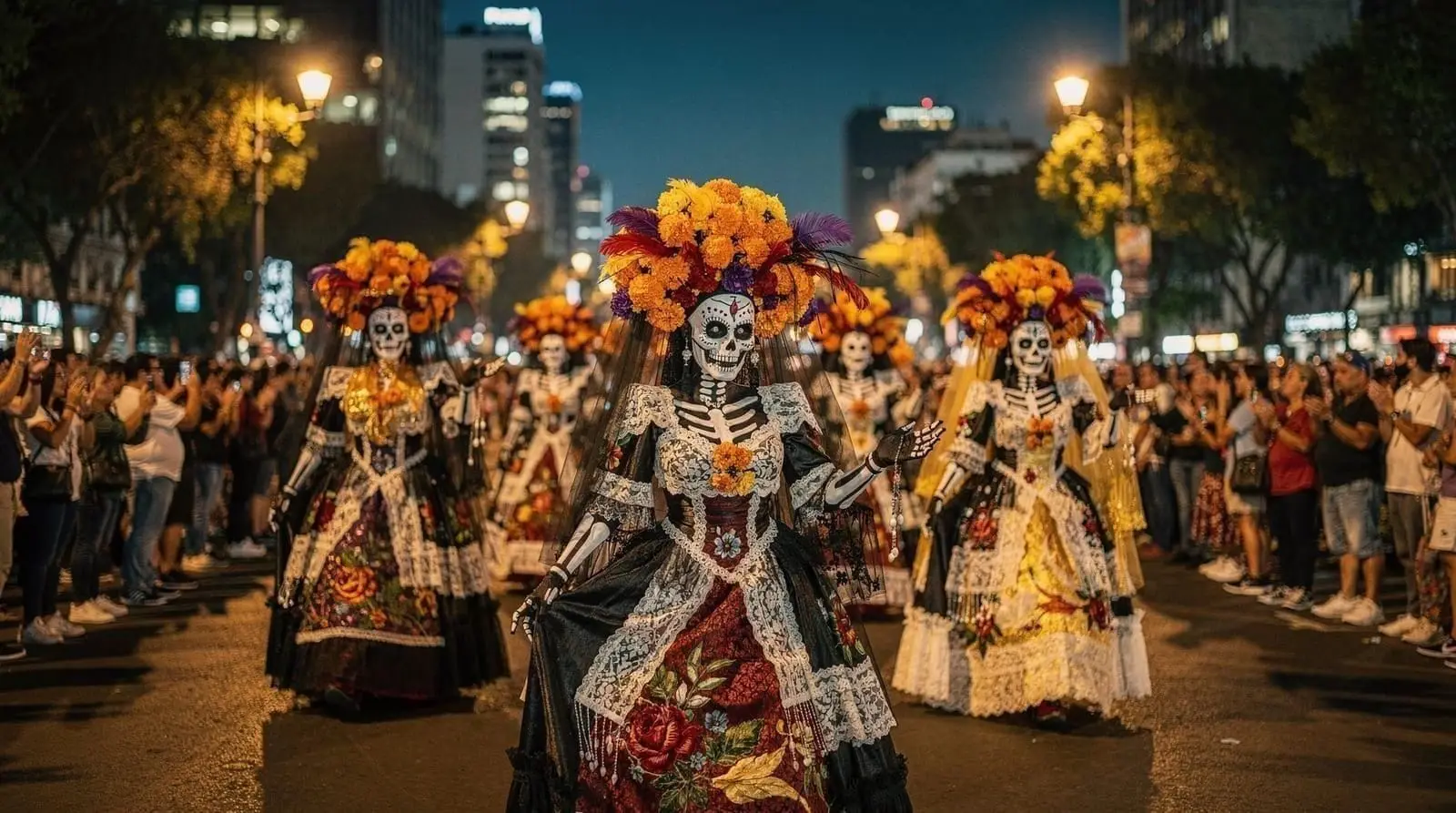
Last weekend of October: The Desfile del Día de Muertos (the alebrije parade, modelled on the Spectre film sequence) passes through Reforma and the major avenues. Free to watch; very crowded. The giant alebrije sculptures — fantastical painted animals up to 20 metres long — are an extraordinary visual spectacle.
October 31: Calaverita (Halloween) celebrations are visible in tourist areas; this is a commercial import. Traditional Day of the Dead is not Halloween.
November 1, all day: Día de Todos Santos. Focused on the spirits of children. Home ofrendas are the centre of the day. The UNAM Gran Ofrenda installation is in full display. Cemetery visits begin in communities that observe this night. Coyoacán and the Museo Frida Kahlo area are crowded with tourists.
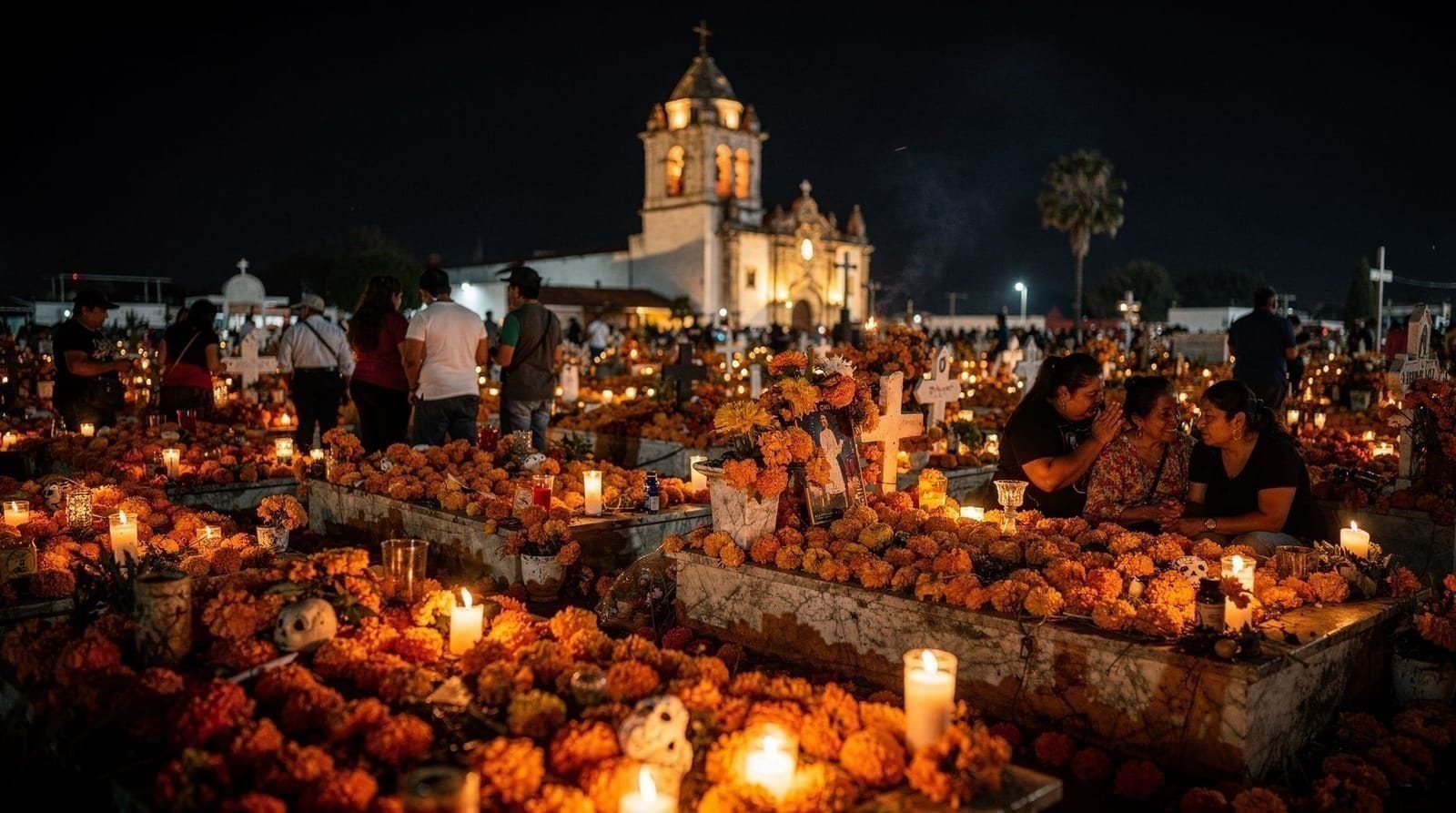
November 1, night into November 2: The most intense period. In Mixquic and other communities, families carry flowers and candles to cemeteries for all-night vigils. In CDMX proper, neighbourhood cemetery visits are quieter but visible.
November 2: Día de Muertos proper. Families gather at graves with food and drinks. The UNAM ofrenda remains in display. By evening, the intensity begins to diminish.
November 3: Markets begin breaking down the Day of the Dead commercial installations. The marigold mountains at Mercado de Jamaica decline rapidly.
Where to experience Day of the Dead in Mexico City
UNAM Gran Ofrenda (Ciudad Universitaria): The National University of Mexico constructs one of the largest public ofrendas in the country on its main campus. The installation covers the central university forum with a massive altar incorporating culturally significant themes (political figures, artists, community members) alongside the traditional elements. Metro CU (Line 3 extension) or Metrobús. Free entry. Peak visit times: November 1–2 afternoons. Most impressive at night with candle illumination.
Mercado de Jamaica: In the days before November 1, the flower market becomes an overwhelming sensory experience. Thousands of bundles of cempasúchil (Tagetes erecta, the Aztec marigold), white chrysanthemums, and cockscomb move through the market 24 hours a day for the week preceding the holiday. The fragrance is distinctive and intense. No tourist infrastructure here; come to see a working wholesale flower market operating at its annual maximum.
Coyoacán: The Jardín Hidalgo and surrounding streets host elaborate public ofrenda installations during the first week of November. The neighbourhood is extremely crowded during this period but the visual density of altars, face-painted people, and marigold decorations is exceptional. Arrive before 10am on November 1 to see before the crowds peak.
Museo Nacional de Antropología: The Anthropology Museum installs culturally significant ofrendas in its entrance hall and atrium during the Day of the Dead period — among the most thoughtful and educationally contextualised of the public installations. Worthwhile even for visitors who have already seen the permanent collection.
San Ángel: The San Ángel neighbourhood, with its Saturday Bazar del Sábado and colonial streets, installs neighbourhood-level ofrendas in local parks and the market building. Less crowded than Coyoacán.
Guided Day of the Dead experiences
The Day of the Dead Guided Tour covers CDMX’s main Day of the Dead installations with a guide who explains the cultural context — useful for visitors unfamiliar with the tradition who want to understand what they are seeing beyond the visual spectacle.
The Day of the Dead Tour with Local Guide and Mariachis combines the ofrenda visits with a mariachi serenade dedicated to the deceased — an emotionally resonant combination that reflects the dual nature of Day of the Dead as both remembrance and celebration.
The Day of the Dead Experience with Mezcal Tasting combines a cultural tour with a tasting of mezcals associated with the season — mezcal has pre-Columbian roots in the same traditions and is placed on ofrendas.
The Day of the Dead House and Craft Workshop teaches participants to construct a small ofrenda and make traditional craft items (sugar skulls, papel picado) — a more participatory format than pure observation. Good for visitors who want to understand the tradition through making.
The Mixquic option
The village of San Andrés Mixquic, 45 minutes south of CDMX, hosts what is widely considered the most authentic and accessible Day of the Dead cemetery vigil near the capital. See the dedicated Mixquic guide for full details — the experience is distinct enough to warrant separate planning.
Building an ofrenda: the symbolism explained
Each element of a traditional ofrenda carries specific meaning, and understanding it makes the installations at UNAM, the Anthropology Museum, and neighbourhood markets considerably more legible. Marigolds (cempasúchil) form a literal and figurative path — petals are sometimes scattered from the street to the altar to guide the spirit home. Water is placed to quench the spirit’s thirst after the long journey back. Salt purifies and preserves the body’s spirit for its return trip. Candles provide light for the spirit to find its way; one candle per deceased person is traditional in home ofrendas.
Papel picado (perforated paper banners) represents the fragility of life and the wind that carries spirits. Photographs anchor the altar to a specific person rather than an abstract concept of death. Pan de muerto and the favourite foods of the deceased are offered so the spirit can, symbolically, enjoy them one more time. The four elements — earth (food), wind (papel picado), water, and fire (candles) — are present in a properly constructed ofrenda, reflecting a synthesis of Mesoamerican and Catholic cosmology.
Comparing the main viewing locations
| Location | Crowd level | Cost | Best for |
|---|---|---|---|
| UNAM Gran Ofrenda | High, esp. Nov 1–2 evenings | Free | Scale, night illumination |
| Mercado de Jamaica | Moderate | Free | Sensory experience, no tourist infrastructure |
| Coyoacán plazas | Very high | Free | Atmosphere, face paint, families |
| Anthropology Museum ofrenda | Moderate | 210 MXN | Educational context |
| Mixquic cemetery vigil | High but manageable | Free (tour ~$50–80 USD) | Most traditional, authentic |
| Alebrijes parade (late Oct) | Very high | Free | Spectacle, not traditional |
If you only have one day (November 1 or 2)
With a single day to allocate, sequence matters. Morning (10am–1pm): the Anthropology Museum’s ofrenda installation, followed by a walk through Coyoacán’s plazas before the afternoon crowd peaks. Afternoon (2–5pm): Mercado de Jamaica for the flower market, ideally in the days just before November 1 rather than on the day itself when the market has already sold through its stock.
Evening (6–10pm): the UNAM Gran Ofrenda, most impressive after dark with candle illumination, or — if you’ve arranged transport in advance — the Mixquic cemetery vigil, which runs latest and rewards the trip most for visitors specifically seeking the traditional (not civic) side of the holiday. Do not attempt Mixquic and a full CDMX day in the same 24 hours; choose one focus per day if you only have one day total.
Planning the rest of your trip around the holiday
Day of the Dead rarely fills an entire trip, so it helps to fold it into a wider plan. The Anthropology Museum guide explains how to approach the collection that the ofrenda installation sits inside, and the Centro Histórico is a natural companion for the commercial installations and the historic streets around them. If you are still choosing how long to stay, the itinerary length guide and the 3-day itinerary show how to leave room for a late vigil without exhausting yourself.
For the practical side, read where to stay in Mexico City before you book, and the getting around guide to understand how the transport network behaves on crowded evenings. If you are weighing this holiday against other seasons, the best time to visit Mexico City puts it in context, and our 2026 Day of the Dead blog post gives a more personal, year-specific take. Eating well is part of the experience too: the street food guide and the tap water and food safety guide help you enjoy seasonal stalls with confidence.
Respecting the tradition as a visitor
Day of the Dead is an active cultural and religious practice, not a performance staged for tourists. Some guidance for respectful participation:
Cemetery visits: The public cemetery vigils (including Mixquic) are open to observers. Dress modestly — jeans and a plain top are appropriate; elaborate skeleton costumes are inappropriate in a cemetery where families are in genuine mourning-and-celebration. Ask permission before photographing individuals at their family altar. Do not touch items on an ofrenda unless invited.
Face paint: The Catrina face paint (full skull makeup in the Calavera Catrina tradition) is culturally connected to the parade and carnival atmosphere of the public celebrations. It is not traditional at cemetery vigils. Read the context before deciding whether to participate: face paint at the parade is fine; face paint at a family cemetery vigil is questionable.
Photography: The public installations (UNAM, museum ofrendas, parade) welcome photography. Family spaces deserve more sensitivity — always ask, never shoot over someone’s shoulder at a private moment.
Purchasing: Buying marigolds from Mercado de Jamaica or pan de muerto from a local bakery is participatory in a genuinely positive way. Supporting local artisans who make calavera skulls, papel picado, and ofrenda items contributes directly to the communities that maintain the tradition.
Practical logistics for visiting during Day of the Dead
Accommodation: Book at least 6–8 weeks in advance for November 1–2. Prices in Roma, Condesa, and Centro rise 40–100% versus standard rates during this period. Consider staying in neighbourhoods outside the tourist centre (Narvarte, Napoles) for better availability and pricing.
Transport during peak days: Metro and Metrobús will be extremely crowded on November 1–2 evenings. Add 30–45 minutes to any journey estimate. Uber/DiDi experience surge pricing; budget accordingly. Walking is often faster than vehicles on the parade route days.
The parade route: The Desfile del Día de Muertos blocks the central Reforma avenue. Plan your movements around this — crossing Reforma on parade days requires significant detours.
Frequently asked questions about Day of the Dead in Mexico City
Is Day of the Dead in Mexico City on November 1 or November 2?
Both. November 1 is Día de Todos Santos (focused on deceased children) and November 2 is Día de Muertos (for adults). The vigil period begins the evening of October 31 and extends through November 2. The most intense cemetery activity is the night of November 1 into November 2.
Is the James Bond-style parade real or was it invented for the film?
The parade was inspired by the 2015 film Spectre, which depicted a fictional Day of the Dead parade as its opening sequence. Mexico City created a real version of the parade beginning in 2016, drawing on the existing tradition of large public cultural celebrations. It is real, it is elaborate, and it draws enormous crowds — but it is a contemporary invention, not an ancient tradition.
What does cempasúchil smell like and why is it used?
Cempasúchil (Tagetes erecta, Aztec marigold) has a distinctive strong fragrance — somewhat pungent, herbal, intensely botanical. The traditional belief is that the fragrance guides the spirits of the dead back to the family altar. The vibrant orange-yellow colour is also significant: it represents the sun and the link between the living and the dead. The smell of thousands of marigold bundles at Mercado de Jamaica before November 1 is immediately recognisable and completely associated with the holiday.
Can children attend Day of the Dead activities?
Yes. Day of the Dead is a family tradition and children are central participants. The parade is suitable for children and specifically engages with the alebrije sculptures. The UNAM ofrenda and museum installations are educational for children. Cemetery vigils with young children require more parental management given the late hour and crowd density.
What should I eat during Day of the Dead?
Pan de muerto is the signature food — buy it from a quality bakery. Mole negro (traditionally prepared for the day’s family meal), tamales (standard ofrenda food), chocolate caliente, and atole appear at seasonal stalls. The markets guide covers where to find seasonal items.
Is Day of the Dead in Mexico City appropriate for tourists to attend?
Yes, with respect. The public civic events (ofrenda installations, alebrijes parade, UNAM activities) are explicitly open to visitors. Cemetery vigils in neighbourhoods are semi-public — families are generally welcoming of respectful observers, but shoving in for selfies or speaking loudly during quiet moments is disrespectful. Follow the lead of local behaviour: observe quietly, ask permission before photographing individuals at their family altars, and dress appropriately (not elaborate skeleton face paint in a community cemetery during a family vigil).
What is an ofrenda and how does it work?
An ofrenda (offering) is the altar constructed in homes, public spaces, and cemeteries to welcome the spirits of deceased loved ones during November 1–2. The traditional elements: marigold flowers (cempasúchil) to guide the spirits; photos of the deceased; the person’s favourite foods and drinks; items associated with their life; copal incense; candles; salt; and pan de muerto (Day of the Dead bread). The belief is that the fragrance of the marigolds and food draws the spirit back for a brief annual reunion.
Where are the best Day of the Dead altars to see in Mexico City?
The Gran Ofrenda Monumental at UNAM (Ciudad Universitaria, Metro CU) is the largest public installation — a massive altar covering the main university plaza. The Museo Nacional de Antropología at Chapultepec installs impressive ofrendas. The Mercado de Jamaica flower market in the days before November 1 is extraordinary — tonnes of marigolds are traded for ofrendas. The most personal altars are in neighbourhood markets and homes, not in public tourist spaces.
What is the alebrijes parade and when does it happen?
The Desfile del Día de Muertos (Day of the Dead Parade) is a relatively recent institution — the James Bond film Spectre’s opening sequence (2015) prompted Mexico City to create a real-life version of the fictional parade. It now runs annually in late October (usually the last weekend of October), passing through the main avenues from Chapultepec to the Zócalo. It includes giant alebrije sculptures (fantastical painted animal figures), skeleton-themed floats, Catrina figures, and traditional dance groups. Free to watch from the route; very crowded.
What is a Catrina and why is she everywhere on Day of the Dead?
La Catrina is the iconic skull figure in elegant 19th-century European dress — created as a satirical etching by José Guadalupe Posada in 1910 to mock the Mexican upper class’s European pretensions. Diego Rivera later incorporated her as a full figure in his famous mural ‘Sueño de una Tarde Dominical en la Alameda’ (1947), giving her the name Catrina. She became the visual symbol of the Mexican Day of the Dead aesthetic — beautiful and dead, elegance in decay. The Catrina figure appears on everything from museum displays to face-paint traditions at the parade.
What is pan de muerto and where should I buy it?
Pan de muerto (bread of the dead) is a sweet enriched bread flavoured with orange zest and anise, decorated with bone-shaped dough pieces and a skull motif dusted in sugar or sesame. It is placed on ofrendas and eaten by families during the November 1–2 period. Quality varies significantly: the best pan de muerto comes from traditional bakeries in Colonia Roma (Panadería Rosetta on Calle Colima, El Globo chain for accessible quality), not from supermarkets. Available from mid-October.
How crowded is Mexico City during Day of the Dead?
Very crowded. November 1–2 is high season — accommodation books out weeks in advance, prices surge, and popular sites like Coyoacán, the parade route, and UNAM are packed. The Zócalo area has extensive commercial Day of the Dead installations that draw very large crowds. Budget an extra 20–30% for accommodation versus the standard CDMX price. Book tours (especially Mixquic tours) 2–4 weeks ahead.
Is Mexico City’s Day of the Dead commercial or authentic?
Both, depending on where you look. The civic parade and many commercial ofrenda installations are CDMX institutions created for public celebration — genuine urban culture, not ancient tradition. The cemetery vigils in neighbourhood communities, the home ofrendas where families gather around their dead relatives’ photos, and the Mixquic vigil represent the living tradition. The face paint and skeleton costumes worn by visitors at the parade are a modern addition, not traditional. The marigolds, the ofrendas, the candles, and the family gatherings are the authentic core.
Top experiences
Bookable activities with verified prices and instant confirmation on GetYourGuide.