Mexico City markets guide: the best mercados for food and culture
Mexico City: Half-Day Market Secrets & Cooking Class Tour
What are the best markets in Mexico City?
For sheer scale: Mercado de la Merced (east Centro). For exotic produce and quality cooking ingredients: Mercado de San Juan (Centro). For flowers and food: Mercado de Jamaica (south). For neighbourhood authenticity: Mercado Medellín (Roma Sur) and Mercado de Coyoacán. Each has a distinct character. None are tourist traps — all serve the local population first.
Mexico City’s market culture
Markets in Mexico City predate the city itself. The Aztec market at Tlatelolco, described by Spanish soldiers in 1519, was reportedly larger than any European market of the period — a vast daily gathering where thousands traded food, cloth, ceramics, animals, and luxury goods. That market culture persisted through the colonial period, through independence, and through the 20th century. Today CDMX has over 300 registered public markets, plus hundreds of tianguis.
This guide covers the markets most useful to visitors: the great historic mercados, the neighbourhood food markets, the specialist markets, and the weekend markets worth planning your schedule around. It focuses on the real, working markets that serve the city’s population first and visitors second.
| Where | Across CDMX — La Merced (east Centro) to Bazar del Sábado (San Ángel) |
| Cost | Comida corrida 80–130 MXN; snacks 20–80 MXN |
| Best time | 9am–1pm Tuesday–Saturday |
| Payment | Cash only at most stalls |
| Getting there | Metro (La Merced, Salto del Agua, Jamaica, Sonora, Viveros lines) |
Which market for what: a quick comparison
| Market | Best for | Tourist level | Time needed |
|---|---|---|---|
| Mercado de la Merced | Scale, dried chillies, authenticity | Low | 90+ min |
| Mercado de San Juan | Gourmet ingredients, easy first visit | Medium | 45–60 min |
| Mercado de Jamaica | Flowers, birria, huaraches | Low | 45–60 min |
| Mercado Medellín | Oaxacan food, neighbourhood feel | Low | 45 min |
| Mercado de Coyoacán | Tostadas, crafts, plaza atmosphere | High | 45 min |
| Bazar del Sábado (Sat only) | High-quality artisan crafts | High | 60–90 min |
Mercado de la Merced: the grand original
La Merced is the largest traditional market in Mexico City and one of the largest in Latin America. The current building dates from the 1950s but the market has operated in this area of east Centro since the colonial period, when it was a convent and later a commercial clearing house for goods entering the city.
Today La Merced occupies an entire block complex with multiple interconnected buildings handling different goods: produce, dried chillies, fresh seafood, meat, dry goods, fresh tortillas, flowers, and an extensive comedor section. The scale is disorienting at first — plan at least 90 minutes to see it properly.
What to seek out:
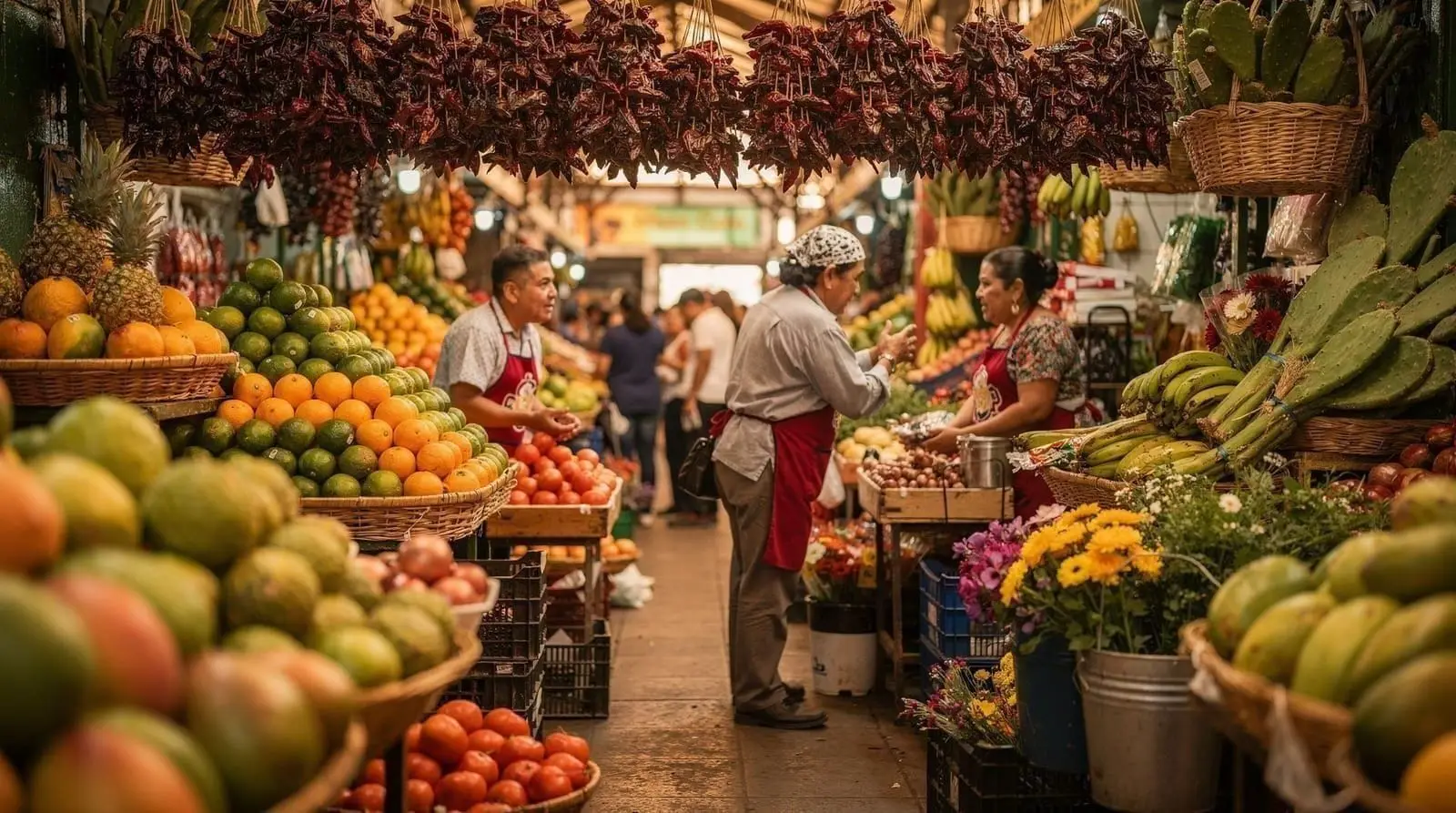
- The dried chilli section: arguably the best in the city, with vendors specialising in specific regional varieties (ancho, mulato, pasilla, chihuacle, catarina) and the dried version vs fresh comparison visible side by side.
- Fresh tortilla stalls: hand-pressed and comal-cooked to order, with blue, yellow, and red corn varieties.
- The comedor section: rows of women (mostly) running open-air lunch stalls serving comida corrida from large clay pots.
- The piñata floor: an entire section dedicated to piñata manufacturing and wholesale — colourful and photogenic.
Getting there: Metro La Merced (Line 1). The market is a 3-minute walk from the exit. Arrive in the morning; the immediate streets outside require awareness after dark.
Hours: Generally 6am–7pm daily; some sections open earlier, comedor section closes by 4pm.
Mercado de San Juan: the gourmet alternative
Mercado de San Juan (Calle Ernesto Pugibet, Centro) is the anomaly in CDMX’s market system: a historic building that has evolved into a specialty food market serving the city’s food professionals, immigrant communities, and food-curious visitors.
The floor plan mixes high-end and specialist: a vendor selling Iberian jamón next to a stall with 40 varieties of artisanal Mexican cheese; a Japanese ingredients section beside fresh ceviche bars; fine olive oils and truffles near stalls selling 15 varieties of dried chilli. This is not a tourist market — it is where Mexico City’s restaurant chefs shop on weekday mornings.
What to seek out:
- The seafood ceviche bars: fresh tostadas of shrimp, octopus, or mixed seafood with lime, tomato, and avocado. Eat at the counter. Prices: 80–140 MXN.
- The cheese vendors: regional Mexican cheeses (queso de bola, queso fresco, Chihuahua, Oaxacan string cheese) plus Spanish and French imports.
- The exotic meat vendor: venison, boar, alligator, and other game meats that appear nowhere else in the standard market system.
- Prepared food at the back: several stalls serve international cuisine (Japanese-Mexican fusion, Spanish pintxos) with high-quality ingredients sourced from the market itself.
Getting there: Metro Salto del Agua (Lines 1 and 8), 5-minute walk. Open Monday–Sunday, 8am–6pm.
Mercado de Jamaica: the flower market
Jamaica is most famous as the city’s central flower market, operating 24 hours and reaching fever pitch in the nights before major holidays (Day of the Dead, Christmas, Mother’s Day). The scale of the flower trade is extraordinary: literally tonnes of cut flowers, potted plants, floral arrangements, and decorative botanical material move through here daily.
But Jamaica is also an excellent food market, particularly for:
- Birria tacos: beef or goat in red chilli broth, served from large pots with consommé for dipping. Some of the city’s best birria stalls are in the interior food section.
- Huaraches: oval masa cakes topped with beans and salsa. Reliable quality at the comedor stalls.
- Tamales: morning tamale vendors at Jamaica are among the most consistent in the city.
- Fresh tropical produce: mangoes, papayas, guanabana, mamey, chico zapote — varieties not commonly found in colder-climate markets.
Night visit logistics: If you come for the spectacular 3–5am flower loading before Day of the Dead (November 1) or Christmas, take an Uber/DiDi and go with a specific plan. The market is safe but crowded and dark in sections; dress warmly and go early enough to see the loading in action.
Getting there: Metro Jamaica (Line 9). Open 24 hours, food section most active 7am–3pm.
Mercado Medellín: Roma Sur’s neighbourhood market
Medellín is the daily market of Roma Sur and, in recent years, something of a food destination in its own right. The market has a strong Oaxacan influence — many of the vendors come from Oaxacan families who migrated to CDMX in the 20th century — making it the best place in the city to eat regional Oaxacan food without travelling three hours south.
The Oaxacan section at Medellín: tlayudas (large, crisped tortillas with black beans, Oaxacan cheese, and choice of meat), memelas, tetelas (triangular masa parcels), and the incomparable Oaxacan-style chocolate (dark, gritty, spiced with cinnamon and almonds — prepared to order for drinking). Find this section in the interior of the market, away from the main entrance.
Fresh produce: Medellín’s produce section is excellent — organic and heirloom varieties appear here alongside standard produce, and vendors from different Mexican regions bring regional specialties (avocados from Michoacán, vanilla from Veracruz, mole paste from Oaxaca).
Morning hours: The market is most active from 8am–1pm Tuesday to Sunday. Monday is the quietest day. Several specialty cheese vendors in the exterior arcade sell regional Mexican cheeses worth buying for self-catering.
Getting there: Metro Sonora (Line 9) or walk from anywhere in Roma. Address: Calle Medellín, between Calle Campeche and Calle Sonora.
Mercado de Coyoacán: the most tourist-facing option
Coyoacán’s market is the most visited by tourists and the most photographed. It has good food, but it also has tourist pricing and a sales culture that can feel pushy — notably the tostada vendors in the central section who aggressively flag down passing visitors.
That said, the tostadas are genuinely good: crispy fried tortilla bases loaded with ceviche, chicken tinga, cochinita pibil (slow-roasted pork), or shrimp. Eat at the counter rather than paying the premium for the seller to plate them up for you — it is the same product.
The exterior of the market has craft stalls selling embroidered textiles, Talavera ceramics, Oaxacan figurines, and Day of the Dead folk art. Quality is variable; prices are higher than the Ciudadela craft market but the setting is more pleasant.
What is worth eating here: Tostadas in the central section (40–70 MXN each), quesadillas from the comal vendors (40–60 MXN), fresh fruit cups (30–40 MXN) with tajín and lime. The comedor section at the back is good for an inexpensive comida corrida (80–100 MXN).
Getting there: Metro Viveros (Line 3) or a 30-minute walk from Roma. Adjacent to the Jardín Centenario, the centre of Coyoacán village.
Weekend and special markets
Bazar del Sábado, San Ángel (Saturdays only): The Saturday market at Plaza San Jacinto in San Ángel is the city’s best artisan market — pre-selected vendors selling handmade folk art, ceramics, textiles, and jewellery at fixed (but negotiable) prices. Higher quality than Ciudadela, higher prices, beautiful colonial setting. The surrounding neighbourhood has excellent restaurants for post-market lunch.
Tianguis del Chopo (Saturdays): An alternative culture market near Metro Buenavista — vintage clothing, records, punk and metal merchandise, and general oddities. Not food-focused but an authentic glimpse of CDMX subculture.
Mercado de Artesanías de la Ciudadela (daily, near Metro Balderas): The main permanent craft market in Centro — over 200 stalls selling Mexican crafts from all regions. Prices are negotiable, quality varies but is generally honest, and the selection is excellent. Better value than the tourist-facing stalls near the Zócalo.
Sunday organic market, Parque México (Roma Norte): A premium farmers-market format with artisanal food products — Oaxacan cheese, organic produce, specialty tamales, craft chocolate, fresh bread. Prices are 2–3x standard market prices, but quality is high. Good for food gifts.
Markets that pair well with a neighbourhood visit
Rather than treating market visits as standalone trips, several pair naturally with sights you’re already planning. Mercado de Coyoacán fits directly into a Coyoacán walking route alongside the Frida Kahlo Museum and the Jardín Centenario — you can eat lunch there before or after the museum without adding a separate journey. Mercado de San Juan is a five-minute walk from the Palacio de Bellas Artes and Alameda Central, making it a natural lunch stop on a Centro Histórico day. The Bazar del Sábado sits inside San Ángel, which rewards a full morning of wandering the colonial streets around Plaza San Jacinto regardless of the market.
Mercado de la Merced is the exception — it’s a destination in its own right rather than a stop along another route, given its scale and the 90-minute minimum needed to see it properly. Plan a dedicated morning for it rather than squeezing it between other Centro sights.
Guided market tours
The Mexican Markets with Mezcal and Traditional Food tour covers multiple markets in a morning, combining tasting with mezcal education — a good combination for visitors interested in both the food and spirits culture simultaneously.
The Eat and Explore Local Markets tour takes a more food-focused approach, visiting working-neighbourhood markets rather than tourist-facing options. This format gives a more authentic picture of how the city actually eats.
Both are useful for first-time visitors who want orientation in what can otherwise be confusing and overwhelming spaces. The food tour comparison guide covers the full range of guided options.
Practical navigation notes
Payment: Cash only at most market stalls. Bring small bills (50 and 100 MXN notes). Very few market stalls have card readers.
Language: Some English at Mercado de San Juan and Coyoacán; minimal English elsewhere. Pointing, showing fingers for quantities, and knowing basic food words (sin picante = no spice, cuánto cuesta = how much, un kilo de… = one kilo of…) goes a long way.
Safety: Main markets are safe during daylight hours. Keep your phone in a front pocket, avoid displaying cameras at the entrances, and be alert in the most crowded sections where pickpocketing is possible. The CDMX safety guide covers the broader picture.
Hygiene: Not all market food is prepared to restaurant standards. The food safety guide gives practical guidance. High-turnover stalls at busy markets are generally lower-risk than quiet vendors with items sitting uncovered.
Market etiquette that makes vendors treat you better
A few habits separate a smooth market visit from an awkward one. Greet before you ask — a “buenos días” before pointing at produce or asking a price is standard courtesy and noticeably changes how vendors respond. Don’t touch produce excessively — pointing and asking the vendor to select is more normal than handling every mango yourself. If you photograph a stall or a vendor, ask first — a smile and a gesture toward your phone is usually enough, and most vendors are happy to oblige once asked. Carry small bills — a 500 MXN note for a 25 MXN taco creates a genuine change problem for small stalls, especially early in the day before they’ve built up change.
Combining markets with a cooking class
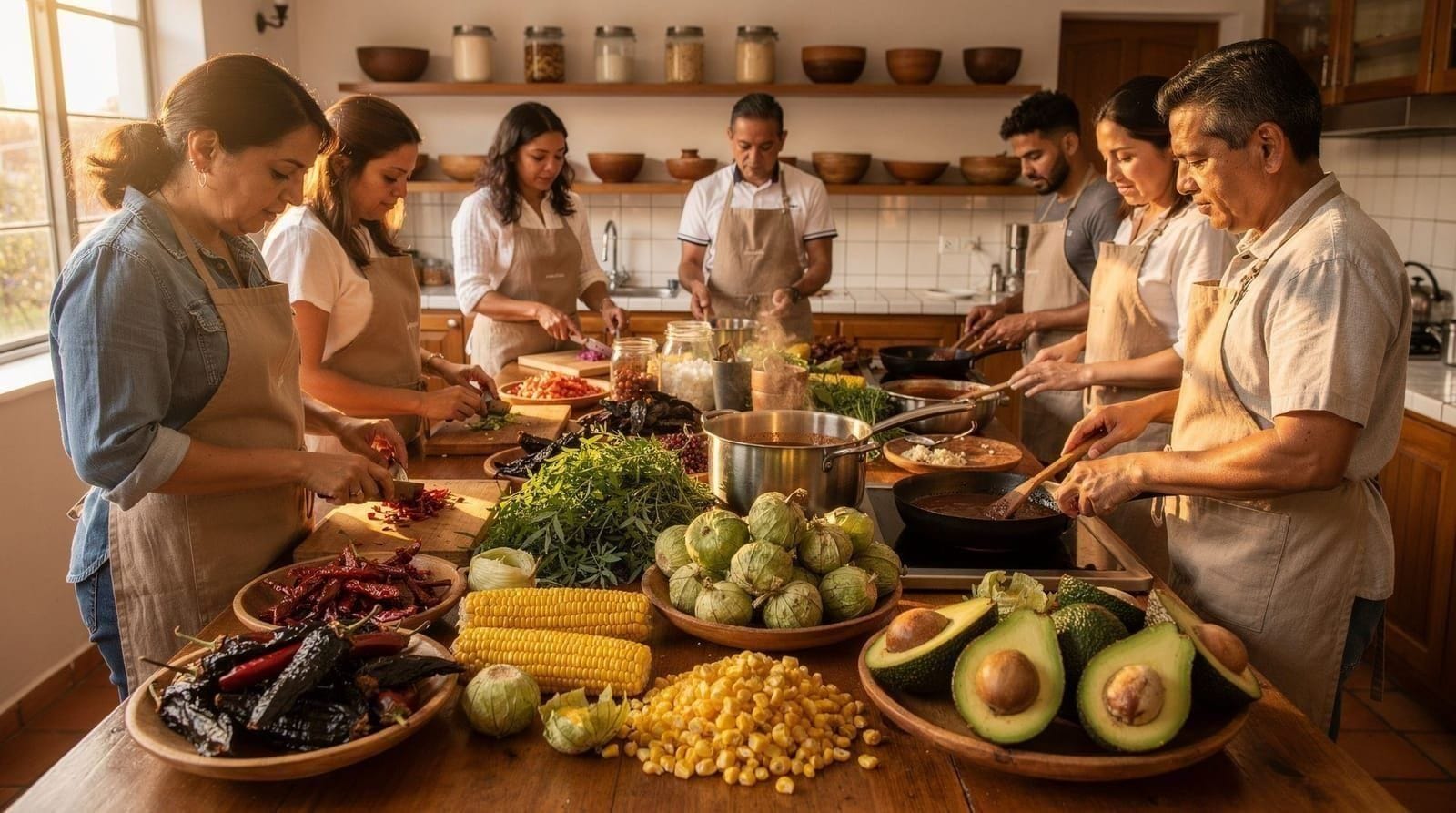
Several of CDMX’s best cooking classes begin with a guided market visit to select ingredients before heading to a kitchen. This solves the biggest problem independent visitors face at a market like La Merced or Medellín: not knowing what half the produce and dried chillies actually are or how to use them. A market-plus-cooking format turns a potentially overwhelming visit into a structured, hands-on introduction to Mexican ingredients, with the added benefit of eating what you cook at the end.
Photographing Mexico City’s markets
The piñata section at La Merced, the flower towers at Jamaica, and the dried chilli walls found at several markets are among the most photogenic scenes in the city. Morning light (before 11am) is best — later in the day the aisles fill with shoppers and photography becomes more about people than produce. Always ask before photographing a specific vendor’s face; photographing the produce and general stall displays is normally uncontroversial.
Frequently asked questions about Mexico City markets
What is the most authentic market in Mexico City?
Mercado de la Merced is the most authentic in the sense of being entirely focused on serving the local population with no tourist infrastructure. It is loud, crowded, and unpolished — which is exactly what makes it the real thing. Mercado Medellín is a close second and more accessible in scale.
Is Mercado de San Juan worth visiting for tourists?
Yes. It is the easiest market to navigate, has the most English signage, and the prepared food stalls are excellent. The ceviche bars and cheese vendors are genuinely special. It is less overwhelming than La Merced and better for a first market visit.
Can I get a cooking class based on a market visit?
Yes. Several cooking classes start with a guided market visit to buy ingredients before returning to a kitchen for the cooking session. See the cooking class guide for details. These combination market-plus-cooking experiences are generally the best value in the cooking class category.
Which market is best for Day of the Dead shopping?
Mercado de Jamaica has the best marigold flowers (cempasúchil) for ofrendas. Mercado de la Merced has the widest range of Day of the Dead decorations. The Ciudadela craft market has Day of the Dead folk art (catrinas, sugar skull ceramics). The Day of the Dead guide covers the full picture.
Are there any markets to avoid?
Tepito market is a major commercial market but also has a persistent reputation for grey-market goods and petty crime. Not recommended for visitors unfamiliar with the neighbourhood. The Mexico City safety guide covers this honestly. All other markets listed in this guide are safe for visitors with normal precautions.
What is the difference between mercado and tianguis in Mexico City?
A mercado is a permanent covered market building with fixed vendors paying monthly rent. A tianguis is a periodic open-air street market — specific days only, vendors set up and pack down. Tianguis have existed in Mexico since before the Spanish conquest; the Aztec Tlatelolco market was a tianguis. The Sunday Tianguis del Chopo (flea/alternative culture market) and the Saturday Bazar del Sábado in San Ángel are the most visited tianguis by tourists.
Is Mercado de la Merced safe to visit?
Yes, during daytime hours. La Merced is one of the oldest and largest traditional markets in the city, located in a working-class area east of Centro. It is busy, loud, and chaotic — not a tourist-polished environment — but safe for visitors who are alert and do not display valuables. Go in the morning (8am–1pm) when it is most active. The surrounding streets require more awareness after dark.
What can I buy at Mercado de San Juan that I cannot find elsewhere?
San Juan specialises in imported and specialty products unusual in standard CDMX markets: Iberian jamón, French cheeses, truffle products, Japanese ingredients, specialty dried chillies, heirloom varieties of produce, game meats (venison, boar), and high-end seafood. It also has the best prepared-food stalls for international cuisines in the city — Japanese, Mediterranean, and Spanish options sit alongside Mexican stalls.
What is the best time to visit CDMX markets?
Most markets are busiest (and best) between 9am and 1pm Tuesday–Saturday. Sunday is quieter for permanent markets but busier for open-air tianguis. Monday is the slowest day — some stall vendors take Mondays partially off. Arrive before noon to see markets at full operation; arriving after 2pm risks finding many food stalls sold out or cleaning up.
Are the prices at CDMX markets negotiable?
For produce and dry goods at traditional markets, mild negotiation is accepted — particularly when buying multiple items. For prepared food at comedores, prices are fixed. At tourist-facing craft markets like Bazar Artesanal de la Ciudadela, negotiation is standard and expected. At Mercado de San Juan (which has many imported goods), prices are usually fixed.
Which market is best for souvenirs and crafts?
Mercado de Artesanías de la Ciudadela (near Metro Balderas) is the main permanent craft market in Centro — extensive, good quality-to-price ratio, and prices are negotiable. The Bazar del Sábado in San Ángel (Saturdays only) has higher-quality artisan work at fixed prices. Mercado de Coyoacán sells crafts alongside food but the craft quality is inconsistent.
What is Mercado de Jamaica known for?
Mercado de Jamaica is Mexico City’s main wholesale and retail flower market — enormous, fragrant, and operating 24 hours. The flower section is the spectacle, but the food stalls inside are excellent: birria, huaraches, tamales, and fresh seafood. It is in the Venustiano Carranza district, a 20-minute Metro ride from Centro (Metro Jamaica, Line 9). The night flower market (3–5am before major holidays) is a spectacular sight.
Can I get a full meal at a CDMX market?
Yes. Every major market has a comedor (dining) section where vendors serve comida corrida — a set lunch of 3–4 courses for 80–130 MXN (USD 5–7.50). Soup, rice, a main dish, and often a small dessert or drink. This is how most of the city’s workers eat lunch. Quality varies by vendor; look for stalls with full tables and turnover. The comedor sections at Mercado Medellín, Mercado de la Merced, and Mercado de Coyoacán are all reliable.
Top experiences
Bookable activities with verified prices and instant confirmation on GetYourGuide.