Mixquic Day of the Dead guide: the most authentic vigil near Mexico City
From Mexico City: Day of the Dead Tour in San Andres Mixquic
What is the Day of the Dead vigil at Mixquic?
San Andrés Mixquic is a village 45 minutes south of Mexico City where families gather in the local cemetery on the night of November 1–2 to illuminate, clean, and decorate their relatives' graves with marigolds and candles. It is the most accessible traditional cemetery vigil near CDMX and considered one of the most authentic Day of the Dead experiences available to visitors. The cemetery fills with hundreds of candlelit graves from late evening.
Why Mixquic for Day of the Dead
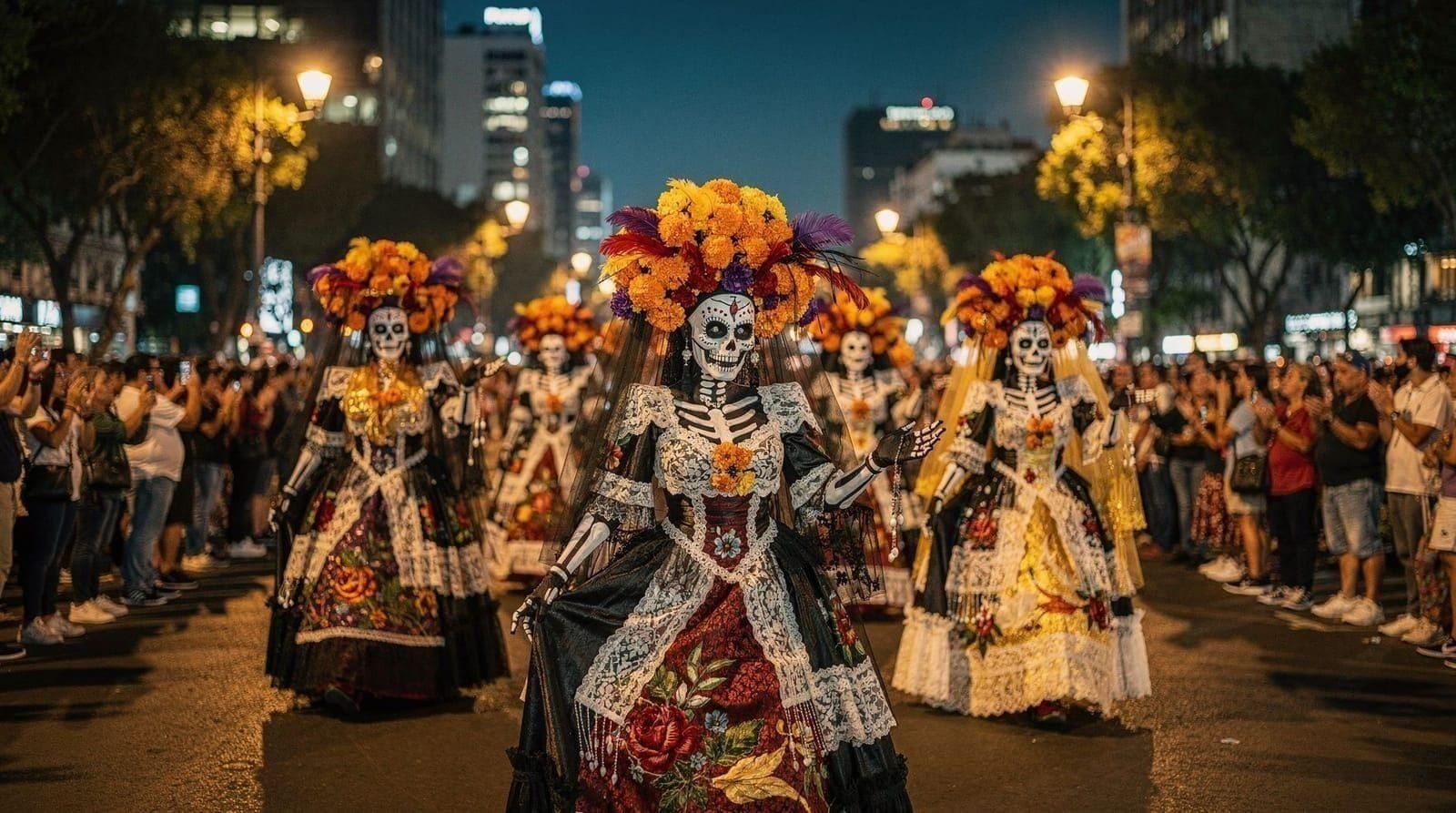
Every November, Mexico City fills with elaborate Day of the Dead installations: the giant ofrenda at UNAM, the alebrije parade on Reforma, the Catrina installations in Coyoacán, and hundreds of commercial altars across the city. All of these are worth seeing and are documented in the Day of the Dead guide for Mexico City.
| Where | San Andrés Mixquic, borough of Tláhuac, ~45 min south of central CDMX |
| When | Night of November 1–2, peak atmosphere around 8pm–midnight |
| Cost | Free cemetery access; transport around 30–250 MXN depending on method |
| Getting there | Metro Tasqueña + combi, Uber/DiDi, or a guided tour |
| Best for | Travellers who want the genuine community vigil, not a staged spectacle |
Mixquic is different. In this village 45 minutes southeast of central CDMX, families gather in the local cemetery on the night of November 1 the same way they have for generations — not as a performance for visitors, not as an Instagram spectacle, but as a genuine community expression of remembrance. Hundreds of graves are covered with marigolds, lit with candles, and attended by families who sit beside their deceased relatives through the night.
Visitors are accepted and generally welcomed. The distinction is that the vigil exists for the community, and visitors are present with permission — not the other way around. This requires a different approach than attending the parade.
The village: background and history
San Andrés Mixquic is a neighbourhood (pueblo originario) in the borough of Tláhuac, on the southern edge of Mexico City’s urban expansion. The village predates the Spanish conquest — it was founded on a chinampa island in the ancient lake system that covered much of the Basin of Mexico. The 16th-century church of San Andrés Apóstol stands where an Aztec ceremonial space once was; the cemetery is adjacent to the church, in the traditional Mexican spatial arrangement.
The community maintains several pre-Columbian traditions alongside the Catholic calendar, and Day of the Dead in Mixquic is one of the clearest examples of this synthesis: the timing follows the Catholic All Souls’ Day, but the practices — the marigold paths, the food offerings on graves, the all-night vigil — are continuous with pre-Columbian ancestor veneration.
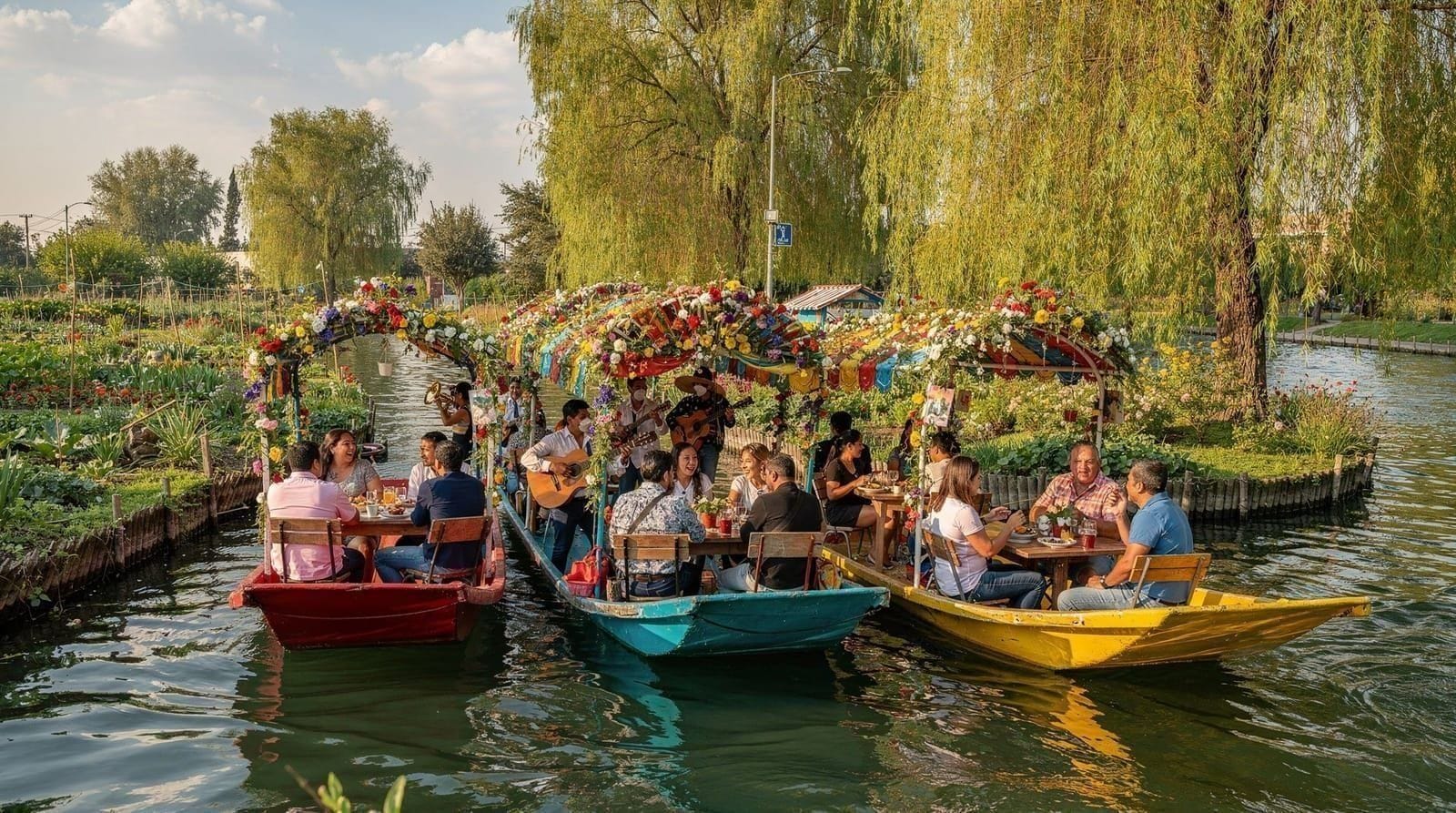
The Xochimilco area nearby also has strong Day of the Dead traditions; the chinampa culture and the canal system connect the two communities historically.
Getting to Mixquic
By Metro and combi: Metro Tasqueña (Line 2) is the southern terminus. From the terminal, combis to Mixquic run regularly — ask at the combi area outside Terminal del Sur for Tláhuac/Mixquic direction. Journey: 35–45 minutes depending on traffic. Cost: 30–60 MXN. Return combis run throughout the night on November 1–2.
By Uber/DiDi: Approximately 45 minutes from Roma or Centro under normal traffic. On November 1 evening, add 20–30 minutes for traffic congestion. Cost: 150–250 MXN each way. For the return journey (leaving the cemetery after midnight), have the app open and ready — surge pricing is common on this night.
By guided tour: The most stress-free option, particularly for the return journey after midnight.
The Day of the Dead Tour to San Andrés Mixquic handles round-trip transport and provides a guide who explains the community’s traditions and introduces the context of what you are witnessing. The guide element is genuinely useful here — the visual experience of the candlelit cemetery is powerful regardless, but understanding the specific family practices and the historical layers adds dimension.
The Mixquic Day of the Dead Celebration tour is a similar format at a slightly different price point — compare both for timing and group size before booking.
The day’s progression in Mixquic
Afternoon (3–6pm): Families begin arriving at the cemetery to clean graves, lay marigold garlands and carpets, and set up candles. Street vendors set up along the approaches. The atmosphere is busy and preparatory; less atmospheric than the nighttime but better for photography of the decorating process.
Early evening (6–8pm): The Alumbrada (illumination) begins — families gradually lighting their candles as darkness falls. By 7pm, hundreds of points of candlelight are visible across the cemetery. The smoke from copal incense drifts across the graves.
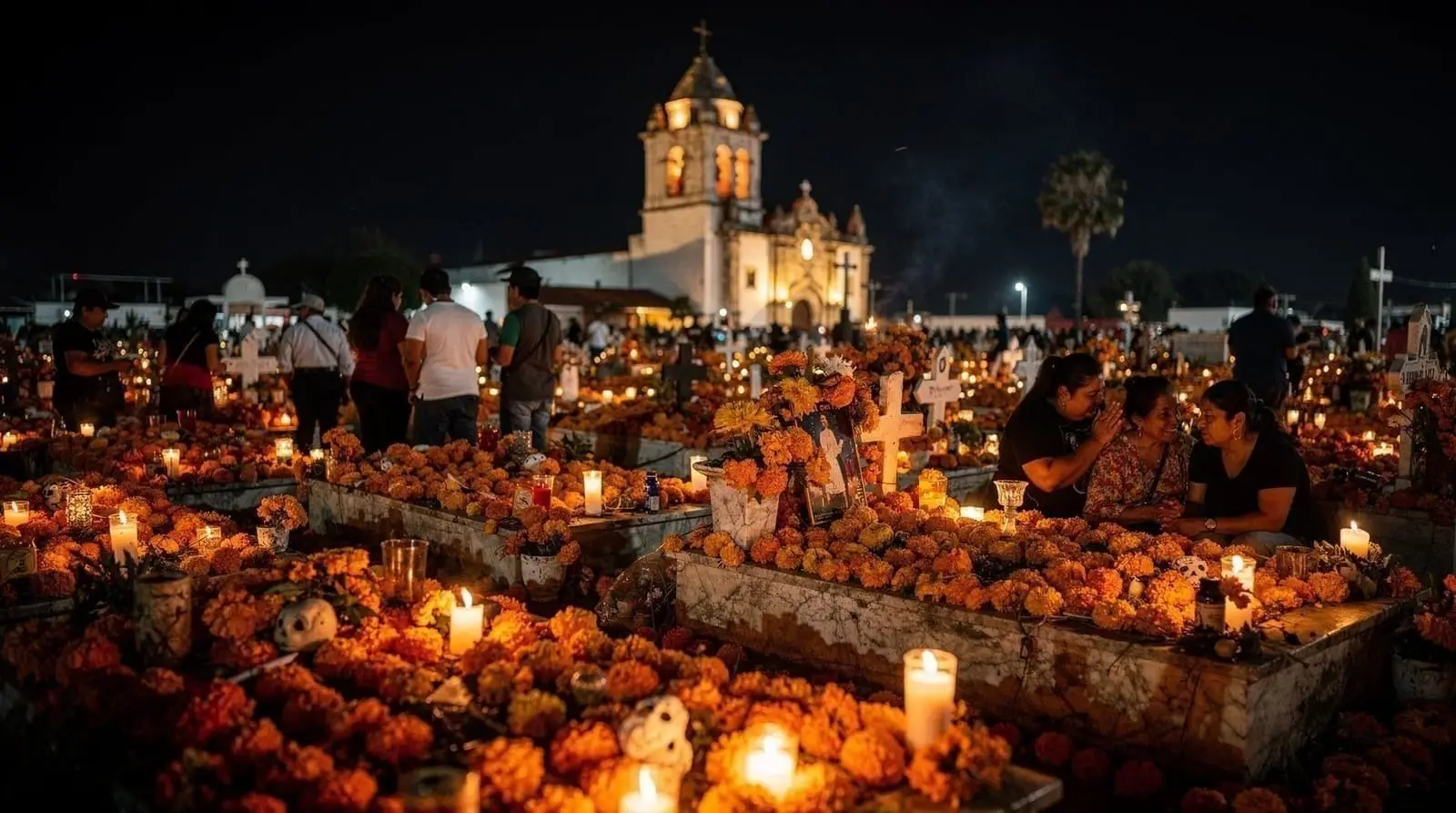
Night (8pm–midnight): Peak atmosphere. The cemetery is fully illuminated, family gatherings are in progress, and the combination of candlelight, marigolds, incense, and quiet conversation creates an atmosphere that is genuinely moving rather than morbid. This is the window for the most memorable experience.
Late night (midnight–dawn): Many families maintain vigil through the night. Tourist numbers thin significantly after midnight. This period is the most intimate for those who remain — fewer cameras, less movement, the full weight of the community tradition.
The cemetery: what you will see
The Mixquic cemetery is a standard Mexican municipal cemetery in layout — rows of graves marked with above-ground tombs, crosses, and family markers. The transformation for Day of the Dead involves:
Marigold carpets: The most striking visual element — graves completely covered with marigold petals arranged in patterns, or entire grave structures encased in orange-yellow flowers. The smell of thousands of marigolds concentrated in a single space is intense and distinctive.
Candle arrangements: From single candles to elaborate groupings of dozens. Beeswax candles are traditional; most families use standard white candles of various sizes. The combined candlelight from hundreds of graves creates the famous illumination effect.
Food offerings: Items placed on graves that the deceased person loved — a favourite bottle of beer, a plate of the preferred food, a packet of cigarettes, a favourite sweet. These are genuine offerings, not decorative items.
Family gatherings: The people at the graves. Families bring food for themselves as well as for the deceased — sitting through the night requires sustenance. There is conversation, occasional music, and sometimes tears; the emotional register is complex and not uniformly solemn.
Photography: the honest conversation
The candlelit Mixquic cemetery is extraordinarily photogenic and you will want to photograph it. Some guidelines:
- Wide establishing shots of the cemetery as a whole are appropriate and widely taken.
- Photographs of grave decorations (the marigold carpets, the candles, the ofrenda items) are generally unproblematic if the human subjects are not identifiable.
- Photographs of identifiable people — particularly family members in evident emotion — require judgment. If a family is clearly in a private moment, do not photograph. If a family is in a social, relaxed gathering mood and you ask permission (with a gesture toward your camera and a questioning expression, or basic Spanish), most will agree.
- Flash photography in the cemetery at night is disrespectful. If you want to photograph the candlelit scene, learn to shoot at high ISO and slow shutter speed without flash; the candlelight images are better anyway.
The street stalls: the festival dimension
The streets approaching the Mixquic cemetery on November 1 are lined with temporary stalls that create a fair atmosphere parallel to the cemetery’s solemnity:
Food: Tamales from large pots, atole (warm corn drink), tacos, elotes, pan de muerto. Prices are standard CDMX street food rates — 30–80 MXN for most items.
Craft and artisan items: Day of the Dead crafts made by local and regional artisans — painted calavera skulls, Catrina figurines, papel picado, marigold wreaths. Prices are reasonable; bargaining is mild.
Atmosphere: The combination of the solemn cemetery vigil and the outdoor festival creates the distinctive Day of the Dead duality — death and life acknowledged simultaneously, neither denying the other.
Comparing Mixquic to other regional vigils
Day of the Dead cemetery vigils occur across Mexico, and some are more dramatic (Pátzcuaro in Michoacán, with its island candlelit cemetery on Janitzio, is the most famous nationally). Within day-trip range of CDMX, Mixquic is the most accessible traditional vigil. Xochimilco also has cemetery activities but the canal-floating aspect is less central to the vigil tradition.
For visitors who want the cemetery vigil experience and cannot travel to Michoacán or Oaxaca, Mixquic is the right destination.
Practical notes for the visit
Dress: Layers — the November evening in CDMX’s southern periphery is cool after dark (10–15°C). The cemetery is open-air; you will be standing or sitting for several hours. Wear comfortable, modest clothing. Dark or neutral colours are more appropriate than bright patterns at a cemetery.
Footwear: The cemetery paths may be uneven and slightly muddy if it has rained. Closed, comfortable shoes.
Cash: For the street stalls, transport, and any craft purchases. No ATMs in Mixquic; bring sufficient pesos from CDMX.
Return transport: Plan this before you arrive. Uber/DiDi return on November 1–2 night is subject to surge pricing and limited driver availability in Tláhuac. Either arrange a return combi time or have the app open early. Guided tours handle the return.
Safety: Mixquic itself is a quiet residential village. The Day of the Dead night is heavily attended by CDMX residents and is safe within the village and cemetery. The journey to and from requires the same awareness as any CDMX transport situation. If it is your first visit to the city during this period, the general is Mexico City safe guide covers the broader context beyond this one night.
Weather and timing across early November
Early November in Mexico City sits at the tail end of the rainy season, so afternoons can still bring a short shower before the vigil gets going after dark; check the Mexico City weather month by month guide if you are building a longer trip around the date. Evenings are cool rather than cold, which is why the layers advice above matters more than most visitors expect — standing in an open cemetery for three or four hours feels colder than a normal CDMX night out.
Combining Mixquic with the rest of your Day of the Dead trip
Mixquic works best as one late-evening stop within a longer stay built around the season, rather than the only Day of the Dead activity on your itinerary. Daytime hours on November 1–2 are better spent at the Coyoacán altars and the wider Day of the Dead guide for Mexico City sights, saving Mixquic for the evening once those installations have been seen in daylight.
Travellers planning several days around the date should look at the 7-day Mexico City itinerary or the 5-day itinerary for how to slot in a full evening at Mixquic without rushing the rest of the day. First-timers building out the rest of their stay should also skim common Mexico City scams — none are specific to Mixquic, but the crowded combi terminal at Tasqueña on this one night draws more petty theft attempts than usual.
Frequently asked questions about Mixquic Day of the Dead
Is Mixquic Day of the Dead appropriate for children?
Yes, with preparation. Day of the Dead is fundamentally a family tradition and Mexican children participate from birth. The cemetery at night is not scary in a horror-movie sense — it is illuminated, busy, and the atmosphere is more communal than macabre. Children who are old enough to understand what a cemetery is, and who have been told what to expect, generally find the experience interesting and moving rather than frightening.
How long should I spend at Mixquic on November 1?
A minimum of 2 hours in the evening allows you to experience the Alumbrada (the lighting up) and the early peak of the candlelit vigil. Three to four hours, arriving around 7pm and leaving around 10–11pm, gives a fuller experience. Some visitors stay until midnight or beyond for the quieter late-night period.
Is there an entrance fee to the Mixquic cemetery?
No entrance fee to the cemetery itself. The tour operators who run guided tours charge for their service (transport + guide). Street stalls within the village are voluntary purchases. The community does not charge for cemetery access.
Can I attend Mixquic on November 2 instead of November 1?
Both November 1 (Día de Todos Santos — for children) and November 2 (Día de Muertos proper) have vigil activity in Mixquic. The November 1 night is generally considered the more intense, as more families observe the full vigil. November 2 sees continuation but with some families departing after the first night.
What is the difference between the Mixquic tour and going independently?
A guided tour provides: transport from central CDMX, a guide who knows the community and its customs, context for what you are witnessing, a predetermined return schedule, and someone who speaks Spanish if communication is needed. Going independently gives more flexibility but requires more navigation, the ability to manage your own transport in an area without tourist infrastructure, and going without cultural context unless you research beforehand. The tour is worth it for first-time visitors; experienced independent travellers with strong Spanish can manage independently.
How do you get from Mexico City to Mixquic for Day of the Dead?
By Metro and bus: Metro Tasqueña (Line 2) to Terminal del Sur, then a bus or combi to Mixquic (35–45 minutes, 30–60 MXN). By Uber/DiDi: approximately 45 minutes from central CDMX, 150–250 MXN each way. Traffic on November 1–2 evening is heavy; allow extra time in both directions. By guided tour: several operators run dedicated Mixquic Day of the Dead tours from CDMX, handling transport and the return journey.
What time does the Mixquic cemetery vigil happen?
The cemetery activity builds through November 1 afternoon and reaches its peak after dark — 7pm to midnight is the most atmospheric window. Families begin arriving in the early afternoon to clean and prepare graves. By 8pm, the cemetery is illuminated with thousands of candles. The most intense period for candlelight photography and quiet observation is 8pm–10pm. The vigil continues until dawn in some family sections, though crowds thin significantly after midnight.
Is the Mixquic vigil appropriate for tourists to attend?
Yes, with active respect. The village community of Mixquic has accepted visitors for decades and the cemetery vigil has semi-public character. Families are generally welcoming of respectful observers. The key behaviours: do not enter a specific family’s grave area without invitation, do not photograph individuals’ grief expressions, speak quietly, do not consume alcohol in the cemetery, and dress appropriately. The community’s willingness to share this tradition depends on visitors behaving with genuine respect.
What does the Mixquic cemetery look like during the vigil?
The cemetery transforms completely on November 1. Hundreds of graves are covered with marigold carpets — the orange flowers laid in patterns, paths, or complete coverings. Candles of all sizes illuminate every grave; the combined effect after dark is thousands of points of candlelight against the dark sky, occasionally punctuated by copal incense smoke. Families sit on stools or folding chairs beside their relatives’ graves, sometimes talking, sometimes in silence, sometimes eating. The atmosphere is peaceful and communal.
What is the town of Mixquic like outside Day of the Dead?
Mixquic is a working-class village in the borough of Tláhuac in southeastern Mexico City’s urban expansion zone. It has pre-Columbian roots — the village was founded on a chinampas island in the ancient lake system, predating the Spanish conquest. The 16th-century church of San Andrés Apóstol dominates the village centre. Outside the Day of the Dead period, Mixquic is a quiet residential community with no significant tourist infrastructure.
What is the ‘Alumbrada’ at Mixquic?
The Alumbrada (the Illumination) is the moment on November 1 evening when families simultaneously light the candles on their family graves. This creates the candlelight effect that makes the Mixquic cemetery famous. The Alumbrada is not a choreographed event — it happens gradually as families arrive and light their candles — but by 8pm the effect is complete and the cemetery is fully illuminated.
Are there food and craft stalls at Mixquic during Day of the Dead?
Yes. The streets approaching the cemetery are lined with temporary food stalls, craft vendors, and Day of the Dead artisan sellers. Standard offerings: tamales, tacos, atole, pan de muerto, marigold flowers, and Day of the Dead crafts (calavera skulls, catrinas, papel picado). The stalls create a festival atmosphere in the streets surrounding the cemetery while the cemetery itself remains relatively quiet.
How is Mixquic different from the Mexico City Day of the Dead events?
Mexico City’s main Day of the Dead events (UNAM ofrenda, Coyoacán installations, the parade) are large-scale public spectacles created for urban celebration. Mixquic’s vigil is a genuine community family tradition. The scale is intimate — this is a village cemetery where real families gather to remember real people. The tourist presence is managed by the community; you are an observer at a family event, not an audience member at a performance.
Top experiences
Bookable activities with verified prices and instant confirmation on GetYourGuide.