Mexico City food tour: comparing the best options
Mexico City: Tacos & Mezcal Night Food Tour
Duration: 3 hours
Why a food tour in Mexico City makes sense
Mexico City’s food scene is genuinely extraordinary — the range of regional Mexican cuisines, the quality of street food, the sophistication of the mezcal and bar culture, and the sheer density of options make it one of the best cities in the world to eat in. It also makes it overwhelming for a first-time visitor, particularly someone who does not speak Spanish.
A food tour with a good guide solves several real problems: it navigates you to vendors and markets that most tourists miss, provides context for what you are eating and why it is culinarily significant, and handles the logistics of payment, ordering, and quantity at stalls where a Spanish-speaking insider is distinctly advantageous.
This review compares the three main organized food tour formats available in Mexico City, with honest assessments of what each includes and who each is best for.
| Where | Historic center, Roma, or Condesa depending on tour |
| Cost | Around 700–1,500 MXN per person including tastings |
| Time needed | 2.5–5 hours depending on format |
| Getting there | Most tours meet on-site; check the meeting point when booking |
| Best time | Evening for mezcal-focused tours; late morning for market-focused tours |
Option 1: Tacos and mezcal night food tour (evening highlight)
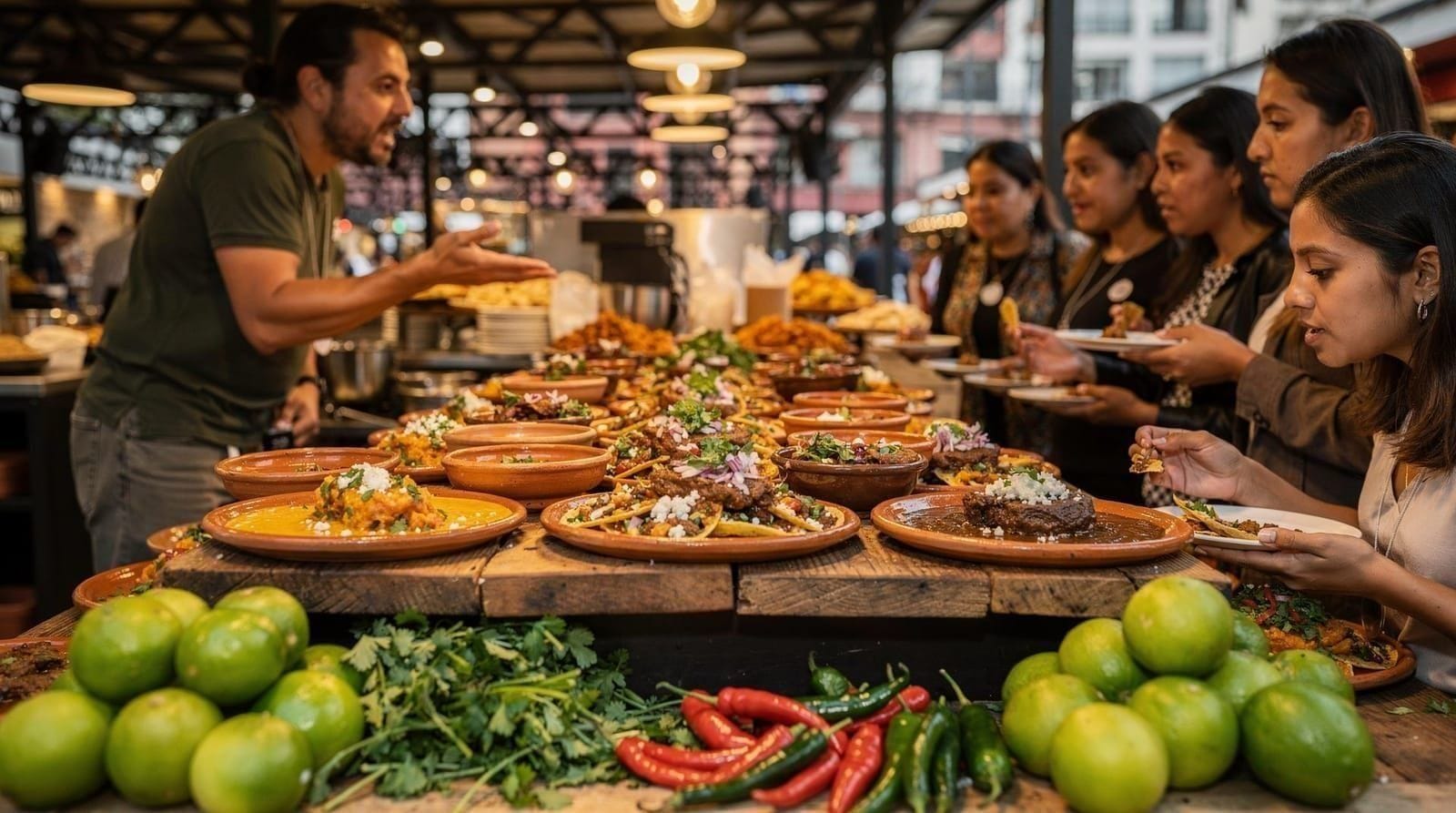
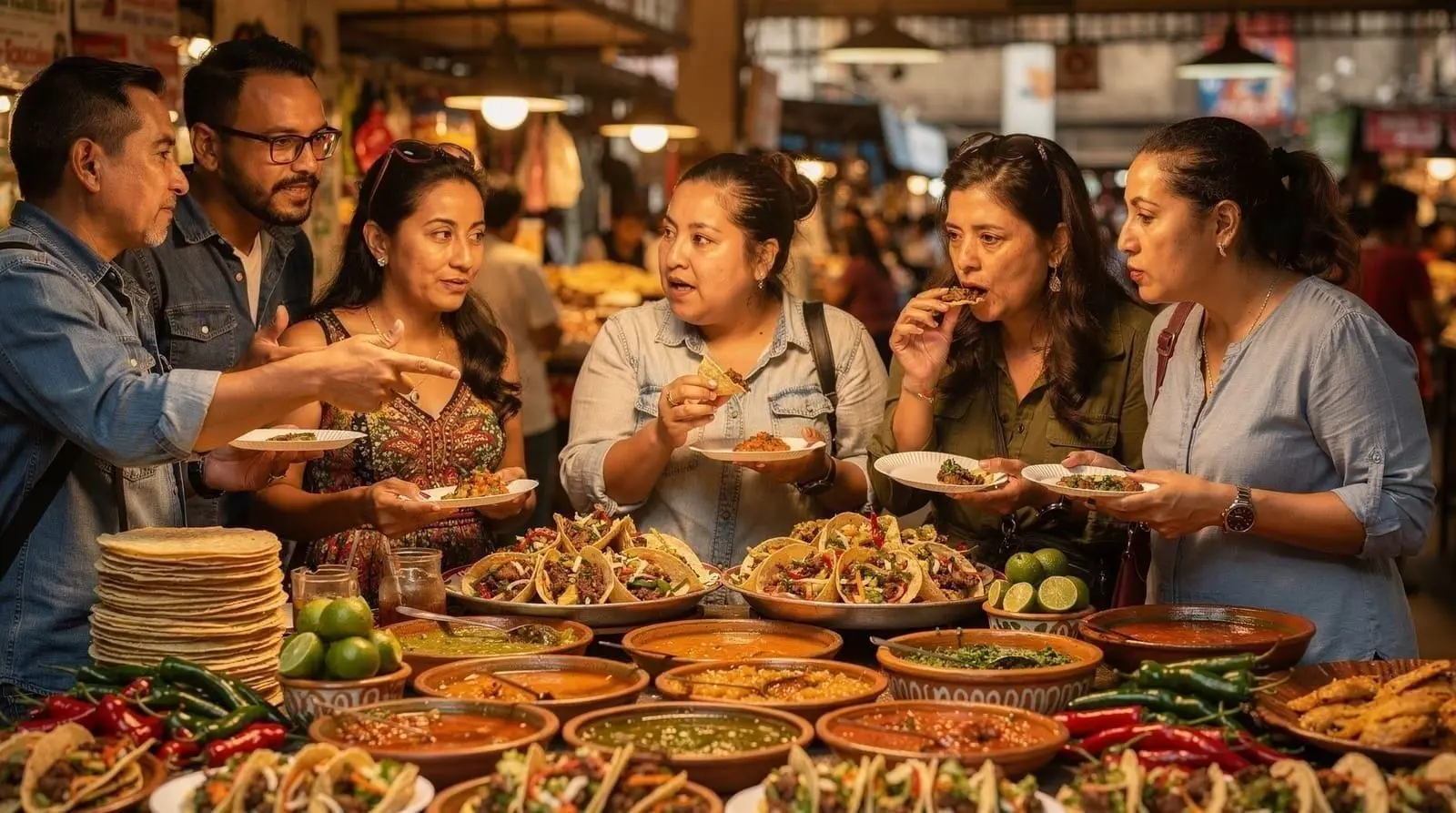
The Mexico City tacos and mezcal night food tour is the highest-profile food tour product in the city. The format is an evening walking tour (approximately 3 hours, typically 7–10 pm) covering 5–7 stops across the historic center, Roma, or a combined route — tacos from multiple styles, mezcal tastings, and at least one traditional cantina or pulquería stop.
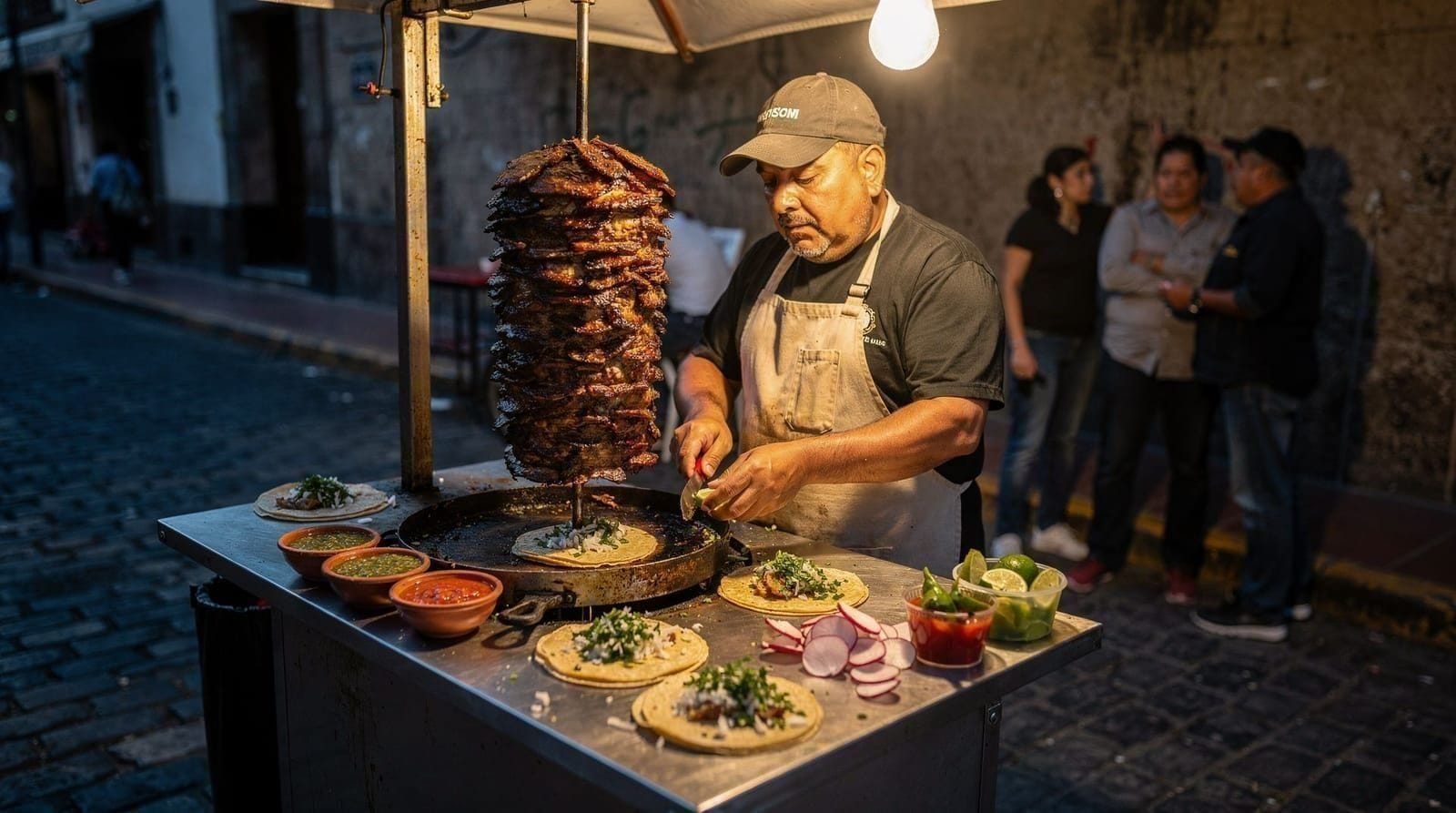
What distinguishes this from a daytime tour: Mexico City at night is different from Mexico City during the day. The taco carts that appear after 9 pm — tacos de guisados sold from folding table setups, late-night pastor stands under fluorescent lights — are often different vendors from the daytime markets. The mezcal culture is genuinely nocturnal. A night tour provides access to an aspect of the food scene that a daytime tour cannot.
What is typically included: 5–7 food tastings (tacos, snacks, sweets), 2–3 mezcal or pulque pours, a bilingual guide, and typically a refrigerated travel card or reference card for navigating the offerings independently afterward.
Price: approximately 1,100–1,500 MXN per person.
Best for: Visitors who eat adventurously; anyone interested in mezcal specifically; travellers who want the social and nightlife context of Mexico City eating culture. Not ideal for visitors who do not drink alcohol (though good operators accommodate this).
Option 2: Historic centre food tasting walking tour (daytime)
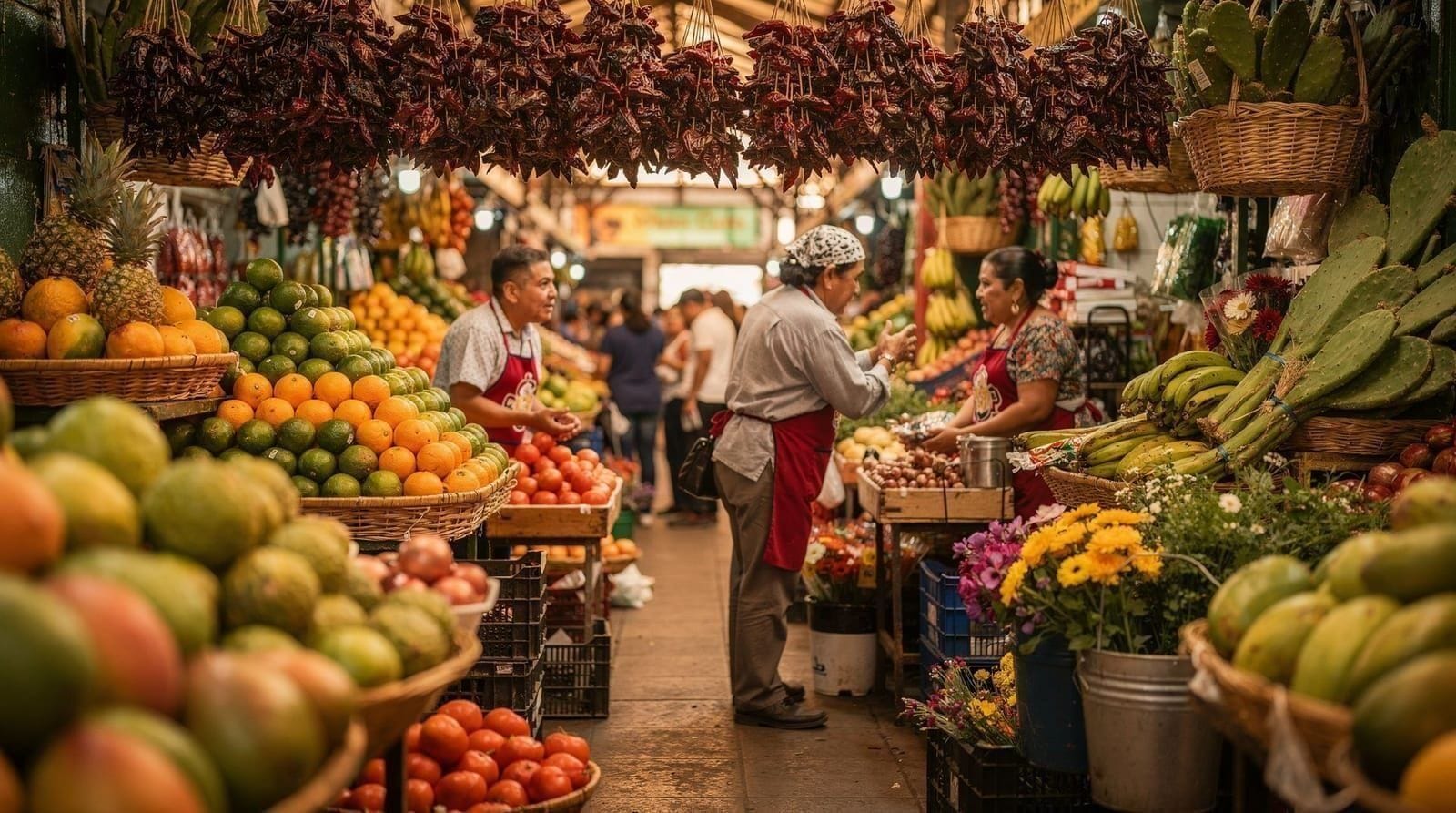
The Mexico City Historic Centre food tasting walking tour is a daytime tour (approximately 5 hours) focused on the Centro Histórico and its food ecosystem — the Mercado de la Merced, the covered market stalls, the tamale vendors in specific doorways known only to locals, and the comedor (home-style lunch counter) culture.
The historic center has the most traditional street food in the city — and the most intimidating for independent exploration. This tour provides a guide who knows which vendors have operated in the same doorways for 40 years and why the torta stall at a particular corner is worth a queue of 20 people.
This is a lunch-time tour in format — you will eat the equivalent of a full mid-day meal across multiple stops. The daytime timing means better availability for visitors who have evening commitments.
Price: approximately 900–1,300 MXN per person.
Best for: Visitors interested in traditional Mexican food over contemporary restaurant culture; anyone who wants to understand the market and street food system in depth; travellers who prefer the historic center for its cultural context.
Option 3: CDMX taco tour experience
The CDMX taco tour experience is a focused taco-centric format — typically 2.5–3 hours visiting 4–5 specific taco operators across neighborhoods, with a narrower food scope than the multi-format tours above. The guide provides context on the taxonomy of tacos in Mexico City (the difference between al pastor, suadero, tripa, carnitas, canasta, and guisados is not obvious to a first-time visitor) and explains the regional and cultural origins of each style.
This is a more focused and slightly shorter experience, which suits visitors who want a clear introductory tour without a multi-hour commitment. The price point is accordingly lower.
Price: approximately 700–1,000 MXN per person.
Best for: Visitors who are primarily interested in tacos specifically; shorter-format preference; travellers adding a 2–3 hour experience to a day already packed with other activities.
For visitors who want to go beyond tacos into the wider market ecosystem, the exotic food and market tour covers less common stalls and specialty market products beyond the three taco- and mezcal-focused formats above.
What to understand about Mexico City taco culture
Mexico City has the world’s greatest concentration of taco styles and operators. A few specifics worth knowing before any food tour:
Al pastor: Pork marinated in achiote and dried chiles, cooked on a vertical spit (trompo) borrowed from shawarma technique via Lebanese immigrants to Mexico in the 20th century. The quintessential Mexico City taco. Quality varies enormously; a good guide takes you to operators with properly maintained trompos and high turnover.
Tacos de canasta: “Basket tacos” — steamed tacos filled with beans, chicharrón, or potato, sold from bicycle baskets in the morning. Very cheap (15–25 MXN each), very soft texture, entirely different from al pastor. Often consumed as morning street food.
Tacos de guisados: Lunch tacos with braised fillings — chicken tinga, rajas con crema, cochinita pibil, nopales — served from steam trays at comedor-style stalls. The most varied format.
Suadero and tripa: Beef brisket (suadero) or intestine (tripa) cooked in lard on a large comal. Significant Mexican taco tradition, an acquired flavor for international visitors.
The Mexico City street food guide covers the full taxonomy with specific vendors and neighborhoods.
Mezcal on a food tour: what to expect
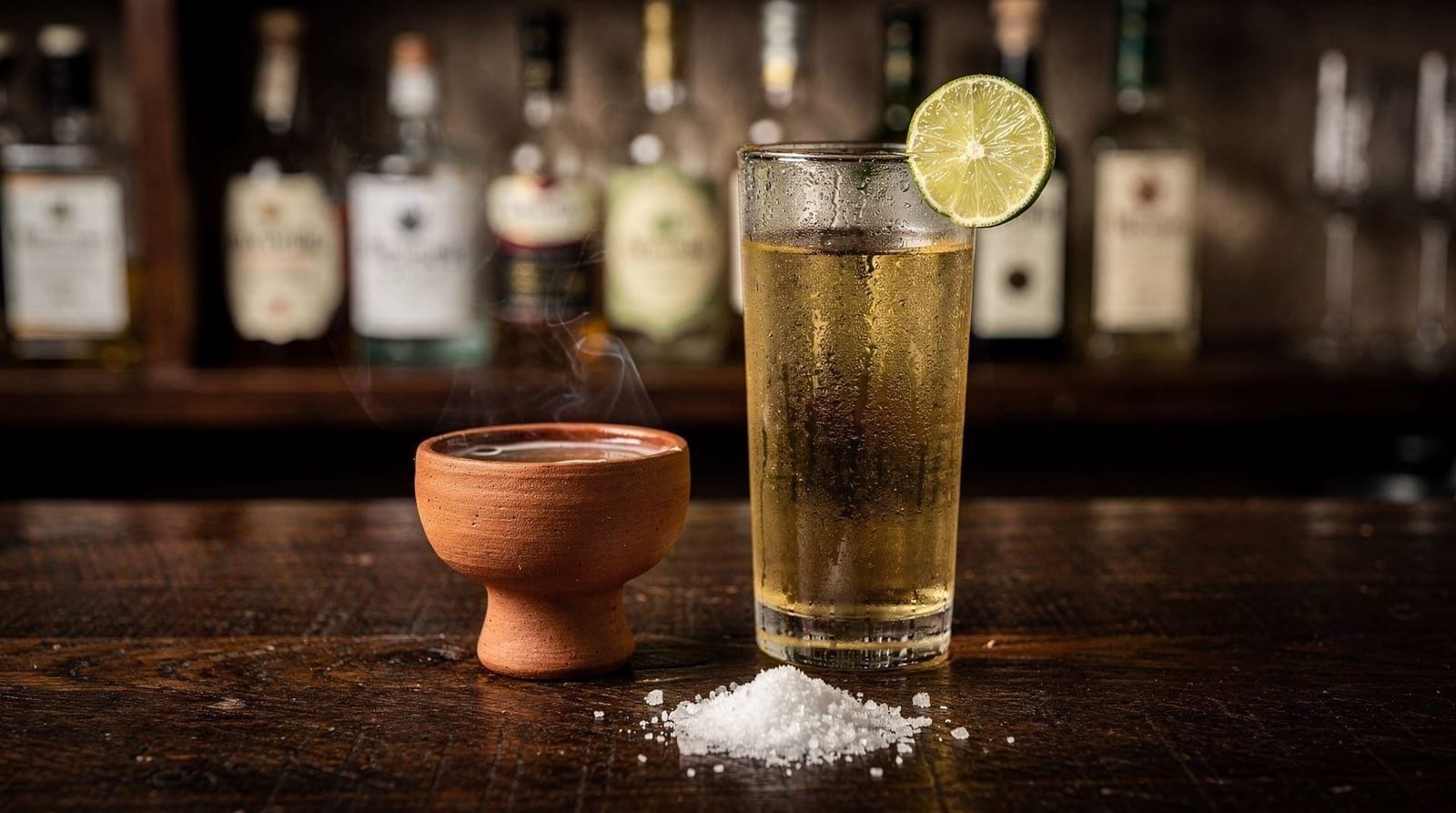
The mezcal component of evening food tours typically involves 2–3 samples across different agave varieties — a blanco (unaged, direct agave flavor), a reposado or añejo if the guide chooses aged expressions, and often a raicilla or sotol to demonstrate that not all agave spirits are mezcal. Good guides explain the difference between mezcal and tequila (both are agave spirits; tequila is a specific protected designation using only blue agave). The mezcal vs. tequila guide covers this in detail.
Independent food exploration alongside a tour
A food tour is a good entry point, not a comprehensive survey. After the tour, the guide typically provides specific vendor recommendations you can return to independently. The Mexico City markets guide and the best food tours guide cover the independent exploration options in depth.
Comparing the three formats at a glance
| Option | Price (MXN/person) | Duration | Best for |
|---|---|---|---|
| Tacos and mezcal night | 1,100–1,500 | ~3 hours, evening | Nightlife and mezcal-focused visitors |
| Historic centre daytime walk | 900–1,300 | ~5 hours | Traditional market-and-street-food depth |
| CDMX taco tour | 700–1,000 | 2.5–3 hours | Focused, shorter taco-only experience |
Fitting a food tour into your itinerary
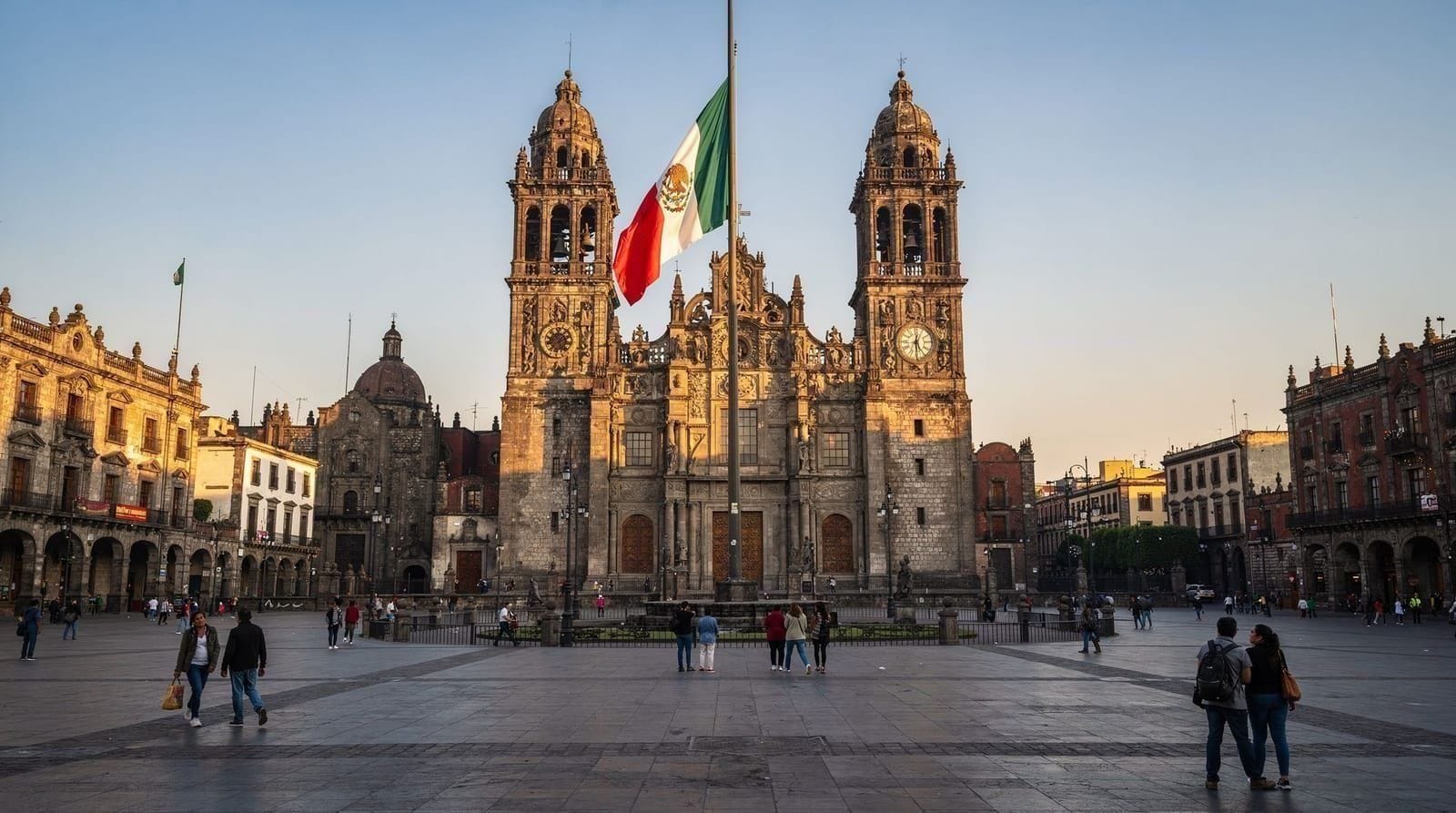
Most first-time visitors do best treating a food tour as an anchor for one evening or one midday block rather than an entire day. The 5-day Mexico City itinerary places the evening tacos-and-mezcal tour on the same night as a walk through Centro Histórico, since both experiences share the same neighborhood after dark. If your schedule is tighter, the CDMX taco tour’s 2.5–3 hour format slots into a single afternoon without displacing other plans.
Drinking safely at altitude
Mexico City sits at 2,240 m, which means alcohol — mezcal in particular, often 40–50% ABV — affects visitors more quickly than at sea level. Evening food tours that include multiple mezcal pours pace them with food between rounds, but it is worth eating something substantial before the tour starts and drinking water alongside the tastings. This matters especially on your first night or two in the city, before your body has adjusted to the altitude.
Frequently asked questions about Mexico City food tours
How spicy is the food on food tours?
Mexican food in general ranges from mild to very hot. Tour guides are experienced with international visitors and generally moderate the heat level of tastings unless you specifically request otherwise. Salsas are offered as condiments — you control how much you add.
Are food tours vegetarian or vegan friendly?
Most Mexico City food tours can accommodate vegetarian visitors with advance notice. Vegan is more difficult given the prevalence of lard (manteca), cheese, and crema in traditional preparations. Confirm with the operator before booking.
How much should I tip the food tour guide?
Standard practice is 100–200 MXN per person for a 3-hour tour, 200–300 MXN per person for a 5-hour tour, at personal discretion. Tips are in cash pesos.
Can I join a food tour if I have a shellfish or nut allergy?
Contact the operator directly before booking and be specific about your allergy. Most operators can route around common allergens for serious conditions. For life-threatening allergies, confirm every stop in advance.
Should I do a food tour on my first night or later in the trip?
Either works, but many visitors prefer the evening tacos-and-mezcal tour in the first day or two — it doubles as an orientation to the city’s food geography, which makes independent eating easier for the rest of the trip.
Are Mexico City food tours worth the money?
For most first-time visitors, yes. A good food guide provides access to vendors and neighborhoods that independent travellers often miss, explains what they are eating and why it is significant, and eliminates the intimidation factor of ordering at Spanish-only street stalls. The per-person cost (600–1,500 MXN) is partially offset by the cost of the food and drinks included.
What food will I eat on a typical Mexico City food tour?
Tacos (multiple styles — al pastor, canasta, carnitas, guisados), tlayudas, tamales, pozole, antojitos (small street snacks), mezcal or pulque tastings, aguas frescas, and regional sweets. The specific stops vary by tour and route. Night tours typically include mezcal tasting as a central element.
What time do food tours run?
Daytime tours run from 10 am–1 pm or 11 am–2 pm, focused on lunch street food and market visits. Evening/night tours run from 6 pm–9 pm or 7 pm–10 pm, incorporating tacos and mezcal bar culture. Some tours run morning-only formats with market and breakfast focus.
How much food is included in a Mexico City food tour?
Most food tours include 5–8 tasting portions across different stops. This is typically enough to constitute a light-to-moderate meal. You should not expect a full dinner substitute, but you will not leave hungry.
Which neighborhood is best for a Mexico City food tour?
The historic center (Centro Histórico) has the deepest concentration of traditional street food vendors. Roma and Condesa are better for contemporary Mexican cuisine and mezcal bars. The best tours visit both or focus deeply on one.
Is Mexico City street food safe to eat?
Yes, with normal common sense. High-turnover stalls with visible cooking and local clientele are the reliable indicator. Avoid pre-made food sitting under glass for extended periods. Tacos al pastor cooked on a rotating spit are consistently safe (the heat kills bacteria). The Mexico City food safety guide covers the specifics.