Puebla and Cholula day trip from Mexico City: tour comparison
From Mexico City: Puebla and Cholula Day Tour with Lunch
Duration: 12 hours
Why Puebla is the best day trip from Mexico City
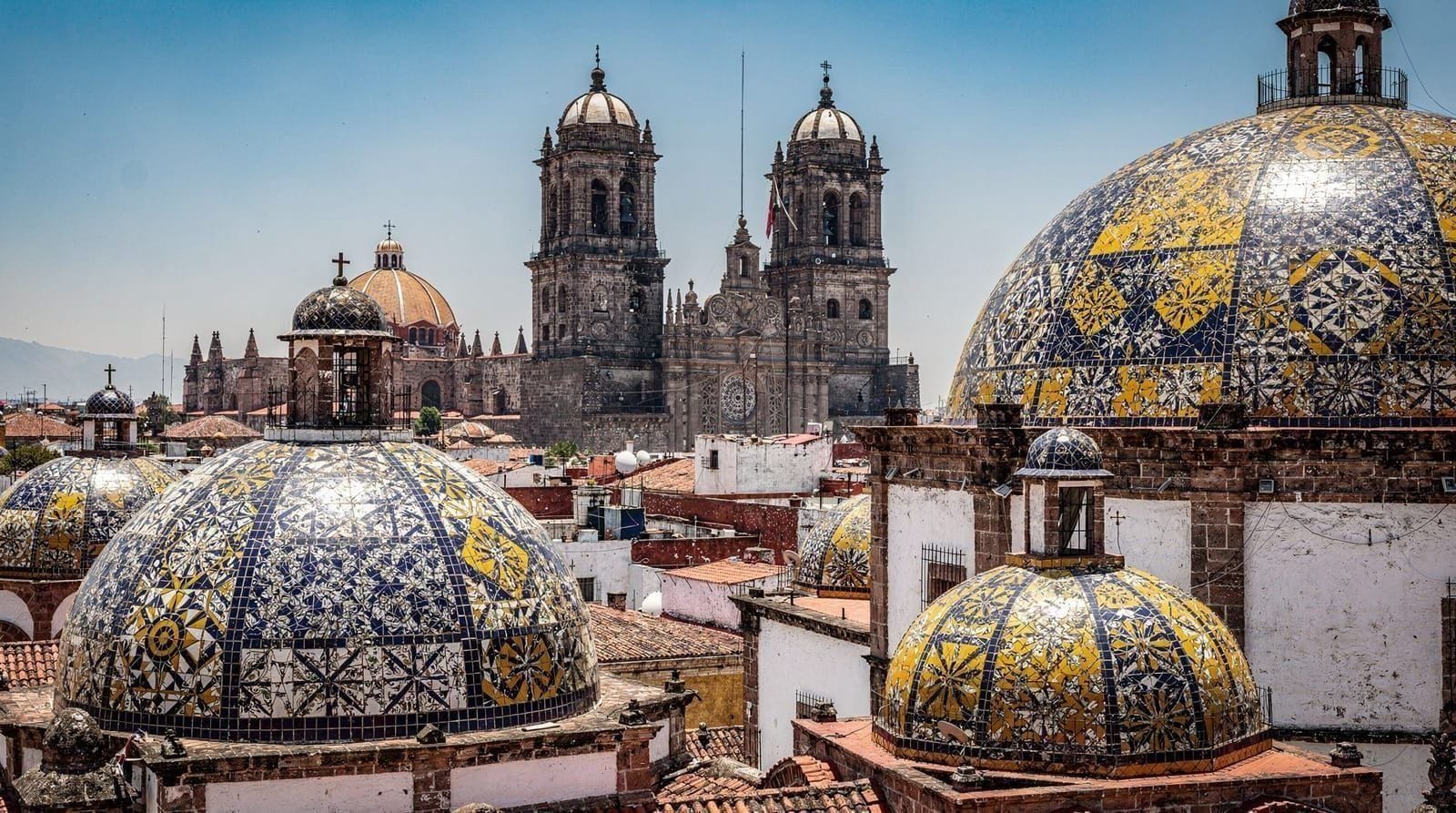
Puebla is 130 km southeast of Mexico City — close enough for a day trip, different enough to justify it. This is not a repeat of what you can see in the capital. Puebla is a distinct colonial city with its own food culture, its own architectural tradition (the Talavera-tiled baroque buildings are impossible to confuse with anything in CDMX), and access to the Great Pyramid of Cholula — which is, by any measure, one of the most remarkable archaeological sites in the Americas.
The tradeoff of a day trip versus an overnight stay is always the same: you see the highlights but miss the slower pleasures of a city. For most visitors with a limited Mexico itinerary, a day trip to Puebla and Cholula from Mexico City is the right call. If you have a week in the region, consider an overnight in Puebla for better food access and the early-morning light on the zócalo.
| Where | Puebla and Cholula, 130 km southeast of Mexico City |
| Cost | Around 1,100–2,200 MXN per person, most formats include lunch |
| Time needed | ~12 hours door to door |
| Getting there | Organized tour pickup, or ADO bus from TAPO terminal |
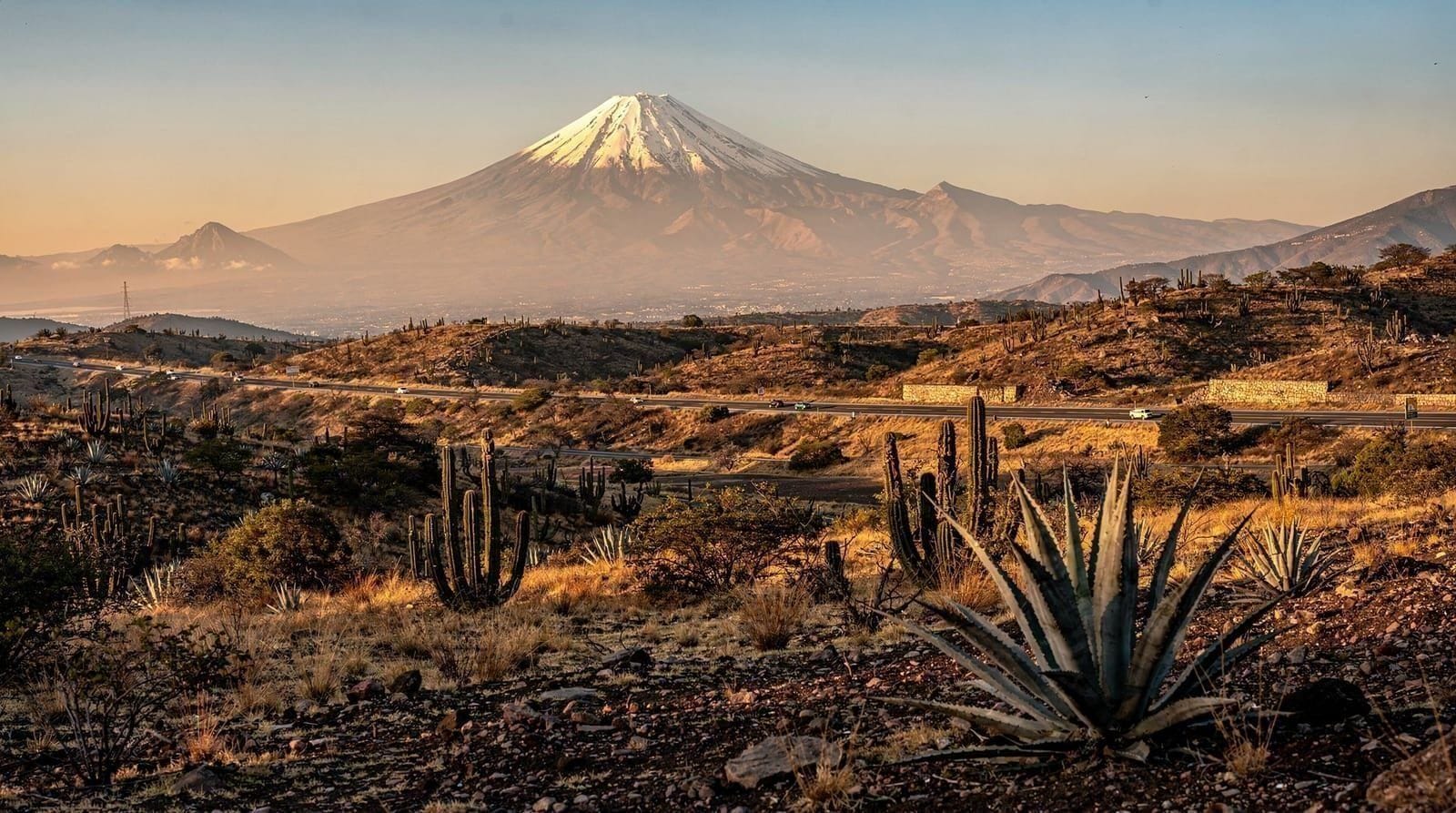
| Best time | Weekdays outside Semana Santa; November–May for clear volcano views |
Option 1: Puebla and Cholula day trip with lunch (most popular)
The Puebla and Cholula day trip with lunch from Mexico City is the standard full-day format and the most-booked variant. Typical itinerary: depart Mexico City 7–8 am, arrive Cholula by 9:30 am for the pyramid complex, lunch at a local restaurant serving traditional Puebla cuisine, Puebla historic center in the afternoon (Zócalo, Catedral de la Inmaculada Concepción, a Talavera workshop visit), return to CDMX by 7–8 pm.
The lunch inclusion is significant: Puebla food is worth going specifically to eat. A good lunch on this day trip typically means mole poblano, cemitas, or barbacoa with handmade tortillas at a restaurant connected to the tour operator’s network — not tourist-trap pricing. Confirm what is included before booking.
What is typically included: Round-trip transport from CDMX, bilingual guide, Cholula pyramid entry (210 MXN), guided time in the Puebla historic center, lunch, and the Tonantzintla church in some versions.
Price: approximately 1,100–1,700 MXN per person.
Duration: approximately 12 hours door to door.
Best for: Most first-time visitors to Puebla; anyone who wants a structured introduction to both Cholula and Puebla food culture in a single efficient day.
Option 2: Puebla, Cholula, and Tonantzintla with lunch
The Puebla, Cholula, and Tonantzintla day trip with lunch adds the Templo de Santa María Tonantzintla to the standard itinerary. This is the variant to choose if interior baroque church architecture is something you specifically value — Tonantzintla’s interior is in a different category from any other colonial church in Mexico.
The tour adds approximately 45 minutes to the schedule to accommodate the Tonantzintla detour from Cholula. This typically means slightly reduced free time in Puebla’s historic center or a faster pace at Cholula. For visitors who have been to Puebla before or are specifically interested in the indigenous-baroque fusion at Tonantzintla, the tradeoff is worth it.
Price: approximately 1,200–1,800 MXN per person.
Best for: Visitors with interest in colonial church architecture; return visitors to Puebla who have seen the main sites; anyone for whom Tonantzintla is a specific priority.
A similar day trip to Puebla, Cholula and Tonantzintla from another operator runs a comparable itinerary — worth comparing inclusions and lunch details against the option above before booking.
Option 3: Cholula pyramid and Puebla small-group tour
The Cholula pyramid and Puebla small-group tour runs with a maximum group size of 8–12 people (versus 20–30 on standard coach tours), allowing a more flexible pace and better guide access. Small-group tours typically depart later (8:30–9 am) and run slightly shorter than full coach day trips.
The tradeoff: higher price per person, but genuinely better quality of experience for the guide-to-visitor ratio. Small groups can spend more time in Tonantzintla, linger at the Cholula tunnels, or take a longer lunch without the logistics of moving 25 people simultaneously.
Price: approximately 1,500–2,200 MXN per person.
Best for: Visitors who have had poor experiences with large coach tours; solo travellers who appreciate smaller social dynamics; anyone visiting Cholula for a second time who wants deeper engagement.
Going independently: the case for the ADO bus
Puebla by first-class bus from TAPO (Terminal de Autobuses de Pasajeros de Oriente, metro Candelaria on Line 1) is the obvious independent option. ADO buses run roughly every 30 minutes from 6 am; the journey takes approximately 2 hours (2.5 with traffic). One-way fare: 220–280 MXN. From Puebla’s CAPU bus terminal, taxis or Uber to the Cholula pyramid run approximately 80–120 MXN.
The independent tradeoff: You save 700–1,200 MXN per person and gain schedule flexibility, but you navigate Cholula and Puebla without a guide who knows which taco stand has been operating the same recipe for 50 years, which tunnel section of the pyramid is worth spending extra time in, and which Talavera workshop sells authentic hand-painted pieces versus mass-produced souvenirs.
For visitors with reasonable Spanish, curiosity, and the Puebla-Cholula day trip guide downloaded, the independent bus is perfectly viable. For first-time visitors to Puebla without Spanish who want to maximize the 12 hours efficiently, the organized tour format is worth the price.
What to see at the Cholula pyramid complex
The tunnel circuit: Entering the tunnel system (part of the archaeological zone) provides the visceral experience of how large the pyramid is — the tunnels are carved through successive construction phases, with older layers visible inside newer ones. The pyramid was built in four successive stages over several centuries; each stage of construction covers and incorporates the previous one.
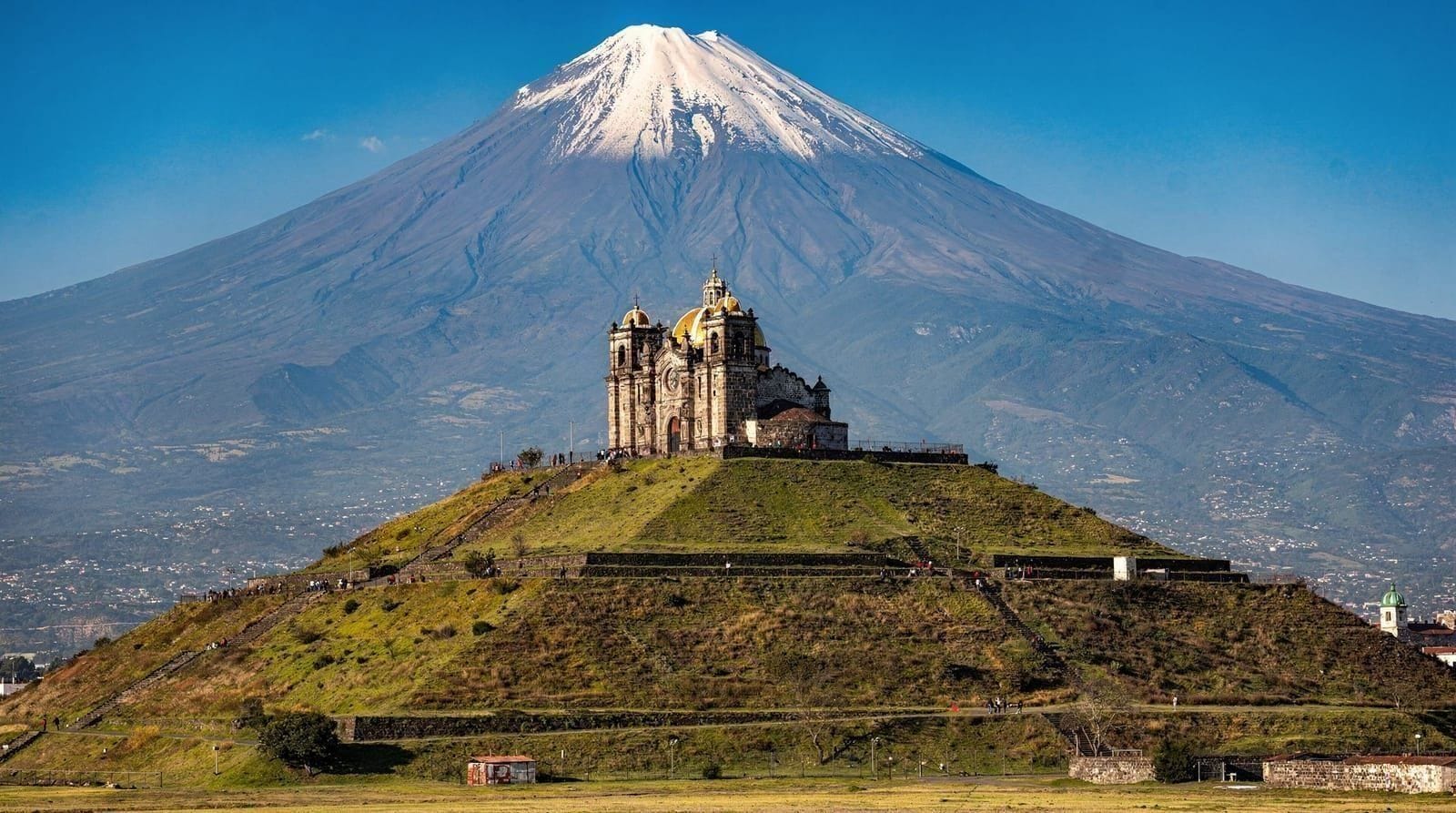
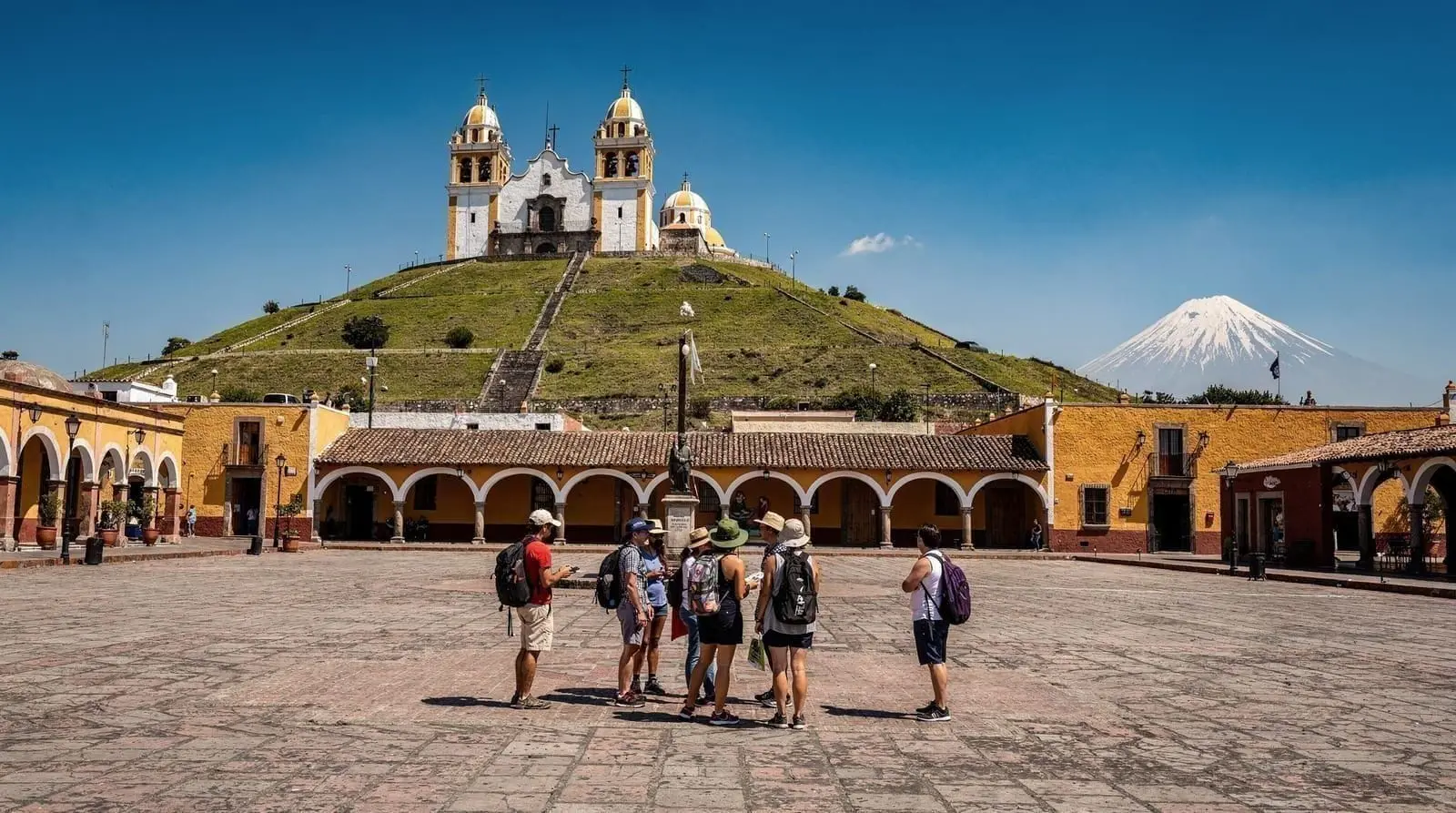
The hilltop church: The Church of Nuestra Señora de los Remedios on the pyramid’s summit is a working colonial church. The view from the hilltop — the pyramid’s terraced structure spreading out below, and Popocatépetl volcano (5,452 m) on the horizon 55 km away — is one of the best photographs available on any Mexico City day trip.
The surrounding zone: The flat ground around the pyramid base has remnants of earlier platform structures and the excavated areas of the archaeological zone. Most tour guides cover the outdoor zone in 60–90 minutes.
What to eat in Puebla
Mole poblano: One of the two or three most famous sauces in Mexican cuisine — a complex reduction of 20+ ingredients including dried chiles, chocolate, spices, and seeds. The version at a quality Puebla restaurant is significantly better than the same dish in Mexico City.
Cemita: A sandwich on a sesame-seed roll stuffed with milanesa (breaded meat), avocado, chipotle, Oaxacan cheese, and papalo herb. Available from street carts in the Puebla market area from 50–80 MXN.
Chile en nogada: A seasonal dish (July–September) of poblano chile stuffed with picadillo (ground meat, dried fruit, nuts) in walnut cream sauce, garnished with pomegranate and parsley in the colors of the Mexican flag. Only genuinely available in season; do not order it in February.
Talavera chocolate: Puebla’s chocolate tradition (hot chocolate, chocolate paste for mole) is centered around the Calle 5 de Mayo market area. Worth buying as a portable gift.
Comparing the three tour formats
| Option | Price (MXN/person) | Includes Tonantzintla | Best for |
|---|---|---|---|
| Standard day trip with lunch | 1,100–1,700 | No | Most first-time visitors |
| With Tonantzintla | 1,200–1,800 | Yes | Colonial church architecture enthusiasts |
| Small-group tour | 1,500–2,200 | Often | Better guide access, smaller crowds |
Puebla vs. other Mexico City day trips
Puebla is one of several classic day-trip options from the capital, alongside Taxco and Cuernavaca and Teotihuacán. Of the three, Puebla is the strongest choice for food and colonial architecture together — Taxco has silver and baroque architecture without the food reputation, and Teotihuacán is purely archaeological. The best day trips from Mexico City guide compares all the options if you are deciding which single day trip to prioritize on a shorter visit.
Building Puebla into a longer Mexico City stay
For visitors with 5–7 days in the region, Puebla works well as one of two or three day trips spread across the week rather than crammed alongside other excursions. The 7-day Mexico City itinerary schedules Puebla on its own day, distinct from Teotihuacán or Taxco, since attempting two full day trips back-to-back leaves little time to recover or explore the capital itself.
Frequently asked questions about the Puebla and Cholula day trip
Is Puebla safe for tourists?
Yes, within the tourist areas. The historic center (Zócalo, market area, Cholula pyramid) is well-trafficked and safe. Standard urban awareness applies. The is Mexico City safe guide covers general Mexico safety; Puebla is comparable.
Can I go to Puebla and Teotihuacán on the same day trip?
No. Both are full-day commitments in opposite directions (Puebla southeast, Teotihuacán northeast). Attempting both produces a rushed and unsatisfying experience of each. See the 7-day Mexico City itinerary for how to schedule both across separate days.
What is the best season for Puebla day trips?
Any time of year. The dry season (November–May) offers clearer volcano views. July–September brings the chile en nogada season. Avoid Easter weekend — Puebla is extremely crowded during Semana Santa and hotel/tour prices spike.
Should I do Puebla or Taxco if I only have time for one day trip?
Choose Puebla if food and the Cholula pyramid interest you most; choose Taxco if silver craft and baroque mountain-town architecture are the priority. Puebla generally has broader appeal for first-time visitors given the pyramid and food combination.
How far is Puebla from Mexico City?
130 km southeast, approximately 2 hours by car or bus on the Mexico–Puebla toll highway (MEX-150D). Traffic from CDMX on Friday evenings can extend this to 2.5–3 hours. Organised tour departures at 7–8 am beat the worst traffic. Independent bus (ADO first-class) from TAPO terminal costs 220–280 MXN each way and takes about 2 hours.
What is the Cholula pyramid and why is there a church on top?
The Great Pyramid of Cholula (Tlachihualtepetl) is the largest pyramid in the world by base area and volume. It is largely buried under a natural-looking hill, with 8 km of excavated tunnels through its interior. The Spanish colonial church (Iglesia de Nuestra Señora de los Remedios) was built on the pyramid’s summit in 1594 as a deliberate act of religious dominance — construction on exactly the spot of the pre-Columbian temple. The combination makes one of the most historically loaded landscapes in Mexico.
Is the Cholula pyramid inside walkable?
Yes. Approximately 8 km of tunnels have been excavated through the pyramid interior and are open to visitors. Walking the tunnel circuit takes 30–45 minutes. Entry to the pyramid tunnels and the hilltop church is included in the Cholula archaeological zone entry (100 MXN).
What is Puebla famous for besides the pyramid?
Puebla is Mexico’s most celebrated food city after Oaxaca: mole poblano (the complex chile-and-chocolate sauce), chile en nogada (stuffed peppers in walnut cream, seasonal), cemitas (distinctive sandwiches), and Talavera ceramics (hand-painted pottery with centuries of tradition). The historic center is a UNESCO World Heritage site with 2,619 officially listed baroque and colonial buildings.
What is the Tonantzintla church near Cholula?
Templo de Santa María Tonantzintla is a small baroque church in the village of San Andrés Tonantzintla, 3 km from Cholula. The interior is covered floor-to-ceiling in indigenous-influenced baroque plasterwork — a fusion of Spanish baroque and Aztec decorative sensibility that is unique in Mexican church architecture. One of the most visually extraordinary interiors in the country. Most Puebla day trips do not include it; the Tonantzintla tour variant specifically does.