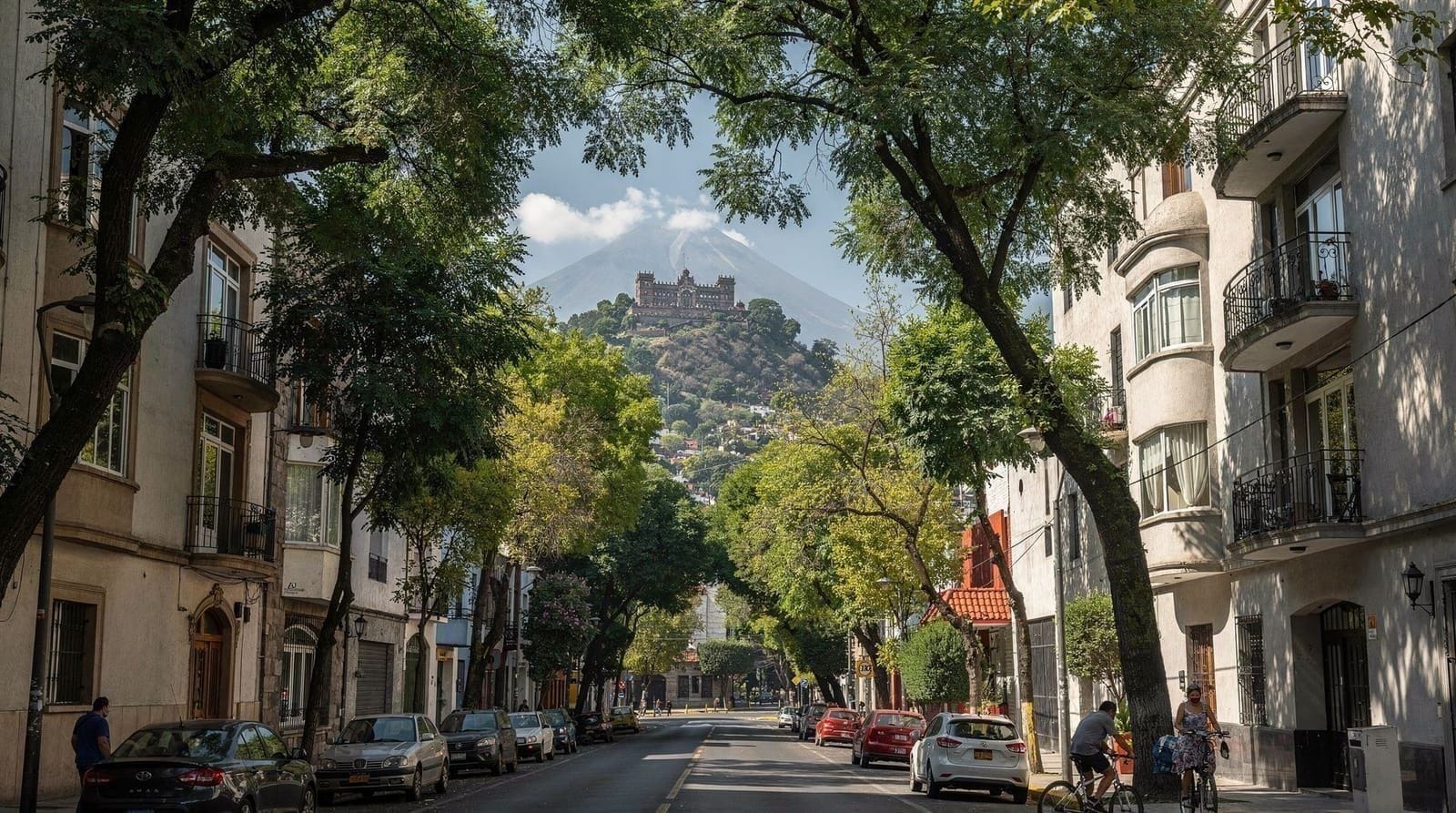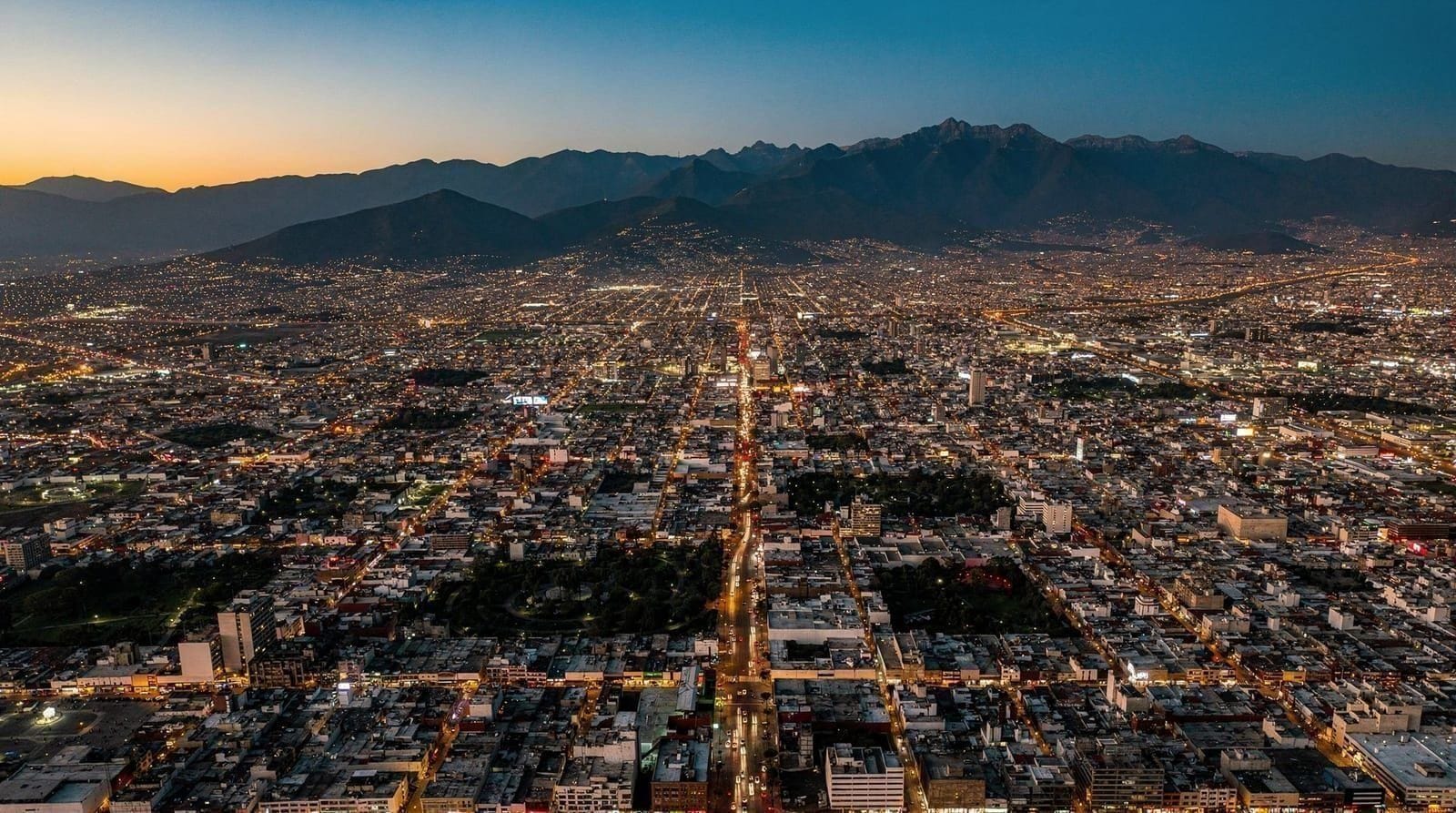
Puebla and Cholula day trip guide from Mexico City
From Mexico City: Puebla, Cholula & Tonantzintla with Lunch
How do you get from Mexico City to Puebla for a day trip?
The ADO bus from TAPO terminal (Mexico City) to CAPU terminal (Puebla) takes 2 hours, runs every 20–30 minutes, and costs 280–380 MXN ($16–22 USD) each way. First class, reclining seats, air conditioning. This is the most practical option for independent travel. Guided tours depart from various CDMX hotels and take 2–2.5 hours by private vehicle.
Why Puebla deserves a full day
Puebla is not a day trip in the sense that Teotihuacán is — where a single site dominates the visit. It is a living city of 1.4 million people with one of the most architecturally preserved historical centres in the Americas. A day trip gives you enough time for a solid introduction; a 2-night trip allows you to actually understand the place.
| Where | Puebla city + Cholula, ~2 hrs east of Mexico City |
| Cost | Bus 280–380 MXN each way; pyramid entry around 210 MXN |
| Time needed | Full day (8am–8pm) for both towns; 2 days for a relaxed pace |
| Getting there | ADO bus from TAPO terminal, or a guided day tour |
| Best time | March–May for weather; Sept–Oct for chile en nogada season |
That said, a well-planned day from CDMX, arriving by 10am and departing by 7pm, covers the essential combination: Puebla’s historic centre and Cathedral in the morning, a mole lunch, and an afternoon at the Great Pyramid of Cholula with a detour to Tonantzintla. This is more substance than most day trips deliver.
If you are weighing Puebla against the other excursions on offer, it suits travellers who want food, colonial streets and one archaeological highlight in the same day. Visitors who care most about ruins may prefer the complete Teotihuacán guide, while those after mountain-town scenery often look at the Tepoztlán day trip guide or the Taxco day trip guide instead.
Getting there
By ADO bus (recommended): TAPO terminal (Calzada Ignacio Zaragoza 200, near Metro San Lázaro) has ADO first-class buses to Puebla’s CAPU terminal every 20–30 minutes from 6am onwards. Journey time: 2 hours. Price: 280–380 MXN one-way. Buy tickets at the TAPO terminal ticket windows (cash or card) or in advance through the ADO app. Return buses run until around 10pm.
By guided tour: Tours depart from CDMX hotels or meeting points, travel by private vehicle, and include a guide who explains the sites. Travel time is similar or slightly longer depending on traffic. The main advantage is a pre-booked itinerary and someone who knows where to eat.
The Puebla, Cholula, and Tonantzintla Day Tour with Lunch is a full-day circuit with a guide and lunch included — the Tonantzintla church addition makes this a more complete experience than the basic Puebla-Cholula combination.
The Puebla and Cholula Day Tour with Lunch (12 hours) covers the main sites with a guide and meal; more time for the cathedral and Talavera shopping than shorter tours.
Puebla city centre: the essential hour
The Zócalo (Plaza Principal): Puebla’s central square is flanked by the Cathedral on the south side, the Municipal Palace on the west, and a series of portales (covered arcades) on the north. The scale is grand in the colonial tradition — this is a city that received enormous investment from the Church during the 16th–18th centuries, and the architecture reflects it.
Puebla Cathedral: One of the largest cathedrals in Mexico, with construction spanning 1575–1649. The towers are the tallest in the country (69m). The interior is extraordinary: ornate baroque altarpieces, a main altar by Manuel Tolsá (who also designed parts of Mexico City’s Palacio de Minería), and a sacristy tiled in Talavera. Free entry except for tower access.
Callejón de los Sapos (Alley of the Toads): A small street south of the Zócalo lined with antique shops, craft sellers, and weekend flea market stalls. The name comes from the frog sculptures embedded in the paving. Best on weekend mornings when the antique stalls operate.
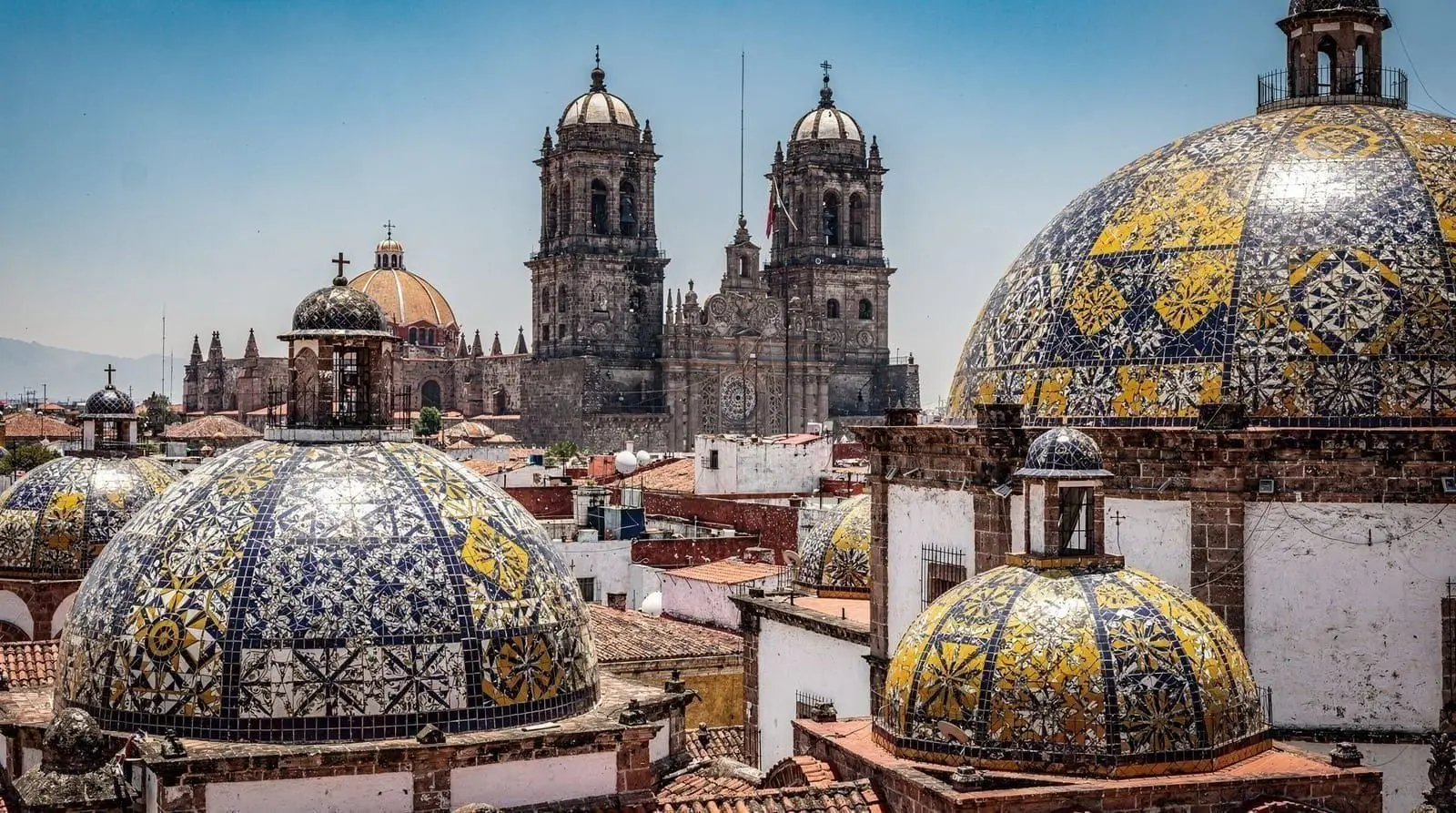
Talavera tile facades: Walking any street within three blocks of the Zócalo reveals why Puebla is called the “city of tiles.” The Church of Santo Domingo (5 de Mayo and 4 Poniente) has the most spectacular Talavera-covered façade; the Chapel of the Rosary inside is considered the finest example of Mexican ultra-baroque anywhere.
Where to eat in Puebla
Mole poblano is the required dish — but not all restaurant versions are equal. La Noria (5 Oriente 201) is a well-respected traditional option; prices are 180–250 MXN for a main course. El Mural de los Poblanos (16 de Septiembre 506) has the atmospheric setting plus a Diego Rivera mural and serves decent traditional food, but tourist traffic has affected the attention to detail.
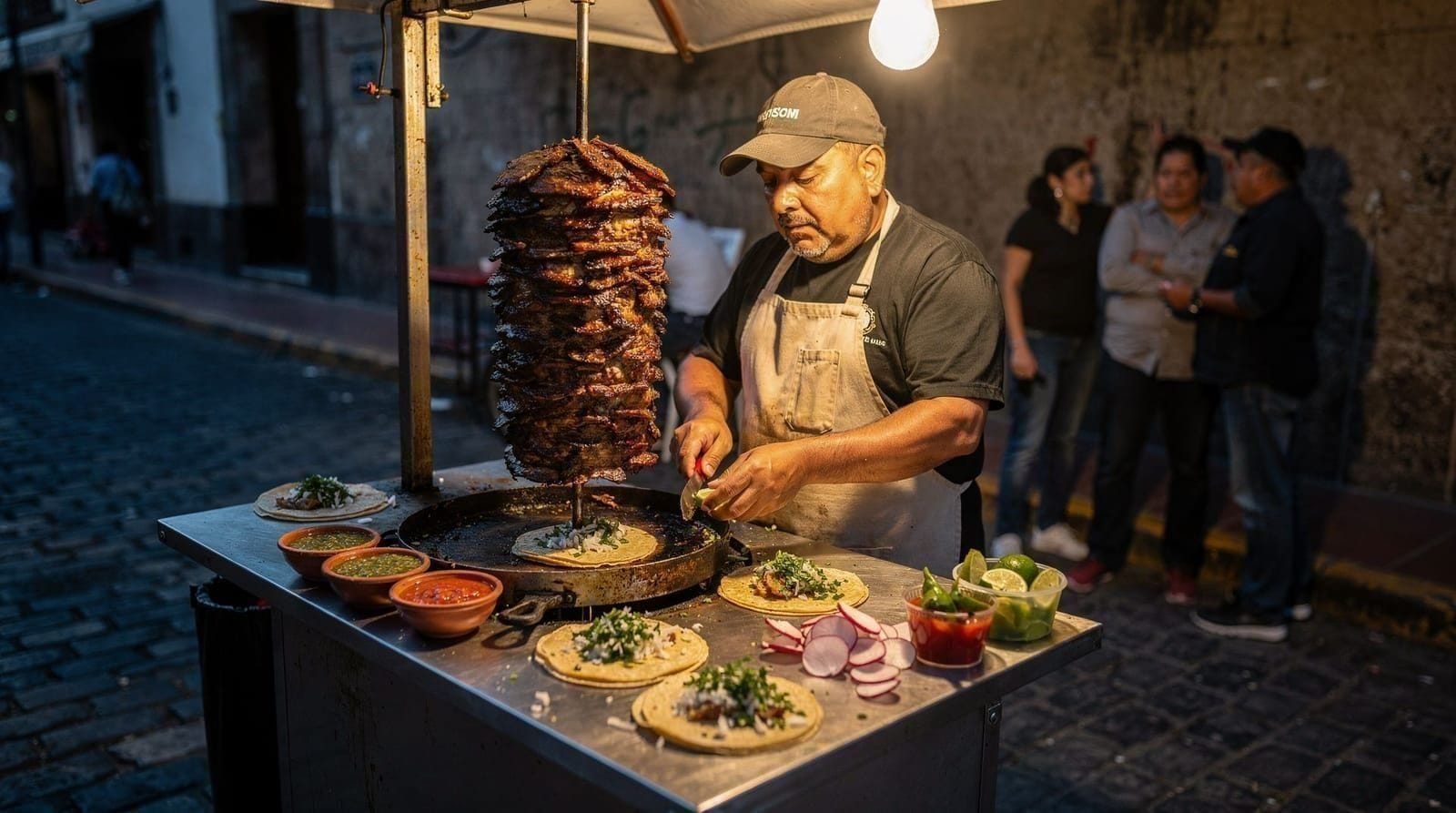
Cemitas: Puebla’s signature sandwich — an oval sesame roll with avocado, Oaxacan cheese, chipotle, papalo (an herb with no substitute), and meat (milanesa or carnitas). The Mercado 5 de Mayo on Avenida 18 Poniente has reliable cemita stalls; 60–90 MXN each.
Mole de caderas: A seasonal goat stew made only in October–November in the Tehuacán region (east Puebla state). If you visit in season and see it on a menu, order it.
If street food is part of why you are going, the Mexico City street food guide explains how to choose stalls and what to order, and the same instincts work in Puebla’s markets. Travellers who would rather have a guide lead the tasting can compare the options in the best food tours in Mexico City before committing a day to the road. Whatever you choose, the advice in the tap water and food safety guide applies just as well here.
The Great Pyramid of Cholula
Cholula is 20 minutes west of Puebla by taxi (100–150 MXN) or the Estrella Roja local bus (15 MXN). The Zona Arqueológica de Cholula entry costs around 210 MXN for adults and includes access to the tunnels.
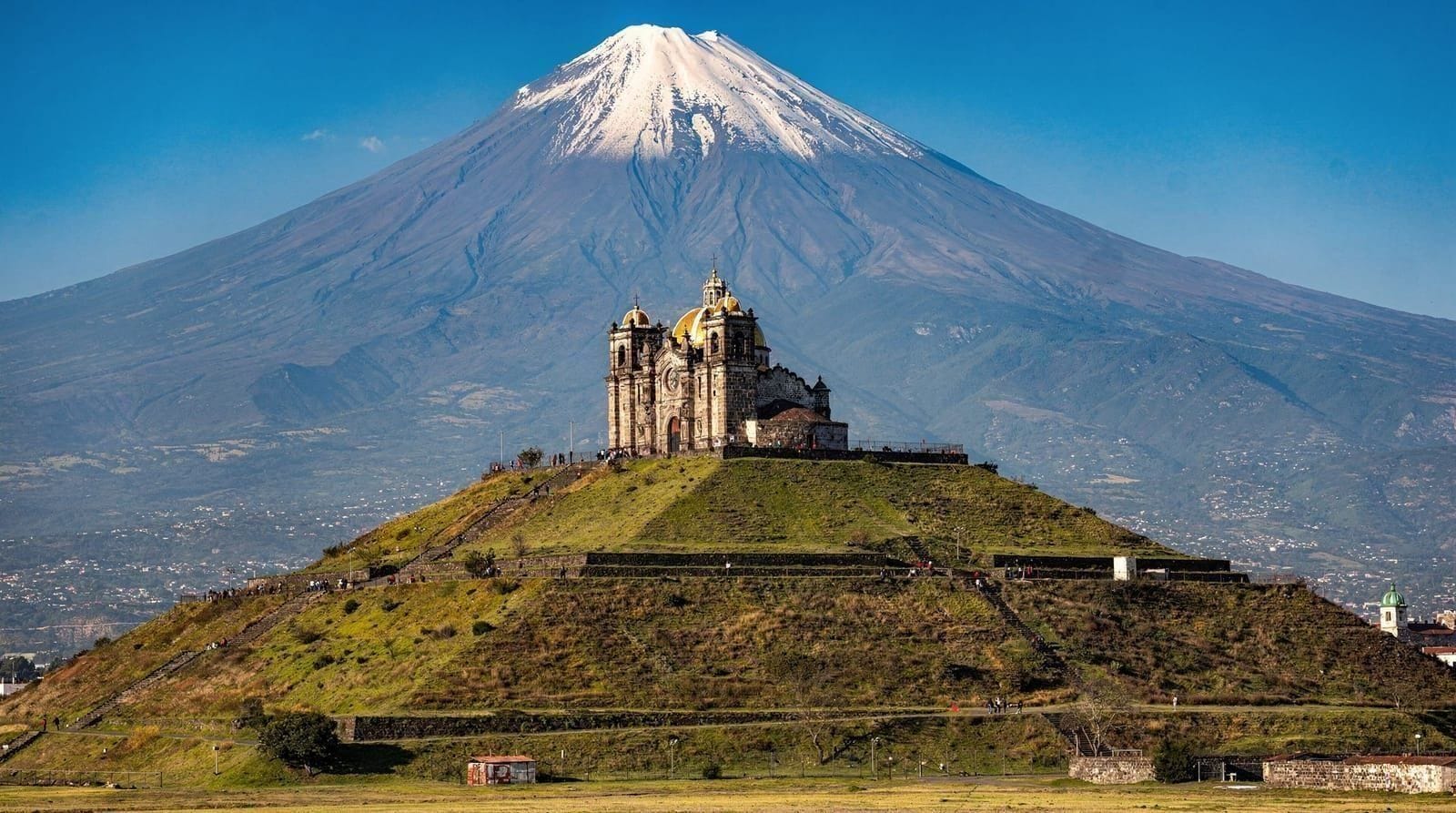
The pyramid sits in the centre of modern Cholula — a town of 100,000 that grew around and over it. From a distance it looks like a grass-covered hill with a church on top. Only when you stand at the base and look along its measured lines does the scale register: 450m per side, 55m tall, and that is after 2,000 years of compression. The total volume is approximately 4.45 million m³.
The tunnels: 8km of excavated passages run beneath the pyramid, revealing four distinct construction phases — the pyramid was rebuilt over itself, each new generation covering the old structure. The interior reveals the adobe brick construction, the religious iconography at different levels, and the stairways of the original structures. Walking the accessible section takes 30–45 minutes.
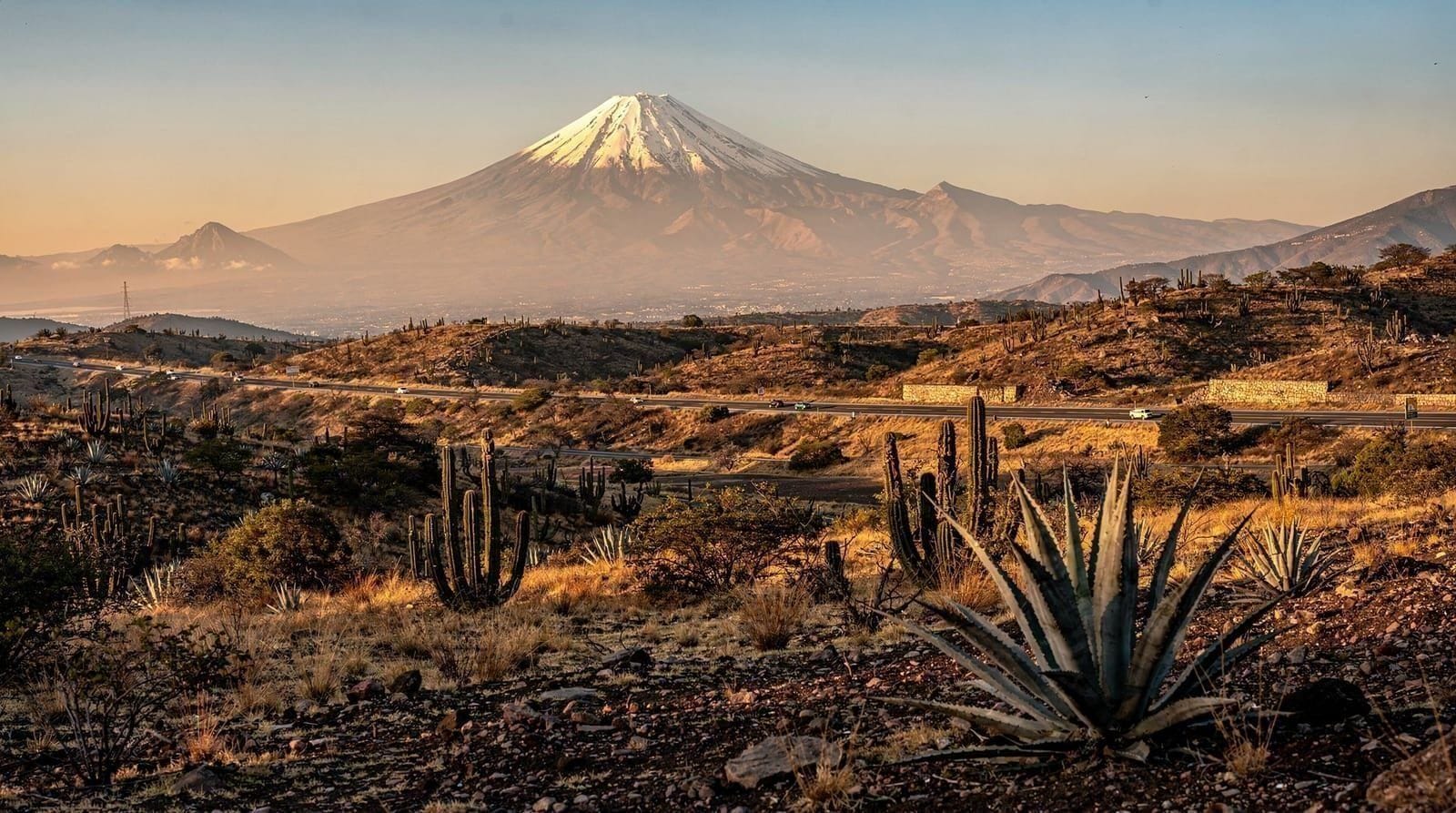
Climbing to the church: A path winds up the exterior to the Iglesia de Nuestra Señora de los Remedios on the summit. The church was built in 1594 by the Spanish on the flattened apex of the pyramid; the juxtaposition of Aztec mound and colonial church, visible in panorama from the ascent, is one of Mexico’s most powerful historical images. Views across the Cholula valley with the two volcanoes (Popocatépetl and Iztaccíhuatl) on a clear day are exceptional.
Tonantzintla: the village with the extraordinary church
San Andrés Cholula, 5 minutes by taxi from the pyramid (40–60 MXN), contains the church of Santa María Tonantzintla — a 17th–18th century baroque building with a façade that gives no clue about the interior.
Inside, every surface — vaults, pilasters, apse, the entirety of the sanctuary — is covered in polychrome stucco figures. Indigenous artisans trained in European stucco technique adapted the iconography to include pre-Hispanic plants, foods, and face types alongside Catholic saints and angels. The result is a completely unique synthesis — neither purely European nor indigenous but distinctly Mexican.
Entry is free. Photography is allowed. Allow 30–45 minutes. If the door is closed during midday, it reopens after 3pm; ask the caretaker.
Full day itinerary
8:00am: Bus from TAPO terminal, CDMX. Arrive Puebla CAPU terminal approximately 10am. 10:30am: Taxi to Zócalo (80–100 MXN from CAPU). Cathedral visit (30 min). 11:15am: Walk the centre — Santo Domingo church, Callejón de los Sapos, Talavera shops on Calle 4 Oriente. 1:00pm: Lunch in Puebla — mole poblano or cemita. 2:30pm: Taxi to Cholula (100–140 MXN). Pyramid tunnels and church. 4:30pm: Taxi to Tonantzintla (40–60 MXN). 5:30pm: Taxi to Puebla CAPU terminal (100–130 MXN). 6:00pm: ADO bus back to TAPO terminal. Arrive CDMX approximately 8pm.
Tourist traps and honest caveats
The ‘craft markets’ near the Zócalo sell imitation Talavera at tourist prices. If you want authentic certified Talavera, visit Uriarte Talavera (4 Poniente 911) where production is visible in the workshop and certification is genuine. It costs more; it is the real thing.
The ‘mole tours’ offered at the bus terminal are unnecessary — Puebla is easy to navigate independently and the tour markup buys little additional value in a walkable city.
The pyramid entry queue: Arrive before 11am to avoid the worst weekend queues. The site becomes extremely crowded on weekends from late morning.
Everyday precautions: The usual street smarts that apply in the capital apply here too. Use taxis from reputable stands or ride-hailing apps, keep valuables out of sight, and read the common scams guide and the is Mexico City safe guide before you travel; the same habits carry over to a long day out in another city.
Best months for the trip
| Months | Conditions |
|---|---|
| March–May | Driest, warmest, most comfortable for walking and the pyramid climb |
| June–August | Rainy season afternoons; mornings still fine for sightseeing |
| September–October | Chile en nogada season — the strongest culinary reason to time a visit |
| November | Day of the Dead crowds in Puebla itself; book transport ahead |
| December–February | Cool evenings, clear skies, busiest around Christmas and Easter |
For the wider context of when to build a Mexico City trip around this day out, the best time to visit Mexico City guide covers how Puebla’s calendar lines up with the capital’s own seasons. The month-by-month weather guide helps you judge what to pack, and if you are visiting in early November, the Day of the Dead guide shows how the festival fits around a trip like this one.
Is this a day trip or does it deserve more time
If you’re deciding between a single long day and splitting it across two days, the honest answer depends on pace. A rushed single day (outlined above) sees the essentials but leaves no room to linger at Tonantzintla or shop properly for Talavera. Splitting the trip — Puebla one day, Cholula and Tonantzintla the next, with a hotel night in Puebla — turns the same sights into a relaxed, memorable two days rather than a checklist.
Because this is a long day, it is worth deciding where it sits in your wider plan. Many visitors slot it into a 4-day schedule as the one full day away from the capital, and the how many days in Mexico City guide helps you decide whether you can afford that trade. If you are still choosing a base, the where to stay in Mexico City guide covers neighbourhoods that make an early start at the bus terminal easier.
Either way, this pairs naturally with the wider best day trips from Mexico City guide if you’re deciding which excursions to fit into a 5-day or 7-day itinerary. For getting around once you’re in Puebla itself, the general principles in the getting around Mexico City guide on taxis and apps apply equally well.
Frequently asked questions about the Puebla-Cholula day trip
Do I need to speak Spanish for a day trip to Puebla independently?
English signage is minimal outside major hotels and some tourist restaurants. Basic Spanish phrases for ordering food and asking directions are helpful. Taxi drivers generally understand “Zócalo,” “pirámide,” and “CAPU.” A translation app (Google Translate, offline Mexican Spanish pack) solves most communication needs.
What is the best season for a Puebla day trip?
Year-round, but avoid major Mexican holidays (Christmas, Easter) when the buses are extremely crowded and the sites overwhelmed. November’s Day of the Dead brings crowds to Puebla for its own celebrations. The September–October period coincides with chile en nogada season — excellent reason to visit. March–May are the driest and most comfortable months.
Can I visit Puebla without going to Cholula?
Yes, but the combination is the compelling reason for the trip. Puebla alone is a fine half-day; with Cholula and Tonantzintla it becomes a full cultural day. The pyramid-with-church is unlike anything else in Mexico.
Is the Puebla-Cholula day trip suitable for children?
Yes. The pyramid site has wide paths and interesting tunnels that children find engaging. The church climb is also accessible. Puebla’s markets and food (cemitas, sweets at the sweet shops on 6 Oriente) appeal to younger visitors. Avoid the day trip with very young children given the long bus journey.
What can I bring back from Puebla?
Genuine Talavera (certified, expensive, worth it for something special), Puebla-style sweets (camotes — sweet potato candies — and tortitas de Santa Clara), mole paste from market stalls (sold vacuum-packed for transport), and local craft items. The Mercado de Artesanías (4 Poniente between 5 and 7 Norte) has the best range of craft items.
What is the Great Pyramid of Cholula and why is there a church on top?
The Great Pyramid of Cholula (Tlachihualtepetl) is the largest pyramid by total volume in the world — larger than the Giza pyramids — though much less visually dramatic because 2,000 years of vegetation and soil have given it the appearance of a natural hill. The Catholic church (Iglesia de Nuestra Señora de los Remedios) was built on the summit by Spanish colonisers in 1594 as a deliberate act of religious and political conquest. The pyramid beneath has 8km of excavated tunnels open to visitors.
How much time do I need in Puebla and Cholula?
A full day trip from CDMX allows about 8 hours between departure and return. Recommended allocation: 3 hours in Puebla centro (Cathedral, Zócalo, tile-facades, Barrio del Artista), 30 minutes transit to Cholula, 2.5 hours in Cholula (pyramid tunnels, church ascent, Zócalo). This leaves time for one sit-down meal but not extensive exploration. A 2-day trip gives a far more relaxed experience.
What is mole poblano and where should I eat it in Puebla?
Mole poblano is the dark, complex chilli-chocolate sauce originated in Puebla, served over chicken or turkey with rice. The classic version uses several dried chilli varieties (mulato, ancho, chihuacle), chocolate, dried fruits, nuts, and charred tortilla. For restaurant mole in Puebla: El Mural de los Poblanos (16 de Septiembre 506) has good traditional mole in a building with a Diego Rivera mural. La Noria (5 Oriente 201) is less tourist-facing with more consistent quality.
What is chile en nogada and when is it available?
Chile en nogada is Puebla’s famous seasonal dish: a poblano pepper stuffed with picadillo (spiced meat with dried fruits and nuts), topped with walnut cream sauce and pomegranate seeds. The colours (red, white, green) mirror the Mexican flag; the dish is traditionally served for Independence Day celebrations (September 15–16). Seasonal availability: July–September when the fresh walnuts and pomegranates are in season. Outside this window, frozen or preserved versions exist but lack the freshness of the in-season dish.
What is Talavera pottery and where should I buy it in Puebla?
Talavera de Puebla is a hand-painted ceramic tradition with 500 years of history, recognised as UNESCO Intangible Heritage since 2019. Genuine Talavera requires a specific clay from the Puebla region, hand-painting with natural pigments, and a certification from CATAP (the regulatory body). Certified production houses open to visitors include Uriarte Talavera (4 Poniente 911) and Talavera La Reyna. Market stalls and shops sell cheaper ‘estilo Talavera’ imitations — visually similar, significantly lower quality.
Is Cholula’s famous pyramid climbable?
Yes, unlike Teotihuacán’s pyramids, the surface of the Cholula pyramid can be climbed — but the climb is actually to the church on the summit, not to the pyramid’s apex (which is no longer visible as a distinct structure). The tunnels beneath the pyramid are what make the Cholula visit distinctive: 8km of excavated passages revealing the construction stages of the pyramid, which was built over itself at least four times across different civilisations.
What is Tonantzintla and is it worth visiting?
The church of Santa María Tonantzintla in the small village of San Andrés Cholula (10 minutes from Cholula’s Zócalo) is one of the most extraordinary interiors in Mexico. The Baroque facade conceals an interior completely covered in polychrome stucco — indigenous artisans covered every surface with angels, plants, fruit, and faces drawn from both Catholic iconography and pre-Hispanic traditions. Free entry; respectful dress required (shoulders covered). Takes 30–45 minutes and is included in some guided tours of the Cholula circuit.
Top experiences
Bookable activities with verified prices and instant confirmation on GetYourGuide.