Puebla and Cholula
Puebla's Talavera tiles and mole negro, Cholula's Great Pyramid with a church on top, and how to combine both on a day trip from Mexico City.
From Mexico City: Puebla and Cholula Day Tour with Lunch
Duration: 12 hours
Quick facts
- Altitude
- 2,135 m / 7,005 ft (Puebla)
- Currency
- Mexican peso (MXN) — USD widely accepted
- Best for
- Great Pyramid of Cholula, Talavera ceramics, mole negro, colonial architecture
- Getting there
- Bus (CAPU/TAPO, 120–160 MXN) ~2 hrs; or guided day tour from CDMX
Two colonial cities, one day trip
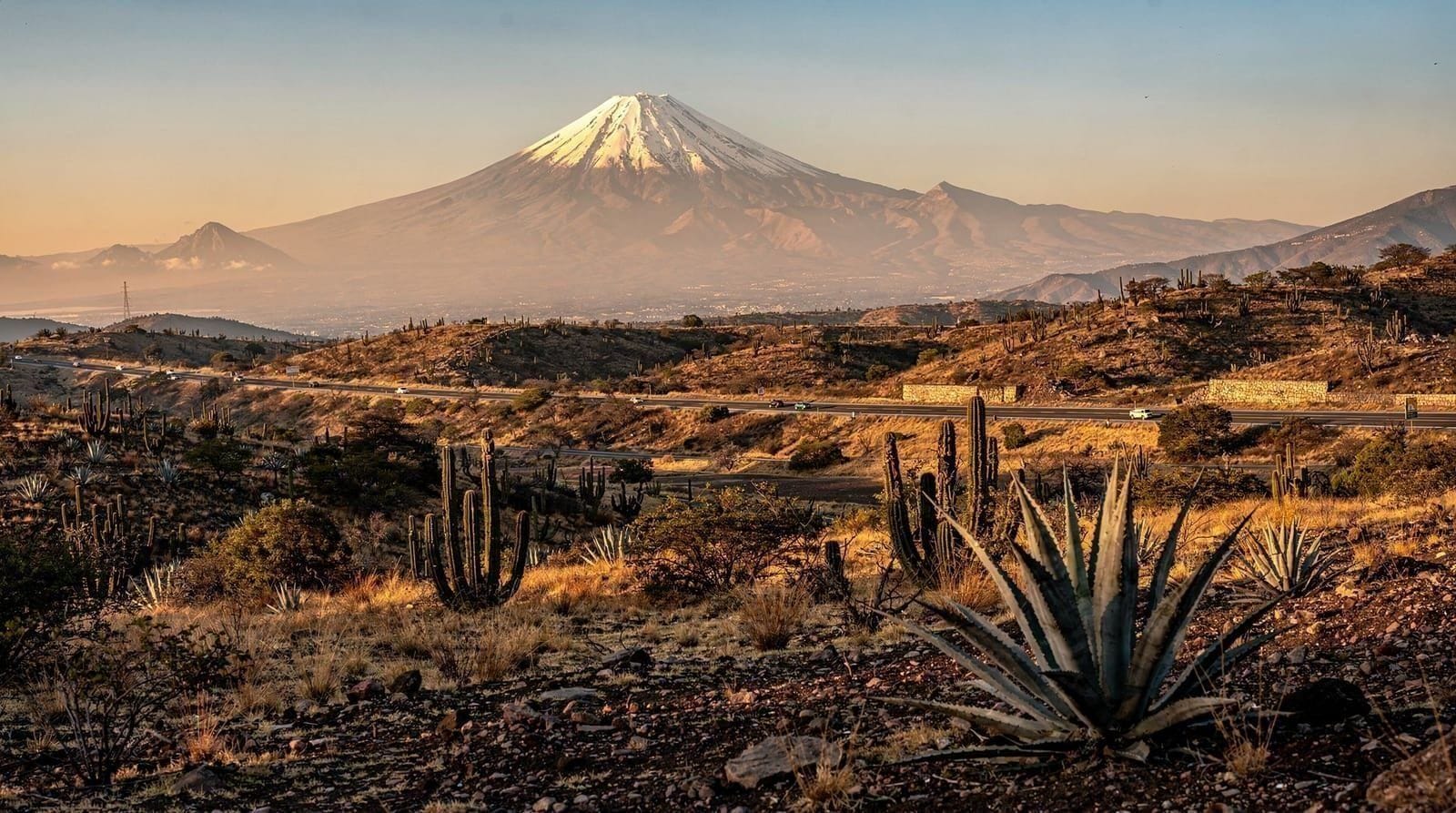
Puebla and Cholula sit 8 km apart in the Valley of Puebla, approximately 130 km southeast of Mexico City with the snowcapped volcano Popocatépetl visible to the west on clear days. They are almost always visited together because Cholula’s Great Pyramid is 20 minutes from Puebla’s historic centre, and the logical sequence is to see the pyramid first and then explore Puebla’s colonial city in the afternoon.
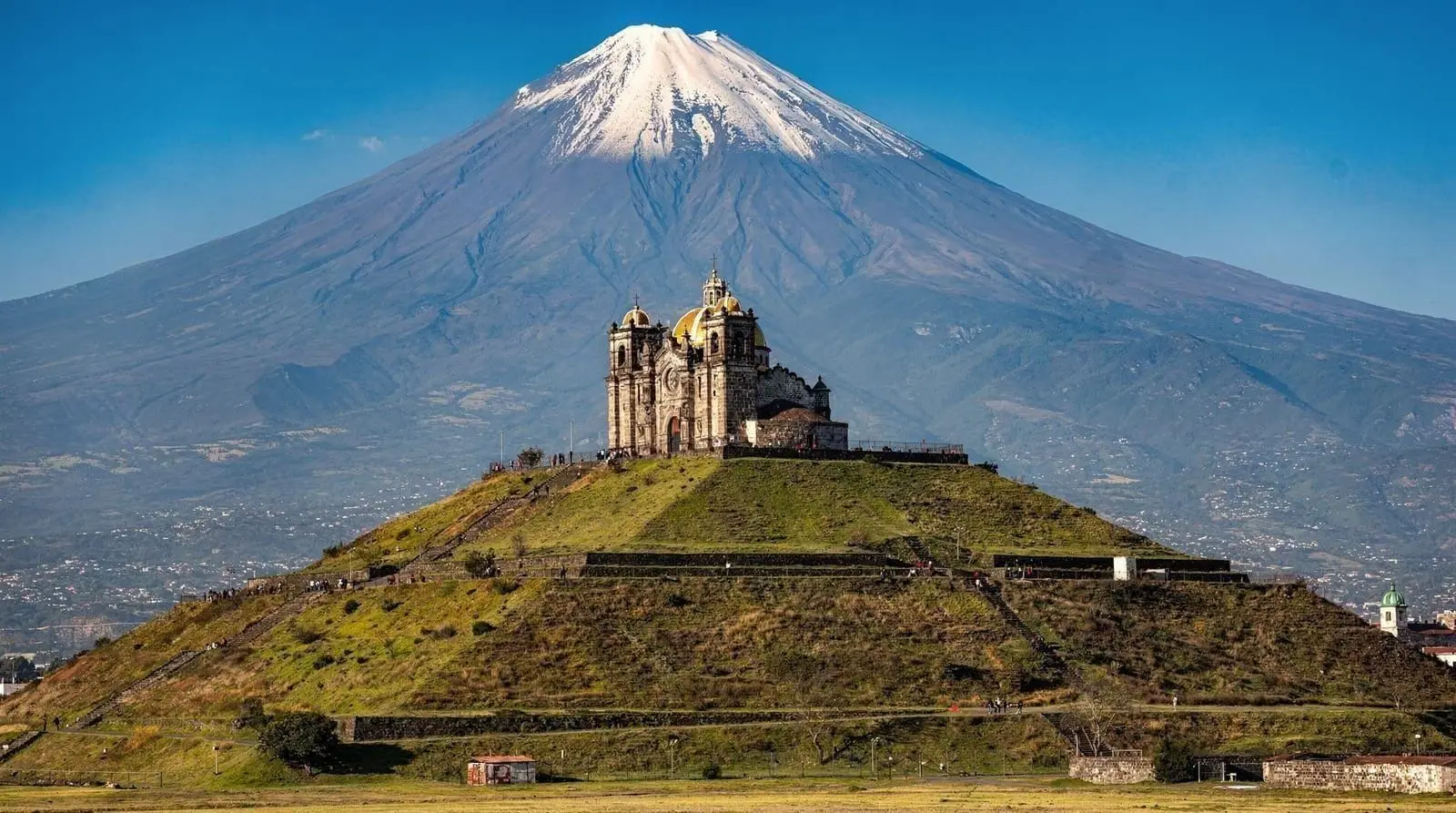
The pairing works at multiple levels: Cholula represents a pre-Columbian religious centre that the Spanish literally built over by placing a Catholic church on the pyramid’s summit; Puebla is the colonial city built by the Spanish as their administrative capital in New Spain. The visual contrast — a Catholic church rising from what looks like a hill that is actually a pyramid, with Popocatépetl behind — is one of the more extraordinary juxtapositions in Mexico.
| Where | Valley of Puebla, about 130 km southeast of Mexico City |
| Cost | Cholula pyramid around 210 MXN; bus 200–280 MXN each way; guided day tours from around 900–1,300 MXN |
| Time needed | Full day trip; one night makes it far less rushed |
| Getting there | ADO bus from TAPO (~2 hrs) or a guided day tour from CDMX |
| Best time | October–May, weekdays, to avoid Cholula’s weekend student crowds |
Cholula: the Great Pyramid
The Great Pyramid of Cholula (Tlachihualtepetl) is the largest pyramid in the world by total volume — approximately 4.45 million cubic metres — though not the tallest. It looks like a hill because it is largely buried under centuries of accumulated sediment and vegetation. The Spanish colonists, using it as a foundation, placed the Nuestra Señora de los Remedios church on the summit in 1594, making the structure visible from across the valley as a church-on-a-mound that was for centuries not understood to be a pyramid.
Excavations beginning in the 1930s have opened 8 km of tunnels through the pyramid’s interior, revealing successive layers of construction spanning approximately 1,000 years (from around 300 BCE to 900 CE). Guided tunnel tours depart regularly and take 30–45 minutes. The tunnel walk is dark, narrow in places, and low-ceilinged; claustrophobic visitors may find it uncomfortable. Outside the tunnels, the excavated platform stairways and plazas around the pyramid’s base reveal the scale — you can see the original pyramid faces emerging from the hill.
Unlike Teotihuacán, the church on top of Cholula’s pyramid can still be visited — it is an active Catholic church. The path to the summit is open, and the view from the top encompasses the pyramid’s full extent plus Puebla’s city spread and the volcanoes on the western horizon.
Admission to the Cholula Archaeological Zone is 210 MXN. The zone is open Tuesday–Sunday 9:00–18:00 (last entry 17:00), and the ticket also covers the tunnels and the site museum. The church on the summit is free.
Puebla’s historic centre
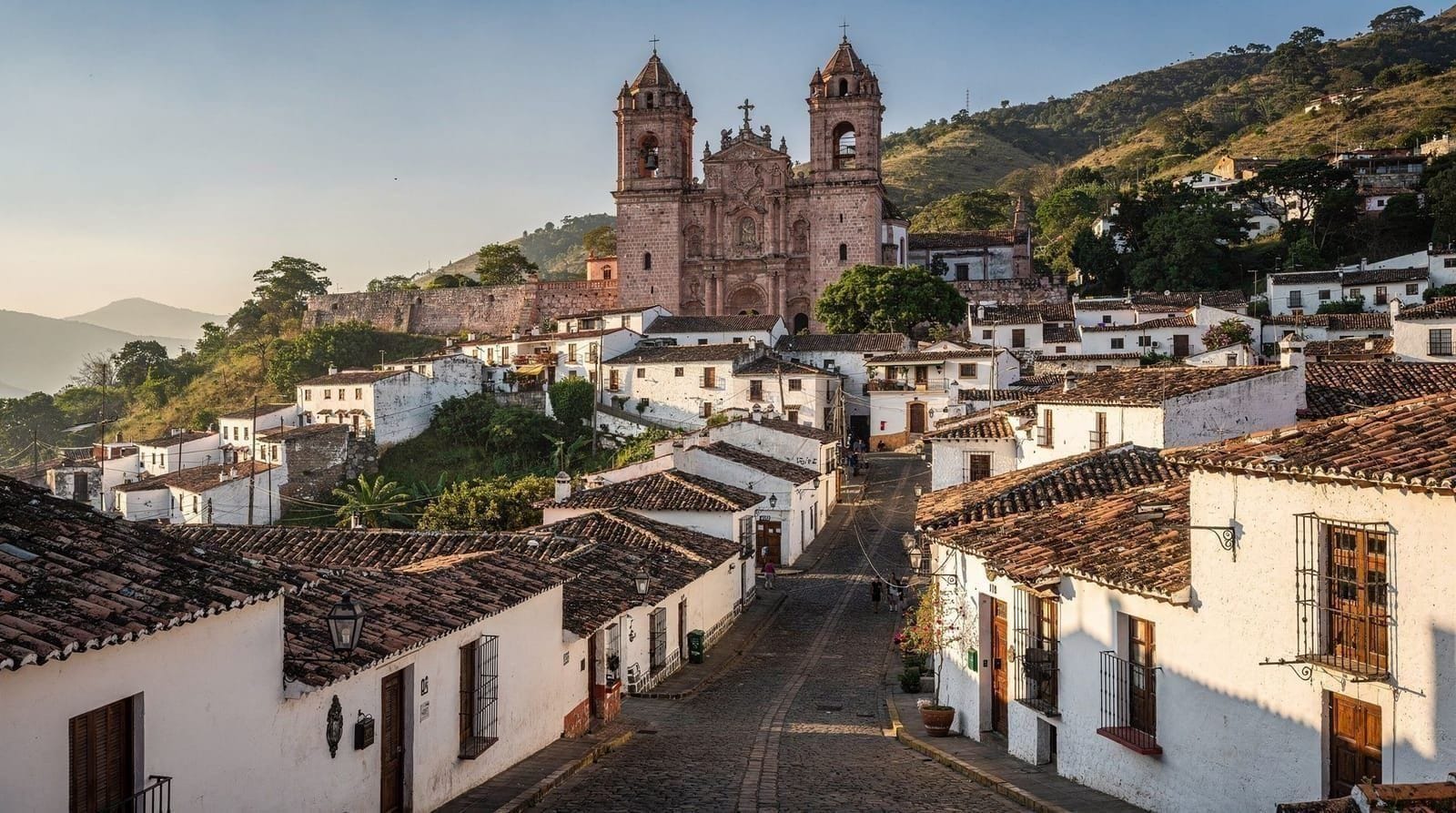
Puebla’s centro histórico is a UNESCO World Heritage Site (1987) covering 391 blocks and 2,619 historic buildings — the largest concentration of colonial Baroque architecture in the Americas. The city was founded in 1531 specifically by the Spanish as a planned colonial city (most Mexican cities grew from existing indigenous settlements; Puebla was greenfield construction) and has retained much of its colonial grid and building stock.
The Cathedral of the Immaculate Conception (Catedral de Puebla) on the Zócalo has the tallest towers in Mexico (69 metres) and an interior mixing baroque, neoclassical, and Renaissance elements. The sacristy is one of the most lavishly decorated rooms in Mexican architecture. Admission is free.
The Barrio del Artista (Artists’ Quarter) northeast of the Zócalo is a pedestrian square with resident artists selling work from open studios. More interesting than the typical tourist craft markets, prices are negotiable.
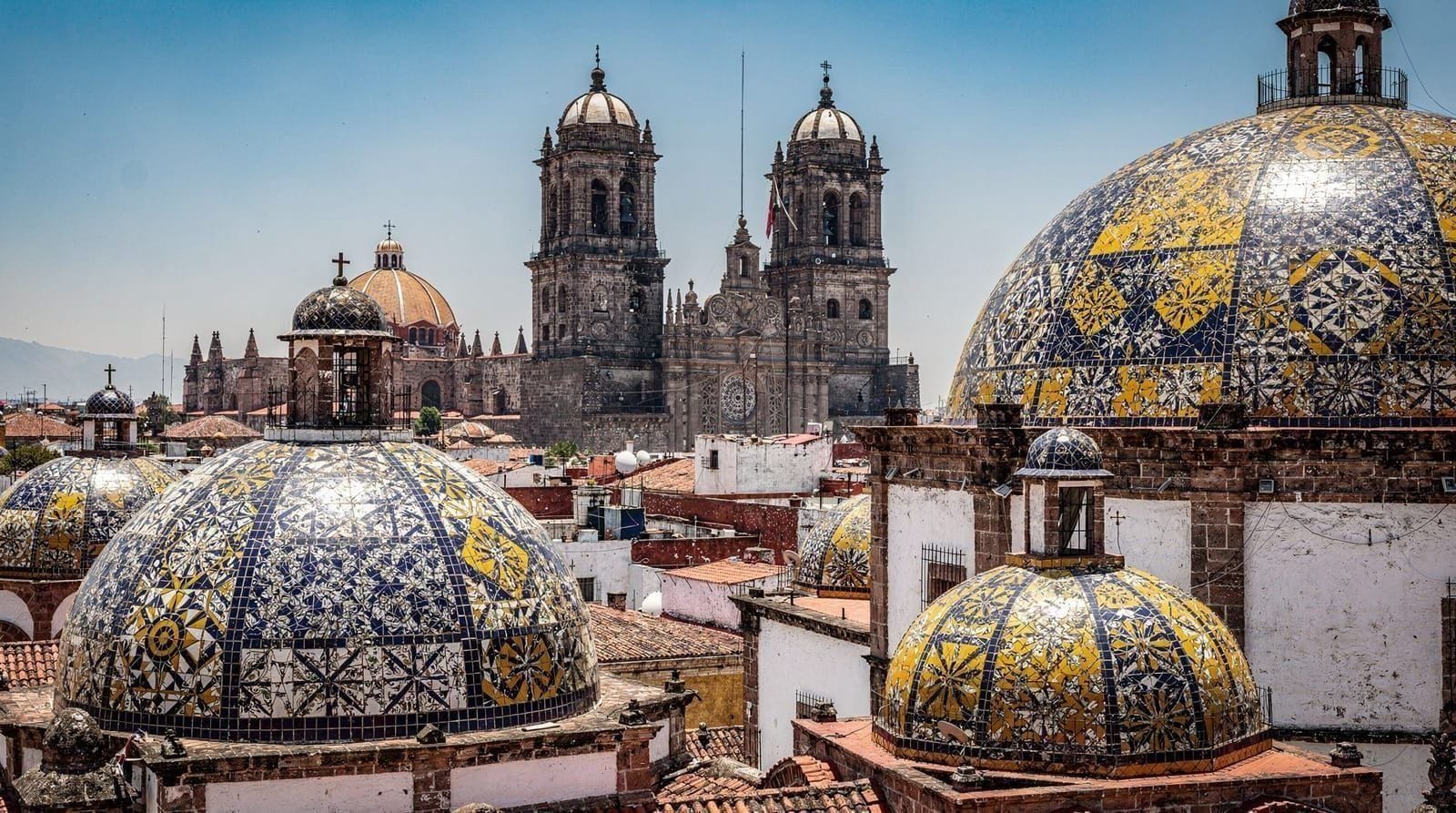
Talavera ceramics — the distinctive blue-and-white hand-painted pottery produced in Puebla since the 16th century using techniques brought from Spain combined with local materials — are the main artisan purchase in the city. Authentic Talavera from the seven certified workshops (including Talavera Uriarte at 4 Poniente 911 and Talavera de la Reyna) carries a certification document. Street-market “Talavera” is often mass-produced imitation; look for the certification.
The food: why Puebla has its own cuisine
Poblano cuisine is one of Mexico’s most distinctly regional food traditions. Mole negro (or mole poblano — one of the two cities claims the dish, and historians still argue) is the city’s signature: a complex dark sauce made from dried chillies, chocolate, spices, tomatoes, and other ingredients, served over turkey or chicken, with a depth of flavour that takes hours to develop. Mole negro at Restaurant El Mural de los Poblanos on 16 de Septiembre 506 or at Fonda de Santa Clara on Calle 3 Poniente 920 is the benchmark version — both have been serving it for decades and use traditional recipes.
Cemitas are Puebla’s version of the torta (stuffed roll) sandwich, made on a distinctive sesame-seeded roll with papalo herb, avocado, Oaxacan cheese, chipotle, and your choice of milanesa (breaded meat) or carnitas. The Mercado Hidalgo on Calle 18 Poniente has the highest concentration of cemita vendors in the city.
Chiles en nogada, served only in season (July–October), is the city’s show-off dish: poblano chillies stuffed with a meat-and-fruit mixture, covered in a white walnut cream sauce, and garnished with pomegranate seeds and parsley — the colours of the Mexican flag. During chile en nogada season it appears on every restaurant menu and constitutes the single best dish in Mexico for the brief window it is available.
Getting there
Day trip by bus: TAPO (Terminal de Autobuses de Pasajeros de Oriente) bus station in Mexico City to Puebla CAPU station is served by ADO buses every 20–30 minutes from early morning. Journey takes 1.5–2 hours. Cost is 200–280 MXN each way. CAPU station in Puebla has local bus connections to Cholula (2 km, 8 MXN) or taxis (50–80 MXN).
Guided day tour: A Puebla and Cholula day tour with lunch from Mexico City handles all transport, includes a guide at the Cholula pyramid, and typically returns to Mexico City by 19:00–20:00. The tour includes lunch, which is the most practical meal solution on a tight day-trip schedule. The small-group Cholula pyramid and Puebla tour is a smaller-group version with more time at the archaeological zone.
The full Puebla-Cholula day trip guide covers the independent route in detail, including which tunnels to take, where to eat, and whether one day is enough.
Is overnight in Puebla worth it?
If your Mexico City itinerary allows, one night in Puebla transforms the trip. The evening on the Zócalo when the colonial buildings are lit, a dinner at El Mural de los Poblanos, and a morning at the Cholula pyramid before the day-trippers arrive are all significantly better than the compressed day-trip version. Budget hotels in the historic centre start at 700–1,000 MXN per night.
The 5-day Mexico City itinerary includes an overnight in Puebla alongside Teotihuacán and other day trips.
Beyond Cholula: other Puebla city attractions
For visitors staying overnight, Puebla has several attractions beyond the Cathedral and Cholula. The Barrio de Analco (the oldest neighbourhood in the city, founded in 1531 by indigenous Tlaxcalan allies of the Spanish) is one block east of the Zócalo and has colonial buildings that predate most of Puebla’s better-known architecture. The Biblioteca Palafoxiana on Avenida 5 Oriente, founded in 1646, is the oldest public library in the Americas and holds 41,000 volumes including parchment manuscripts; it is open as a museum and is one of the more genuinely extraordinary library rooms in the world by aesthetic and historical standards.
The Museo Amparo on Calle 2 Sur 708 is Puebla’s best museum — a private collection of pre-Columbian objects, colonial art, and contemporary Mexican art in a well-designed converted colonial building. Entry is 85 MXN for adults and is free on Mondays. The collection quality exceeds what the museum’s fame (relatively modest outside Mexico) would suggest.
Sunday afternoon in Puebla’s Zócalo involves a concert, families, balloon sellers, and the kind of unself-conscious city-square life that has become less common in Mexico City’s more self-aware tourist neighbourhoods. If your schedule allows a Sunday in Puebla, the afternoon Zócalo scene is worth being present for.
Cholula’s student character
Cholula is home to the Universidad de las Américas Puebla and has a large student population that gives the area around the pyramid a different atmosphere from Puebla’s more sedate historic centre. The streets south of the pyramid are lined with bars, cheap restaurants, and mezcalerías that cater to students rather than tourists. Prices in this area are noticeably lower than in Puebla’s centro: tacos at 20–30 MXN, mezcal at 60–80 MXN per shot. If you want to eat and drink cheaply before or after the pyramid visit, this strip is the place.
Cholula’s pyramid versus Teotihuacán
Visitors often ask whether to prioritise Cholula or Teotihuacán if time allows only one pyramid day trip. They are genuinely different experiences: Teotihuacán offers monumental scale and open climbable pyramids (see the guide to which Teotihuacán pyramids you can climb), while Cholula’s pyramid is mostly buried, explored via tunnels, and topped by a living church rather than an open platform. Neither replaces the other. If you only have one day for pyramids, most first-time visitors get more from Teotihuacán; Cholula rewards travellers who are already headed to Puebla for the food and colonial architecture.
Fitting Puebla-Cholula into your Mexico City trip
This is one of the best day trips from the capital precisely because it delivers a pyramid, a UNESCO colonial centre, and a completely different regional cuisine in a single outing. The best day trips from Mexico City guide ranks it against Teotihuacán, Taxco and Tepoztlán for travellers choosing between excursions, and the itinerary length guide explains how many total days you need to fit this alongside the rest of the city. If Puebla-Cholula doesn’t fit this trip, Taxco is the other classic overnight-worthy colonial day trip from the capital.
Planning around the rest of your trip
Puebla and Cholula work best when the day before and after are lighter. The guide to getting around Mexico City helps you reach the bus station on time, and the best time to visit Mexico City page is a useful check on the season before you commit to an outdoor pyramid day. If you are still choosing a base in the capital, where to stay in Mexico City explains which neighbourhoods make early departures easiest.
Travellers who like to pair a food-focused day with a heritage day can set this trip beside the capital’s own culinary side: the Mexico City street food guide shows what to compare against Puebla’s cemitas and moles. Anyone planning a longer stay can slot the excursion into the 4-day Mexico City itinerary or the 7-day Mexico City itinerary, keeping Puebla for a day when your energy is high.
Frequently asked questions about Puebla and Cholula
Can I climb the Great Pyramid of Cholula?
Yes — unlike at Teotihuacán, visitors can still climb the exterior path to the top of Cholula’s pyramid. The path leads to the Nuestra Señora de los Remedios church at the summit, which is an active Catholic church. The climb takes about 15 minutes. There are no restrictions as of 2026. However, the tunnel interior tours are separate and require a guide.
What is Talavera ceramics and how do I buy authentic pieces?
Talavera is a specific type of tin-glazed majolica pottery made in Puebla and the nearby town of Atlixco using a combination of local and imported clays, hand-painted with traditional patterns. Authentic Talavera carries a certification document from the Consejo Regulador de Talavera. Non-certified pieces (often labelled “Talavera-style”) are mass-produced imitations and are generally much cheaper. If you are buying for value, buy non-certified; if you want authentic artisan work, visit a certified workshop and expect to pay significantly more.
How far is Cholula from Puebla’s city centre?
About 8 km west of central Puebla. Taxi costs 50–80 MXN and takes 15 minutes. Local buses (combis) depart from near CAPU station and cost 8–10 MXN. If arriving by guided tour from Mexico City, transport between Cholula and Puebla is included.
Is one day enough for both Puebla and Cholula?
It is enough to see the highlights: Cholula pyramid and tunnels (2 hours), Puebla Zócalo and Cathedral (1 hour), a neighbourhood walk and lunch (1.5 hours). A rushed day trip from Mexico City fits all this. To see the food market, Barrio del Artista, Talavera workshops, and eat well, two days (or at least one overnight) is better.
What should I eat in Puebla?
Mole negro or mole poblano over turkey at El Mural de los Poblanos or Fonda de Santa Clara. Cemitas from Mercado Hidalgo. Chiles en nogada in July–October season. Molotes (fried masa stuffed with potato and chorizo) from street vendors near the markets. Pasitas (liqueur-soaked raisins coated in chocolate) from the original shop on Avenida 6 Oriente 602.
What other sights are in Cholula besides the pyramid?
The town of San Andrés Cholula has a main square with colonial buildings and a pleasant café atmosphere. Tonantzintla village, 3 km from Cholula, has the Iglesia de Santa María Tonantzintla — a colonial baroque church interior decorated entirely by indigenous artisans with Aztec imagery integrated into the Catholic iconography. It is one of the most extraordinary colonial interiors in Mexico and is almost unknown to international tourists. The Puebla, Cholula and Tonantzintla day tour includes it specifically.
Is Puebla-Cholula a better day trip than Taxco or Tepoztlán?
It depends on what you want. Puebla-Cholula offers the most complete package — pyramid, colonial city, and a distinct regional cuisine — and suits travellers who want variety in a single day. Taxco is a better choice for silver shopping and mountain-town scenery; Tepoztlán suits travellers wanting a shorter trip with a hike and a more bohemian atmosphere. See the best day trips from Mexico City guide for a full comparison.
Top experiences
Bookable activities with verified prices and instant confirmation on GetYourGuide.