Roma vs Condesa: which Mexico City neighbourhood should you base yourself in?
The most common accommodation question about Mexico City is whether to stay in Roma or Condesa. They are adjacent neighbourhoods — you can walk between them in 15 minutes — so the question is partly moot. But they have distinct characters, different price points, and genuinely different daily experiences. Here is an honest comparison.
| Where | Roma Norte/Sur and Condesa, adjacent neighbourhoods |
| Cost | Roma from ~1,800 MXN/night; Condesa from ~2,500 MXN/night |
| Walk between them | 12–18 minutes |
| Best for | Roma: food and transit; Condesa: parks and quiet |
| Booking | Book earlier for either during spring (jacaranda) and Nov 1–2 |
Roma vs Condesa at a glance
| Factor | Roma Norte/Sur | Condesa |
|---|---|---|
| Price | Lower | 20–40% higher hotels, 30–60% higher restaurants |
| Street food density | High | Lower, more restaurant-focused |
| Atmosphere | Lively, louder at night | Quieter, park-centred |
| Best for | First-timers, transit users, budget | Design/architecture lovers, families, runners |
| Transit access | Slightly better (Metrobús, Metro) | Slightly further to stations |
The basics: what each neighbourhood is
Roma (Roma Norte and Roma Sur) is Mexico City’s most popular neighbourhood for first-time visitors and long-term residents alike. It developed from the 1900s onward and has streets named after European capitals (Orizaba, Córdoba, Mérida, Tonalá). Roma Norte is denser, louder, and has the highest concentration of cafés, taquerías, cantinas, and boutique hotels per block in the city. Roma Sur is calmer and more residential.
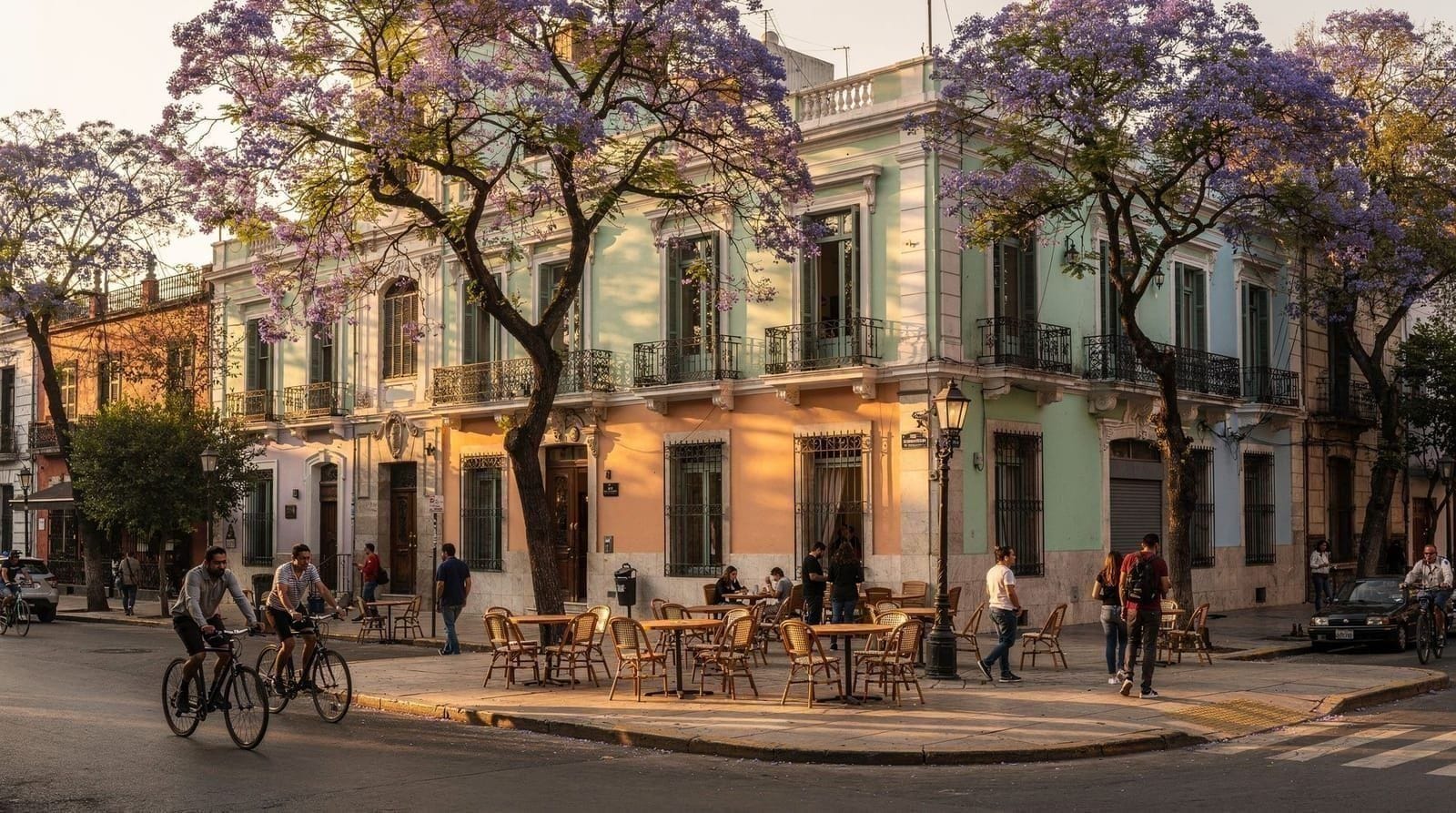
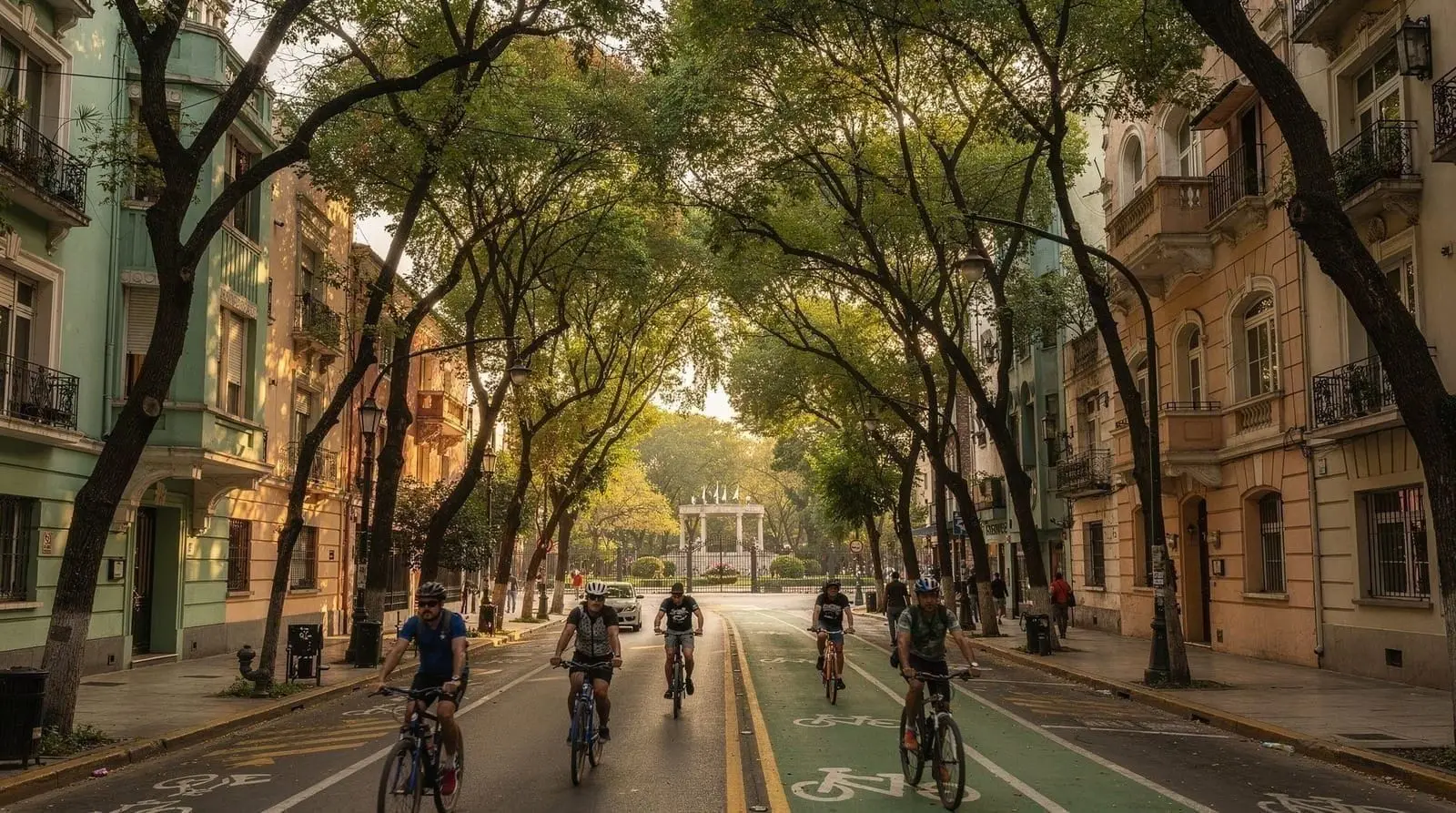
Condesa developed in the 1920s–1940s and has a distinct Art Deco character — rounded buildings, ornamental facades, parks at the centre. The neighbourhood is built around two parks: Parque México (the oval park with the central track, fountains and jacaranda canopy) and Parque España. Condesa has restaurants but fewer street vendors; it feels more designed and quieter than Roma Norte.
The neighbourhoods share a boundary along Avenida Sonora / Avenida Ámsterdam. Walking between them takes 12–18 minutes depending on your exact hotel location.
For a broader look at both areas as a single destination, the Roma and Condesa destination page covers what to see and do once you have chosen a base.
Price comparison
Both neighbourhoods have gentrified significantly and neither is cheap by CDMX standards. That said:
Boutique hotels:
- Roma Norte: 1,800–3,500 MXN/night ($90–175 USD) for a decent 3-star boutique
- Condesa: 2,500–5,000 MXN/night ($125–250 USD), with some design hotels reaching higher
Apartments/Airbnb-style:
- Roma: slightly more options at lower prices; a studio in Roma Norte runs 900–1,500 MXN/night
- Condesa: similar or slightly higher, with more design-oriented properties
Street food:
- Roma wins clearly. The taco stands, torta shops, market stalls and fondas in Roma Norte are denser and cheaper than in Condesa. A full lunch in Roma = 100–150 MXN; equivalent quality in Condesa at a restaurant = 200–350 MXN.
Walkability and convenience
Both are excellent for walking. The key differences:
Roma Norte advantages:
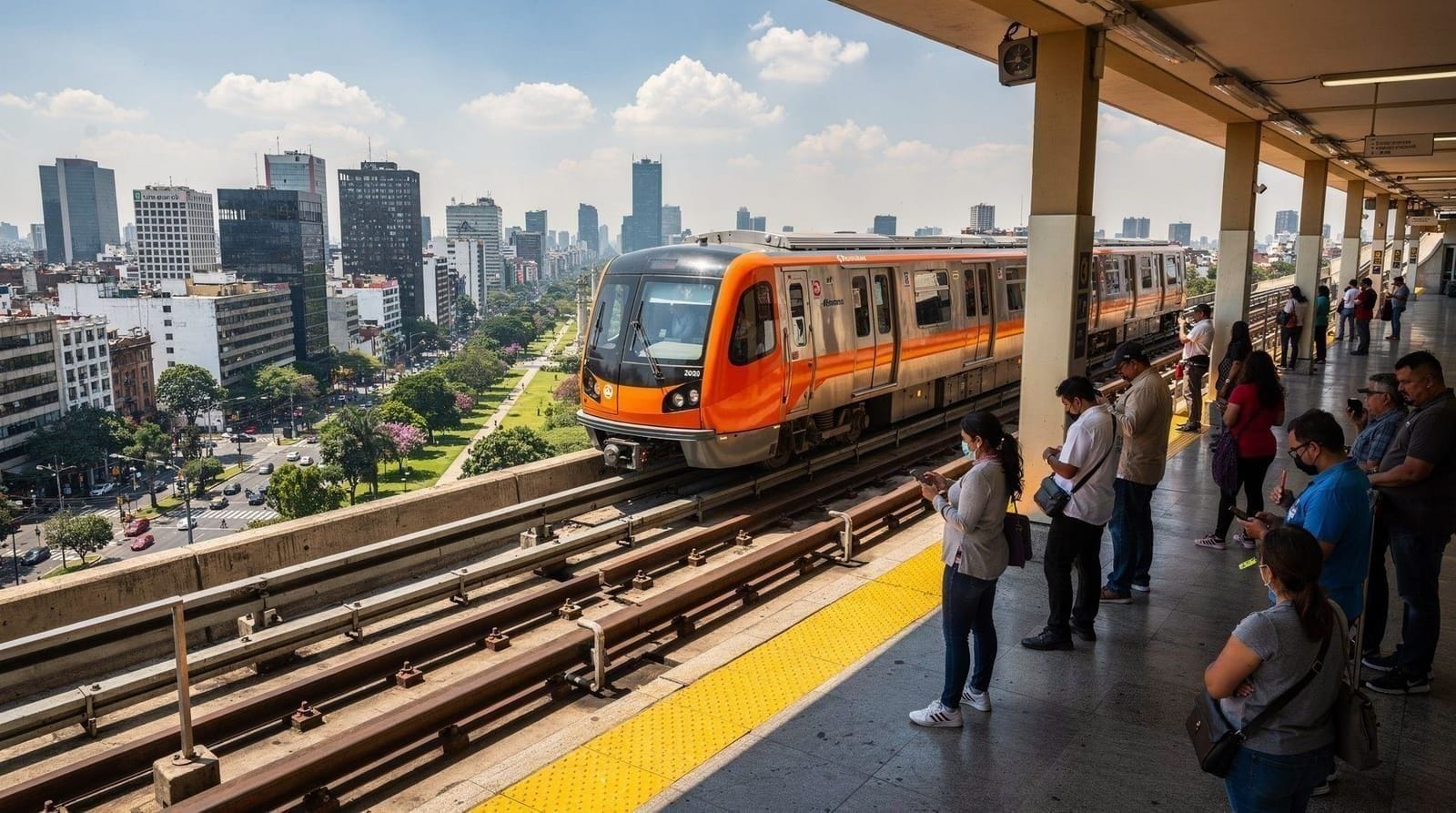
- Closer to Metrobús Line 1 (Álvaro Obregón and Sonora stations) — direct connection to the historic centre and airport
- Metro Line 1 accessible at Insurgentes station (10-minute walk)
- More street life and vendor density means you spend less time looking for food
- Slightly closer to Centro Histórico by transit
Condesa advantages:
- More pleasant for just walking — the park network makes it genuinely beautiful
- Parque México is a better morning run or slow coffee option than anything in Roma
- Less street noise; quieter at night
- Slightly more compact between its main restaurants and the parks
Both are walkable to each other and to the Chapultepec Museum cluster. Coyoacán and San Ángel require Uber from either neighbourhood (25–35 minutes). Teotihuacán requires a 2-hour transit or a guided tour pickup from either location equally.
The food scene
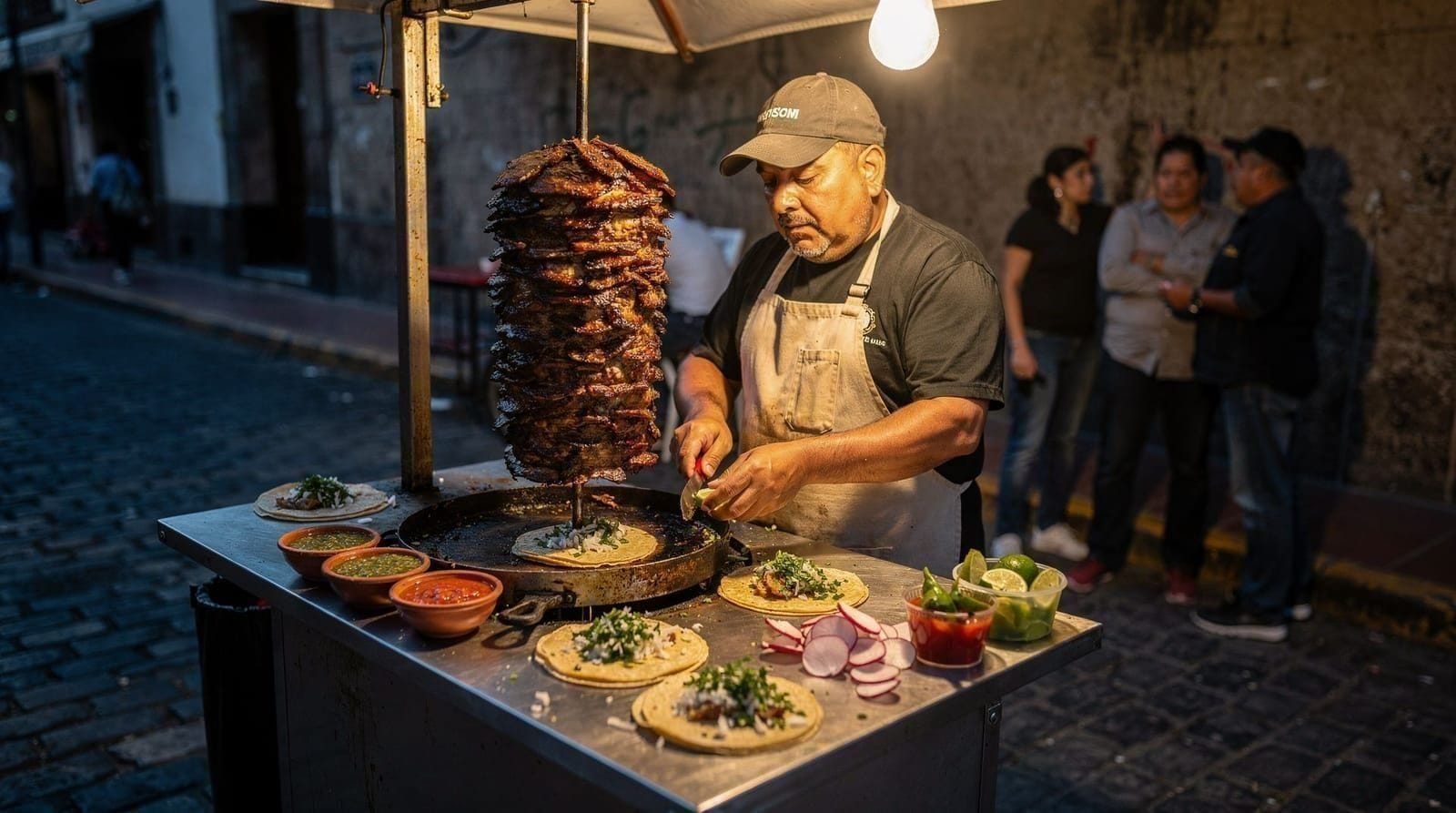
Roma: The food in Roma is simply more diverse and more concentrated. The dense blocks around Álvaro Obregón, Orizaba, and Tonalá have everything from Japanese-Mexican fusion to family-run pozole spots to 3 am tacos. Mercado Medellín (a local market at the south end of Roma Sur) is excellent for produce, prepared food, and understanding how residents actually shop.
The street food here is continuous from morning to 2 am. You do not have to plan; you just walk until something looks right. If you want to eat with more confidence, the street food guide explains what to order and how to choose a stall, and the guide to tap water and food safety covers the habits that keep a stomach happy. A food tour is also a good way to learn the neighbourhood in your first evening.
If you would rather have someone pick the stalls for you after dark, a guided tacos and mezcal night out keeps the choosing simple and suits a first evening well.
Condesa: Condesa’s food scene is more restaurant-focused and slightly more expensive. The cluster around Ámsterdam and Michoacán has excellent mid-range restaurants — Italian-influenced, modern Mexican, decent brunch spots. The terrace dining in Condesa is some of the best in the city aesthetically: eating outdoors at a Parque México café with the afternoon sun coming through the jacaranda canopy is a specific pleasure.
The neighbourhood has fewer street vendors than Roma. If you prefer restaurant dining to improvised street eating, Condesa is more comfortable.
Nightlife
Roma Norte is louder at night. The cantinas on Tonalá and the mezcal bars on Orizaba operate late; there is a consistent street noise level from 9 pm onward on weekends. If you are a light sleeper, note this when choosing a hotel room (ask for an interior-facing room, not street-facing).
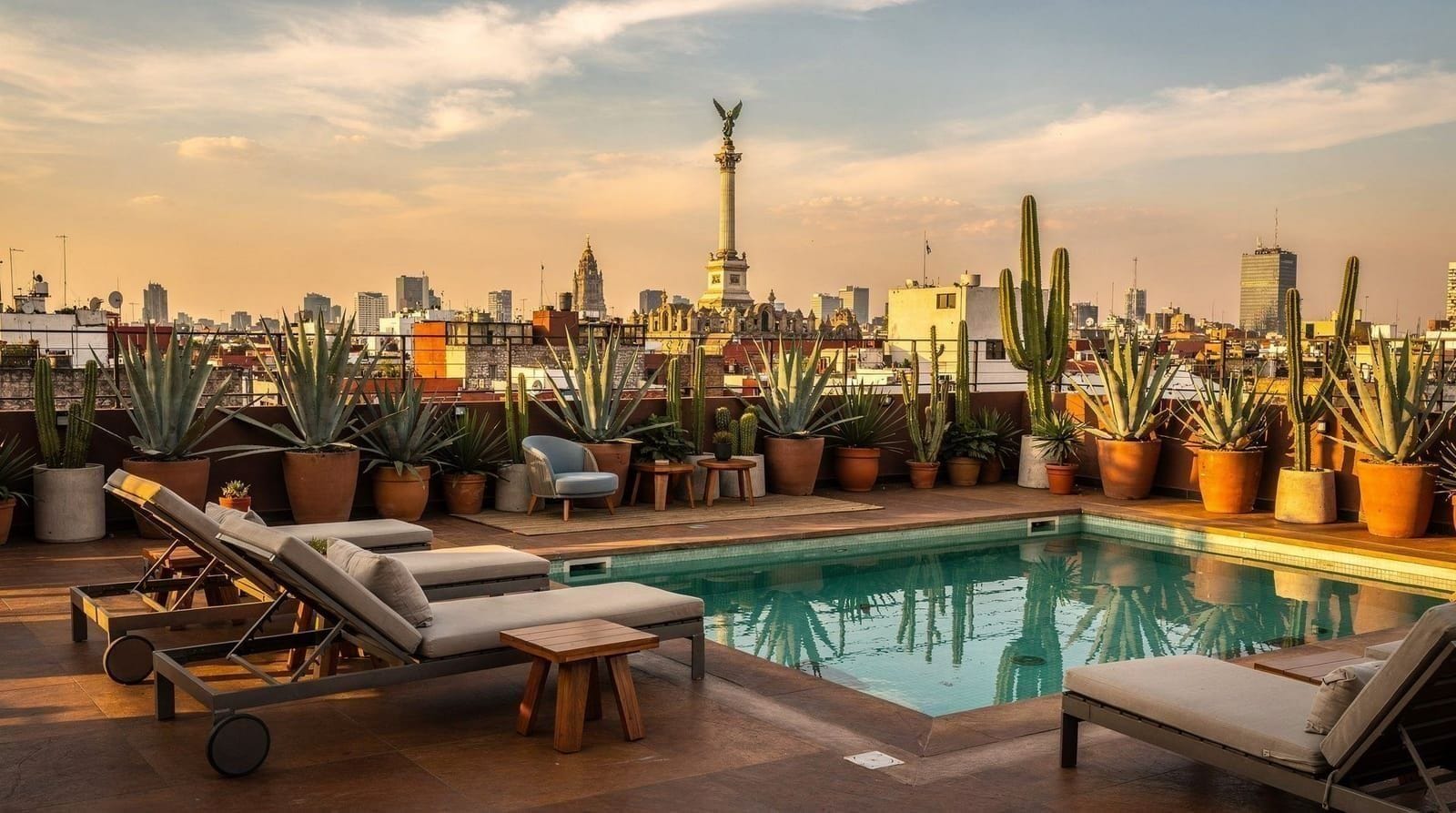
Condesa is quieter but not dead. The restaurants around Parque México run late, and there are several good cocktail bars. It is a better choice if you want to return to a calm neighbourhood at 11 pm after an evening out. For a view over the city before dinner, see our list of the best rooftop bars in Mexico City.
Who should stay where
Stay in Roma Norte if:
- You are a first-timer who wants maximum food and neighbourhood experience density
- You plan to use the Metro or Metrobús frequently
- Budget is a factor and you want cheaper cafés and street food on your doorstep
- You want the most “alive” neighbourhood to come home to at night
Stay in Condesa if:
- Design and aesthetics matter to you (the parks, the architecture)
- You want quieter streets and a more relaxed pace
- You prefer restaurant dining to street stalls
- You are travelling with young children (the parks are the best free daily activity)
- You are a runner or want park access for morning exercise
Stay in neither if: You are primarily visiting for the historic centre — in that case, consider Juárez (between Roma/Condesa and Centro, decent mid-range options) or a hotel on Paseo de la Reforma to cut Uber costs in half.
The choice between Roma Norte and Condesa comes down to the street as much as the neighbourhood. Check how far the room sits from the nearest Metro or Metrobús stop if you plan to ride them often, and whether it faces a busy road if quiet matters to you. Recent guest comments on noise help, and you can filter Roma and Condesa rooms through Booking.com listings for both areas.
Seasonal price swings to plan around
Both neighbourhoods see meaningful price movement across the year, and the swings are worth knowing before you fix your dates. Spring (March–April, jacaranda season plus Semana Santa) pushes rates up in both areas, more sharply in Condesa given its smaller hotel inventory. Day of the Dead week (late October–early November) is the single biggest spike — rooms in Roma and Condesa can roughly double, and the better boutique properties sell out a month or more ahead.
December through February is comparatively calmer outside the Christmas/New Year fortnight, and rates in both neighbourhoods soften noticeably. If your travel dates are flexible, shifting even a week outside these peaks can mean a meaningfully better hotel for the same budget. The best time to visit guide and the month-by-month weather guide help you weigh the trade-offs, while the jacaranda season guide and the Day of the Dead guide explain why those two periods are so busy.
The practical decision
The honest answer for most first-timers: Roma Norte is the slightly better base. It costs less, has better street food, and gives a more textured experience of the city. Condesa is genuinely beautiful, but its beauty is primarily spatial (the parks) rather than food or cultural density, and the extra hotel cost only makes sense if the parks and quiet are priorities.
That said, the difference is small enough that the best hotel deal in either neighbourhood beats a mediocre one in the other. Book the better hotel, not the “correct” neighbourhood.
The where to stay guide covers all major CDMX neighbourhoods including Polanco and Centro Histórico. The getting around guide has detail on transport from each area.
Master Intro walking tour of Mexico CityIf you want to get oriented on arrival, a walking tour that covers both Roma and Condesa alongside the historic centre gives you the spatial understanding that makes the rest of the trip easier.
Once you have picked a base, the 3-day itinerary and the guide to how many days you need show how to fit the main sights around it. For a more personal account, our 3-day trip report and the first-timer mistakes post are worth a read, and the 24 hours in Mexico City post suits a short stopover. If you are landing soon, the airport to city centre guide explains how to reach either neighbourhood.
Frequently asked questions about Roma vs Condesa
Are Roma and Condesa close to tourist sights?
Both are 30–45 minutes by Metro or Uber to Teotihuacán pick-up points, 15–20 minutes to the Anthropology Museum, and 25–35 minutes to Coyoacán. Centro Histórico is 20–30 minutes by Metro.
Is Condesa genuinely more expensive than Roma?
Yes, on average — hotels by 20–40%, restaurants by 30–60%. The gap is smaller at the budget end (a hostel in Condesa is not dramatically more than one in Roma) and larger at the mid-range.
Can I walk between Roma and Condesa easily?
Yes. The walk between the neighbourhoods takes 12–18 minutes on flat streets. There is no reason to take a taxi between them.
Are both neighbourhoods safe at night?
Yes, by the standards of a large city. The main streets are busy until midnight on weekends. Standard urban awareness applies: phone in pocket in crowds, stick to lit streets late at night. See the safety guide for full detail.
Does it matter where in Roma Norte I stay?
The north part of Roma Norte (closer to Insurgentes and Metrobús) is more transit-convenient. The streets around Álvaro Obregón and Orizaba are the most restaurant-dense. Avoid the very southern edge near Parque Luis G. Urbina if you want maximum options on foot.
Is one neighbourhood better for a longer stay (a week or more)?
Condesa’s advantages compound over a longer stay — the parks, the quiet, and the more residential feel matter more when you’re not just passing through for two or three nights. For a week-plus visit where you’ll cook occasionally or want a slower pace, Condesa’s case gets stronger relative to Roma’s food density.
Day-to-day logistics from each neighbourhood
Getting to major sights from Roma
The Anthropology Museum: Metro Line 1 to Chapultepec (10-minute ride), then a 10-minute walk through the park. Or Uber — about 100 MXN, 15 minutes without traffic. See the Chapultepec guide.
Centro Histórico: Metrobús Line 1 south to north, or Metro Line 1 from Insurgentes station (15–20 minutes). Uber is 150–200 MXN but traffic on this route can be unpredictable.
Coyoacán: Uber only, 25–35 minutes, 150–200 MXN. There is no direct transit option that is not confusing for first-timers.
Teotihuacán: Metro to Terminal Norte, then bus. The journey from either neighbourhood is the same — 2+ hours each way — so pick-up tours from the hotel are worth considering for the time saving.
Getting to major sights from Condesa
The same distances apply as Roma, since the neighbourhoods are adjacent. If you are at the western edge of Condesa (nearer Parque España), add 5–10 minutes to Roma Norte transit times. The Metro access from deep Condesa requires walking to Sonora or Insurgentes stations.
The practical differences in transit are minimal between the two neighbourhoods. Location within Roma or Condesa matters more than which neighbourhood you choose.
Eating and drinking: the real difference
The clearest practical advantage of Roma over Condesa for most visitors is the density of excellent cheap food.
In Roma Norte, within a 10-minute walk of most hotels:
- At least 5–10 taco stands operating from 7 am
- 2–3 fondas (family lunch restaurants) doing comida corrida at 100–150 MXN
- Multiple OXXO and small markets for water, snacks, supplies
- Several late-night taquerías operating until 2–3 am
In Condesa, within a 10-minute walk:
- Fewer street food options; the neighbourhood is more restaurant-focused
- Sit-down brunch and café options are excellent (especially around Parque México)
- A smaller selection of delivery/corner-store options late at night
- The market equivalent (Mercado Condesa on Tamaulipas) is good but smaller than Mercado Medellín in Roma
If you cook occasionally or want maximum budget flexibility on food, Roma’s density of casual options makes a meaningful practical difference over a week-long stay. For a 2–3 day visit, it matters less.
The verdict as a planner
Both neighbourhoods are excellent choices and the decision is ultimately low-stakes. If you have asked me this question as someone planning a first trip, here is the shortest version: book a good hotel in whichever neighbourhood has the better deal at your travel dates. If prices are equal, Roma Norte. If you are staying for more than 5 days and want a more residential, quieter experience, Condesa.
The where to stay guide includes Polanco, Juárez, and Centro as additional options if neither Roma nor Condesa fits your requirements or budget.