Where to stay in Mexico City: Roma, Condesa, Polanco, Centro and more
Mexico City: Hop-on Hop-off City Tour by Turibus 1-Day Pass
Where should I stay in Mexico City?
Roma Norte is the best all-round base for most first-timers: central, safe, walkable to Condesa and quick to Centro by Uber, with the city's best independent café, restaurant, and bar scene at every price point. Condesa suits a quieter, park-centred stay. Polanco is upscale with easy Chapultepec access. Centro puts you in the historic heart but is less comfortable at night.
The neighbourhoods that matter for visitors
Mexico City has dozens of colonias (neighbourhoods), but for tourists, the decision effectively comes down to five or six primary options. Each has a distinct character, price range, and set of trade-offs. This guide gives an honest, experience-based comparison rather than cheerleading for each.
The short version: Roma Norte is the best default choice for most first-time visitors. Read on for why, and when other neighbourhoods make more sense.
| Best all-round base | Roma Norte |
| Best for families | Condesa |
| Best for luxury/business | Polanco |
| Best for history immersion | Centro Histórico |
| Typical mid-range price | 1,200–3,000 MXN/night |
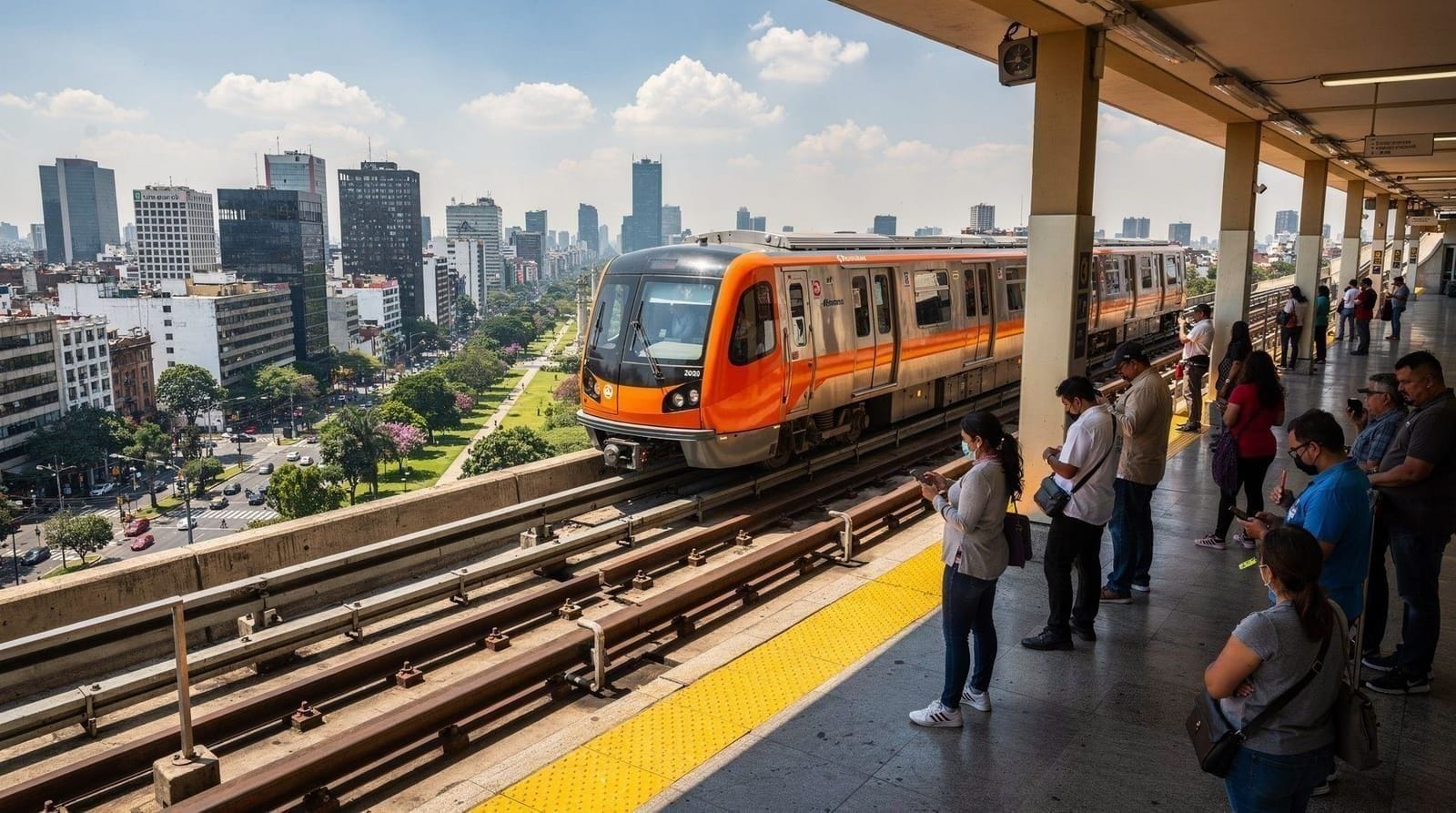
| Getting between areas | Uber/DiDi 15–30 min, or Metro Line 1 |
Roma Norte and Roma Sur: the first-timer’s default
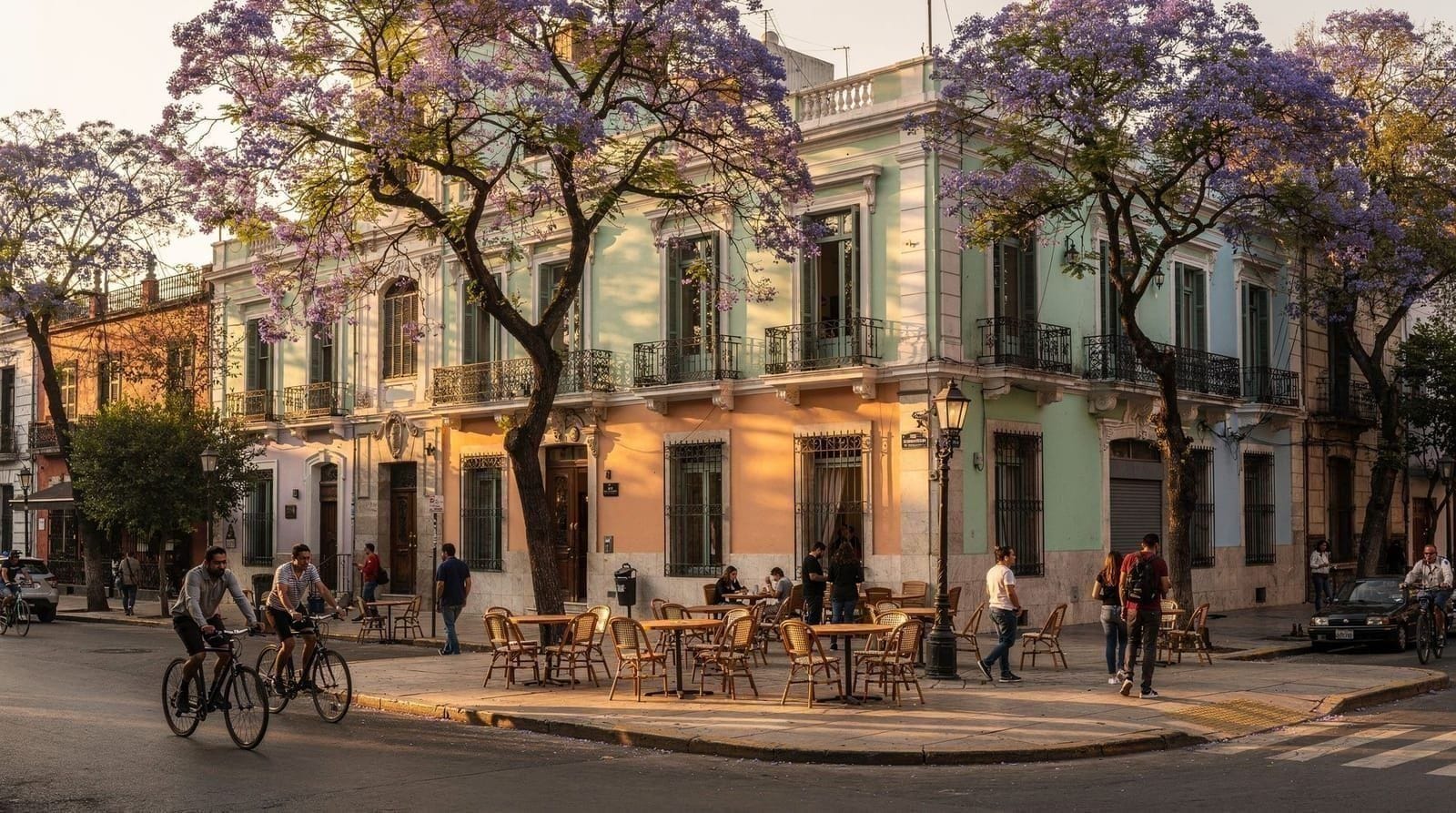
Vibe: Bohemian, café-culture, cosmopolitan. Tree-lined streets, art galleries, second-hand bookshops, independent restaurants at every price point. The most popular neighbourhood for international visitors, which means it can feel tourist-dense in high season — but never overwhelming, because locals dominate the street life. See the Roma/Condesa destination overview for a fuller sense of the area before you book.
Safety: Excellent for a Mexico City neighbourhood. Main streets are active until midnight. The safety guide rates Roma highly for solo travellers of all kinds. Petty theft (phone snatching on main streets) is the main risk — the same as any busy urban neighbourhood globally.
Proximity: Centrally located. Walking distance to Condesa (15 minutes). Quick Uber to Centro Histórico (20 minutes, 50–80 MXN), Coyoacán (30 minutes), and Polanco (20 minutes). Metro Line 1 at Insurgentes and Sonora stations.
Price range: Budget end: Airbnb rooms from 500–800 MXN, hostels from 350 MXN/dorm. Mid-range hotels: 1,200–2,200 MXN per night. Design boutique hotels: 2,500–4,000 MXN.
Best for: First-timers, couples, solo travellers, food-focused visitors, those who want neighbourhood life over hotel facilities.
Specific hotels worth knowing:
- Hotel Carlota (Roma Norte): A converted mid-century apartment building with a rooftop pool, good coffee, and design-forward rooms at mid-range prices (1,800–2,800 MXN/night). One of the best value design hotels in the city.
- Casa Goliana: A small guesthouse with only a few rooms in a quiet Roma Sur house, popular with repeat visitors.
- Casa Comtesse: Boutique hotel with a beautiful breakfast patio, Roma Norte.
Condesa: the park-centred, quieter cousin
Vibe: Slightly upscale, more residential than Roma, centered on Parque México and Parque España. Art Deco apartment buildings, dogs everywhere (Condesa has a genuine dog culture — the parks on Sunday mornings are remarkable), quieter streets at night than Roma. The restaurant scene is excellent but slightly more expensive than Roma.
Safety: Equally safe to Roma. Streets are very well lit on the main boulevards. Slightly quieter after midnight — which is either a positive or negative depending on your preference.
Proximity: Adjacent to Roma — walking between the two takes 15 minutes. Same metro access. Slightly further north from the Chapultepec park entrance, which is walkable (25 minutes) along Avenida Ámsterdam.
Price range: Marginally higher than Roma for equivalent quality. Mid-range hotels: 1,400–2,500 MXN. Airbnb apartments: 1,200–2,000 MXN per night.
Best for: Couples wanting a romantic, quieter atmosphere; visitors who will spend significant time in Chapultepec; return visitors who already know Roma; families — see the family-friendly section below.
Roma vs. Condesa decision: If price is equal, pick whichever hotel you prefer regardless of which neighbourhood it’s technically in — you’ll spend time in both.
Polanco: the luxury district
Vibe: Upscale, corporate, international-hotel-oriented. Avenida Masaryk has Mexico City’s luxury retail (Prada, Louis Vuitton, Hermès), plus the best cluster of high-end restaurants in the city (Pujol, Quintonil, Biko). Also home to a significant expat and business traveller population. Less character and street-level life than Roma, but very comfortable and extremely well-serviced.
Safety: Among the safest neighbourhoods in the city. Polanco has the highest density of private security, well-lit streets, and active foot traffic from embassy personnel and corporate visitors. Very low petty crime.
Proximity: Walking distance to Chapultepec Park and the National Museum of Anthropology (15–20 minutes). Uber to Centro: 30–45 minutes. To Roma: 20 minutes.
Price range: Mexico City’s most expensive neighbourhood for accommodation. Budget-end boutique hotels: 2,000–3,000 MXN. Mid-range hotels: 3,000–5,000 MXN. Luxury (InterContinental, St. Regis, Camino Real): 6,000–15,000 MXN+.
Best for: Business travellers, luxury travellers, those with Chapultepec as their primary focus, visitors who value hotel facilities (spa, gym, rooftop pool) over neighbourhood character.
Honest note: Polanco is expensive relative to what you get in neighbourhood experience terms. Roma offers more per peso for most visitors.
Centro Histórico: the historical choice
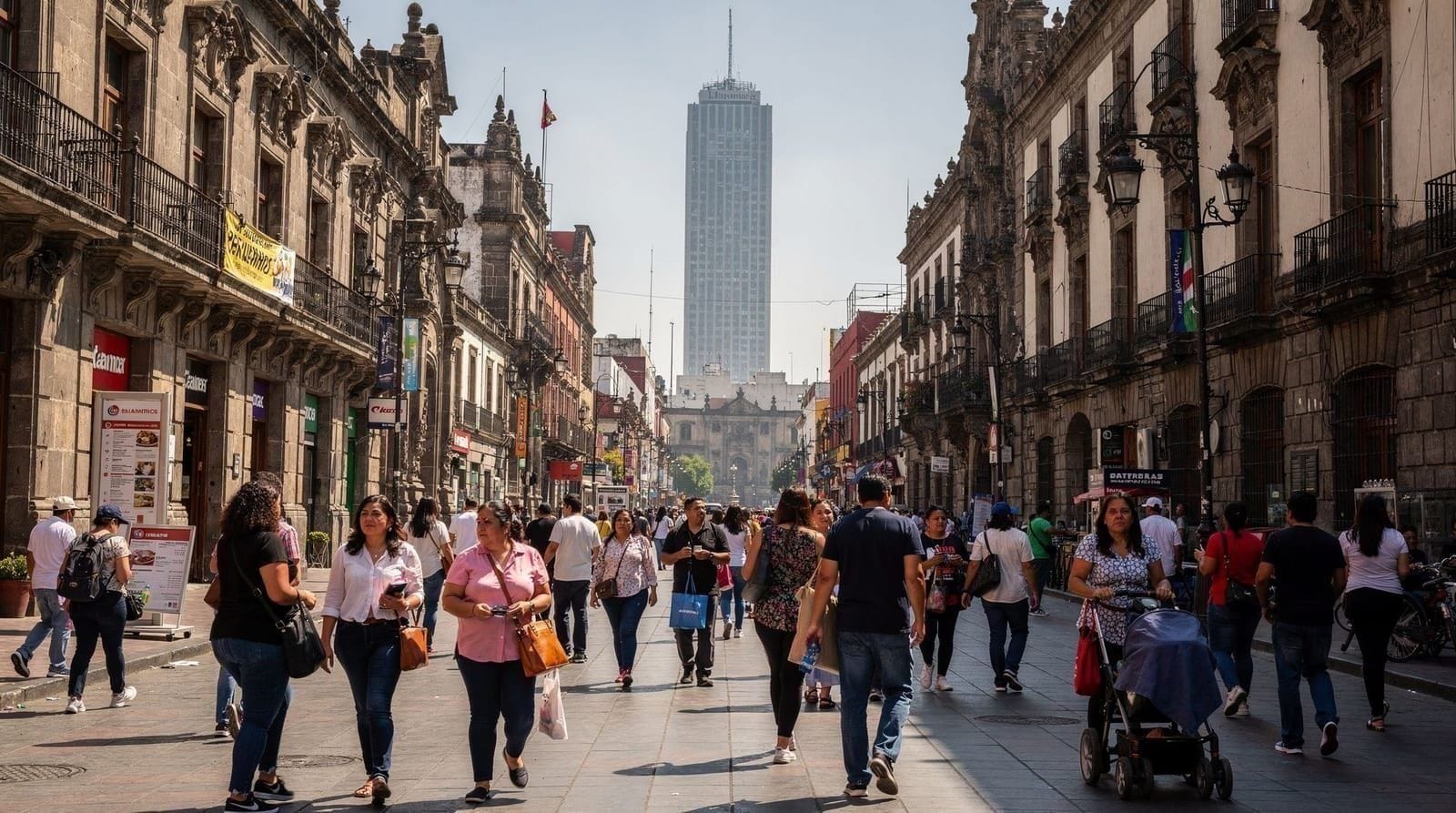
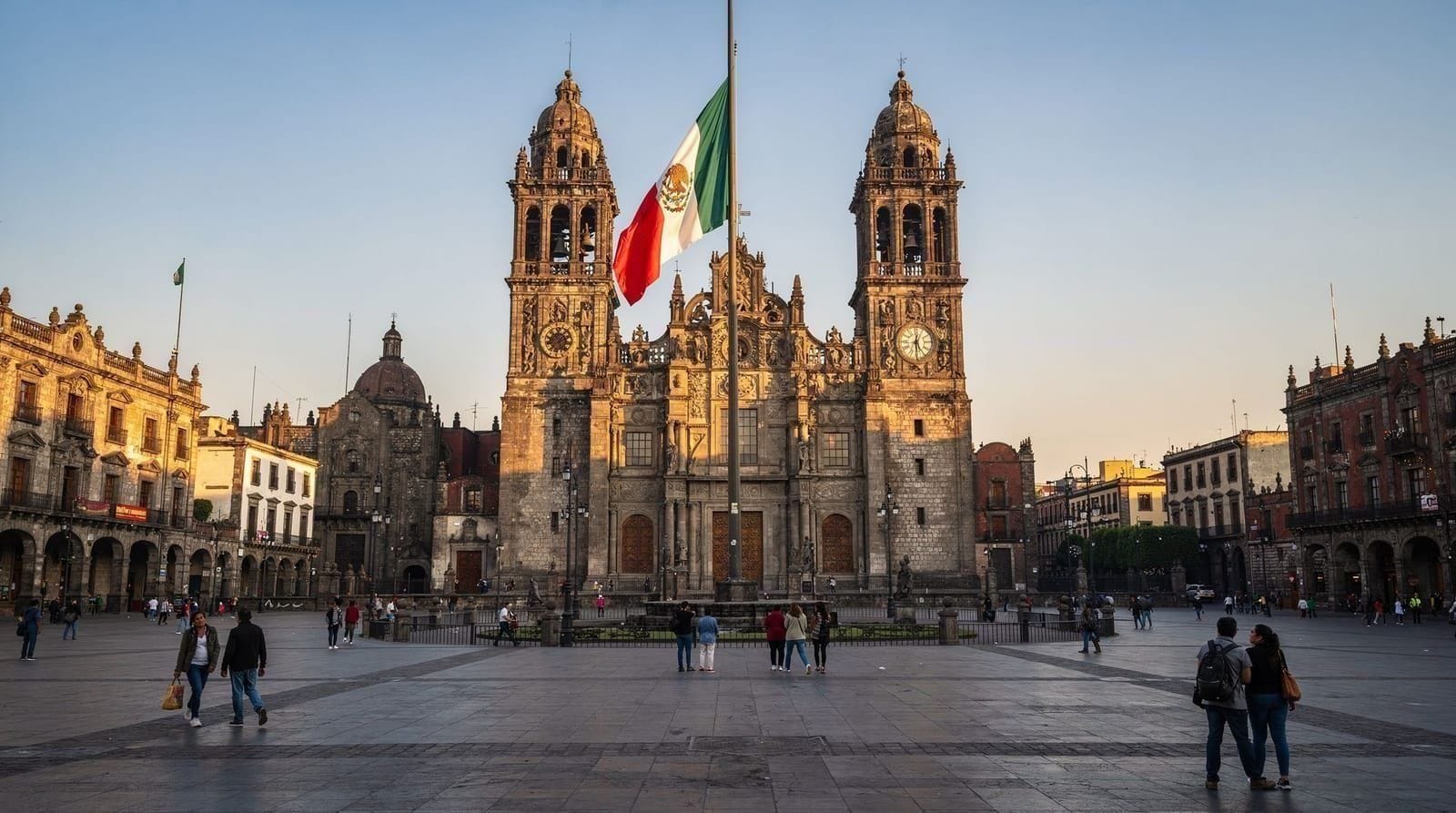
Vibe: Intense, dense, historical, loud. You are living inside Mexico’s most significant historical core — the Zócalo (one of the world’s largest public squares), the Metropolitan Cathedral, the National Palace with Rivera’s murals, the ruins of Templo Mayor. In exchange: a neighbourhood that is commercial and government-dominated rather than residential, with streets that thin out significantly after 9 pm.
Safety: Adequate during the day on main streets, requires caution at night. The safety guide covers the specific parameters. Hotels on Madero Street and adjacent to the Zócalo are on the most active and policed stretch.
Proximity: You are at the historic core — Zócalo and Templo Mayor is literally outside. But you are further from Roma/Condesa (20 minutes by Uber) and Polanco (30 minutes).
Price range: Wide range. Budget hotels near the Zócalo: 600–1,200 MXN. Mid-range: 1,500–2,500 MXN. The Gran Hotel Ciudad de México (with its spectacular Tiffany stained glass atrium) is 3,000–5,000 MXN — architecturally extraordinary.
Best for: History enthusiasts, visitors who want to be inside the historical experience from the first morning, those who prefer a more urban, less gentrified atmosphere.
Honest note: The experience of staying in Centro is unique and worthwhile for the right visitor. It is not a comfortable base for food-focused or nightlife-focused visits, where Roma’s concentration of quality options is an overwhelming advantage.
Juárez and Zona Rosa: central but mixed
Juárez is the neighbourhood immediately east of Reforma and north of Roma, bisected by the Paseo de la Reforma. The Zona Rosa within Juárez is Mexico City’s traditional LGBTQ+ hub with a cluster of bars and clubs around Calle Amberes and Calle Londres.
Vibe: Central, increasingly gentrified (particularly north Juárez toward Reforma), commercial in parts. The Zona Rosa strip has late-night bars and a particular kind of nightlife energy.
Safety: Variable. Reforma Boulevard is well-patrolled. The side streets off Zona Rosa at late night can be lively in ways that require alertness.
Price range: Hotels 900–1,800 MXN mid-range; hostels from 300 MXN/dorm — generally cheaper than equivalent Roma or Condesa accommodation for a comparably central location. See the getting around guide for how well-connected Juárez is by Metro and Metrobús.
Best for: LGBTQ+ travellers who want to be near the main community spaces; visitors who want maximum centrality at slightly lower prices than Polanco.
San Ángel and Coyoacán: the colonial south
San Ángel (15 km south of Centro) is a quiet, colonial neighbourhood best known for the Saturday Bazar del Sábado craft and art market. Very limited accommodation options — primarily small guesthouses. More suitable as a day visit from Roma/Condesa than a base.
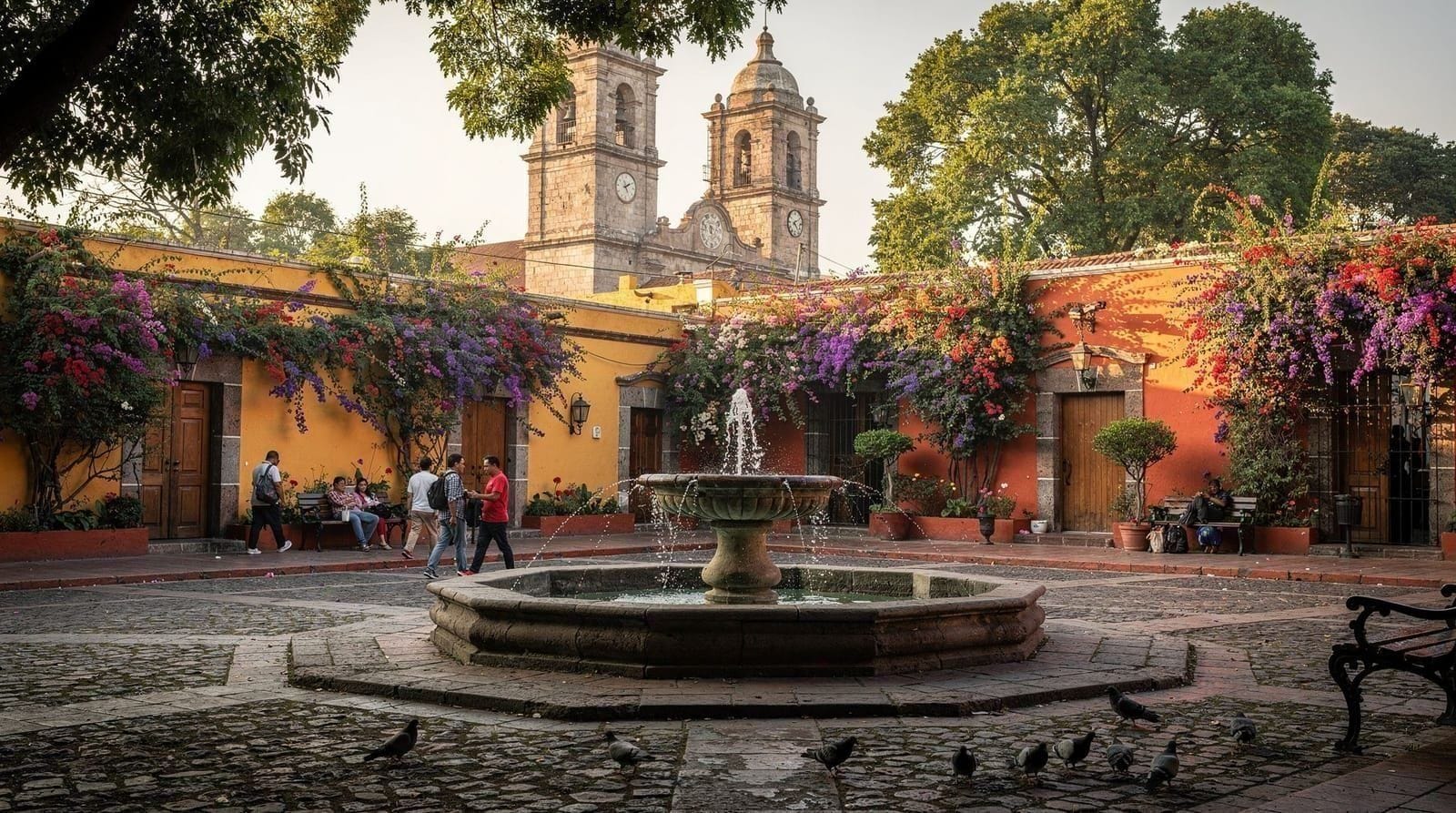
Coyoacán (12 km south of Centro) is where the Frida Kahlo museum is, where León Trotsky was assassinated in 1940, and where the city’s best colonial-neighbourhood experience exists. Some excellent boutique hotels and Airbnb options around the plazas.
Trade-off: Beautiful atmosphere, quiet evenings, but 30–45 minutes from Centro and Teotihuacán by Uber adds up across a week. Best for visitors who have already been to Mexico City and want a different, slower base — or those whose trip centres heavily on Frida Kahlo and the southern city.
Summary comparison table
| Neighbourhood | Safety | Vibe | Cost (mid-range/night) | Distance from Centro |
|---|---|---|---|---|
| Roma Norte | ★★★★★ | Bohemian, active | 1,400–2,500 MXN | 20 min |
| Condesa | ★★★★★ | Quiet, residential | 1,500–2,600 MXN | 25 min |
| Polanco | ★★★★★ | Upscale, corporate | 3,000–5,000 MXN | 30 min |
| Centro Histórico | ★★★★ | Historical, intense | 1,000–2,500 MXN | 5 min walk |
| Juárez/Zona Rosa | ★★★★ | Central, mixed | 900–1,800 MXN | 15 min |
| Coyoacán | ★★★★★ | Colonial, village | 1,200–2,500 MXN | 35 min |
Which neighbourhood matches your trip style
| Traveller type | Best neighbourhood | Why |
|---|---|---|
| First-time visitor | Roma Norte | Central, walkable, best food density |
| Family with young kids | Condesa | Two large parks, quiet streets, close to Chapultepec |
| Business traveller | Polanco | Corporate hotels, embassy-district security |
| Budget backpacker | Centro Histórico or Roma Sur | Cheapest hostel and hotel rates |
| Frida Kahlo / slow-travel fans | Coyoacán | Village pace, Casa Azul on your doorstep |
| LGBTQ+ traveller | Zona Rosa (Juárez) | Community hub, central, lower prices than Polanco |
Family-friendly neighbourhoods
Condesa is the strongest family base: Parque México and Parque España give children room to run, the streets are calm after dark, and it is a comfortable walk or short Uber to Chapultepec’s playgrounds, lake and zoo. Roma Norte is a reasonable second choice if food variety matters more than park space to you. Avoid Centro Histórico as a family base — it is an excellent daytime destination but thins out and feels less relaxed for children in the evening. See the Mexico City with kids guide and the family itinerary for how your neighbourhood choice fits the rest of a family trip.
Tours that cover multiple neighbourhoods
A Turibus hop-on hop-off 1-day pass on your first day is useful regardless of where you stay — it covers the main circuit from Centro through Reforma, Polanco, and Chapultepec and gives geographic context for a city that can feel overwhelming in scale on arrival.
For a walking orientation of the city’s most historically significant areas, the Historic Downtown Walking Tour covers Centro from a guide who will also give you practical neighbourhood intelligence.
What to look for in a hotel or apartment
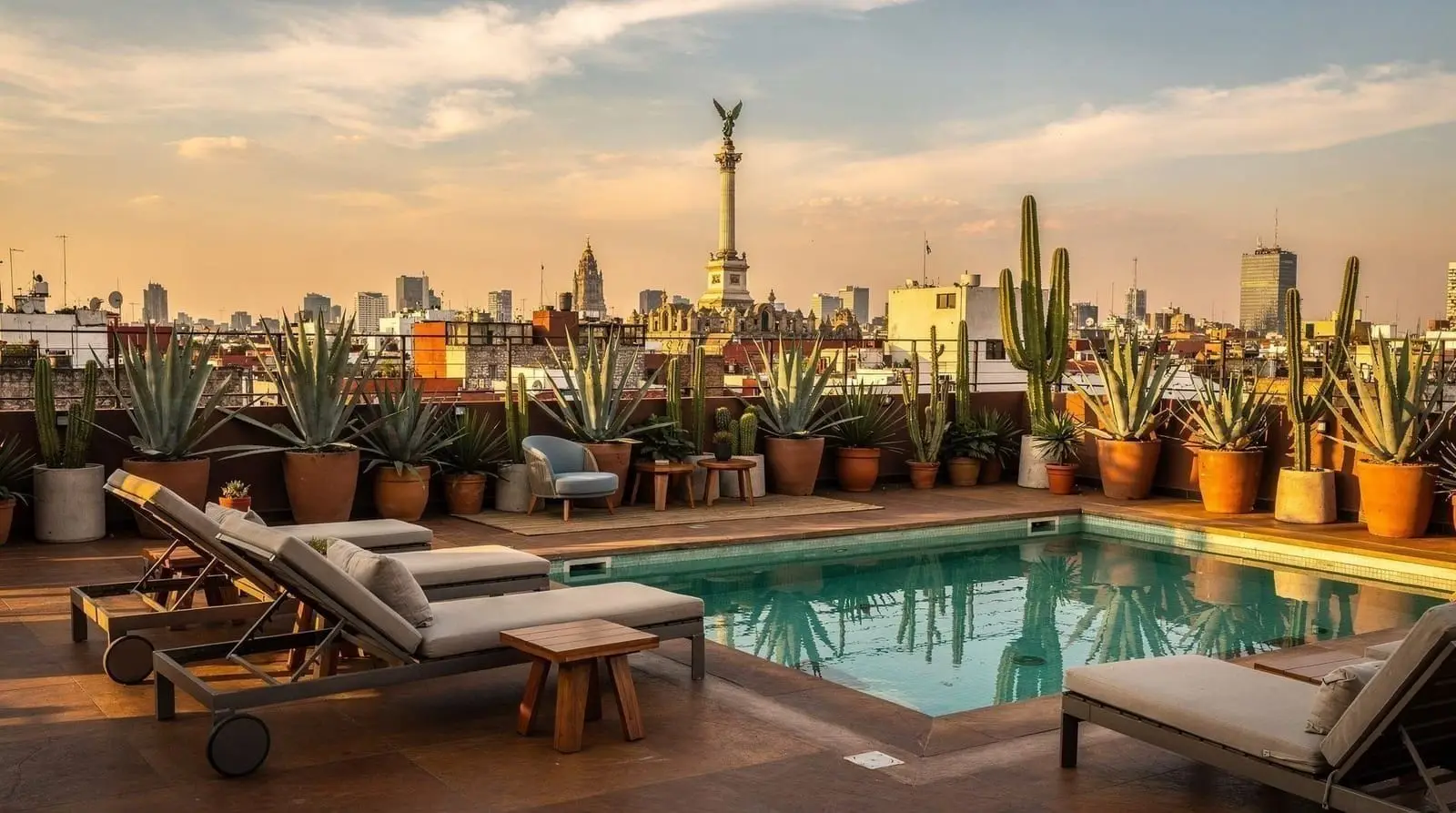
Rooftop terrace or pool: Mexico City’s altitude and clear skies make rooftop terraces excellent. In good weather they are genuinely used social spaces. Hotel Carlota in Roma, Hotel Básico in the Hipódromo area, and various Airbnb penthouse options have good rooftop infrastructure.
Hot water reliability: Older buildings in Centro and even some in Roma have inconsistent hot water, particularly in budget accommodation. Check recent reviews specifically mentioning this.
Noise: Roma Norte’s main bar streets (around Álvaro Obregón and Plaza Luis Cabrera) can be noisy on weekend nights. If you are a light sleeper, request an interior-facing or back-of-building room.
Altitude consideration: Good ventilation matters at 2,240 m. Well-ventilated rooms sleep better than sealed air-conditioned boxes for most people. Many older Roma and Condesa apartments have large windows and good airflow.
Staying longer: a week or more
For stays of a week or longer, Roma Sur and southern Condesa offer the best value-to-location ratio: Airbnb monthly discounts are common, and both areas have enough café and co-working infrastructure (reliable wifi, laptop-friendly seating) to support remote work days between sightseeing. Coyoacán is a genuine alternative for a longer, slower stay if you don’t mind the extra 20–30 minutes into central Mexico City most days — the trade-off is worthwhile for visitors prioritising a quieter, more residential rhythm over constant central access.
Practical booking notes
Peak season: March–April (jacarandas), November 1–2 (Día de Muertos), and Christmas–New Year see significantly higher prices and earlier sellouts. Book 4–8 weeks ahead for popular boutique hotels in these periods.
Airbnb vs. hotel: Airbnb apartments in Roma and Condesa are often better value than hotels for stays of 4+ nights, particularly for groups or those who want kitchen access. Mexico City has a dense Airbnb supply and hosts are generally reliable. Check the building security (many require a code or doorbell), confirmed wifi quality, and hot water reviews.
Frequently asked questions about where to stay in Mexico City
What is the safest neighbourhood to stay in Mexico City?
Polanco has the lowest crime rates among tourist neighbourhoods, followed closely by Roma Norte, Condesa, and Coyoacán. Safety in the tourist belt is generally good. See the complete safety breakdown for detail.
Are boutique hotels better than chains in Mexico City?
For the experience of the city, yes. Mexico City has an excellent boutique hotel scene, particularly in Roma and Condesa. Chain hotels (Marriott, Hyatt, Hilton) are concentrated in Polanco and the Reforma corridor and are well-managed but offer less local character. For a one-off visit, a boutique hotel in Roma or Condesa is a better use of budget.
Can I find good accommodation for under 1,000 MXN per night?
Yes. Hostels in Roma (mostly dorm rooms) start at 300–450 MXN per bed. Budget hotels in Centro start at 600–800 MXN per private room. Airbnb private rooms in Roma start at 700–1,000 MXN. Mexico City is not cheap relative to Southeast Asia, but good-value accommodation exists at every level.
Is there an area with the best food near accommodation?
Roma Norte has the highest density of excellent restaurants per square metre in the city. Condesa is second. The Mexico City street food guide and best food tours guide cover the eating landscape in detail. Staying in Roma means the city’s best food culture is effectively at your doorstep.
Is Hipódromo a good base?
Hipódromo is the section of Condesa centred on Parque México — architecturally the most beautiful part of the neighbourhood with the famous oval Avenida Amsterdam. If a hotel is described as “Hipódromo Condesa,” it is in this area: excellent for walking, with everything Condesa offers.
Is Roma or Condesa better to stay in?
Roma wins for street life, restaurant variety, and value for money. Condesa wins for quiet park atmosphere, Art Deco architecture, and slightly fewer tourists. They are adjacent — staying in either puts you equally close to both. First-timers should choose based on hotel/Airbnb price, since you will spend significant time in both neighbourhoods regardless of where you sleep.
Is Centro Histórico good to stay in?
For the historical experience, yes — you wake up steps from the Zócalo. For comfort and evening safety, it is not the most relaxed base. Centro is excellent in the daytime but streets thin out quickly after 9:00 pm. If you stay in Centro, choose a hotel on or near the main pedestrian streets (Madero, Cinco de Mayo) rather than deeper side streets.
Is Polanco worth the higher prices?
If Chapultepec Park and the National Museum of Anthropology are your priority, Polanco’s proximity is a genuine asset. If you want neighbourhood atmosphere, good cheap food, and local street life, Polanco is expensive and slightly sterile. Business travellers and luxury travellers love it; budget and mid-range visitors typically get better value in Roma.
Can I stay in Coyoacán?
Yes, and it is beautiful — colonial streets, the Frida Kahlo museum nearby, a village atmosphere. The downside is distance: Coyoacán is 30–45 minutes from Centro and Teotihuacán requires an early start from even further south. It suits visitors who plan to base around the Frida Kahlo museum and southern neighbourhoods rather than the tourist centre.
What is the best neighbourhood for budget accommodation?
Roma Sur has cheaper Airbnb and hostel options than Roma Norte with essentially the same access. Centro has budget hotels near the Zócalo at 400–700 MXN per night. Juárez/Zona Rosa has hostel-category accommodation and is well-located but noisier at night.
How close do I need to be to attractions?
In Mexico City, proximity matters less than safety and walkability. Uber and DiDi make most attractions accessible from any central neighbourhood within 20–45 minutes. What matters is your hotel’s immediate neighbourhood: can you walk to dinner safely? Is there a café for breakfast? Does the street life suit your pace? Location relative to a single attraction is secondary.
Which neighbourhood is best for a family with young children?
Condesa is the strongest family base: its two large parks (Parque México and Parque España) give children space to run, streets are quiet after dark, and the neighbourhood is walkable to Chapultepec’s playgrounds and the zoo. Roma Norte works too if you value restaurant variety over park space. Avoid Centro Histórico as a family base — it is a daytime destination, not a relaxed evening neighbourhood for kids.
Is it worth staying near the airport instead of a central neighbourhood?
Rarely. Airport-area hotels save perhaps 15–20 minutes on arrival night but cost you daily transit time to every attraction, since almost everything worth seeing sits in the Roma/Condesa/Centro/Polanco/Coyoacán corridor. Only consider an airport hotel for a genuine late-arrival, early-departure layover with no sightseeing planned.