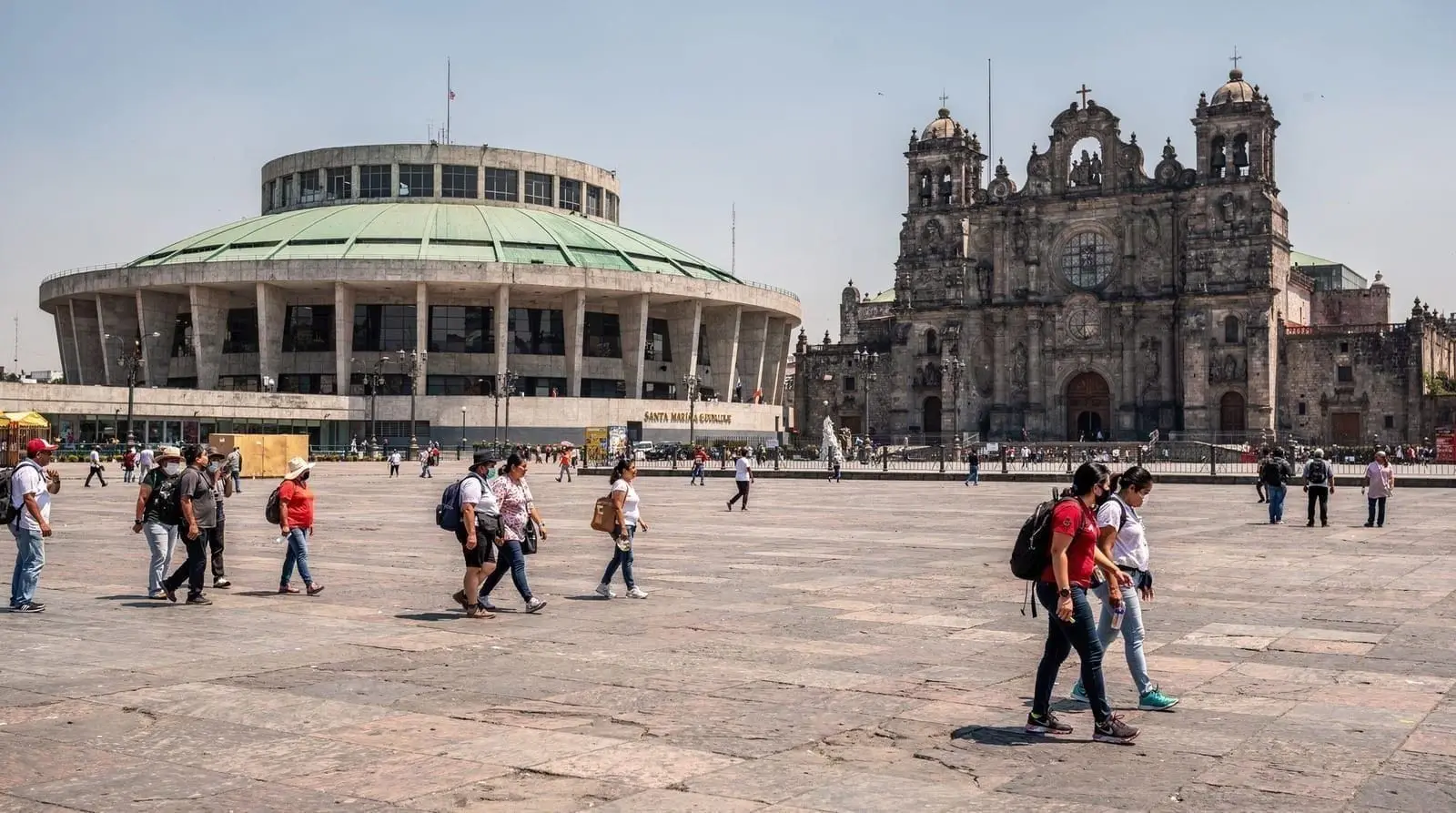
Basílica de Guadalupe
Mexico's most visited religious site: the Basílica de Guadalupe, its miraculous tilma, moving walkways, and hilltop Cerro del Tepeyac pilgrimage routes.
Mexico City: Basilica of Our Lady of Guadalupe Tour
Duration: 5 hours
Quick facts
- Altitude
- 2,240 m / 7,350 ft
- Currency
- Mexican peso (MXN) — USD widely accepted
- Best for
- Religious heritage, Mexican cultural identity, pilgrimage, colonial chapels
- Getting there
- Metro Line 6 to La Villa–Basílica; or Metrobús Line 1 to Deportivo 18 de Marzo
The most visited Catholic site in the Americas
The Basílica de Guadalupe in the Tepeyac neighbourhood of northern Mexico City is the most visited Catholic pilgrimage destination in the Americas and one of the most visited religious sites on Earth, drawing approximately 20 million visitors per year. Unlike most major pilgrimage destinations, it is architecturally and logistically accessible to ordinary tourists — compact, well-signed, and reachable by metro in under 40 minutes from the city centre.
The site’s religious importance stems from the apparitions of the Virgin Mary to an indigenous Mexican named Juan Diego in 1531, ten years after the Spanish conquest. According to Catholic tradition, the Virgin appeared four times on the Cerro del Tepeyac and left her image imprinted on Juan Diego’s tilma (cloak) as proof of the apparitions. The tilma, which has never been restored or repainted and has been scientifically examined several times without definitive explanation of its survival after 500 years, is the centrepiece of the new basilica and the object of devotion that draws pilgrims from across Latin America.
The full site consists of multiple buildings and chapels spread across the base and slopes of the Cerro del Tepeyac. A half-day allows you to see the main components; combining it with a Teotihuacán tour (which also departs from the north of the city) makes logistical sense.
| Where | La Villa, Gustavo A. Madero borough, northern CDMX |
| Cost | Free entry; guided tours around 900–1,400 MXN |
| Time needed | Half day (3–4 hours) for the basilica, chapels and hilltop |
| Getting there | Metro Line 6 to La Villa–Basílica; around 25 min by car from Roma |
| Best time | Weekday mornings, January–November; avoid Dec 9–12 unless attending the feast |
The new basilica and the tilma
The current Basílica de Nuestra Señora de Guadalupe — built between 1974 and 1976 to replace the sinking colonial basilica next door — is an extraordinary piece of 1970s religious architecture by Pedro Ramírez Vázquez, the same architect who designed the Anthropology Museum. The circular concrete building seats 10,000 and looks, from the outside, like a collapsed parachute or a low flying saucer. The interior works precisely as intended: the circular plan ensures that every seat has a direct line of sight to the tilma, which hangs above the altar inside a climate-controlled display case.
The building’s most distinctive feature is the series of moving walkways — escaleras mecánicas tilted horizontally — that carry visitors slowly past the tilma at altar level, so that pilgrims can view the image without stopping the flow. On ordinary weekdays, the walkways operate continuously and the wait from ground level to the walkway queue is under ten minutes. On December 12 (feast day) and the days preceding it, the basilica fills with millions of pilgrims over four or five days; access is managed but crowds are extreme.
The tilma itself, when you finally pass it on the moving walkway, is smaller than most visitors expect — about 1.7 by 1.05 metres — and the image of the Virgin occupies the upper two-thirds of the cloth. Whether or not you have a religious relationship with what you are looking at, the object’s age, cultural importance, and the density of devotion in the room give the viewing a distinct weight.
The colonial buildings on the plaza
The 18th-century colonial basilica next door to the modern building is no longer used for services because of its severe sinking (the floor has multiple levels as different parts have subsided at different rates), but it is open for visitors and serves as an art museum displaying ex-votos — small painted thank-offering tiles — and colonial religious art. The sinking itself is visually dramatic from outside: the columns and towers lean visibly.
Around the main plaza, the Templo de la Capilla del Cerrito, the Capilla del Pocito (a baroque circular chapel built over a spring that is one of the most photographically beautiful buildings on the site), and the Capilla de los Indios are all worth a walk-through. The Capilla del Pocito in particular is a remarkable piece of churrigueresque baroque architecture with a tilework dome — often photographed, rarely explained to visitors who don’t have a guide.
The Basílica de Guadalupe guided tour covers the historical context of the apparitions, the architecture of all the chapels, and access to the Cerro del Tepeyac path up to the hilltop chapel where the apparitions are said to have occurred. Without a guide, most visitors see the new basilica and miss the colonial chapels entirely.
Cerro del Tepeyac: the hilltop
A stone path winds up the Cerro del Tepeyac from the main plaza to a series of chapels and a hilltop viewpoint. The path takes about 20 minutes to climb and is used by pilgrims ascending on their knees (a common act of devotion). The summit chapel has views back over the basilica complex and across northern Mexico City. The hill itself was a sacred site before the Spanish conquest — it was dedicated to the Aztec mother goddess Tonantzin, which is why Catholic missionaries considered it strategically important to establish the Guadalupe devotion precisely here.
Combining with Teotihuacán
Many tour operators combine the Basílica with Teotihuacán in a single full-day tour, since both sites are in the north of the city and the bus route from central CDMX to Teotihuacán passes near La Villa. A combined Teotihuacán and Guadalupe tour with lunch covers both sites efficiently — the Basílica works as a morning stop before the longer Teotihuacán section — and is a reasonable way to see both if you have one day for northern Mexico City excursions.
See the Teotihuacán destination guide for detailed information on what to expect at the pyramids, and the Teotihuacán complete guide for timing a combined day.
Crowd levels through the year
The gap between an ordinary weekday and the December feast is the single biggest planning variable at this site, so it is worth seeing the shift laid out plainly.
| Period | Crowd level | Notes |
|---|---|---|
| Jan–Nov, weekdays | Low | Walkways nearly empty; the calmest way to view the tilma |
| Jan–Nov, weekends | Moderate | Local families and day pilgrims from across the city |
| Dec 1–8 | Rising | Pilgrim numbers build steadily ahead of the feast |
| Dec 9–12 | Extreme | Feast of the Virgen de Guadalupe; millions attend over four days |
| Dec 13–31 | Low again | Often the quietest week of the year at the site |
Photography and etiquette inside the basilica
Photography is permitted throughout the plaza and inside the new basilica, including from the moving walkways, but flash is discouraged near the tilma and disruptive posing is not welcome — this remains an active site of worship, not a photo backdrop. Keep voices low inside the seating area even outside of Mass times, and remove hats when passing directly in front of the altar. Visitors dressed for a beach day sometimes draw disapproving looks on the plaza during Mass hours; the common scams and etiquette guide covers wider city norms worth knowing before any religious site visit.
Planning your day if time is short
If you only have 90 minutes, prioritise the new basilica and the moving walkway past the tilma, then a quick look at the leaning colonial basilica from outside — skip the Cerro del Tepeyac climb and the Capilla del Pocito. With a full half day, do all of it in the order described above, finishing on the hilltop for views back over the complex. Travellers building a short 3-day Mexico City itinerary usually fit the Basílica in as a half-day add-on to a Teotihuacán morning rather than as a standalone outing; see the itinerary length guide for how many days that leaves for the rest of the city.
Practical information
Hours: The new basilica is open daily 6:00–21:00. The colonial basilica (ex-voto museum) opens Tuesday–Sunday 10:00–18:00. The Cerro del Tepeyac path is accessible during daylight hours.
Admission: Free. There are donation boxes throughout but no entry fee for any part of the site.
Getting there: Metro Line 6 to La Villa–Basílica is the most direct route; the station exits near the plaza. Uber from Roma takes about 25 minutes and costs 60–100 MXN depending on traffic. Free parking is available nearby but congested on weekends.
What to avoid: December 9–12 is the main pilgrimage window; if you want to attend the feast, book accommodation and transport well in advance, arrive early, and expect crowds measured in millions. The experience is culturally extraordinary but logistically intense. For a standard tourist visit, a weekday between January and November is far more manageable.
Dress code: Conservative dress is expected — shoulders and knees covered. Shorts and sleeveless tops are technically allowed but attract unfriendly attention from devout pilgrims on busy days.
The best-time-to-visit guide has a full breakdown of the December pilgrimage season alongside all other major CDMX calendar events.
Juan Diego and the canonisation controversy
The history of the Guadalupe apparitions is both religiously significant and historically contested. Juan Diego Cuauhtlatoatzin, the indigenous man who reported the apparitions in 1531, was beatified by Pope John Paul II in 1990 and canonised in 2002 — making him the first Catholic saint of indigenous Mexican heritage. The canonisation was controversial: some historians argued that historical evidence for Juan Diego’s existence as a historical individual (rather than a literary or symbolic figure) was insufficient.
The debate has not diminished the Guadalupan devotion, which operates independently of the historical questions about Juan Diego’s historicity. For millions of Mexican Catholics, the tilma is both physical evidence of the apparition and a national symbol that predates academic controversy. Understanding this emotional register — distinct from formal doctrinal theology — helps non-Catholic visitors understand why the site feels different from other religious heritage sites.
The neighbourhood: La Villa
The basilica sits in the Gustavo A. Madero borough of northern Mexico City, in an area commonly called La Villa. The neighbourhood is primarily working-class residential with a commercial district around the pilgrimage site. For visitors who have extra time after the basilica visit, the local food around the metro station includes pozole, barbacoa, and tamales from street vendors that reflect the north Mexico City food tradition rather than the tourist-facing menus in Roma or Centro. Prices are correspondingly lower — a full lunch around the Basílica market costs 80–130 MXN.
La Villa is safe during the day around the basilica and main commercial streets. The pilgrim accommodation district around the main plaza hosts visitors who have walked long distances for the feast day.
Frequently asked questions about Basílica de Guadalupe
What is the tilma and why is it significant?
The tilma is the cloak of Juan Diego, an indigenous Mexican who reportedly received apparitions of the Virgin Mary in 1531. According to tradition, the Virgin’s image appeared miraculously on the cloth as proof of the apparitions. The original tilma is displayed inside the new basilica and is the object of devotion for millions of pilgrims. Scientists who have examined it cannot fully explain either the properties of the image’s pigments or why the cloth has survived intact for nearly 500 years without deterioration.
How long does a visit to the Basílica take?
A visit to the new basilica and the main plaza takes about 45 minutes at an unhurried pace. Adding the colonial basilica museum, the Capilla del Pocito, and the Cerro del Tepeyac path adds another 1.5–2 hours. A half-day (3–4 hours) is enough for a thorough visit. A guided tour takes about 3 hours and covers the context that makes the site meaningful to non-Catholic visitors.
Is the Basílica worth visiting if I am not religious?
Yes, for cultural and historical reasons. The site is central to Mexican national identity in a way that is not purely religious — the Virgen de Guadalupe image appears on murals, political banners, taxi medallions, and kitchen tiles across Mexico. Understanding its significance helps you understand Mexico. The architecture, particularly the Capilla del Pocito and the sinking colonial basilica, is genuinely interesting on aesthetic grounds alone.
When is the December 12 feast day and should I go?
December 12 is the Feast of Our Lady of Guadalupe and is the single largest annual pilgrimage event in the Americas. Pilgrims arrive from across Mexico and Central America in the days before, many having walked for weeks. The main celebration runs December 9–12. The atmosphere is extraordinary but the logistics are intense — millions of people, continuous music, and limited mobility around the site. It is worth attending once, but plan all transport and accommodation well in advance.
Can I combine the Basílica with other sights in the same day?
Yes. The most natural combination is with Teotihuacán, since both are in the northern part of the city. Many guided day tours do exactly this. Alternatively, combine it with the Centro Histórico — they are about 8 km apart and you can connect them by taxi or the Metro Lines 2 and 6.
How do I get there from the Zócalo?
Metro Line 2 to Hidalgo, then transfer to Line 3 northbound to La Raza, then transfer to Line 6 to La Villa–Basílica. Total journey is about 40 minutes and costs 5 MXN. Uber takes 20–30 minutes and costs 60–90 MXN from Centro.
Do I need a guide to appreciate the Basílica?
Not strictly, but a guide adds a lot for relatively little cost. Without one, most visitors see only the new basilica and the moving walkway, missing the colonial chapels, the Capilla del Pocito, and the historical context of the apparitions and the canonisation debate. A private guided tour of the Basílica with a dedicated guide covers all of this in about three hours; independent visitors short on time can use the getting around Mexico City guide to plan a self-guided route instead.
Is the Basílica accessible for visitors with mobility limitations?
Largely yes for the plaza and new basilica, which are flat, wheelchair-accessible, and served by ramps at the main entrances; the moving walkways past the tilma are usable by wheelchair users with assistance. The Cerro del Tepeyac hilltop path, however, is a steep stone climb with no accessible alternative, so visitors with mobility limitations should plan to see the plaza-level sights only.
Top experiences
Bookable activities with verified prices and instant confirmation on GetYourGuide.