Mexico City itinerary: how many days do you need?
Mexico City: Xochimilco Fiesta in Trajinera and Coyoacan Tour
How many days do you need in Mexico City?
Three days is the minimum to cover the core (Centro, Coyoacán/Frida Kahlo, and Teotihuacán). Four to five days is ideal for most first-timers — it adds Xochimilco, Chapultepec, and proper neighborhood time. Seven days lets you add two or more day trips (Puebla, Tepoztlán, Taxco) without rushing.
The honest answer: 4–5 days for most first-timers
Mexico City is one of the most content-dense cities in the Americas. The metro area has 22 million people, 12 UNESCO-linked heritage sites, hundreds of museums, and a restaurant scene that consistently ranks among the world’s top ten. No itinerary “covers” Mexico City. The question is: what version of Mexico City do you want to see?
For most first-time visitors, four to five days is the sweet spot. It allows the three essential experiences (Teotihuacán, Coyoacán/Frida Kahlo, Centro Histórico) without day-trip time pressure, adds neighbourhood depth in Roma and Condesa, and still leaves space for spontaneous street food discoveries and evenings without a schedule.
Three days works but leaves you with a list of things you wish you’d seen. Seven days starts revealing a different, slower Mexico City that is deeply rewarding if you have the time.
| Minimum | 3 days (Centro, Coyoacán/Frida Kahlo, Teotihuacán) |
| Recommended | 4–5 days (adds Xochimilco, Chapultepec, neighbourhoods) |
| Ideal for day trips | 7 days (adds Puebla, Tepoztlán or Taxco) |
| Altitude factor | 2,240 m — plan light activity on day one |
| Booking lead time | 2–3 days minimum for Frida Kahlo Museum & Teotihuacán early access |
Trip length vs. what you’ll realistically cover
| Days | Core city sights | Day trips | Pace |
|---|---|---|---|
| 2 | Centro or Coyoacán, not both fully | None | Rushed |
| 3 | Centro, Coyoacán/Frida Kahlo, Teotihuacán | None | Tight but complete on the essentials |
| 4 | + Xochimilco, Chapultepec/Anthropology Museum | None | Comfortable |
| 5 | + Roma/Condesa depth, food tour, lucha libre or mezcal evening | Optional half-day | Relaxed |
| 7 | Full tier-one and tier-two list, repeat-visit time in favourite neighbourhoods | 2 (e.g. Puebla + Tepoztlán) | Slow, genuinely restful |
What to prioritise: the tier-one experiences
Before mapping out days, it helps to know which experiences most visitors rate as essential and which can flex depending on interest.
Tier 1 — Do not miss:
- Teotihuacán (full half-day minimum, ideally with early access)
- Frida Kahlo Museum / Casa Azul in Coyoacán
- Zócalo and Templo Mayor in Centro Histórico
- Wandering Roma and Condesa
Tier 2 — Strong additions for 4–5 day trips:
- Xochimilco trajinera experience
- National Museum of Anthropology at Chapultepec
- Chapultepec Castle
- Coyoacán walking tour beyond the museum
- A food tour or market visit
Tier 3 — For longer stays or specific interests:
- Basilica de Guadalupe
- Day trips: Tepoztlán, Taxco, Puebla/Cholula
- Diego Rivera murals beyond the National Palace
- Lucha libre at Arena México
- San Ángel on a Saturday for the Bazar del Sábado
3 days: the minimum viable Mexico City
With three days, focus. Try to do everything and you will do nothing well.
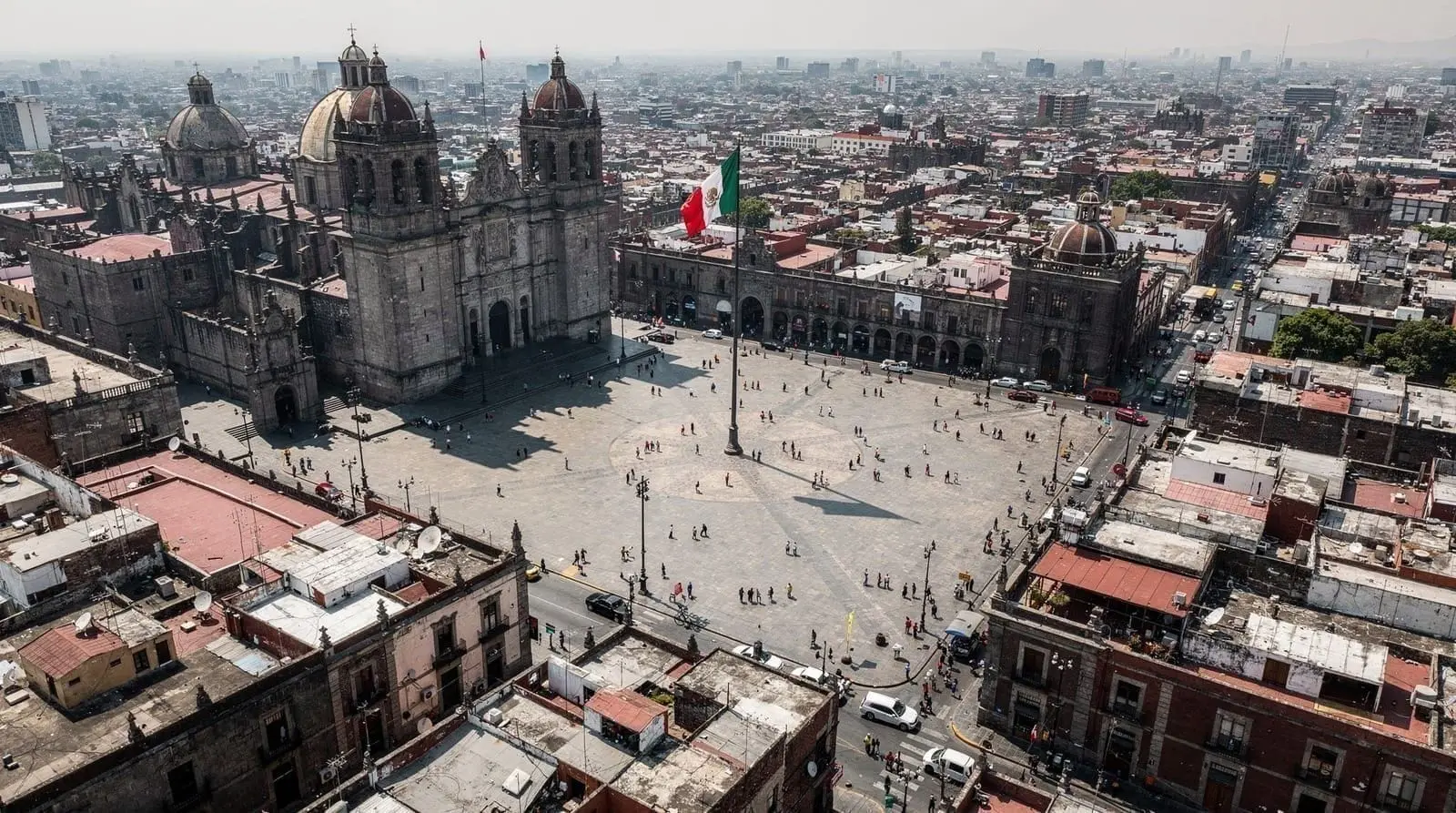
Day 1 — Centro Histórico and neighbourhood orientation Start at the Zócalo (one of the largest public squares in the world) and visit the Templo Mayor — the ruins of the main Aztec temple excavated right in the heart of the city. Walk to the Metropolitan Cathedral, then into the National Palace to see Diego Rivera’s famous murals depicting Mexican history. Lunch at a comedor in the neighbourhood. Afternoon: walk up to Torre Latinoamericana for the city overview, or simply wander the Madero pedestrian street. Evening in Roma or Condesa.
Day 2 — Teotihuacán This requires an early start. The pyramids are 50 km north and tours typically depart at 7:00–8:00 am. An early-access guided tour gets you there before the crowds and before the midday sun makes the site uncomfortable. Note that since 2024, climbing the pyramids is no longer permitted — the experience is now ground-level, focused on the Avenue of the Dead, the Pyramid of the Sun (which you walk around), and the excellent site museum. Back in the city by early afternoon for a gentle evening in Condesa.
Day 3 — Coyoacán and the Frida Kahlo Museum Book the Frida Kahlo Museum (Casa Azul) well in advance — it sells out weeks ahead during peak season. Spend the morning in the museum, then walk the streets of Coyoacán for lunch at the market, a coffee in the main plaza, and the local atmosphere. If time allows, the Coyoacán walking guide covers a route that takes in the church, the market, the Jardín Hidalgo, and the lesser-known corners of the neighbourhood.
The 3-day Mexico City itinerary has a detailed day-by-day schedule with exact venues and logistics.
4 days: adding Xochimilco and neighbourhood depth
Day 4 breaks cleanly into: morning at the National Museum of Anthropology in Chapultepec (one of the world’s great archaeology museums), afternoon in Roma browsing independent bookshops and having coffee, and an evening Xochimilco trip.
Xochimilco works best in the afternoon: take a trajinera (flat-bottomed boat decorated with flowers and a name) through the UNESCO-protected canal system, with on-water vendors selling food, beer, and occasionally mariachi services. The canals are 45–60 minutes south of Centro by Uber. The Xochimilco complete guide covers logistics and what to expect. Book a combined Xochimilco Fiesta and Coyoacán tour if you want to pair both southern neighborhoods in one efficient day.
The 4-day Mexico City itinerary has the logistics mapped.
5 days: the recommended minimum for a satisfying first visit
Five days is enough to see Tier 1 and most of Tier 2, with breathing room. Add one or two of the following to a base 4-day structure:
- A morning food tour in Centro (La Merced market, street tacos at the stalls near Mercado San Juan) — the best food tours guide has operator comparisons
- Chapultepec Castle for the Maximilian-era history and the city views from the battlements
- A lucha libre evening at Arena México or Arena Coliseo (Fridays/Tuesdays/Sundays depending on the venue)
- San Ángel on a Saturday for the Bazar del Sábado antiques and art market
The 5-day Mexico City itinerary is the most fully developed of the planning guides and includes specific restaurant and transport recommendations.
7 days: day trips and a second layer of the city
At seven days, the question shifts from “what to see in the city” to “what day trips to add.” The city itself rewards slower exploration — a week lets you revisit a neighbourhood on different days and at different times of day, which completely changes the experience.
Day trips that work well from Mexico City:
Tepoztlán (90 km south): a colonial pueblo mágico below a spectacular pyramid-topped mountain. A morning hike to the pyramid, lunch in the market, back by late afternoon. Good for: magic towns, hiking, escaping the city.
Puebla and Cholula (130 km east): UNESCO-listed baroque city with 365 church domes, the covered Cholula pyramid, and Puebla’s renowned food scene (mole poblano, chiles en nogada). Good for: colonial architecture, gastronomy.
Taxco (170 km southwest): the silver capital of Mexico on a dramatic hillside. Colonial cobblestone streets, silver workshops, the spectacular Santa Prisca church. Longer drive (2.5 hours) but a very different city from CDMX. Good for: colonial architecture, silver shopping.
The 7-day Mexico City itinerary incorporates two day trips with city days distributed to avoid rushing.
The case for going slower
One of the consistent reports from experienced Mexico City visitors is that the city rewards time spent without a schedule. Sitting in Parque México in Condesa on a Sunday morning, watching families, dogs, and roller skaters, costs nothing and teaches you more about how the city works than a fifth museum visit. The Roma and Condesa neighbourhood guide captures this unhurried character better than any structured itinerary.
Similarly, Coyoacán has layers that only emerge on a second walk through — the craft stalls behind the market, the quieter streets away from the tourist core, the excellent independent bookshop across from the church. A week in Mexico City spent mostly in two or three neighbourhoods often produces better memories than the same week spread thin across twelve attractions.
This is also where longer trips (8–10 days or more) start to make sense, even though most planning guides stop at seven. Beyond a week, the marginal value shifts from “seeing more things” to “understanding the city better” — a second Coyoacán walk at a different time of day, returning to a favourite Roma café, or finally getting to San Ángel on the one Saturday it’s open for the Bazar del Sábado. If you have the time, don’t feel obligated to fill every extra day with a new day trip; some of the best extended-stay feedback comes from travellers who deliberately left days unplanned.
Practical factors that affect pacing
Altitude: At 2,240 m, the first 48 hours may produce mild fatigue or headaches. See the altitude guide for practical advice. Plan lighter activities on day one — a neighbourhood walk, a market visit — rather than immediately heading to Teotihuacán.
Transport time: Mexico City is large. Getting from Chapultepec and Polanco to Xochimilco takes 45–60 minutes. Getting to Teotihuacán takes 50–70 minutes. A day that includes two geographically distant elements will feel rushed. The getting around guide covers metro vs. Uber tradeoffs for different trip lengths.
Booking lead time: The Frida Kahlo Museum requires advance booking — often weeks ahead in March–April. Teotihuacán early access tours sell out quickly. Budget 2–3 days minimum for popular attraction bookings, more during peak season.
Matching trip length to traveller type
Not every trip-length decision comes down to available vacation days — it also depends on what kind of visitor you are:
First-timer wanting the highlight reel: 4–5 days. This covers Tier 1 and most of Tier 2 without rushing and leaves at least one unstructured evening in Roma or Condesa.
Repeat visitor or slow traveller: 7+ days, weighted toward day trips and neighbourhood depth rather than ticking off new museums. The Puebla and Cholula day trip and Tepoztlán day trip reward this kind of trip.
Business traveller with a free weekend: 3 days, tightly scheduled. Pre-book everything — the Frida Kahlo Museum and Teotihuacán early access especially — since last-minute availability during the week is unreliable.
Family with children: 5 days minimum. Children need more downtime between big activities than the compressed 3-day plan allows. The Mexico City with kids guide and the dedicated family itinerary build in that slack deliberately.
Whatever the trip length, some travellers would rather not build a fixed itinerary at all. A private tour guide with multiple itinerary options lets you settle the pacing and the neighbourhood mix on the day, which suits business travellers squeezing in sightseeing around meetings and families who need to adjust plans around a tired child just as much as it suits slow travellers who simply prefer not to plan in advance.
Frequently asked questions about Mexico City trip length
Can you do Mexico City as a long weekend?
A long weekend (Friday–Monday, 3 nights) covers the basics if you are organized. Fly in Thursday night, do Centro and Templo Mayor Friday, Teotihuacán Saturday, Coyoacán/Frida Kahlo Sunday. You will not see Xochimilco, Chapultepec, or Condesa properly, but you will have a meaningful experience. Pre-book everything.
Is a week too long in Mexico City?
Not for most people. A week gives you room to enjoy the city rather than race through it, add two day trips, and have a few evenings without a fixed plan. The 7-day itinerary is well-paced and includes genuine breathing room.
How many museums can you realistically visit per day in Mexico City?
One large museum or two small ones is usually enough. The National Museum of Anthropology alone deserves 3–4 hours; visiting it on the same day as the Templo Mayor and Chapultepec Castle is ambitious. Prioritise depth over breadth.
Is Mexico City a good family destination?
Yes. See the Mexico City with kids guide for a dedicated family itinerary. Xochimilco is genuinely fun for children, the Anthropology Museum has interactive exhibits, and the city’s food scene easily accommodates fussy eaters (tacos, quesadillas, and fresh fruit are everywhere).
Should I take a hop-on hop-off bus for orientation?
A Turibus hop-on hop-off 1-day pass is genuinely useful for geographic orientation on a first full day, covering the main circuit from Centro through Reforma and Polanco. It is not a replacement for neighbourhood walking but it gives you a mental map of the city’s layout before you start navigating independently.
Is 2 days in Mexico City enough?
Two days is enough to see a highlight or two, but you will feel rushed and miss the real texture of the city. Centro Histórico and Coyoacán/Frida Kahlo in two days is doable but leaves Teotihuacán, Xochimilco, and every neighborhood experience unvisited. If you only have 2 days, be selective rather than trying to sprint through a checklist.
What can you realistically do in 3 days in Mexico City?
Day 1: Centro Histórico and Zócalo (Templo Mayor, cathedral, Diego Rivera murals in the National Palace). Day 2: Teotihuacán early access tour. Day 3: Coyoacán and the Frida Kahlo Museum. That covers the headline trinity but leaves Chapultepec, Xochimilco, the food scene, and neighborhoods like Roma and Condesa barely touched.
What does a 5-day Mexico City trip cover?
Five days allows the core three-day itinerary plus Xochimilco and Chapultepec, with time for neighborhood wandering in Roma and Condesa, a food tour, and one evening of lucha libre or mezcal. That is a satisfying and unhurried first visit.
When is the best time to visit for a longer trip?
See the full seasonal breakdown in the best time to visit guide. But in terms of length: a longer trip in the rainy season (June–October) is highly viable — the afternoon rain fills naturally into a post-lunch museum window, and lower prices justify the extra nights.
Is Mexico City exhausting to visit?
The altitude (2,240 m) adds a fatigue factor, particularly in the first 48 hours. Plan lighter activities on day one — a neighborhood walk rather than the pyramids. See the altitude guide for practical acclimatisation advice. Beyond altitude, the city is large but its main tourist neighborhoods are compact and walkable.
How far apart are the main attractions?
Centro Histórico to Coyoacán: 30–40 minutes by Uber (12–15 km). Centro to Teotihuacán: 50–60 minutes by car (50 km north). Xochimilco to Centro: 45–60 minutes. Roma and Condesa are adjacent and 15–20 minutes from Centro by metro or Uber. Chapultepec is 20 minutes from Roma on foot or 10 by Uber.