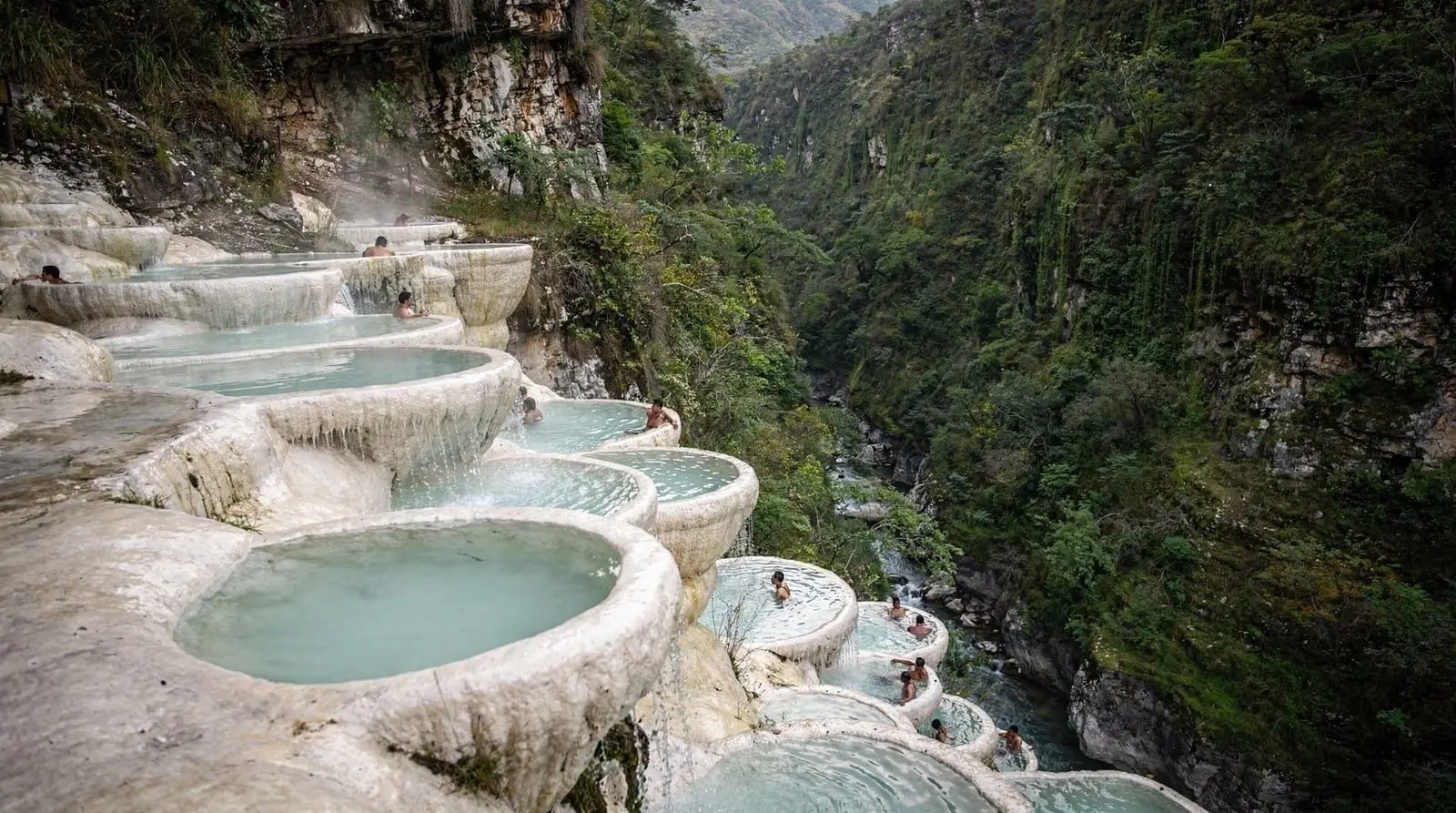
Tolantongo
Tolantongo's turquoise river canyon, hot spring pools, Grutas cave, and hanging pools. Everything you need to know before visiting from Mexico City.
From Mexico City: Tolantongo Caves Small Group Tour
Duration: 14 hours
Quick facts
- Altitude
- 1,600 m / 5,249 ft (canyon site)
- Currency
- Mexican peso (MXN) — limited card acceptance on-site
- Best for
- Turquoise hot spring pools, cave grottos, river canyon, overnight camping
- Getting there
- 3.5–4 hrs from Mexico City (car or organised tour); public buses available but indirect
The turquoise canyon that requires planning to get right
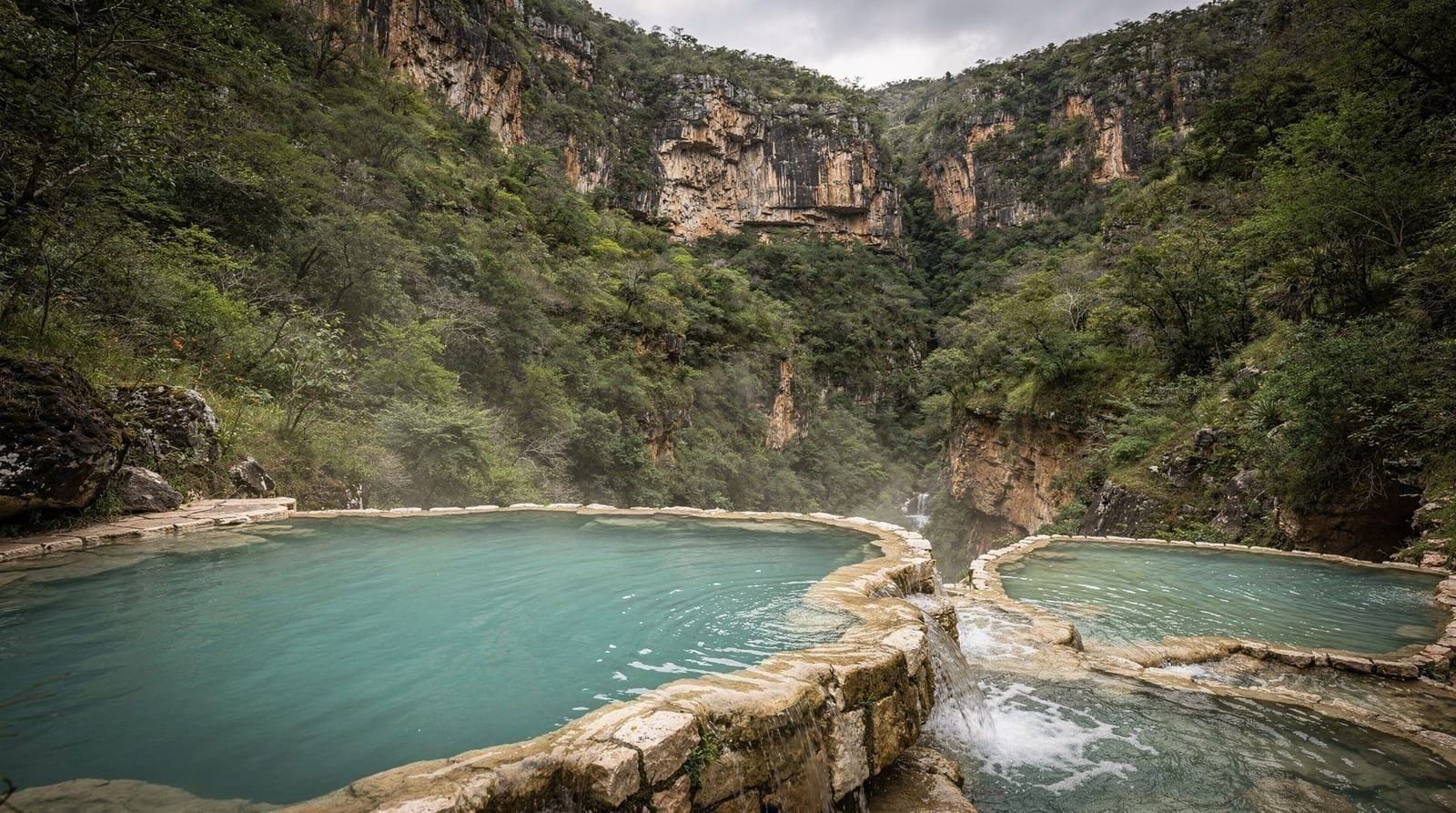
Grutas de Tolantongo is a natural site in a canyon in the state of Hidalgo, approximately 200 km north of Mexico City, where a thermal river emerges from a limestone cave system and flows through a series of pools before joining the Tula River in the canyon below. The water is turquoise-blue from mineral content, thermally heated to approximately 34–38°C, and the pools are set into the canyon walls and rocky ledges — an arrangement that produces the visual combination of turquoise water, basalt cliffs, and semi-tropical vegetation that makes Tolantongo one of the most photographed natural destinations in central Mexico.
The site is managed by the local Ejido (communal land) of San Cristóbal Ecatepec, which has developed it incrementally over decades. The result is functional but not luxurious: concrete pool structures with varying levels of maintenance, a cave system accessible by wading or walking, a river valley with rock pools, and basic accommodation (cabins and camping) for overnight stays. The appeal is the natural setting, not any resort-level polish.
The biggest logistical challenge is the distance: 200 km from Mexico City, but the journey takes 3.5–4 hours because the final stretch involves mountain roads with significant curves. Tolantongo is most enjoyable as an overnight stay — arriving before midday, having the site in the afternoon, evening and next morning, then departing — rather than as a rushed day trip.
| Where | Hidalgo state, ~200 km / 3.5–4 hrs north of Mexico City |
| Cost | Around 100–150 MXN entry; cabins from ~800–1,500 MXN/night |
| Time needed | 1–2 days (overnight recommended over a rushed day trip) |
| Getting there | Car or organised small-group tour; public bus + combi via Ixmiquilpan is feasible but indirect |
| Best time | Weekday mornings, Oct–May dry season for clearest turquoise water |
What’s at the site: three zones
La Gruta (The Cave): The main thermal cave is the centrepiece. A limestone cave of approximately 150 metres that you enter on foot, wading through knee-deep thermal water, with a waterfall at the far end. The water temperature inside the cave is approximately 36–38°C. The experience is quite dark — the cave’s interior sections have minimal artificial lighting, and the steam from the warm water reduces visibility. It is atmospheric and slightly disorienting, which is part of the appeal. The cave can be crowded on weekends with queues at the entrance; weekday mornings have it nearly to yourself.
La Pila (Hanging pools): Above the main cave entrance, a series of terraced concrete pools have been built into the cliff face, fed by the thermal springs. These are the most photographed part of Tolantongo — the pools overflow into each other and the lower ones cascade down the cliff face. On weekdays they are tranquil; on weekend afternoons they fill with day-trippers from Mexico City and the mood becomes more festive than contemplative.
El Río (The river valley): Below the cave and pools, the thermal water joins a natural river that flows through the canyon floor. The river section has natural rock pools formed by the river’s flow over decades. This area is less developed and less visited than the cave and hanging pools — and for visitors who prefer a more natural experience without concrete pool edges, it is the best part of the site.
Overnight versus day trip
The honest recommendation is to stay overnight. The site has cabins (from approximately 800–1,500 MXN per night for a basic double) and camping areas. Arriving at 12:00 on a Saturday, day-trippers from Mexico City will be arriving simultaneously; the site gets crowded from 11:00–16:00 on weekends. An overnight stay means you have the cave and pools to yourself from 7:00–9:00 on both days, which is a substantially better experience than any crowded midday visit.
The Tolantongo caves small-group day tour from Mexico City handles transport and provides a guide — the most practical day-trip approach for visitors without a car. The tour departs early (typically 6:00–7:00) to arrive before midday crowds. The Tolantongo hot springs and natural pools day trip is an alternative tour option with similar logistics. Travellers who’d rather book a straightforward round trip with fixed pickup and drop-off can also choose the Grutas de Tolantongo day trip from Mexico City, which covers the same return transport as a standalone option. For travellers set on the overnight approach, the Tolantongo private adventure tour offers more flexible timing and a private vehicle instead of a shared group departure.
Because the trip eats so much of a day, it helps to place it deliberately in your wider plan. Travellers with a short stay are better served by the Mexico City weekend itinerary or the 3-day itinerary, which stay in the city. Those with more time can slot Tolantongo into the 4-day itinerary as a single overnight away. If you are weighing the trip against the capital’s own attractions, the Mexico City itinerary guide explains how many days each kind of plan realistically needs.
Getting there independently
Driving from Mexico City: Take the Mexico City–Pachuca toll highway, then the Ixmiquilpan road, then follow signs toward San Cristóbal Ecatepec/Tolantongo. The final 25 km from the highway junction involves steep mountain switchbacks; the road is paved but requires careful driving. Total drive time is approximately 3.5–4 hours from Mexico City centre. Toll costs approximately 180–220 MXN each way.
By public transport: Take the Metro to Autobuses del Norte terminal, then a bus to Ixmiquilpan (approximately 2.5 hours, 120–150 MXN), then a shared taxi or combi from Ixmiquilpan to the site (45 minutes, 80–120 MXN). Return combis run until approximately 17:00. This is feasible but requires navigating connections at Ixmiquilpan without fixed schedules.
Practical information
Admission: The site charges per-person entry fees set by the Ejido: approximately 100–150 MXN per adult as of recent visitor reports (fees increase periodically). Weekend fees are sometimes higher than weekdays. Cash only at the entry gate — bring MXN in small bills.
What to bring: Swimwear (essential), towel (towels are rented at the site but bringing your own is cheaper), water shoes or sandals that can get wet (the cave floor is rocky), waterproof bag for electronics, sunscreen (the pools on the cliffs are exposed), cash in pesos, and enough food and water for the day (the site’s food concessions are limited).
Water safety: The thermal water is safe for bathing. Do not drink the water. The river valley section after heavy rains can run high and fast — avoid the river pools during or immediately after significant rainfall.
Photography: The site is extremely photogenic. The best light for photography is morning (7:00–10:00) when the sun hits the cliff faces from the east. Weekend afternoon light is less flattering and the pools are more crowded.
The complete Tolantongo guide has current entry prices, accommodation options, and detailed logistics for both day trips and overnight stays.
Before you set out, a few city-side details are worth sorting out. The getting around Mexico City guide covers the Metro and rides to the northern bus terminal, and the guide to the weather month by month helps you judge whether the rainy months will affect your dates. Visitors arriving from the capital’s high altitude may also want to read the altitude guide, since a hot soak after a long drive can feel more tiring than expected.
What to know about the Ejido and the site’s management
Tolantongo is managed by the Ejido San Cristóbal Ecatepec, a communal land organisation that has developed the site incrementally over several decades without outside investment or government management. This structure means that prices, facilities, and rules can change without much advance notice. The Ejido has periodically closed the site for renovation, restructured the entrance fee system, and changed opening hours — current information from the Ejido’s own social media accounts (they maintain a Facebook page) is more reliable than travel blog posts from more than six months ago.
The relationship between visitors and the site is more directly communal than at a INAH-managed archaeological site: fees go to the Ejido, local families work as site staff and food vendors, and the development decisions reflect local priorities. This is generally a positive dynamic — the site feels genuinely local rather than managed for an international tourism market — but it also means the visitor experience is less standardised than at more professionalised sites.
Swimming and water conditions
The thermal pools at La Pila and the cave at La Gruta are safe for swimming. The cave’s temperature (36–38°C) can feel hot for some visitors; most people spend 20–30 minutes inside before the warmth becomes uncomfortable. The river section has variable depth and some current — the natural pools on the canyon floor are safer for non-swimmers than the open river sections.
Avoid visiting the river valley sections immediately after heavy rain (June–September is rainy season): water levels rise, visibility drops, and the current can be dangerously strong. The hanging pools (La Pila) are fed directly by the springs and are safe year-round, but the aesthetic quality is best in dry season (October–May) when the water is clearest and most turquoise.
Combining with other Hidalgo destinations
The state of Hidalgo has several natural attractions that work in combination with Tolantongo. Peña del Bernal (a 433-metre monolith near the town of Bernal) is 150 km west. The mezcal town of Ixmiquilpan, which you pass through on the way to Tolantongo, has a remarkable 16th-century Augustinian monastery with indigenous murals.
The Toltec ruins at Tula sit on the same general route north from Mexico City, so travellers with a car sometimes stack the two into one ambitious weekend rather than two separate trips. For a multi-day Hidalgo itinerary, the 7-day Mexico City itinerary includes Tolantongo alongside the northern day trips; the 5-day itinerary fits it in as a single overnight add-on for travellers with a bit more flexibility.
How Tolantongo compares with Mexico City’s other nature escapes
Tolantongo is one of several out-of-town nature options travellers weigh against each other, and the honest comparison saves a lot of second-guessing.
| Destination | Distance from CDMX | What it offers | Best for |
|---|---|---|---|
| Tolantongo | 3.5–4 hrs | Turquoise thermal pools, cave, canyon | Hot springs, overnight nature escape |
| Valle de Bravo | 2.5–3 hrs | Lake town, water sports, monarch butterflies (Nov–Feb) | Colonial-town weekend, lake activities |
| Xochimilco | ~30–45 min | Canals, trajineras, chinampas | Half-day, no overnight needed |
Tolantongo demands the biggest time commitment of the three but delivers the most distinctive natural setting — nothing else on this list has turquoise thermal water in a canyon. If your time is limited to a half day, Xochimilco is the realistic choice; Tolantongo needs at least an overnight to be worth the drive. The best day trips from Mexico City guide has the fuller comparison across all the northern and western options, including Tula and Puebla-Cholula.
Frequently asked questions about Tolantongo
Is Tolantongo appropriate as a day trip from Mexico City?
Feasible but long. The drive is 3.5–4 hours each way, meaning a day trip involves 7–8 hours of driving for 4–6 hours at the site. If you arrive by 11:00 and depart by 16:00, you have a reasonable visit. But the experience is substantially better as an overnight — both the morning light and the absence of midday crowds make it worth the extra night. An organised tour with early departure makes the day trip more manageable.
What is the water like at Tolantongo?
The water is a natural thermal mineral water at approximately 34–38°C in the pools and cave. The turquoise colour comes from dissolved calcium carbonate and other minerals. The water is clear enough to see the bottom in most of the pools. After heavy rain, the mineral content and clarity can be reduced; dry season (October–May) gives the clearest, most turquoise water.
Are there changing rooms and lockers at the site?
Yes, there are basic changing facilities near the main pools. Lockers or storage for valuables is limited; the safest approach is to leave non-essentials (passport, extra cash) in a locked car or secured bag, and take only what you need for the pools.
Is the cave (Gruta) accessible for all fitness levels?
The cave is accessible for most people who can walk on uneven wet surfaces and are not claustrophobic. You wade through knee-deep water on a rocky floor in low light. Elderly visitors and those with knee problems should assess carefully. The cave is not suitable for young children who cannot walk reliably in water.
What should I expect from the food at the site?
The site has basic food vendors selling tacos, quesadillas, grilled meats, and drinks at slightly above-standard prices (typical rural tourist markup). The quality is fine for a casual meal but not worth specific planning. If you are staying overnight, bringing supplies for at least one meal is practical.
Is Tolantongo safe?
Yes, the site is managed by the local Ejido and is well-established. The roads through Hidalgo state are normal Mexican rural roads — drive in daylight and don’t drive on the mountain section after dark. The site itself has no specific safety issues beyond standard water safety precautions.
Top experiences
Bookable activities with verified prices and instant confirmation on GetYourGuide.