Xochimilco complete guide: canals, trajineras and what to actually expect
Mexico City: Xochimilco Traditional Boat Tour, Culture and Fun
What is Xochimilco and how do you visit it?
Xochimilco is Mexico City's ancient canal network — a UNESCO World Heritage site 28 km south of the city center. You hire a trajinera (flat-bottomed wooden boat), drift through floating gardens, and have mariachis, food vendors and other boaters come alongside. A 2-hour trajinera hire costs about 300–600 MXN. Weekends are loud party territory; weekday mornings are calm and ecological.
What Xochimilco actually is
Xochimilco sits in the southeast of Mexico City, 28 km from Centro Histórico. What it contains is one of the most significant surviving landscapes in the Americas: the last remnant of the network of freshwater lakes and canals that covered the Valley of Mexico before the Spanish filled most of them in. The Aztec capital Tenochtitlan (now downtown Mexico City) was built on an island in this lake system and provisioned by agricultural islands — chinampas — just like those at Xochimilco.
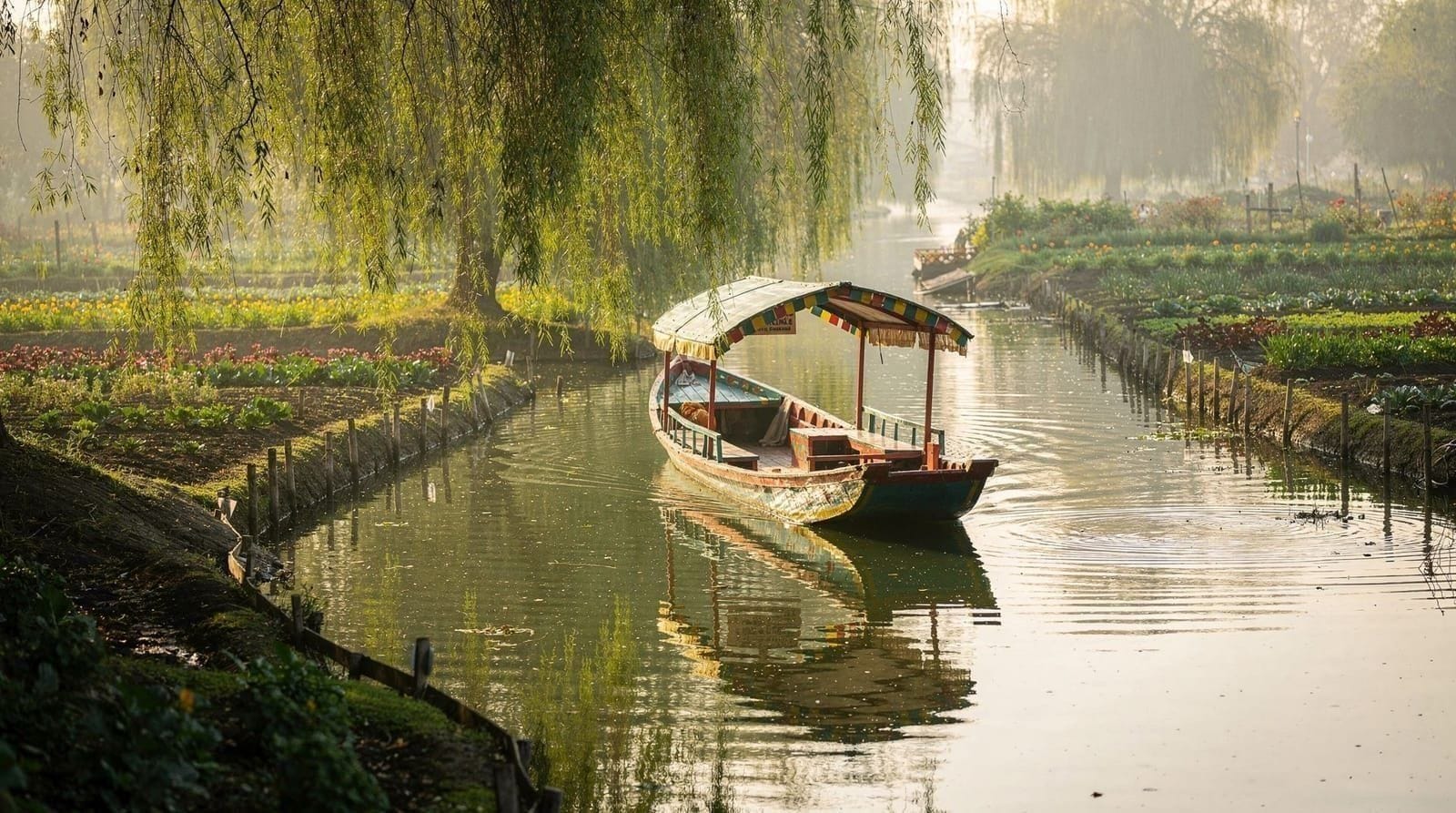
Today Xochimilco’s canal system covers roughly 180 km of navigable waterways through floating garden islands still farmed by local families. It was declared a UNESCO World Heritage Site in 1987 and is also an Important Bird Area. It is the only habitat in the world where the wild axolotl survives, though critically.
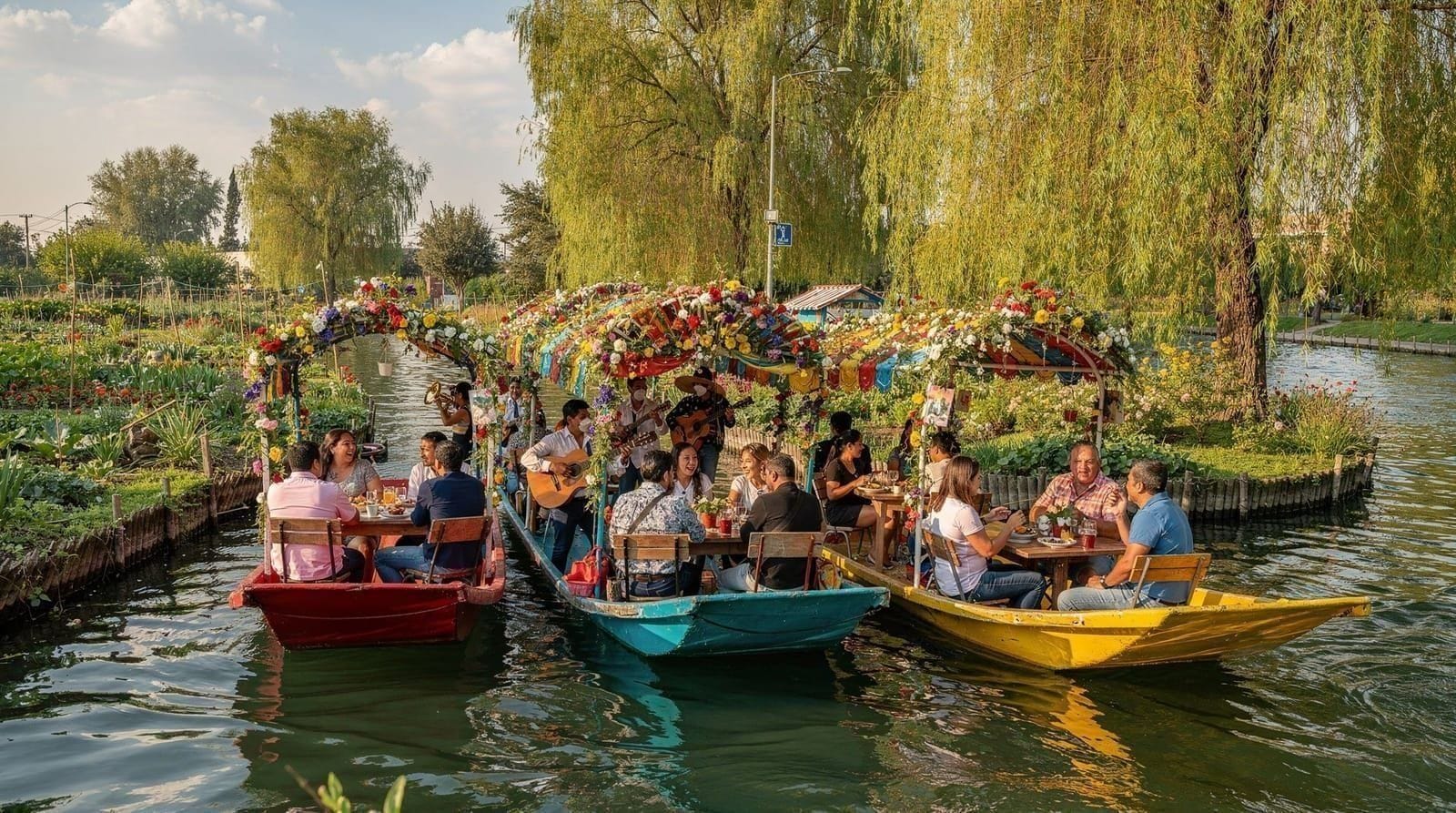
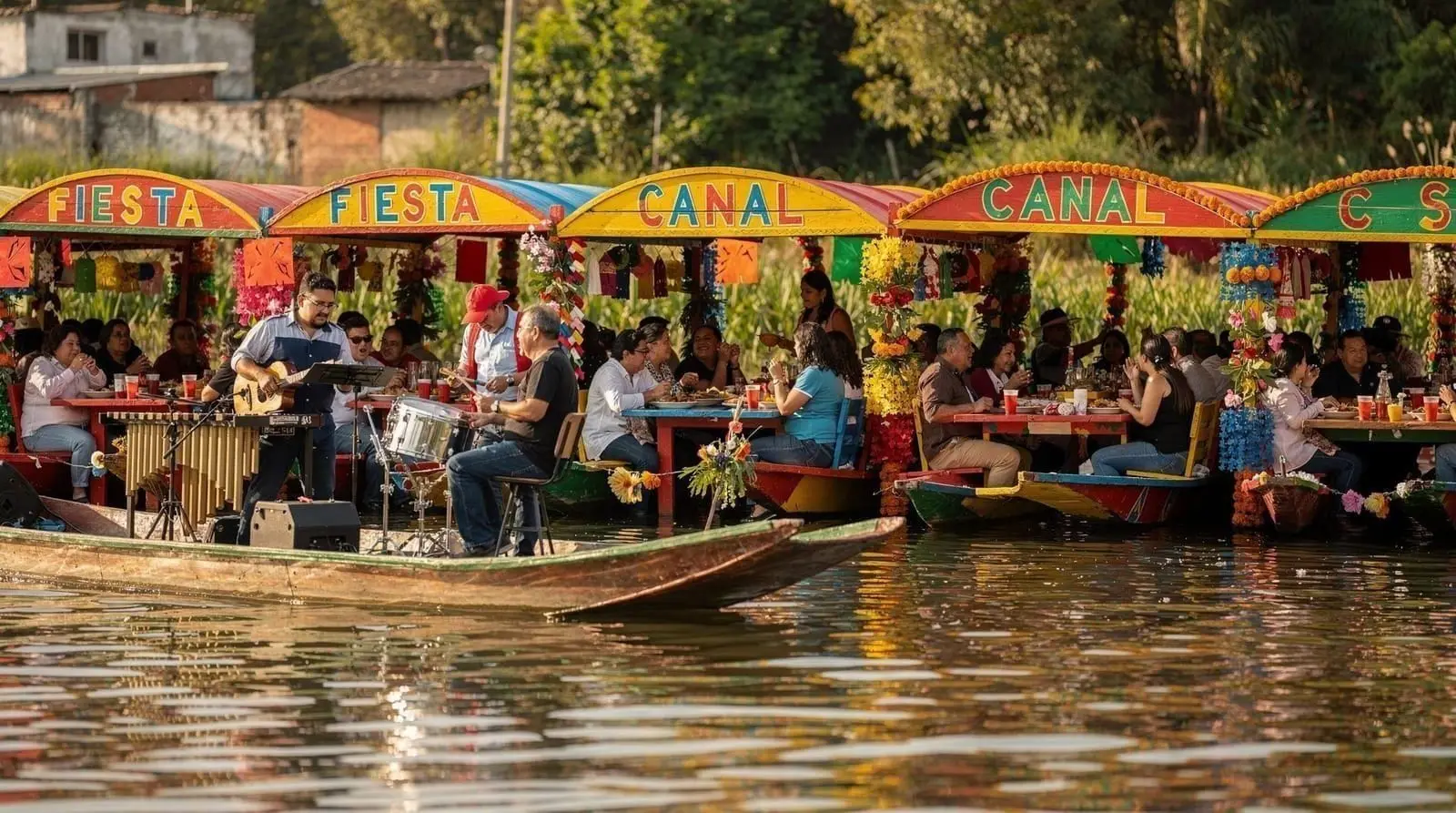
For most Mexico City visitors, Xochimilco means a morning or afternoon on a trajinera — a painted flat-bottomed wooden boat — drifting through the canals while vendors pull alongside selling food, drinks, flowers and the services of mariachi bands. This is a legitimate and enjoyable experience, but it’s also heavily concentrated in the tourist sections of the canal network around a few main embarcaderos.
The broader Xochimilco — the ecological zone, the farming communities, the bird life — is an entirely different visit. Full logistics on hiring a boat, rates and negotiation live in the companion Xochimilco trajinera guide; this page covers the wider picture — what Xochimilco is, its two very different visitor experiences, and how to plan the day around it.
| Where | 28 km southeast of Centro, Xochimilco borough |
| Cost | Trajinera hire around 300–900 MXN (whole boat, up to 20 people) |
| Time needed | 2–3 hours on the water; half a day with travel |
| Getting there | Metro Line 2 + tram, or Uber ~100–150 MXN from Roma |
| Best time | Weekday mornings (calm) or weekend afternoons (fiesta) |
The tourist experience vs. the ecological zone
Xochimilco has two distinct visitor experiences that operate almost independently:
The tourist canal circuit runs from the main embarcaderos (Fernando Celada, Nativitas) through a network of decorated canals crowded on weekends with trajineras carrying Mexican families celebrating birthdays, quinceañeras, and baptisms alongside international tourists. This is festive, noisy, and culturally authentic in its own way — it reflects how Chilangos (Mexico City residents) actually use Xochimilco. Vendors on small boats come alongside selling everything from corn on the cob to full quesadilla plates to chilled beers. Mariachis will board your boat and play for a tip. This is the default Xochimilco experience.
The ecological canal circuit departs from Cuemanco embarcadero or specific eco-tour operators and enters the quieter canal networks to the east and south. These canals pass working chinampas with crops, birding areas, and the Xochimilco Ecological Park. The axolotl sanctuary is accessible from here. This experience suits visitors interested in the pre-Columbian agricultural landscape and the biodiversity rather than the fiesta atmosphere.
The two don’t overlap much. Booking the right type of tour for your interests matters.
Getting to Xochimilco from central Mexico City
Xochimilco is at the southern end of Metro Line 2 (pink line), though the Metro station is about 3 km from the main embarcadero. From the Xochimilco Metro station, take the tranvía (light rail tram) about 10 minutes to the Mercado de Xochimilco or walk 25–30 minutes.
From Roma or Condesa by Uber/DiDi: approximately 100–150 MXN and 40–60 minutes depending on traffic.
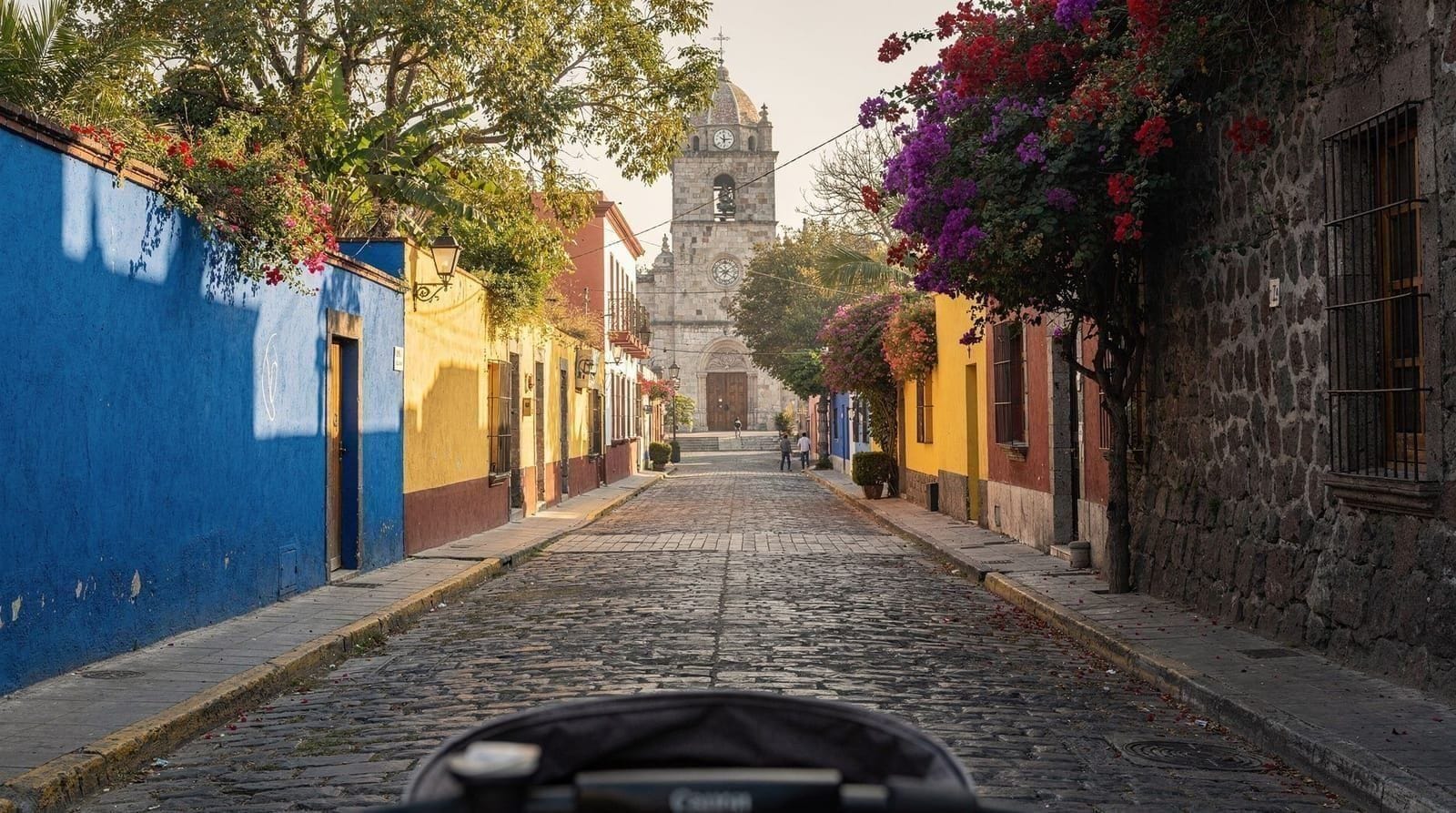
Many visitors combine Xochimilco with Coyoacán (the colonial neighborhood with Frida Kahlo’s Casa Azul) in a single day — see the Coyoacán walking guide for that neighborhood. Both Xochimilco and Coyoacán are served by the Metro and lie in the same general south part of Mexico City.
Organized tours from central Mexico City include transport: the Xochimilco traditional boat tour includes transport and a guided trajectory through the main canal network.
Hiring a trajinera independently
If you arrive independently at the main embarcadero (Fernando Celada, near the town center), the process is:
- Approach one of the oficial (licensed) boat operators at the dock
- Agree a route and price — standard rates are posted, but negotiation is normal
- Board your trajinera
- The boatman (trajinero) poles or paddles the boat; no additional charge for his service beyond the hire fee
- Tip the trajinero at the end (50–100 MXN is reasonable for a good 2-hour trip)
Rates (approximate, 2026):
- Short circuit (1.5 hours): 300–400 MXN on weekdays, 500–700 MXN on weekends
- Standard circuit (2 hours): 400–600 MXN on weekdays, 600–900 MXN on weekends
- Island of the Dolls (3–4 hours from Fernando Celada): 1,200–1,800 MXN
These prices are for the entire boat (up to 20 people). A group of 4 splits the cost to 100–200 MXN per person for the standard circuit — very affordable.
Warning: Unlicensed boats at unofficial embarcaderos charge less but have no safety oversight. Use the officially designated landing areas.
What happens on the water
The first 20 minutes of a standard tourist circuit are canal navigation through the main embarcadero area — busy with other trajineras, motor launches, and the constant traffic of vendor boats. By 30 minutes in, the canal opens up slightly and the flowering gardens appear. The iconic images of colourful trajineras passing under flower arches are real, though they require some selective framing to capture without other boats in the background.
Vendors will approach your boat constantly. They are working people earning a living; a polite “no gracias” is sufficient. Common purchases worth considering:
- Elotes (corn): grilled corn on the cob with cheese, chili and lime. 40–50 MXN. Genuinely good.
- Quesadillas and memelas: made on a comal on the vendor boat. 30–50 MXN each. This is authentic Xochimilco food.
- Cold drinks and beers: 30–40 MXN. Bring your own water but buying drinks from vendors is part of the experience.
- Flowers: Xochimilco is a major cut flower production area for Mexico City; buying flowers is seasonally appropriate and cheap.
What to skip:
- Overpriced tourist trinkets
- “Authentic pulque” shots at 80–100 MXN from boats
Mariachi boats: Mariachi bands on separate trajineras will come alongside and offer to play. A standard song is 100–150 MXN per song. If you want mariachi music, this is legitimate; if not, a polite wave-off is sufficient.
The Island of the Dolls
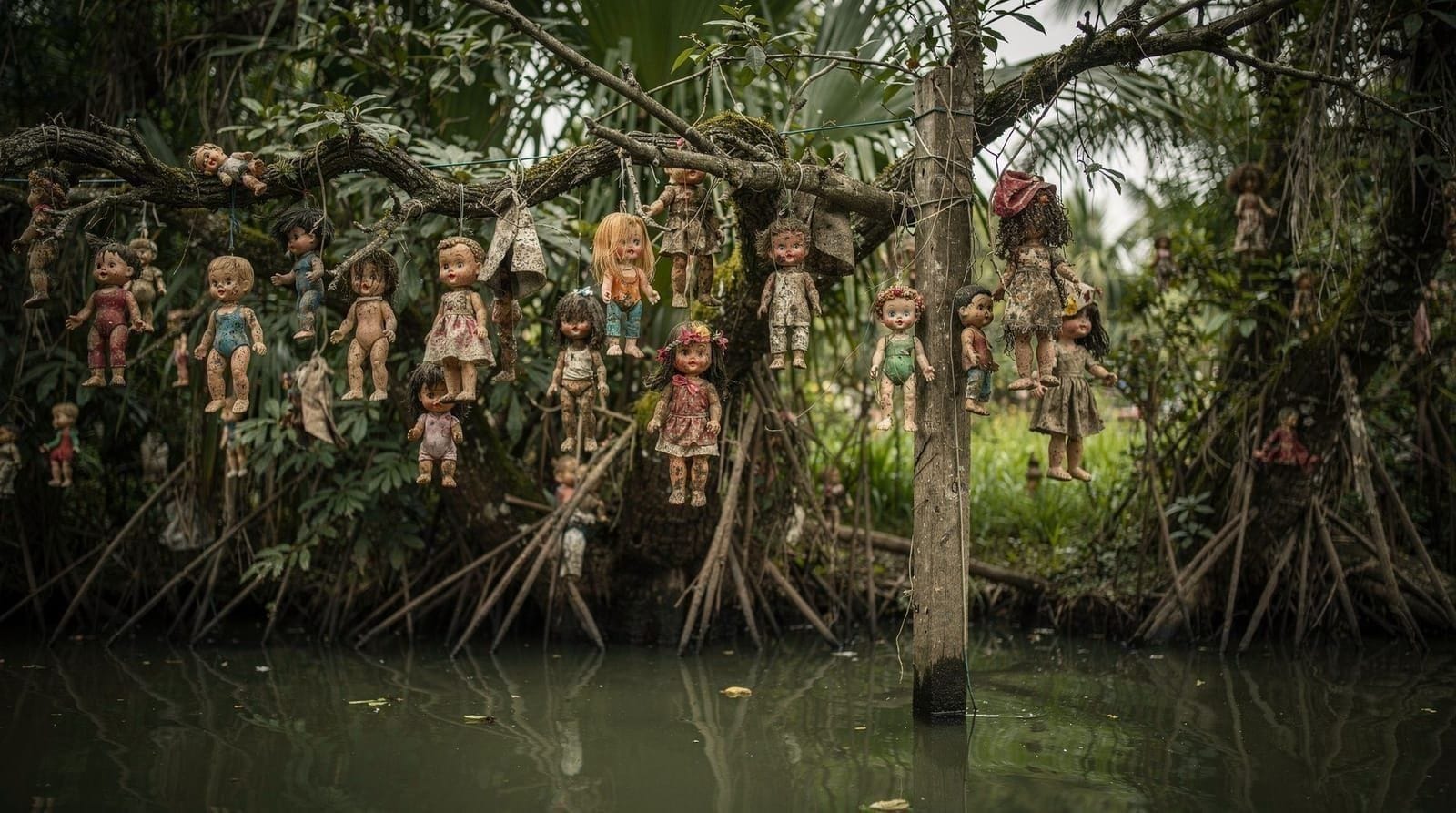
The Isla de las Muñecas (Island of the Dolls) is a full separate section of the guide — see the Island of the Dolls guide — but the basics: it’s a chinampa hung with hundreds of deteriorating dolls, requiring a long trajinera journey to reach. Worth planning for if you have specific interest; not worth rushing through on a short general visit.
The boat tour specifically visiting the Island of the Dolls includes the longer journey to reach it from the main embarcadero.
Ecological Xochimilco: the other visit
For a very different experience, the ecological tour away from the tourist crowds takes a different route through working chinampa farms and quieter canal networks. These tours are typically run by organizations with conservation ties to the Xochimilco biosphere and last 2–3 hours.
What you see on ecological tours:
- Working chinampas growing flowers, herbs and vegetables
- Herons, egrets and other waterbirds feeding along canal edges
- Traditional farming methods (composting, pest management without synthetic inputs) at some farms
- The axolotl sanctuary area (though actual axolotl sightings are not guaranteed)
For visitors who want to prioritize the sanctuary itself rather than treat it as one stop among many, the Xochimilco boat tour with axolotl sanctuary routes specifically toward that area.
What you won’t see: the party atmosphere, the mariachis, the vendor boats.
Xochimilco through the year
| Season | Conditions | Best for |
|---|---|---|
| Nov–Feb (dry, cool) | Clear skies, cold mornings, no rain | Photography, comfortable all-day visits |
| Mar–Apr | Warm, dry, jacaranda bloom nearby | Flower Festival season, ecological tours |
| May | Hottest, dry | Early-morning visits to avoid midday sun |
| Jun–Oct (rainy season) | Warm, afternoon showers | Morning visits; bring a rain jacket |
| Late Oct–Nov 2 | Day of the Dead season | La Llorona boat show, festive canals |
Rainy-season afternoons (June–October) bring regular but usually short showers; the trajinera canopy gives partial shelter, and boats typically head back to the embarcadero early if rain is heavy. Scheduling before roughly 13:00 keeps the odds of a dry trip highest.
Late October through November 2 brings Xochimilco’s Day of the Dead season, when the canals take on a distinct festive character and the after-dark La Llorona boat performances run — see the trajinera guide for the details on that seasonal add-on.
Combining Xochimilco with Coyoacán
The classic south Mexico City day trip combines Xochimilco (2–3 hours on the water, morning start) with Coyoacán (Frida Kahlo’s Casa Azul, the Jardín Centenario, tamales at the market, afternoon wandering). The neighborhoods are about 8 km apart by car.
The Mexico City 3-day itinerary and 4-day itinerary both build this combination into the south CDMX day. Start Xochimilco at 10:00, finish by 13:00–14:00, then move to Coyoacán for the afternoon. For other ways to structure a day beyond the city centre, the best day trips from Mexico City guide covers the wider options, including Teotihuacán and Puebla.
Xochimilco with children
Xochimilco is excellent for children — the boat ride, the market foods, the vendor boats, and the novelty of the canal system all work well for families. See the Mexico City with kids guide for specific suggestions. The Xochimilco family-specific tour is designed with children in mind and is a good option if you want a structured experience without independent embarcadero navigation.
Key family tips: bring sunscreen (the canals offer little shade), bring snacks the children like rather than relying on vendor boats, and choose a weekday morning in rainy season to avoid afternoon showers on the water.
Photographing Xochimilco respectfully
The colourful trajineras and flower-hung canal edges are genuinely photogenic, but a few courtesies keep the experience good for everyone. Ask before photographing vendors or mariachi musicians directly — a tip is customary if they pose for you. Avoid blocking narrow canal passages for a shot; other boats need to pass. On the ecological circuit, keep noise down near bird-nesting areas, and don’t ask your trajinero to steer close to working chinampas just for a photo — the farmers are working, not part of a set.
Practical logistics
Opening hours: The main embarcaderos operate from approximately 08:00 to 18:00. Weekday mornings are quietest; Saturday afternoons are peak.
Entry fee: There is no park entry fee for the general canal area. The ecological park has a separate entry. Individual trajinera hire fees apply.
What to bring: Sunscreen and a hat (canals offer limited shade midday), cash (vendors and trajinera hire are cash transactions), comfortable shoes (you don’t do much walking but the embarcadero is a market area).
Drinking: You can bring your own drinks. Public consumption of alcohol is technically restricted but widely tolerated in the trajinera context.
Frequently asked questions about Xochimilco
Is Xochimilco worth it for just two hours?
A two-hour visit covers the main canal experience — the floating garden views, vendor boats, and the atmosphere. That’s the core Xochimilco experience and is entirely worthwhile. If you want to reach the Island of the Dolls or do an ecological tour, you need a minimum of 3–4 hours.
How crowded is Xochimilco on weekends?
Very. Saturday afternoons at Fernando Celada embarcadero can see hundreds of trajineras on the water simultaneously. This is actually part of the genuine experience — seeing Mexican families celebrating is culturally illuminating — but if you want photography with clear water and no other boats visible, come on a weekday morning.
Is there anywhere to eat near the Xochimilco embarcadero?
The Mercado de Xochimilco (central market) near the Fernando Celada embarcadero is excellent. Stalls serve tamales, tlayudas, memelas, and traditional foods from early morning. Eating at the market before or after the boat tour is recommended over eating only from vendor boats.
Do I need a guide for Xochimilco?
No, though a guide adds context about the chinampa system, the Aztec history, and the ecology. For the party-atmosphere weekend visit, no guide is needed — hire a boat and enjoy. For the ecological or historical experience, a guide is worthwhile.
How much does it cost to visit Xochimilco?
The trajinera (boat) hire is the main cost: approximately 300 MXN per hour on weekdays, 400–600 MXN per hour on weekends. Boats hold up to 20 people — a group splits the cost. Additional costs: vendor food and drinks on the water (40–80 MXN per item), and transport to Xochimilco from central Mexico City (Metro + tram about 10 MXN, Uber about 100–150 MXN from Roma).
What is the difference between the embarcaderos at Xochimilco?
The main tourist embarcadero is Fernando Celada, near the town center. It’s the liveliest and most organized. Cuemanco embarcadero, several kilometers east, is the starting point for ecological tours (quieter, chichinautzin biosphere access, axolotl sanctuary nearby). Nativitas is another popular alternative. Most organized tours use Fernando Celada or Cuemanco.
Is Xochimilco safe for tourists?
The canal area and embarcaderos are generally safe during daylight hours. On busy weekend afternoons, there are large crowds including groups drinking heavily. Petty theft (phone snatching from boats, pickpocketing in crowds) is the primary risk. Go with a group, keep valuables out of sight on the water, and use authorized boat operators. Arriving and departing via organized tour or rideshare app is recommended over taxis at the main embarcadero.
What are floating gardens (chinampas)?
Chinampas are man-made islands built by Aztec engineers by layering aquatic vegetation, mud and reeds in the shallow lake beds. The word ‘floating’ is a slight misnomer — they’re anchored to the lake floor by tree roots. They were the agricultural engine of the Aztec Empire, allowing year-round cultivation in what was otherwise open water. About 3,000 hectares of chinampas survive at Xochimilco, still farmed by local families.
Can you see axolotls at Xochimilco?
Axolotls (the aquatic salamander native to Mexico City’s lake system) survive in the wild only in the Xochimilco canal system. However, they are critically endangered and wild sightings are rare. The Xochimilco ecological zone has a conservation sanctuary where axolotls are bred and studied; some eco-tours visit the area, but seeing a wild axolotl is not guaranteed or even likely.
What is the Island of the Dolls?
The Island of the Dolls (Isla de las Muñecas) is a chinampa island hung with hundreds of deteriorating dolls by a local farmer, Don Julián Santana, who spent decades decorating the island in homage to the spirit of a girl he believed drowned nearby. Don Julián died in 2001 and the island is now a tourist attraction. It requires a dedicated longer trajinera journey (around 2 hours from Fernando Celada).
When is the best time to visit Xochimilco?
Weekday mornings (09:00–12:00) for a peaceful, ecological experience with local farmers and few tourists. Saturday and Sunday afternoons for the full party atmosphere with mariachis, vendors and crowded canals. Avoid weekend afternoons if you want quiet nature; avoid weekday mornings if you want the cultural fiesta experience.
Does it rain during a Xochimilco boat trip?
It can, particularly June–October, Mexico City’s rainy season. Afternoon showers are typical rather than all-day rain, and the trajinera’s canopy gives partial shelter. Morning visits (before roughly 13:00) are more likely to stay dry year-round. If heavy rain starts, boats generally return to the embarcadero early rather than continuing the full circuit.
Top experiences
Bookable activities with verified prices and instant confirmation on GetYourGuide.

Mexico City: Xochimilco Traditional Boat Tour, Culture and Fun
Mexico City: Xochimilco Serene - A Calm Cultural Escape from the Crowds

Mexico City: Xochimilco Boat Tour & The Island of the Dolls

Mexico City: Xochimilco for Kids and Families