Coyoacán walking guide: the best route through the neighbourhood
Coyoacan's Self-Guided Tour with Frida Kahlo Museum Tickets
What is the best walking route through Coyoacán?
Start at the Frida Kahlo Museum (book in advance), walk north to the twin plazas (Jardín Hidalgo and Jardín Centenario) for coffee and people-watching, cut through the covered market for lunch, walk east to León Trotsky's house, then south to Viveros de Coyoacán park. A full circuit including museum time takes 4–5 hours.
Why Coyoacán is different from the rest of Mexico City
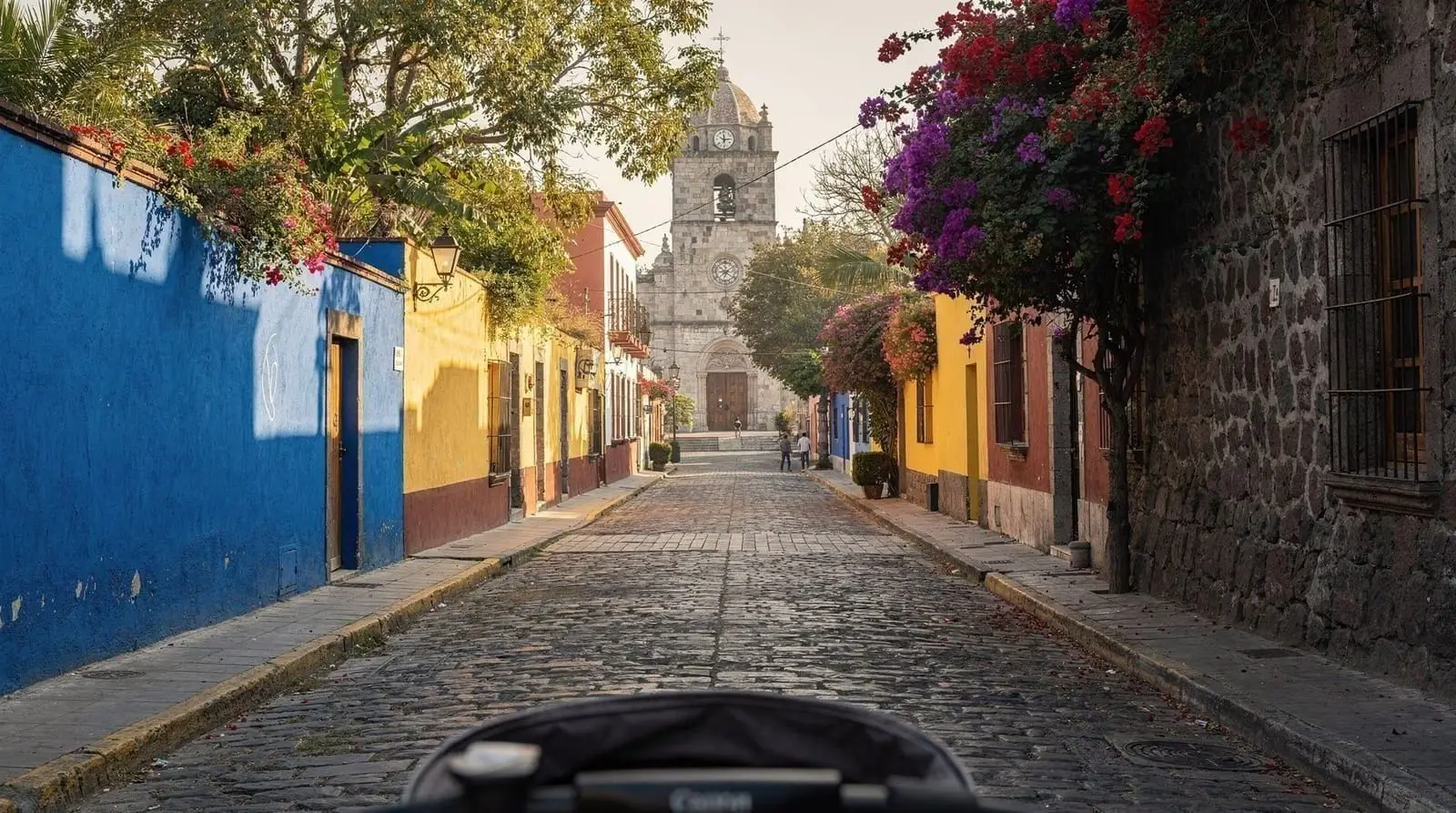
Coyoacán (roughly: “place of coyotes” in Nahuatl) was a separate town before Mexico City swallowed it during the mid-20th century urban expansion. The colonial-era layout — cobblestone streets, a central church and plaza, single-storey houses with tiled courtyards — survived the expansion in a way that most of the city’s older neighbourhoods did not. Walking Coyoacán, you are in a neighbourhood where the 16th century street plan still dictates your path.
This is the neighbourhood where Frida Kahlo grew up and died, where Diego Rivera built his extraordinary pyramid museum, where León Trotsky fled after Stalin’s expulsion orders, where Hernán Cortés established his base after the fall of Tenochtitlán. The density of historical layering is exceptional even by Mexico City’s standards.
The walking guide below covers two formats: a focused half-day (4–5 hours, built around the Frida Kahlo Museum and central area) and a full-day that extends to Viveros park, Trotsky’s house, and the Anahuacalli Museum.
| Where | Coyoacán, south CDMX, Metro Viveros (Line 3) |
| Cost | Free to walk; museums 50–80 MXN each |
| Time needed | 4–5 hrs half-day / 7–8 hrs full day |
| Getting there | Uber 25–40 min from Roma/Condesa |
| Best time | Weekday mornings for a local feel |
Getting to Coyoacán
From Roma or Condesa: Uber or DiDi is the easiest — 25–40 minutes, 80–120 MXN depending on traffic. Book from your accommodation or hotel.
From the metro: Line 3 (olive/dark green) to Viveros/Derechos Humanos station, then a 20-minute walk east through Viveros park to the main plazas. This is a genuinely pleasant arrival route and warms you up for the neighbourhood atmosphere.
From Centro Histórico: Uber, 30–40 minutes.
Route summary at a glance
| Stop | Duration | Notes |
|---|---|---|
| Frida Kahlo Museum | 1.5–2.5 hrs | Book ahead |
| Plazas (Hidalgo/Centenario) | 30–45 min | Coffee stop |
| Coyoacán Market | 45–60 min | Lunch |
| El Jarocho Coffee | 20 min | Full-day extension |
| Trotsky House Museum | 1–1.5 hrs | Full-day extension |
| Viveros de Coyoacán | 30–45 min | Full-day extension |
| Anahuacalli Museum (optional) | 1–1.5 hrs | 10 min Uber detour |
The half-day route (4–5 hours)
Stop 1: Frida Kahlo Museum / La Casa Azul
Address: Londres 247 (corner of Allende) Duration: 1.5–2.5 hours Booking required: Yes — see the Frida Kahlo Museum guide
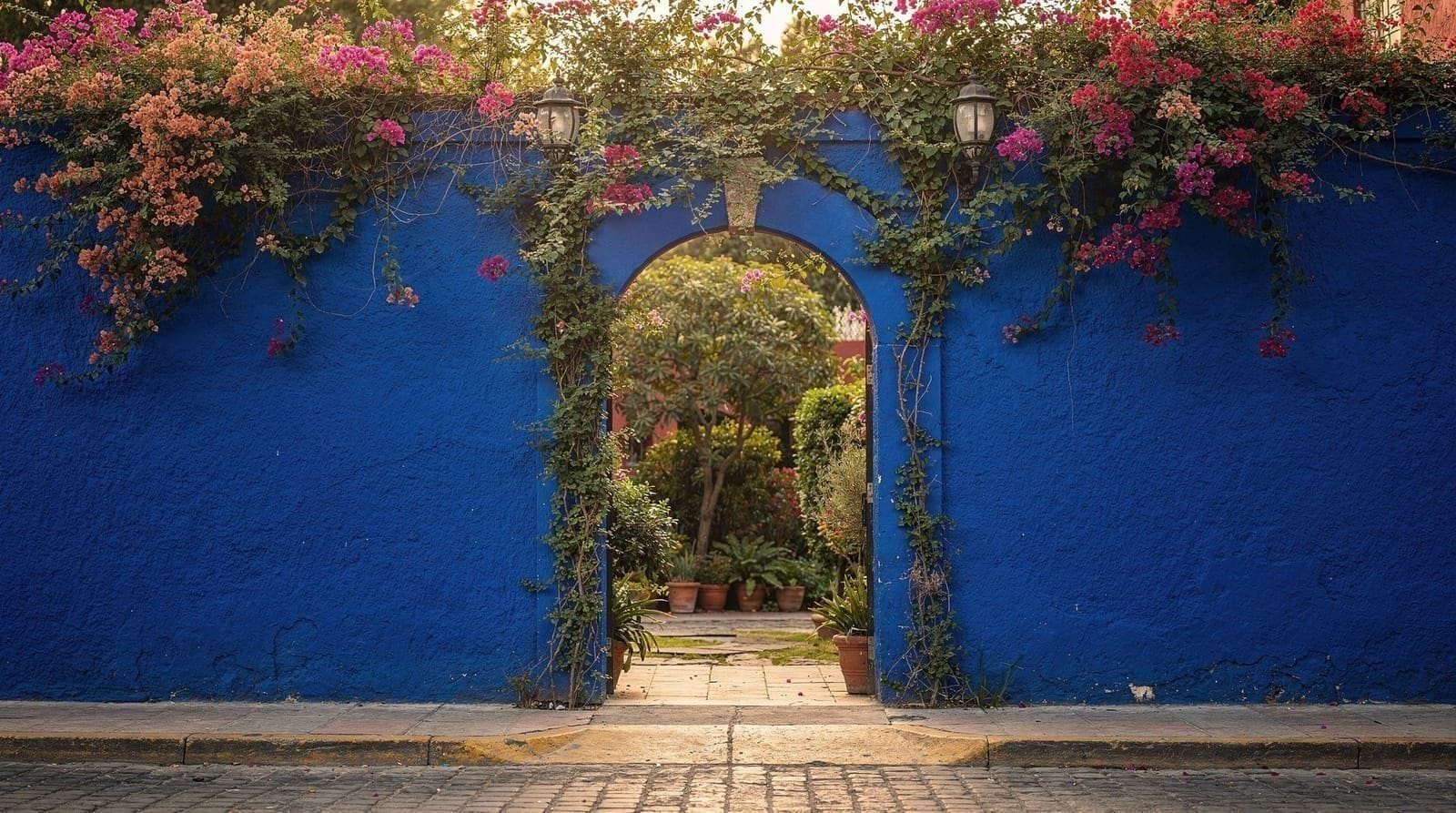
Start at 10:00 am when the museum opens. Early entry minimises crowds in the most popular rooms (the studio, the bedroom). Spend enough time in each room to absorb the personal detail rather than speed through. The garden is often the most overlooked element — sit on the bench near the pyramid for a few minutes before leaving.
If you want a guided experience with biographical narration, the Coyoacán self-guided tour with Frida Kahlo Museum tickets provides a mapped audio route that combines the museum with the neighbourhood walk described below.
The museum shop (entered from the street, not requiring museum entry) has the best licensed Frida memorabilia in Mexico City — quality prints, exhibition catalogues, jewellery. Skip the souvenir vendors on the street outside; the official shop is the better option.
Stop 2: Avenida Frida Kahlo and the surrounding streets
Exiting the museum, turn left (north) onto Allende. The surrounding streets of Coyoacán are some of the most architecturally intact colonial streets in Mexico City — take 10 minutes to walk the block between Londres and Centenario before heading to the plazas.
Look for: the mural on the corner of Allende and Viena (directly relevant to the neighbourhood’s history); the small independent art galleries tucked into residential buildings; the contrast between the cobblestone streets and the constant flow of cyclists (Coyoacán has an active cycling culture).
Stop 3: Plaza Centenario and Jardín Hidalgo
Duration: 30–45 minutes
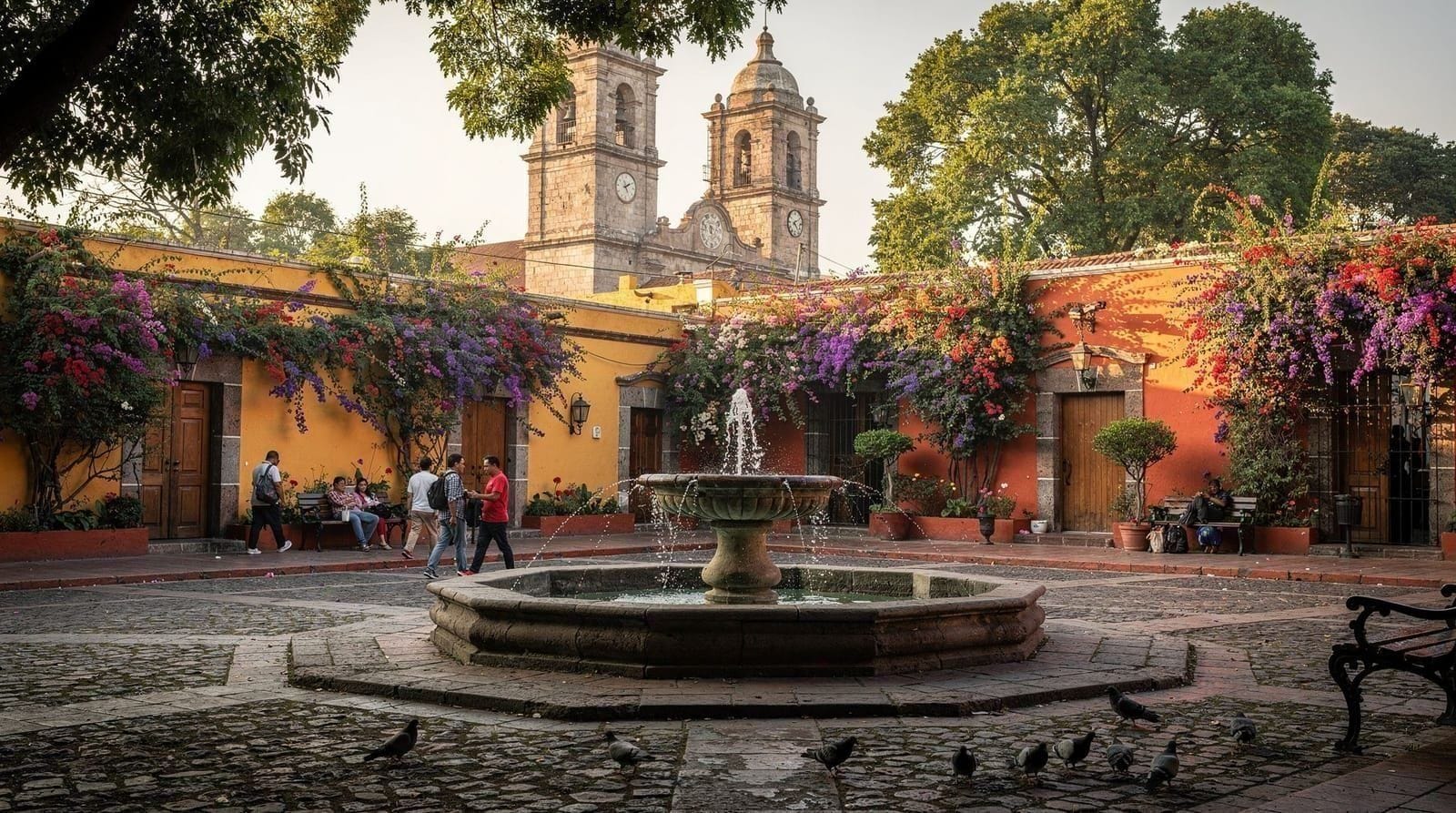
The heart of Coyoacán is two adjacent plazas: Jardín Hidalgo (the larger, with a bandstand and fountain) and Jardín Centenario (the smaller, in front of the Parroquia de San Juan Bautista church). On weekdays, these plazas are calm and local: vendors selling fresh elotes (corn), old men playing chess, mothers with pushchairs. On weekends they fill with craft sellers, street musicians, and families from across the city.
The church facing the plaza — Parroquia de San Juan Bautista — dates to 1522 and has one of the most intact original colonial façades in the city. The interior is relatively simple but the building is architecturally significant as one of the earliest churches established after the Spanish conquest.
The outdoor café terraces facing the plazas are the natural coffee stop. Café El Parnaso (Calle Carrillo Puerto, facing Jardín Hidalgo) is a long-established literary café-bookshop combination and a Coyoacán institution. Order a café de olla (traditional pot coffee with cinnamon and piloncillo sugar) and watch the plaza.
Stop 4: Mercado de Antojitos de Coyoacán
Duration: 45–60 minutes (for lunch)
The covered Coyoacán market, on the block between Calle Malintzin and Ignacio Allende, has two sections: a general market selling fresh produce, flowers, and meat, and the antojitos section — the food stalls at the back of the market that are the real reason to visit.
The antojitos (small bites, the Mexican equivalent of bar snacks elevated to a meal) include:
- Tostadas: Flat crisp tortillas topped with chicken, beef, beans, seafood, or combinations with salsa, lettuce, crema. 25–40 MXN each.
- Enfrijoladas / enchiladas: Tortillas bathed in black bean or red chili sauce with various fillings. 60–90 MXN for a plate.
- Quesadillas: Handmade on the comal to order with any filling combination (mushroom and epazote, black bean, flor de calabaza). 35–50 MXN.
Choose a stall that has regular local customers and active cooking. A full lunch with an agua fresca (fresh hibiscus/jamaica or tamarind drink) costs 100–150 MXN and is typically excellent.
Note on Tostadas de Coyoacán: The neighbourhood has a specific association with tostadas (flat crispy tortilla bases with toppings), and there are dedicated tostada specialists around the market. The most established is Tostadas Coyoacán, a family business with multiple stalls known particularly for their shrimp and crab tostadas. These are more expensive than the average market stall (40–60 MXN each) but genuinely high quality.
Continuing the walk: the full-day extension
Stop 5: El Jarocho Coffee
Address: Cuauhtémoc 134 (corner with Allende) Duration: 20 minutes
After lunch, walk east from the market to El Jarocho — a legendary Veracruz-style coffee stand that has been serving on this corner since 1953. The queue moves fast; order at the window (café de olla, café americano, or café con leche for 20–30 MXN) and drink it standing with the other customers. This is not a specialty third-wave café — it is a Mexican coffee institution that operates entirely without tables or chairs, serves outstanding affordable café de olla, and has a clientele entirely of locals. Worth noting and worth the stop.
Stop 6: León Trotsky House Museum
Address: Viena 45 (Museo Casa de León Trotsky) Duration: 1–1.5 hours Entry: 50 MXN
Walk 10 minutes east of the main plazas to the house where the Russian revolutionary Leon Trotsky lived from 1939 until his assassination in 1940. The house is surrounded by the walls and watchtowers added after an unsuccessful assassination attempt in May 1940 (led by David Alfaro Siqueiros, the muralist). In August 1940, Ramón Mercader — a Stalinist agent — killed Trotsky with a mountaineering ice axe in his study.
The museum preserves the study, the garden where Trotsky and his wife Natalia tended rabbit hutches, the watchtower, and extensive documentary material about his life and death. It is less visited than the Frida Kahlo Museum and has almost no queue, making it an easy complement for anyone interested in 20th century political history.
Context note: Trotsky came to Coyoacán at the personal invitation of Diego Rivera and initially stayed at the Casa Azul as a guest of Diego and Frida. His relationship with Frida became a brief affair. He and Rivera later broke politically. The neighbourhood connections between Frida, Diego, Trotsky, and Siqueiros (who attempted the first assassination) are a remarkable convergence of early 20th century revolutionary politics.
Stop 7: Viveros de Coyoacán
Duration: 30–45 minutes
Viveros de Coyoacán (the Coyoacán Nurseries) is a large public park and nursery that supplies trees and plants to the city’s parks system. It occupies a significant forested area north of the main plaza and is completely free to enter. The interior has long tree-shaded paths, benches, and the particular quiet of a working green space rather than a designed public park.
In March and April, Viveros has significant jacaranda plantings alongside its other tree varieties. On weekday mornings it is primarily used by joggers and cyclists from the neighbourhood. On weekends, families occupy the benches and children’s play areas.
This is a natural final stop before Ubering back to your hotel — peaceful, free, and a different kind of Mexico City experience from the historical sites.
Optional extension: Anahuacalli Museum
Address: Calle del Museo 150 (10 minutes south of the Frida Kahlo Museum by Uber) Entry: 80 MXN
Diego Rivera designed and built this pyramid-shaped lava-stone building to house his collection of 50,000 pre-Columbian objects — figures, masks, and vessels from Aztec, Maya, Zapotec, and other Mexican civilisations. Rivera called it “house of the native” (Ana means water/surrounded; huac means place; calli means house in Nahuatl).
The building is architecturally extraordinary: a stepped pyramid fused with the philosophy of creating a physical connection between Rivera’s contemporary art and pre-Columbian culture. Rivera died before he could integrate a studio he planned at the top. The collection is curated and displayed thoughtfully, though the building itself — volcanic stone, dramatic light through small windows — is the experience as much as the objects.
This is not on most tourist itineraries and that makes it more rewarding. If you have time for a full day in Coyoacán, Anahuacalli is the best second museum in the neighbourhood.
A shorter route for limited time
If you only have 2–3 hours in Coyoacán, cut the route to three stops rather than trying to compress all seven. Start at the Frida Kahlo Museum (1.5 hours, non-negotiable if this is your priority), walk 5 minutes north to the plazas for a quick coffee (20 minutes), then finish at the covered market for a fast lunch (30–40 minutes) before heading back. This skips Trotsky’s house, Viveros park, and El Jarocho Coffee — all genuinely worthwhile, but the shortened route still delivers the neighbourhood’s two essential experiences (the museum and the market) without feeling rushed at either. Save the full-day extension for a return visit or a day when Coyoacán is your only planned activity.
Rainy-season and weekend variations
If your visit falls in the June–October rainy season, sequence the outdoor stops (the plazas, Viveros park) for the morning and save the covered market and museums for the afternoon rain window (typically 3–5pm) — Coyoacán’s plazas have limited covered seating, while the market and both museums are entirely indoors. On weekends, arrive at the Frida Kahlo Museum at opening (10:00am) rather than mid-morning; by 11:30am on a Saturday, the queue for the studio and bedroom rooms can add 20–30 minutes. Weekday visits avoid this almost entirely and give the plazas a genuinely local, uncrowded character that the neighbourhood loses on Sunday afternoons.
Where to stay near Coyoacán
Coyoacán itself has limited hotel options compared to Roma or Condesa, and most visitors base themselves in Roma or Condesa and Uber down for the day, as this guide assumes. The trade-off is worth it: Roma and Condesa offer far more restaurant and nightlife density for evenings, while Coyoacán rewards a daytime visit. Staying in Coyoacán itself makes sense mainly for visitors prioritising a quieter, more residential base and planning to spend multiple days exploring the southern neighbourhoods (Coyoacán, San Ángel, Xochimilco) without commuting back and forth. See the where to stay guide for a full neighbourhood comparison.
Guided tours combining Coyoacán
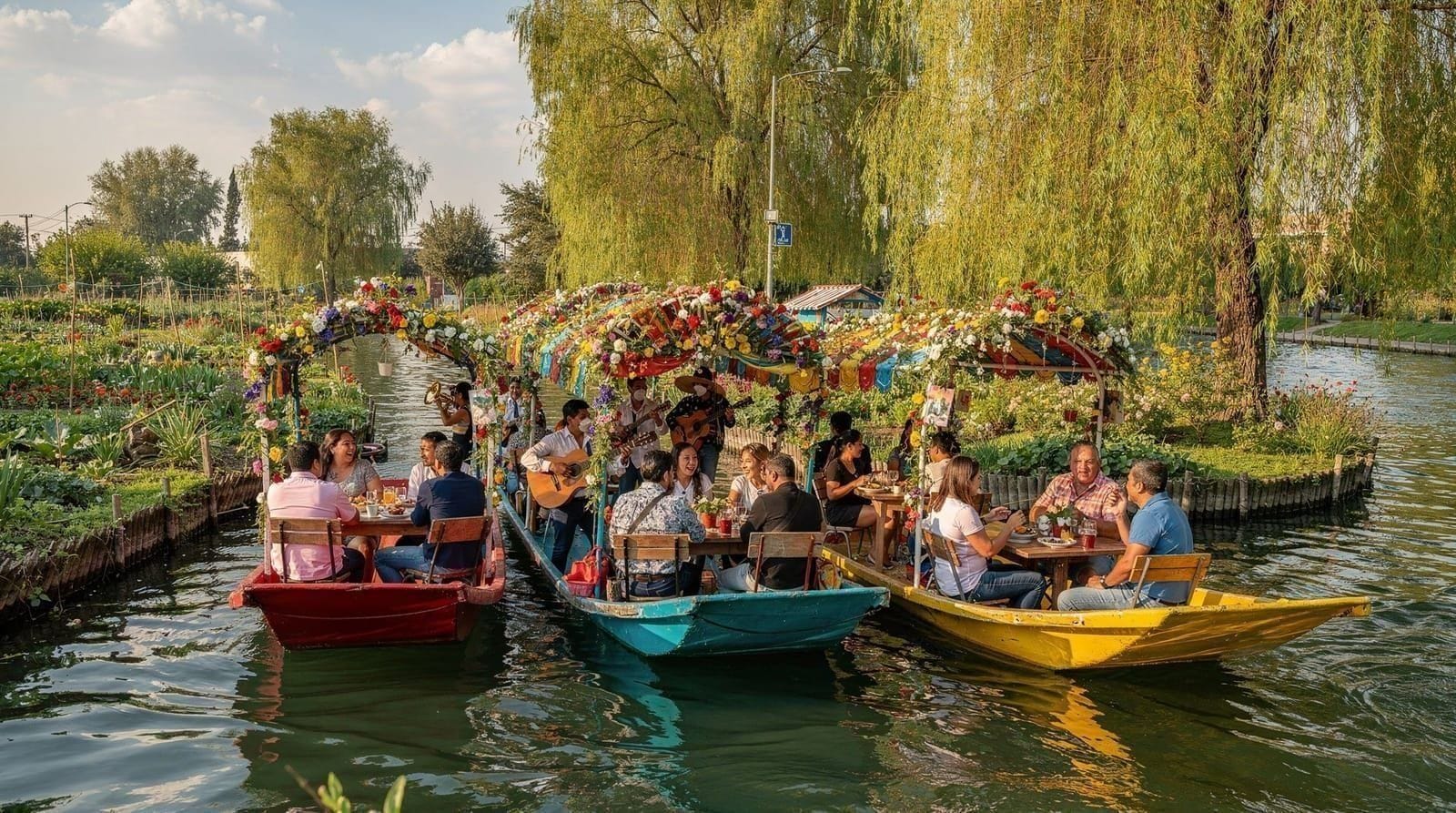
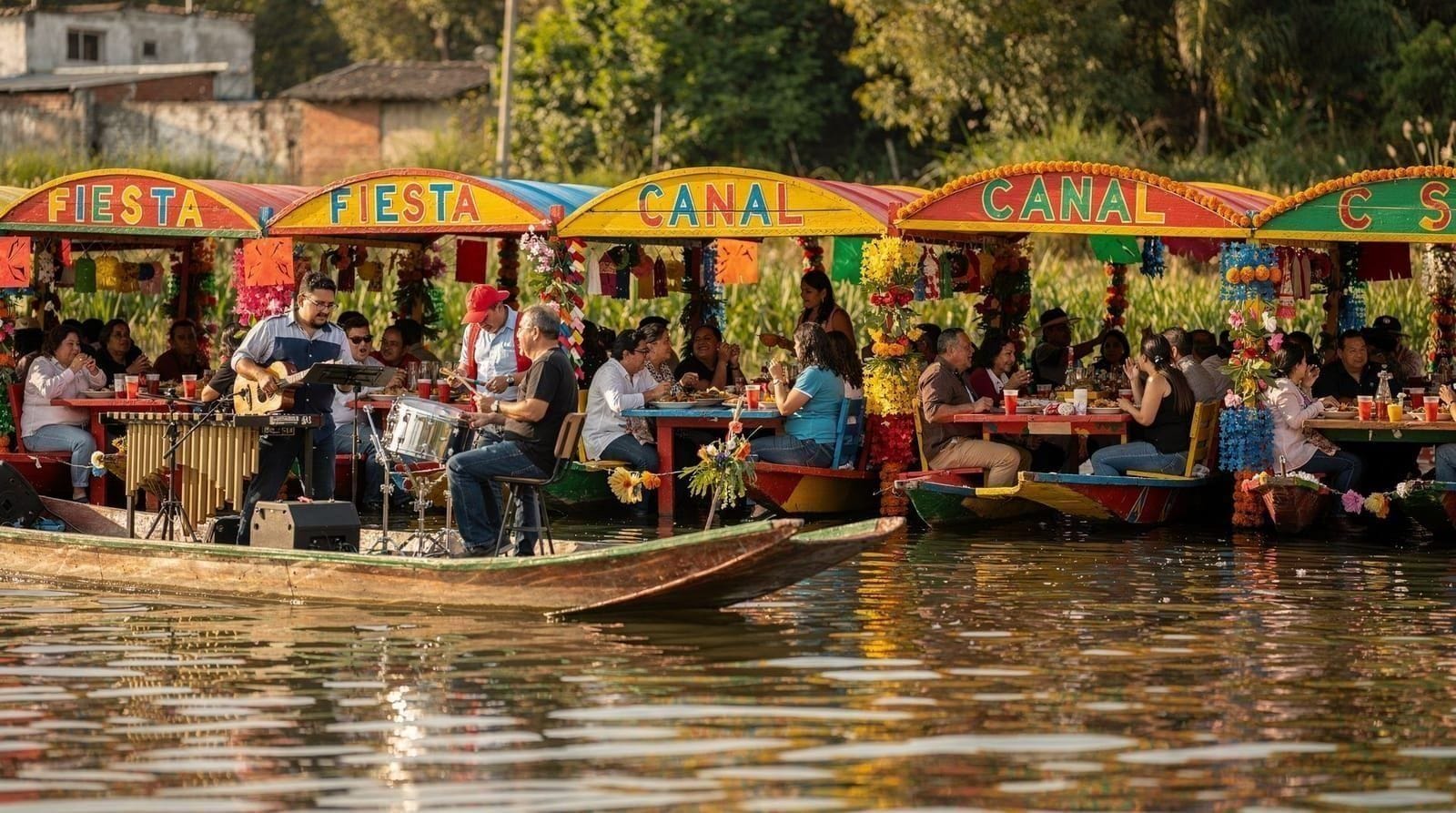
For those who want both Coyoacán and Xochimilco in one day, the Xochimilco Fiesta in Trajinera and Coyoacán Tour handles the logistics of moving between the two southern destinations and includes both the canal boat experience and neighbourhood highlights. Useful particularly if you have limited days and want to be efficient. For a themed alternative to the self-guided walk above, the Coyoacán myths and legends walking tour covers the same plazas and streets through the neighbourhood’s ghost stories and folklore rather than a straight historical narration.
Frequently asked questions about walking in Coyoacán
Is Coyoacán walkable for people with mobility issues?
The main plaza area and most streets have cobblestones rather than pavement, which can be difficult with wheeled mobility aids. The Frida Kahlo Museum has a ramp entry but the interior has multiple levels and narrow doorways. Viveros park has paved paths throughout. Some cobbled streets between the museum and the plazas are rough.
Can I see Coyoacán at night?
Yes — the main plazas are active and lit until 10:00 pm, with outdoor cafés and street performers. The neighbourhood has a pleasant evening atmosphere on weekends. Beyond the plaza area, streets become dark quickly and a ride home is advisable after 10:00 pm.
What craft items are sold in Coyoacán?
The craft market around the plazas has mixed quality: some genuine handcraft (particularly woven textiles, carved wooden figures, silver jewellery from Taxco), some mass-produced tourist goods. The quality is better than souvenir stalls outside the Frida Kahlo Museum entrance but requires selectivity. See the tourist traps guide for the better craft market alternatives.
Is parking available in Coyoacán if I drive?
Yes — there are paid parking lots on the periphery of the pedestrian centre. But Coyoacán’s streets are narrow and often congested on weekends. Uber from a central hotel is significantly easier than driving and parking yourself.
What are the best neighbourhoods to visit near Coyoacán?
San Ángel is 15 minutes west by Uber — colonial, Saturday art market, very complementary to Coyoacán as a south-of-the-city day. Xochimilco is 20–30 minutes south for the canal experience. The 5-day Mexico City itinerary structures these southern neighbourhoods efficiently.
How do I get to Coyoacán from central Mexico City?
Uber or DiDi from Roma or Condesa takes 25–40 minutes and costs 70–120 MXN. Metro Line 3 to Viveros/Derechos Humanos station is a 20-minute walk from the main plazas. Taking the metro and walking through Viveros park as an arrival is actually pleasant. For the return, Uber from the plazas is usually under 5 minutes’ wait.
How long should I spend in Coyoacán?
Half a day is the minimum — 4–5 hours covers the Frida Kahlo Museum plus the central plazas and market. A full day allows Viveros park, León Trotsky’s house, the Anahuacalli Museum, and a leisurely lunch. The neighbourhood rewards staying longer than you planned.
Is Coyoacán safe for walking?
Yes. Coyoacán is one of Mexico City’s safest and most tourist-friendly neighbourhoods. The main plaza area has active foot traffic throughout the day and into the evening. Side streets are quiet but generally fine during daylight. After dark, stick to the lit plaza area and take an Uber for the return.
What is the best day to visit Coyoacán?
Any weekday offers the most relaxed experience — the neighbourhood has a local rather than tourist-packed character. On weekends (especially Sunday), the plazas fill with families, street performers, and craft stalls for a festive atmosphere that some visitors love. The Saturday craft stalls are more active than weekday. Avoid Sunday afternoon if you dislike crowds.
Is the Coyoacán Market good for food?
Yes — the Mercado de Antojitos de Coyoacán inside the covered market is one of the best market eating experiences in the city. Stalls serve tostadas, tlayudas, enchiladas, quesadillas, fresh aguas frescas, and the full roster of Mexican street food in a covered, busy environment. Lunch here for 80–150 MXN including a drink is very good value.
Can I combine Coyoacán with Xochimilco?
Yes — Xochimilco is 20–30 minutes south of Coyoacán by Uber. Combining both in one day is popular: Coyoacán in the morning (Frida Kahlo Museum opening at 10:00 am), lunch in the market, afternoon Xochimilco. The Xochimilco trajineras typically run 12:00 noon to 6:00 pm for tourists.
Top experiences
Bookable activities with verified prices and instant confirmation on GetYourGuide.