Frida Kahlo Museum tour: tickets, guided options, and honest review
Mexico City: Frida Kahlo Museum or Casa Kahlo Entry Ticket
What you are visiting when you go to Casa Azul
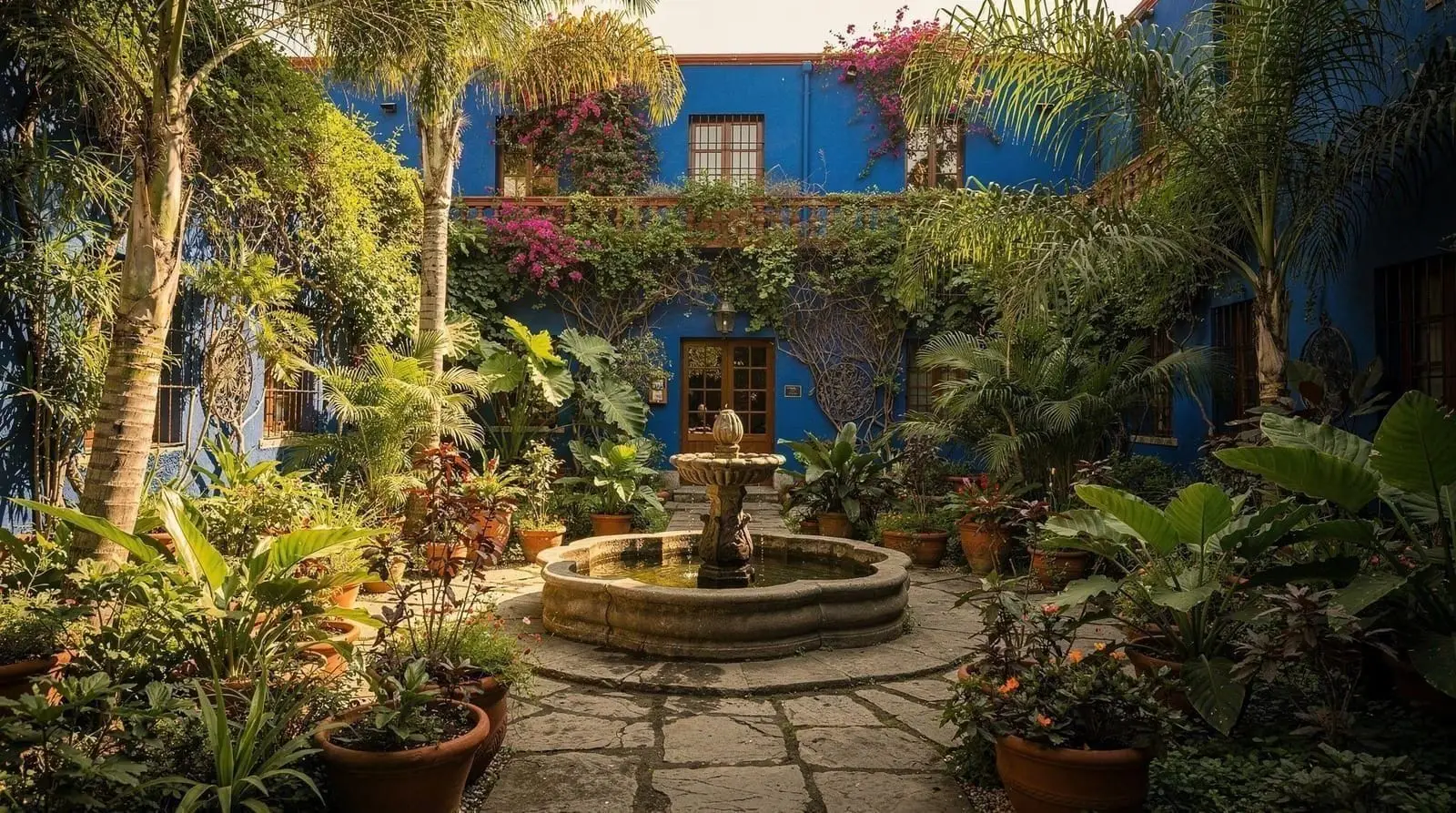
The Frida Kahlo Museum at Londres 247 in Coyoacán is not a conventional art museum. It is the house where Frida Kahlo was born in 1907, returned to after her near-fatal bus accident in 1925, lived and worked with Diego Rivera, and died in 1954. The Blue House (Casa Azul) was opened as a museum in 1958, four years after her death, with Rivera’s cooperation.
What makes the visit remarkable is the density of personal presence. Frida’s painted plaster corsets are displayed alongside her oil paints and brushes. Her wheelchair, positioned at her easel, faces an overhead mirror she used to paint her own reflection during years of physical immobility. Her collection of Mexican folk art, pre-Columbian figurines, and photographs covers every surface. Her kitchen is painted in yellow and blue Talavera tiles. Diego Rivera’s letters are visible in glass cases.
This is not a curated gallery experience — it is a preserved life. The question is how to experience it most meaningfully, which is what this review addresses.
| Where | Londres 247, Coyoacán, ~12–15 km south of the Zócalo |
| Cost | Around 270 MXN entry; 420–1,200 MXN for guided/digital-guide packages |
| Time needed | 60–120 minutes inside, plus travel |
| Getting there | Metro Line 3 to Coyoacán/Viveros + 10–15 min walk, or Uber from Roma Norte |
| Best time | Weekday morning at opening (9 am); book 5–10 days ahead for weekends |
Option 1: Museum entry with digital guide (recommended for most visitors)
The Frida Kahlo Museum or Casa Kahlo entry ticket with digital guide provides a timed entry slot plus an audio guide delivered through a mobile app or dedicated device. The audio guide covers the major rooms and objects in Spanish and English, with biographical context at each stop.
For most visitors, this is the correct product. The digital guide solves the language barrier (room labels are in Spanish only), provides the biographical context needed to understand the significance of specific objects, and allows you to move at your own pace — pausing, replaying, and spending longer in rooms that interest you most.
What is included: Timed museum entry, digital audio guide.
Price: approximately 420–550 MXN per person (includes museum entry fee).
Best for: Most first-time visitors who are familiar with Frida Kahlo at a basic level; English-speaking visitors without Spanish.
Option 2: Guided tour of the Frida Kahlo Museum
The Mexico City Frida Kahlo Museum guided tour includes a licensed bilingual guide for the full visit, a skip-the-line or priority entry arrangement, and in some versions a brief introduction to the Coyoacán neighborhood before entering the museum.
The live guide format is better than the digital guide for visitors with deep interest in Frida’s biography — particularly the political dimension of her life (she was a committed Communist, and many objects in the house reflect this), her medical history (33 operations, a medically induced disability from the 1925 bus accident that permanently shaped her work), and the complicated relationship with Diego Rivera. A guide can answer questions that a fixed audio track cannot.
The skip-the-line benefit matters practically: walk-up queues to enter even with a pre-booked slot can run 20–45 minutes at peak times. A guided tour with organized entry typically bypasses this.
Price: approximately 800–1,200 MXN per person.
Best for: Art history enthusiasts; visitors with prior interest in Frida’s work; anyone who prefers a question-and-answer format over self-guided audio.
Honest note: Group sizes on commercial tours are typically 8–16 people. A smaller group (under 10) gives better guide access. Check group sizes before booking if this matters to you.
Option 3: Coyoacán self-guided tour with Frida Kahlo Museum tickets
The Coyoacán self-guided tour with Frida Kahlo Museum tickets combines a structured walking route through Coyoacán — the Jardín Hidalgo, the market, the colonial streets, and historical sites — with a museum entry ticket for Casa Azul. Navigation and context are provided through a mobile-based route guide rather than a live guide.
This is the best format for visitors who want to experience the museum as part of a broader Coyoacán neighborhood exploration rather than as an isolated attraction. The self-guided neighborhood route (typically 90 minutes before the museum) covers the Jardín Centenario, the church, the market, and optional coffee and food stops.
Price: approximately 500–750 MXN per person.
Best for: Independent travellers who enjoy walking neighborhoods without a guide; visitors combining the museum with a half-day in Coyoacán.
Walk-up vs. advance booking: the honest picture
The museum publishes a limited number of daily tickets through museofridakahlo.org.mx. Advance booking via the museum website costs the standard entry fee (270 MXN). Walk-up tickets are available in small quantities daily but are not reliable on weekends or school holidays.
Booking through a tour operator (Options 1–3 above) guarantees entry because operators purchase blocks of tickets. This is the justification for the price premium over the museum website direct booking — you are paying for reliability, not just the experience.
On weekdays in low season: Walk-up tickets are often available. Arrive at the museum by 9 am (opening time) and queue at the ticket window.
On weekends and peak season: Do not plan on walk-up availability. Book at least 10 days ahead.
The Coyoacán neighborhood context
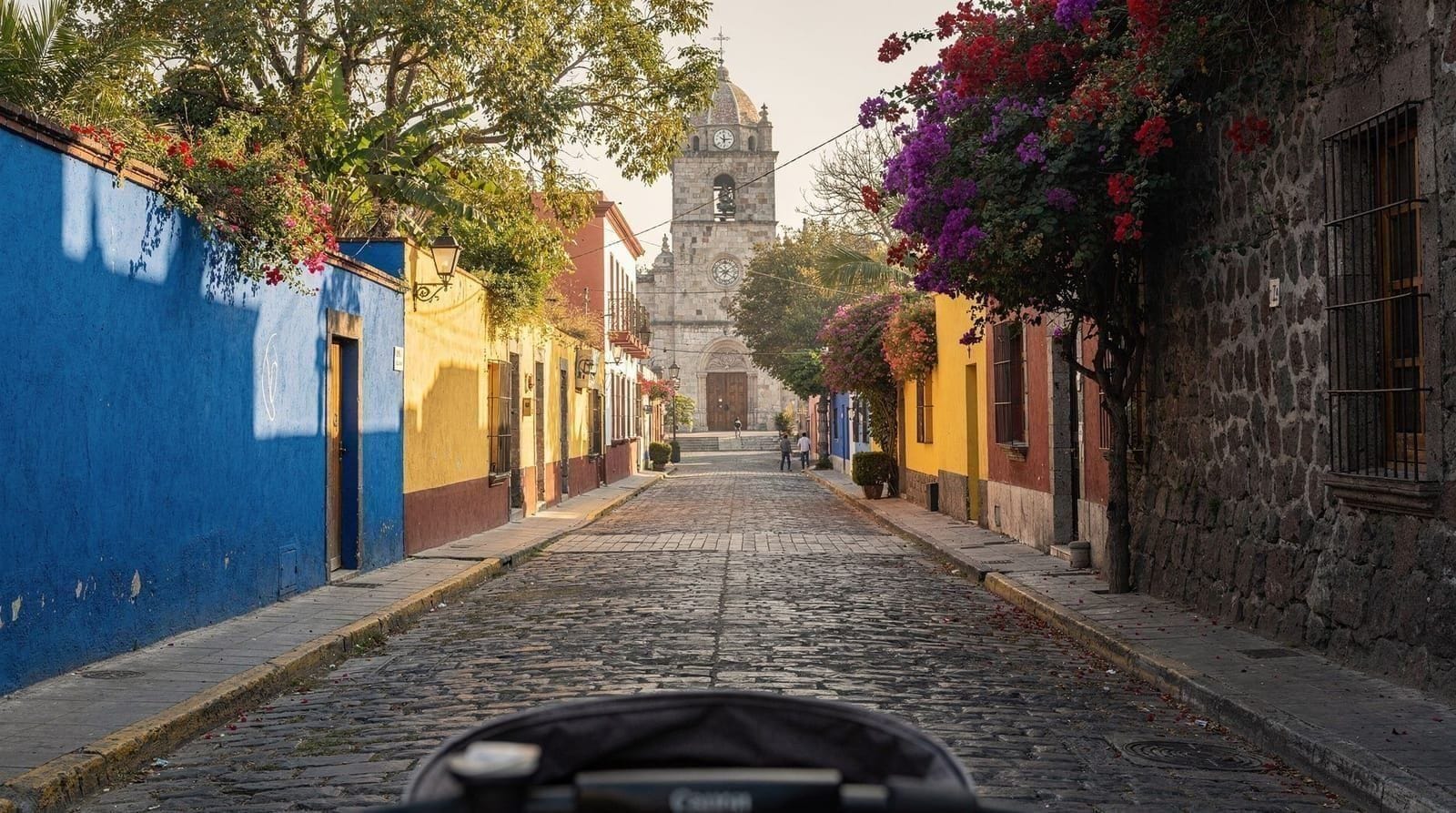
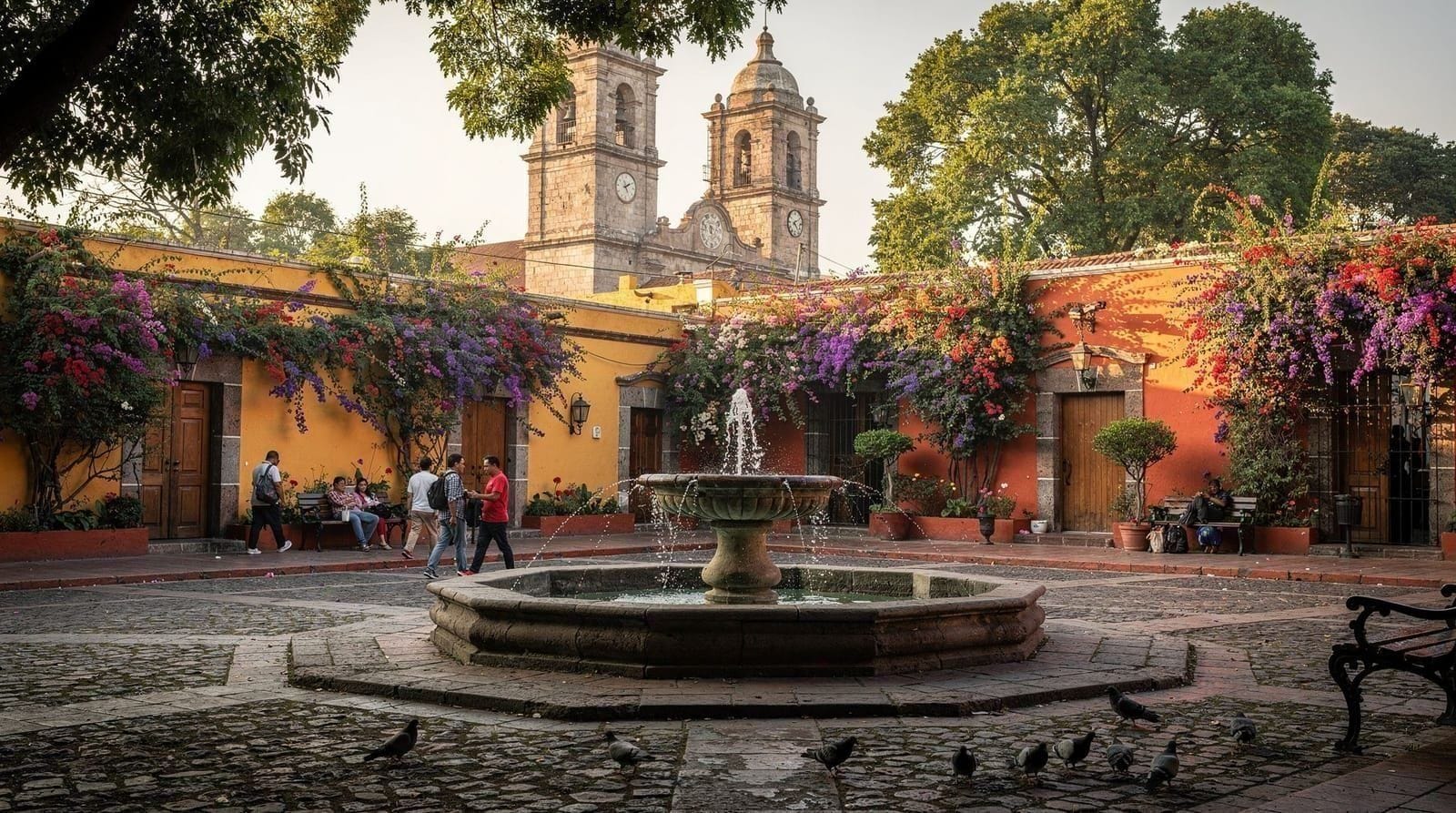
The museum is in the heart of Coyoacán — one of Mexico City’s most appealing neighborhoods for a half-day visit. The colonial street grid, the twin plazas with their permanent artisan market stalls, the Mercado de Coyoacán food hall (tostadas de pata, gorditas, agua de chía from 50–80 MXN), and El Jarocho café (Allende 38, café de olla 35 MXN, operating since 1953) are all within a 10-minute walk.
The Coyoacán walking guide maps a 90-minute neighborhood circuit that pairs well with either a morning or afternoon museum visit. For afternoon slots (museum closes at 6 pm), the combination of a museum visit plus neighborhood walk makes an excellent full-afternoon structure.
What to pay attention to inside the museum
The studio: The most emotionally charged room — Frida’s wheelchair in front of her easel with the overhead mirror, the shelves of small tin retablos (votive paintings) she collected, and the unfinished work “Marxism Will Give Health to the Sick” on the easel nearby. Photography not permitted.
The bedroom and medical section: Documents and photographs from her 33 operations, casts, and corsets. The orthopedic corsets, some painted in her characteristic imagery, are among the most compelling objects in the museum.
Diego Rivera’s studio: Separate from Frida’s (they maintained independent living spaces within Casa Azul), reflecting the nature of their 23-year on-and-off relationship. Rivera’s large-format painting tools and maquettes are preserved here.
The garden: Where Frida was buried — her ashes are contained in an urn shaped like a pre-Columbian figure. The garden is also where she grew the plants that appear in many of her paintings.
Comparing the three options at a glance
| Option | Price (MXN/person) | Guide | Best for |
|---|---|---|---|
| Digital guide entry | 420–550 | Audio only | Most first-timers, no Spanish needed |
| Guided tour | 800–1,200 | Live bilingual guide | Deep biographical interest, skip-the-line |
| Coyoacán self-guided + tickets | 500–750 | Mobile route guide | Combining the museum with a neighborhood walk |
Extending the visit beyond Casa Azul
Frida’s legacy in Mexico City is not confined to one house. The Casa Estudio Diego Rivera y Frida Kahlo in San Ángel — the twin studio houses connected by a rooftop bridge where the couple lived and worked separately in the 1930s and 40s — is a 20–25 minute Uber from Coyoacán and a natural pairing for the same day if you start early. The Anahuacalli Museum, Diego Rivera’s purpose-built pre-Columbian collection near Xochimilco, is architecturally striking and rarely crowded, though it requires a separate trip.
For visitors building a full day around Coyoacán, the neighborhood’s Mercado de Coyoacán and surrounding food stalls (covered in the Mexico City markets guide) make a natural lunch stop before or after the museum — tostadas de pata and agua de chía are the local specialties to try. Most visitors slot the Frida Kahlo Museum into a morning, lunch in the market, and an afternoon walk through the twin plazas.
How this fits a Mexico City itinerary
On a first visit, the Frida Kahlo Museum works best as a half-day anchor rather than a rushed add-on. The 3-day Mexico City itinerary places it on day two alongside the rest of Coyoacán; the 4-day itinerary gives it a full unhurried morning followed by San Ángel or Xochimilco in the afternoon. Trying to combine Casa Azul with the historic center or Chapultepec on the same day is possible but rushed — Coyoacán sits far enough south that transit eats into museum time.
Frequently asked questions about the Frida Kahlo Museum tour
Can I buy the Frida Kahlo Museum ticket at the door?
On weekdays in low season, a small number of walk-up tickets are available. On weekends, holidays, and peak tourist season (July, August, December, Easter), walk-up availability is not reliable. Advance booking is strongly recommended — the Frida Kahlo Museum entry ticket with digital guide is the simplest self-guided way to lock in a timed slot without waiting on a live tour’s departure time.
How far is Casa Azul from the Zócalo?
12–15 km. Metro Line 3 (blue/green) from Hidalgo or Centro Médico station to Coyoacán or Viveros station takes about 25–30 minutes, plus 10 minutes walk to the museum. Uber from Centro runs 100–150 MXN.
Are there other Frida Kahlo sites in Mexico City?
Yes: the Casa Estudio Diego Rivera y Frida Kahlo in San Ángel (50 MXN entry) is the studio complex they shared; the Anahuacalli Museum in Xochimilco was Diego Rivera’s personal pre-Columbian art collection, connected to Frida’s legacy. The Frida Kahlo Museum guide covers all the relevant sites.
Is the museum accessible for visitors with mobility limitations?
Partially. The ground floor and garden are wheelchair accessible. Some upper-level rooms require steps. The museum does not have an elevator. If mobility is a constraint, contact the museum directly at museofridakahlo.org.mx before booking.
Can I combine the Frida Kahlo Museum with San Ángel in one day?
Yes. The Casa Estudio Diego Rivera y Frida Kahlo in San Ángel is a short Uber ride from Coyoacán (20–25 minutes outside peak traffic). Visit Casa Azul in the morning, have lunch at the Mercado de Coyoacán, then head to San Ángel in the early afternoon — the San Ángel Saturday bazaar adds another layer if your visit falls on a weekend.
Do I need to book the Frida Kahlo Museum in advance?
Yes, emphatically. Walk-up availability is limited and regularly sold out, especially on weekends, Mexican school holidays, and during high tourist season (December–January, Easter, July–August). Book at least 5–7 days ahead via museofridakahlo.org.mx or through a tour operator. Weekend slots sell out 2–3 weeks in advance during peak periods.
What is the entrance fee for the Frida Kahlo Museum?
270 MXN (approximately $13) for foreign tourists, 80 MXN for Mexican nationals. The entry is by timed slot. Photography is permitted in most areas of the museum but not in the studio section. The ticket includes access to the house, garden, studio, and temporary exhibition areas.
How long should I spend at the Frida Kahlo Museum?
A focused visit takes 60–75 minutes. An unhurried visit with audio guide or tour guide takes 90–120 minutes. The museum is not large — the house is the original building where Frida lived — but the density of personal objects, paintings, and biographical material rewards slow attention.
Can I take photographs at Casa Azul?
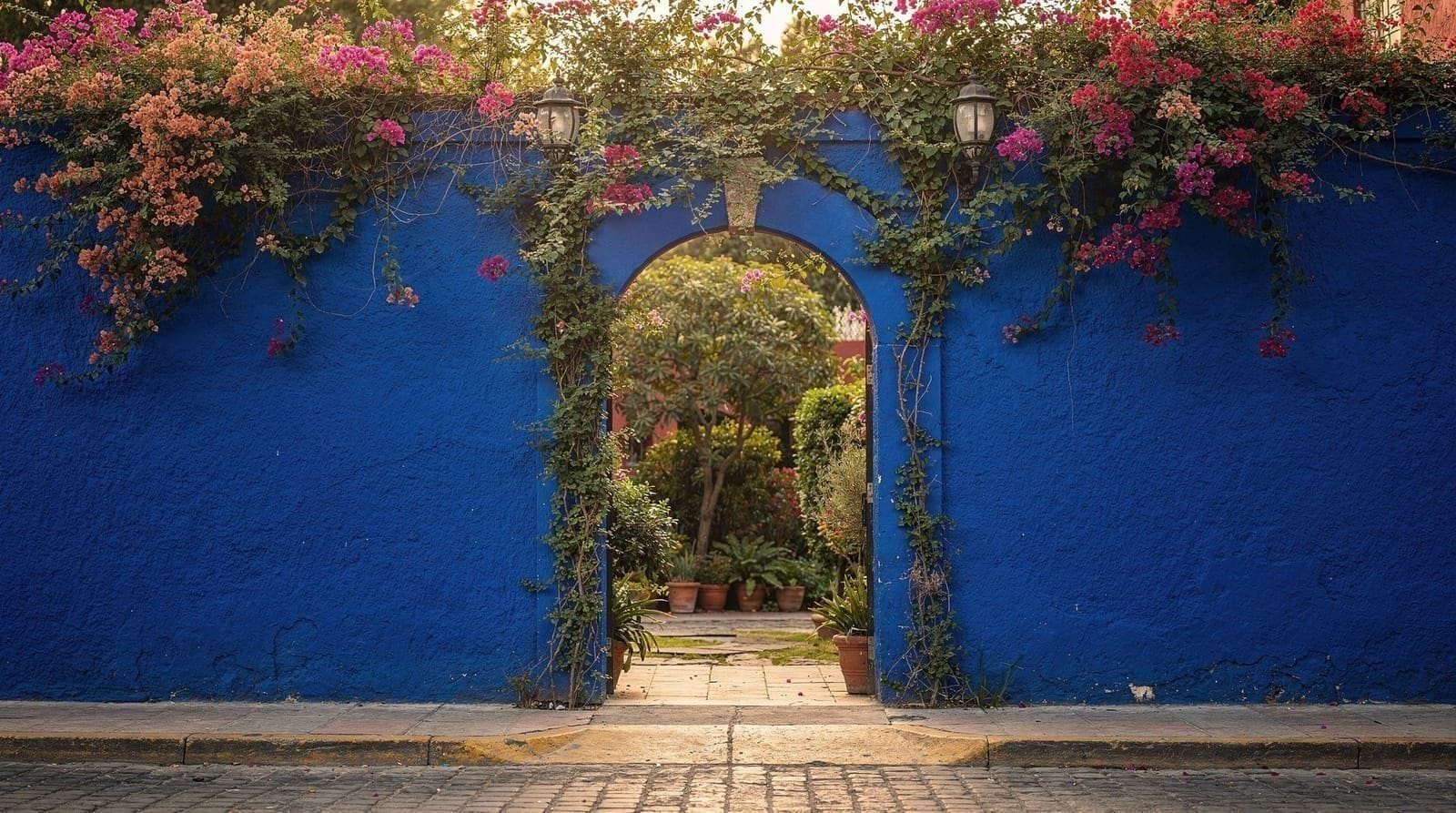
Yes, except in the studio/bedroom section where photography is prohibited (posted at entry). The famous blue exterior, the garden, and most interior rooms are photographable. Flash is not permitted anywhere inside.
Is a guide necessary at the Frida Kahlo Museum?
Not necessary but valuable. The museum’s room labels are in Spanish; the digital guide (audio tour) is the practical solution for English-speaking visitors. A live guide adds biographical depth and the ability to ask questions, which matters most for visitors with deep interest in Frida’s life and work rather than casual visitors.
How far is the Frida Kahlo Museum from the city center?
Approximately 12–15 km south of the Zócalo. By metro: Line 3 (blue/green) to Coyoacán or Viveros station, then a 10–15 minute walk. By Uber from Roma Norte: about 80–120 MXN, 20–25 minutes outside peak hours.