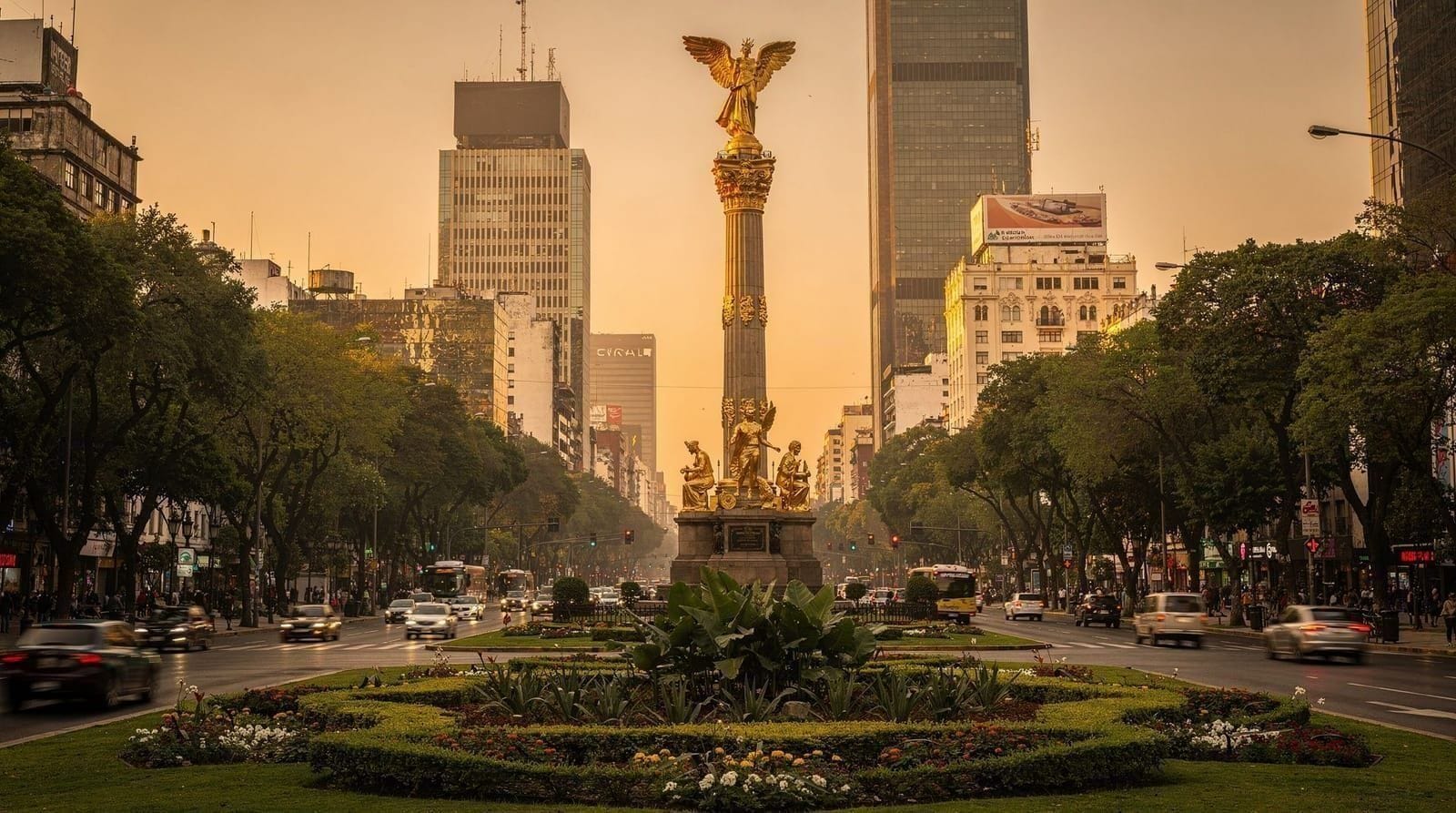
Mexico City in 3 days: Centro, Chapultepec, and Coyoacán
Mexico City: Historic Downtown Walking Tour
Three days is the minimum — here is how to use them well
Three days in Mexico City is tight but entirely viable for a first visit. You will not see everything — nobody does — but you can cover the three anchor experiences that define the city: the historic center with its Aztec foundations and colonial grandeur, the Bosque de Chapultepec with the world-class National Museum of Anthropology, and the bohemian southern neighborhoods of Coyoacán where Frida Kahlo’s blue house still stands. Everything on this itinerary is accessible by metro or Uber; no car rental is necessary or advisable in the city.
| Covers | Centro Histórico, Chapultepec, Coyoacán |
| Pace | One neighborhood per day, no rushing |
| Getting around | Metro + Uber, no car needed |
| Best time to go | November–May (dry season) for clear skies |
| Extend if you can | 4 days adds Teotihuacán as a day trip |
One practical note before you start: Mexico City sits at 2,240 m (7,350 ft). Most visitors from sea-level destinations feel mild breathlessness or a dull headache on day one. Hydrate aggressively, go easy on alcohol that first evening, and avoid strenuous hill-climbing before acclimatisation. The effect is usually minor and passes by day two.
If you can extend to four days: The 4-day itinerary adds Teotihuacán as a day trip and is significantly more satisfying. Three days is the minimum for the city alone. If you only have a weekend, the 2-day weekend itinerary cuts this same plan down further.
The three days at a glance
| Day | Focus | Anchor sight | Evening base |
|---|---|---|---|
| Day 1 | Centro Histórico | Zócalo, Templo Mayor, Rivera murals | Roma Norte |
| Day 2 | Chapultepec | National Museum of Anthropology, castle | Polanco |
| Day 3 | Coyoacán | Frida Kahlo Museum, Jardín Hidalgo | Roma Norte |
Day 1: Centro Histórico — Zócalo, Templo Mayor, and murals
Morning
Start at the Zócalo — officially the Plaza de la Constitución — one of the largest urban plazas in the world, framed by the Metropolitan Cathedral, the National Palace, and government buildings. It costs nothing to walk and orient yourself here. The sheer scale of the square, with Aztec ruins visible at its northeastern corner, sets the tone for what Mexico City is about: multiple historical layers occupying the same ground.
The Templo Mayor is immediately adjacent (entry 80 MXN, approximately $4). This is the excavated main pyramid of Tenochtitlán, the Aztec capital that Mexico City was built upon. The site museum is excellent and included in the ticket. Allow 90 minutes. You will be standing on the religious center of a city that had a population comparable to 15th-century London — it is not a minor ruin.
The Metropolitan Cathedral, on the north side of the Zócalo, is the largest cathedral in the Americas. Entry is free. The sinking floors and columns — the entire city sits on what was Lake Texcoco — are visible at the eastern end of the nave. Structurally fascinating, architecturally baroque.
Afternoon
After lunch (El Cardenal on Calle Palma — set menu around 200 MXN — is one of the better traditional options in the area), the Diego Rivera murals in the National Palace are unmissable and free. Rivera’s Epic of the Mexican People covers the entire east staircase and surrounding walls of the first courtyard. These are among the greatest public murals in the world; budget an hour minimum.
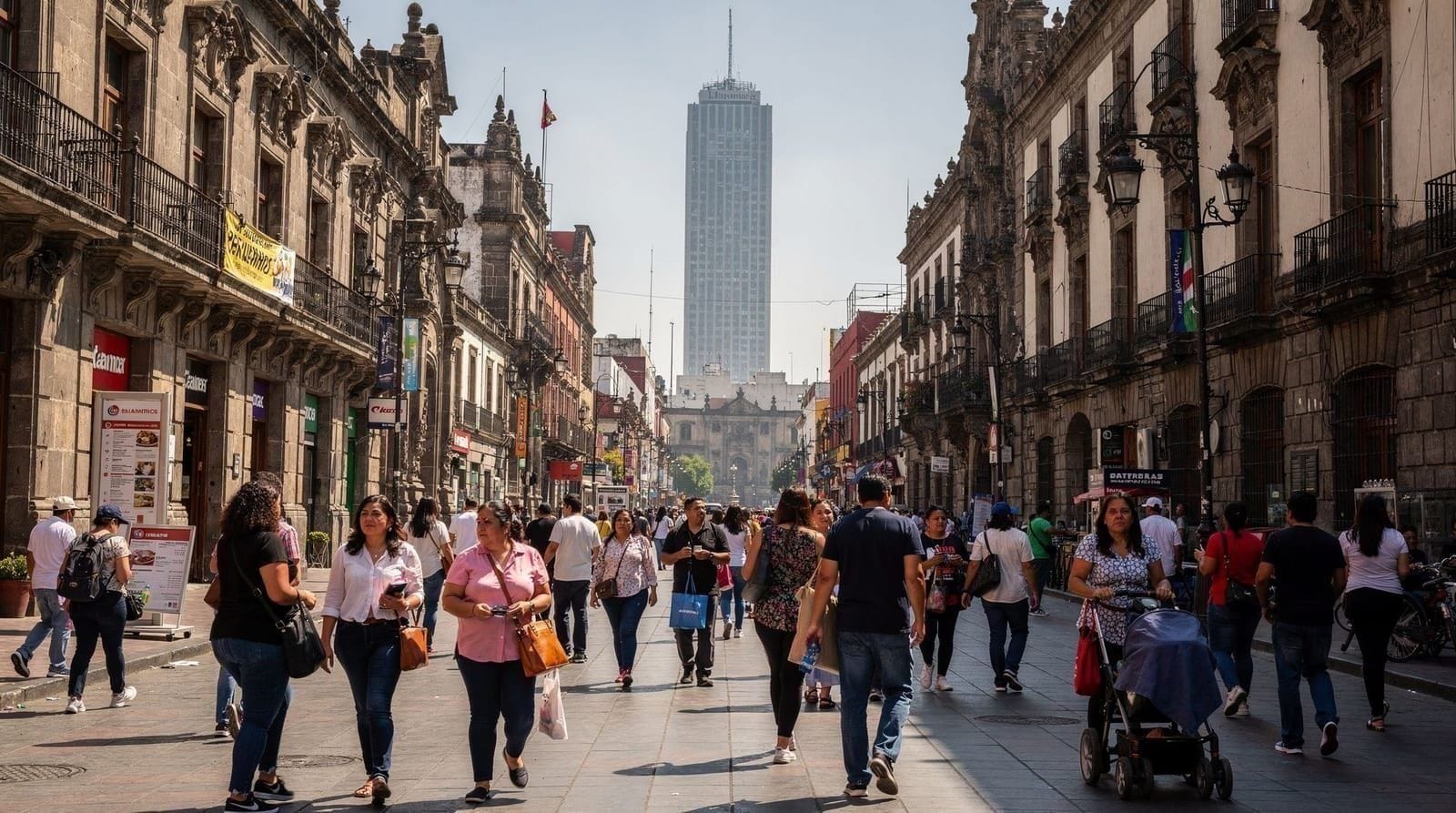
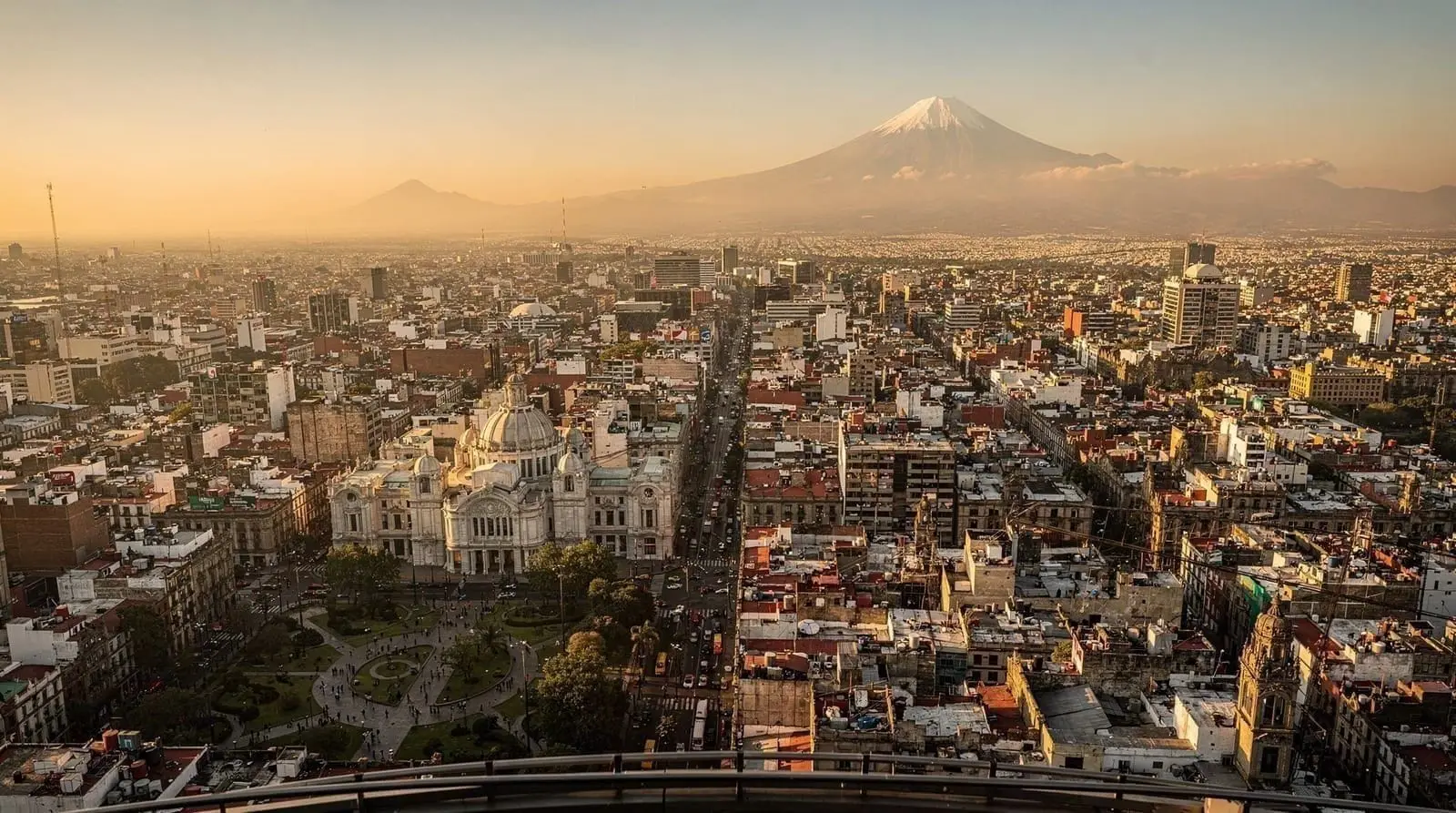
From there, explore the pedestrian streets west of the Zócalo toward the Torre Latinoamericana. The Palacio de Bellas Artes is 10–15 minutes’ walk — the exterior and ground floor are free to enter. The Diego Rivera mural “Man, Controller of the Universe” is on the third floor (entry 80 MXN).
For a guided orientation of the historic center that covers the context a first-timer needs, the historic downtown walking tour is worth booking for the morning to get oriented before exploring independently.
Evening
Roma Norte is the best base for dinner on a first evening. Take the metro (Line 3, blue, toward Universidad, exit at Insurgentes) or an Uber from the center (around 80–120 MXN). The streets around Álvaro Obregón and Orizaba have excellent restaurants at all price points. Contramar (seafood, 400–600 MXN per person) is famous but requires a reservation; Los Bisquets Bisquets Obregón is a reliable, very affordable Mexican all-day diner if you want something low-key after a long day.
Where to stay: Roma Norte or Roma Sur gives walkable access to good restaurants and easy metro and Uber connections to everywhere on this itinerary. Mid-range budget: 1,200–2,500 MXN/night. Closer to the centro is cheaper but the neighborhood quiets after dark.
Day 2: Chapultepec and the National Museum of Anthropology
Morning
The Bosque de Chapultepec is Mexico City’s central park — 686 hectares of forest and museums. Take the metro (Line 1, pink, to Chapultepec station, exit 1) or an Uber.
The National Museum of Anthropology (Museo Nacional de Antropología, MNA) is the most important archaeological museum in the Americas and one of the finest in the world. Entry is 210 MXN (approximately $11). Budget a minimum of three hours — realistically, four to five to see it properly. The Mexica (Aztec) room alone, with the Sun Stone, the Coatlicue statue, and the reconstructed head of Coyolxauhqui, is worth a half-day. The Mayan room is equally extraordinary.
Do not skip the garden behind the main building — the reproduction of the Mayan palace at Palenque with water running down the pillar is architecturally distinctive.
A guided visit makes the Anthropology Museum dramatically more comprehensible. The Chapultepec Castle and Anthropology Museum combined tour covers both sites in a single morning with expert interpretation, which is particularly valuable for visitors without a pre-existing background in Mesoamerican cultures.
Afternoon
Chapultepec Castle sits on a hill above the park (entry 210 MXN). The view over the city from the terrace is excellent. The castle served as the residence of Emperor Maximilian I and later as a Mexican presidential residence — the rooms, murals, and imperial furnishings provide a vivid portrait of 19th-century Mexico’s turbulent history. Allow 90 minutes.
After the castle, walk north through the park toward Polanco. This upscale neighborhood has luxury shops and restaurants, but the free attraction is the sculpture-lined Paseo de la Reforma between Chapultepec and the Auditorio — a pleasant 20-minute walk.
Evening
Dinner in Polanco or the nearby Lomas area. Pujol (Tennyson 133) is the most celebrated restaurant in Mexico and one of the highest-ranked in Latin America — book three to four weeks ahead; tasting menu 2,500–3,500 MXN. For something less expensive but still excellent, Quintonil (Newton 55) has a similarly lauded kitchen at slightly lower prices. Budget option: the taco stands on Presidente Masaryk avenue serve excellent tacos al pastor from around 35 MXN each.
Day 3: Coyoacán — Frida Kahlo’s house and colonial streets
Morning
Take the metro (Line 3, blue, toward Universidad, exit at Coyoacán or Viveros) to reach Coyoacán. The 30-minute ride from Roma costs 5 MXN. An Uber from Roma runs 80–130 MXN.
The Frida Kahlo Museum (Casa Azul, “Blue House”) at Londres 247 is the most-visited museum in the neighborhood. Entry is 320 MXN ($17) for foreign tourists — book online at museofridakahlo.org.mx at least a week ahead, as walk-up availability is severely limited on weekends and holidays. The museum is Frida’s actual childhood home and studio; her personal belongings, her painted corsets, her correspondence with Diego Rivera, and the studio where she worked are all preserved. Allow 90 minutes.
The Frida Kahlo Museum entry with digital guide provides on-site audio context that significantly deepens the visit, especially for visitors who are not already familiar with her biography and work.
Afternoon
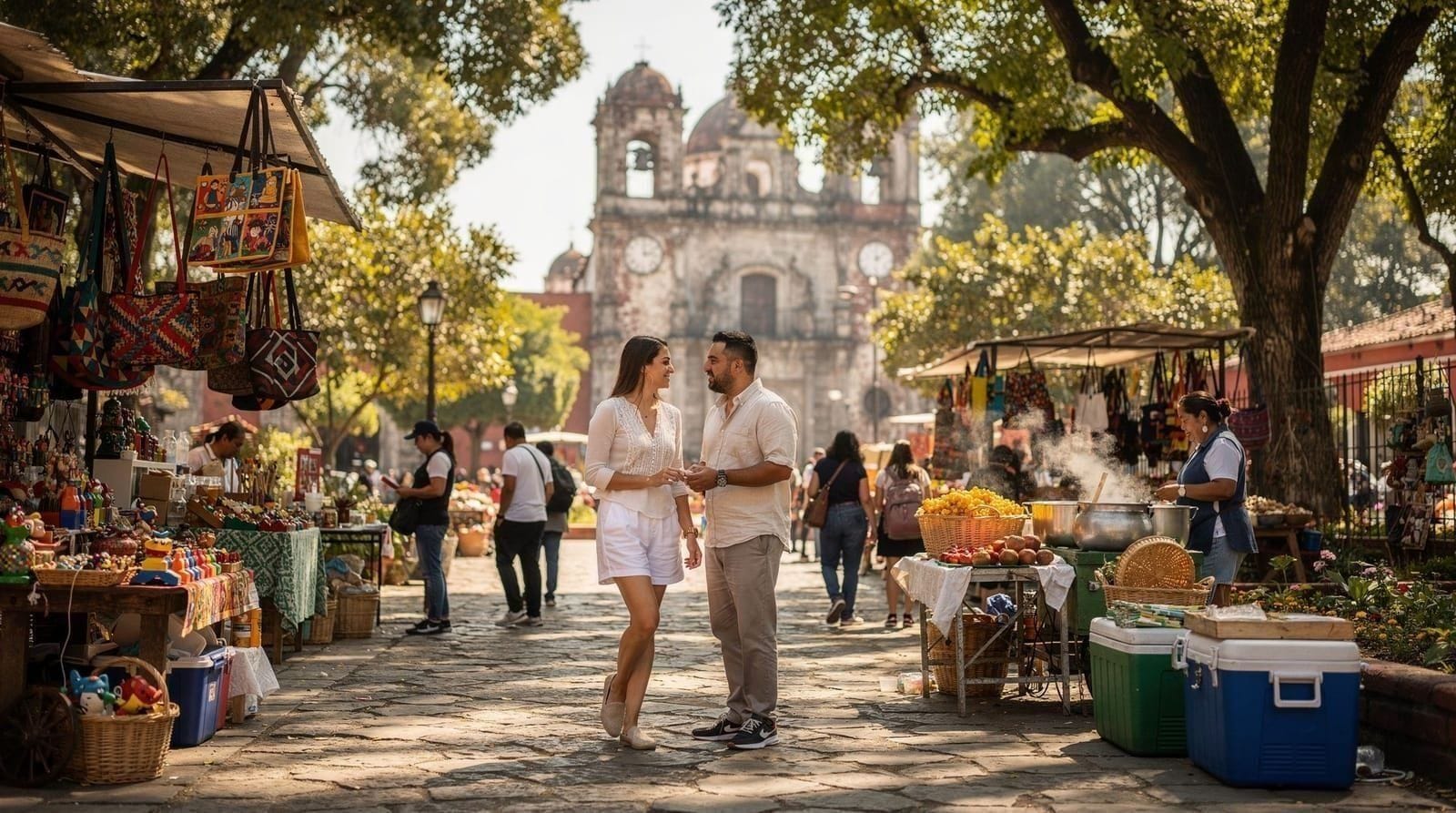
After the museum, walk to the Jardín Hidalgo and Jardín Centenario at the heart of Coyoacán — the twin plazas that form the neighborhood’s social center. Artisan market stalls, cafés, and traditional food vendors surround both squares. El Jarocho coffee stand (Allende 38) has been serving coffee and churros since 1953 and is perpetually busy for good reason — café de olla (pot coffee with cinnamon) for 35 MXN.
From the plaza, walk to the Mercado de Artesanías de Coyoacán for local crafts, and then south to San Ángel if time allows — it is a 20-minute Uber (80–100 MXN) and the colonial architecture, cobblestone streets, and Bazar del Sábado (Saturday art market) make the short hop worthwhile.
For a comprehensive day covering both Coyoacán and Xochimilco with lunch included, the Xochimilco, Coyoacán and Frida Kahlo with lunch tour combines these southern neighborhoods efficiently and is particularly suitable for visitors who prefer not to navigate independently. If you would rather stay on foot in Coyoacán itself, the Coyoacán walking tour covers the plazas, market, and colonial streets with a guide instead of a lunch stop.
Evening
Return to your base neighborhood for a final dinner. If you are staying in Roma, the Mercado Roma (Querétaro 225) has a food hall format with stalls representing different Mexican regional cuisines — a good final overview of what you have been eating all week, with a craft beer bar upstairs.
Practical notes for three days in Mexico City
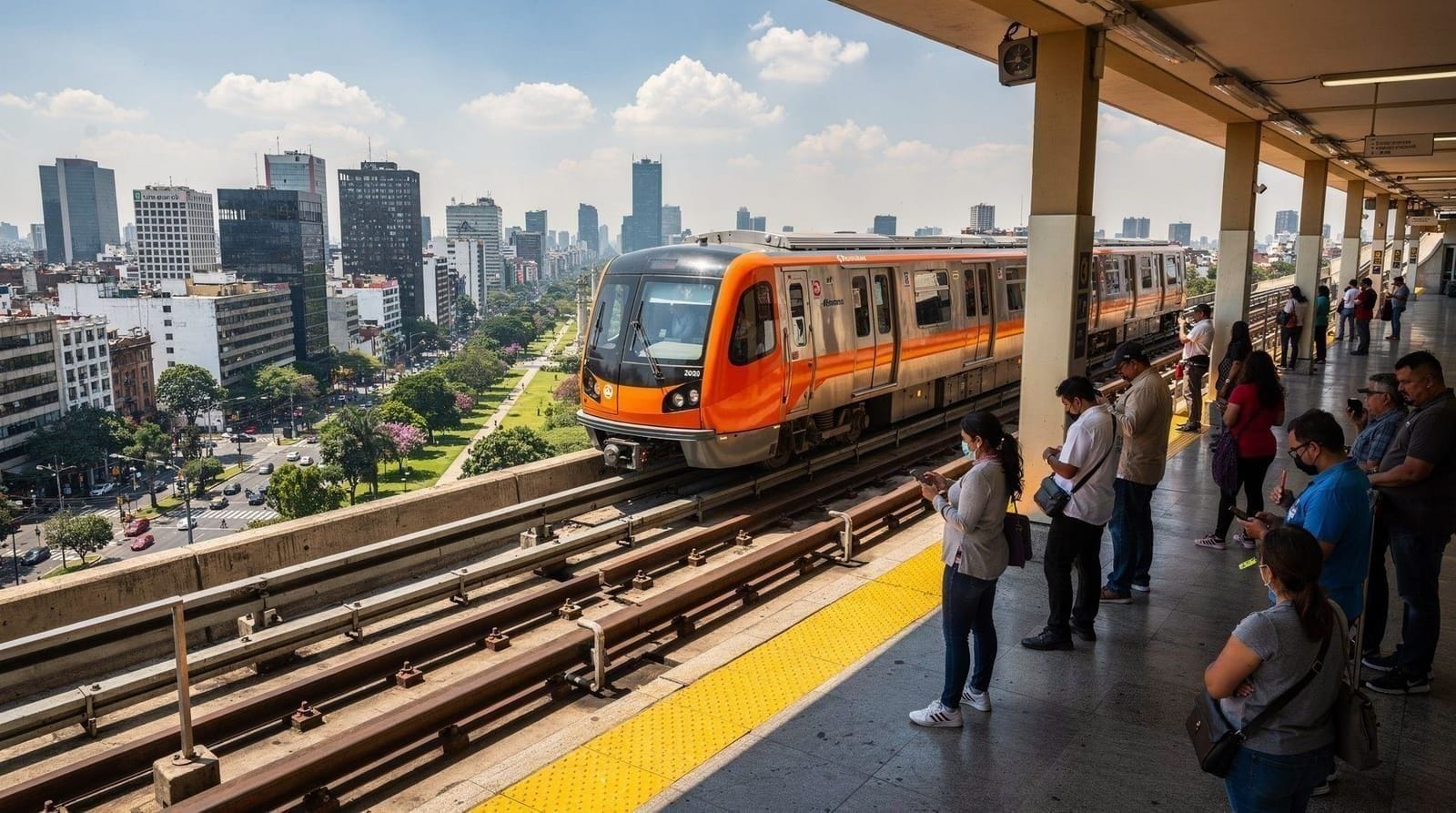
Getting around: The metro is the fastest and cheapest option (5 MXN per journey) but can be crowded during peak hours (7–9 am, 6–8 pm). Uber and DiDi are inexpensive by international standards (80–200 MXN for most city journeys) and reliably safe. Avoid metered street taxis flagged from the roadside — use only app-based services. See the getting around Mexico City guide for full transport details.
Safety: Roma, Condesa, Coyoacán, Polanco, and Centro Histórico during the day are all safe for tourists exercising normal urban awareness. The is Mexico City safe guide covers the neighborhoods and specific scams to know about before you arrive.
Altitude: 2,240 m. If you experience a persistent headache on day one, rest, hydrate, and take standard over-the-counter ibuprofen. The altitude guide covers this in detail.
Water: Do not drink tap water in Mexico City. Bottled water is available everywhere at 10–20 MXN.
Best time of year for this itinerary
November through May is the dry season and the best window for a short trip — clear skies, daytime highs around 22–25°C, and cool evenings that suit a jacket. March and April bring the jacaranda bloom, which turns Roma and Condesa’s streets purple and is worth timing a trip around if you can. June through September is the rainy season: mornings are usually clear, but expect a reliable afternoon downpour, which is manageable on a museum-heavy day but worth building slack into outdoor plans. The best time to visit Mexico City guide and the weather month-by-month guide break down the full year in detail.
What to skip if three days feels too rushed
If day one is running long, cut the Palacio de Bellas Artes interior and keep the exterior photo stop — the Diego Rivera murals in the National Palace matter more. On day two, the Anthropology Museum can absorb an entire day on its own; if you are behind schedule, skip Chapultepec Castle rather than rushing the museum’s Mexica and Maya rooms. On day three, San Ángel is the first thing to drop — it is a worthwhile bonus, not a core stop, and the Coyoacán walking guide covers a tighter self-guided route through the neighborhood’s essentials if you are pressed for time.
Staying safe and avoiding common mistakes
Roma, Condesa, Coyoacán, Polanco, and Centro Histórico by day are all comfortable for first-time visitors, but a few recurring scams catch newcomers off guard — unofficial “helpers” at the Frida Kahlo Museum queue, inflated taxi fares from unmarked cabs, and street vendors who shortchange distracted tourists. The Mexico City common scams guide is worth five minutes before you land, and pairs well with the where to stay guide if you have not yet booked accommodation.
Budget reference (3 days, mid-range, per person)
| Category | MXN | USD approx. |
|---|---|---|
| Accommodation (2 nights, shared double) | 2,400–5,000 | $115–240 |
| Museum entries (Templo Mayor, Anthropology, Chapultepec, Frida) | 950 | $50 |
| Meals (3 days at mid-range) | 1,800–3,000 | $85–145 |
| Transport (metro + Uber) | 400–700 | $19–34 |
| Guided tours (optional) | 800–1,500 | $38–72 |
A comfortable three-day visit without flights runs approximately 6,315–11,115 MXN ($300–530 USD) per person.
Frequently asked questions about this itinerary
Is three days enough for Mexico City?
Three days is the minimum for a meaningful first visit. You will cover the historic center, Chapultepec, and Coyoacán. You will not reach Teotihuacán, Xochimilco, or the southern day trips. If you can stay four or five days, see the 4-day and 5-day itineraries.
Which neighborhood should I stay in for three days?
Roma Norte is the best base: walkable, safe, excellent restaurant density, and easy metro and Uber access to all three areas on this itinerary. Condesa is equally convenient and slightly greener. Centro Histórico is cheaper but less comfortable in the evenings.
Do I need to speak Spanish?
For the areas covered in this itinerary — Centro, Chapultepec, Coyoacán — English is widely spoken in museums, restaurants, and hotels. Metro signs are in Spanish but the numbered/colored lines are intuitive. Street food vendors are Spanish-only; a translation app handles this with minimal friction.
Is the metro safe for tourists?
Yes, for most journeys. Keep phones and wallets in front pockets during busy hours, particularly at transfer stations. The Line 3 (blue) between Insurgentes and Coyoacán and Line 1 (pink) to Chapultepec are the relevant routes for this itinerary and are well-maintained.
When should I book the Frida Kahlo Museum?
At least 5–7 days ahead online, and 2–3 weeks ahead for weekend or holiday visits. Walk-up availability runs out quickly, particularly for the midday sessions. Book at museofridakahlo.org.mx using your passport number.
How much cash should I carry?
Budget around 500–800 MXN per day in cash for street food, tips, market purchases, and smaller vendors. Cards are accepted at restaurants in Roma and Polanco; many street food stalls and smaller businesses are cash-only. See Mexico City tap water and food safety for notes on drinking safely while eating at street level.
What is the best time of year for a three-day trip?
November through May, the dry season, gives you the most reliable weather for a short visit with fixed dates. March and April add the jacaranda bloom around Roma and Condesa. See the weather month-by-month guide if your dates are flexible.
Top experiences
Bookable activities with verified prices and instant confirmation on GetYourGuide.