Mexico City historic center tour: comparing the best options
Mexico City: Historic Downtown Walking Tour
The historic center: Mexico City’s most layered neighborhood
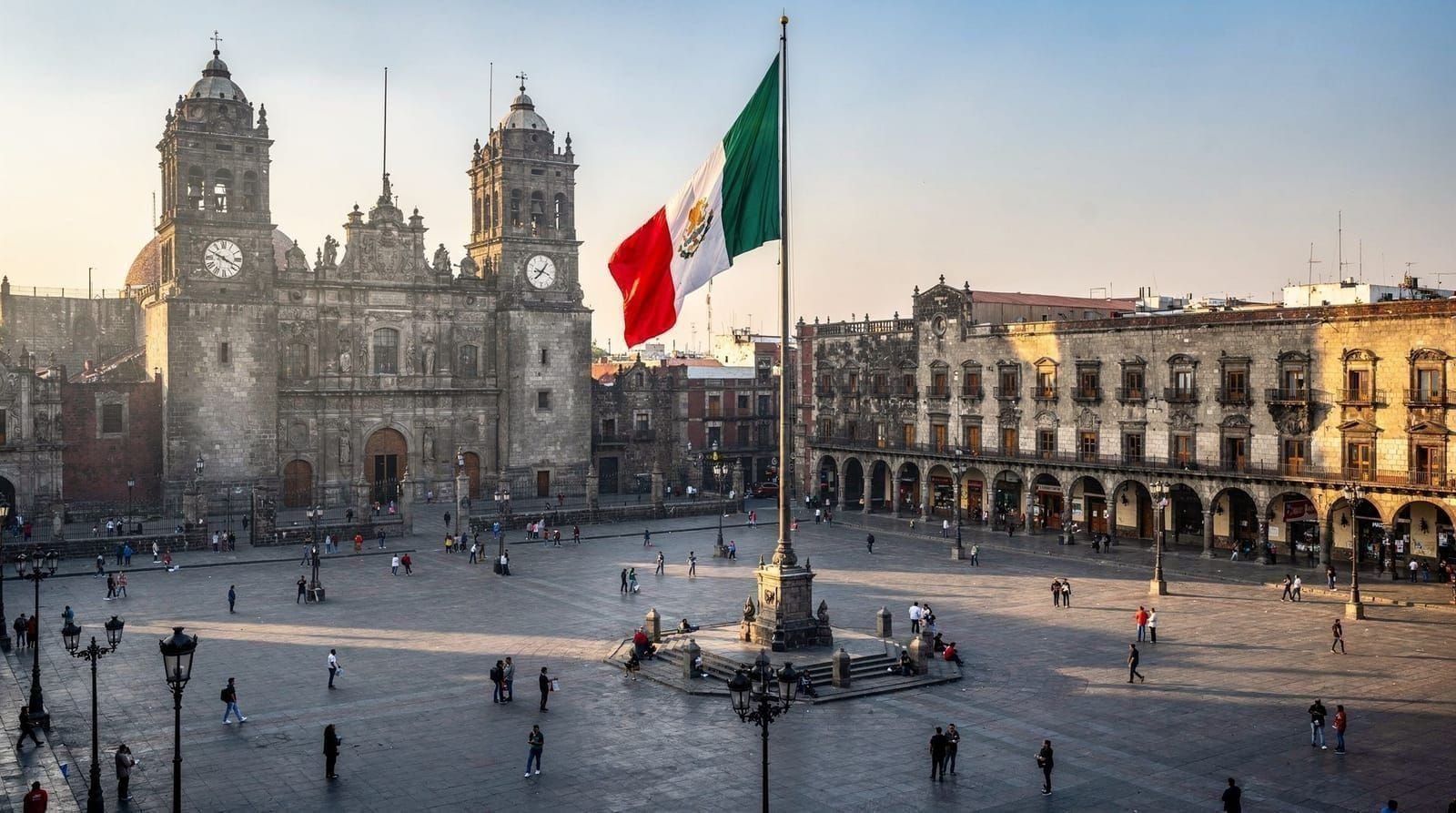
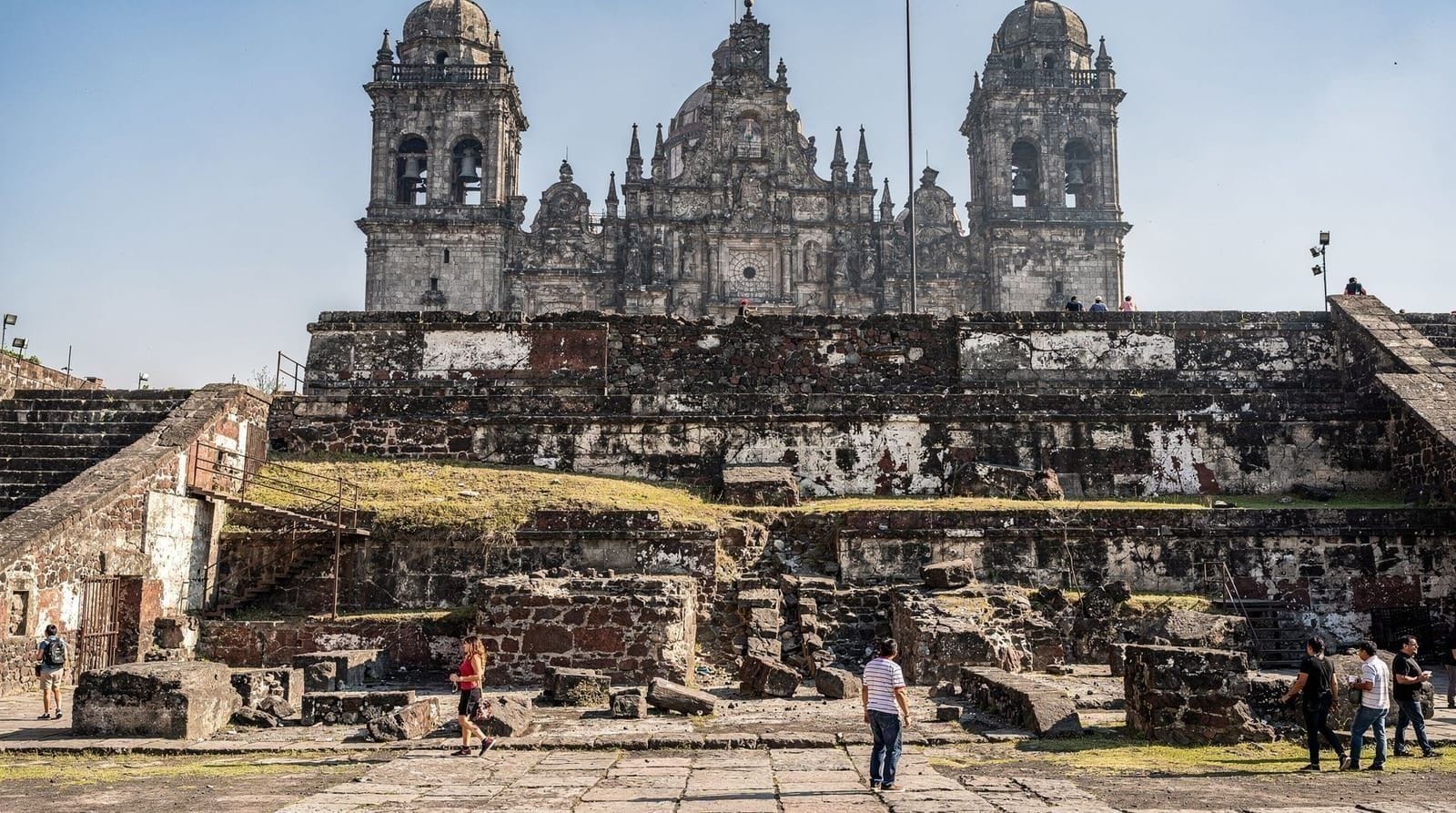
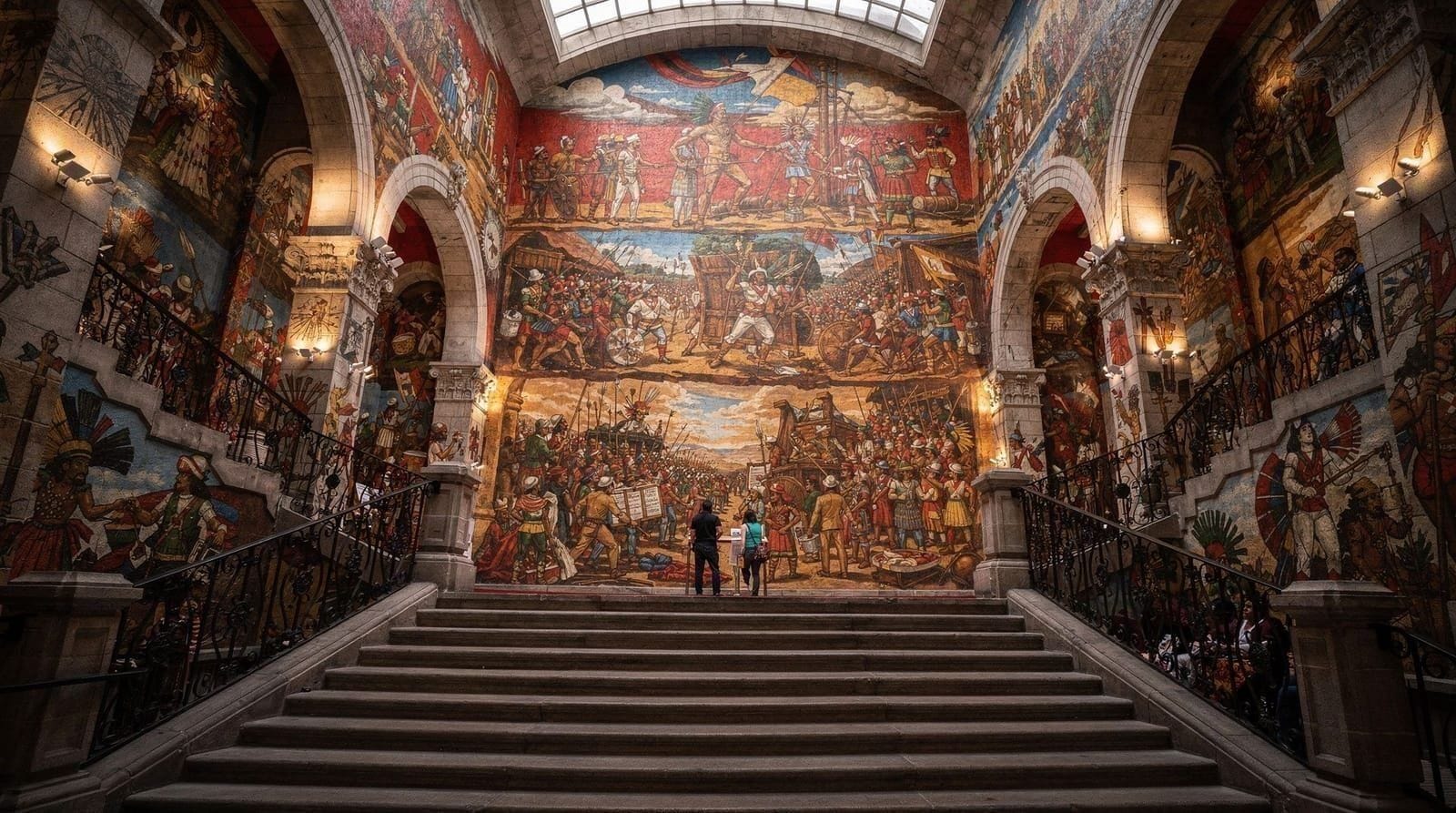
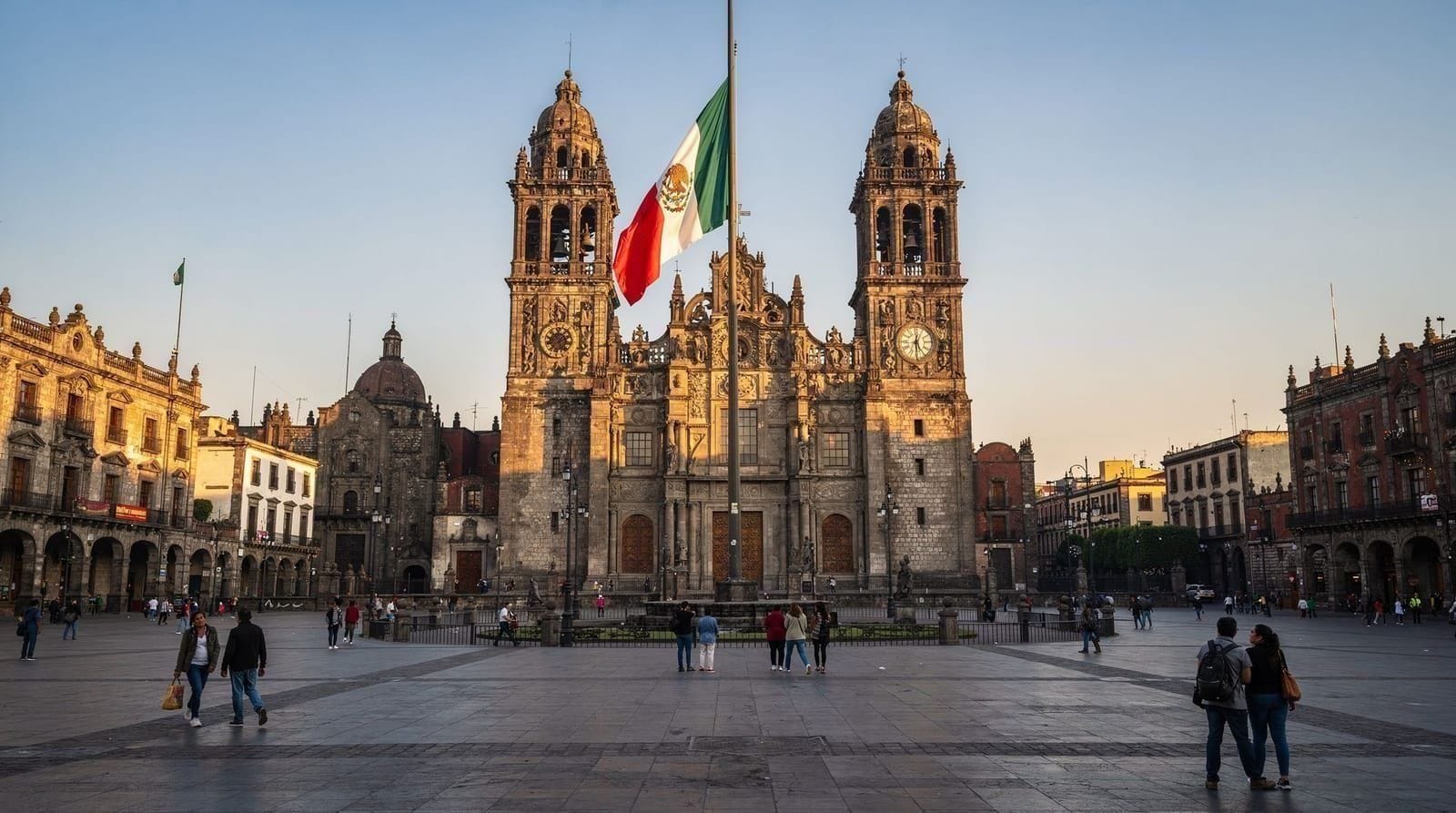
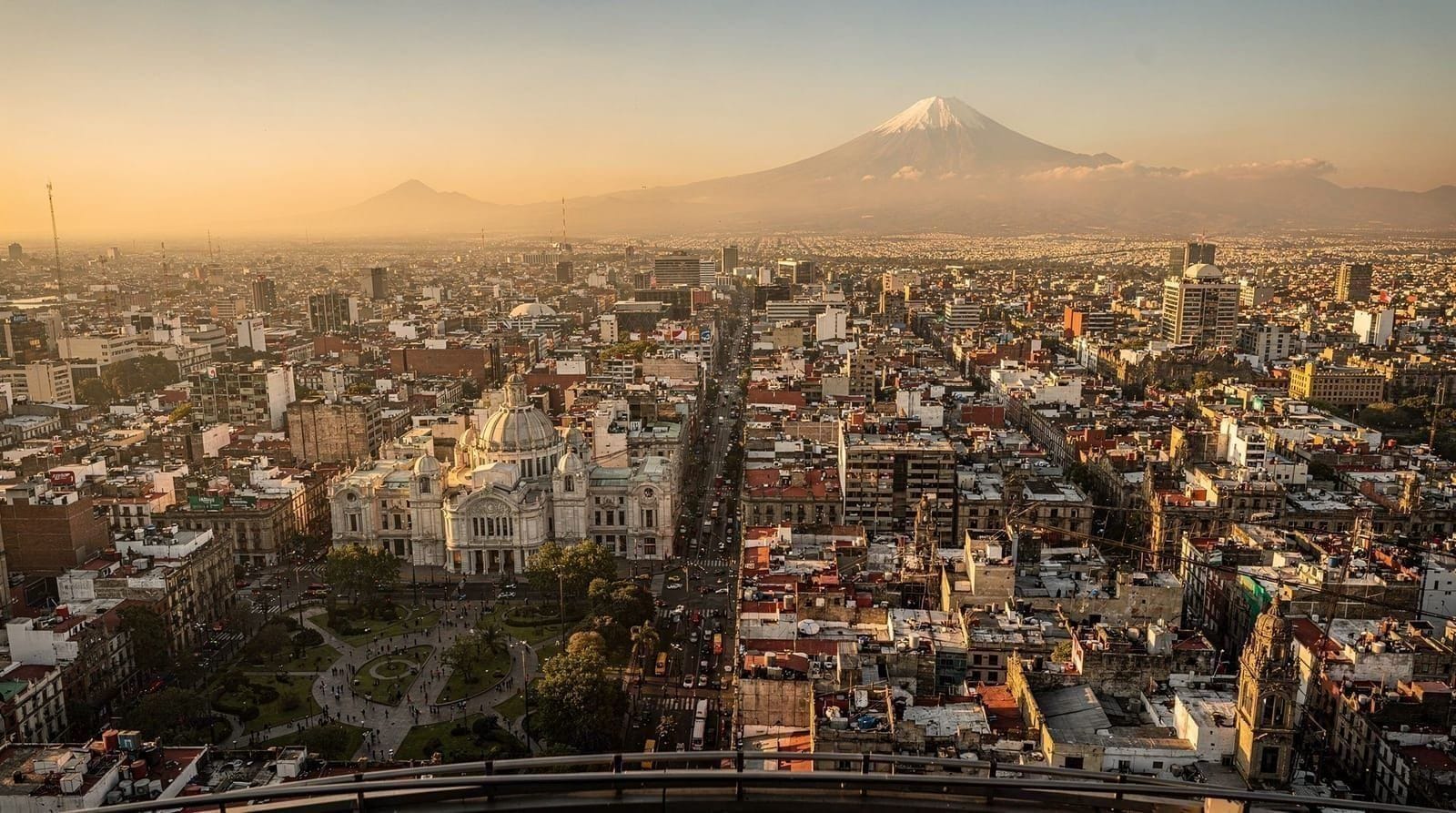
The Centro Histórico is where Mexico City begins and where its entire history is compressed into one square kilometer. The Aztec Templo Mayor pyramid was excavated after electric workers stumbled upon it in 1978 — it had been buried under 16th-century construction for nearly 500 years. The Metropolitan Cathedral began construction in 1573 using dismantled Aztec pyramid stone and took 240 years to complete. The National Palace houses one of the most significant mural programs in art history. The Zócalo plaza has hosted executions, political rallies, military parades, and one of the most dramatic Day of the Dead installations in the world.
A walking tour of this area with a good guide covers more layers of Mexican history per hour than almost anywhere else in the country. The three main formats are a standard introductory tour, a VIP format with specific museum access, and the Diego Rivera murals-focused walk. This review compares all three honestly.
| Where | Zócalo and surrounding streets, Centro Histórico |
| Cost | Around 350–1,500 MXN per person depending on format |
| Time needed | 2–4 hours guided; 5–6 hours if exploring fully self-guided |
| Getting there | Metro Zócalo/Pino Suárez (Lines 2 and 1), or Allende station |
| Best time | Before 9 am for a quiet Zócalo; tours typically depart 9–9:30 am |
Option 1: Historic downtown walking tour (best starting point)
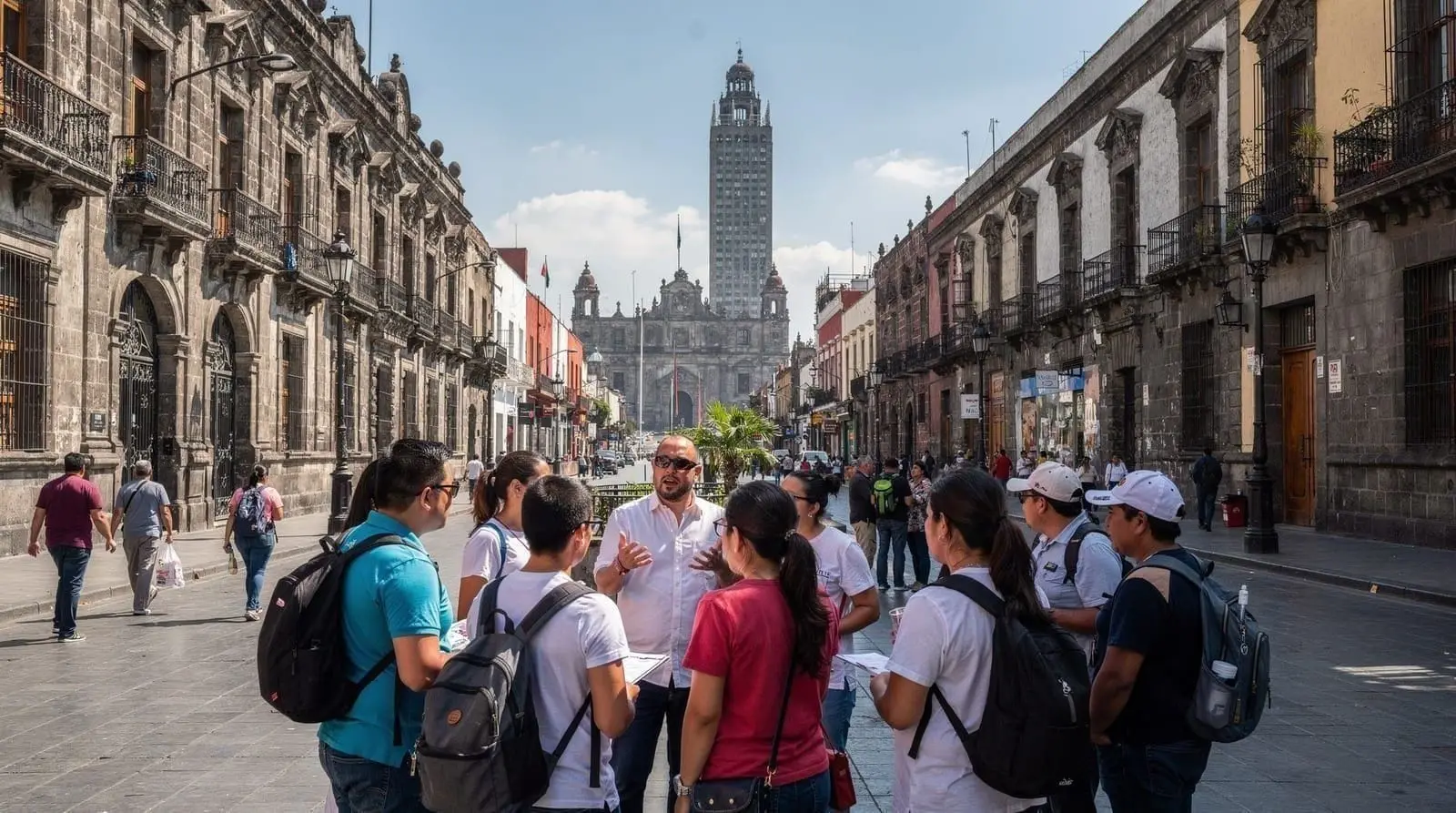
The Mexico City historic downtown walking tour is the standard introduction — a 2–3 hour guided walk from the Zócalo through the main streets and plazas of the historic center, covering the Metropolitan Cathedral, the exterior of the Templo Mayor, the National Palace (exterior and, in most versions, the mural staircase), Madero street, and the Palacio de Bellas Artes.
For a first-time visitor, this is the correct starting point. The guide’s explanation of the relationship between Aztec Tenochtitlán and the colonial city built on top of it is crucial context for understanding everything else you will see in Mexico City. Without that framework, the Templo Mayor is impressive but disorienting; with it, the entire city becomes legible.
What is typically included: Bilingual guide, 2–3 hours of walking coverage of the main historic center sites, and in most versions some specific time inside the National Palace for the Rivera murals.
Price: approximately 350–600 MXN per person (group tours); 800–1,500 MXN per person (private).
Best for: All first-time visitors; morning activity before independent afternoon exploration; visitors without specific deep-dive interests.
Travellers who prefer not to join a group can book the same route as a private historic center walking tour — a dedicated guide, flexible pacing, and the ability to linger longer at the Templo Mayor or National Palace murals, at a higher per-person price than the standard group format.
Option 2: Historic center VIP tour with Templo Mayor
The Mexico City historic center VIP tour with Templo Mayor incorporates skip-the-line access and a guided visit inside the Templo Mayor museum — the on-site museum at the excavated Aztec pyramid that houses the most significant archaeological finds from the site, including the Coyolxauhqui disc (eight tonnes of carved volcanic stone, discovered in 1978) and the Tlaltecuhtli monolith discovered in 2006.
The distinction between standing outside the Templo Mayor on a standard tour and entering the museum with an archaeologist-guide is significant. The museum’s contents — the scale models of Tenochtitlán, the sacrificial objects, the ritual calendars — are the primary evidence base for understanding how Aztec religious and political life actually operated. A guide who can interpret this evidence is irreplaceable for visitors who want depth.
The VIP element also typically includes priority access to the National Palace murals to avoid the queue that builds after 10 am.
Price: approximately 700–1,200 MXN per person.
Best for: History and archaeology enthusiasts; visitors with prior interest in Aztec civilization; anyone who wants more than a surface-level understanding of the pre-Columbian layers of Mexico City.
Option 3: Diego Rivera murals walking tour
The Diego Rivera murals guided walking tour is specifically focused on the mural program that Rivera executed across the historic center and adjacent buildings — the National Palace staircase and corridor (the most famous and most extensive), the Secretariat of Public Education (SEP, 235 murals across two floors), and the Hospital de la Raza (not always included but worthwhile).
This is the most specialist of the three options. It presupposes significant interest in Diego Rivera’s work specifically — his political ideology, his visual language, the art-historical context of Mexican muralism, and the specific historical episodes depicted across 25 years of mural painting. A guide who can explain what Rivera intended versus what the state that commissioned him wanted is essential for appreciating the murals as more than impressive painting.
The Secretariat of Public Education murals are significantly less visited than the National Palace staircase and are where Rivera’s program can be read most clearly as a narrative — a 235-panel visual essay on Mexican identity, labor, culture, and history.
Price: approximately 600–1,000 MXN per person.
Best for: Art history enthusiasts; visitors with existing interest in Rivera’s work; anyone who has read the biography and wants the visual equivalent.
The Templo Mayor in detail
The Templo Mayor deserves its own consideration regardless of which tour you take. The excavated temple compound at the northeast corner of the Zócalo is the most significant Aztec archaeological site in the country — not because of its size (it was much larger before demolition) but because of what was found during and after the 1978 excavation.
Entry to the site and museum (210 MXN, free on Sundays for Mexican nationals and residents) includes the outdoor ruins and the museum building. The museum’s highlights:
The Coyolxauhqui disc: A 3.25 m diameter carved stone showing the Aztec moon goddess Coyolxauhqui dismembered after being killed by her brother Huitzilopochtli. Weighing approximately eight tonnes, it was found 2 m below the surface of Calle Guatemala by an electric company worker in 1978 and triggered the largest archaeological excavation in Mexico City’s history.
The Tlaltecuhtli monolith: Discovered in 2006 during infrastructure work adjacent to the site — a 4-metre carved stone depicting the earth deity, considered the most important archaeological find in Mexico in the 21st century.
The scale model of Tenochtitlán: A meticulously researched reconstruction of the island city as it appeared circa 1519. The scale and urban density visible in the model — denser than contemporary Seville or Venice — explains why the Spanish conquistadors described their first sight of the city as seeing a vision.
The Templo Mayor guide covers the site and museum in full detail.
Self-guided visiting: practical notes
The historic center can be explored independently with the Zócalo and Templo Mayor guide and Diego Rivera murals guide as reference. The main sites are:
| Site | Entry | Hours |
|---|---|---|
| Templo Mayor | 210 MXN | Tue–Sun 9 am–5 pm |
| National Palace (murals) | Free | Daily 9 am–5 pm |
| Metropolitan Cathedral | Free | Daily 7 am–8 pm |
| Palacio de Bellas Artes | 95 MXN (Rivera mural) | Tue–Sun 9 am–5 pm |
| Torre Latinoamericana (observation deck) | 110–140 MXN | Daily 9 am–10 pm |
Sunday is free admission day for most federal museums and sites (including Templo Mayor) for Mexican nationals; foreign visitors still pay. The Zócalo itself is free at all times.
Comparing the three tour formats
| Option | Price (MXN/person) | Focus | Best for |
|---|---|---|---|
| Historic downtown walking tour | 350–1,500 | Broad introduction | First-time visitors, morning activity |
| VIP tour with Templo Mayor | 700–1,200 | Aztec archaeology museum access | History/archaeology enthusiasts |
| Diego Rivera murals walk | 600–1,000 | Mural program in depth | Art history enthusiasts |
Extending the day into Frida Kahlo territory
The historic center pairs naturally with a second stop if you have the stamina for a full day. Many visitors combine a morning in the Centro Histórico with an afternoon at the Frida Kahlo Museum in Coyoacán — the metro connection (Line 2 to Line 3, or an Uber) takes about 30–40 minutes outside peak traffic. Building both into one day works if you start the historic center walk by 9 am and treat the Frida Kahlo Museum as a focused 90-minute visit rather than a leisurely afternoon.
Why the Templo Mayor changes how you see the rest of the city
Once you have internalized that the entire Centro Histórico sits on top of Tenochtitlán, the rest of Mexico City reads differently — the sinking, uneven pavements throughout downtown are the ongoing consequence of building a colonial and modern city on a drained lakebed. The Zócalo and Templo Mayor guide goes deeper into this geological and historical relationship, and it is worth reading before or after any of the three tour formats above, guided or not.
Frequently asked questions about historic center tours
How much should I tip a private walking tour guide?
For a 2–3 hour tour: 200–300 MXN per person is standard. For a 4+ hour specialized tour: 300–500 MXN per person. Cash in pesos.
Can I combine the historic center with Chapultepec on the same day?
Yes, but it makes for a full day. Historic center in the morning (9 am–1 pm), lunch near Reforma, Chapultepec afternoon (2–6 pm). Both are on the same Paseo de la Reforma axis, making the transit straightforward. See the 3-day Mexico City itinerary for the full day structure.
Is the Palacio de Bellas Artes worth entering?
For the Rivera mural on the third floor (“Man, Controller of the Universe,” 95 MXN entry): yes, definitely. For the building as architecture: the exterior is spectacular and free to view. The lobby and first-floor common areas are also free. The third-floor murals by Rivera, Orozco, and Siqueiros are the most significant mural program in a single building in Mexico. The Palacio de Bellas Artes guide covers the full contents.
Can I visit the historic center and the Frida Kahlo Museum on the same day?
Yes, but plan for a full day. Historic center touring in the morning, lunch near the Zócalo or en route, then metro or Uber south to Coyoacán for the Frida Kahlo Museum in the afternoon — book the museum slot in advance since it does not accept casual walk-ups on busy days.
Is a guided tour of the Mexico City historic center necessary?
Not strictly necessary, but very valuable for a first visit. The Centro Histórico layers Aztec, colonial, 19th-century, and 20th-century history in the same square kilometer. A guide who can explain the context of each layer — what was demolished to build what, why the Metropolitan Cathedral sinks in one direction, what the murals in the National Palace are actually depicting — transforms an impressive walk into a comprehensible one.
What is the difference between the Zócalo and Tenochtitlán?
Tenochtitlán was the Aztec capital that occupied the island in Lake Texcoco at this location until the Spanish conquest (1521). The Zócalo (officially Plaza de la Constitución) was built over the center of Tenochtitlán — the Templo Mayor, excavated in 1978, sits at the northeast corner of the modern plaza. The entire historic center sits on former Aztec urban fabric.
What time should I arrive in the historic center?
Before 9 am to see the Zócalo before tour groups and market stalls arrive. The Templo Mayor and National Palace open at 9 am. Guided tours often depart at 9 am or 9:30 am. By 11 am, the main pedestrian streets (Madero, Cinco de Mayo) are significantly more congested.
How long does a historic center tour take?
Standard walking tours run 2–3 hours and cover the Zócalo, Metropolitan Cathedral, Templo Mayor vicinity, and Diego Rivera murals in the National Palace. VIP tours with museum access run 3–4 hours. A thorough self-guided visit of all major sites takes 5–6 hours.
Is the historic center safe for tourists?
Yes, during the day. The Zócalo area and main pedestrian streets are well-policed and heavily tourist-trafficked. Standard urban precautions apply: keep phones in inner pockets, use card payments where available. After dark, the streets around the Templo Mayor area quiet significantly; the western zone toward Alameda and Bellas Artes stays active longer. See the is Mexico City safe guide.