Templo Mayor guide: the Aztec temple beneath Mexico City's center
Mexico City: Templo Mayor Skip-the-Line Entry Ticket
What is Templo Mayor and is it worth visiting?
Templo Mayor is the remains of the great Aztec temple of Tenochtitlan, excavated under central Mexico City beginning in 1978. The site includes outdoor ruins and a world-class museum with over 10,000 artifacts. Entry costs 210 MXN. Allow 2–2.5 hours. It's one of the most important pre-Columbian archaeology experiences in Mexico City.
What is Templo Mayor?
Mexico City is built on the ruins of Tenochtitlan, the Aztec capital that the Spanish destroyed and then built over beginning in 1521. For four centuries, the exact location of the Aztec great temple — the Templo Mayor, the ceremonial center of an empire — was known roughly but not precisely. Churches, government buildings and streets covered the old city.
| Where | Seminario 8, Centro Histórico, behind the Metropolitan Cathedral |
| Cost | 210 MXN, ruins + museum combined |
| Time needed | 2–2.5 hrs |
| Getting there | Metro Zócalo (Line 2), or a short walk from anywhere in centro |
| Best time | Weekday mornings; closed Mondays |
Then, in February 1978, workers from the Compañía de Luz electrical utility were digging a utility trench behind the Metropolitan Cathedral on the Zócalo when their equipment struck a carved stone object. It turned out to be the Coyolxauhqui Stone — a 3.25 m basalt disc of the moon goddess, carved around 1500 CE, buried under 60 cm of street fill.
The discovery triggered one of the most significant archaeological excavations in the Western Hemisphere. The Mexican government halted construction on two city blocks and brought in INAH archaeologists. What emerged over the following years was the Templo Mayor — the great double temple of Huitzilopochtli (sun and war god) and Tlaloc (rain deity), rebuilt seven times in layers as successive Aztec rulers expanded the structure. The excavation is ongoing.
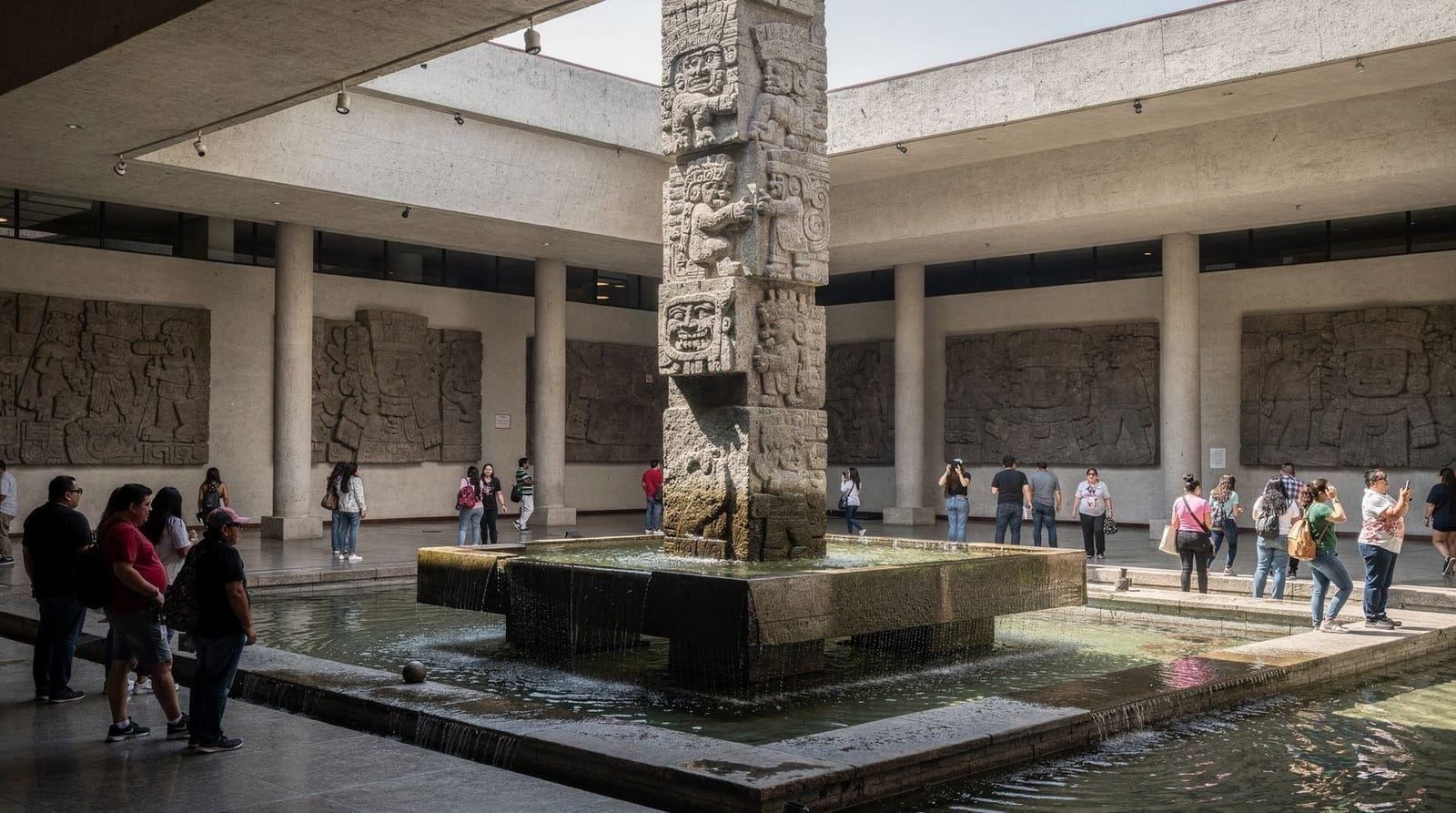
Today the site includes the exposed ruins of multiple construction phases and the Museo del Templo Mayor, which houses over 10,000 objects recovered from the site and is considered one of the world’s top archaeological museums.
Getting there
Templo Mayor is in the Centro Histórico, one of Mexico City’s easiest neighborhoods to reach:
Metro: Line 2 (blue line) to Zócalo station. Exit and walk north across the plaza — the entrance to Templo Mayor is on Calle Seminario 8, on the northeast side of the Zócalo (the square), behind the cathedral.
Uber/DiDi: Drop-off on the Zócalo or Calle Seminario. About 60–90 MXN from Roma or Condesa.
Walking: The Zócalo is about 4 km east of Chapultepec and 2 km from the Roma neighborhood. Many visitors walk if weather allows.
Timing your arrival: The site opens at 09:00 and the first hour is consistently the quietest, before tour groups and school groups arrive mid-morning. If your schedule allows a 9am arrival, the ruins and the first few museum rooms are noticeably calmer than an 11am or afternoon visit.
If you are still choosing where to base yourself, the where to stay in Mexico City guide explains how each neighborhood connects to the historic center, and the getting around Mexico City guide covers the Metro, ride-hailing apps and walking routes in more detail.
The outdoor ruins
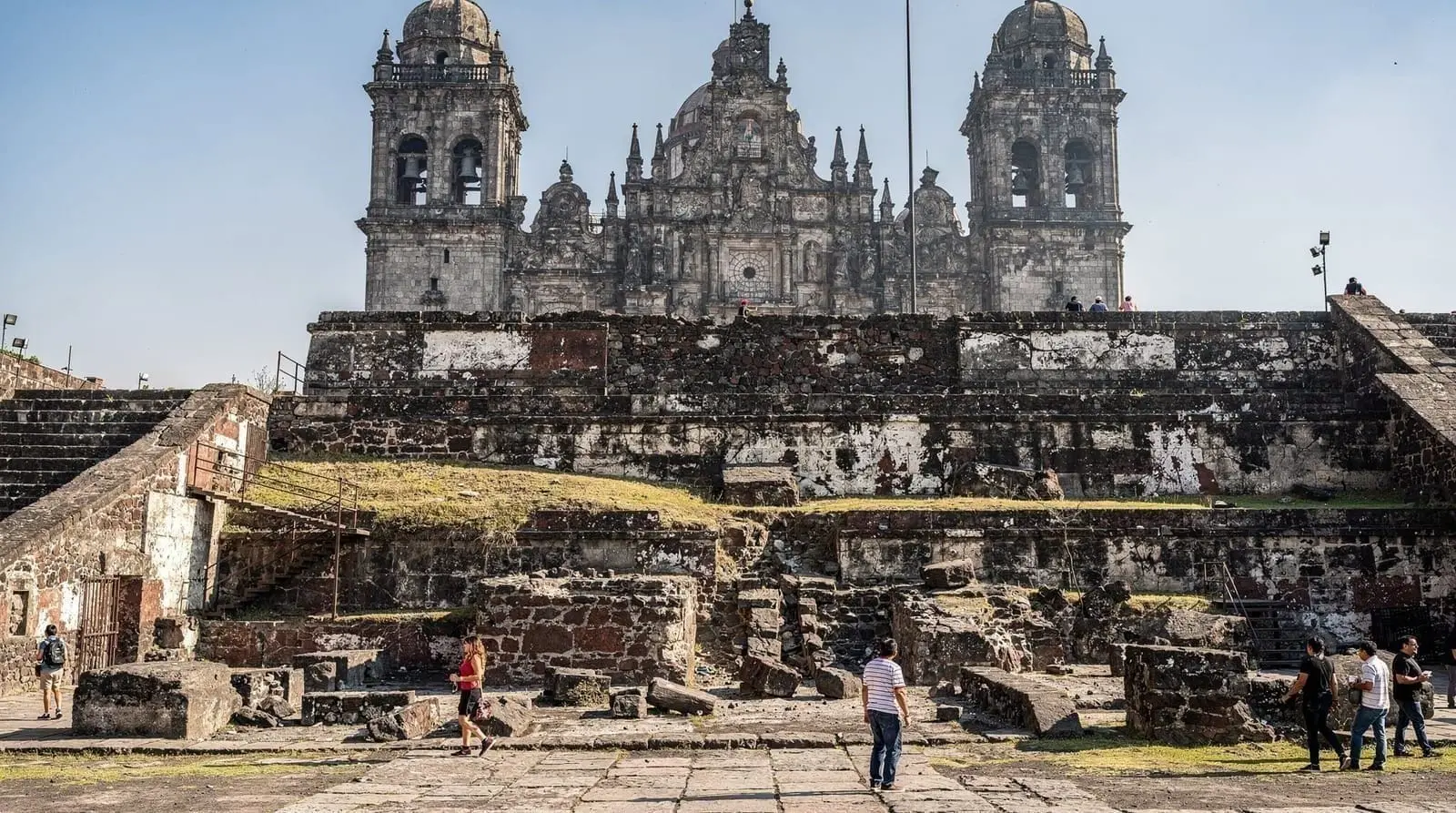
The excavated ruins occupy roughly a city block and are viewed from boardwalks and pathways between the exposed stone structures. The seven construction phases are visible as concentric shells — each ruler’s expansion encased the previous temple — labeled Phase I through Phase VII. The oldest phases are interior; the most recently excavated sections extend toward the street.
Key features visible in the ruins:
- The Tzompantli (skull rack base): rows of carved skulls representing the actual wooden rack where sacrificed skulls were displayed
- Altar platforms and offering deposits (marked with informative panels)
- Carved serpent heads at the base of the original stairway platforms
- The Coyolxauhqui Stone location (the stone itself is in the museum)
- Multiple superimposed stairways showing reconstruction phases
The panels are in Spanish and English. Audio tours (included with some organized tour packages) add considerable depth.
The museum: eight rooms of extraordinary artifacts
The Museo del Templo Mayor is divided into eight thematic rooms rather than a simple chronological display. The quality of individual objects is outstanding:
Room 1 — Ritual and War (Huitzilopochtli shrine side): Objects from the south half of the temple (dedicated to Huitzilopochtli). Sacrificial knives (tecpatl) with mosaic handles, warrior costume elements, and the context for the human sacrifice that took place at the temple summit.
Room 2 — The Coyolxauhqui Stone: The entire room is organized around the Coyolxauhqui disc, displayed dramatically in a pit below viewing level so you see it from above — the perspective of the priests who stood above her dismembered body. The lighting is theatrical and effective.
Room 3 — Tlaloc shrine offerings: The north half of the temple was dedicated to Tlaloc. Offerings buried beneath the floors included coral, shells, fish, miniature Tlaloc vessels, jade figurines and — consistent with rain deity offerings — turquoise objects. The quantity and variety reflects the economic power of an empire that drew tribute from the Gulf Coast and Pacific regions.
Room 4 — Fauna: Animal remains recovered from offerings: jaguars, pumas, eagles, crocodiles, sharks, coral and tropical fish — all tribute from distant ecological zones. The imperial reach of Tenochtitlan is illustrated by the geography these animals represent.
Room 5 — Agriculture and tribute: Chinampas, ceramic vessels from tributary regions, and the economic system that supported a city of 200,000+ people in a high-altitude lake environment.
Room 6 — The Tlaltecuhtli Stone: Discovered in 2006 during sewer line work adjacent to the site: a monumental stone (4 × 3.6 m) showing the earth deity Tlaltecuhtli in a position of birth/death, one of the most significant Aztec sculptures ever found. The discovery was made 28 years after the Coyolxauhqui find; the excavation around Templo Mayor continues to produce major objects.
Rooms 7–8 — Trade and daily life: Everyday objects, trade goods, and the political system of the Aztec empire in its final century before 1521.
Guided tour value
The archaeology here is dense and the English signage, while present, leaves out significant interpretive content. A licensed archaeologist guide transforms the visit.
The private tour with an anthropologist guide covers both the outdoor ruins and the museum with scholarly context — the best option for visitors who want depth.
The skip-the-line entry is useful on weekends or during peak season when entry queues at the ticket window can run 20–30 minutes.
For combining with the broader historic center, the historic center walking tour with VIP Templo Mayor access pairs the ruins with Diego Rivera murals at the Palacio Nacional (a five-minute walk away) and the Zócalo itself.
For visitors who want to see the ceremonial center as it looked before the conquest, the Templo Mayor tour with a Tenochtitlan VR experience layers a virtual reconstruction of the temple complex onto the ruins you’re standing on.
Templo Mayor and its neighbors
The Centro Histórico immediately surrounding Templo Mayor contains some of Mexico City’s most historically dense urban fabric:
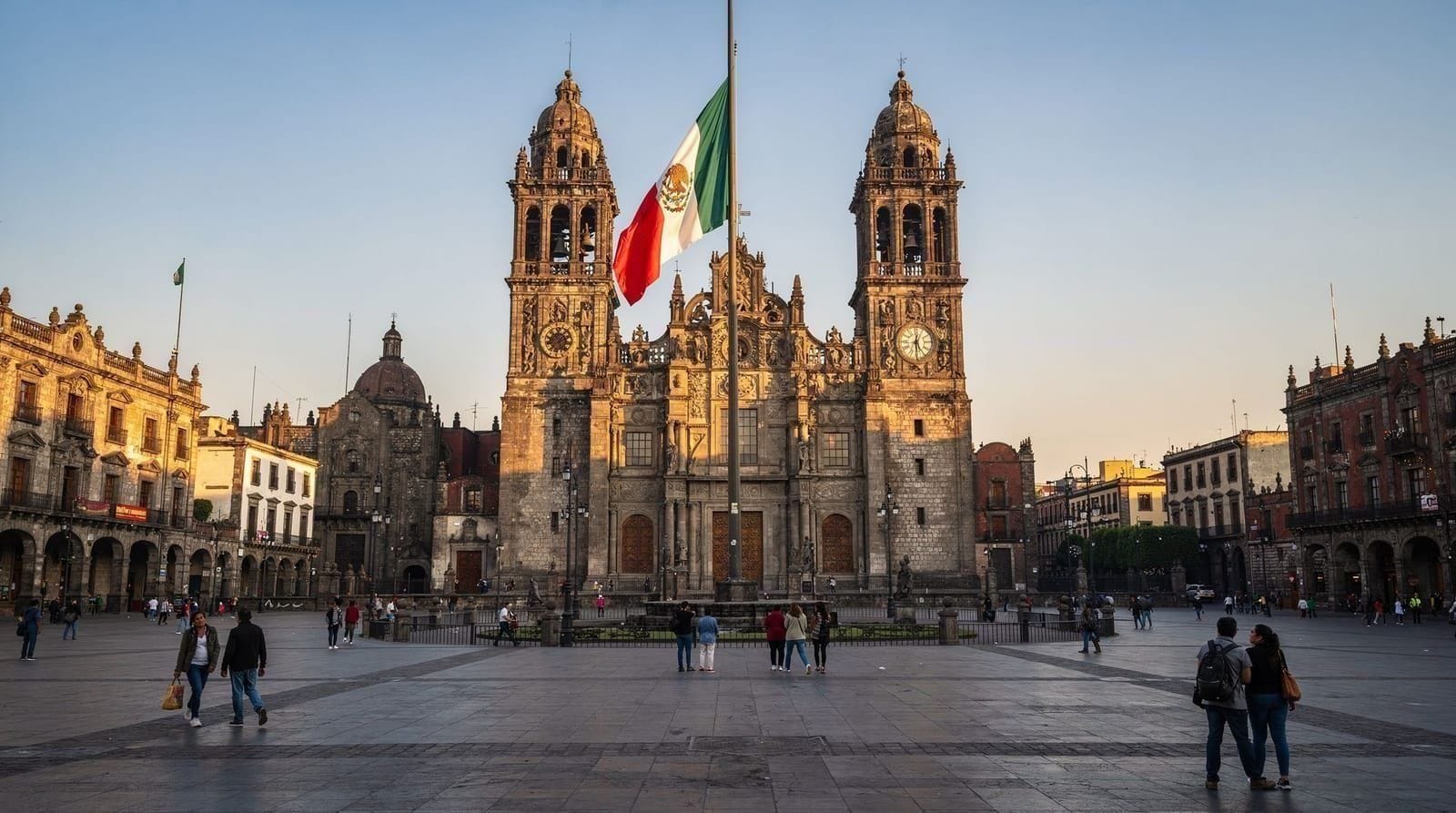
Metropolitan Cathedral (Catedral Metropolitana): Directly south, built from 1573 and still settling unevenly into the lake bed below. The greatest Baroque religious building in the Americas. Free entry; organ concerts scheduled regularly.
Palacio Nacional: The presidential palace on the east side of the Zócalo, with Diego Rivera’s major History of Mexico mural cycle (free entry). See the Diego Rivera murals guide.
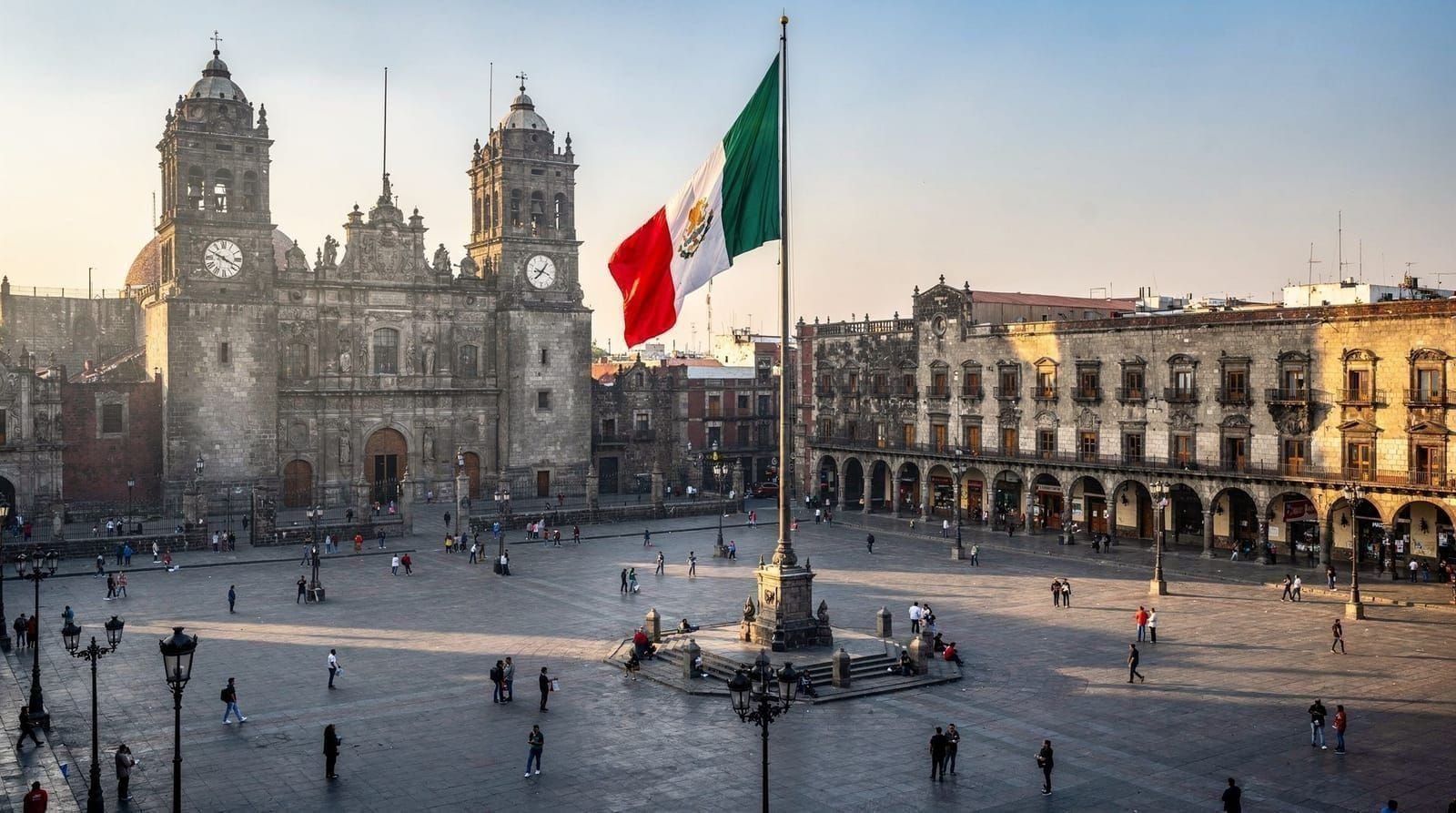
Zócalo: The central plaza, one of the largest in the world. Free, always accessible.
The Zócalo and Templo Mayor guide covers the full historic center area, and the Centro Histórico destination page has the broader neighbourhood context if you’re spending more than one day here.
Templo Mayor vs. the Anthropology Museum vs. Soumaya
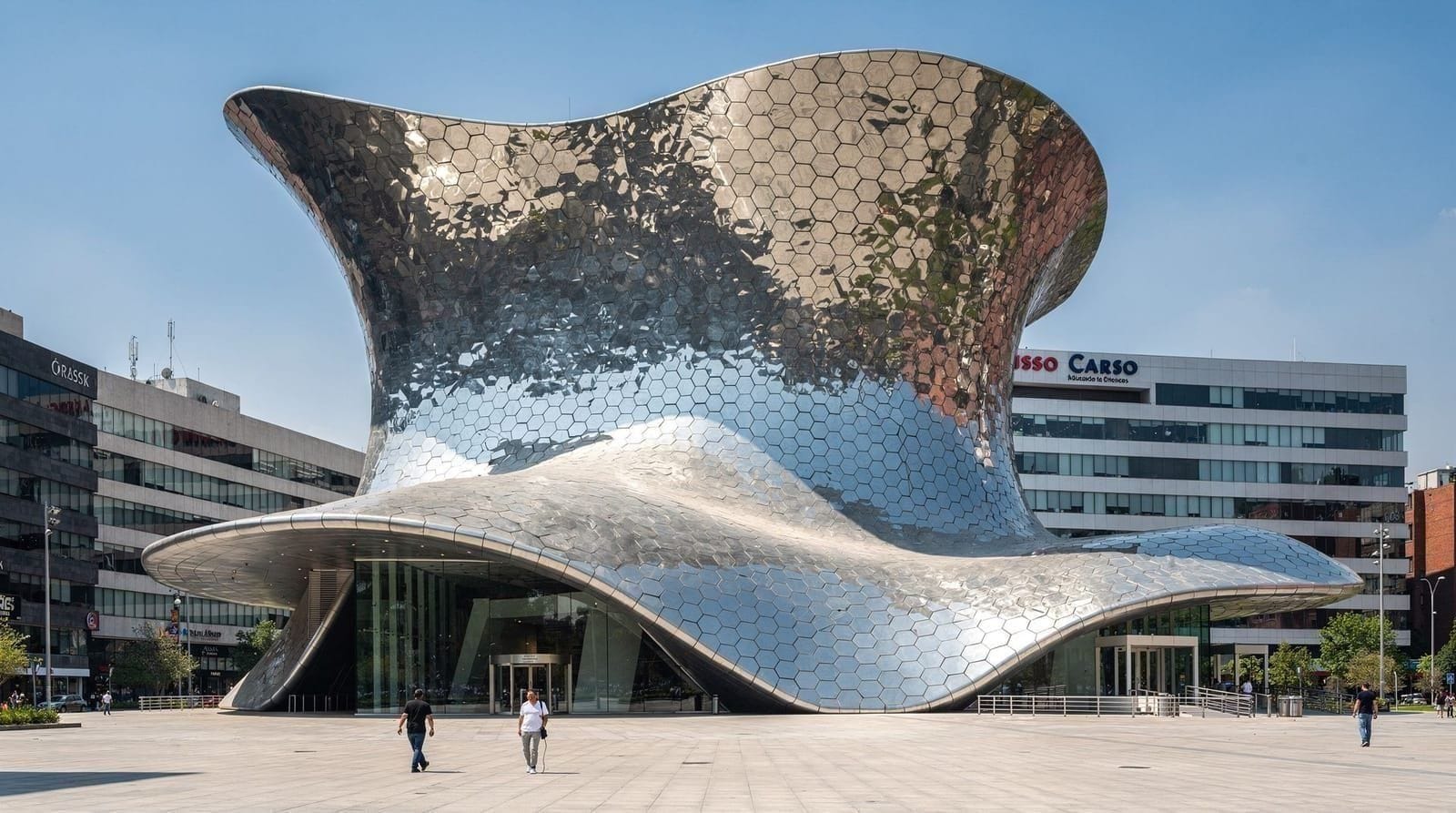
Visitors with limited museum time often ask which of Mexico City’s major museums to prioritise. Templo Mayor is narrow and deep — one city, one temple, one excavation, told with extraordinary object density. The Anthropology Museum is broad — dozens of Mesoamerican civilisations across centuries, the definitive overview. The Soumaya Museum is different again — free entry, an eclectic private collection spanning European and pre-Columbian art with no single geographic focus. None replaces the others: Templo Mayor gives you the specific site where the empire’s history is buried directly beneath your feet, which no other museum in the city can offer.
The Aztec city beneath your feet
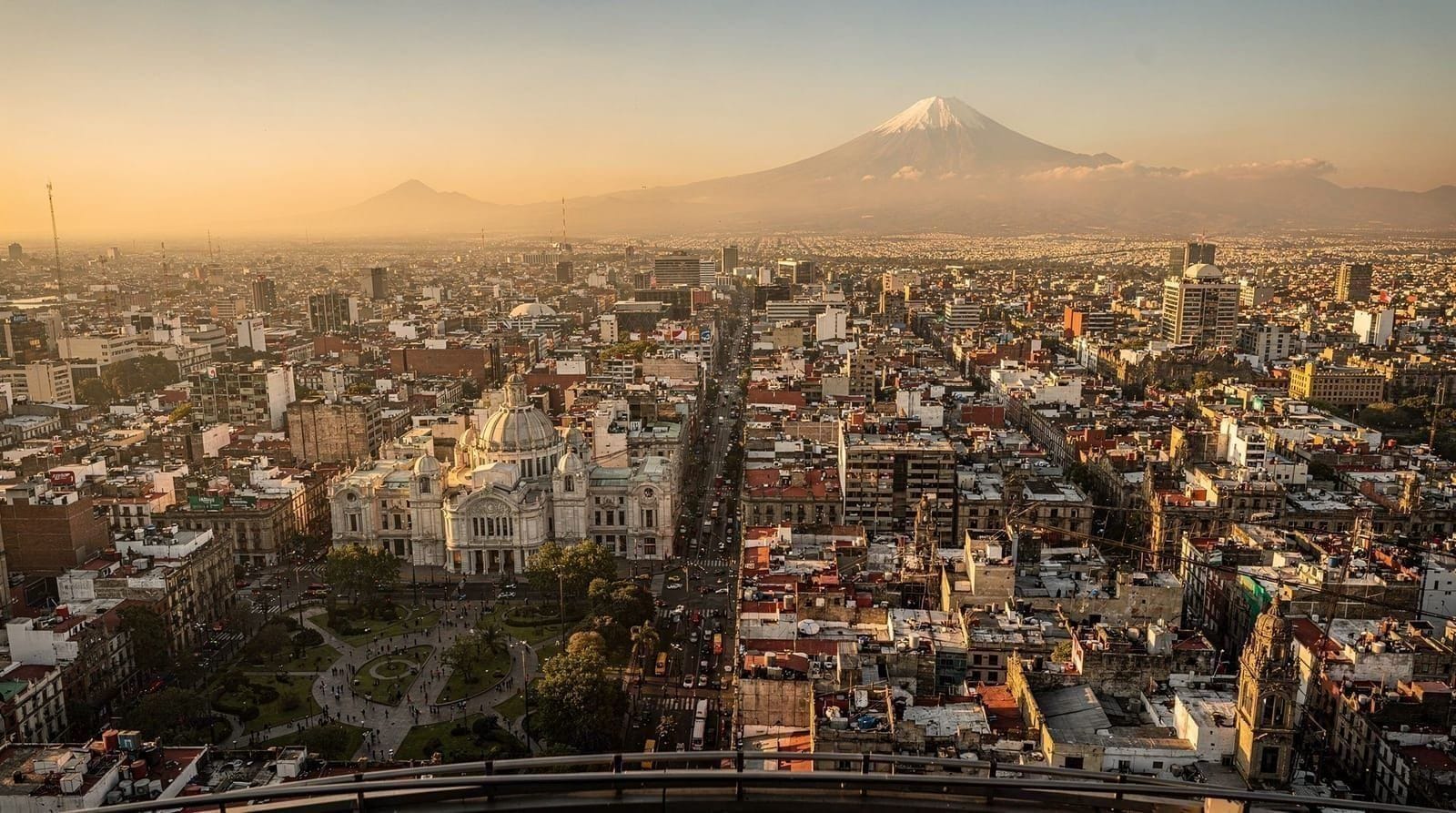
One of the most disorienting things about visiting Templo Mayor is understanding how much remains hidden. The excavated zone covers roughly two city blocks — a tiny fraction of the original sacred precinct, which covered around 1.3 km² at its height. Beneath the colonial churches, government buildings and residential streets of the Centro Histórico lies the rest of Tenochtitlan, in varying states of preservation, most of it unexcavated.
The layout of the original city is known from multiple sources: the famous Moctezuma’s Map (preserved in copies), indigenous codices made after the conquest, and the accounts of Spanish soldiers who walked through the intact city before its destruction. The sacred precinct alone contained roughly 78 buildings — temples, tzompantli (skull racks), ball courts, priests’ quarters, animal houses and administrative structures. The Templo Mayor was the physical and cosmological center: all distances in the empire were measured from it.
When you walk the Zócalo today, you’re walking over the rubble of Tenochtitlan. The cathedral is partly built with stones from the demolished temples. The Palacio Nacional occupies the site of Moctezuma’s palace. The Metro, Metrobús tunnels, utility lines and water systems all thread through a geological layer of pre-Columbian archaeology that Mexico City’s infrastructure has been negotiating for 500 years.
Because the Zócalo is also a place where crowds gather and pickpockets work, it helps to read the common scams guide before you go, and the altitude guide is worth a look if you are on your first day in the city and plan to spend hours on your feet.
Combining Templo Mayor with a full centro day
A well-organized Centro Histórico day pairs Templo Mayor with the buildings and streets immediately around it:
Morning (3 hours):
- Templo Mayor outdoor ruins (45 minutes)
- Templo Mayor museum (75 minutes)
- Metropolitan Cathedral interior (30 minutes — free entry)
Lunch:
- Café de Tacuba (Calle Tacuba 28) — classic historic restaurant in a 17th century building, reliable Mexican cooking, cantina atmosphere
- Mercado 27 de Enero (nearby) — market stalls, cheaper
Afternoon (2 hours):
- Palacio Nacional murals (Diego Rivera’s History of Mexico, free entry)
- Zócalo walk and architecture
This is a genuinely full and satisfying day in the historic center. The Mexico City 3-day itinerary builds this combination into the centro day, and the street food guide has more options if the Café de Tacuba lunch above doesn’t fit your budget or timing.
Where Templo Mayor fits in a longer trip
Templo Mayor works well as the first stop of a stay, because it gives context for everything that follows. If you have more time, the Mexico City weekend itinerary and the 4-day itinerary both place the historic center early, and the Teotihuacán complete guide is the natural next step for anyone who wants to see a pre-Aztec site outside the city after the Aztec capital.
Frequently asked questions about Templo Mayor
How deep are the Templo Mayor ruins?
The most ancient construction phases (Phase I) are approximately 4–5 m below current street level. The site sits in an area that has been built up, demolished, and rebuilt repeatedly since 1521. The street fill above the ruins accumulated over 450 years. Some artifacts were found at 6–7 m depth.
Were all the human remains from sacrifices?
Most of the human bones found at Templo Mayor are from sacrificed individuals — the ritual practice is well-documented. However, the site also contains non-sacrificial burials, including cremated remains of elite Aztec individuals. The scale of sacrifice at Templo Mayor was large: at the 1487 consecration of the expanded temple, Aztec sources record thousands of sacrifices over several days (the precise numbers are debated).
Is the excavation still ongoing?
Yes. Excavations continue under and around the main site; the blocks to the north and east of the current museum have been partially excavated and further work is planned. A major discovery of the Tlaltecuhtli Stone in 2006 shows that significant finds remain possible. Archaeological work is the ongoing occupation of the site, not a historical event.
Can children visit Templo Mayor?
Yes. The outdoor ruins are engaging for curious children, and the museum is manageable. Some sacrificial imagery (knives, skull racks) may require contextual explanation for younger children. The Mexico City with kids guide addresses heritage site visits with children.
Where is Templo Mayor located?
Templo Mayor is in the Centro Histórico, immediately behind the Metropolitan Cathedral on the northeast corner of the Zócalo (Plaza de la Constitución). It is walkable from the Zócalo Metro station (Line 2). Address: Seminario 8, Centro Histórico.
How much does it cost to visit Templo Mayor?
Entry costs 210 MXN (approximately $11 USD) and includes both the outdoor ruins and the Museo del Templo Mayor. On Sundays, Mexican nationals enter free. Children under 13 enter free. The site is open Tuesday to Sunday, 09:00–17:00. Closed Mondays.
What are the most important finds from Templo Mayor?
The most celebrated discovery is the massive monolithic disc of the goddess Coyolxauhqui (Moon Goddess), found in 1978 and measuring 3.25 m in diameter. The museum also displays the massive stone of Tlaltecuhtli (an earth deity, 4 × 3.6 m), thousands of ritual offerings (ceramic figurines, obsidian objects, animal remains), and the skull rack (tzompantli) fragments.
Can you walk on the Templo Mayor ruins?
You walk around and between the ruins on elevated boardwalks and paths. Direct contact with the original stone surfaces is restricted to preserve them. The outdoor zone shows seven superimposed construction phases of the temple, one encasing another, exposed by decades of excavation.
How is Templo Mayor different from the Anthropology Museum?
The Anthropology Museum covers pre-Columbian Mexico broadly — dozens of civilizations, centuries of history. Templo Mayor is focused entirely on Tenochtitlan (the Aztec capital, 1325–1521 CE) and the specific excavation of its main temple. The Templo Mayor museum is smaller and more intense: it gives you the deep specificity of one city rather than the broad overview. Both are worth visiting.
What is the Coyolxauhqui Stone?
The Coyolxauhqui Stone is a carved basalt disc 3.25 m in diameter depicting the dismembered body of the moon goddess Coyolxauhqui. According to Aztec mythology, the sun god Huitzilopochtli killed and dismembered his sister Coyolxauhqui at the moment of birth. The disc was placed at the base of the Templo Mayor so that sacrificial victims’ bodies rolling down the stairs would symbolically re-enact this creation myth.
How long should you spend at Templo Mayor?
The outdoor ruins take 45 minutes to walk thoroughly. The museum has 8 rooms and requires 60–90 minutes. Budget 2–2.5 hours total for the combined experience. If you add the nearby Metropolitan Cathedral (free entry), allow another 30–45 minutes.
Top experiences
Bookable activities with verified prices and instant confirmation on GetYourGuide.