Zócalo and Templo Mayor guide: the heart of Mexico City
Mexico City: Historic Downtown Walking Tour
What should I see at the Zócalo and Templo Mayor?
The Zócalo (Plaza de la Constitución) is a free public square and one of the world's largest. Around it: the Metropolitan Cathedral, the National Palace (free entry, Diego Rivera murals inside), and the Templo Mayor ruins (210 MXN entry + museum). A half-day covers all three thoroughly. Add Palacio de Bellas Artes if staying into the afternoon.
Standing at the centre of three civilisations
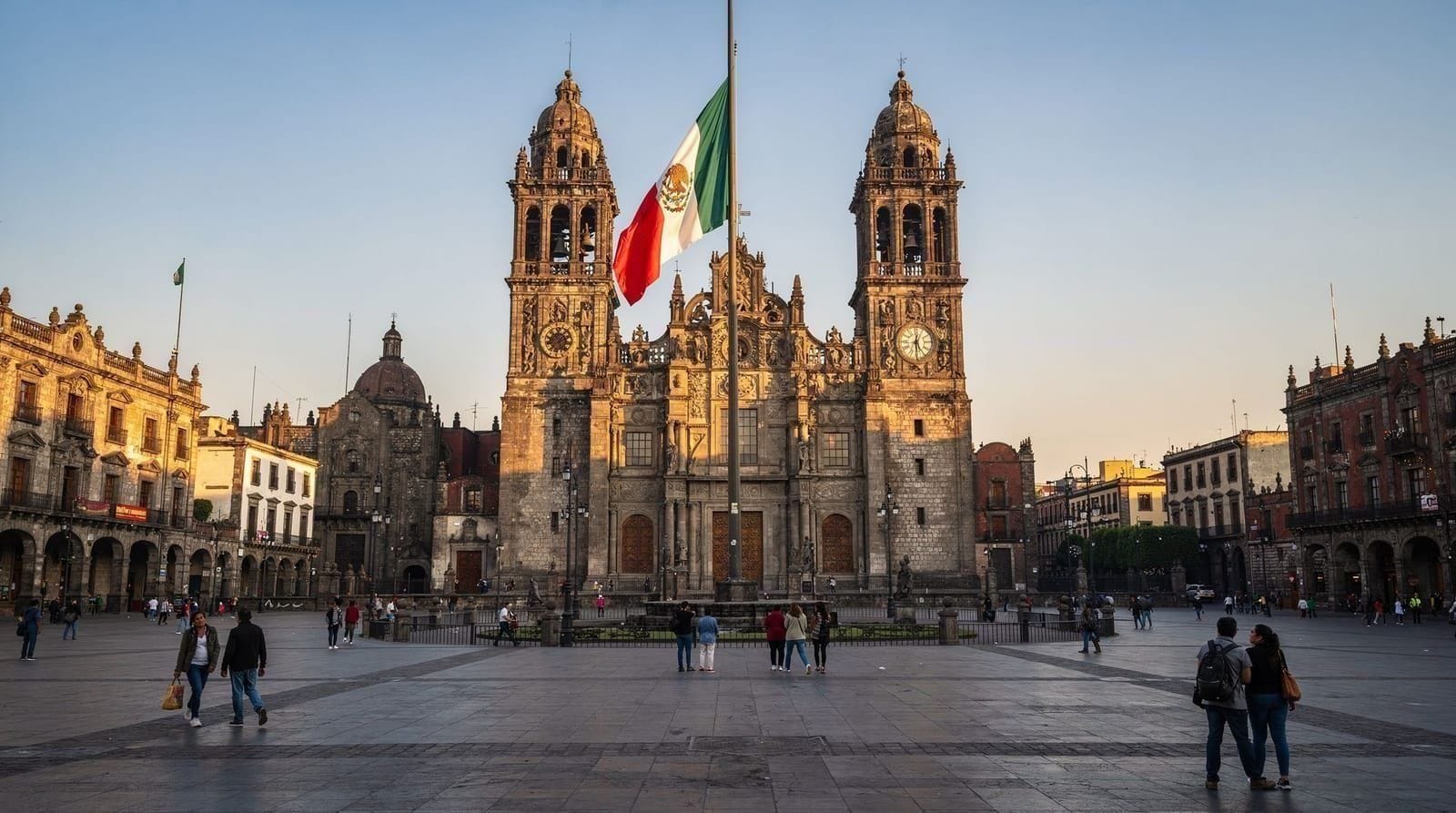
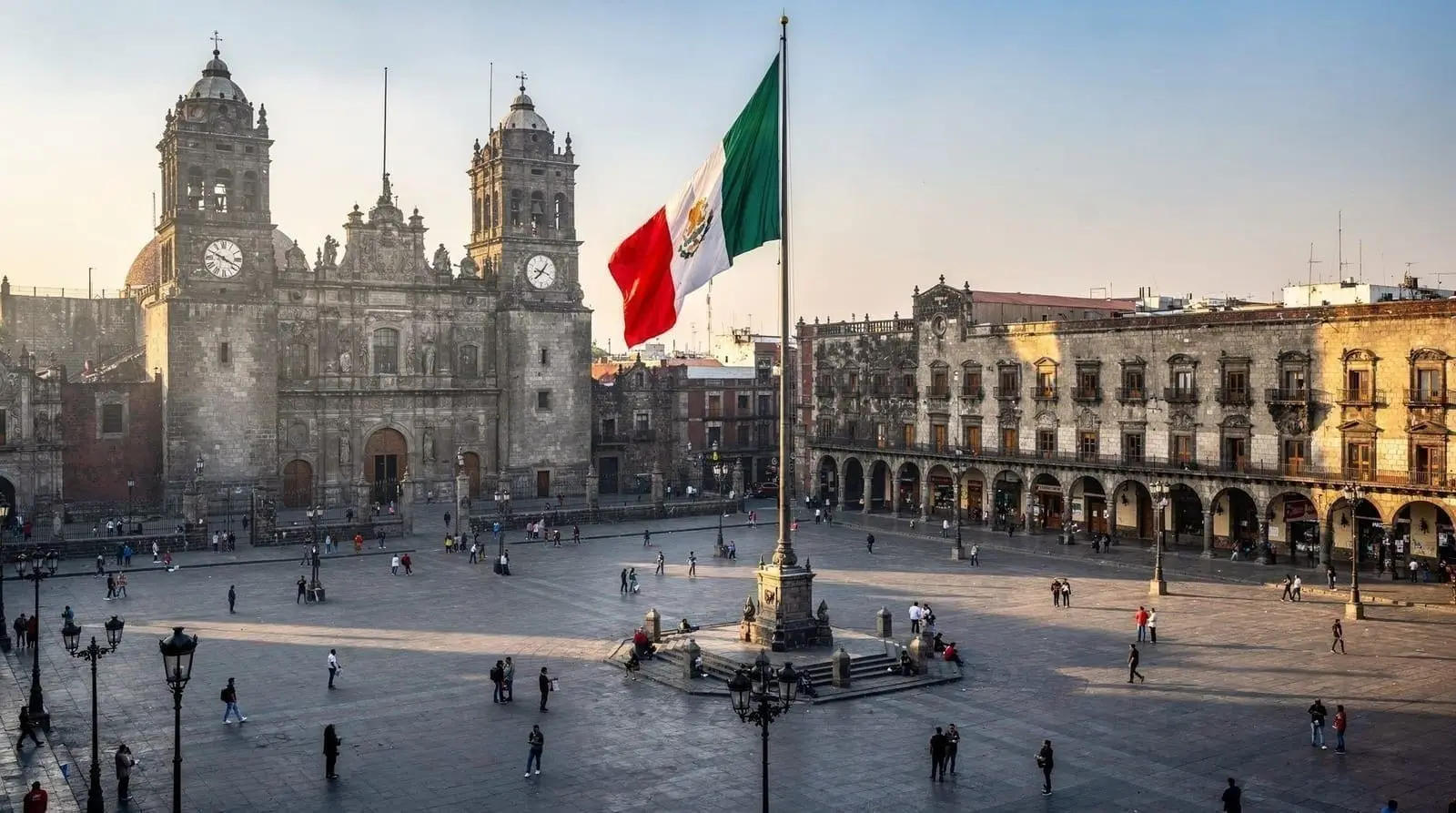
The Zócalo — formally Plaza de la Constitución — is the social, political, and historical centre of Mexico City, and has been the centre of whatever city or empire stood here for approximately 700 years. The Aztec capital Tenochtitlán was founded on this site in 1325. The Spanish conquistadors levelled it in 1521 and built their colonial capital over the rubble, using the Aztec stones for construction. The independent Mexican republic inherited the colonial city. All three layers are visible from the square.
The plaza itself measures approximately 240 x 240 metres — one of the largest public squares in the world, exceeded only by Tiananmen Square and Red Square in area. At its centre, a Mexican flag of enormous dimensions is raised and lowered with military ceremony daily (6:00 am raising, 6:00 pm lowering — the ceremony itself is worth watching if you time your visit). The square is surrounded on four sides by the Metropolitan Cathedral, the National Palace, city government buildings, and a colonnade of hotels and shops.
| Where | Plaza de la Constitución, Centro Histórico |
| Cost | Zócalo and Cathedral free; Templo Mayor 210 MXN |
| Time needed | 3 hours minimum; 5–6 hours for a full historic-core half-day |
| Getting there | Metro Line 2 (Zócalo station) or Uber ~50–80 MXN from Roma |
| Best time | Weekday mornings, Tuesday–Friday, for the lowest crowds |
The Metropolitan Cathedral
Work began on the cathedral in 1573, using stones from the demolished Aztec temples beneath. The building took 240 years to complete — started in Renaissance style, continued through Baroque, finished in Neoclassical. The accumulated architectural history is visible on the facade and in the interior.
What to see inside:
- The Altar of the Kings (Altar de los Reyes) — an extravagant churrigueresque gilded altarpiece from 1737, one of the most elaborate Baroque works in Mexico
- The carved choir stalls in dark wood
- The crypt beneath the nave with the remains of Mexican archbishops
- The tilt — the building has sunk differentially into the soft lake-bed soil, and the nave floor is visibly uneven. The sinking problem has been managed since the 1990s but the tilt remains a visible reminder of the unstable foundation.
Entry: Free. Open daily, 8:00 am – 8:00 pm (morning masses from 7:00 am). Dress code: covered shoulders and knees (enforced). Photography is permitted.
Duration: 30–45 minutes for a thorough walk-through.
Getting inside without a queue: Morning masses aside, the Cathedral rarely has meaningful lines even in peak season, unlike Templo Mayor. Arriving right after the flag-raising ceremony at 6:00 am is the quietest possible window, though a mid-morning visit works fine for most travellers.
The National Palace and Diego Rivera’s murals
The Palacio Nacional (National Palace) occupies the entire east side of the Zócalo. This is the seat of the executive branch of the Mexican federal government — the President of Mexico has an office here, and the building contains the offices of the Treasury and other ministries. Despite being an active government building, the main areas including Diego Rivera’s murals are open to the public free of charge.
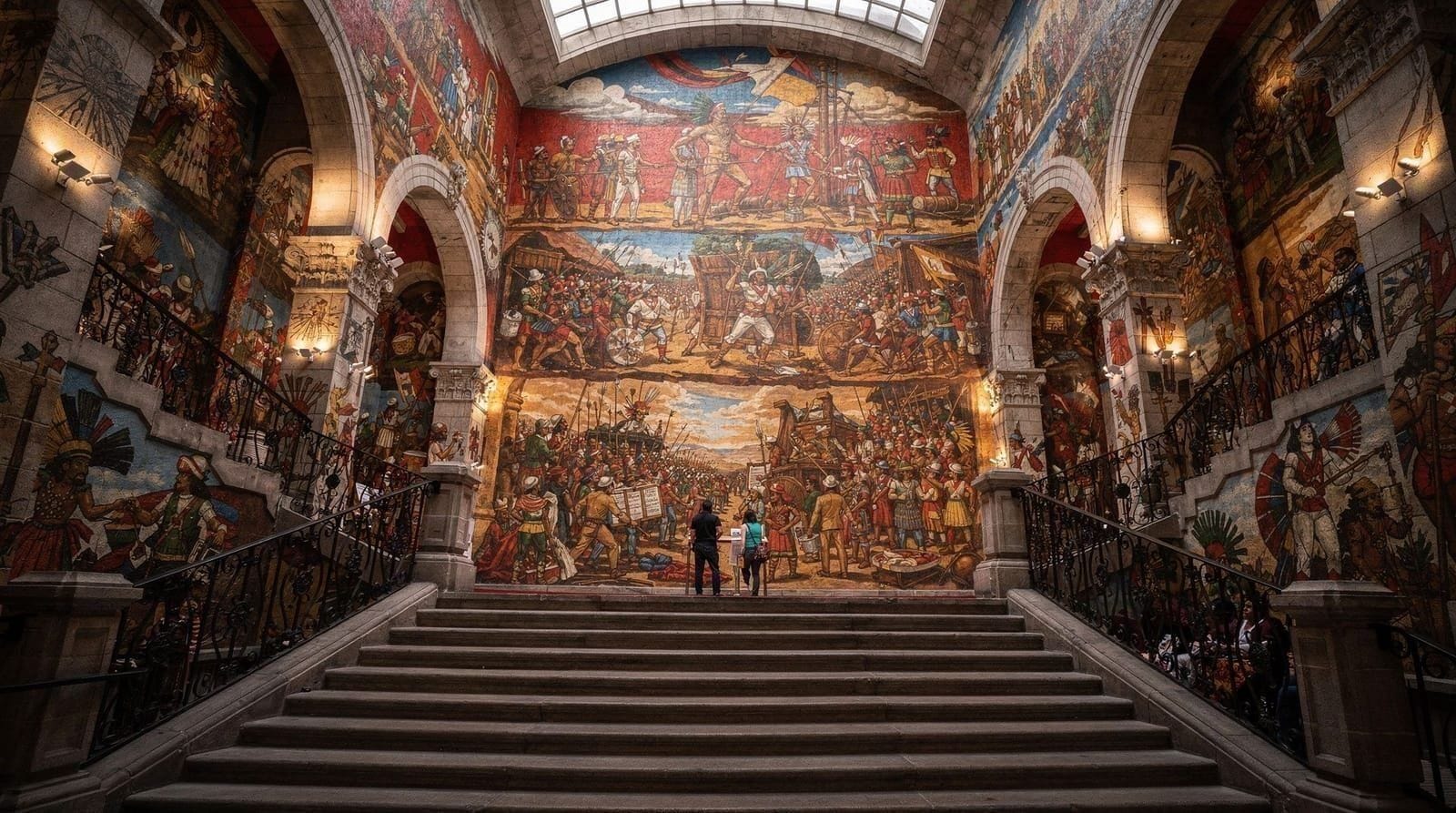
Diego Rivera’s mural cycle: Painted between 1929 and 1951 on the main staircase and the upper-level corridor, Rivera’s murals represent the most ambitious single narrative artwork in Mexican history. The main staircase mural depicts “The History of Mexico” in panoramic detail: the Aztec golden age, the Spanish conquest, the colonial period, the Independence struggle, the Reform Wars, the Revolution of 1910, and the Marxist future as Rivera imagined it.
Key figures to identify in the mural: Quetzalcóatl (the feathered serpent deity), Hernán Cortés (depicted with a deformed hand — Rivera’s characterisation of him as damaged), La Malinche (the indigenous woman who served as Cortés’s interpreter and became a complex symbol in Mexican identity), Miguel Hidalgo (the priest who launched Independence), Benito Juárez, and Karl Marx visible in the upper section.
The murals are free to see. Entry through the main gate on the Zócalo. You will need to leave bags in security lockers (50 MXN deposit) and show ID. Photography of the murals is allowed.
Duration: 1–1.5 hours for the complete mural route with time to study the detail.
Templo Mayor: the Aztec temple beneath the city
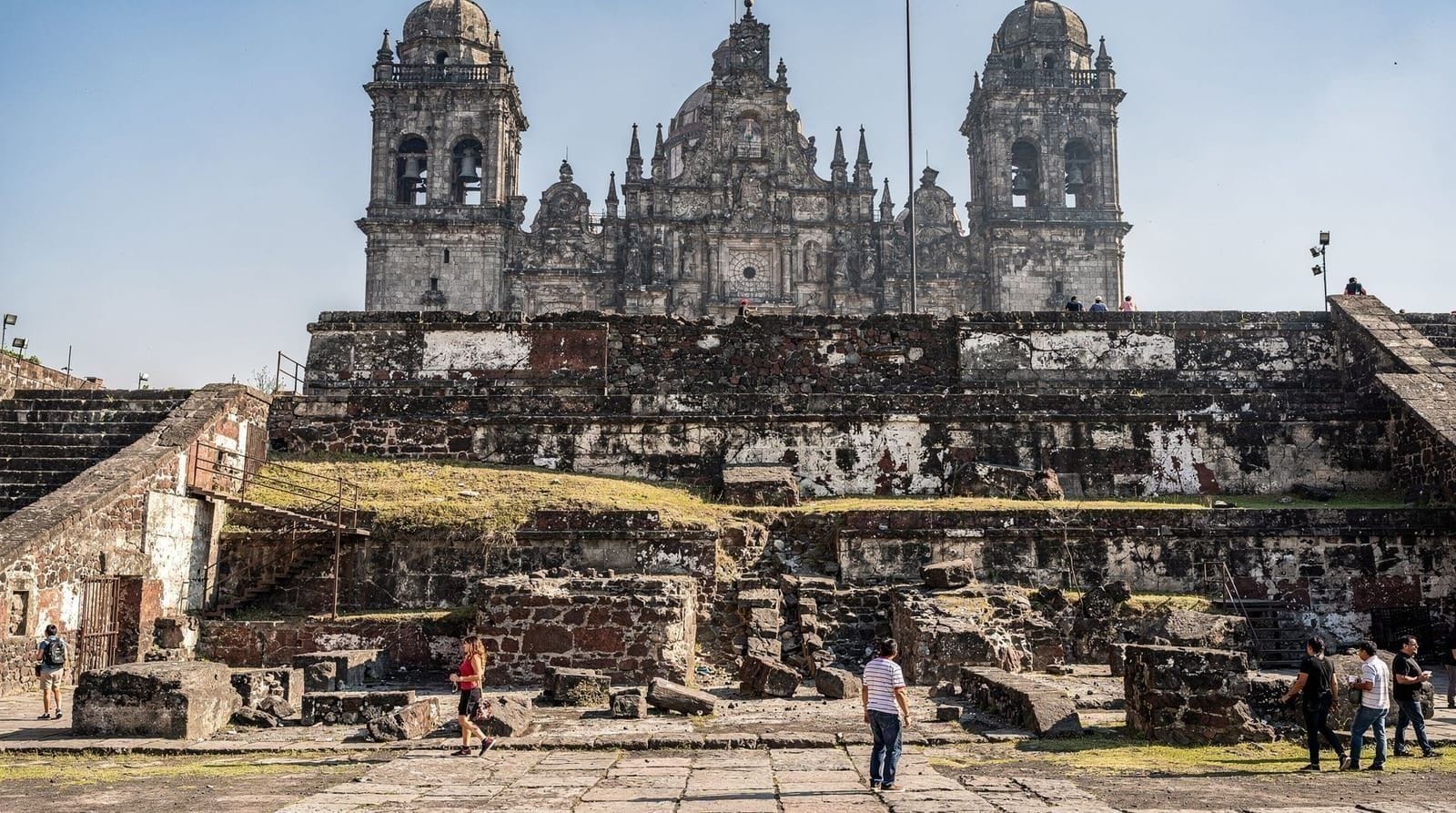
The Templo Mayor (Great Temple) is the most important archaeological site in Mexico City’s urban core. It was the ceremonial heart of Tenochtitlán — the Aztec capital — and was, before the Spanish destroyed it, one of the most important religious buildings in the pre-Columbian Americas.
Discovery: In 1978, electrical workers excavating near the Metropolitan Cathedral accidentally uncovered a monumental carved disc depicting the moon goddess Coyolxauhqui (about 3.25 m in diameter). This prompted systematic excavation that exposed the remains of the Great Temple below the Spanish colonial buildings — a project that required demolishing an entire city block.
What you see: The excavated ruins consist of seven superimposed temples (each Aztec ruler enlarged the temple by building a new one over the previous). The current visible remains show multiple phases of construction from the early 14th century through 1521. Walking through the excavations, you move through several periods of Aztec architectural history simultaneously.
The Templo Mayor Museum: The adjacent museum (included in the 210 MXN entry) is outstanding. It houses the Coyolxauhqui disc (in its own circular room designed specifically for it), warrior eagle sculptures, ceramic figures, ritual objects, and the enormous stone of Tizoc — a circular carved monument depicting the king’s military conquests.
Allow at least 2 hours for the site and museum combined. A guided tour significantly enhances the experience — the ritual functions of specific spaces and the relationship between the physical ruins and Aztec cosmology require explanation to be meaningful.
The exclusive Templo Mayor tour in CDMX is a specialised tour with an archaeologist guide that covers both the ruins and the museum in depth. For visitors combining Templo Mayor with the broader historic centre, the Historic Center VIP Tour with Templo Mayor connects the archaeological site to the Spanish colonial layer that built over it. For a deeper dive into the site’s history and every gallery in the museum, the dedicated Templo Mayor guide goes further than this overview can.
Walking west to Bellas Artes: Madero Street
From the Zócalo, the pedestrian street Francisco I. Madero runs west for approximately 1 km to the Alameda Central park and the Palacio de Bellas Artes. This is one of the most architecturally rich pedestrian streets in Mexico City, and free to walk.
Key stops on Madero:
Casa de los Azulejos (House of Tiles): A 16th-century house completely covered in blue-and-white Talavera tiles from Puebla, now occupied by Sanborns restaurant. The interior courtyard has an original Jose Clemente Orozco mural on the staircase. Worth stepping inside for the architecture — the restaurant is tourist-priced but the building is genuinely extraordinary.
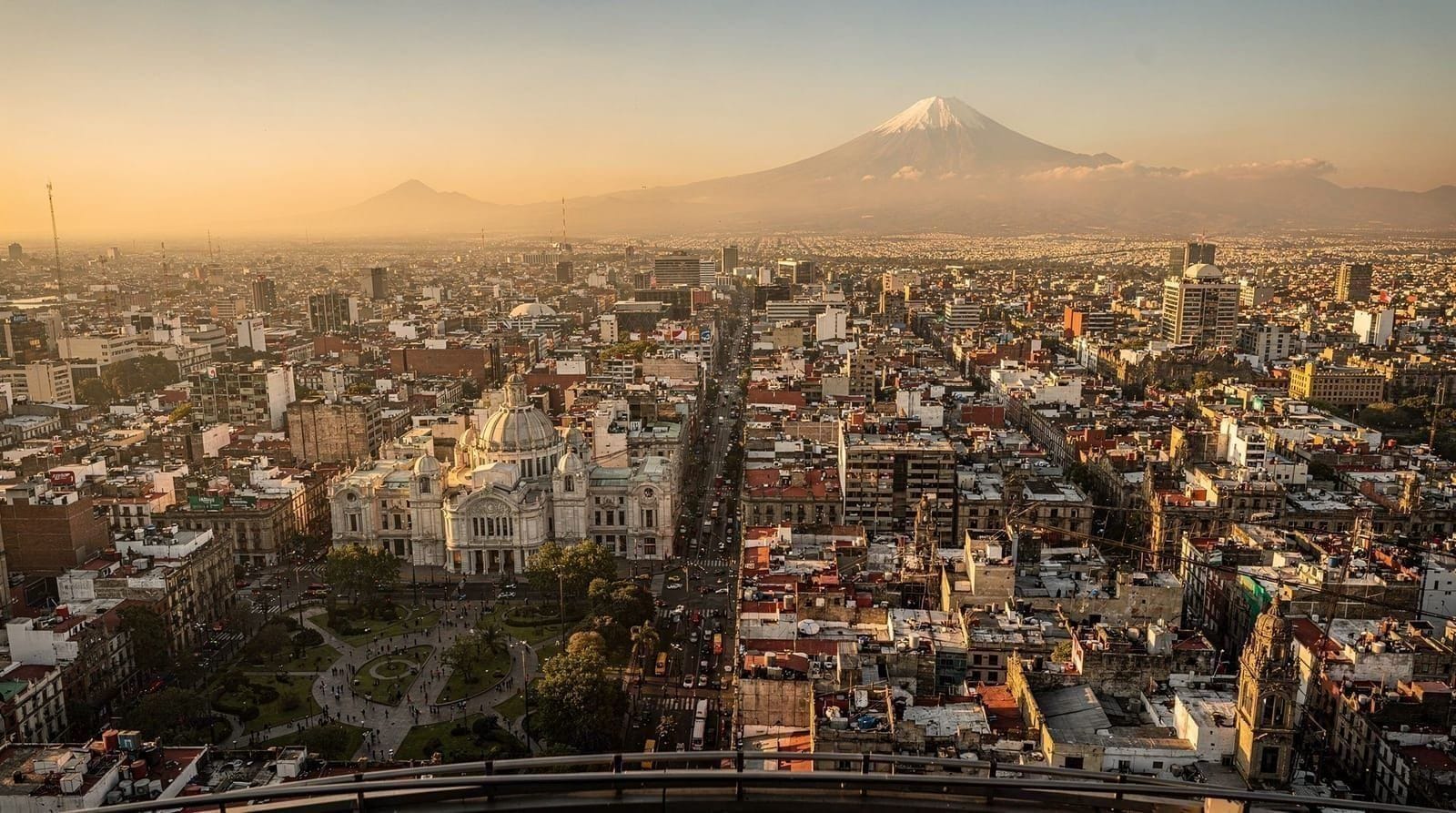
Torre Latinoamericana: The 1956 skyscraper was Mexico City’s tallest building for decades and remains the most famous viewpoint in the historic centre. The observation deck on the 44th floor (and a live shark aquarium on the 38th) offers 360-degree views of the city and on clear days the volcanoes Popocatépetl and Iztaccíhuatl. Open daily, approximately USD 12–15 for the deck.
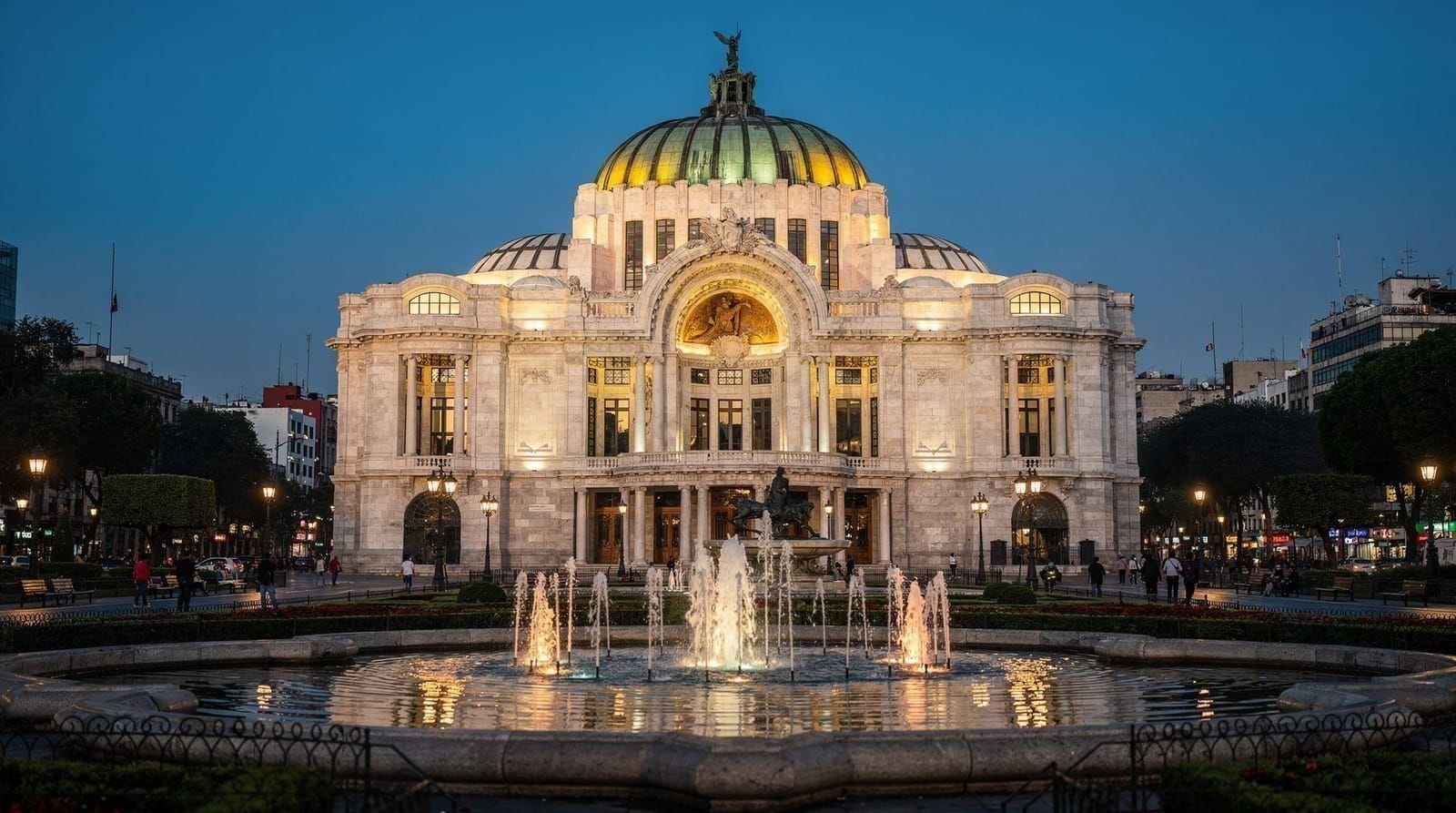
Palacio de Bellas Artes: Mexico City’s most architecturally significant building — a massive Art Nouveau/Art Deco white Carrara marble palace with a stained glass dome that is visible from across the city. The interior has the most important murals by Rivera, Orozco, and Siqueiros in one building. Free to enter the main hall; exhibitions in the upper galleries cost 80–90 MXN. The dedicated Palacio de Bellas Artes guide covers ballet folklórico performances, the building’s history and gallery schedule in full.
Suggested half-day sequence
| Time | Stop | Notes |
|---|---|---|
| 9:00–9:30 | Zócalo + flag | Arrive before crowds build |
| 9:30–11:00 | National Palace murals | 1–1.5 hrs, free, ID required |
| 11:00–11:45 | Metropolitan Cathedral | 30–45 min walk-through |
| 12:00–14:00 | Templo Mayor + museum | Allow at least 2 hours |
| 14:00–15:00 | Lunch off the plaza | See eating notes below |
| 15:00–16:30 | Walk Madero to Bellas Artes | ~1 km, several stops en route |
This sequence works as the historic-core day in both the 3-day itinerary and the 4-day itinerary — adjust start time earlier in high season to stay ahead of tour-group crowds at Templo Mayor.
The historic centre walking tour option
The Centro Histórico has enough content to fill multiple days at varying depths. For first-time visitors who want a structured introduction with a local guide providing context — particularly the Aztec-to-colonial-to-independence historical layers — the Historic Downtown Walking Tour covers the main circuit in 2–3 hours with a guide who contextualises what the layers of architecture mean.
The Diego Rivera murals guide covers the full mural route across Centro (National Palace, Ministry of Education, Bellas Artes) for those who want to focus specifically on the muralist tradition.
Practical information for the Zócalo area
Getting there: Metro Line 2 to Zócalo station, or Uber/DiDi from Roma takes 20–30 minutes (50–80 MXN).
Best time: Weekday mornings (Tuesday–Friday, 10:00 am – 1:00 pm) for the lowest crowds. Saturday afternoons bring families and street performers to the square itself. Sunday is the most active day — Metro Line 2 (Línea Azul) is free on Sundays.
Safety: Daytime is heavily policed and generally safe; the area thins out and requires more caution after roughly 9:00 pm. See the full safety guide for neighbourhood-by-neighbourhood detail.
Eating near the Zócalo: The restaurants directly on the plaza are tourist-priced and mediocre (see the tourist traps guide). Head south on Calle Mesones or west on 5 de Febrero for proper Centro eating — comidas corridas (set lunch menus) in the interior restaurants that serve the local office workers are excellent value and food quality.
September 15: El Grito de Independencia happens on the night of September 15 when the President re-enacts Hidalgo’s call to arms from the National Palace balcony. The square fills with hundreds of thousands of people. This is a genuinely extraordinary civic experience — but plan transport carefully in advance, as the entire area becomes pedestrian-only and app-based rides are extremely limited.
Frequently asked questions about the Zócalo and Templo Mayor
Can I see the Zócalo flag ceremony?
Yes. The military ceremony raising the flag takes place at 6:00 am and lowering at 6:00 pm, with changing of the guard at both times. The evening lowering with the dramatic light is the more atmospheric. A large contingent of uniformed soldiers marches from the National Palace to the flag pole — the precision and ceremony is impressive regardless of political perspective.
Is there a skip-the-line option for Templo Mayor?
Yes — the Templo Mayor skip-the-line entry ticket is available and useful during peak season (March–April) when queues at the main entrance can reach 30–45 minutes in mid-morning.
What is the Tlatelolco Plaza de las Tres Culturas and is it near the Zócalo?
Tlatelolco (Plaza de las Tres Culturas) is 3 km north of the Zócalo — accessible by Uber in 10 minutes. It is the site of the 1968 student massacre and a striking architectural ensemble where Aztec ruins, a colonial church, and 1960s housing blocks all exist simultaneously. A significant historical site worth visiting for those interested in modern Mexican history.
Is the historic centre accessible for people with mobility limitations?
The Zócalo itself is flat and accessible. The National Palace has wheelchair access to the mural areas. The Templo Mayor archaeological site involves uneven surfaces and stairs — partly accessible but not entirely. The Metropolitan Cathedral’s main nave is level but the crypt and upper areas are not fully accessible.
How much time does a first visit to the Centro Histórico need?
Minimum: 3 hours (Zócalo + National Palace murals + quick look at the Cathedral). Better: 5–6 hours including the Templo Mayor. Full: a whole day for those who want to add Madero Street, Bellas Artes, a market lunch at La Merced, and the Torres Latinoamericana viewpoint.
Is the Templo Mayor worth visiting?
Yes. The Templo Mayor is the excavated ruins of the main ceremonial temple of the Aztec capital Tenochtitlán, discovered accidentally in 1978 during street work. The ruins are right in the middle of the modern city, which makes the layering of civilisations visible in an extraordinary way. The adjacent museum has one of the world’s best collections of Aztec artifacts.
How much does Templo Mayor cost?
Entry to the archaeological site and museum: 210 MXN. Free for Mexican nationals and residents on Sundays. The site is open Tuesday–Sunday, 9:00 am – 5:00 pm (last entry 4:00 pm).
Are Diego Rivera’s murals in the National Palace free to see?
Yes. Entry to the National Palace and the Diego Rivera murals is free. The murals are on the main staircase and the upper balcony corridor and cover the full sweep of Mexican history from pre-Columbian civilisations to the 20th century revolution. They are among the most ambitious public artworks in the Americas.
How long do I need at the Zócalo area?
A focused 3-hour visit covers the Zócalo itself, the National Palace murals, the Metropolitan Cathedral, and the Templo Mayor. A half-day (5–6 hours) allows time for the Templo Mayor museum in depth plus a walk along Madero pedestrian street to Bellas Artes. A full day adds a food tour of the surrounding markets.
Is the Zócalo safe for tourists?
During daylight hours, the Zócalo and its immediate surroundings are heavily policed and generally safe. The square has military and police presence daily (the National Palace is the presidential residence). Pickpocketing in the market stalls around the square is the main risk. Evening safety diminishes on side streets from around 9:00 pm — take a ride back to your hotel. See the full safety guide for context.
What is special about the Metropolitan Cathedral?
The Catedral Metropolitana de la Asunción de María was built over 240 years (1573–1813) on the ruins of the main Aztec temple. It is the largest cathedral in the Americas. Its architecture spans four centuries of style: Renaissance, Baroque, Neoclassical. The building is visibly sinking into the soft lake-bed soil beneath — the tilt is visible to the naked eye from the main nave.
Can I visit the Zócalo, Templo Mayor and Palacio de Bellas Artes all in one day?
Yes, comfortably. Start at the Zócalo mid-morning for the National Palace murals and Cathedral, spend around 2 hours at Templo Mayor including the museum, then walk Madero Street west to Bellas Artes for the afternoon. Budget 5–6 hours total for an unhurried pace, or add a market lunch to make it a full day.
What should I do if it’s raining during a Zócalo visit?
The National Palace murals, the Cathedral interior, and the Templo Mayor museum are all indoor spaces, so a rainy day barely disrupts the core visit — only the plaza crossing itself is exposed. Bring a compact umbrella for moving between buildings and consider prioritising the museum-heavy stops if a downpour is forecast.
Top experiences
Bookable activities with verified prices and instant confirmation on GetYourGuide.