Best time to visit Mexico City
Mexico City: Anthropology Museum Guided Visit with Transportation
When is the best time to visit Mexico City?
November through May is the dry season — sunny days, low humidity, and temperatures of 10–24°C. March and April add the jacaranda bloom across Roma, Condesa, and the Bosque de Chapultepec. November 1–2 brings Día de Muertos celebrations. June through October sees afternoon thunderstorms (usually clearing by evening) but greener parks and fewer crowds.
The short answer: dry season wins, but every month has something
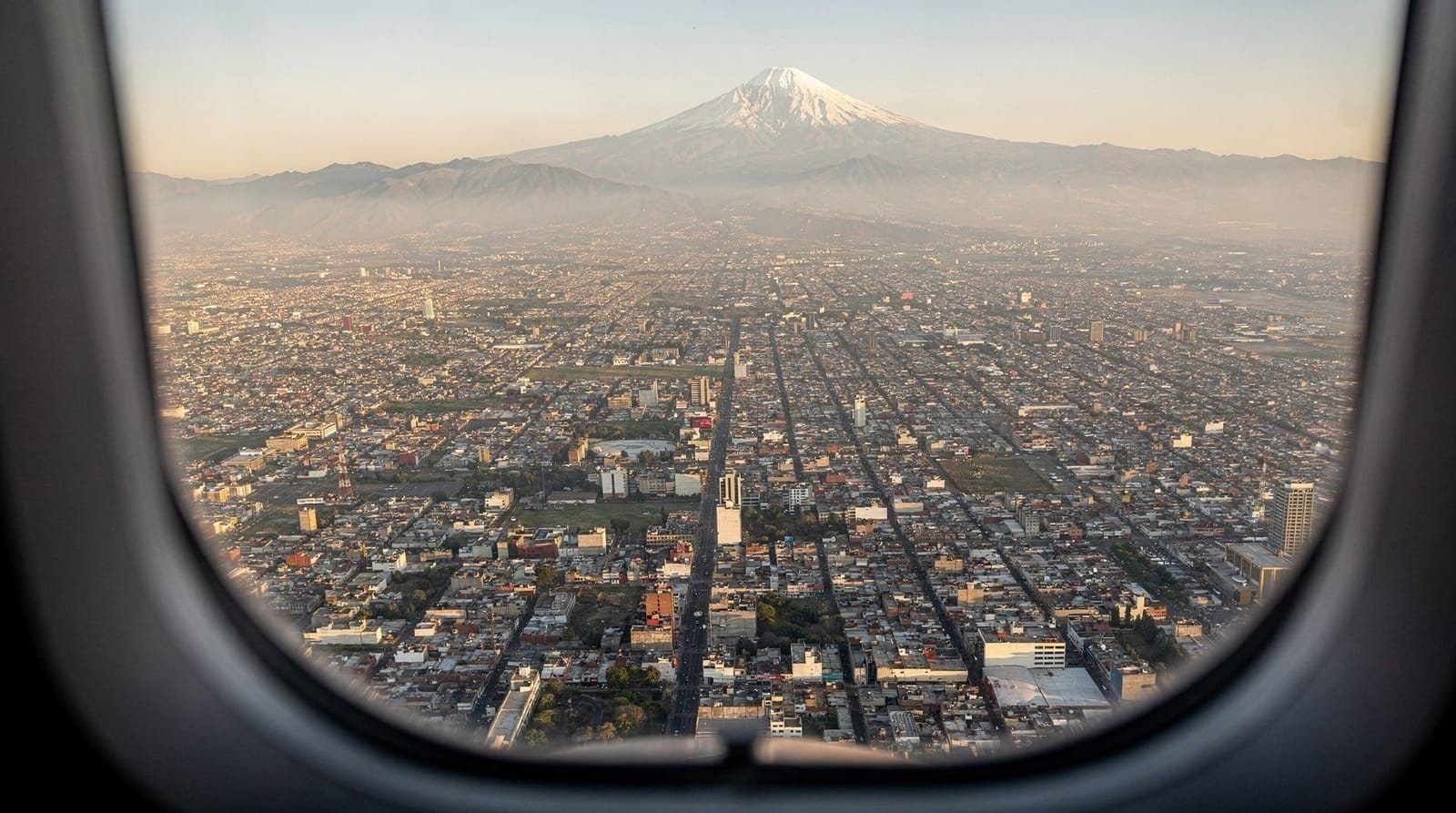
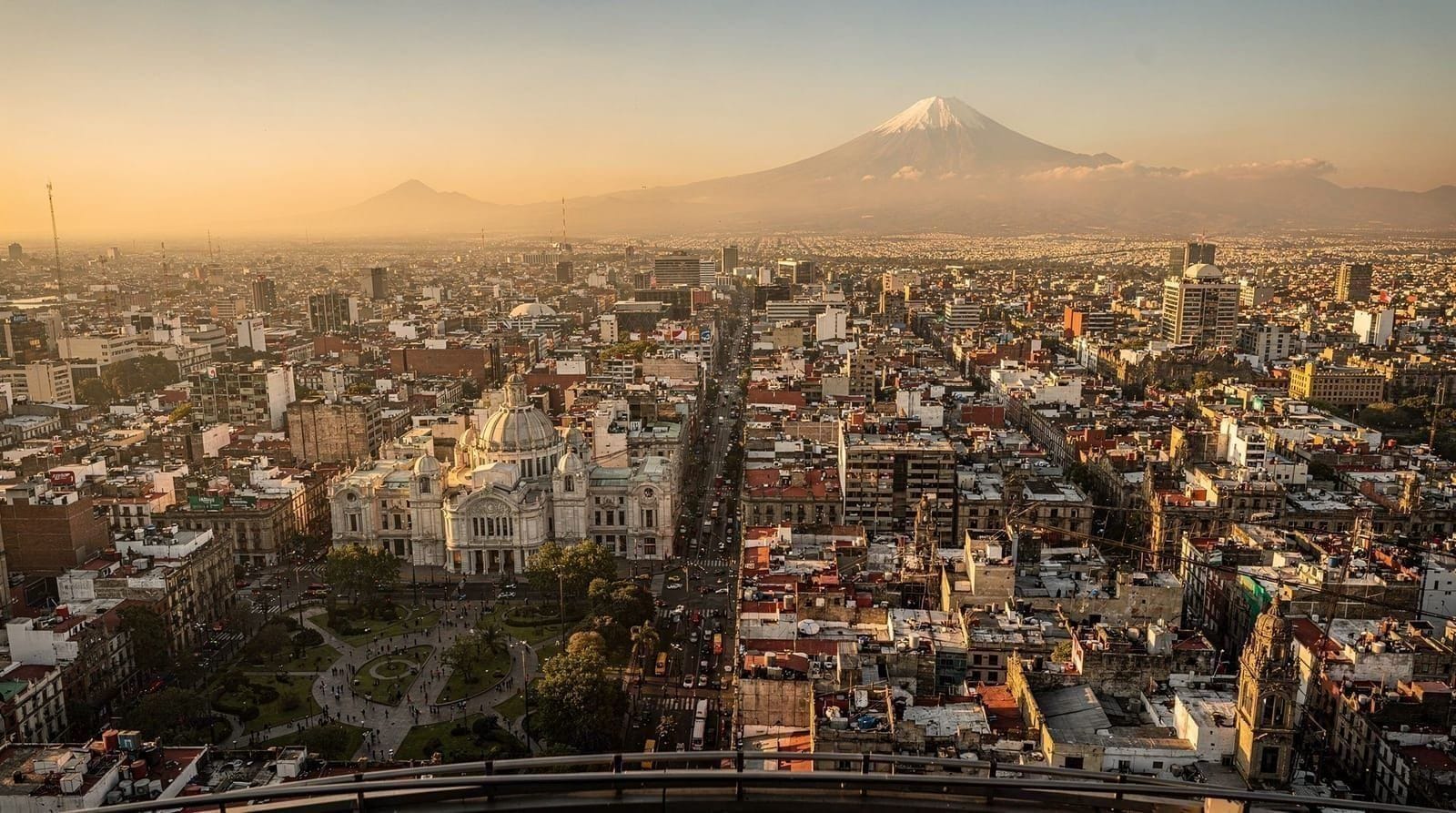
Mexico City sits at 2,240 m on a broad highland plateau, which moderates temperatures year-round. Unlike beach destinations that get oppressively hot, the city rarely climbs above 27°C even in the warmest months. What actually determines your experience is rainfall — and Mexico City has a very clear wet season (June–October) and dry season (November–May).
The dry season is simply easier: sunny skies most days, no need to shuffle afternoon plans around thunderstorms, and for many visitors the psychological comfort of reliable weather. But “easier” does not mean “better” in every dimension. The rainy season has real advantages for budget travelers and anyone seeking a more local experience without the crowds.
| Best months | March–April (jacaranda, dry, warm) |
| Driest | December–February |
| Wettest | July–August (afternoon storms) |
| Cheapest | June–September |
| Book far ahead | Nov 1–2, Sep 15–16, Dec 22–Jan 6 |
If you want more detail than the table below, the month-by-month weather guide goes deeper on each month, and the guide to how many days to spend helps you decide how much of that weather you will actually experience. Once you have a rough window, where to stay in Mexico City is the next decision worth making, since the best neighborhoods fill up first in peak weeks.
Month-by-month at a glance
| Month | Daytime high | Rain | Crowd level |
|---|---|---|---|
| Jan | 19–21°C | Minimal | Moderate (post-holiday) |
| Feb | 19–22°C | Minimal | Low |
| Mar | 22–24°C | Low | High (jacarandas begin) |
| Apr | 23–25°C | Low–moderate | High (jacarandas, Easter) |
| May | 24–26°C | Moderate (rain begins) | Moderate |
| Jun | 22–24°C | Increasing | Moderate |
| Jul | 20–22°C | High (afternoon storms) | Low–moderate |
| Aug | 20–22°C | High | Low |
| Sep | 20–22°C | High | Moderate (Independence Day) |
| Oct | 19–21°C | Decreasing | Moderate |
| Nov | 16–22°C | Low | High (Día de Muertos) |
| Dec | 18–20°C | Minimal | High (Christmas period) |
Dry season (November–May): the classic choice
The dry season covers six and a half months and encompasses several distinct sub-periods, each with its own character.
November opens the dry season with pleasant temperatures (16–22°C) and the spectacular Día de Muertos on November 1–2. The city takes the festival seriously: public altars appear across Centro Histórico, families visit cemeteries at Mixquic (a village southeast of the city with one of Mexico’s most atmospheric observances), and the trajinera canals at Xochimilco run night tours through decorated waterways. Book well ahead if your visit coincides with these dates.
For the village side of the festival, the Mixquic Día de Muertos guide explains what to expect, and the Xochimilco trajinera guide covers how the boats work. The 2026 Día de Muertos blog post is the place for this year’s planning.
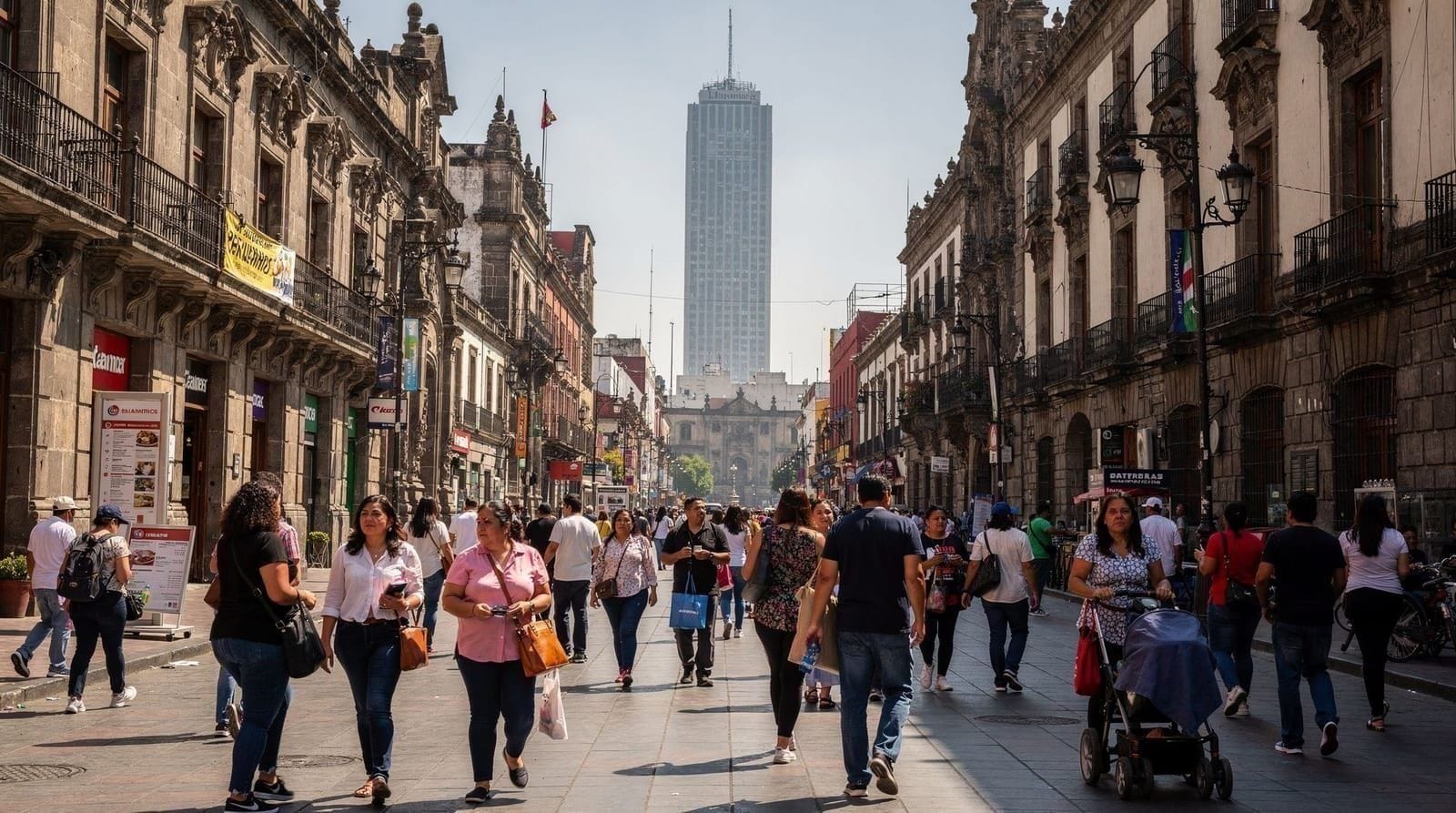
December through January is the coldest stretch. Daytime temperatures hover around 18–21°C but nights can drop to 4–7°C, sometimes colder. The city decorates heavily for Christmas, street food stalls multiply around the Zócalo, and posadas processions fill residential streets. Note that many museums and government buildings close December 24–25 and January 1. The week between Christmas and New Year is busy with Mexican domestic tourists.
February is typically dry and sunny, with daytime highs of 19–22°C. Fewer tourists than December, but the city is far from empty. Valentine’s Day brings out restaurant crowds in Roma and Condesa — reserve in advance for popular spots.
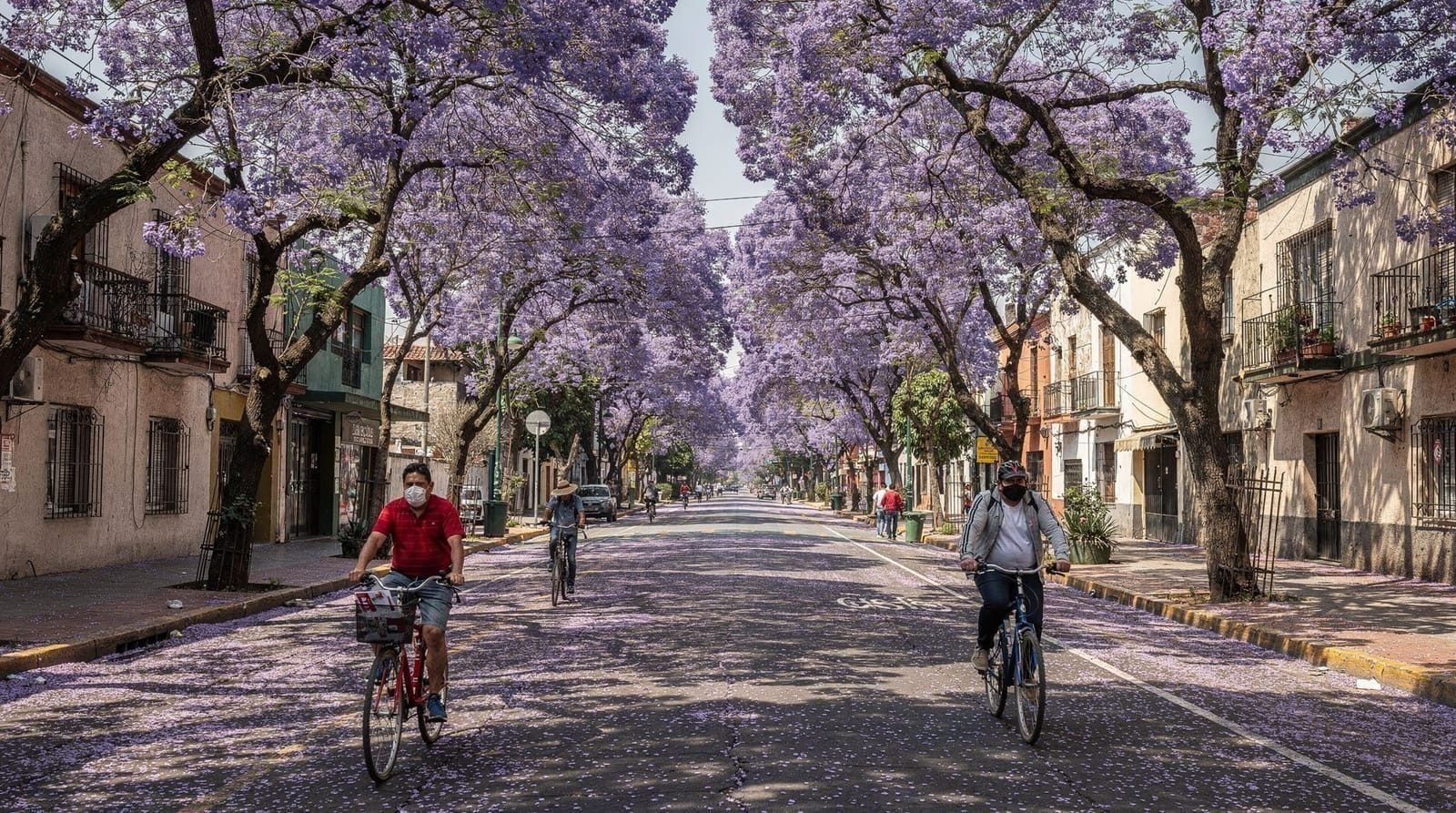
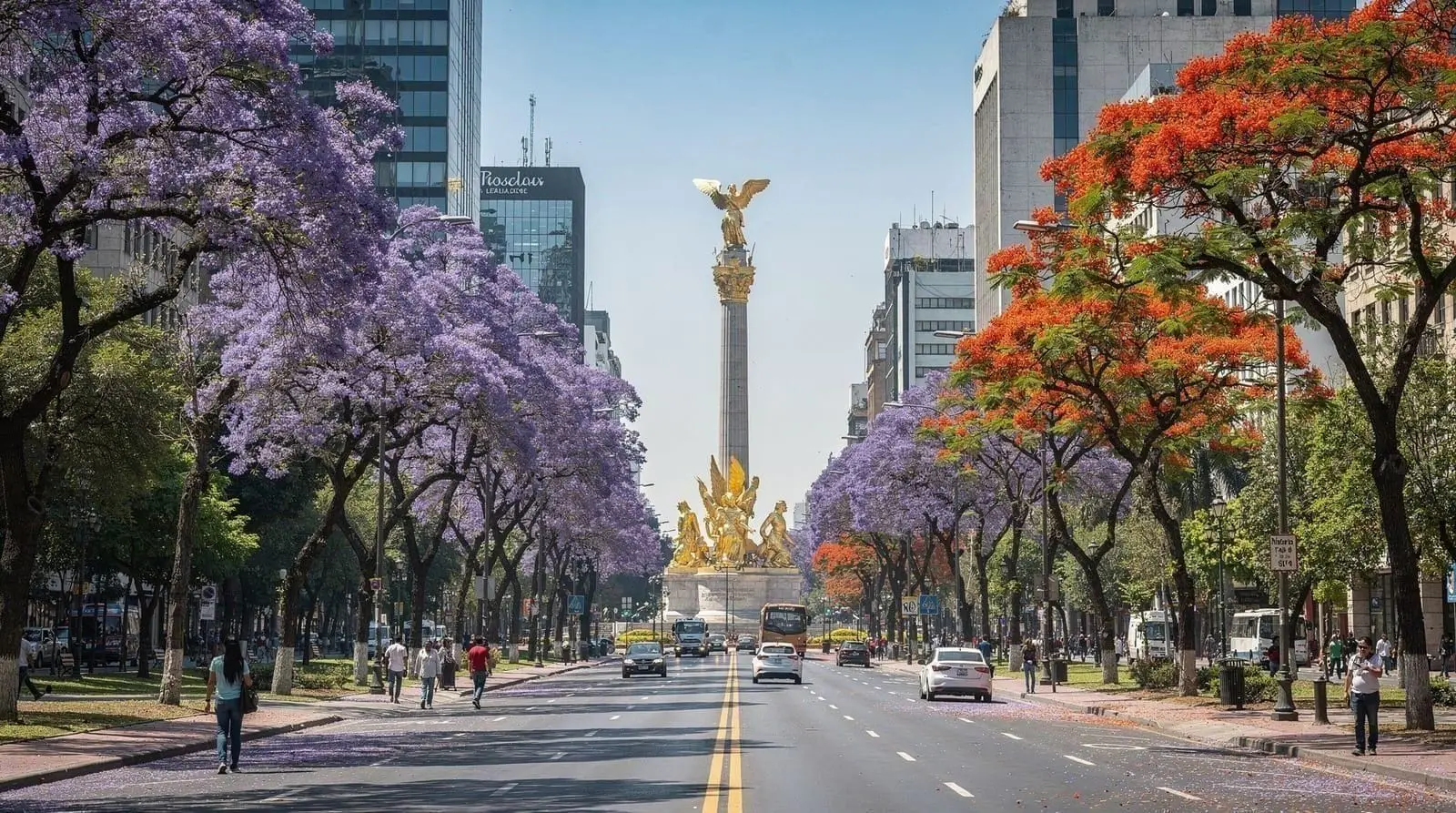
March and April represent the peak of the peak season for a reason: jacaranda bloom. The trees lining Avenida Amsterdam in Condesa, the streets of Roma Norte, and the paths through Chapultepec and Polanco turn purple-blue in a transformation that makes the city genuinely beautiful. See the dedicated jacaranda guide for timing and locations. Temperatures warm to 22–25°C, rain is minimal, and evenings remain comfortable.
The Spring Equinox (around March 21) draws visitors to Teotihuacán where people gather in white clothing to receive energy at the pyramids — one of the more visually striking traditions in the Mexico City orbit. Note that since 2024, climbing the pyramids is no longer permitted; the equinox experience is now about gathering at the base and in the plazas. Book a guided tour through a reputable operator to understand what you’re seeing. The complete Teotihuacán guide and the page on whether you can climb the pyramids set expectations, and how to get to Teotihuacán covers the logistics on a crowded equinox morning.
The same dry months suit other excursions too: the best day trips from Mexico City collects them, with Tepoztlán and Puebla and Cholula among the most popular outings when skies are clear.
May is the warmest month of the dry season, reaching 24–26°C, and sees the first hints of returning afternoon cloud. It can feel almost pre-rainy. Still a good month to visit, especially mid-May before the rains establish.
Rainy season (June–October): underrated
The rainy season is not the monsoon — it is a predictable afternoon-thunderstorm pattern. Mornings in Mexico City in July are typically sunny and fresh. The rain arrives mid-afternoon (usually 3:00–5:00 pm), falls hard for 1–2 hours, and clears. By the time dinner rolls around, the streets are wet but the sky is clear.
This rhythm is easy to work with: do outdoor sightseeing in the morning, visit museums or markets in the early afternoon, and be inside or under cover during the peak rain window. A cheap poncho (sold at street stalls for 30–50 MXN) or a compact umbrella handles the rest.
June is the transition month — some days perfectly dry, some wet. Hotel prices begin to ease from their spring peak.
July and August are the wettest months but also some of the most atmospheric. The Bosque de Chapultepec is deeply green, the air after rain smells clean, and the streets of Coyoacán are noticeably quieter than in March. Frida Kahlo’s Casa Azul has shorter queues (though advance booking is still advisable). Temperatures are actually very comfortable: 16–22°C most days, with the rain itself cooling things down.
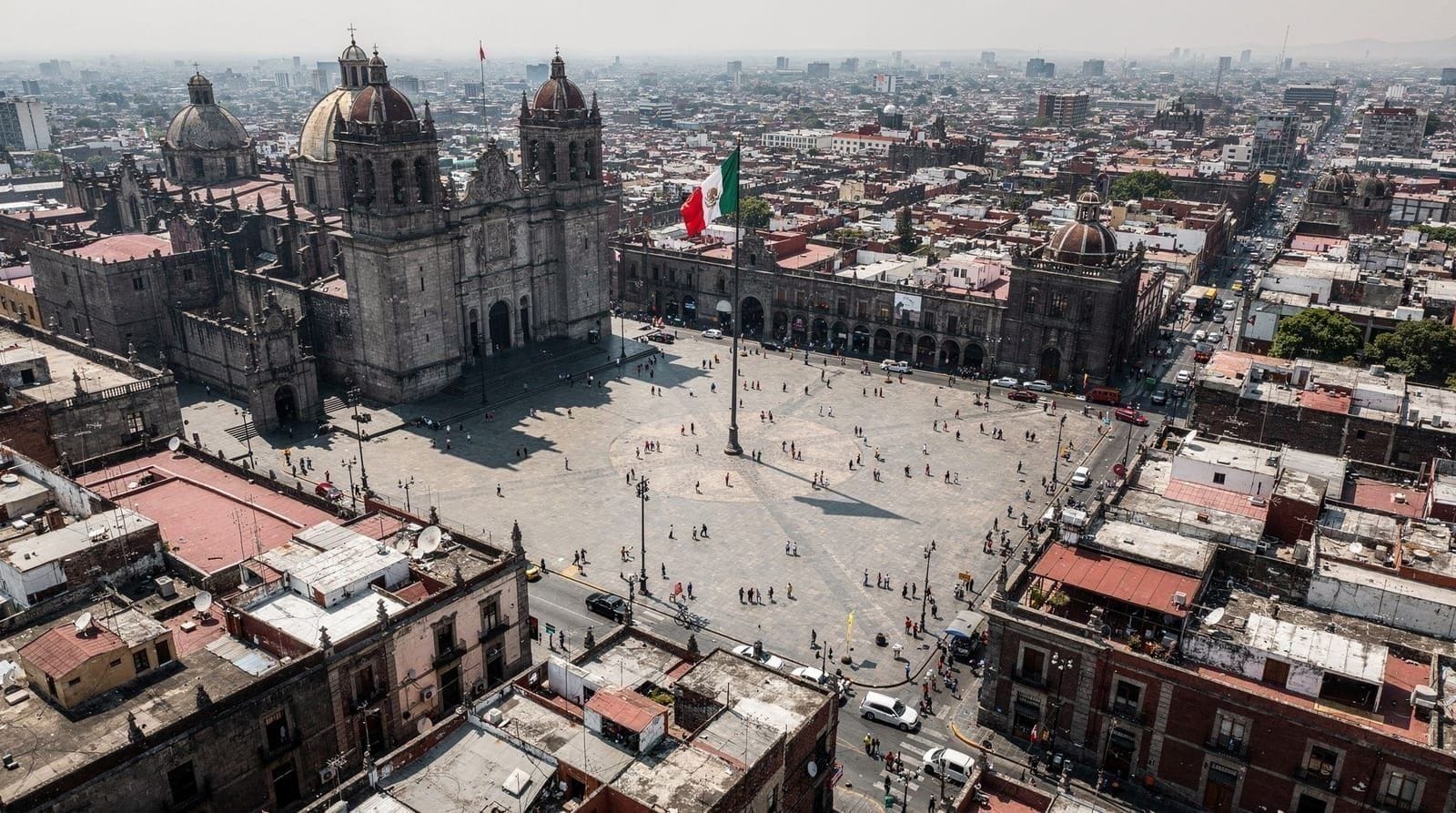
September brings Mexico’s most significant patriotic celebration: Independence Day on September 15–16. On the night of September 15, the President performs El Grito de Independencia from the balcony of the National Palace at the Zócalo — a ceremony that draws hundreds of thousands of people to the square. The crowd is enormous and festive, not dangerous, but plan your transport carefully. The Zócalo and Templo Mayor area becomes a massive street party.
October sees rain diminishing and temperatures dropping slightly. The city begins preparing for Día de Muertos — ofrenda displays appear in shop windows, bakeries start producing pan de muerto, and a celebratory mood builds.
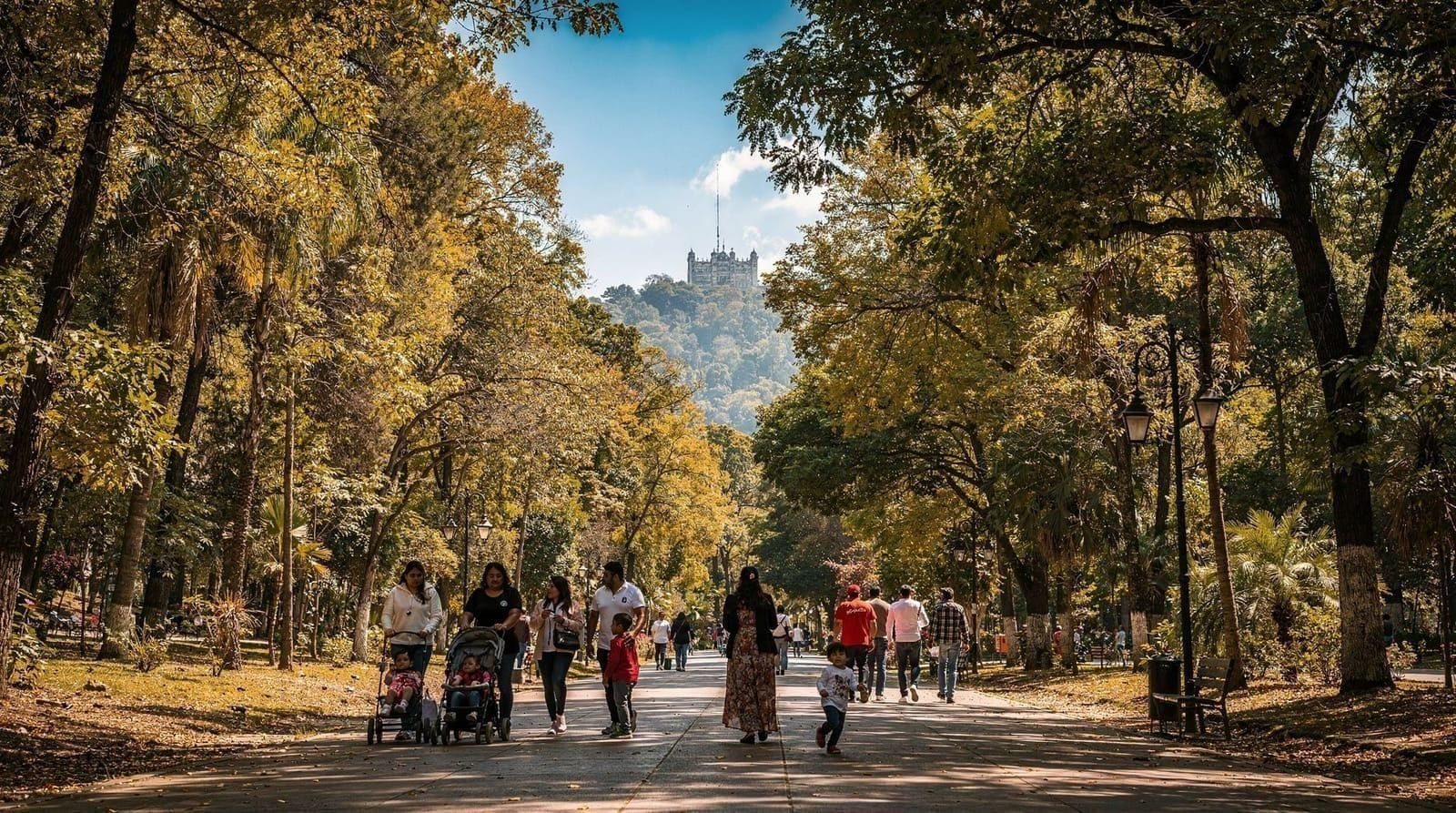
Rainy afternoons are a good excuse for indoor highlights such as the Anthropology Museum or the covered markets. Travelling with children in the wet months is also manageable; the Mexico City with kids guide has indoor ideas.
If you would rather not sort out transport on a wet afternoon, a guided Anthropology Museum visit with transport included keeps the logistics simple and gives you a dry, worthwhile way to spend the storm window.
Festival calendar: when to plan around specific dates
| Date | Event | Impact |
|---|---|---|
| March 21 | Spring Equinox at Teotihuacán | Large crowds at pyramids |
| March–April | Jacaranda bloom | Peak season, higher prices |
| Sep 15–16 | Independence Day / El Grito | Zócalo packed; transport disrupted |
| Nov 1–2 | Día de Muertos | High demand, book far ahead |
| Dec 12 | Virgen de Guadalupe pilgrimage | Basilica de Guadalupe area very crowded |
| Dec 22–Jan 6 | Christmas–Three Kings period | Festive, some closures |
Practical summary: who should go when
First-timer wanting best conditions: late October through early May. The sweet spot is March for warmth, jacarandas, and dry skies.
Budget traveler: June through August. Lower hotel rates, shorter museum queues, the city still fully operational.
Culture/festivals: early November for Día de Muertos; September for Independence Day.
Avoiding crowds: February is a good compromise — dry season, post-holiday lull, prices reasonable.
Safety-minded travelers: the season changes little about whether Mexico City is safe, but crowded festival dates are when common scams such as distraction theft are easiest to run, so stay alert in dense crowds.
Families with school-age children: Easter week (Semana Santa) and Christmas–January are popular with Mexican families — expect busy museums and parks. July is quieter for international tourists even if locals are present.
Getting the most from any season
Whatever time you visit, a few factors remain constant. The metro and Metrobús system runs year-round and is the fastest way to move between neighborhoods. Roma and Condesa are walkable and pleasant in all weather. The museums — National Anthropology, Frida Kahlo, Templo Mayor — have no weather dependency and provide excellent rainy-afternoon options.
For a quick orientation across the city regardless of season, the Turibus hop-on hop-off 1-day pass covers the main circuit and is particularly useful on arrival day. The route passes through Centro Histórico, Reforma, Polanco, and Chapultepec — a good geographic overview before you start navigating independently.
Short on time? The weekend itinerary and the 4-day itinerary fit most seasons, and the family itinerary suits school holidays. For a firsthand account, read the 3-days trip report or the 24 hours in Mexico City post.
The 3-day Mexico City itinerary and 5-day itinerary are calibrated for dry-season conditions but note the rainy-season alternatives in the day-by-day breakdown.
Whichever month you pick, a few basics apply: the tap water and food safety guide matters in every season, and the first-timer mistakes post is worth a read before you book. For this year’s bloom specifically, see the 2026 jacaranda post.
What does “best” actually mean?
For most visitors “best weather” translates to “dry and sunny” — which points clearly to November–May. But Mexico City is a city you experience primarily indoors: in markets, museums, cantinas, and neighbourhoods where the temperature is always the same whether it’s raining or not. The argument for the rainy season is that a city experienced slightly off-peak, with emptier streets and more spontaneous encounters with locals, is often a richer experience than the same city with optimal weather but maximum tourist density.
Visit for the jacarandas if you can. Visit for Día de Muertos if that’s your window. But don’t let an August travel deal go to waste just because a weather website says “avoid rainy season” — the afternoon rain in this city is usually a feature, not a problem.
Shoulder-season sweet spots
Two windows consistently outperform their reputation. Late September into early October sits between the Independence Day crowds and the Día de Muertos rush — rain is tapering off, hotel rates haven’t yet spiked, and the city feels genuinely uncrowded while still being fully green from the summer rains. Mid-February is the other underrated window: dry, mild (19–22°C), past the New Year lull, and well before the March jacaranda crowds and Easter week (Semana Santa) push prices back up. Neither window has a signature festival to build a trip around, which is exactly why they stay quiet.
What to pack by season
Dry season (Nov–May): Layers matter more than rain gear. Mornings and evenings in December–February can drop to 4–7°C, while afternoons reach a comfortable 18–22°C — a packable jacket handles the swing better than a heavy coat. Sunscreen is worth applying daily regardless of season; the altitude of 2,240m means stronger UV exposure than the temperature suggests.
Rainy season (Jun–Oct): A compact umbrella or a cheap poncho (sold streetside for 30–50 MXN) covers the predictable afternoon downpour. Waterproof shoes are unnecessary — the rain is heavy but brief, and covered transport (Metro, Uber) bridges most of the wet window. Bring a light rain jacket rather than full wet-weather gear.
Year-round: A reusable water bottle, given the altitude’s dehydrating effect, and comfortable walking shoes for the city’s cobblestones in Coyoacán and Centro Histórico.
Frequently asked questions about the best time to visit Mexico City
What is the hottest month in Mexico City?
May is the warmest month, with average highs of 24–26°C. Even at its hottest, Mexico City rarely exceeds 27°C, thanks to its altitude of 2,240 m. Evenings cool quickly to around 12–14°C year-round.
Does Mexico City get cold?
January nights can drop to 4–7°C, occasionally colder. Daytime temperatures in December–January are comfortable (17–20°C) but a warm jacket and layers are essential for mornings and evenings. The city does not get snow in the urban centre, though nearby volcanoes are snow-capped in winter.
Is there a hurricane season in Mexico City?
Mexico City is inland at altitude and is not directly affected by Atlantic or Pacific hurricanes. However, major storms on the coasts can push heavy rain systems toward the central highlands in August–September. The city’s drainage systems have improved significantly but heavy rainstorms can cause localised flooding in some streets.
When is Mexico City least crowded?
February and June are typically the quietest months for international tourists. August is quiet for foreigners despite being a local holiday period. Avoid the weeks around Easter (Semana Santa), Christmas–New Year, and Día de Muertos if you are sensitive to crowds.
Do prices change by season?
Yes. The dry season (particularly March–April and Christmas period) commands higher hotel rates. Some hotels charge a premium for Día de Muertos weekend. The rainy season offers meaningfully lower rates — often 20–35% below peak prices for equivalent rooms.
What months have the best weather in Mexico City?
December through February is the driest and coolest stretch, with daytime highs around 18–20°C and cold nights below 10°C. March through May brings warmer days (22–24°C), the jacaranda bloom, and minimal rain — this is the most popular period.
Is Mexico City worth visiting in the rainy season?
Yes. The rainy season (June–October) brings afternoon downpours that typically last 1–2 hours and clear before dinner. Mornings are usually sunny and perfect for sightseeing. Prices are lower, museums have shorter queues, and the city looks lush and washed clean. Just carry a compact umbrella.
When should I visit for Día de Muertos?
Book for November 1–2. The main celebrations include altars (ofrendas) across the city, a public procession along Reforma, and Xochimilco’s famous night trajinera tours through the canals. Hotels fill up in October — reserve at least six weeks ahead.
When are jacarandas in bloom in Mexico City?
Jacarandas typically peak in mid-to-late March and continue through April. Avenida de los Insurgentes, Roma Norte, Condesa, the UNAM campus, and the Bosque de Chapultepec are the classic spots. The bloom is highly weather-dependent — a late cold snap can delay it by two weeks.
Is Mexico City busy at Christmas?
Yes. The period from December 22 through January 6 (Three Kings Day) is active with street markets, pastorelas, posadas processions, and busy restaurants. Hotel prices rise. The city is festive but not unmanageable — just book accommodation and popular restaurants in advance.
What are the cheapest months to visit?
June through September offer lower hotel rates and fewer international tourists. August is particularly quiet. Quality of experience is still high if you front-load your sightseeing to mornings and accept afternoon rain as part of the rhythm.
How does altitude affect what time of year to visit?
Mexico City sits at 2,240 m year-round, so altitude effects are constant regardless of season. The thinner air does make cold-season nights feel colder than the temperature suggests — pack a warm layer even if visiting in spring.