Jacaranda season in Mexico City
Mexico City: Teotihuacan First Entry Tour with Expert Guide
When is jacaranda season in Mexico City?
Jacarandas typically start blooming in early-to-mid March and peak in late March through mid-April, when hundreds of thousands of trees across Roma, Condesa, Coyoacán, the UNAM campus, and the Bosque de Chapultepec turn vivid purple-blue. Peak timing varies by 1–2 weeks depending on winter cold snaps and spring warmth.
Mexico City’s most spectacular natural event
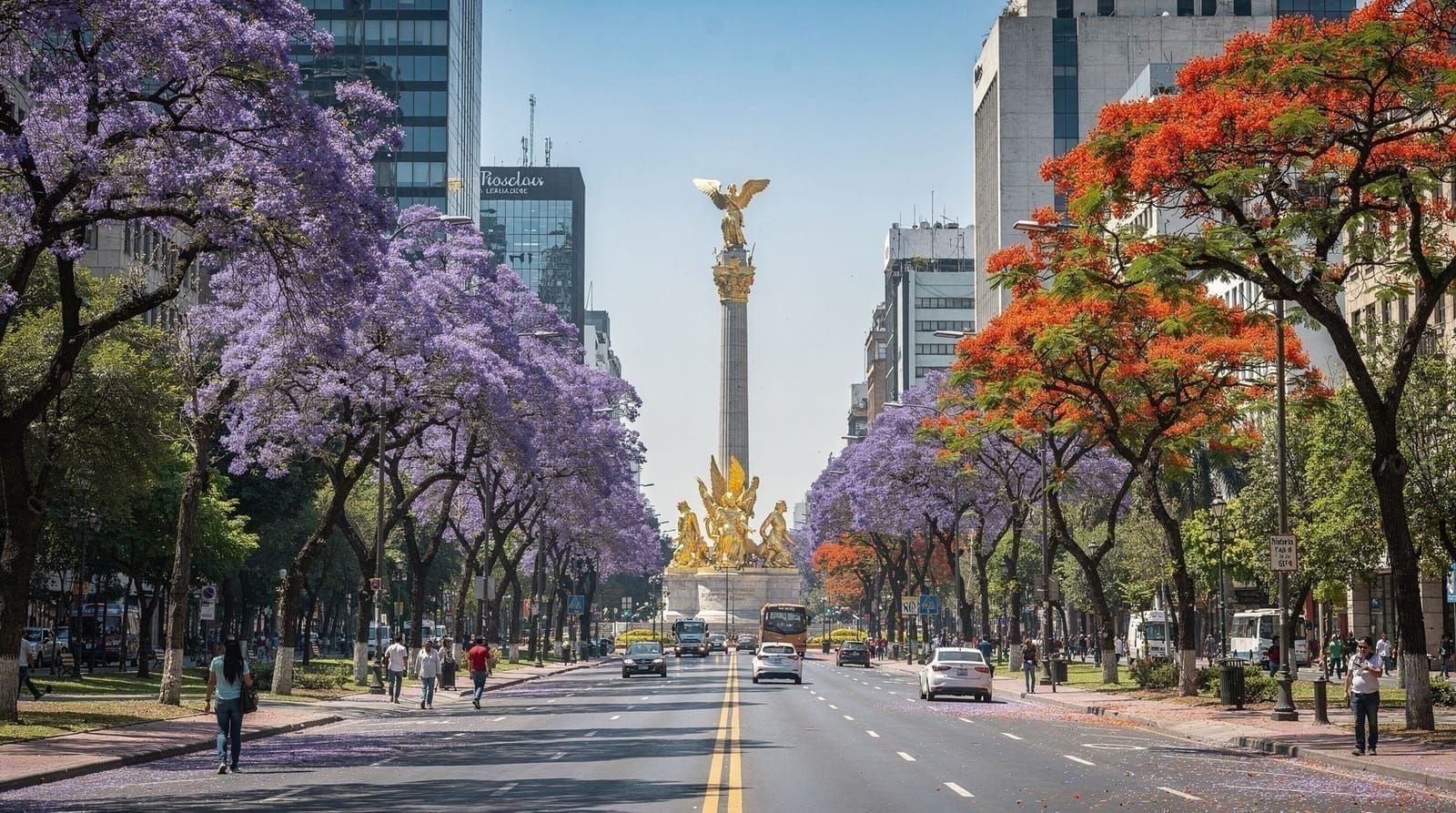
For a few weeks every spring, Mexico City undergoes one of the more dramatic urban transformations in Latin America. An estimated 50,000–70,000 jacaranda trees — planted across six decades of mid-20th century urban expansion — simultaneously open their purple-blue flowers, coating entire boulevards, parks, and residential streets with colour that is visible even from the air.
The jacaranda bloom is not a minor local curiosity. It is a city-scale spectacle that draws visitors specifically for its timing and has become one of Mexico City’s defining seasonal identities alongside Día de Muertos in November. If your travel dates are flexible and you are trying to choose between visiting in February, March, or April, the jacaranda bloom is a decisive argument for the March–April window.
| When | Early March to mid-April, peaking late March |
| Best street | Avenida Amsterdam, Condesa |
| Cost | Free — it’s a public street/park display |
| Time needed | Half a day for a walking circuit of 2–3 spots |
| Best time of day | 7:00–9:00am for light and fewer crowds |
Month-by-month bloom probability
| Period | What to expect |
|---|---|
| Late Feb | Trees bare; occasional very early bloomer in warm microclimates |
| Early March | First trees opening, mostly in Condesa’s warmest pockets |
| Mid–late March | Widespread bloom, Amsterdam and Parque México at their best |
| Early April | Peak holds in UNAM and Coyoacán, which bloom slightly later |
| Mid-April | Bloom fading, purple petal carpets on sidewalks |
| Late April | Mostly bare, leaf-out underway |
When the jacarandas bloom: realistic timing
The bloom responds to temperature and day length rather than a fixed calendar date, which creates uncertainty in exact timing. The broad pattern is:
- Early March: first trees begin opening, typically in the warmest microclimates of Condesa and the southern neighborhoods
- Mid-to-late March: widespread bloom across most of the city, Avenida Amsterdam and Parque México at their most photogenic
- Early April: peak maintained across UNAM campus and Coyoacán, which tend to bloom slightly later than Condesa
- Mid-April: bloom begins to fade, petals falling and carpeting sidewalks in purple
- Late April: most trees bare of flowers, leaf-out beginning
A late February cold front can push the whole sequence 2–3 weeks later. In a warm year, peak bloom can arrive in the second week of March. For trip-planning purposes, targeting the last week of March gives the best statistical probability of catching peak bloom without requiring exact year-specific knowledge.
The best jacaranda spots in Mexico City
Avenida Amsterdam, Condesa
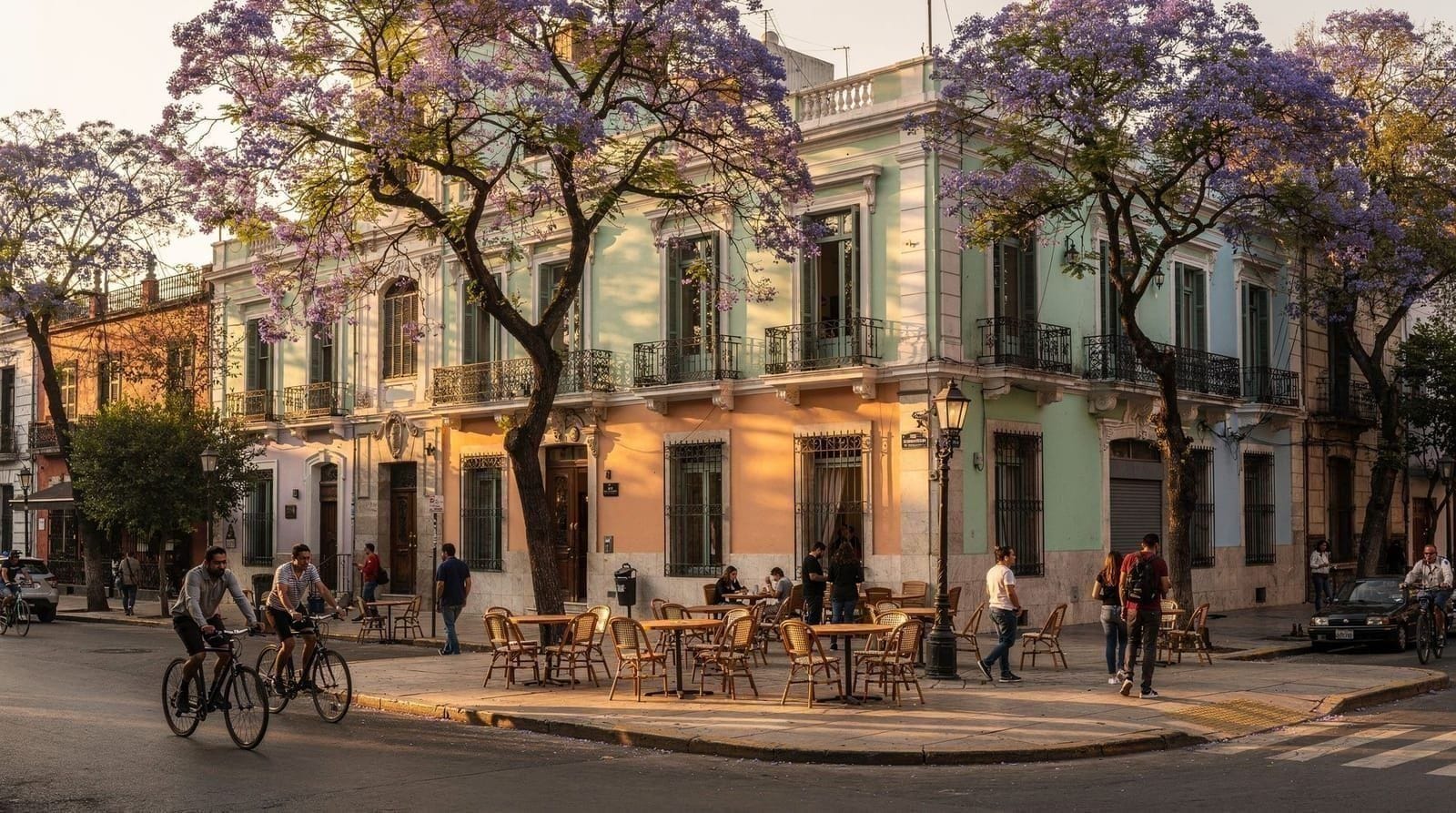
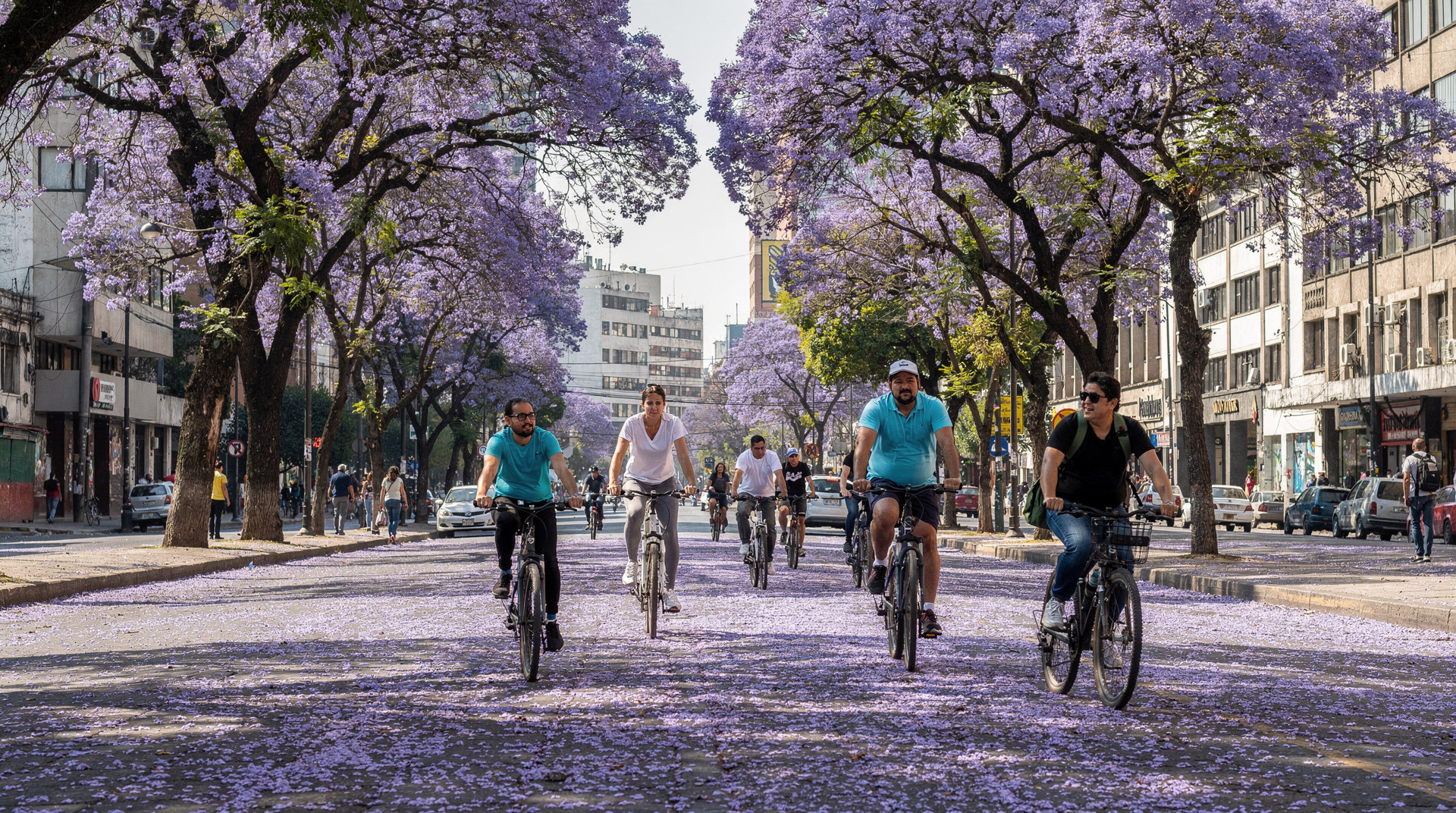
The single most photographed jacaranda boulevard in Mexico City is Avenida Amsterdam in Condesa — a 2.3 km oval boulevard that traces the perimeter of what was once a horse-racing track. The entire boulevard is lined with mature jacaranda trees whose canopies meet overhead at peak bloom, creating a purple tunnel effect above walkers and cyclists. The interior of the oval contains Parque México, with more jacarandas around its paths.
To reach Avenida Amsterdam: Metro Line 1 to Chilpancingo station (Pink Line), then walk north about 10 minutes. The best light for photography is in the morning before foot traffic builds. Visit on a weekday morning for the most peaceful experience; weekends in peak bloom are genuinely crowded.
Roma Norte
The adjacent neighborhood of Roma Norte has dense jacaranda plantings on many residential streets, particularly around Colonia Roma’s tree-lined avenues. Plaza Luis Cabrera and Parque España both have notable trees. Roma is highly walkable and can easily be combined with Condesa for a half-day bloom walk.
UNAM Campus (Ciudad Universitaria)
The National Autonomous University of Mexico campus in the south of the city — a UNESCO World Heritage Site for its Diego Rivera murals and mid-century architecture — has what many consider the single densest concentration of jacarandas in the metropolitan area. Hundreds of trees line the campus walks and frame the iconic mosaic facades of the library.
The UNAM campus is about 30 minutes from Centro by metro (Line 3 to Universidad, then bus). Entry to the campus is free. The Diego Rivera Murals guide covers the famous mosaic-covered Biblioteca Central that forms the visual centrepiece.
Bosque de Chapultepec
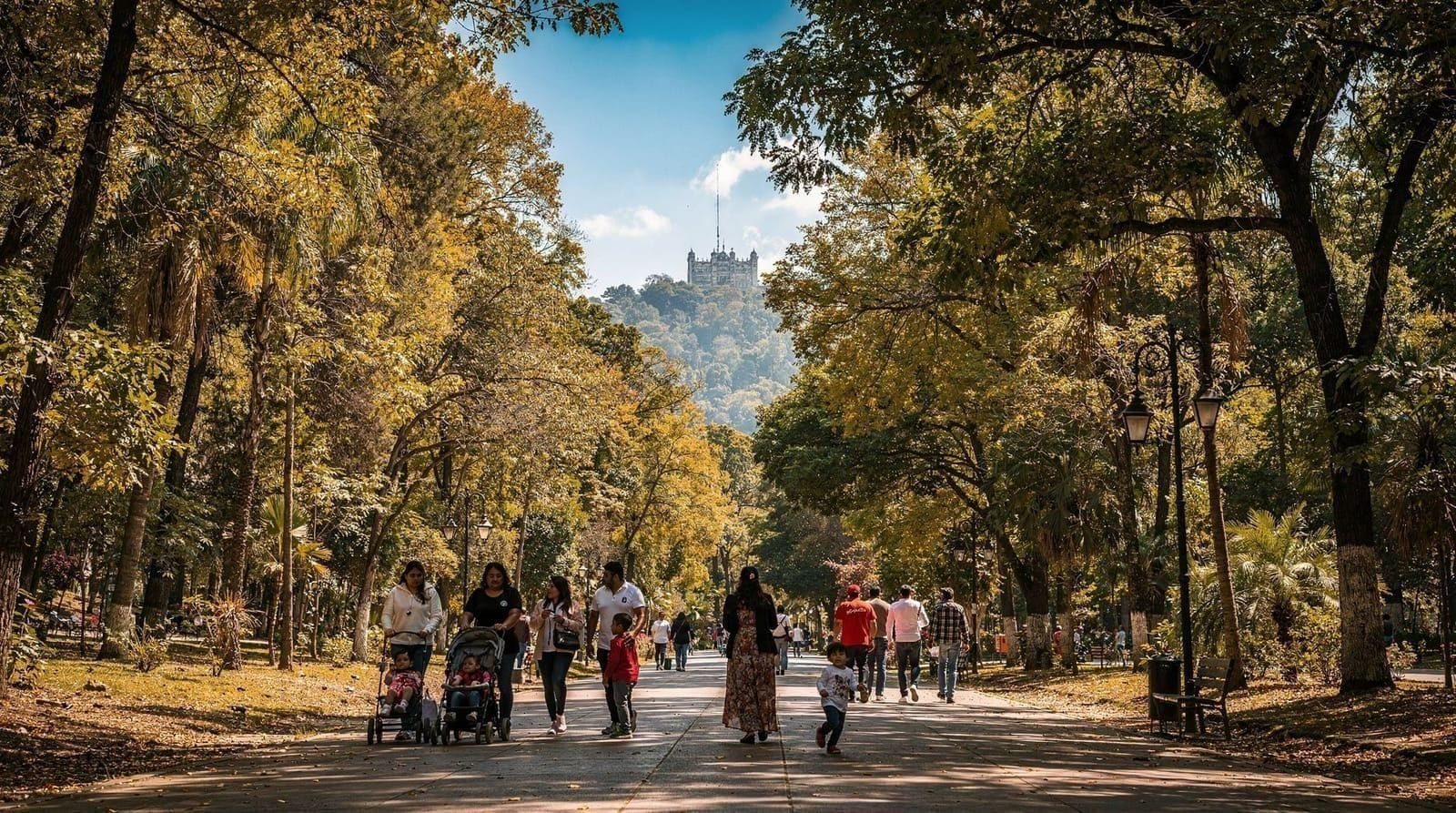
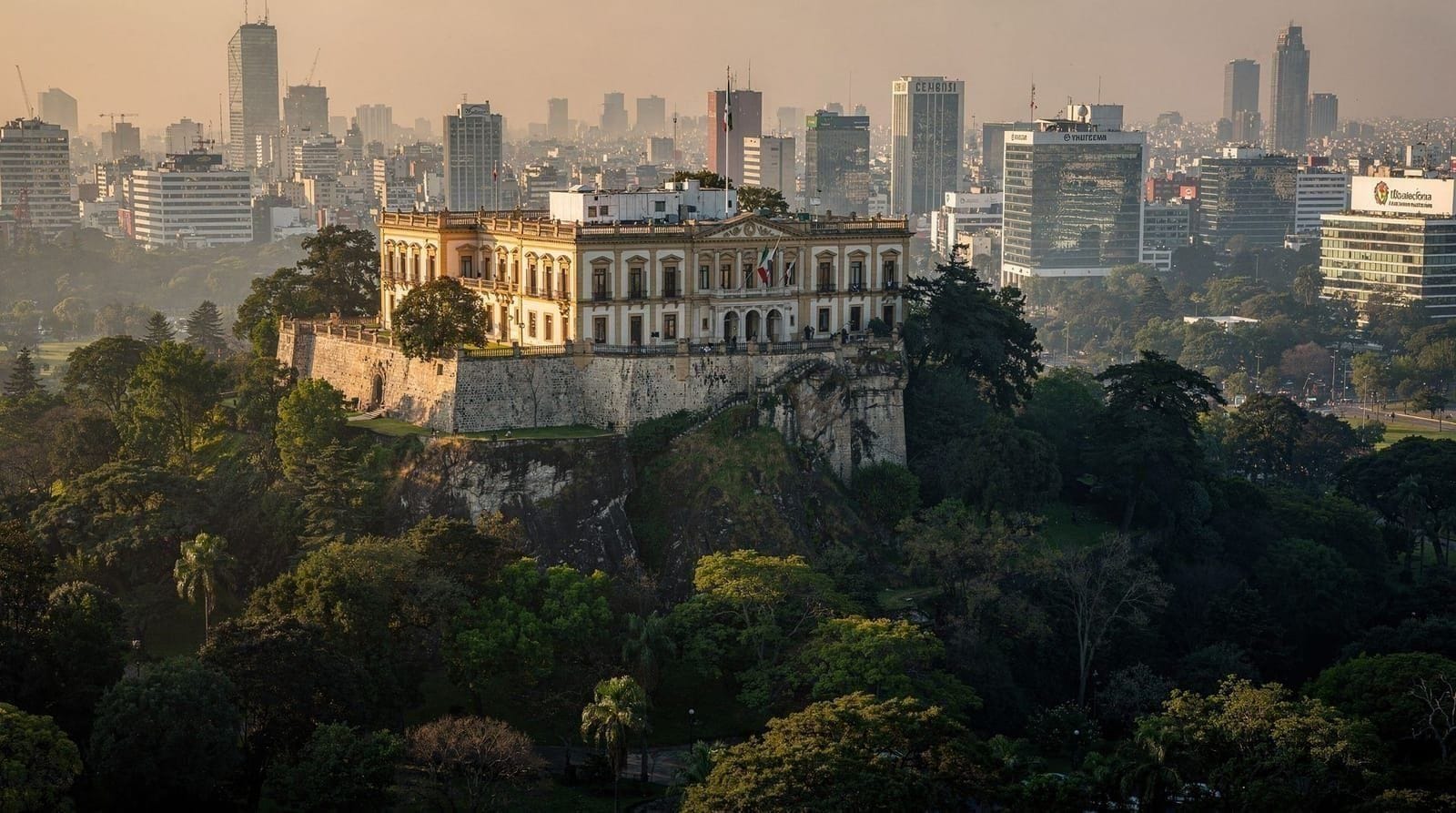
The city’s main park has significant jacaranda plantings along its main avenues, particularly in the first section (Section I) near Reforma and around the footpaths near the anthropology museum. The combination of jacarandas, green lawns, and the backdrop of the castle on the hill is classic Mexico City spring photography.
The Chapultepec and Polanco area guide covers the park layout. On Sunday mornings, the park fills with families, joggers, and cyclists — combine a jacaranda walk with the weekly open-air scene for an authentic local experience.
Coyoacán
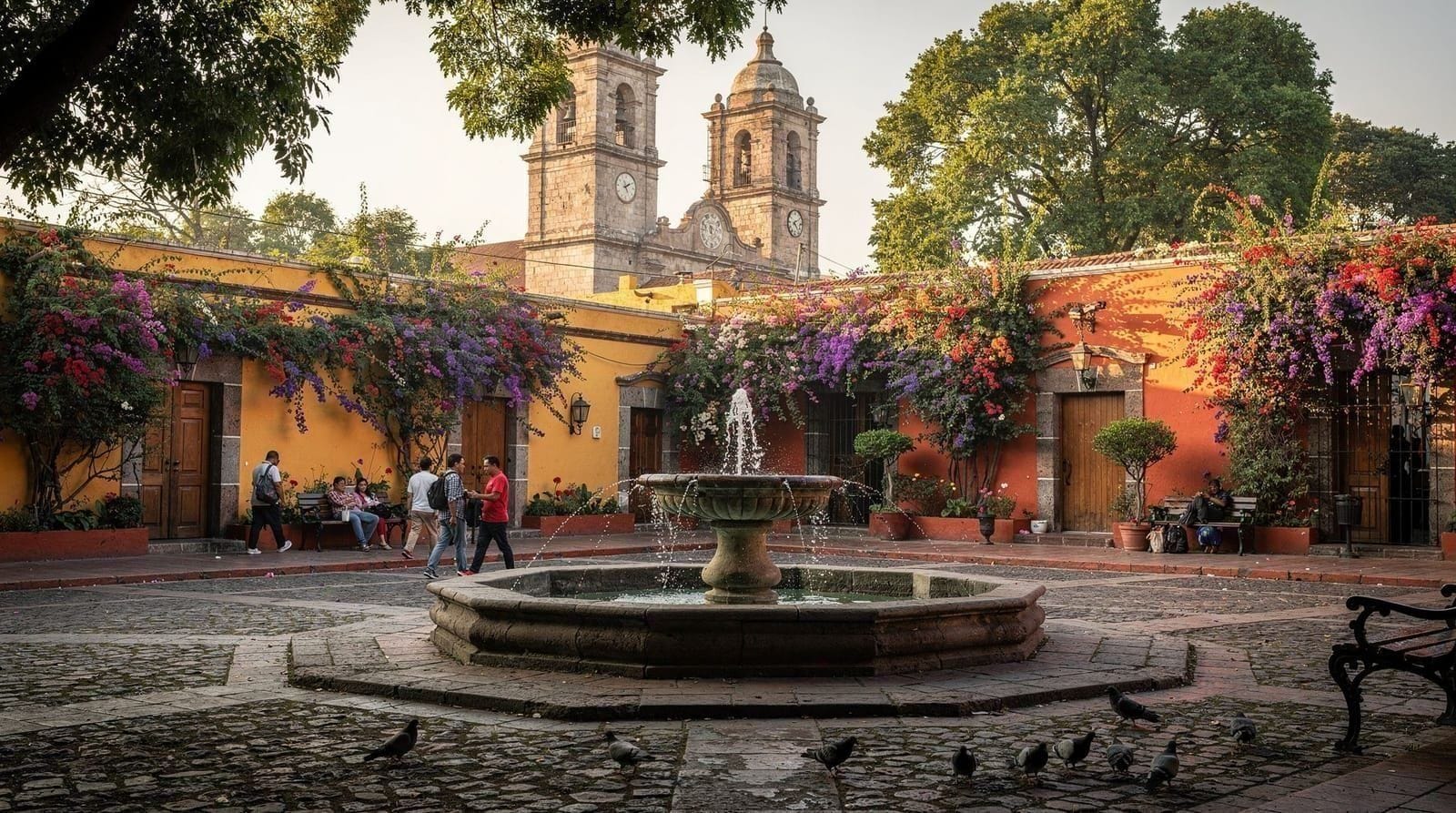
The colonial neighborhood of Coyoacán — base for the Frida Kahlo museum visit — has beautiful jacarandas around Parque Coyoacán, Viveros de Coyoacán (a public nursery and park), and along Avenida de los Compositores. Viveros, in particular, is one of the best spots in the city: a large park whose paths wind between old jacarandas and other flowering trees, largely unknown to tourists but popular with local families and joggers.
San Ángel
The colonial weekend neighbourhood of San Ángel has jacarandas particularly around Parque de la Bombilla and Avenida Altavista. The Saturday Bazar del Sábado (art market) falls right within the jacaranda season and combines well for a south-of-the-city morning: Viveros for the bloom, then San Ángel for the market and a meal.
Combining the jacaranda bloom with other spring activities
The jacaranda season coincides with the most pleasant overall weather of the year — dry, warm (22–25°C), and sunny. This makes it easy to combine bloom-watching with the rest of what Mexico City offers in spring.
A morning in Condesa for Avenida Amsterdam, then lunch in Roma Norte followed by an afternoon at the Frida Kahlo Museum in Coyoacán is a natural spring day route. Book the museum well in advance — it limits visitor numbers and sells out weeks ahead during peak season.
For Teotihuacán, March 21 (Spring Equinox) draws crowds in white clothing to gather at the pyramids — a striking cultural spectacle that coincides with the beginning of jacaranda season. An early-morning Teotihuacán first-entry tour with expert guide from Mexico City takes advantage of both the spring energy and the cooler morning temperatures.
The purple carpet underfoot
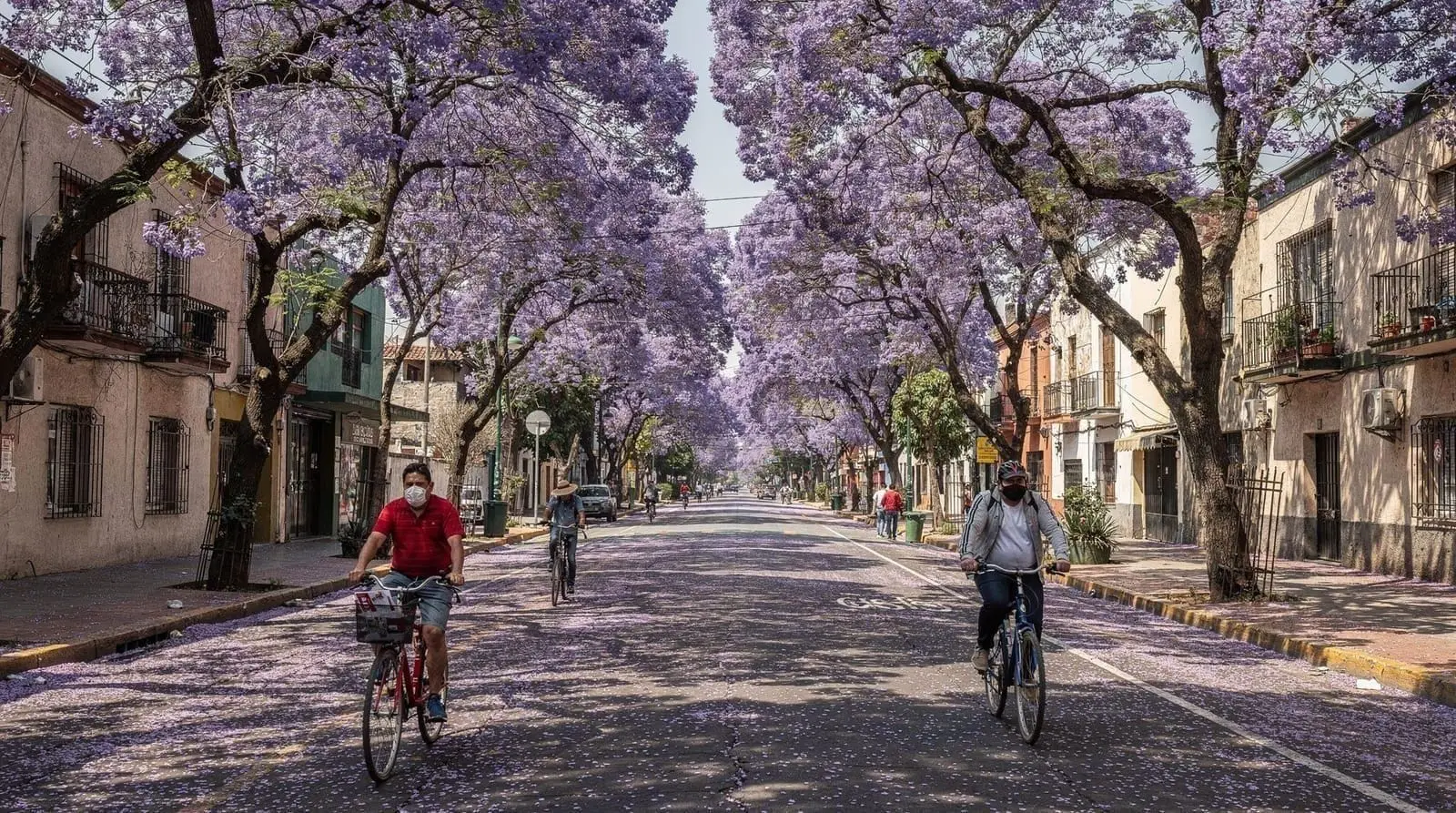
One of the lesser-appreciated aspects of jacaranda season is what happens when the blooms fall. From mid-April into late April, the petals carpet the sidewalks and streets of Condesa and Roma in purple — a softer, more melancholy beauty than the peak bloom but arguably more photographically interesting for the contrast of purple flowers against grey pavement, parked cars, and passing cyclists.
Street cleaners sweep the petals daily in Condesa, but the effect regenerates overnight. If you catch the tail end of the bloom, the fallen-petal carpets are part of the experience.
Practical notes for visiting during jacaranda season
Timing your arrival: If you have flexibility, target March 20 through April 5 for the highest probability of catching peak bloom. The Mexico City weather month-by-month guide gives context on what March and April conditions look like.
Photography: Morning light (7:00–9:00 am) is best before the streets fill. Overcast days actually give more even, saturated colour than direct midday sun, which washes out the purple tones.
Crowds: Weekends during peak bloom are genuinely busy in Condesa. Locals as well as tourists come specifically for the blooms. Arrive before 9:00 am or after 4:00 pm for quieter streets.
Allergies: Jacaranda pollen is relatively low, but some visitors experience mild reactions during peak bloom. The real allergy culprit in spring Mexico City is often grass pollen and cypress, not the jacarandas themselves.
A half-day jacaranda walking route
For visitors with a single morning to dedicate to the bloom, this route covers the two best-known spots without excessive backtracking: start at Avenida Amsterdam around 7:30–8:00am for quiet streets and good light, walk the full 2.3km oval, then cut into Parque México for the interior plantings. From there it’s a 15–20 minute walk into Roma Norte for a coffee stop and more residential-street jacarandas around Plaza Luis Cabrera. If you have the energy for a second half of the day, an Uber to Viveros de Coyoacán (20–25 minutes) adds a quieter, more local-feeling counterpoint before finishing with lunch in Coyoacán’s main plaza area.
Where to stay for jacaranda season
If the bloom is a priority for your trip, basing yourself in Roma or Condesa puts Avenida Amsterdam and Parque México within walking distance and cuts down on the early-morning travel needed to catch the best light. Staying further out — Polanco or Centro Histórico — is still workable, since Uber to Condesa is quick outside rush hour, but you lose the option of a pre-breakfast stroll before the streets fill.
Frequently asked questions about jacaranda season in Mexico City
What is a jacaranda tree?
Jacaranda mimosifolia is a sub-tropical flowering tree native to South America (Bolivia and Argentina) that was widely planted in Mexican cities throughout the 20th century. It produces spectacular purple-blue tubular flowers on bare branches before the leaves emerge, which is what makes the bloom so visually striking — the colour is unobstructed by green foliage.
Are jacarandas found anywhere else in Mexico?
Yes — Guadalajara, Morelia, Oaxaca, and Puebla all have significant jacaranda plantings and spring blooms. Mexico City’s bloom is largest in scale due to sheer tree density in the metropolitan area. Combining a Puebla and Cholula day trip with Mexico City in spring lets you see jacarandas in two colonial settings.
Do jacarandas bloom again later in the year?
In Mexico City’s climate, jacarandas typically bloom once per year in spring. Occasional secondary blooms can occur after late summer rains, but these are partial and far less dramatic than the main spring flowering.
Is the spring equinox at Teotihuacán really worth it during jacaranda season?
The equinox gathering at Teotihuacán is a uniquely Mexican experience — crowds of people dressed in white gathering at the pyramids to receive energy, surrounded by vendors, music, and atmosphere. It is crowded and requires an early start from Mexico City (ideally before 7:00 am). Combined with the early jacaranda bloom visible on the drive out through the city, it makes for a full and memorable spring day.
Can I see jacarandas from the Turibus hop-on hop-off route?
Yes. The Turibus route passes through Condesa, Reforma, and Polanco and covers several of the main jacaranda streets. A Turibus 1-day hop-on hop-off pass during peak bloom gives you a good overview and lets you alight at Condesa for the Avenida Amsterdam walk.
What streets have the most jacarandas in Mexico City?
Avenida Amsterdam (Condesa) is the most photographed — a oval boulevard completely lined with jacarandas. Other standouts: Insurgentes Sur, the UNAM campus (Ciudad Universitaria), Avenida de los Compositores in Coyoacán, Parque México in Condesa, and the main allées of the Bosque de Chapultepec.
How long does the jacaranda bloom last?
Individual trees bloom for about 2–3 weeks. With the variety of tree ages and microclimates across the city, the overall season usually spans 5–7 weeks from early March to mid-April. The peak — when the largest number of trees are simultaneously in full bloom — typically lasts 7–10 days in late March.
Do all parts of Mexico City have jacarandas?
They are concentrated in certain neighborhoods and parks. Condesa, Roma, Coyoacán, San Ángel, Polanco, and the university area have the densest plantings. Centro Histórico and Tepito have far fewer. The best blooms are in the areas planted during the mid-20th century urban expansion when jacarandas were the tree of choice.
Why are there so many jacarandas in Mexico City?
Jacaranda mimosifolia was planted extensively during the 1920s–1950s urban expansion, partly influenced by horticulturalist Nicolas Martínez and urban planners who favoured the tree for its tolerance of the altitude and its dramatic seasonal display. An estimated 50,000–70,000 jacaranda trees now grow within the metropolitan area.
Can a cold snap delay the jacarandas?
Yes. A late cold front in February or early March can delay the bloom by 2–3 weeks. In some years, the peak falls in late March; in others it arrives as early as the second week of March. If timing matters to you, check local social media accounts like @cdmxjacarandas on Instagram as you approach your trip.
Is there a jacaranda festival in Mexico City?
There is no single official festival, but the bloom prompts spontaneous street-side flower markets, photography events, and cultural programming in Condesa and Roma. UNAM’s campus sometimes organizes guided nature walks during peak bloom. Local events are announced on neighborhood social media pages.