Mexico City weather month by month
Mexico City: Street Food Tour - Local Flavors and History
What is the weather like in Mexico City each month?
Mexico City has two clear seasons: dry (November–May) with 10–25°C days and reliable sunshine, and rainy (June–October) with warm mornings and afternoon thunderstorms averaging 1–2 hours. The altitude of 2,240 m keeps temperatures mild year-round — it never gets truly hot or truly cold by global standards.
Understanding Mexico City’s climate at 2,240 m
Mexico City’s weather is shaped primarily by altitude, not latitude. At 2,240 m (7,350 ft) on a broad highland plateau — the Valley of Mexico — the city never gets the tropical heat of coastal destinations like Cancún or Puerto Vallarta. But it also never gets the true cold of mountain resorts. The result is a remarkably stable temperature band year-round: 10–25°C covers almost every day of every month.
What changes dramatically between seasons is rainfall. The Inter-Tropical Convergence Zone brings moisture from the Pacific and Gulf of Mexico through the highlands from June through October, producing the city’s characteristic afternoon thunderstorms. From November through May, this moisture source retreats and the city enjoys almost unbroken sunshine.
UV radiation deserves a separate mention. At 2,240 m, you receive roughly 25% more UV radiation than at sea level for the same cloud conditions. Sunscreen is essential year-round, not just in summer.
| Dry season | November–May, 10–25°C, reliable sunshine |
| Rainy season | June–October, warm mornings, 1–2hr afternoon storms |
| Wettest month | July (~170–180mm) |
| Coldest nights | December (5–8°C) |
| UV exposure | ~25% higher than sea level year-round |
Weather is only one input when choosing dates. The where to stay guide and the getting around guide are worth reading alongside the month sections below, because a rainy afternoon or a cold morning feels very different depending on your base and how you move between sights.
January
Temperature: 7–21°C (average low 7°C, average high 21°C) Rainfall: ~5 mm (one of the driest months) Sunshine: ~7–8 hours/day
January is cold by local standards but mild by global ones. Morning temperatures around 7–9°C require a real jacket. By midday it typically climbs to a pleasant 18–21°C. Rain is extremely rare. The city is post-holiday but still somewhat festive through Three Kings Day (January 6), when families exchange final Christmas gifts and the street bakeries make a ring-shaped Rosca de Reyes cake.
Practical note: some smaller restaurants and shops take vacation between Christmas and January 8–10. Museum attendance is back to normal after the holiday peak.
February
Temperature: 8–23°C Rainfall: ~5 mm Sunshine: ~8 hours/day
February is dry, often sunny, and warming slightly toward spring. Daytime temperatures regularly hit 22–24°C by mid-month. The city is quieter than March–April — a good window to visit without peak-season crowds. Valentine’s Day brings out restaurants in Roma and Condesa — book ahead for nicer spots.
The Zócalo often hosts cultural events and temporary art installations through February. The Palacio de Bellas Artes programming picks up after the quiet post-Christmas period.
March
Temperature: 10–25°C Rainfall: ~10 mm Sunshine: ~8 hours/day
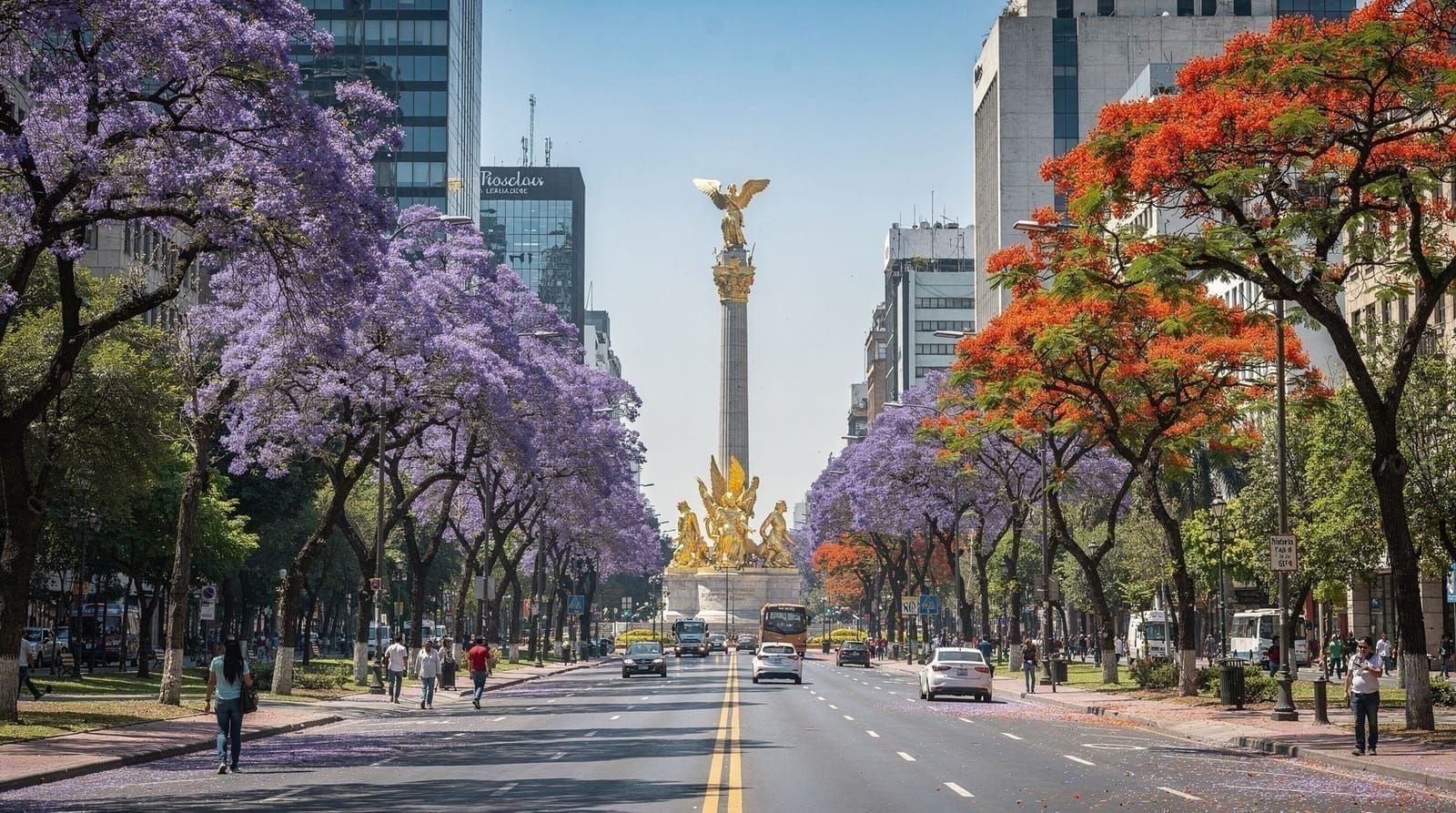
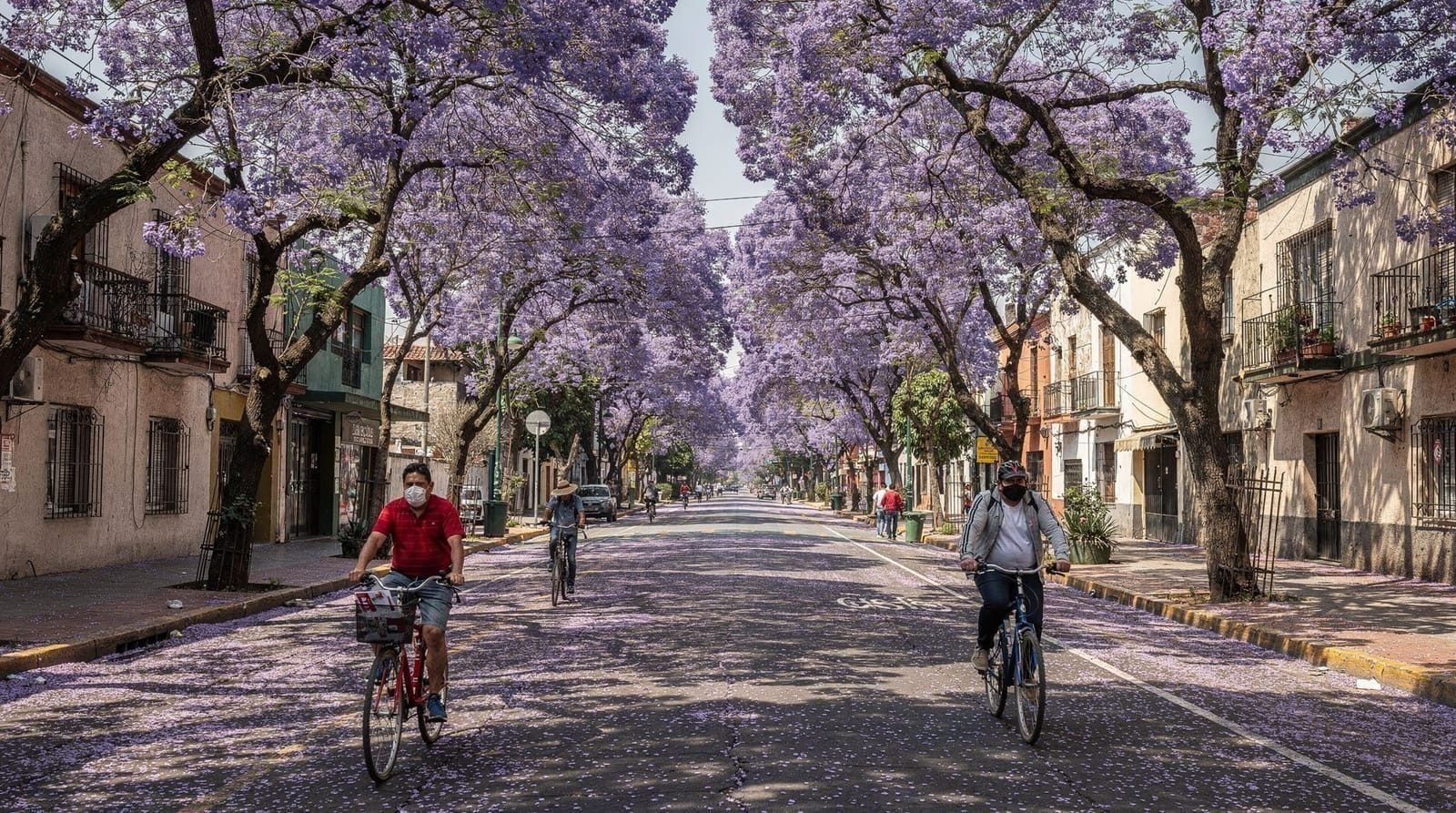
March is when the magic happens: the jacaranda bloom begins in earnest from mid-March, with purple-blue flowers coating the trees along Avenida Amsterdam in Condesa, the streets of Coyoacán, Avenida Insurgentes, and the UNAM campus. The jacaranda guide covers exact spots and timing.
Temperatures are ideal — warm enough for t-shirts by midday but fresh in the morning. The Spring Equinox (around March 21) brings large crowds to Teotihuacán for the traditional gathering in white clothing. This is peak tourist season; hotel prices are at their highest.
April
Temperature: 12–26°C Rainfall: ~20 mm Sunshine: ~7–8 hours/day
April continues the jacaranda season into its final weeks. Temperatures are the warmest of the dry season — 24–26°C at midday. Easter week (Semana Santa) falls in March or April depending on the year and is Mexico’s main domestic holiday period. Museums, parks, and transport are busy with local families. Pre-booking accommodation and popular tours is essential.
Dry, clear days suit the big outdoor excursions. The best day trips from Mexico City are at their most reliable in this stretch, and the Teotihuacán complete guide and how to get to Teotihuacán explain how to plan an early start before the sun gets strong.
The first tentative afternoon showers can appear in late April, signalling the transition. These are not yet the established rainy season pattern — more isolated events that are easy to work around.
May
Temperature: 14–26°C Rainfall: ~50 mm Sunshine: ~6–7 hours/day
May is warm and increasingly humid as the rainy season approaches. Afternoon cloud builds through the month, and from mid-May, some days see genuine afternoon showers. By late May the rainy season is effectively beginning. Daytime temperatures are warm (24–26°C) and evenings are pleasant.
May 5 (Cinco de Mayo) is a public holiday commemorating the 1862 Battle of Puebla. It is celebrated modestly in Mexico City itself — primarily a state occasion — though the Puebla and Cholula day trip around this date has particular historical resonance.
June
Temperature: 13–24°C Rainfall: ~120 mm Sunshine: ~5–6 hours/day
June marks the firm establishment of the rainy season. The afternoon thunderstorm pattern becomes reliable: mornings are sunny and warm (20–23°C), clouds build through lunch, and rain typically arrives between 3:00 and 6:00 pm. The storms can be intense — genuine downpours with thunder — but usually pass within 1–2 hours.
Hotel prices drop from May–June, and international tourist numbers are lower. The city’s parks and gardens are at their greenest. A street food tour of Mexico City’s historic downtown is particularly good in the morning before the afternoon rain; the markets are at their freshest early in the day.
Evenings are a good time for indoor entertainment while the rain passes: the lucha libre guide and the Garibaldi mariachi guide both cover nights out that work whatever the sky is doing. For eating, the street food guide and the tap water and food safety guide are useful all year.
July
Temperature: 13–22°C Rainfall: ~170 mm (wettest month) Sunshine: ~4–5 hours/day
July is the wettest month. Rainfall averages 170–180 mm spread across 20+ rainy days. Some days see prolonged rain; most follow the morning-sun, afternoon-storm pattern. Temperatures are actually very comfortable — the rain cools things down to 17–20°C during storms.
This is a good month for museums. The National Museum of Anthropology near Chapultepec and Polanco is never more enjoyable than when you duck in from the rain and find the galleries relatively quiet. The Anthropology Museum guide helps you plan the visit, and the markets guide covers covered alternatives when the sky turns grey. The Frida Kahlo Museum in Coyoacán has shorter queues than spring — advance booking is still advisable but less critical.
August
Temperature: 13–22°C Rainfall: ~150 mm Sunshine: ~4–5 hours/day
August is similar to July — wet afternoons, comfortable temperatures. Mexican school holidays mean local families are out in force at parks and family-oriented attractions (Xochimilco, Chapultepec Zoo). International tourist numbers remain lower than in the dry season.
One practical note: air quality in Mexico City sometimes improves noticeably in the rainy season as precipitation washes particulates from the air. The city can look genuinely crisp and clean after a good August thunderstorm. This is also a reasonable month for a rainy-season Xochimilco visit — the canals and floating gardens look especially green, and the trajinera boats are still fully operating; check the Xochimilco guide for the seasonal logistics.
If you would rather not arrange boats and transport yourself, a guided Xochimilco day trip with lunch keeps the logistics simple, and mornings are usually the driest part of a rainy-season day.
September
Temperature: 12–22°C Rainfall: ~130 mm Sunshine: ~4–5 hours/day
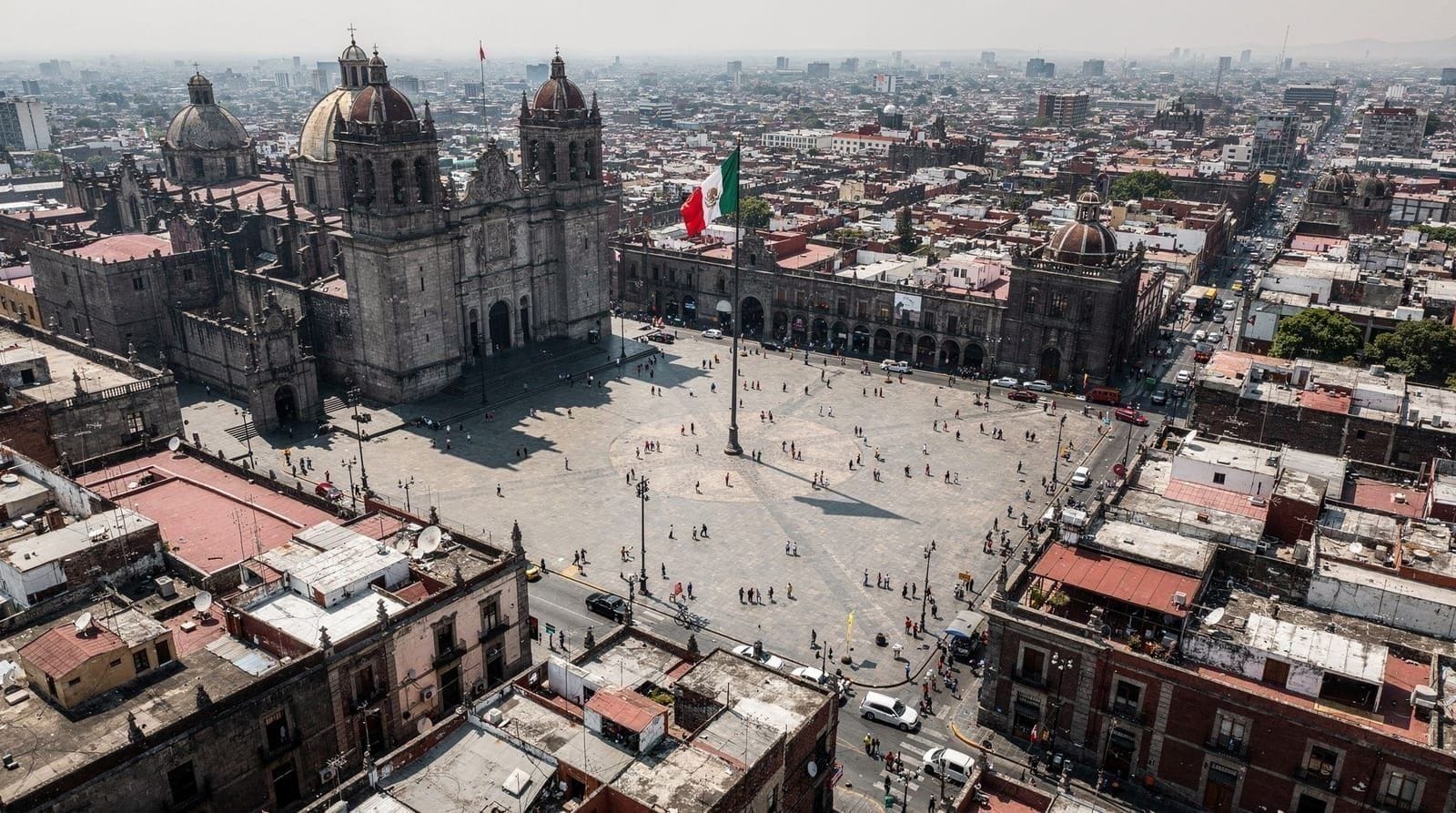
September brings Mexico’s most significant patriotic moment: El Grito de Independencia on the night of September 15. The President re-enacts Miguel Hidalgo’s 1810 call to arms from the balcony of the National Palace on the Zócalo. Hundreds of thousands gather in the main square for a raucous, festive celebration. Book accommodation and plan transport well in advance — Uber/DiDi prices surge and metro stations near Centro get extremely crowded.
Weather is still rainy but temperatures begin to ease slightly. Late September sometimes sees a transition toward drier conditions.
October
Temperature: 10–22°C Rainfall: ~60 mm Sunshine: ~5–6 hours/day
October is the transition out of the rainy season. Rainfall diminishes noticeably from September, and by late October some days are fully dry. Temperatures cool slightly — 18–22°C by day, 10–12°C at night. The city shifts its mood toward the approaching Día de Muertos: bakeries stock pan de muerto, marigold (cempasúchil) flowers appear in markets, and ofrenda displays start going up in shop windows and public spaces.
October is an underrated month to visit — lower prices than November, good weather improving through the month, and the Día de Muertos buildup adding cultural texture without the peak-November crowds.
November
Temperature: 8–22°C Rainfall: ~15 mm Sunshine: ~7–8 hours/day
The dry season is fully re-established by November. Rainfall is minimal, skies are clear, and daytime temperatures hover at a very pleasant 20–22°C. November 1–2 (Día de Muertos) is the year’s most culturally significant event: elaborate altars across the city, the Mixquic night ceremony south of CDMX, and Xochimilco’s decorated canal tours. See the Xochimilco complete guide for the Día de Muertos trajinera experience.
The Día de Muertos guide and the Mixquic guide go deeper on where to be and how to plan around the crowds.
Hotel prices spike around November 1–2 and recover quickly after. The rest of November is excellent value — dry, sunny, and less crowded than December.
December
Temperature: 5–20°C Rainfall: ~8 mm Sunshine: ~7–8 hours/day
December is cold by Mexico City standards. Morning temperatures often fall below 7°C in the first and last weeks, with the coldest nights of the year around Christmas. Daytime highs of 18–20°C are pleasant but cooler than any other dry-season month. Pack warm layers for mornings and evenings — a light down jacket is ideal.
The city is beautifully decorated. Posadas processions (the nine-night pre-Christmas tradition recreating Mary and Joseph’s search for shelter) run December 16–24 in residential streets across Roma, Condesa, and Coyoacán. Street food stalls multiply around the Centro, selling hot atole, tamales, and ponche (a warm spiced fruit punch). December 12 brings pilgrims from across Mexico to the Basilica de Guadalupe — one of the most visited Catholic shrines in the world.
Month-at-a-glance summary
| Month | Avg High | Avg Low | Rain | Crowds | Notes |
|---|---|---|---|---|---|
| Jan | 21°C | 7°C | Very low | Medium | Cold nights, dry |
| Feb | 23°C | 8°C | Very low | Low | Best value dry season |
| Mar | 25°C | 10°C | Low | High | Jacarandas begin |
| Apr | 26°C | 12°C | Low | High | Peak jacarandas, Easter |
| May | 26°C | 14°C | Medium | Medium | Warming, rain starting |
| Jun | 24°C | 13°C | High | Low | Rainy season starts |
| Jul | 22°C | 13°C | Highest | Low | Wettest month |
| Aug | 22°C | 13°C | High | Low | Local families out |
| Sep | 22°C | 12°C | High | Medium | Independence Day Sep 15 |
| Oct | 22°C | 10°C | Medium | Medium | Transition month |
| Nov | 22°C | 8°C | Very low | High | Día de Muertos |
| Dec | 20°C | 5°C | Very low | High | Festive, cold nights |
Best month by priority
| If your priority is… | Best months | Why |
|---|---|---|
| Guaranteed sunshine | November, February | Driest, clearest, mild temperatures |
| Lowest hotel prices | June–August | Rainy season, lower international demand |
| The jacaranda bloom | Mid-March to mid-April | Peak purple canopy in Condesa, Coyoacán, UNAM |
| Día de Muertos | Late October–November 2 | Altars, Mixquic, Xochimilco decorated canals |
| Fewer crowds, good weather | October, February | Shoulder months between peak seasons |
| Cool evenings, festive atmosphere | December | Posadas, markets, Basilica pilgrimage (cold nights) |
Packing by season
Dry season (November–May): Light layers for midday warmth, a jacket for mornings and evenings, sunscreen and a hat for the strong altitude UV, comfortable walking shoes. December and January nights need a genuine warm jacket, not just a light layer.
Rainy season (June–October): Everything above, plus a packable rain jacket or compact umbrella. A light rain layer beats a large umbrella for navigating crowded metro exits and market aisles. Quick-dry clothing helps since afternoon downpours are brief but can be intense.
Weather also interacts with safety habits: walking after dark is a different proposition in the cold, quiet streets of December than on a busy evening in spring, so the safety guide is worth a read whatever the month. If you are short on time, the weekend itinerary fits any season, and the first-timer mistakes post lists the errors travellers most often make on a first visit.
Whichever season you’re visiting in, the altitude guide covers how 2,240 m affects your body regardless of weather, and the itinerary length guide factors seasonal pacing into day-by-day planning.
Frequently asked questions about Mexico City weather month by month
What is the average temperature in Mexico City in winter?
December through February: daytime highs of 18–22°C, overnight lows of 5–9°C. Genuinely cold by local standards for mornings and evenings; a winter jacket is necessary, not optional.
Does Mexico City have a spring season?
March and April feel spring-like — warming temperatures, low rainfall, and the famous jacaranda bloom give the city a distinctly vernal character. This is when Mexico City is at its most photogenic.
Is Mexico City humid?
Not particularly. The dry season is low humidity, which makes the altitude-moderated temperatures very comfortable. The rainy season brings higher humidity before afternoon storms, but the city does not have the oppressive humidity of tropical coastal areas.
Can I visit Mexico City year-round?
Yes. Every month offers a functional, enjoyable visit. Weather is the main variable — choose dry season for reliable sunshine, rainy season for lower prices and a more local pace. See the best time to visit guide for a decision-making framework.
How should I dress for the altitude in Mexico City?
Layers are the answer year-round. At 2,240 m, temperature shifts between morning (cold) and midday (warm) are larger than at sea level — a difference of 10–15°C between sunrise and noon is normal. Start every day with a jacket you can peel off by 10 am. Read the altitude guide for the physical effects of 2,240 m on your body.
Does the weather affect outdoor day trips like Teotihuacán?
Yes, meaningfully. In the dry season, Teotihuacán’s exposed Avenue of the Dead gets very hot by midday with almost no shade — early morning visits matter for comfort as well as crowd avoidance. In the rainy season, morning visits are usually dry, with the storm risk concentrated in the afternoon, so an early departure still works well. Bring sunscreen and a hat regardless of season; the site has essentially no natural shade.
Is the weather different in day-trip destinations like Puebla or Tepoztlán?
Slightly. Puebla, at a similar altitude to Mexico City, follows a nearly identical seasonal pattern. Tepoztlán, at a lower elevation, runs a few degrees warmer year-round and can see more concentrated rainy-season downpours given the surrounding mountains. Both are comfortably visited in the same months recommended for Mexico City itself.
Does it snow in Mexico City?
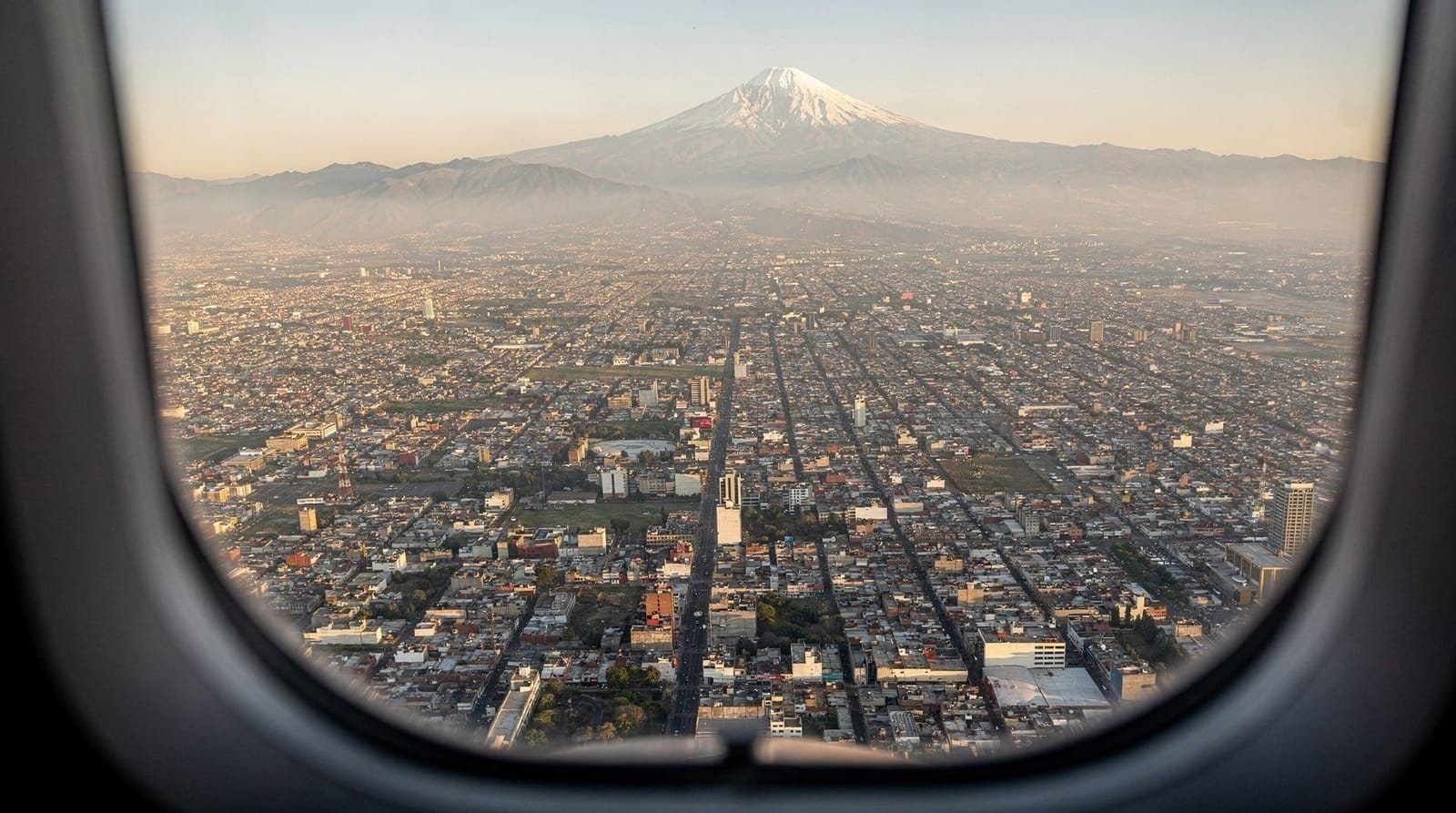
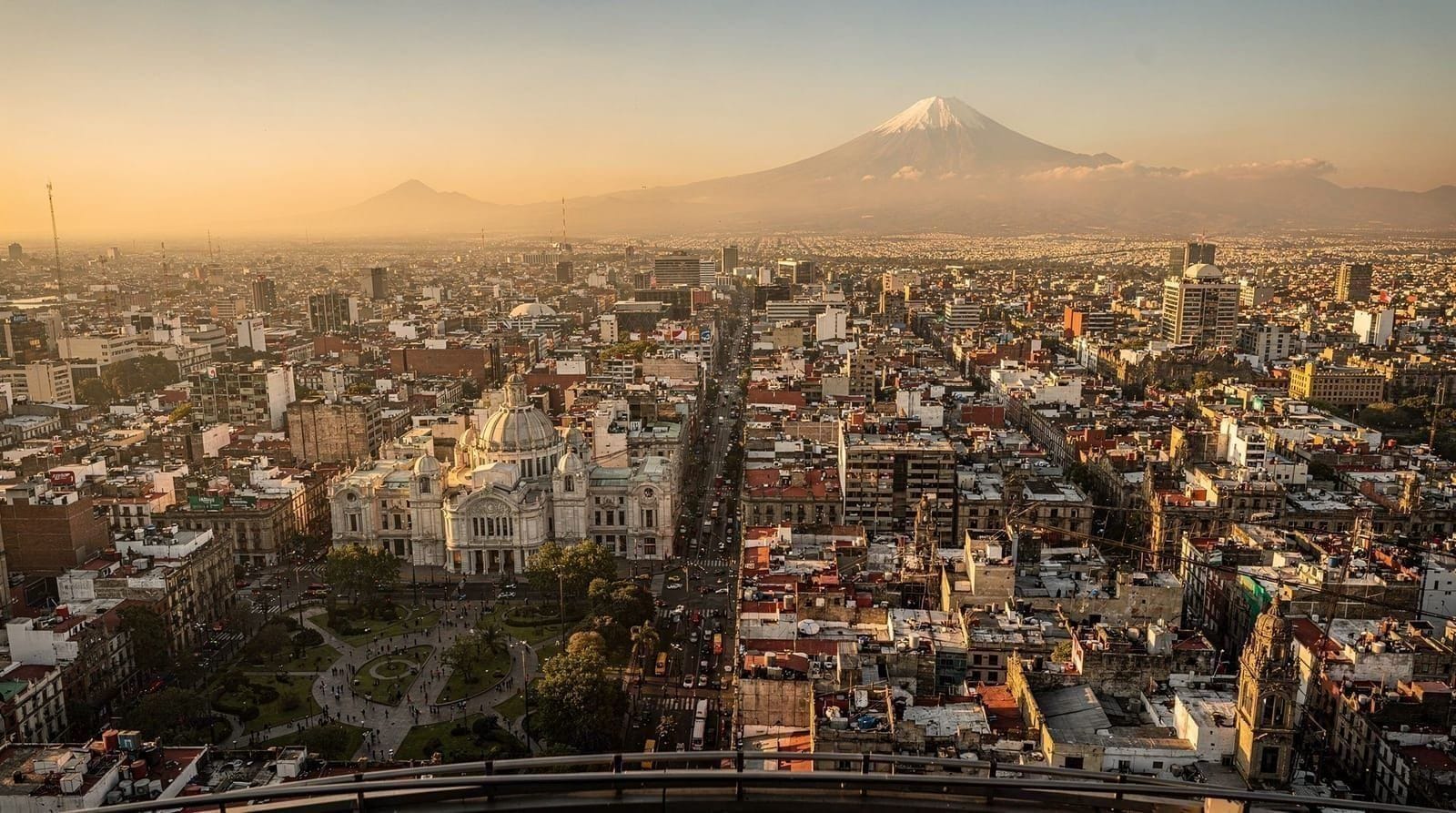
Snow in the urban centre is extremely rare — the last significant snowfall was in 1967. Temperatures can approach freezing on cold January nights, but precipitation usually falls as rain. The volcanoes Popocatépetl and Iztaccíhuatl visible on clear days to the southeast are snow-capped from November through March.
How accurate are Mexico City weather forecasts?
Reliable for general patterns (dry vs. rainy season), less so for daily precision during the rainy season. The afternoon thunderstorm pattern from June–October is predictable in timing even when exact intensity varies. During the dry season, forecasts are quite accurate — rain on a dry-season day is genuinely surprising.
What should I pack for Mexico City weather?
Year-round essentials: layers (mornings and evenings are cool at 2,240 m), sunscreen (UV radiation is high at altitude), and comfortable walking shoes. Rainy season adds: a compact umbrella or packable rain jacket. Winter adds: a warm jacket for evenings. December–January nights can be genuinely cold (4–8°C).
Is December a good time for weather?
December has excellent daytime weather — sunny, 17–21°C, very low rainfall. It is cold at night (6–10°C). The city is festive with Christmas markets and posadas. Main downside is higher hotel prices around December 22–January 6.
What month has the most rain?
July is typically the wettest month, averaging 170–180 mm of rainfall spread across 20+ rainy days. However, most rain falls as intense afternoon showers lasting 1–2 hours rather than all-day drizzle.
Is it hot in summer in Mexico City?
No. Mexico City’s altitude keeps summer temperatures comfortable: July averages 17–22°C. The rain itself further cools the air. It can feel muggy before a storm, but ‘hot’ by tropical coastal standards is not a description that applies to Mexico City.