Taxco day trip guide from Mexico City: silver, colonial streets, and caves
From Mexico City: Taxco and Cuernavaca Full-Day Tour
Is Taxco worth a day trip from Mexico City?
Yes, for the specific appeal: extraordinary colonial hilltop architecture, the best silver jewellery shopping in Mexico, and the option to add the spectacular Grutas de Cacahuamilpa cave system nearby. The journey is 3 hours each way — the longest of CDMX's major day trips — so plan a very early departure. A late start turns Taxco into a rushed visit.
Taxco in context
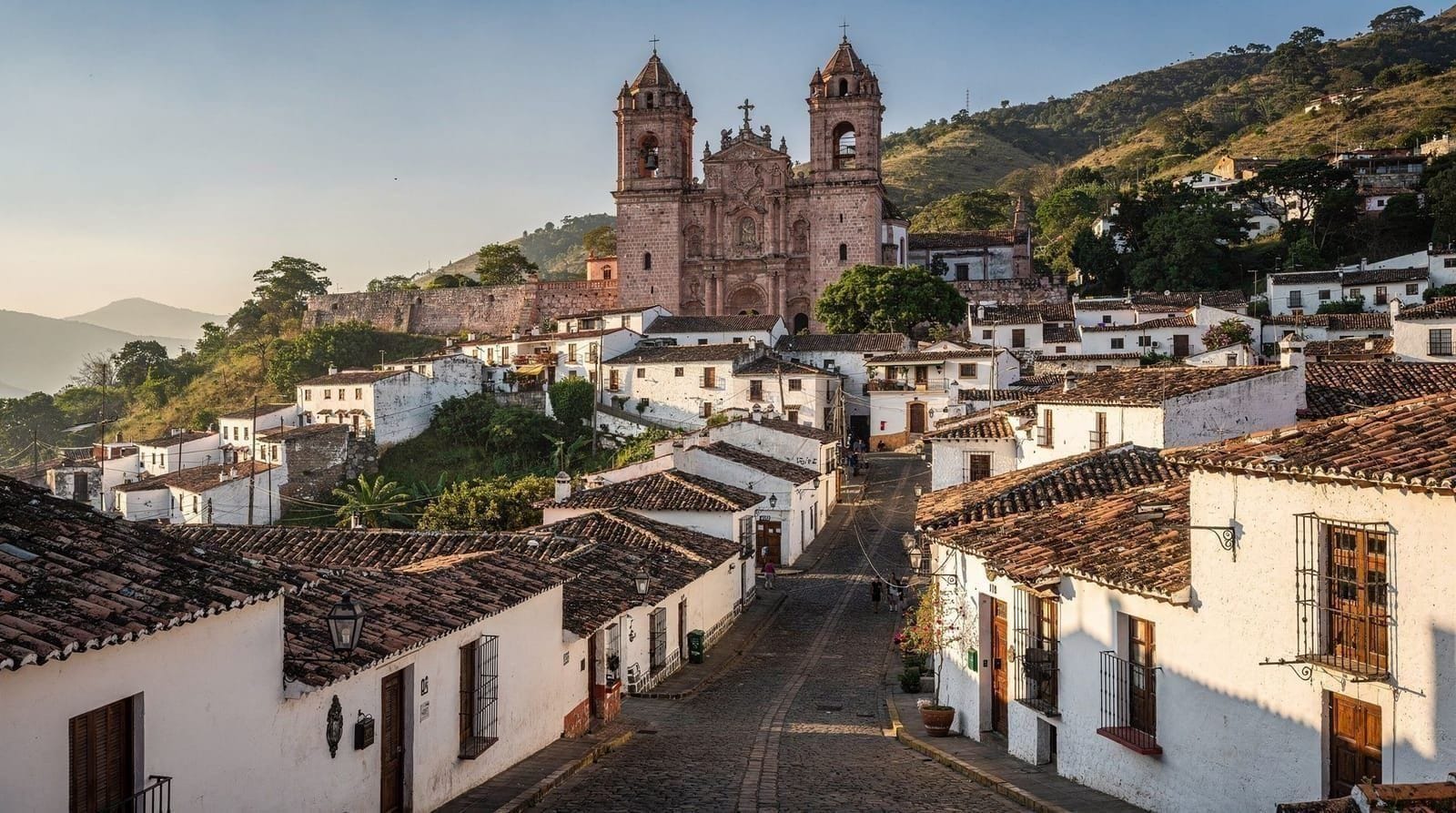
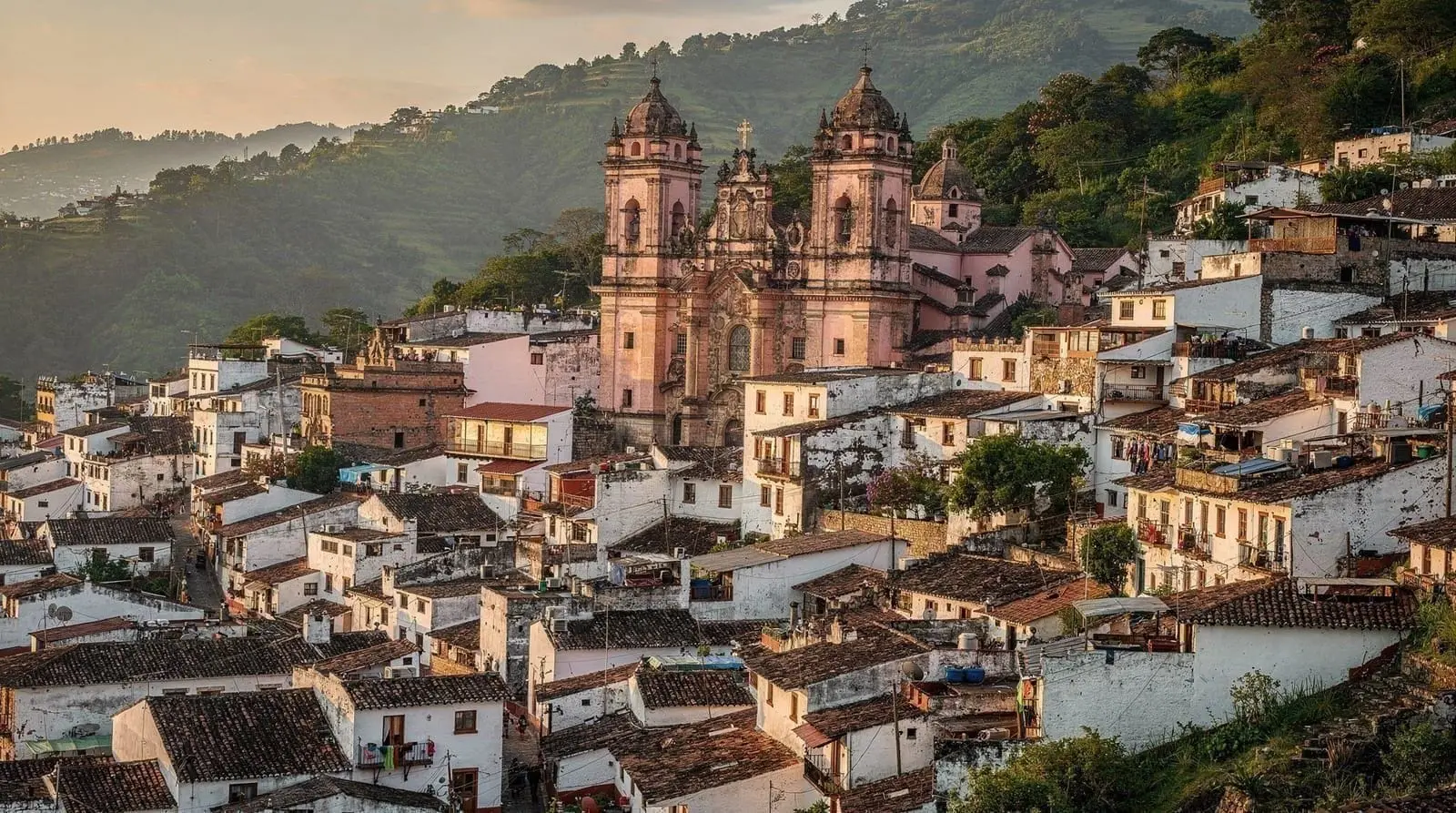
Taxco de Alarcón is one of Mexico’s most striking towns, and it earns that description without qualification. A white-and-terracotta colonial city clinging to a steep hillside in the Sierra Madre del Sur, with winding cobblestone streets too narrow for anything except pedestrians and the small white VW Beetle taxis (combis) that somehow navigate them, and the Baroque bulk of Santa Prisca church dominating the central plaza — it is the quintessential image of colonial Mexico.
| Where | Taxco de Alarcón, Guerrero state, ~3 hrs south of Mexico City |
| Cost | Bus 200–280 MXN each way; silver from around 300 MXN for genuine sterling pieces |
| Time needed | Full day (5–6 hrs in town minimum given the journey) |
| Getting there | Flecha Roja bus from Terminal del Sur, or a guided day tour |
| Best time | October–April for comfortable walking on the steep streets |
The silver trade that built the town continues to define it. The approximately 900 silver workshops and shops in Taxco make it the most concentrated silver market in the world. This is both the town’s draw and its commercial reality: Taxco earns its living from selling silver to visitors, and the shopping experience ranges from excellent to mediocre depending on where you go and how much you know about what you are buying.
The 3-hour journey from CDMX is the honest limiting factor. Taxco is worth the distance, but a day trip requires committing to an early start. The best day trips guide compares all options from CDMX, and the Taxco destination page has more on the town beyond a single day visit.
Getting there
By bus from Terminal del Sur: Terminal del Sur (also called Taxqueña) at Metro Taxqueña (Line 2) is CDMX’s southern bus terminal. Flecha Roja buses run direct services to Taxco, departing regularly between 6am and 5pm. Journey: 2.5–3 hours, 200–280 MXN one-way. Taxco’s bus terminal is a 15-minute taxi ride from the Zócalo (30–50 MXN). Return buses run until approximately 7–8pm.
By guided tour: Tours from CDMX typically combine Taxco with Cuernavaca — a 10-hour day that covers the Diego Rivera mural at the Palacio de Cortés and the Jardín Borda before continuing to Taxco.
The Taxco and Cuernavaca Full-Day Tour is a solid combination: 2–3 hours in Cuernavaca, 3–4 hours in Taxco. Transport and guide included.
The Taxco, Cacahuamilpa Caves and Cuernavaca Full-Day Tour adds the Grutas de Cacahuamilpa cave system — the best option if cave geology is of interest. This is a very full day (15 hours) and requires genuine energy; it is more than most day trips cover.
Taxco centre: what to see and where
Plaza Borda (the Zócalo): The central plaza is small — barely 80 metres across — dominated entirely by the facade of Santa Prisca. The plaza itself has benches, jacaranda trees, and a constant supply of silver vendors. The view of the church’s twin towers from the plaza is the defining image of Taxco.
Parroquia de Santa Prisca: Built between 1751 and 1758 at the expense of the silver magnate José de la Borda, Santa Prisca is considered the most important Churrigueresque church in Mexico. The facade is covered in carved stone in the Churrigueresque style — an extreme elaboration of Baroque that fills every surface with layered ornament. The interior has nine gilded altarpieces and a sacristy with paintings by Miguel Cabrera, one of New Spain’s most important artists. Open daily; free entry with respectful dress.
Silver workshops and shops: The most concentrated area is around the Zócalo and along Calles de la Palma and de Muñoz. The range is broad: mass-market jewellery sold from market stalls (often alpaca alloy, not silver), mid-range shops with commercial designs, and artisan workshops producing distinctive pieces that represent the Spratling legacy.
To identify genuine artisan workshops from mass-market stalls: look for a visible work area where artisans are actually working, sterling stamps on the pieces, maker’s marks, and staff who can explain the piece’s design origin. Reputable names include Taller Elena Ballesteros, Joyería Elena, and the Spratling Museum’s attached workshop.
Museo Guillermo Spratling: The museum (Calle Porfirio Delgado 1, 2 minutes from the Zócalo) documents the life and work of William Spratling — the American architect who moved to Taxco in 1929, established the silver design tradition, and trained the craftspeople whose students and descendants continue working today. Admission: 70 MXN. 45 minutes is sufficient.
Teleférico: A small cable car connects the lower town with a hotel complex above. The view over Taxco’s rooftops and Santa Prisca from above is worth 10 minutes. Fare: 40–60 MXN return.
Silver shopping: how not to get cheated
The biggest risk in Taxco silver shopping is paying silver prices for alpaca (a nickel alloy with no precious metal content). Here is how to protect yourself:
-
Look for the stamp: .925, 925, or PLATA TAXCO on any piece you buy. Silver that cannot be stamped is not silver. Street market vendors rarely have stamped pieces.
-
Weight test: Real sterling silver is heavier than it looks. Alpaca feels lighter for the same volume.
-
Maker’s mark: Artisan workshops register a maker’s mark with the Mexican regulatory authority. Legitimate artisan pieces carry this mark alongside the purity stamp.
-
Price signal: Genuine sterling silver jewellery from artisan workshops is 300–2,500+ MXN depending on the piece. Anything priced at 50–100 MXN at a market stall is almost certainly not silver.
-
Workshop sourcing: Buying directly from a visible workshop removes the retail markup and provides the most reliable quality assurance.
Adding the Grutas de Cacahuamilpa
The Grutas de Cacahuamilpa are 25km north of Taxco on the federal highway. The caves are managed as a national park; access is by guided tour only (mandatory for safety), with tours departing every 30 minutes from the park entrance. The cave is 2km of accessible passages; a tour takes approximately 50 minutes.
Inside: chambers up to 80m in height, formations with names accumulated from their shapes (La Catedral, La Copa del Mundo, El Gigante), and extraordinary scale. The caves maintain a constant temperature of around 21°C regardless of outside conditions. The lighting is functional rather than spectacular — these are not the dramatically lit commercial caves of European tourism, but the geological reality is more impressive than any lighting design.
Entry: 135 MXN. Taxi from Taxco: 200–300 MXN return with waiting time. Adding the caves to a Taxco day trip requires a 6am departure from CDMX. Guided tours that include the caves are the practical option for most visitors.
Cuernavaca: the halfway stop
Most guided day trips to Taxco stop in Cuernavaca, 90km south of CDMX. The city is at 1,500m — lower and warmer than CDMX — and was historically the weekend escape for Mexico City’s elite. The Palacio de Cortés (now the Museo Cuauhnáhuac) has an important Diego Rivera mural covering the history of Morelos state, painted in 1930. The Jardín Borda is an 18th-century terraced garden open to visitors. Neither requires more than 45 minutes; the stop serves as a break in the 3-hour drive as much as a destination. Travellers curious about a less-visited chapter of the region’s history can instead book the Taxco, Cuernavaca and Crypto-Jewish heritage tour, which builds the same Taxco–Cuernavaca route around the area’s crypto-Jewish history — an angle most standard sightseeing itineraries skip entirely.
If the Rivera mural at Cuernavaca appeals, the Diego Rivera murals guide shows where to see more of his work back in the capital, which makes a good follow-up to this stop.
Day trip itinerary options
Long day with Cuernavaca and Taxco (guided): Depart CDMX 7:30am. Cuernavaca 9:30am–11am. Arrive Taxco 12:30pm. Lunch, Santa Prisca, silver workshops, cable car. Depart Taxco 5pm. Return CDMX 7–8pm.
Taxco only (independent bus): Depart Terminal del Sur 7:00am. Arrive Taxco 9:30–10am. 5–6 hours in town. Depart Taxco 4:30pm. Return CDMX 7:30pm.
With Cacahuamilpa caves (guided tour): Depart CDMX 6:30am. Cuernavaca 8:30am. Taxco 10am–12:30pm. Cacahuamilpa caves 1:30–4pm. Return CDMX 7–8pm.
Comparing the three ways to do Taxco
| Option | Duration | Best for |
|---|---|---|
| Taxco only, independent bus | ~12 hrs door to door | Budget travellers comfortable navigating alone, most time actually in Taxco |
| Taxco + Cuernavaca, guided | ~12 hrs door to door | First-timers wanting a mural stop and no logistics to manage |
| Taxco + Cuernavaca + caves, guided | ~15 hrs door to door | Visitors specifically interested in cave geology, with genuine stamina for a long day |
Planning the rest of your trip around Taxco
A long day like this works best when the days around it are lighter. Because the bus leaves from the southern side of the city, many travellers choose a base that makes the early start easier; the where to stay in Mexico City guide and the Roma vs Condesa comparison help with that choice.
Taxco also sits alongside other excursions rather than replacing them. If you are weighing it against a different kind of escape, the Tepoztlán day trip guide and the Puebla and Cholula day trip guide cover the alternatives in the same format, and the Teotihuacán complete guide covers the closest of the big excursions.
The day after a 3-hour-each-way journey is a good moment for something gentle and close to your base. A stroll through Coyoacán or a slow morning in the Centro Histórico suits tired legs after Taxco’s steep streets. For help sequencing everything, the Mexico City weekend itinerary shows how short stays are usually structured, and it makes clear why Taxco rarely fits into one.
Honest assessment: is Taxco worth the distance?
Yes, for the right visitor. The architecture and setting of Taxco are genuinely unlike anywhere else in Mexico — the combination of steep topography, dense colonial fabric, and the dominant presence of Santa Prisca creates an environment that is visually compelling throughout. The silver shopping, if you are interested in silver, is the best in the country.
The honest caveats: the journey is long, the day is tiring, and the silver shopping pressure in the most tourist-facing streets is persistent. First-time visitors to CDMX with only 3–4 days are better served by shorter day trips (Teotihuacán, Tepoztlán) and saving Taxco for a longer visit or a second trip.
For general trip logistics and safety context beyond this one day trip, see the getting around Mexico City guide and the is Mexico City safe guide; travellers fitting this into a longer stay should check the 5-day or 7-day itinerary for where a long day trip like this one fits without exhausting the rest of the visit.
Frequently asked questions about the Taxco day trip
Is Taxco safe to visit?
Yes. Taxco’s centro, the market areas, and the routes between the bus terminal and the Zócalo are safe for visitors during the day. Like any city, it has areas outside the tourist zone that are less polished. Stay in the centre, be back at your bus before dark, and the visit is trouble-free.
What is the best time of year to visit Taxco?
October–April is drier and more comfortable for walking the steep streets. The Semana Santa (Holy Week/Easter) celebrations in Taxco are among the most famous in Mexico — elaborate processions with historical and religious re-enactments. The silver festival (Feria de la Plata) runs in November. Both periods draw large crowds.
How much silver can I bring back to my home country?
Silver jewellery and items for personal use are not subject to customs restrictions in most countries. Commercial quantities may attract duty. Sterling silver must be declared as jewellery at customs; a receipt showing the purchase price is useful.
Is the Taxco cable car worth it?
Yes, briefly. The view over the city rooftops, the whitewashed facades, and Santa Prisca from above provides the best overall perspective on the town’s topography. 10–15 minutes and 40–60 MXN return. The hotel at the top is not required; the cable car is a public service.
How do you get from Mexico City to Taxco?
By bus from Terminal del Sur (Metro Tasqueña, Line 2): Flecha Roja buses run direct services to Taxco. Journey time approximately 3 hours. Price: 200–280 MXN each way. Buses run every 30–60 minutes. Return buses from Taxco’s bus terminal run until around 7–8pm. Guided tours depart from CDMX hotels and often combine Taxco with a stop in Cuernavaca (1.5 hours from CDMX, 1 hour before Taxco).
What makes Taxco silver special?
Taxco has been a silver production centre since 1743 when a major silver vein was discovered nearby. The craft tradition was codified in the 20th century by American designer William Spratling, who established a design school and workshop system in the 1930s that trained a generation of Mexican silversmiths. The result is a distinctive Taxco aesthetic: bold geometric and pre-Hispanic-inspired designs in heavy sterling silver (the Mexican standard is .925 purity). Taxco silver is significantly cheaper here than when imported, and quality ranges from mass market to museum-level artisan work.
How do I know if Taxco silver is genuine .925 sterling?
Genuine .925 sterling silver (the Mexican standard) should be stamped .925 or 925 on the piece. The PLATA TAXCO stamp indicates both material and origin. Look for the silver punch mark and ask to see the maker’s mark if buying from a workshop. Fake silver (alpaca or german silver — nickel alloys with no precious metal) is common at market stalls. It looks similar, tarnishes faster, and turns skin green. Reputable workshops near the Zócalo with visible production facilities are the safest source.
What is the Church of Santa Prisca and why is it significant?
The Parroquia de Santa Prisca (1751–1758) is one of the finest examples of Churrigueresque Baroque architecture in Mexico — an ornate style so elaborately decorated it was named after José de Churriguera, a Spanish architect. The facade is covered in layered carved stone: saints, angels, and vegetal motifs stacked in vertical tiers. The funding came from José de la Borda, the mining magnate who struck the silver vein that made Taxco wealthy. The interior has exceptional gilded altarpieces and paintings by Miguel Cabrera.
What are the Grutas de Cacahuamilpa and are they worth visiting?
The Grutas de Cacahuamilpa are one of the largest accessible cave systems in the world — 2km of mapped passages with chambers reaching 80m in height and 90m in width. The guided cave tour (the only access method; 45-minute group tours every 30 minutes) reveals extraordinary stalagmite and stalactite formations in formations that have been accumulating for millions of years. Entry and guide tour: 135 MXN. The caves are 30 minutes from Taxco. Adding Cacahuamilpa to a Taxco day trip requires a very early CDMX departure (6am) but is worthwhile if cave geology interests you.
Should I hire a guide in Taxco?
Taxco is small enough to navigate independently — the centro is 6–8 blocks across and most of the activity concentrates around the Zócalo. Official guides (identifiable by badges, available near the Zócalo) can provide historical context for the Santa Prisca church and the silver history that makes a real difference to the visit. Cost: 300–500 MXN for a 2-hour walking tour. Optional but useful. Guided tour groups from CDMX include a guide throughout.
What is Cuernavaca and is it worth combining with Taxco?
Cuernavaca (City of Eternal Spring) is 90km south of CDMX and 90km north of Taxco — a natural halfway stop. The city has a Diego Rivera mural in the Palacio de Cortés (worth 45 minutes), the Jardín Borda (a 18th-century terraced garden), and a pleasant colonial centre. Guided Taxco tours almost always stop here. The climate is noticeably warmer than CDMX; Cuernavaca was the weekend retreat of Mexico City’s elite for centuries.
Top experiences
Bookable activities with verified prices and instant confirmation on GetYourGuide.