Taxco
Taxco's whitewashed streets, Santa Prisca church and silver mines: how to visit this colonial silver town on a day trip or overnight.
From Mexico City: 10-Hour Cuernavaca and Taxco Tour
Duration: 10 hours
Quick facts
- Altitude
- 1,740 m / 5,709 ft
- Currency
- Mexican peso (MXN) — USD widely accepted in silver shops
- Best for
- Colonial silver town, Santa Prisca church, silver jewellery, whitewashed architecture
- Getting there
- Bus from Mexico City (Taxqueña terminal) ~2.5 hrs, 250–350 MXN; or guided day tour
Mexico’s silver capital, built on a hillside
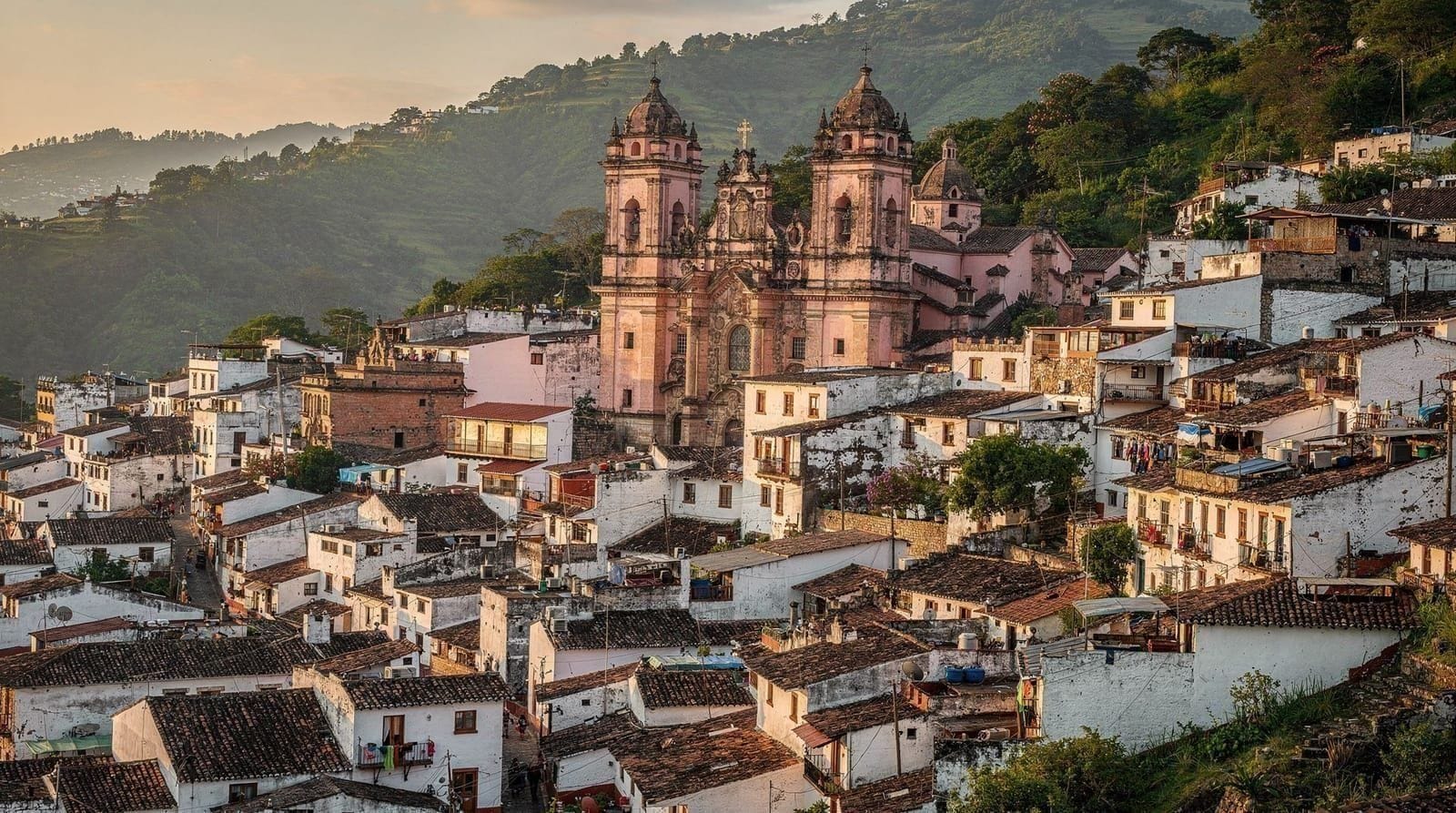
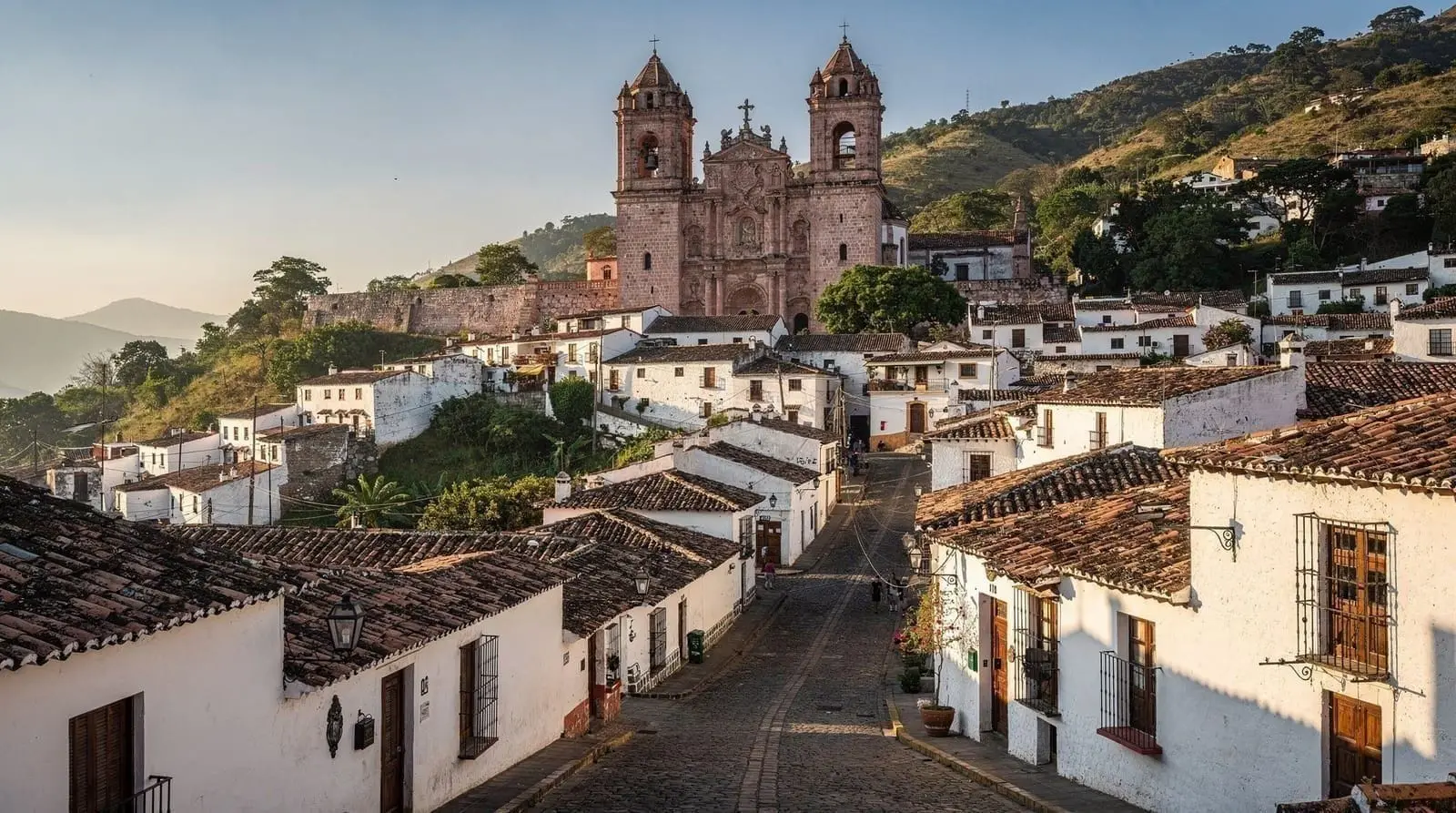
Taxco is a preserved colonial mining town in the state of Guerrero, 175 km south of Mexico City, that remains architecturally intact because it was declared a national monument in 1928 — a protection that prevented most of the building demolitions and road widening that modernised other Mexican colonial towns. The result is one of the most visually coherent colonial townscapes in Mexico: whitewashed buildings rising up a steep hillside, red-tiled roofs, narrow cobblestone streets, and at the summit of the central hill, the baroque church of Santa Prisca whose pink stone towers are visible from any approach to the town.
The silver economy that built Taxco began in the 16th century when Spanish colonialists discovered silver deposits in the surrounding hills. The town reached its colonial peak in the 18th century when the Spanish mining magnate José de la Borda accumulated enough wealth from the Santa Bárbara mine to commission the construction of Santa Prisca (1751–1758) as a personal gift to God and the town. Taxco’s contemporary silver industry — workshops, shops, and the plateros (silversmiths) who practise the trade — descends from this colonial economy and makes the town the place in Mexico to buy silver jewellery at source.
| Where | Guerrero state, about 175 km south of Mexico City |
| Cost | Bus 250–350 MXN each way; guided day tours from around 900–1,600 MXN |
| Time needed | Full day trip; overnight for the best light and atmosphere |
| Getting there | Bus from Taxqueña terminal (~2.5 hrs) or a guided day tour |
| Best time | October–May; avoid August–September’s heavy rains |
Santa Prisca church
The Parroquia de Santa Prisca y San Sebastián, facing the main Zócalo (Plaza Borda), is the dominant architectural monument of Taxco and one of the finest examples of churrigueresque baroque architecture in Mexico. The façade is covered in densely carved stonework — columns twisted with vine ornament, arched doorways framing saints, and the twin pink stone towers that give the church its distinctive silhouette. The building took seven years to construct (1751–1758) and was largely funded by José de la Borda’s silver fortune.
The interior maintains a comparable level of elaboration: gilded altarpieces, an 18th-century pipe organ, and a series of colonial oil paintings attributed to Miguel Cabrera. Entry is free but donations are encouraged. Allow 30–45 minutes inside; the guides available at the church entrance can explain the iconographic programme of the altarpieces, which rewards knowledge of colonial Catholic symbolism to fully appreciate.
The Zócalo in front of the church is the social centre of Taxco — the usual collection of vendors, taxis, families on benches, and tourists from Mexico City photographing the towers. It is most atmospheric in the evening when the church is lit.
Silver: buying intelligently in Taxco
Silver production has been continuous in Taxco since colonial times, and the town currently has several hundred registered silver workshops and shops. The concentration of silver jewellery, flatware, and decorative objects makes Taxco the most practical place in Mexico to buy silver at competitive prices.
Quality varies significantly. The best indicator of genuine .925 sterling silver is the stamped hallmark on the piece — look for “925” or “Sterling” stamped on the back of jewellery. Items stamped only with “Taxco” or with the artisan’s initials are silver alloy content that may vary. Shops on the pedestrian streets around the Zócalo charge tourist prices; the market stalls on the downhill streets and in the Mercado de Artesanías sell similar quality at lower prices. For high-quality artisan work, look for shops that show workshop spaces or where the owner is also the silversmith.
William Spratling, an American architect who arrived in Taxco in 1929 and almost single-handedly revived the artisan silver industry by training local craftspeople, is considered the founder of Taxco’s modern silver economy. The Museo Spratling on Calle Porfirio A. Delgado 1 covers his story and has a collection of pre-Columbian objects and reproductions. Entry is 85 MXN.
Silver mines: the Mina El Monte
The Mina El Monte, Taxco’s best-accessible historic mine, offers guided tours into the working (or partially working) mine shafts. Tours last approximately 45 minutes and cover the history of colonial silver extraction alongside the current mining operation. This is not a polished tourist experience — the mine is functional and the tour is quite basic — but it provides genuine contact with the industrial reality that created the town. The Taxco and Cuernavaca tour with pre-Hispanic mine includes the mine visit alongside the colonial town tour.
Getting to Taxco from Mexico City
The most direct bus route is from the Taxqueña bus terminal in Mexico City (Metro Line 2, Tasqueña station) on the Estrella Blanca or Futura lines to Taxco. Journey time is approximately 2.5–3 hours. Cost is 250–350 MXN each way. Service runs frequently from early morning.
By guided tour: A 10-hour Cuernavaca and Taxco tour from Mexico City covers both colonial towns in a single day with transport. This combination is practical because Cuernavaca (the “city of eternal spring” at 1,550 m altitude, with its tropical gardens and the Cortés Palace murals by Diego Rivera) is 75 km north of Taxco and forms a natural southern circuit. The drive from Mexico City to Cuernavaca takes 1 hour; Cuernavaca to Taxco another 1.5 hours.
For drivers: the toll highway Mexico City–Cuernavaca–Taxco is straightforward and takes about 2.5 hours total from the city. Parking in Taxco itself is difficult given the narrow streets; park on the outskirts and walk or take the local taxis (Volkswagen Beetles painted white, the traditional Taxco taxi).
Practical notes
Getting around Taxco: The town is built on a steep hillside with very narrow streets that exclude most normal vehicles. Local transport is by the VW Beetle taxis (which navigate the narrow lanes), motorcycles, and feet. Comfortable walking shoes and awareness of the cobblestone gradient are essential.
Food: The Zócalo has several restaurants serving traditional Guerrero state food. Pozole verde — the Guerrero version uses green tomatillo and is different from the red Jalisco pozole — is the local speciality. Calle Arco on the pedestrian street has a reliable restaurant with a terrace view of Santa Prisca.
Semana Santa: Holy Week in Taxco is one of the most dramatic religious celebrations in Mexico — processions run through the narrow streets on several nights, with participants wearing crowns of thorns and carrying crosses. It is extraordinary to witness but accommodation books out months in advance; day-tripping from Mexico City is not practical during peak Semana Santa days.
The Taxco day trip guide covers the full logistics of the independent day trip including bus schedules and what to see in a single day.
Planning Taxco around the rest of your trip
Taxco works best as a deliberate break from the capital rather than an afterthought. If you are still working out the basics of moving around the city before you head out, the getting around Mexico City guide explains the metro and ride-hailing options that get you to the bus terminal, and the where to stay guide helps you pick a base from which the early departure is easy.
Many travellers pair Taxco with another excursion on a different day instead of stacking them back to back. Puebla and Cholula pulls in the opposite direction, with a very different food and church scene, while Teotihuacán gives you the pre-Hispanic counterpart to Taxco’s colonial character. Keeping them on separate days leaves you with energy for the steep Taxco streets.
If you prefer to stay in the capital for the rest of the week, the weekend itinerary and the 3-day itinerary show how much fits without leaving town, which helps you judge whether a long day out to the silver town is worth the time on a short stay.
What to buy: silver shopping honestly assessed
Taxco’s silversmithing reputation is genuine but the shopping environment requires some navigation. The blocks immediately surrounding the Zócalo are aimed squarely at day-trippers from Mexico City and charge accordingly. The most interesting shopping is in two places: the workshops (talleres) that are open to visitors in the neighbourhood streets one or two blocks from the plaza, where you can watch pieces being made and buy at closer-to-wholesale prices; and the Mercado de Artesanías on Benito Juárez, which has a wider price range and is populated by both local producers and resellers.
Items to consider: taxco-style filigree silver earrings (delicate open-work designs traditional to the region), heavy cast silver bracelets and rings, and the hand-hammered flatware (forks, spoons, serving pieces) that Taxco is known for outside jewellery. For jewellery with a contemporary design sensibility, the shops on Ruiz de Alarcón, one block north of the Zócalo, have a higher percentage of artisan-designed rather than mass-produced pieces. Prices: basic silver earrings from 200 MXN; quality bracelets 500–2,000 MXN; flatware sets from 1,500 MXN.
Do not buy from vendors who approach you directly on the street claiming their pieces are antique or offering unrepeatable deals — these interactions rarely result in quality purchases.
Taxco versus Tepoztlán: which day trip suits you
Travellers deciding between the southern colonial-town day trips often weigh Taxco against Tepoztlán. Taxco is farther (2.5 hours each way) but delivers a genuinely unique hillside silver town and Santa Prisca’s architecture; Tepoztlán is closer, has a pyramid hike, and a more bohemian, market-heavy atmosphere.
If silver shopping and colonial architecture matter most, choose Taxco; if a shorter trip with a physical hike appeals more, choose Tepoztlán. The best day trips from Mexico City guide ranks both against Teotihuacán and Puebla-Cholula for travellers narrowing down options, and the itinerary length guide helps decide whether your trip has room for more than one southern day trip.
Avoiding the silver-shopping tourist traps
The blocks immediately around the Zócalo are where most visitors buy, and where prices are highest relative to quality. The tourist traps guide covers similar pricing dynamics across the wider region — the short version for Taxco is the same principle: walk a block or two away from the main plaza, look for shops that show a working bench, and always check for the “925” hallmark before paying jewellery-grade prices for what may be lower-purity alloy.
Frequently asked questions about Taxco
How long do you need in Taxco?
A half-day covers Santa Prisca, a walk around the Zócalo, and basic silver shopping. A full day (6–8 hours) allows the mine visit, the Spratling museum, more thorough shopping, and a proper lunch. An overnight extends the experience to early morning walks before tour groups arrive and the evening atmosphere around the lit church — which is the best version of Taxco.
Is Taxco safe?
Taxco itself is a tourist town with a generally safe tourist zone. The historic centre around the Zócalo is safe during the day and evening. The town has been affected by broader Guerrero state security issues in recent years; the tourist centre is isolated from these, but check current travel advisories for Guerrero. Arriving by guided tour from Mexico City is the most comfortable option for first-time visitors. For the wider picture on staying safe in the capital and on the road, the Mexico City safety guide and the common scams guide apply just as well on a day out.
What makes Santa Prisca architecturally significant?
Santa Prisca is one of the finest examples of the Churrigueresque style — the Spanish baroque variant characterised by extreme decorative exuberance, with surface ornamentation covering every available area. It was funded entirely by one patron (José de la Borda) and built in seven years, giving it a unified design uncommon in churches that were typically modified and expanded over generations. The pink cantera stone used for the towers and façade is specific to this region and gives the church its distinctive colour.
Is silver in Taxco a good deal compared to Mexico City?
Generally yes, for mid-range and artisan pieces. Taxco silver shops have lower overhead than Mexico City boutiques and the selection is wider. However, tourist-facing shops on the Zócalo perimeter charge similar prices to Mexico City stores. The best prices are in the market areas away from the main plaza. For high-end contemporary silver jewellery design, Mexico City’s Polanco boutiques have pieces not available in Taxco.
Can I combine Taxco with Cuernavaca or the Cacahuamilpa Caves?
Yes. The Grutas de Cacahuamilpa are 40 km north of Taxco — one of the largest cave systems in the world, with caverns up to 80 metres high, accessible via guided underground tours. The Taxco, Cacahuamilpa Caves, and Cuernavaca full-day tour covers all three in a single long day from Mexico City. It is a full 12+ hour day but efficient if your time is limited. Travellers more interested in archaeology than caves can instead pair Taxco with the pre-Hispanic pyramids of Xochicalco, a UNESCO World Heritage hilltop site with an astronomically aligned Pyramid of the Feathered Serpent; the Taxco tour combined with the Xochicalco pyramids covers both destinations in a single day.
Should Taxco be a day trip or an overnight from Mexico City?
An overnight is genuinely worth considering if your schedule allows it. A day trip means roughly five hours of driving for perhaps four hours in the town, arriving mid-morning alongside the tour-bus crowds and leaving before the evening light on Santa Prisca. One night lets you see the church lit after dark, walk the empty streets at dawn, and shop without the day-trip time pressure. The 5-day Mexico City itinerary builds in exactly this kind of overnight excursion.
Top experiences
Bookable activities with verified prices and instant confirmation on GetYourGuide.