Jacaranda season in Mexico City 2026: when to go, where to see the purple bloom
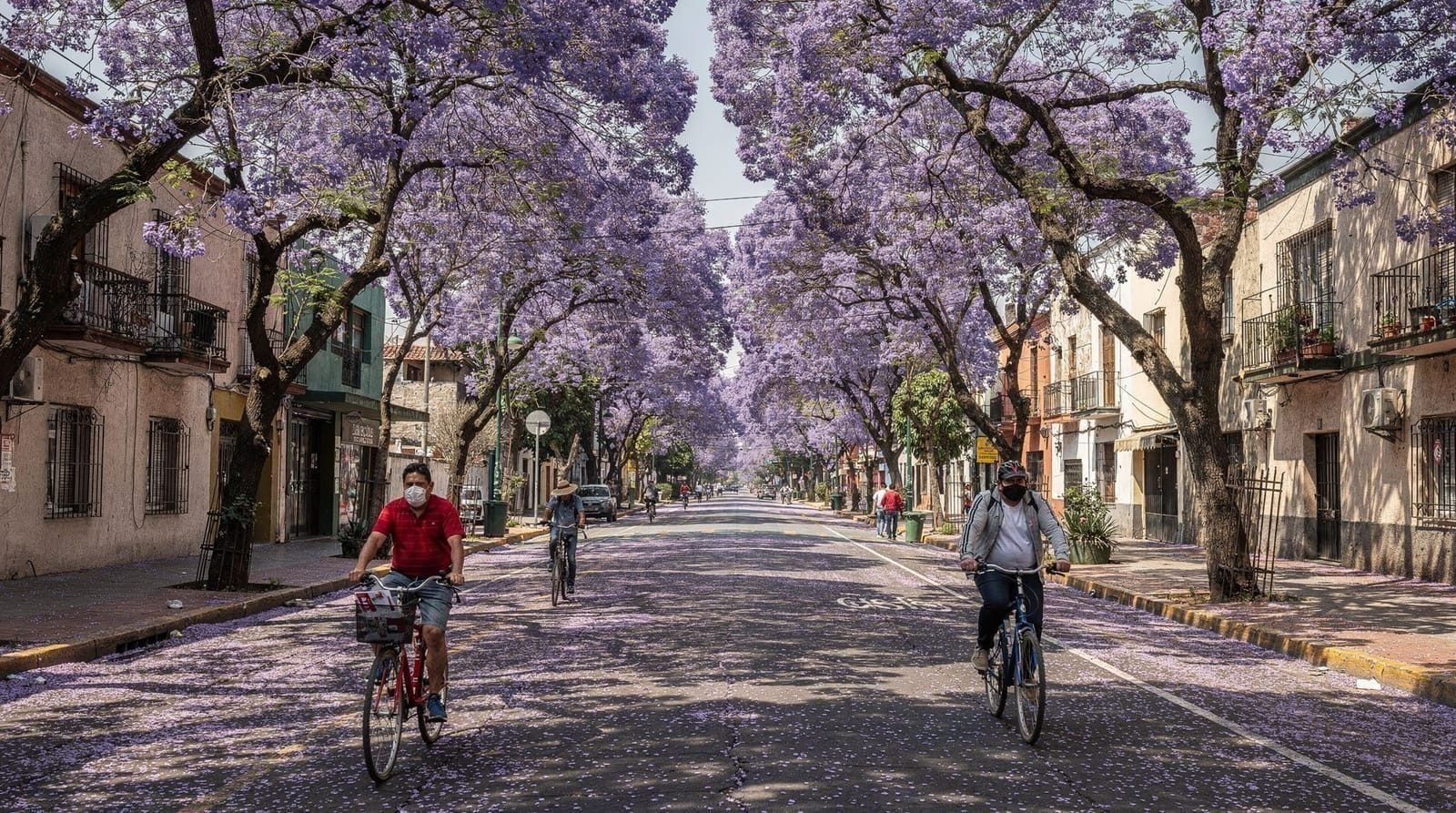
For about six weeks every spring, Mexico City turns purple. Thousands of jacaranda trees — planted across the city in the 1930s and 1940s on the initiative of landscape architect Miguel Ángel de Quevedo — flower simultaneously along boulevards, inside park lanes and across residential streets. The effect, when you happen upon Avenida Amsterdam in Condesa carpeted in violet petals, is genuinely stunning. The timing is not guaranteed, because it depends on winter temperatures, but the window is predictable enough to plan around.
| Where | Avenida Amsterdam, Parque México, Chapultepec, Reforma |
| Cost | free to view; park/museum entries around 85 MXN |
| Time needed | a morning walk (2–3 hours) covers the highlights |
| Best time | mid-March to early April, before 9 am |
| Booking | none needed for viewing; book Frida Kahlo Museum ahead in spring |
Month-by-month bloom likelihood
| Period | Bloom status | Notes |
|---|---|---|
| Late Feb | Early buds, patchy | Too early to plan a trip around |
| Early–mid March | Building, some streets peak already | Good odds, fewer crowds than late March |
| Late March–early April | Peak bloom citywide | Best window; also Semana Santa crowds some years |
| Mid–late April | Tapering, mixed with green leaf | Still worthwhile, less dramatic |
| May onward | Bloom over | Skip; plan for next year |
When does the bloom peak?
The jacaranda (Jacaranda mimosifolia) blooms in late February through April, with peak typically in mid-March to early April. In 2026, expect full bloom in the third and fourth weeks of March, tapering in April as rains begin. The trees flower just before the dry season ends — an ecological signal before the first rains arrive. A warm winter shortens the season; a cooler one extends it.
The bloom is largely over by the time the rainy season hits in earnest (June onward). If you are visiting specifically for jacarandas, mid-March is your safest bet.
The best spots in the city
Avenida Amsterdam, Colonia Condesa
This is the most-photographed jacaranda street in CDMX. Amsterdam is an oval boulevard in Roma-Condesa with a central running track and pedestrian lane. The trees line both sides and their canopies meet overhead. At peak bloom, the ground is purple before the street sweepers arrive in the morning. Come before 9 am on a weekday for the best light and fewest people; on weekends it fills with photographers and joggers by 8 am.
Paseo de la Reforma
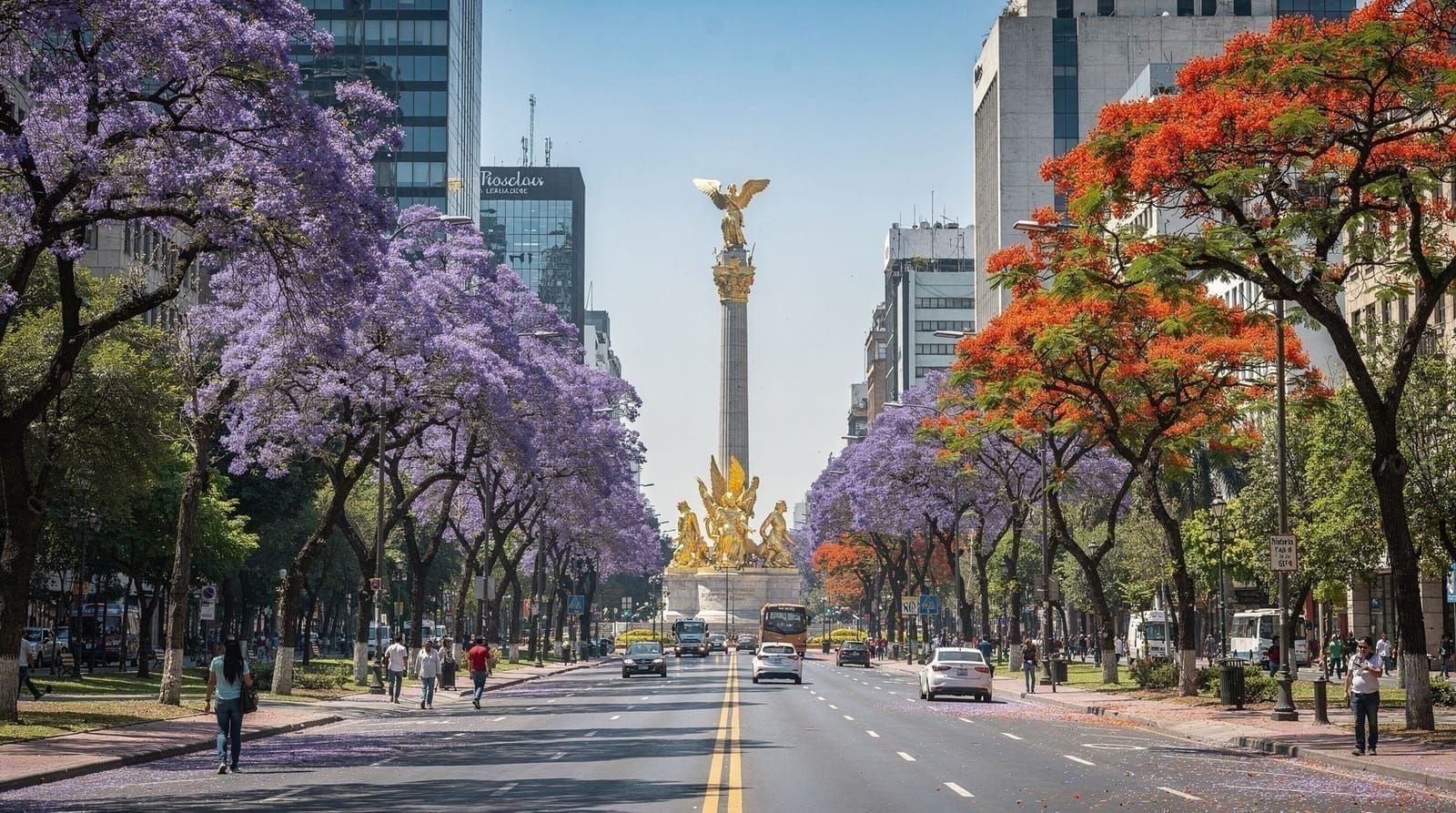
The most dramatic scale: Reforma runs 15 km through the city and has jacarandas along significant stretches, particularly between Chapultepec park and Glorieta del Ángel (the Independence Monument). The combination of the Angel statue, the traffic circle, and the purple canopy is striking. The best viewing is from the central pedestrian lane or from the Turibus upper deck.
Chapultepec Park
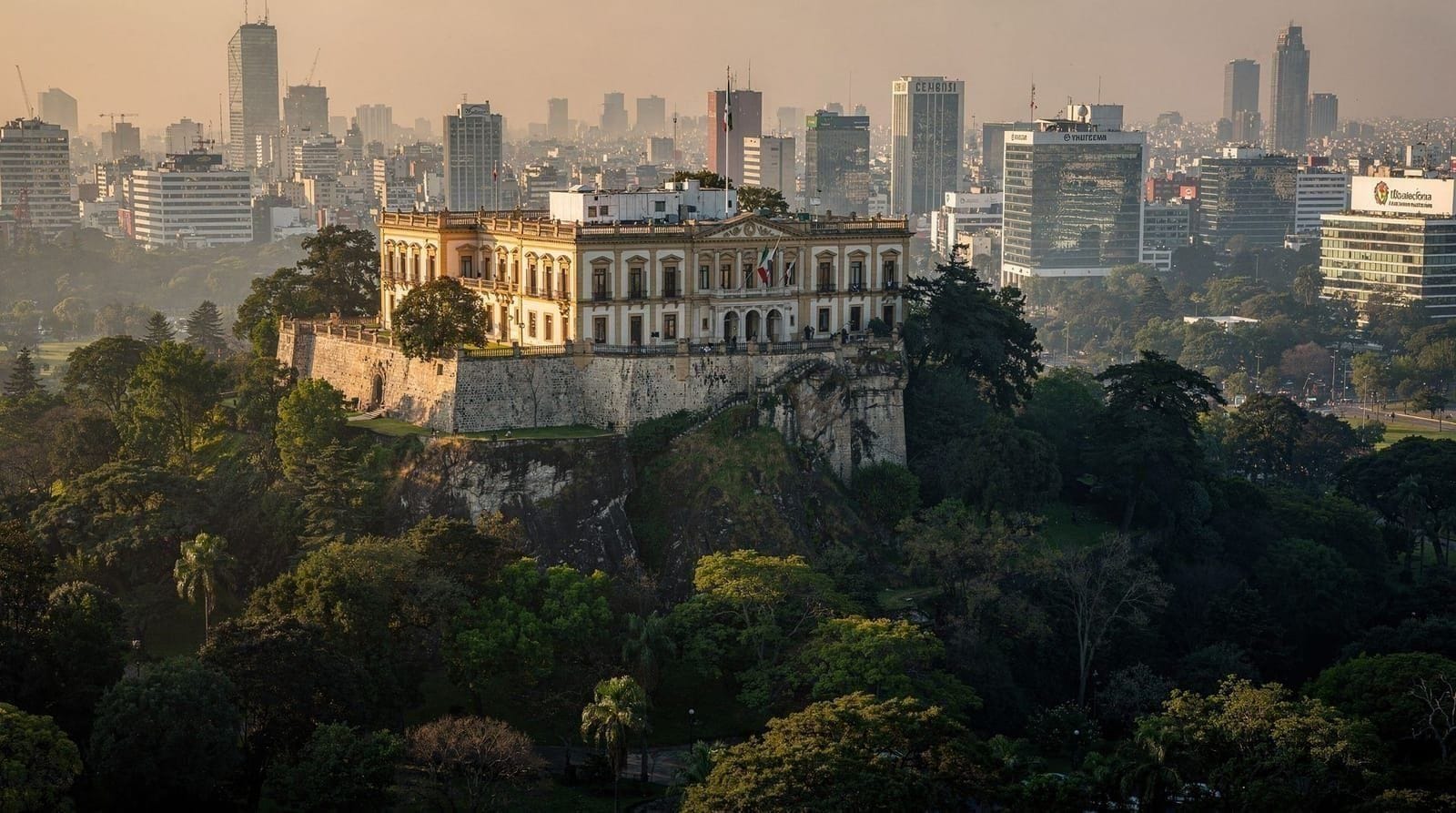
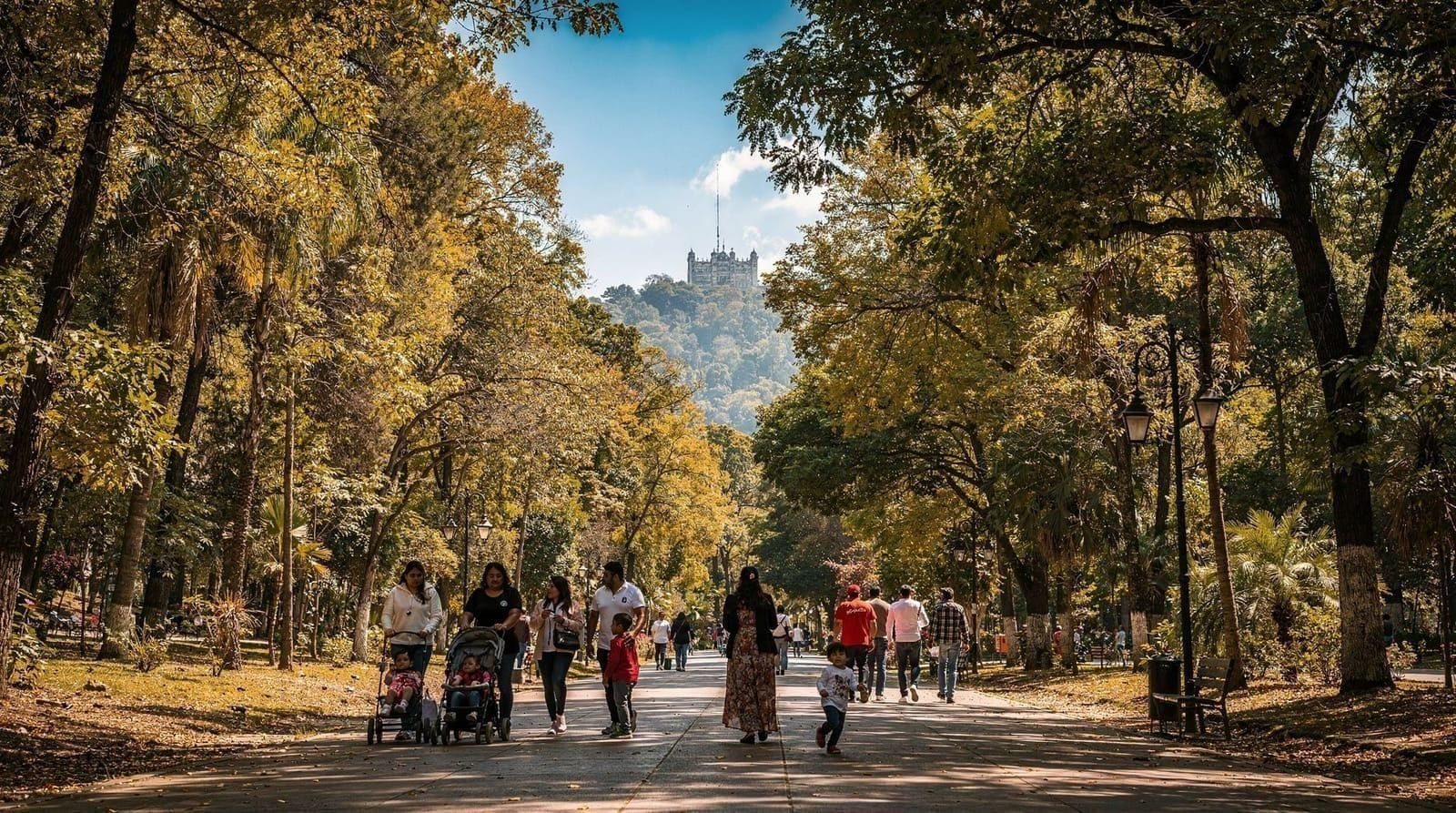
Chapultepec-Polanco has scattered jacarandas throughout the first section (Primera Sección) of the park, especially along the paths toward Chapultepec Castle and near Lago Mayor. The pink flamingo pond area in the second section is a quieter option. The park is enormous — focus on the area between the castle hill and the Museo Nacional de Antropología.
Parque México, Colonia Condesa
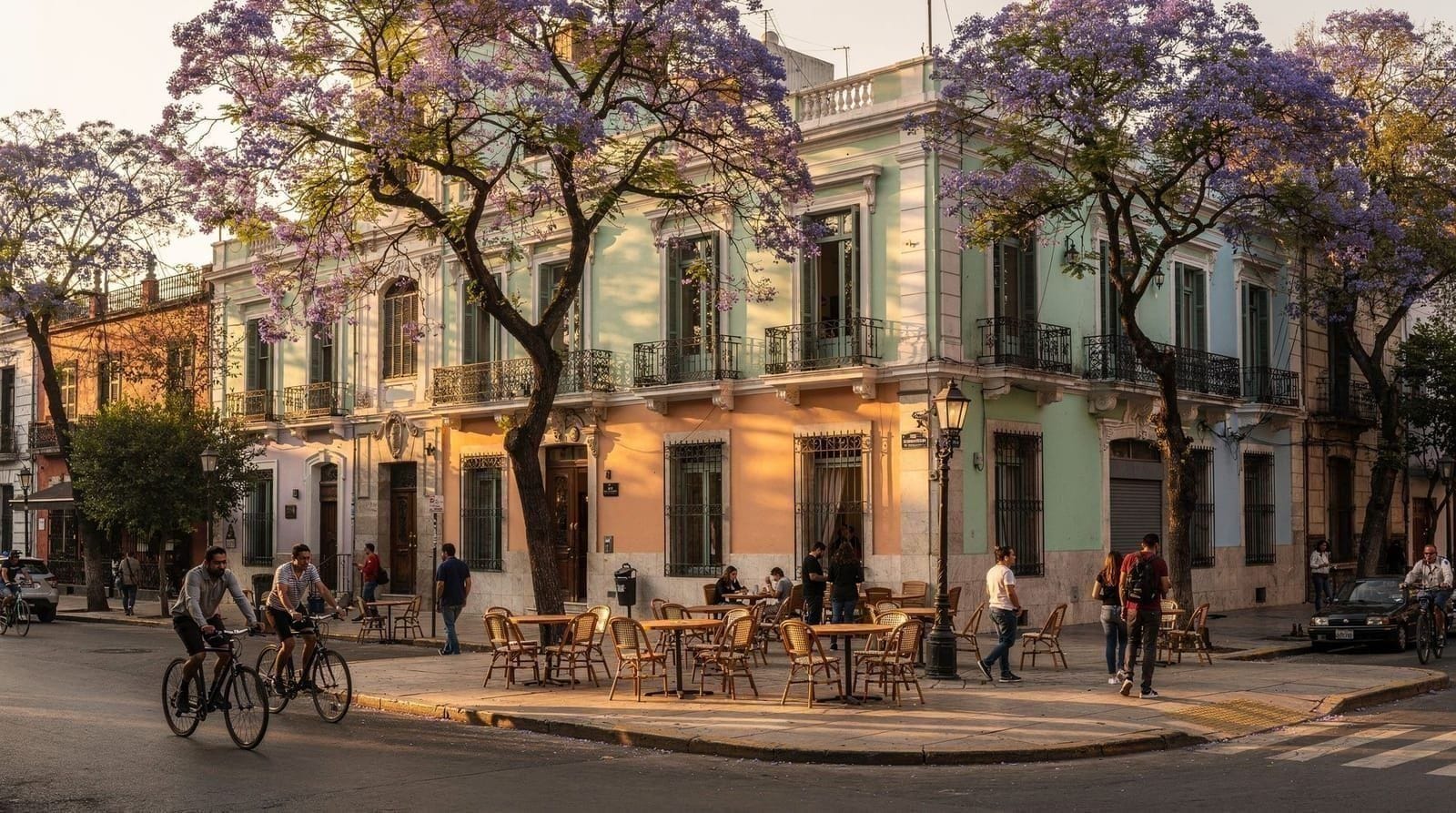
Smaller and more intimate than Chapultepec, Parque México (also known as Parque San Martín) sits in the heart of Condesa and has a dense jacaranda canopy around its central fountain. It is a 15-minute walk from Avenida Amsterdam. Weekend mornings here feel like a neighbourhood garden party — dogs, families, brunch crowds from nearby cafés.
Coyoacán
Coyoacán has jacarandas around the jardín principal (Jardín Hidalgo) and along the streets radiating from the market. The colonial architecture — pastel-coloured houses, cobblestones, the yellow-painted Frida Kahlo Museum — against the purple backdrop is the combination that fills social media in March. Visit on a weekday morning.
If you want to go inside the blue house after your walk, it is simpler to get a Frida Kahlo Museum entry ticket arranged ahead of time than to hope for a gap in spring, when the queue and sell-outs are most likely.
Avenida Insurgentes
Mexico City’s main north-south artery, Insurgentes runs the full length of the city. The stretch through Roma Norte and Condesa has jacarandas planted along the median. Less intimate than Amsterdam but gives a sense of the scale of the city’s spring bloom when you are travelling by Metro or Metrobús.
What locals actually do
Jacaranda season is not officially a festival — it does not have an opening ceremony or a schedule. What locals do: morning runs on Amsterdam, weekend picnics in Parque México, brunch at street terrace cafés in Condesa with purple petals falling into their coffee. Some restaurants put out tables specifically to frame a jacaranda view.
Food-wise, March–April also overlaps with Semana Santa (Holy Week), when the city quiets down as many chilangos (Mexico City residents) travel. This means fewer crowds for you in the parks, which is pleasant, but some smaller restaurants and shops close for the week.
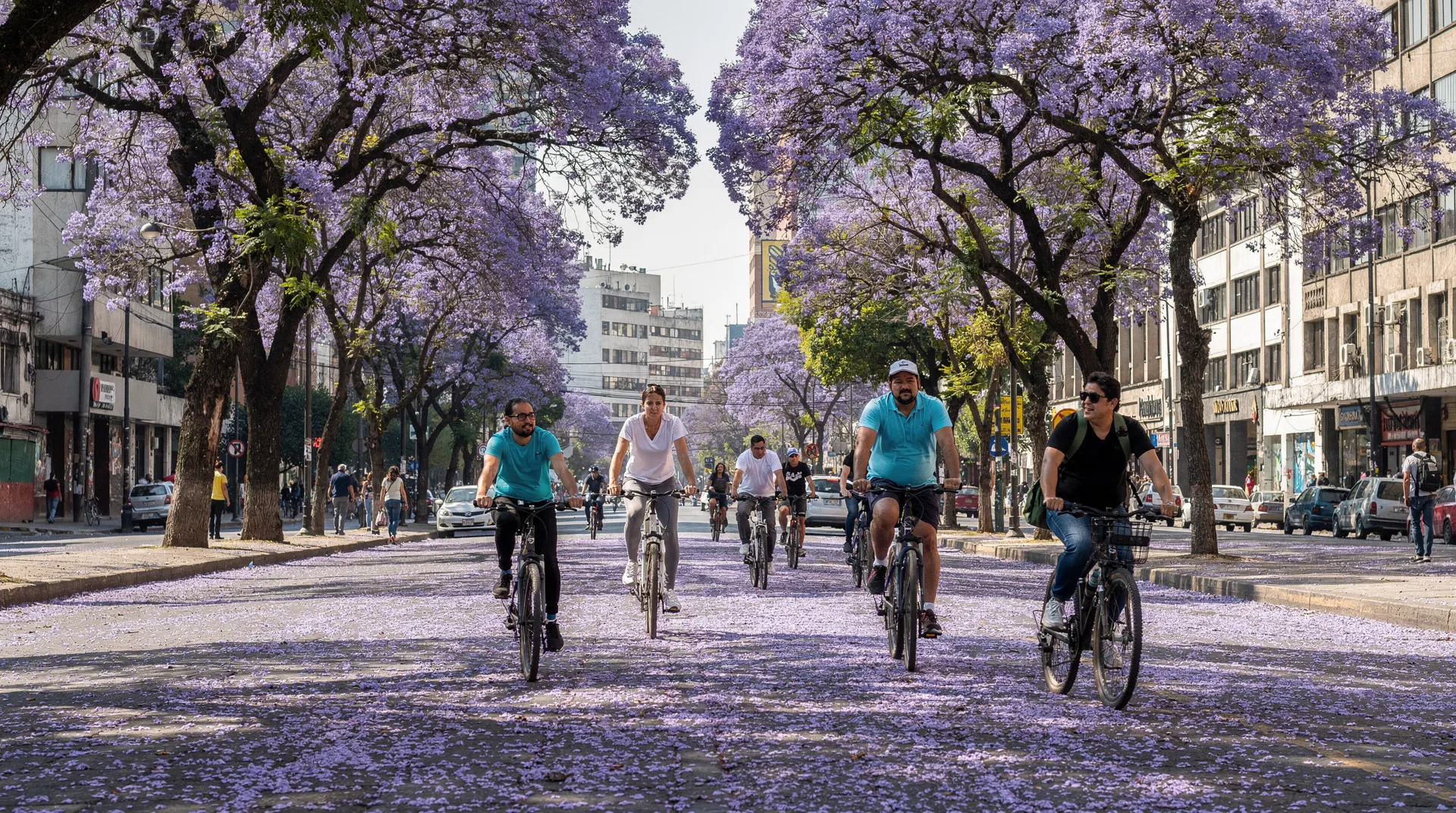
Chapultepec and Reforma bike experienceA bike ride through Reforma and Chapultepec during jacaranda season combines two of the city’s best spring experiences. The route passes the most concentrated jacaranda corridors and can be done in 2–3 hours at an easy pace.
If you would rather not plan the route yourself, the bike outing above is an easy way to cover the corridors without thinking about transport. For the wider picture of how to move around the city between viewing spots, the getting around Mexico City guide explains the options, and the Roma and Condesa neighbourhood guide helps you choose a base within walking distance of the best bloom streets.
Photography tips
- Time: 7–9 am for soft light and minimal crowds. Late afternoon (5–7 pm) also works but streets fill up again.
- After rain: if it rains overnight (rare in March, more likely in April), the streets are carpeted in purple petals the next morning. That is the shot most photographers wait for. Check the forecast.
- Phone vs camera: the purple hue is difficult to reproduce accurately on phone cameras. The saturated magenta that social media photos show is often processed. The actual colour is closer to blue-violet and the muted version is also beautiful — don’t be disappointed if your photos look “less purple” than Instagram.
- Looking up: the canopy shot (lens pointing upward through the branches) works on Amsterdam and Parque México. Mid-morning when light is filtering through works best.
Practical context for a 2026 visit
Spring in Mexico City (March–April) is arguably the best season: dry, sunny, comfortable temperatures around 14–26°C, and the jacaranda bloom. It is also peak season before Easter, so hotels fill up and prices rise (not as dramatically as November, but noticeably). Book accommodation by January for a March trip.
The best time to visit Mexico City guide covers the full seasonal picture. The month-by-month weather breakdown is useful for specific travel dates.
Altitude reminder: CDMX sits at 2,240 m. If you are arriving from sea level and plan to spend mornings jogging around Amsterdam, take day one easy — moderate activity is fine, hard cardio on arrival day is unpleasant at altitude. See the altitude guide if this is a concern.
Combining jacaranda season with other activities
Spring is the best season to pair the bloom with the city’s major sites. The Anthropology Museum (full guide here) is a 10-minute walk from Chapultepec park’s jacaranda corridors. After the museum, walk through the park rather than taking a taxi — the paths between Bosque de Chapultepec and the museum are lined with jacarandas. The combination of the pre-Columbian collection and the purple forest is a strong spring morning.
If you have more days, the jacaranda season guide gives a more detailed account of all the city’s bloom locations. The 3-day itinerary can be adapted to prioritise spring bloom spots on a morning walk before major sites.
Teotihuacán has no jacarandas — the site is open semi-desert at altitude. Schedule that day trip separately from your bloom walks. The Teotihuacán complete guide covers the logistics, and how to get to Teotihuacán from Mexico City explains the transport options. Note that the question of whether you can climb the Teotihuacán pyramids has its own answer worth reading before you go.
Other spring pairings work well too. Chapultepec Castle sits inside the park where many of the trees grow, and the Frida Kahlo Museum guide fits naturally with a Coyoacán morning, together with the Coyoacán walking guide. If your days in the city are limited, the 24 hours in Mexico City plan shows how to fit a short bloom walk around the main sights, and the first-timer mistakes article covers the errors most visitors make in any season.
Hungry after a long walk? The street food guide and the food tours guide are good starting points for breakfast or lunch near the parks, and the rooftop bars are a pleasant way to end a spring day.
What’s different about spring in CDMX vs other seasons
Spring (March–May) is universally regarded as the best time to visit Mexico City for three reasons: the dry season means clear skies and no afternoon downpours; temperatures are pleasant (14–26°C during the day, cooler evenings); and the jacaranda bloom adds a visual dimension that other seasons do not have.
The downsides: spring is peak domestic and international tourism season, so hotels book up and prices rise. Semana Santa (Holy Week, April 12–19 in 2026) sees families from across Mexico travel, which means crowded parks, closed small businesses and higher hotel rates. The week after Easter quiets down noticeably.
The Anthropology Museum, Teotihuacán, and the Frida Kahlo Museum are all at high visitor volumes in March–April. Book timed-entry tickets for the Frida Kahlo Museum at least 2–3 weeks in advance in spring. See the best time to visit guide for full seasonal comparison.
A sample jacaranda morning
7:00 am — Coffee at a terrace café on Orizaba, Roma Norte. 7:45 am — Walk Avenida Amsterdam (full oval: about 25 minutes). Arrive before street sweepers if possible for the petal carpet. 9:00 am — Cut through Parque México: the fountain area is at peak bloom mid-March. 9:30 am — Breakfast at a Condesa café facing the park — most on Michoacán or Ámsterdam. 11:00 am — Uber to Chapultepec park: walk from the museum entrance toward Lago Mayor. 12:30 pm — Museum visit or walk along Reforma toward Glorieta del Ángel for the boulevard scale.
This itinerary covers all the major jacaranda locations in one morning without transport stress.
Getting between the viewing spots efficiently
The five best spots — Amsterdam, Parque México, Chapultepec, Coyoacán, and Reforma near the Angel — are spread across a wide arc of the city, so a single morning realistically covers three, not all five. Amsterdam and Parque México are a 15-minute walk apart in Condesa and pair naturally. Chapultepec is a 15–20 minute Uber from either (or a 10-minute Metro ride to Chapultepec station on line 1).
Coyoacán is a separate 25–35 minute Uber trip south and is best treated as its own outing rather than squeezed into the same morning — it pairs better with an afternoon at the Frida Kahlo Museum than with a jacaranda-only loop. Reforma near Glorieta del Ángel can be folded into a Chapultepec visit since the boulevard runs directly past the park’s entrance.
Is it worth basing your whole trip around jacaranda season?
If flexible, yes — spring is genuinely the best season for Mexico City on multiple fronts (weather, the bloom, fewer afternoon rain interruptions than summer), and the best time to visit guide backs this up independent of the flowers. If your dates are fixed and don’t land in the March–early April window, don’t be too disappointed: jacarandas are a genuine bonus, not the reason to visit CDMX. The Anthropology Museum, Teotihuacán, the food, and the neighbourhoods are worth the trip in any season.
Frequently asked questions about jacaranda season in Mexico City
Do the trees bloom every year?
Yes, reliably, though the intensity varies with winter temperatures. A drier, cooler winter typically produces a more dramatic bloom. In mild winters, the display is less uniform.
Is there a specific date they bloom in 2026?
No one date — it is a window, not an event. For 2026, plan for mid-March through early April and you will catch them. Check social media (search #jacarandas CDMX) in the week before your arrival for current conditions.
Can I do a jacaranda walk on a Sunday?
Yes, and Sundays on Reforma are partly car-free until noon — a good time to walk or bike the boulevard. Parque México and Avenida Amsterdam are always pedestrian-friendly.
Are jacarandas native to Mexico?
No. Jacaranda mimosifolia is native to Argentina and Bolivia. They were brought to Mexico in the late 19th century and planted extensively in CDMX from the 1930s onward under De Quevedo’s greening project.
Can you see the jacarandas in rainy season?
No — by June the bloom is fully over and most trees are in full green leaf. A few individual trees may have straggler flowers in late April, but peak season is definitively March–early April.
Are there entrance fees for the parks?
Parque México, Avenida Amsterdam, and the Chapultepec forest (for walking) are all free. The Anthropology Museum and Chapultepec Castle inside the park have admission fees (approximately 85 MXN each).
Which single spot should I prioritise if I only have one morning?
Avenida Amsterdam, for the classic petal-carpet shot, followed by a 15-minute walk to Parque México. Together they take under two hours and give the most concentrated jacaranda experience in the city without needing an Uber.